UniteBoston

Bridging Divides Across Christians for the Flourishing of the City

  • Home
  • Events
    • Submit Event
  • Join In
    • Beloved Community Lab
    • Migrant Care and Solidarity
    • The Church and Civic Engagement
    • The ATTIC
    • Kingdom Conversations
    • Worship & Pray
    • Boston Flourish
  • About
    • UB Board, Staff & Volunteers
    • Cohorts
    • Missional Letter
    • Annual Reports
    • History
    • Christian Unity
  • Forums
  • Blog
  • Give
  • Contact
  • Search

Jul 16 2020

The Narrow Way of Racial Justice

“[There is] immense pressure, even in the Church, to prove our belonging to the “acceptable” group—a pressure that makes it easy to forget that justice often means longer term, un-sexy, behind-the-scenes labor in policy, paperwork, learning to love neighbors, and quiet, unseen conversations and prayers.”
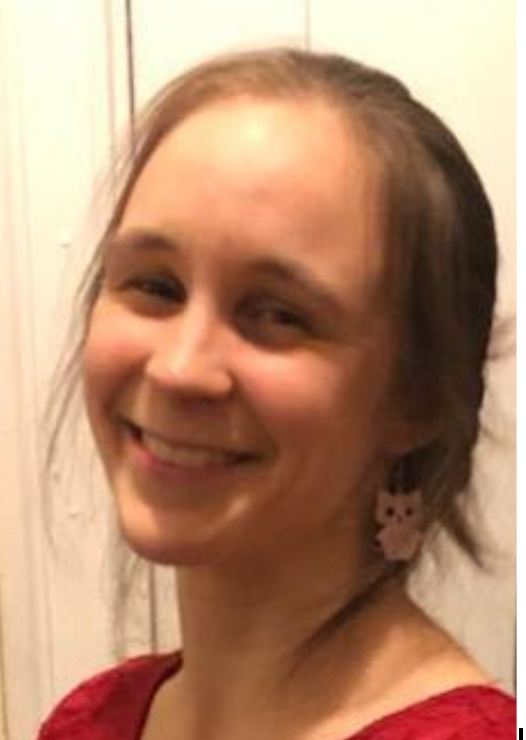
This week, we feature a blog by Lexi Carver, member of Church of the Cross. Lexi recently moved back to her hometown of east Arlington, where she lives with her husband Connor and their cat, Billboard. Trained as a mechanical engineer, Lexi spends her days writing engineering software user guides, where she obsesses about rigorous use of language and contemplates the magic of nanoscale design. She also enjoys long walks and reading theology from many traditions. Lexi shares a powerful perspective on the need for Christians to examine their underlying motives behind their work towards racial justice and the need for discernment about the consequences of current cultural trends.


Photo Credit: Elijah Mickelson

This past month, grappling with injustice against black Americans, I have learned and prayed much and still have much to learn and pray about. The ways in which churches continue to be complicit in racial injustice are heartbreaking; white Christians in particular are called to reflect on and repent of these sins, but also to act towards bringing forth a more fair and reconciled  society; and for Christians, this must first begin in the church. I am heartened to see how many white people (myself included) are beginning to better comprehend the long suffering of our black brothers and sisters. The charge to listen is a great one – it is imperative that each person takes seriously the aches, wounds, discomforts, and the long line of injustices back through history. The reminder that Christ alone is our hope is a much-needed anchor. The invitation to pray and lament is crucial.

But there is even more at stake than what we see on the surface, for the battle is not against flesh and blood. In the midst of increased work for justice and awareness, I have noticed increased social temptations: to send certain signals for the sake of social acceptability, making my motives about me instead of the problem at hand, to succumb to viewing others with suspicion by mimicking scenarios in which people are labeled “friend” or “foe” based on (dis)agreement, and to judge others and myself as “moral” or not based on choices of politics or preferred action.

I have seen that it has become very easy in Boston, even encouraged, to label other people “racist,” “white supremacist,” “ignorant,” “unresponsive,” and a whole host of other condemning (or even idealizing) labels. These labels often stem from perceptions of only a few choices: Did they attend protests or not? Who did they vote for? Do they want to defund the police? Are they using the right lingo? In some conversations these days, disagreement feels tantamount to personal betrayal.

In some cases, these assessments may be accurate. But the temptation to hastily assume others’ hearts or to wave self-righteous flags reflects a cultural pitfall of moralizing judgment, of separating the “acceptable” people from the “unacceptable,” often along political lines. This leads to immense pressure, even in the church, to prove our belonging to the “acceptable” group—a pressure that makes it easy to forget that justice often means longer term, un-sexy, behind-the-scenes labor in policy, paperwork, learning to love neighbors, and quiet, unseen conversations and prayers. We can easily forget that Jesus called us to close our doors, praying to the Father who sees what is done in secret.

Amid the obvious issues of racial injustice many of us are exploring in conversation, there are also much less-discussed tensions of economic oppression, cultural identity, and political motives. My husband lived in Jamaica Plain for 10 years before we got married. In the last few years of his living there, many of his black and Latino neighbors suddenly moved away and their former homes were gutted, quickly rehabbed, and resold, in many cases for upwards of a million dollars.

We noticed with dismay that this sharp increase in gentrification directly correlated with an equally sharp increase in the number of “Black Lives Matter” signs appearing on the lawns of the new, wealthier, mostly white residents. These college-educated transients who had just pushed out lifelong residents showed no interest in getting to know the remaining, less wealthy, neighbors. Given the circumstances, it was hard not to see the lawn signs more as a social signal, support for a specific organization and its political ties, or perhaps an attempt to associate with virtuous sentiments, than an effort for real justice.

This was – and is – hard to talk about in Boston, home to so many universities and egregiously high rent prices, and where economic oppression can go hand-in-hand with political signaling. Although this trend is obviously not limited to predominantly black neighborhoods, what happened to my husband’s street was a cautionary tale to me of how people fighting for certain causes may widely perpetuate other injustices.

I am sure I am not exempt from the temptation to this particular sin! None of us are. We realistically will rarely have perfect motives, and it requires humility to acknowledge this. A question we might ask ourselves before joining any cultural movement is, “Is this for God’s glory or my own sake? What am I gaining?”     

Yet discussions of issues like this can quickly turn bitter as political opinions become, more and more, all-encompassing labels of identity. In addition to the political label that can come with Black Lives Matter lawn signs, another label that comes to mind is the phrase “anti-racist.” Despite the commonality of this phrase, I find myself hesitant to define people overarchingly by what we are against. Jesus certainly stood against evil, but he defined Himself in terms such as the comforter, Savior, mediator, king, shepherd, bridegroom, deliverer—never the “Man Against Wickedness.” As my friend Kelly Madden recently pointed out, I want to be for justice, for cheering for the personal agency and authority of my black friends and neighbors and leaders, for the protection and exaltation of black lives, for the respect of black voices and churches and businesses, for support of black communities, for the liberation of black prisoners wrongly accused and unjustly sentenced, for better and fairer policies, for accountability without condemnation, for humble and ongoing learning and growth. Perhaps our challenge is to pause long enough and breathe deeply enough of the Holy Spirit to envision something to create, not only to tear down.

The Enemy would use this time, if we allow it, to tempt us to pit ourselves against each other, to drive our divisions deeper rather than work to heal them, to malign each other (or others not in the room) endlessly. But this is nothing new; as Jesus tells us, the path of the Kingdom of God is narrow, wending and twisting between landmines in our hearts and our societies.

I do not have the answers for how best to work for and discuss issues of racial justice, or any of the other forms of justice we need right now, while avoiding the evil that will inevitably follow from “standing in the synagogues and on the street corners to be seen by others” (Matt. 6:5). Of course, God can use even our most measly and self-serving actions to his own purposes and glory. But I believe these are questions that the church must grapple with. Following the way of Christ means allowing God to train us in shrewdness and innocence, prayerfully discerning where and with whom we are called to work, and digging beyond the surface of cacophonous news headlines, social pressures, and our own hearts. 

Pray with me:

 Lord, help us to seek, above all, your heart for our churches and our city. Plug our ears against the siren calls of selfishness, social acceptability, and condemnation of our neighbor; help us to learn the language of your Spirit; teach us narratives and ways that edify your children. Help us to take the time to sit with you, until we are filled with and compelled by your love. Empower us to pray for our enemies and love our opponents. Above all, help us to see your reflection in every human face, and show us your call to us in your mission of racial justice and other forms of justice in the world.
Written by uniteboston · Categorized: Blog · Tagged: boston, christian, home, jesus, neighborhood

Jun 04 2020

Speaking Out For Racial Justice? 4 Suggestions for Getting Started

This week, we feature a blog from Josh Wilson, a movement architect and organizer at The Table, a multiracial church startup in Dorchester. Prior to his work at The Table, Josh served under black leadership and in primarily non-white congregations in Boston, Philadelphia, and Chicago. He holds Masters degrees in church-planting and urban ministry.
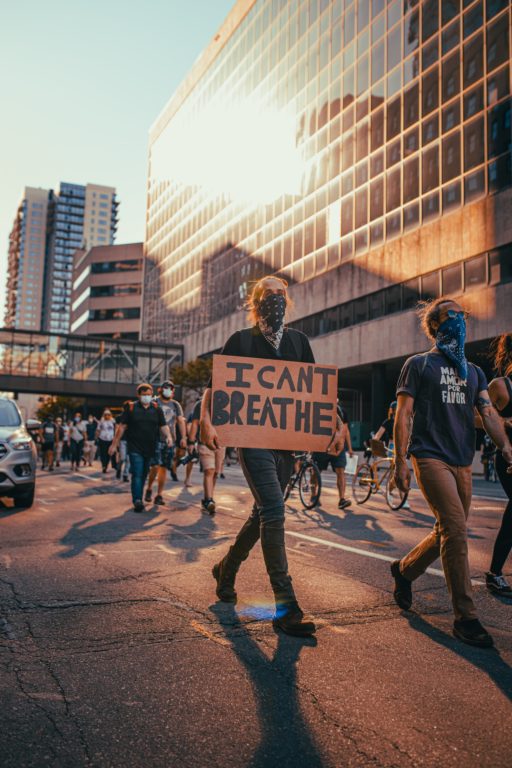

(Photo by Josh Hild on Unsplash)

So many folks are raising their voices right now to speak out against police brutality and racial injustice. I’m seeing so many friends black out profile picture and #SayHisName for the first time ever. For me at least, it’s a ray of hope in a pretty dark time.

As a white guy who’s been learning to take action for racial justice for a few years now, I wanted to offer some unsolicited advice, resources, and cautions to white friends who are speaking out. Whether you’ve been considering issues of racism for a while or the murder of #GeorgeFloyd has sparked a new awareness of racist police violence, welcome to the conversation. I know that for some of you, speaking out feels risky. Some of you are getting pushback in your comments from people you love. So, thanks for standing up for something important.

Right upfront, I want to say I am not an expert on race. I am not an expert on black people. I haven’t arrived or even fully rooted out the racialized assumptions in my own soul (POC, standing invitation to check me on anything I say here). I am someone who’s been on a journey of realizing and repenting of my own racist beliefs and working to deconstruct the ways they play out in our culture and churches for a few years. I still miss it. I am just a recovering racist who chooses to be an antiracist every day.

I want to highlight a few traps to avoid. I share these out of my own experience of making mistakes and receiving painful and embarrassing rebukes from friends who loved me enough to help me grow. My hope is you can avoid some of these pitfalls and this might speed you along your journey.

1. Listen. Live. Speak Last.

I’m the type of person who enjoys sharing the things I’m learning. Generally, this feels like a positive thing, but at times, I speak with authority on things I still really haven’t fully grasped or have only begun to learn about (that has to do with privilege btw). If you’re like me, let me caution you to be “Quick to listen. Slow to speak.” If you’re white, you are never going to be an expert on the black experience. The vast majority of people about racism, have NOT YET done the internal work needed. Listen and ask A LOT of questions. If you have friends of color who are up for sharing their experience with you (don’t assume and treasure it if they are), absolutely ask about their experience and perspective. If you don’t have this type of deep, meaningful, personal relationships, begin building them. In the meantime, the internet is a thing! People have written books, articles, created podcasts, made movies. Literally, all the resources in the world are at your disposal if you’re up for learning. I’ve taken the time to compile an annotated bibliography of some resources that have been helpful to me personally. There are so many other great resources; these are just a few of the best I’ve personally engaged. All of this to say, sharing is great – but only if you’re also listening much and putting what you’re learning into practice.

2. Act. Welcome feedback. Go again

If you’re like me (and most white people I know), you probably have some ignorant perspectives on race. This does not make you bad; you don’t know what you don’t know. While people of color are forced to grapple with race, those of us in majority culture can sail through life without having to learn. All of this means, when you first start relating across difference, you’re going to say some things that aren’t quite right, make some faulty assumptions, or accidentally say something that’s taken in a way you didn’t intend. This does not make you bad (although you may really hurt or negatively impact someone even without intending to). I love how SURJ – Showing up for Racial Justice Puts this: “As white people, we are going to make mistakes when doing racial justice work. It’s inevitable. We don’t know anyone who has been in the work and hasn’t made a mistake. Not a single person. When we make mistakes, we want to take the time to reflect on them thoughtfully and keep moving in the work. We cannot let making mistakes prevent us from continuing our work.” This is great advice. When you “splat,” acknowledge it. And go again.

3. Steer clear of virtue signaling. It’s not about you.

There’s a lot of pressure right now at least in some cultural spaces to say/do the “woke” thing. There’s also a toxic culture of performing our lives on social media for others. It’s so easy to say or do things for the likes; to share things that demonstrate that we’re “on the right side.” Ironically, when we’re mostly concerned with being perceived in a certain way, we stunt our learning and growth. So long as we’re most interested in looking good, we’ll continue to resist having our blind spots exposed. Push back on this. As you share, keep asking “why?” And be conscious of the fact that while your voice is important, it should not be at the center of conversations around racial justice. Who are the black and brown voices you can listen to and amplify?

4. Invest locally for the long haul.

Protests have value. Perhaps changing your profile picture and posting a hashtag do too. But if your engagement with this conversation stops there, that’s a huge miss. The problem of racism isn’t simply a few bad apples somewhere else; I promise you it infects your workplace, your school, your church, and your neighborhood. How can you get involved, keep learning, and actually show up for change in the places you live, work, and play? Beyond the work I do with The Table, here in Boston, for me that means learning from and supporting efforts lead by organizations like the following. If these aren’t relevant to you, find out who’s doing this work where you live and get plugged in:

Race & Christian Community Initiative
Families for Justice as Healing
Louis D. Brown Peace Institute
Violence In Boston Inc.
Bma Boston
Boston Ujima Project
The New Democracy Coalition
City Life/Vida Urbana
Dorchester Not for Sale
Mass Action Against Police Brutality
Massachusetts Bail Fund
Asian American Resource Workshop (AARW)

Blessings to you, friends. This work is a marathon, not a sprint. Keep building relationships, listening well, learning to love, and stand with those experiencing oppression. Your investment and action can make a difference.

*Note: citation of a resource or recommendation of an organization should not be read as an endorsement of the everything that resource or organization believes, says, or does. Proceed with wisdom, discernment, and an ear to hear. 

Written by uniteboston · Categorized: Blog · Tagged: boston, community, neighborhood, peace, unity

Mar 27 2020

Talk Local – Singles Serving Singles in the Face of Social Distancing

This week, we have Rebekah Kerstetter as our featured blogger on UniteBoston. Rebekah is a Boston-area mom of three awesome kids, and a member of Highrock Church in Arlington. In the blog below, Rebekah shares about her new network for Christian Singles across churches to connect, which is especially important during this time of social distancing. Read below to learn more about how this ministry promotes Christian unity and how to join with Christian Singles in your area.


I have worked towards church unity for 20 years, and then ten years ago, God began pressing on my heart towards another focus – serving singles in the body of Christ. I have seen many of the challenges Christian singles face when looking for community, friendships and even dating opportunities. All of these forms of community are blessings God calls ‘very good,’ but I feel that America’s social structure does not support singles as well as it once has.

Wanting to step in and help out, I have hosted dating events, relationship trainings, bible studies, games nights and other activities for three years to build community for Christian singles. I started doing this in St. Louis, before returning back east.

Today, I believe that what will help most is a network of Christian singles throughout the Boston area. Heres why I believe this ministry is so important, especially in the midst of the Coronavirus:

  • Not every single has a large single’s group or church network checking in on them. 
  • Some singles may need groceries dropped off because they are ill or have been laid off from their jobs due to the Coronavirus crisis.
  • Some singles have no roommates (and/or are extroverts) and are going sTiR-CrAzY during social distancing and would love more connection.

Here is how you can help:

‘Talk Local’ on Thursdays at 8:30 pm is a weekly gathering to build a Boston-based network to connect Christian singles during social distancing. We will be currently connecting via Zoom, and then face-to-face once social distancing ends. Currently, it’s a 30 minute (not boring) Zoom call with Christian singles throughout the Greater Boston Area and then a 30 minute Zoom break-out by neighborhood or town to talk more with the Christian singles who live closest to one another.

Prayerfully, when the current crisis is over, ‘Talk Local’ will become ‘Dinners Next Door’ where Christian singles can eat with others who easily walk, bike or can drive quickly to their home or favorite nearby restaurant.  Living closer to friends or who we are dating makes it easier to grow the relationships. The extra time we save by living close together can become more time spent together!

And the beauty of this is that since the Christians living around us are from many different churches and church backgrounds, building relationships with those who live nearest to us will naturally build authentic networks of unity across Boston churches. 

Let’s get to know Christian singles from all over the Boston area and then further get to know those next door to us and serve together locally. Let’s watch this ripple effect bless all of Boston!

Photo Credit: The Scotsman / Shutterstock

To stay connected with Rebekah & Dinner’s Next Door & Talk Local, go to www.SingleSocials.com or  https://singlesocials.com/thursday-weekly-calls We also appreciate your help in spreading word to your church network and other singles you know!

“Each of you should look not only to your own interests, but also to the interests of others.” -Philippians 2:4

“A new commandment I give you: Love one another. As I have loved you, so also you must love one another. By this all men will know that you are My disciples, if you love one another.” John 13:34-35 

Written by uniteboston · Categorized: Blog · Tagged: christian unity, community, neighborhood, uniteboston, unity

Feb 22 2020

Christ the Redeemer Quincy: A New Church, A Kingdom Effort

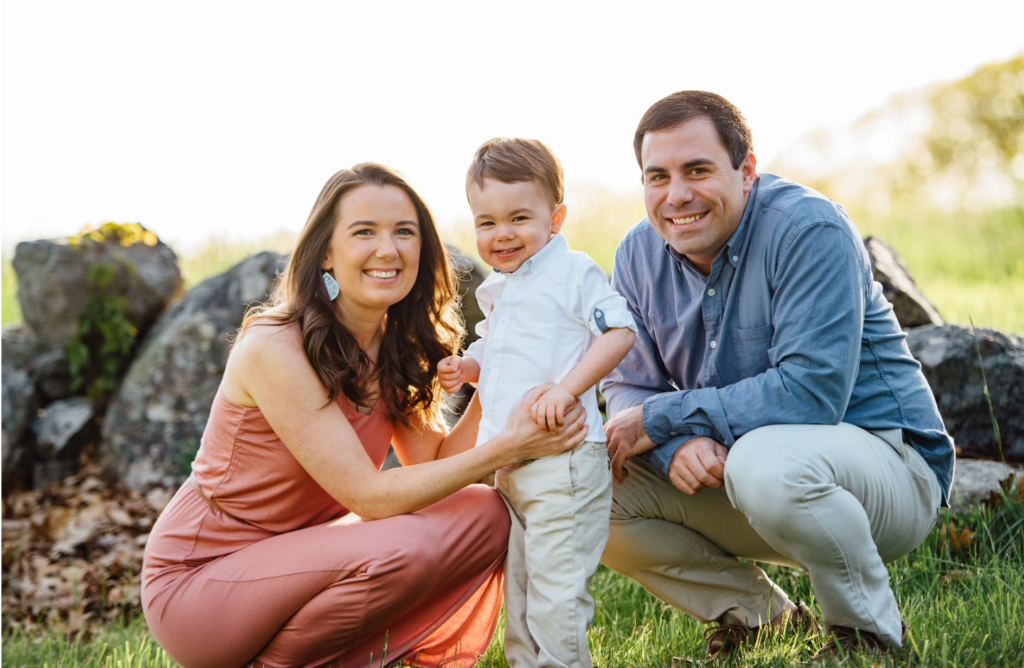
This week, we have Pastor Matt Owens as our guest blogger. Matt Owens is a native of Illinois, but has served the Church in greater Boston for nearly seven years, first as the Assistant Pastor of Christ the King Somerville (now Seven Hills Presbyterian), and currently as the planting Pastor of Christ the Redeemer in Quincy. He met his wife Naomi in Boston, and they married in 2015. They have a two-year old son, Liam. In the blog below, he shares about how their new church in Quincy has adopted a kingdom mindset and been supported by many other local churches.

The story of our new church in Quincy is, from beginning to end, the story of the collaborative, Kingdom-minded investment of other churches. 

It was the pastor of a Brazilian Presbyterian Church (Christ the King Quincy) that first challenged me to consider planting in Quincy. I had been serving as the Assistant Pastor of Christ the King Somerville (now Seven Hills Presbyterian Church). As my wife, Naomi, and I considered church planting, we determined we did not want to go anywhere outside of greater Boston. While still in Somerville, I would occasionally take the red line down from Somerville to Quincy to meet with pastors who were already serving in Quincy. I wanted to get a feel for what church planting would be like there, but I also wanted to get a sense of whether there was a possibility for Kingdom-minded collaboration. Everyone with whom I met during this time said some version of, “We need more gospel-centered churches in Quincy.” I remember hearing, “Until there are 95 gospel-proclaiming churches of 1,000 members, we will need more churches” (there are about 95,000 people in Quincy). I certainly did not want to come to Quincy with the attitude some church planters seem to have: that their new church is the only faithful church in the city. We should be grateful that many good, gospel-centered churches have been planted in greater Boston, and that many have existed here for generations. The days of saying, “There are no good churches in Boston,” are long gone (and that has always been untrue). The fact that there are so many good churches doesn’t change the reality that we need more good churches; but it must change our approach to church planting. We must be intentional about Kingdom-minded collaboration. We must recognize that the Lord uses many different kinds of churches to reach many different kinds of people with the good news of Jesus. So, when we arrived in Quincy, I was glad to work together and learn from other churches (in several languages) already faithfully serving our city. 

What we found when we moved to Quincy in the summer of 2018, knowing very few people in Quincy or on the South Shore of Boston, was that there was still plenty of need and opportunity, even in our own neighborhood. We have found it true what we had heard of our neighborhood, that it is, “the kind of place where it takes you an hour to walk around the block because everyone stops and talks to each other.” Shortly after we moved in, there was a neighborhood block party, at which we met several people who have become friends. The week following the block party, one older woman Naomi had spoken with came by our house to drop off a map of our neighborhood, which included the names of the majority of the people who lived in our immediate neighborhood, their children’s names and even their dogs names (in parentheses). For what purpose this woman gave us this map, I can’t say. But for us, it was a clear indication of the mission the Lord had set before us, a clear indication that the Lord had not only led us to Quincy, but to our specific street. The map represented, over a long period of time, the people God had called us to love and serve. It was as if the Lord was saying, “Here, you have no excuse not to pray for your neighbors.” Even with many good churches in Quincy already, there is still plenty of need for gospel ministry, both in word and in deed.

Shortly after my family and I moved to Quincy, a group of five or six pastors, all from different churches/denominations began to pray together for our city and our church’s ministries. To this day, we continue to meet together to pray and talk about how we can care for one another, and love and serve the city together. We have celebrated one another’s successes, and grieved together over difficulties. 

This past November, I received a text message from the Lead Pastor of Life Community Church in Quincy, asking me to come and share about our church plant at their worship services. The purpose, he said, was because they had decided to give one half of their special Advent offering to support our church plant (and the other half to support another local church plant). Rather than seeing other churches as competitors, Life Community and many other churches in Quincy have embraced us as partners in the work of gospel ministry.

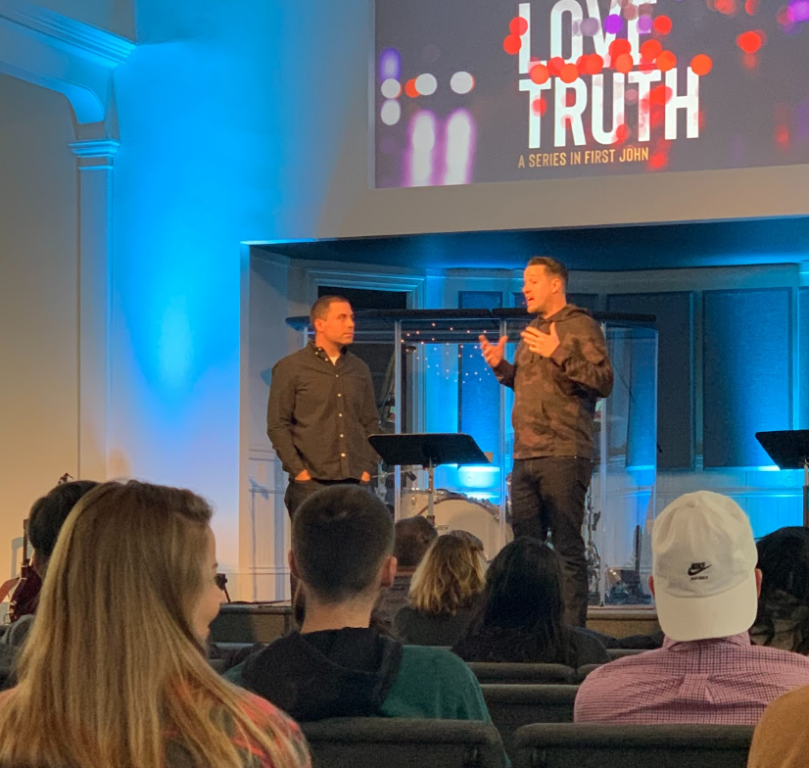
Pastor Matt Owens and Pastor Aaron Calvin on stage together at Life Community Church

As we launch the new church, it has been so encouraging to know that the Church, the community of believers from all denominations and walks of life, has our back. We continue to receive help from believers from other congregations in order to help us get off the ground in Quincy.

I believe we must see more of this in our city. We gain nothing by being territorial. We have so much to gain by working together. Aaron Cavin, the Pastor of Life Community in Quincy, recently said that if the church in Boston is going to see revival, we need to be faithful to the Great Commission, the Great Commandment (Matthew 22:37-39) and (what he called) the Great Collaboration. If we want to see people experience the love of Christ, they need to see it lived out between Christians. They need to see the unity Jesus prayed for in John 17.

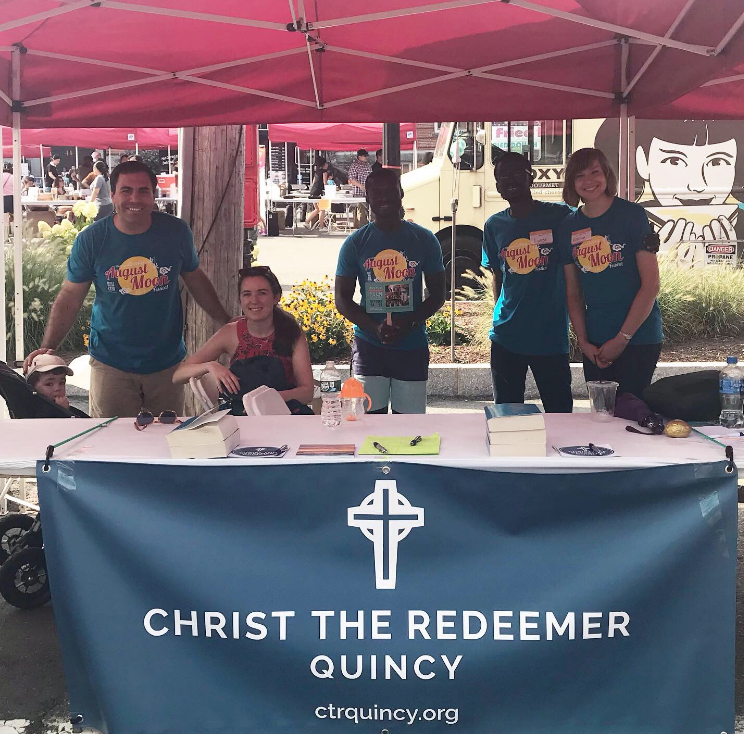
Members of CTR Quincy meeting people at the August Moon Festival this past summer.

Pastor Matt Owens offers three ways in which other Christians can support the launch of Christ the Redeemer Quincy:

1. Pray– We greatly appreciate your prayers for my family, for our core group, and for all of those who are coming who are checking out church for the first time in a while (or ever). 

2. Invite– If you know anyone in the Quincy or the area, please let them know about the new church (I am attaching an advertisement/invitation that you can send them)…and if they’re interested, consider coming with them to our launch on March 1st!

3. Come– We would love to have you join and celebrate the launch with us! But if you can’t come on March 1st, we would also love to have you join us anytime after. Our thinking on this is, “the more, the merrier.” When my neighbors show up, they’re probably far less likely to return if there’s 25 people there than if there’s 75. So we are looking to the larger Church body for help us in getting off the ground by sending some people to simply be present (and friendly). If you are able, or people from your congregation are able, we would love for people to come not just on launch Sunday, but multiple times over the first few months. 

There are also two positions we are looking to fill: 

1. Worship Leader / Musicians- We are looking for a part-time (6-8 hours / week) Worship Leader to regularly lead our congregation in worship through song. Currently, we have a team of gifted musicians, but no one to lead on a weekly basis. We also have a few music leaders from other congregations that are coming to lead us when they can, but this is not sustainable long-term. If you know musicians who might be interested in leading us weekly, or any who would be able to help us out less frequently, just as we get going, please email me at matt@ctrquincy.org for the job description.

2. Children’s Ministry Director- We are also looking for a part-time (4-6 hours / week) Children’s Ministry Director. My wife (Naomi) is currently serving in this role as an Interim Children’s Ministry Director. But, this is not sustainable for her after this summer. If you know anyone who might be interested, please email me at matt@ctrquincy.org for the job description.

Written by uniteboston · Categorized: Blog · Tagged: collaboration, community, lent, neighborhood, unity

Oct 28 2019

Meet the Two New UniteBoston Board Members!

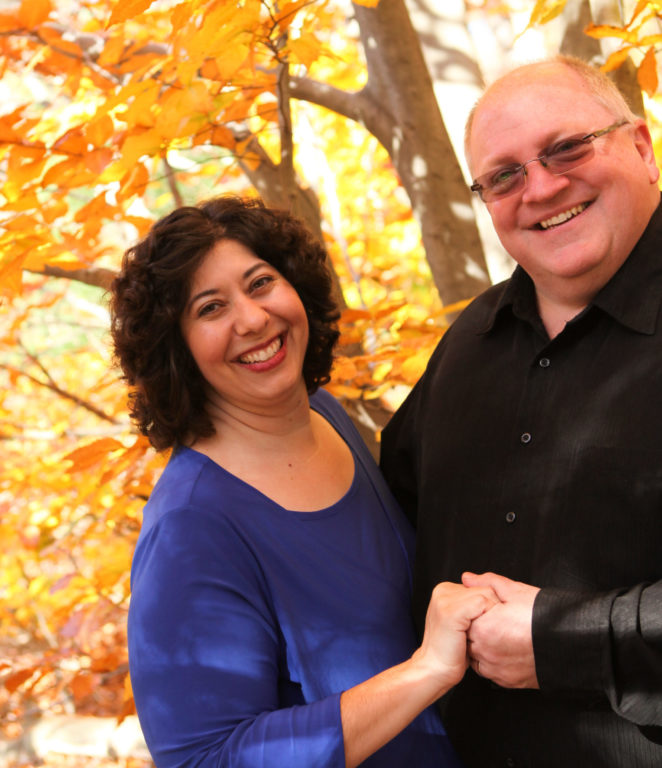
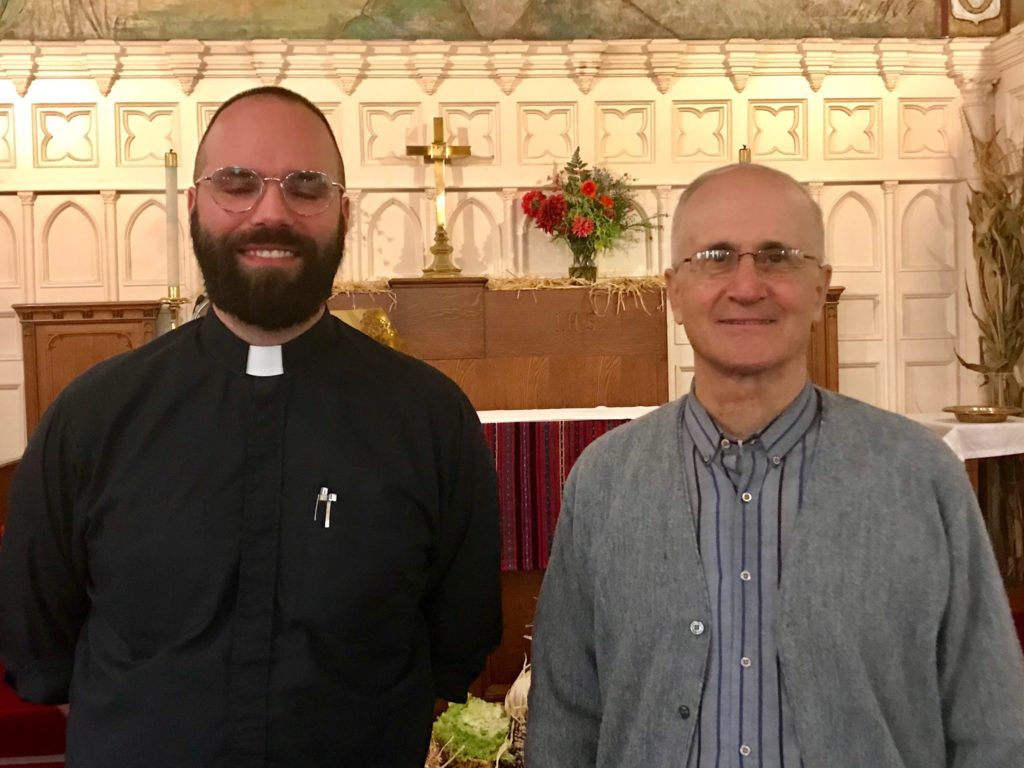
On the left, Pastor Robin Lutjohann from Faith Lutheran Church in Cambridge, and at right, Father Tom Ryan from the Paulist Center in downtown Boston

The UniteBoston Board is an incredible team of clergy, leading Christian communities from a diversity of denominational and ethnic backgrounds. Together, we seek to model the unity we have in Jesus Christ amidst our ecclesial diversity. You can meet the entire UB Staff, Volunteers, and Board here – and below are the board profiles for our two new board members, Pastor Robin Lutjohann from Faith Lutheran Church and Father Tom Ryan from the Paulist Center.


Pastor Robin Lutjohann

Ministry Roles:

“I am glad to serve as pastor to a quirky and lovely little church in Cambridge: Faith Lutheran Church. It’s a community full of grace, which I believe is desperately needed in an often grace-starved world. It’s also a church that somehow its able to hold a variety of theological perspectives, age groups, and ideological commitments in one body. To be sure, we are very flawed, but we mostly know it too. And from that self-awareness, we can appreciate God’s lavish kindness and pass it on to others.”

Why Robin enjoys serving with UB:
“I am impressed by UB’s ability to bring very different followers of Jesus together. In fact, our church has already benefited from this in a number of ways. I believe in the unity of the church, not just as an aspiration, but as a present reality. In my own Lutheran tradition, we have a somewhat minimalist conception of what “church” means. Wherever the Gospel is proclaimed and people gather to share the sacraments — there is the church of Christ. So, I see UniteBoston simply manifesting what is already true about the Body of Christ. Our unity is not something to achieved — it’s something to be lived! And I want to be a part of that.”

About Robin:
“I am a native of Berlin, Germany. I came to this continent for college and stayed because I fell in love with my wife Heather and with the city of Boston. I am a proud Allstonian and can be found cycling manically to and fro various coffee shops, bars, churches, and museums. I grew up unchurched in a loving family of musicians, bartenders, poets, hippies, and trouble-makers. When I was in college, Jesus decided to blindside me with the full heft of the Gospel and plunk me into an ecumenical community of Christian students. My best friends were the daughter of a Pentecostal missionary, a Catholic woman with a conflicted call to the priesthood, a environmentalist who had recently converted to Eastern Orthodoxy, and an aspiring Jesuit brother. Through many conversations and countless long nights of reading and praying, I ended up in the Lutheran church (ELCA). I was baptized in the Charles River, not far from one of the boathouses in Cambridge. Ever since, God has been throwing me into the wonderful company of the saints, and I am beyond grateful. After some time of study at Harvard’s Divinity School and a brief stint of appeasing the needs of a Lutheran education in the Midwest, I have found myself right back where it all started, and I couldn’t be more excited.”


Father Tom Ryan

Ministry Roles:
Executive Director, Paulist North American Office for Ecumenical and Interfaith Relations, located since 2016 in downtown Boston

Why Tom enjoys serving with UB:
‘The ecumenical movement has produced volumes of dialogue Agreed Statements over the past 50 years, which by and large are gathering dust on bookshelves. Those Agreed Statements need to find concrete expression at the grassroots level among church members, and that’s the significant and vitalizing contribution Unite Boston is making in neighborhoods and congregations in the region.  My passion too is grassroots engagement, and it is a deep joy to join hands in the gospel work of this Holy Spirit-animated network, responding in concrete, practical ways to Jesus’ prayer for his followers that ‘they all may be one’.” (Jn 17:21).”

About Father Tom:
A member of the Paulist Fathers, Fr. Tom did his theological studies at the Washington (DC) Theological Coalition, the University of Geneva and the World Council of Churches Ecumenical Institute of Bossey in Switzerland. He directed the Canadian Center for Ecumenism for 14 years; founded and directed Unitas for 5 years, an ecumenical center for spirituality co-sponsored by 8 denominations in Montreal; then founded the Paulist North American Ecumenical Office where he has served the past 20 years in NY City, Washington DC, and now Boston.  Among the 17 books he has authored are Tales of Christian Unity: The Adventures of an Ecumenical Pilgrim; A Survival Guide for Ecumenically-Minded Christians; and Christian Unity: How You Can Make a Difference. He leads ecumenical workshops and retreats across the U.S. and Canada.


Written by uniteboston · Categorized: Blog · Tagged: christian unity, community, neighborhood, uniteboston, unity

  • « Previous Page
  • 1
  • …
  • 7
  • 8
  • 9
  • 10
  • 11
  • …
  • 15
  • Next Page »


Give to Further Christian Unity

DONATE!

  • Email
  • Facebook
  • Instagram
  • YouTube

Copyright © 2026 · UniteBoston · Built on WordPress