UniteBoston

Bridging Divides Across Christians for the Flourishing of the City

  • Home
  • Events
    • Submit Event
  • Join In
    • Beloved Community Lab
    • Migrant Care and Solidarity
    • The Church and Civic Engagement
    • The ATTIC
    • Kingdom Conversations
    • Worship & Pray
    • Boston Flourish
  • About
    • UB Board, Staff & Volunteers
    • Cohorts
    • Missional Letter
    • Annual Reports
    • History
    • Christian Unity
  • Forums
  • Blog
  • Give
  • Contact
  • Search

May 01 2026

Awakening Boston: The Vision and Heart of Pray.Boston

At UniteBoston, we love seeing churches pray and serve together, which is why we are grateful to feature Pray.Boston, a new citywide movement of prayer to see the city of Boston awakened to life with Jesus.

In this week’s blog, Yasmin Lountchenko (Pray Ministry Lead at Grace City Church) shares her vision for building “altars of prayer” where believers from all backgrounds intercede for our city’s flourishing. Click below to read how a humble prayer room has grown into a collaborative space for people to contend for God’s Kingdom “on earth as it is in heaven.”


By Yasmin Lountchenko

I used to walk through downtown Boston, and I would see the city seal but not think anything of it. Last summer, I was on a prayer walk in the Boston Common, and felt the need to look up the significance of the seal. Inscribed on the seal is the motto of our city, which is “SICUT PATRIBUS. SIT DEUS NOBIS”. 

This translates to “God be with us as he was with our fathers.” Our city motto comes from King Solomon’s prayer when he dedicates the temple as a place to host God’s presence. This has largely shaped how we pray at  Pray.Boston — like Solomon, we are praying that God’s presence would be known here in a tangible way. 

My name is Yasmin Loutchenko, and I am serving as the Prayer Ministry Lead of Grace City Church and Pray.Boston. I moved to Boston for undergrad in 2020, and quickly got involved at Grace City Church. It was at Grace City that I was discipled in prayer and grew in love for the city of Boston. Throughout my time at Boston University, I felt God invite me to pray for awakening in Boston, which eventually led to Pray.Boston being formed out of Grace City. 

Pray.Boston is a movement of prayer to see the city of Boston awakened to life with Jesus. We are calling our city to seek God, love him wholeheartedly, and contend for a move of His Spirit in our time. We exist as a citywide ministry for Boston, aiming to be a resource and a gift to the church in Boston. 

We see prayer as the primary means through which God advances his kingdom on Earth. All throughout Scripture and awakening history, we see God move when his people gather to pray. The Northeast has witnessed significant moves of God, and our own city has a rich spiritual history. Boston was founded to be a “city on a hill,” a vision articulated by John Winthrop, later reinforced by Harvard as a center for training ministers, and dramatically renewed during the First Great Awakening. We have heard of all that God has done in our region, and we believe that God is raising up a praying community of people who are calling on him to do it again in our time and in our city.

In 2019, the Prayer Room started at Grace City Church – it was small and humble, but characterized by a deep dependence on the Spirit and confidence that the Lord responds to those who seek him. Even before Grace City officially launched, prayer was central to the leadership of the church, and the prayer room was born out of the belief that in order for us to faithfully steward our calling as a church, it needed to first come out of a place of total dependence on God. We needed God to do in his power, what we couldn’t in our own strength, so we met consistently every week, asking God to move in Boston and across New England. 

As we continued to meet for prayer, God placed Pray.Boston on our hearts. We wanted to remain faithful with what God had entrusted us with, while seeking God’s heart for Pray.Boston. Over time, the Prayer Room grew and we started to welcome people from different churches and backgrounds. It was a space for people to encounter the presence of God and contend for God’spurposes in our city and world. 

In August 2025, we sensed a clear release from the Lord to formally establish Pray.Boston—formalizing what had already been unfolding. With this step, our vision expanded: not only to cultivate a culture of prayer within Grace City, but across Boston. Since then, we have increased capacity in the Prayer Room, launched Prayer Labs to equip churches to build cultures of prayer in their own contexts, and begun forming meaningful relationships with pastors, leaders, and congregations throughout Boston.

We know that Jesus’s heart is not for one individual congregation, but for his entire body. And while we may have different expressions of our faith, we believe that communion with Christ and one another unites us and fulfills Christ’s desire for his bride. This is why we also started to host Citywide Prayer. Citywide Prayer is hosted bimonthly on Wednesday morning as a space for ministry leaders across the city of Boston to gather in united prayer as we seek God to move in and beyond our city. 

Through Pray.Boston, we are witnessing people catch a vision of the inbreaking kingdom through prayer. One of our involved team members went from not really understanding prayer, to now regularly serving in the Pray.Boston Prayer Room, and now even starting a prayer meeting at his workplace. The Prayer Room is not built around any one personality, church, or method, but around the person and ministry of Jesus. Jesus instructs us to pray for the kingdom to come on earth as it is in Heaven, and the kingdom picture we see in Scripture is the gathering of a vast multitude from every nation, tribe, people, and language before the Lamb who is enthroned at the center (Rev. 7:9). 

Our desire is to see each heart, home, and church collectively agree that the Lord is welcome and wanted in our city, knowing that God’s awakening work is greater than any one church. God is raising up a praying community in our city that serves as a promise to our city that there is a new and better way that is centered on Christ. 

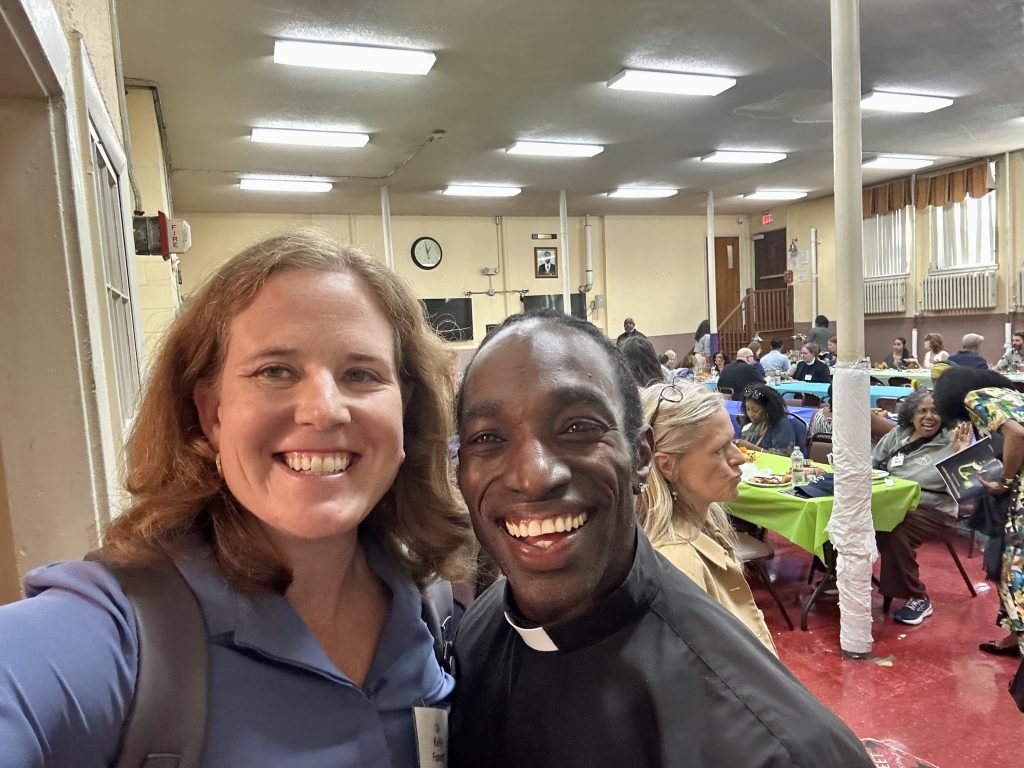
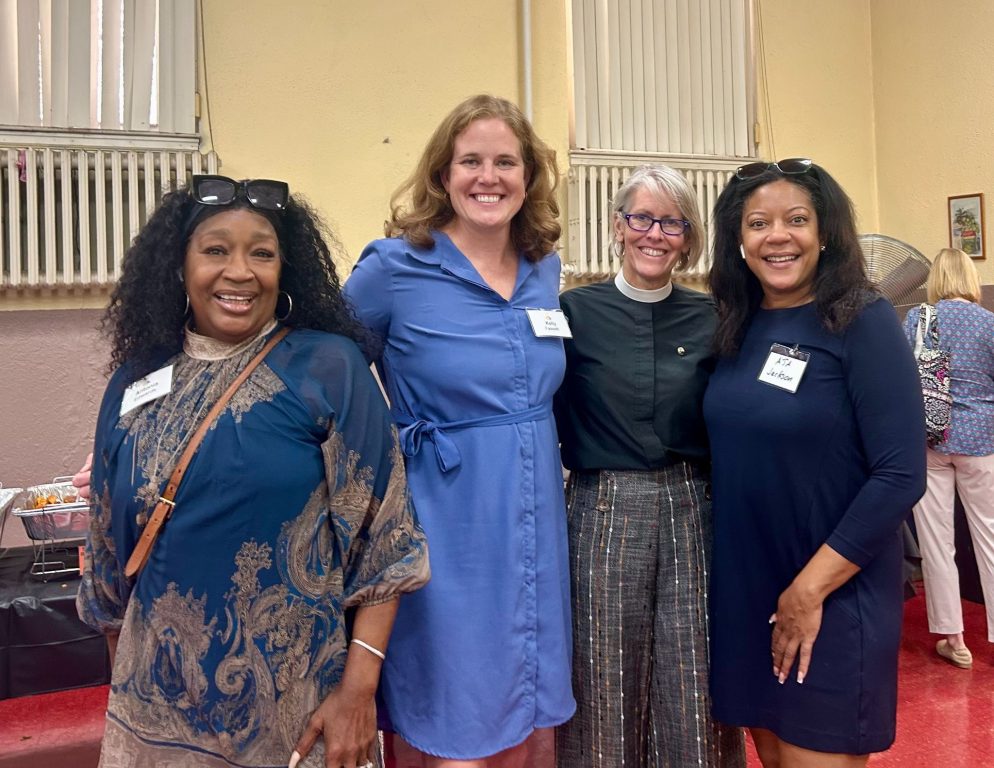
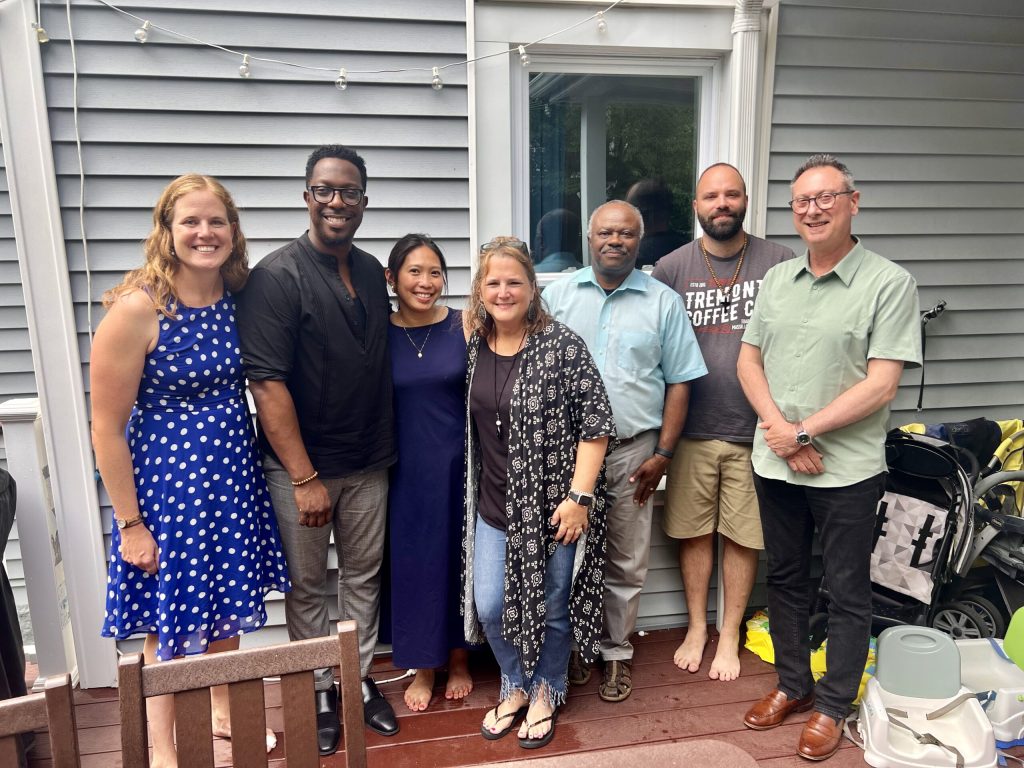
Rev. Devlin Scott & Rev. Kelly Fassett (UniteBoston) along with Pastor Brian Owen & Yasmin Lountchenko (Pray.Boston)

Join in! All are invited to join this praying community and commit to seeking revival and awakening in our city. The Prayer Room is open every Wednesday at 7:00 AM and 8:00 AM at 874 Beacon St., with an Evening Prayer Room hosted on the last Thursday of each month at 6:00 PM. Pastors and ministry leaders are also encouraged to attend Citywide Prayer on May 6 from 9:30-10:45am at 874 Beacon St. For additional events and resources, visit pray.boston.

Written by uniteboston · Categorized: Blog · Tagged: community, prayer walk, uniteboston, united prayer, unity

Mar 27 2026

Solidarity is Sacred: Good Friday Public Worship & Action for Immigration Justice

“During Holy Week, Christians remember Jesus’ death as a confrontation with – and triumph over – the powers of empire. Jesus’s crucifixion was God’s ultimate act of solidarity with persecuted people — an act that calls us into radical solidarity with the crucified people of today.”

As a key practice this Holy Week, we invite the Boston Christian community to join Solidarity is Sacred, a movement devoted to reclaiming the story of Good Friday to stand in solidarity with our immigrant friends and neighbors.

Read more below as the organizers share the theological heartbeat of this initiative, which transforms the Stations of the Cross into a powerful public witness for Christ-centered sanctuary and justice.


By Sarah Hansman, Stef Grossano, and Katy Fazio 

In March 2025, just blocks from First Church in Somerville – where one of our authors is the pastoral resident – plain clothes, masked men grabbed a Tufts graduate student off of the street in broad daylight and put her into the back of a car. For hours, the young woman’s attorney could not figure out where she had been taken. The student, later identified as Rümeysa Öztürk, had her visa revoked and was shipped thousands of miles away to a Louisiana detention center – all because of a student journalism piece Ozturk had written for the Tufts Daily. Members of First Church Somerville knew Ozturk and her friends. Fear and anger set in. Immigration enforcement tactics were changing and many wondered who would be next. The next 12 months revealed a campaign of cruelty towards immigrants that we continue to live through today.

Immigration enforcement tactics have long threatened the safety of our neighbors. But in this moment of authoritarian breakthrough, state violence is intensifying, causing fear and outrage in our communities. We have seen a record number of deaths in US detention centers (including Emmanuel Damas on March 2, a Haitian man living in our Boston), a near total ban on asylum, and the continued separation of families. 

We are the co-coordinators of a grassroots, ecumenical coalition of people of faith responding to this moment. Our response to this moment comes out of our shared humanity, in recognition of the fundamental dignity in each person that has for too long been violated. Our distinct voice, however, is a Christian one. Our strength comes from drawing upon who we are and what we believe, which breaks through with striking clarity on Good Friday. 

We are a coalition of Christians from various faith traditions and experiences. Sarah is a doctoral student in theological ethics, a hospital chaplain, prison minister, and Catholic woman committed to bridging the worlds of the worlds of theology, ministry, and community organizing. Stef believes in the creative power of human beings and the Holy Spirit to bend the moral arc of the universe towards justice. She has tried to flex that creativity and Spirit as an organizer, a prison educator, a facilitator, a legal worker, and now as the queer pastoral resident at First Church Somerville, UCC. Katy is a children’s minister, mom of two, and a gardener- all roles  that require hope for the future and the pursuit of peace. This is the second year we are coordinating this action, because we believe that Good Friday is a unique moment for us to join together, as people of faith, to remember the memory of Jesus’ crucifixion and how it calls us to be in solidarity with the crucified peoples of the present.  

Christians follow a God who was murdered by the state so that no one else would be subjected to such cruelty. The moment we forget this story is the moment we forget our call to solidarity as followers of Christ.  If the cross is a spiritual instrument, it must be a mirror challenging us to never allow what happened to Jesus to happen to anyone else. 

Last year, we joined together on Good Friday for Sanctuary is Sacred, a public worship and action, to call out persecution and scapegoating and demand  that our state government protect our immigrant neighbors and refuse cooperation with ICE. We made it clear that the Jesus who was himself scapegoated calls on our politicians, and each of us, to pick up their cross and walk with the oppressed.

This year, we return stronger for Solidarity is Sacred: Public Worship & Action for Immigration Justice. We refuse to be scared into silence by the disappearance of our neighbors and the deployment of ICE into US cities. We refuse to fall prey to scapegoating narratives that seek to turn us against each other, self-interest that feigns ignorance, or despair that believes that there is “nothing we can do.” We believe public worship and nonviolent collective action matters and so we come to Good Friday with three main goals. 

1.  By publicly praying the Stations of the Cross, we hope to provide a theological framing and spiritual grounding for this political moment that moves us closer to solidarity with our immigrant neighbors and to God’s call to set the captive free and to break every yoke. 

The Via Crucis, or Stations of the Cross, is not only a reenactment of distant history, but as a living prayer through the streets of our own time. This longstanding Christian practice traces the path of Jesus’ suffering and execution at the hands of empire. We will join together in front of the JFK Building in downtown Boston, the location of the Boston Department of Homeland Security Office, to pray five out of the fourteen Stations of the Cross and stand in solidarity with crucified peoples of our time. The stations we will observe include: Jesus is condemned to die, Jesus meets his mother, Jesus falls for a third time, Simone of Cyrene helps Jesus carry the cross, and Jesus dies on the cross.

As we mark the moments along Jesus’ final path——each station reveals Christ present in the crucified peoples of today: in the bodies of those detained and deported without due process, the grieving mother torn from her child, the imprisoned denied medical assistance, the refugee turned away at the border. 

To pray the Stations is to see the world as it truly is—to name suffering, to confront injustice, and to refuse to look away. In a world that still builds crosses, we walk the stations to say: this is not the end. Even as we confront the forces of death—racism, poverty, xenophobia, colonialism, environmental destruction—we do so with the conviction that love is stronger, and that resurrection is real.

This walk is a prayer, a protest, and a public witness. We ask not only what happened to Jesus, but also what is happening to our neighbors, and what is being asked of us. We pray to be awakened. We pray to be changed as people and leaders.

2. To bear public witness to our Christian faith and values. 

We refuse to cede the public square to White Christian nationalism. Too often, Christianity has been distorted for political gain and against our most vulnerable communities, including our migrant siblings. Our Catholic Vice President has wrongly used the ‘ordo amoris’ to justify the Trump administration’s nationalist agenda and Christian Speaker of the House Mike Johnson has used isolated and faulty Bible interpretation to defend Trump’s immigration policy. We are mindful that the story of Good Friday itself has been used across for centuries to foment violence and prejudice against our Jewish siblings and is a part of the legacy of antisemitism today.

We repent for and reject any weaponization of Christianity. We feel called to provide a counternarrative that witnesses to another way of being Christian. Migration is at the heart of the Christian story. From the Exodus, to the story of Ruth and Naomi, to the Holy Family, scripture tells us of people on the move. And Jesus’s death on a cross declares where God chooses to dwell—not with the powerful, but with the broken, the cast off, the dispossessed. 

3. To create opportunities for local, interfaith relationship-building and platform existing ways to take action. 

We learned from Minneapolis that voices of faith matter and so does knowing your neighbor. Scripture teaches us: love your neighbor as yourself (Matt 22:39). But before we love our neighbor, we have to know our neighbor. Who is my neighbor (Luke 10:29)? Massachusetts has a robust network of immigration justice organizations and coalitions to say no to state violence and yes to local and state networks that protect our communities. Rather than ask with despair, “how can I, one person, make a difference?” We join together as neighbors, in solidarity, to see how much power we have, and provide pathways to take action going forward. 

Will you join us? 

We will begin at the JFK Building, home of the Boston office of the Department of Homeland Security  to pray the Stations of the Cross. After the liturgical portion of our event, we will march together, up to the State House, to hear from our final speakers. These leaders in the immigration justice movement will share how you can take further action to be in solidarity with our immigrant neighbors today. Come weary, come hopeful, come yearning, come energized, come lamenting, and bring your communities with you.

We have an incredible group of co-sponsors behind this effort. Massachusetts Communities Action Network (MCAN), MA TPS Committee, Pax Christi Massachusetts, Southern New England Conference of the United Church of Christ (SNEUCC), Catholics in Communion, UniteBoston, Episcopal City Mission, Center for Public Theology & Migration, and First Church Somerville, UCC

📅 Good Friday, April 3rd, 4PM

📍 Downtown Boston

🔗 RSVP here: https://bit.ly/goodfriday2026  

Written by uniteboston · Categorized: Blog · Tagged: community, lent, peace, uniteboston, unity

Mar 20 2026

Five Choirs, One God: United Gospel Experience Tour Creates Christian Community Through Music

The tour brings collegiate gospel choirs together to perform praise songs for audiences across New England.

A powerful new movement is emerging in our region as five New England collegiate choirs join forces, proclaiming the message of freedom and hope we have in Jesus Christ. Read the full story by Boston College student journalist Ella Chang to go behind the scenes before our final Gospel Experience tour stop at Morningstar Baptist on April 18!

P.S. Please help us spread the word by spreading the word to local pastors and congregations through our invite letter! 


By Ella Chang

UMass Lowell’s New Purpose Gospel Choir performs at the third stop of UGET.

UMass Lowell’s New Purpose Gospel Choir shuffles onstage in an orderly line. They’re met with polite applause…and pounding footsteps.

Two college-aged women appear in the shadowy recesses of the auditorium. They charge awkwardly down the aisle, one valiantly battling a long, flowy dress that’s doing its best to trip her. Miraculously, they arrive at the front of the room unscathed, skidding to a stop mere feet from the stage.

As New Purpose sings, the women explode into a head-bobbing, hip-swinging frenzy. They clap along to an upbeat rendition of Joshua’s Troop’s “Everybody Clap Your Hands”. For Ricky Dillard’s “Amazing” – a soulful ballad – they plop down in front row seats, rocking side to side.

These women are members of the University of Hartford Gospel Choir, one of three guest choirs at tonight’s concert. Their group came to support New Purpose at the Lowell stop of the 2025-26 United Gospel Experience Tour (UGET).

UGET is an annual concert series featuring choirs from five schools: Providence College, Gordon College, the University of Hartford, UMass Lowell, and Trinity College (who couldn’t make it to the UMass Lowell show). Together, the choirs perform gospel music at locations across New England.

UGET’s goal is simple: unite collegiate gospel choirs to spread the faith and hope of Jesus Christ through music.

“It’s not just about going on tour,” Angel Nooks, UGET’s executive assistant, said, “but helping to bring unity across campuses; helping to bring unity within the body of Christ.”

Historically, gospel music has been a powerful source of unity in the Black church. It began as a means of encouragement and resistance for enslaved Africans. Centuries later, it served as the soundtrack of the Civil Rights Movement.

Dr. Craig Ramsey addresses the crowd.

Today, the gospel genre remains rooted in community. For Dr. Craig Ramsey, UGET’s tour director, church gospel choirs provided a way to connect with other Christians from a young age.

“It was about giving kids opportunities to work together, to come together, to serve together, to worship together,” he said.

But in his 14 years as a collegiate choir director, Ramsey noticed that, unlike the choirs of his childhood, collegiate gospel groups seemed isolated. They rarely collaborated with other choirs and mostly stayed within their own campuses. This meant they faced various challenges – from leadership turnover to lack of funding – alone.

“I saw that these gospel choirs were not being encouraged,” Ramsey said. Gradually, an idea formed: “What if we went on tour, and we just supported one another?”

Initially, a collegiate gospel tour was a pie-in-the-sky dream. Then UniteBoston – an organization dedicated to bridging divides among Christians – stepped in. They helped apply for grants and organize the tour, while Ramsey recruited choirs. In November 2024, UGET was born.

The first tour gave the choirs a taste of the intercampus community they’d been missing.

“The experience of collaborating with the other schools was really amazing,” Dyna Louis, New Purpose’s president, said, “being able to see these students in one place with one goal and one thing in mind, which is to worship Jesus Christ.”

Front right: Dyna Louis, president of New Purpose.

Now, in UGET’s second season, the students are even more excited to perform.

“You just come with greater anticipation,” Louis said. “You now come with the mindset of, ‘What is God going to do? How is God going to move?’”

Keeping the focus on God has always been UGET’s goal. It’s especially important now, Ramsey says, as Christians split along political lines rather than embracing their shared faith.

“We are allowing what’s going on in our country to divide us,” Ramsey said. “If we can get back under that umbrella of Jesus Christ, we can build from there and walk together. And I think we’ll find that there is more that brings us together than divides us.”

UGET’s second season isn’t quite finished – its last stop will be at Boston’s MorningStar Baptist Church on April 18. But already, Ramsey is looking to the future.

“We’re trying to build in the New England area and beyond,” he said. “What would it look like if every gospel choir that felt forgotten or didn’t feel like they had support came under the umbrella of the United Gospel Experience Tour?”

Four choirs sing together at the finale of UGET’s UMass Lowell concert.

It would probably look something like the finale of the UMass Lowell concert, where the four choirs merge together. Singers from different groups and different universities form one great whole: UMass next to UHart, Providence next to Gordon.

With infectious energy, they belt out classic hymns (“This is the Day”); traditional gospel (Malcolm Williams’ “The Blood Still Works”); and more modern tracks (Judith Christie McAllister’s “Hallelujah You’re Worthy”). They move as one unit; they sing as one triumphant voice, raising songs of victory and praise.

There’s no better symbol of UGET’s mission.

“What you do by yourself, that’s great,” Ramsey said. “What we do together is so much better.”

Written by uniteboston · Categorized: Blog · Tagged: community, jesus, uniteboston, unity, university

Mar 12 2026

Beyond Simple Answers: Theology Lab’s New Video Podcast Series 

By Scott Rice, Kristin T. Lee and Greg Fung


How do we pursue a theological vision when simple answers aren’t enough? This is the core question behind a new podcast series from Theology Lab, called Beyond Simple Answers.

Today, Scott Rice (ThD) from Highrock Church offers two key insights to this central question. Below, he unpacks this exciting new series and how we can uphold God’s vision for unity and diversity by seeking nuance and curiosity in our faith.


Does Theology Matter?

For me, Beyond Simple Answers is more than a new podcast series. The vision behind this series tries to capture the gift I hope theology can be for everyday Christians, how theological conversations can be meaningful tools for discovery and spiritual growth. Personally, this is because theology has been such a necessary and practical thing for me. 

College was a challenging period in the thinking life of my faith. I encountered questions that caused me, for example, to reexamine how God speaks to us through the human authors of the Bible, people like you and me. I was also invested in off-campus ministry where I became close friends with people in situations of chronic poverty. The experiences they shared with me led to much grappling, theoretically and personally, with the problems of human suffering that surround us. 

Theology wasn’t so much a choice, but something I was compelled to do. It’s not that it wasn’t joyful – to the contrary, I found wonderful companions for reflection in both ancient Christian traditions and conversations with peers that have turned into longstanding friendships. But it did feel like something I had to do for the sake of honesty: I knew that for me to continue to pray, to participate in acts of worship, now required exploring questions about God’s goodness and what it means to trust an invisible God.  

God met me in these ventures. What’s more, conversations about faith spurred me into asking new questions, which I’ve found often leads to a more (not less) vibrant way of relating to God. These experiences also gave me new perspectives on my past. I came to appreciate the people in my faith life like Chris Eiesenman, a spiritual mentor of mine from high school, who embodied putting Christ in the center of all things. I didn’t realize it then but, to me, Chris exemplified a faith rooted in Christ that could be expressed in generosity toward others, in both actions and in how we exchange ideas with other people.

This has been my journey. Theology and community have been gifts that have sustained my faith. And I think it’s part of what inspires Beyond Simple Answers, a vision for faith and reflecting on belief today that Kristin, Greg (my co-hosts in this podcast) and I hope to convey in this joint venture. 

What’s Beyond Simple Answers about?

The motto of Beyond Simple Answers is this: seeking a theological vision when simple answers fall short. There’s two parts to this:

Beyond Simple Answers isn’t about going beyond the beautiful simplicity of faith. The beyond is more like what the Psalmist means in the line, the law of God “is sure, making wise the simple” (Psalm 19:7 NRSUVE). It’s the yearning that many have expressed – and which you could probably see in my story above – for a faith characterized by nuance and subtle reflection. For many, that comes through in words like deconstruction. In the story I shared above, it meant a deep desire for curiosity to play a more basic role in what it means for me to be Christian.  

The second part has to do with holding onto a theological vision, or continuing to think through such a vision. For some, facing doubts or a process like deconstructing (which admittedly means different things to different people) means belief moves to the margins of one’s life, or ceases to exist at all. But, often, it doesn’t. For many, the issue isn’t unbelief – rather, it’s about a variety of things that prompt us to seek out a way of navigating faith, doubts, and questions in community. 

I have shared how new questions both led to difficulties but also a new sense of rigor in my faith life. Questions like Who is God? or How do we grapple with the reality of suffering in the world? or How do we interpret the Bible? haven’t lost their urgency, although we might find ourselves thinking about them in deeper ways. For many, a theological vision still matters; it may even be the key to a revitalized faith.

My co-hosts in this series are Kristin T. Lee and Greg Fung. We are part of Highrock Church, and in many ways, Beyond Simple Answers is our attempt to do in public something we’ve been doing in everyday conversations for years. When there are several, seemingly disconnected lines of thought in a given conversation, Greg is adept at identifying the signal among the noise. Kristin has a knack for naming the felt-need behind luminous theological concepts, and forging links between theological ideas and solidarity with people on the margins. 

Each of us cares about pursuing a theological vision within a faith community. We know that we won’t end up in the same place on every topic. Uniformity isn’t the goal. (For a lighthearted example of this, see Greg’s growing affinity for process theology in episode 3.) Rather, it’s to learn what Christ means for a vibrant, thinking faith – together. 

These last lines point to the importance of a lived notion of unity-in-difference in Beyond Simple Answers. This is, of course, also central to the mission of UniteBoston. In this spirit, I thought it would be appropriate to ask Greg and Kristin what unity-across-differences means to them as we begin this joint venture at Theology Lab. 

What Does Unity-In-Difference Mean to You?

Kristin: When I come up against thorny theological questions that stump me (and that have frankly stumped the entire world, unless someone has solved the predestination vs. free will conundrum), I find myself craving a multitude of viewpoints rather than a singular but unsatisfying ‘answer.’

For example, I was raised on the idea of penal substitutionary atonement as the one and only understanding of the cross—so normalized that it didn’t even have a name or label. It was the only explanation I was ever given for how and why Jesus had to die for our sins. As an adult, when I found myself troubled by aspects of this teaching, it was a relief to discover that there are actually a multitude of lenses through which we can understand the cross and its centrality to our faith, none of which likely encapsulates the entire glory of Christ but all of which can contribute to our understanding of God’s love. This pattern repeated itself over and over. At multiple points where my faith felt ready to break, it was listening to voices on the margins of the church that kept me hopeful and believing.

Thus, to me, unity is essential, because unity means embracing our diversity and not casting anyone out. It means keeping the table of theological discussions open to all who approach it out of love, especially bringing those to the table whose voices haven’t yet been platformed, who can nuance or trouble our too-easy explanations of God. Unity is an acknowledgement that we need every single one of us to be the living, breathing body and to better see the multifaceted brilliance of the God we worship.   

Greg: There was a time in my life when “unity across differences” meant gathering large groups of different people into one big event. I was in a para-church ministry and remember the vibrant energy of being a part of something larger. These large-scale events provided energizing visions of unity, but (understandly) were less adept in helping us reckon with differences that might enable us to go beyond ourselves. 

I would return home, inspired, but without ministry tools for navigating complex situations.  I needed a broader vision that could hold competing values in tension, but doing so would have required me to venture past my safe theological comfort zone, something I was not able or willing to do at the time.

Being open to change is hard for me. I’m especially resistant to frontal assaults on my worldview, and I respond poorly to coercive or manipulative efforts to make me change my mind. Yet, there have been unpredictable moments where I’ve grown. Most often, they are when I’m with people I trust, who have similar goals and values, but who don’t see the world exactly as I do. Something magical happens for me when there’s just a bit of grist in the midst of a safe place.

Which is why I’m excited about Beyond Simple Answers. It aims to make these random moments of growth more commonplace. One of our hopes is to foster, or perhaps better, try to embody the kind of growth that comes from bumping up against one another in relationship — not in spite of our differences but because of them. I’m not sure what the outcome will be, but I know it will involve growth, be a little messy, and be a whole lot of fun.  


Here at UniteBoston, we celebrate Scott, Kristin, and Greg’s efforts to cultivate conversations to take people deeper and grow in Christ “beyond simple answers.”

The Introduction episode is available on Apple Podcasts, Spotify and YouTube.

Episodes 1-5, addressing the question Why does God create a world with so much suffering? will be released during the months of March and April 2026. Subscribe or follow Theology Lab’s podcast or YouTube channel to receive the latest episodes!

Written by uniteboston · Categorized: Blog · Tagged: community, home, jesus, uniteboston, unity

Feb 27 2026

He Will Establish the Work of Our Hands: An Interview with FaithWorks Founder Camille Sery-Ble

A world-class city anchored by rich history, influential industries, and notable educational institutions, Boston’s culture can be tightly bound to profession and progress. In this setting, an important Christian movement has begun. FaithWorks, a non-profit dedicated to helping Christians integrate their faith with their professional lives, is drawing together a diverse and vibrant community of believers across Greater Boston.

As FaithWorks prepares for its second annual conference this April, Faithworks’ Research and Analytics Chair Luke Redington sat down with Founder and President Camille Sery-Ble to discuss the origins of this young ministry and the impact it is already having in the lives of Christians from many different backgrounds.


By Luke Redington 

A Vision Born in an Inspired Moment

The rapid success of FaithWorks can be traced back to a singular, inspired moment. One day, Camille felt a distinct calling: Boston needed a space where believers could learn to thrive as disciples while pursuing their careers.

She grabbed a pencil and paper, and began to write. The ideas came like a flood. She began listing names of people she would like to see attend (two-thirds of whom would eventually participate) and specific industries that needed representation. When she looked back at what she wrote, she could see that God had woven these plans from the strands of her own entrepreneurial, workplace, and personal experiences. She sensed that through this dream, God would redeem her frustrations and realize her hopes. And God did! A few months later, a venue in Cambridge hosted the first FaithWorks Conference in April 2025.  

Unity by Design

Though FaithWorks is young, its impact is already measured in the hundreds. Perhaps more impressively, it has become a model for Christian unity. Both the executive board and the conference attendees represent a wide tapestry of denominations and backgrounds—a goal Camille built into the organization’s founding principles. 

Her explanation of how the Lord brought this goal to fruition is straightforward: “To embody Christ is to unite people. To walk in Christ and love your neighbor as yourself—whether as an employee or as a business owner—will unite you with many people.” 

Camille knows this truth through experience. Now, whenever she attends a professional networking event in the Boston area, she sees people she knows and greets them with a smile.  

Shared Pressures, Singular Purpose

When asked why faith in the workplace has become such a unifying idea in Boston, Camille’s answer is both highly practical and deeply theological. “Christians are subject to the same economic pressures as everyone else in the city,” she explains. Commuting to work, pivoting from one career to another, or just trying to make ends meet are concerns that confront Bostonians, no matter their creed. 

Yet, for the believer, there is a unique concern: a desire to honor Christ not just on Sundays, but in the 9-to-5. FaithWorks helps believers address this concern by bringing together the practicalities of work and the theology of vocation.

         “We can model Christ at all times—in family, social, and work settings,” Camille says. “That doesn’t mean we are simply evangelizing at work. It means your coworkers should encounter the love of Christ through you. They should experience the ‘fruit of the Spirit’ in your professional conduct. That experience should make them curious.”

Join the Movement: The 2026 Conference

The second annual FaithWorks Conference is set for Saturday, April 25, 2026. Building on last year’s momentum, the event will feature specialized workshops tailored to various career sectors—from tech and healthcare to the arts and trades.

The theme for 2026 is An Urgency of Holiness: From Repentance to Deliverance, focusing on the link between a believer’s inner spiritual life and their public witness in the workplace. With a diverse lineup of Boston-based industry leaders and ministers, the conference is designed to help you place Christ at the very center of your career. 


Event Details

  • What: 2nd Annual FaithWorks Conference: An Urgency for Holiness: From Repentance to Deliverance
  • When: Saturday, April 25, 2026
  • Where: The Foundry, 101 Rogers St, Cambridge, MA 02142
  • Secure your tickets today!

By integrating the practical and theological dimensions of faith in the workplace, FaithWorks provides a model for faithfully carrying Jesus into the public sphere—the very “faithful witness” UniteBoston attests to. Consider joining this conference and movement in Boston and help us spread the word!

Written by uniteboston · Categorized: Blog · Tagged: cambridge, christian unity, community, uniteboston, unity

  • 1
  • 2
  • 3
  • …
  • 71
  • Next Page »


Give to Further Christian Unity

DONATE!

  • Email
  • Facebook
  • Instagram
  • YouTube

Copyright © 2026 · UniteBoston · Built on WordPress