UniteBoston

Bridging Divides Across Christians for the Flourishing of the City

  • Home
  • Events
    • Submit Event
  • Join In
    • Beloved Community Lab
    • Migrant Care and Solidarity
    • The Church and Civic Engagement
    • The ATTIC
    • Kingdom Conversations
    • Worship & Pray
    • Boston Flourish
  • About
    • UB Board, Staff & Volunteers
    • Cohorts
    • Christian Unity Canvas Prints
    • History
    • Christian Unity
    • Annual Reports
  • Forums
  • Blog
  • Give
  • Contact
  • Search

Nov 10 2025

Discipleship and Community Without Judgmentalism

Today, our guest blogger is Mark D. Baker, who lives in Portland Maine and attends Rise Church. Rev. Kelly recently connected with Mark, as he wrote a book called Centered-Set Church; centered-set thinking resonates deeply with the vision of UniteBoston.

Below, Mark shares some of his personal experience, offering valuable insights on the perils of in-group and out-group thinking and how we can draw theological boundaries that faithfully uphold our convictions with compassion.


Cancel culture, us-them divisions, and line-drawing judgmentalism tear at the seams of society today. The way of Jesus offers an antidote, but before churches can offer the antidote to others, we must stop these practices ourselves. How can we leave judgmentalism behind, but still maintain a commitment to truth and biblical ethics? How can we appropriately make judgments between right and wrong without practicing self-righteous judgmentalism?

Youthful Judgmentalism

While riding home from church as a six-year-old, I looked disdainfully at people mowing their lawns; I had learned that Christians did not work on Sunday. I could draw a neat line between those who belonged to my religion and those who did not, just by looking at this one behavior. This gave me the security of knowing I was “in.” As I grew older, I continued to derive security from the lines I drew. As a teenager, I felt morally superior because, in contrast to those around me, I did not cheat on tests, steal on the job, drink, dance, swear, smoke, or do drugs. Unlike those on the other side of my lines, I was “in”––a good Christian.

The Problem is Judgmental Line Drawing, Not the Content of the Lines

At the Christian college I attended, I met some Christians who had a shorter list of rules than I did. They drank alcohol occasionally and enjoyed dancing. I faced a dilemma. My definition of Christianity told me they could not be Christians—at least, not good ones. In other ways, though, I recognized their faith to be more mature than mine. I concluded that the problem was legalism—putting too much focus on rules and strictly enforcing them. So, I became less legalistic. But had I really changed? Was I less judgmental? No, I had immediately drawn new lines. I looked down on legalistic Christians. Now they were the ones who were not “good Christians.”

Over the next several years, I embraced new expressions of Christian discipleship: a simple lifestyle, total commitment to Jesus, openness to gifts of the Spirit, and advocacy for social justice. I also continually drew new lines or added new criteria to the lines I used to define what constituted a good Christian. Just as I had disparaged those who mowed on Sunday, I now looked down on those who did not share my new perspectives. 

I thought I had progressed as a Christian, but one day, through the prodding of a friend, I recognized I was just as judgmental as I had been as a six- or sixteen-year-old. I thought that legalistic rules were the problem, but it was the judgmental use of lines. Ceasing to draw lines would appear to be the solution. Many have erased the lines, but the resulting fuzziness creates new problems.

An Alternative: Orientation to the Center

Knowing I wrestled with this issue, a friend recommended I read an article by missiologist Paul Hiebert. He borrows categories from mathematical set theory to describe how groups determine who belongs and applies it to churches. A bounded church (left diagram) creates a list of essential characteristics that form a clear boundary line that determines whether a person is part of the group or not. Anyone who meets the requirements is considered “in.” I immediately recognized that I had practiced a bounded approach to Christianity. As seen in the diagram, a fuzzy church (right diagram) is the result of addressing the problem through line removal. Hiebert gave me language and diagrams for better describing my line-drawing judgmentalism and the ambiguity of the fuzzy option. More significantly, though, he introduced me to an alternative: a centered approach. 

Bounded Set
Fuzzy Set

A centered group is created by defining a center and observing people’s relationship with the center–which in this case is Jesus. As the diagram with its arrows illustrates, instead of just judging a person by which side of a line they are on, a centered church looks at the direction the person is heading. 

Centered Set

Jesus’ parable of the Pharisee and the tax collector in Luke 18 clearly displays the difference between a bounded and centered approach. Luke informs us that Jesus told this parable “to some who were confident of their own righteousness and looked down on everyone else” (18:9). In Hiebert’s terminology, we could say that Jesus told this parable to those using a bounded-group approach.  According to a bounded approach, the Pharisee would be in—part of the group. The tax collector would be out—on the wrong side of the line. But referring to the tax collector Jesus says, “I tell you that this man, rather than the other, went home justified before God” (v. 14). How can Jesus say it is the tax collector who is justified, included, “in”? Because Jesus is looking at direction. A centered approach evaluates trajectory rather than just looking at compliance with a list of requirements. 

Note that Jesus does not state that the Pharisee’s standards are wrong, it is his attitude toward others.  Boundaries themselves are not the problem. Jesus himself draws boundaries between appropriate and inappropriate behaviors—like those listed by the Pharisee. The problem of the bounded church is using the boundaries to grasp for status and put others down. Through using boundaries to define the group, a bounded church ends up putting its identity and security in the lines drawn. A centered approach, through defining members by their orientation toward the center, naturally pulls people to put their identity and security in the center—Jesus. (See this article for a fuller explanation of the bounded, fuzzy, and centered approaches.)

A Resource: Examples of Practicing a Centered Approach

Excited by its potential to help students practice discipleship and ethics in less legalistic and judgmental ways, I introduced my seminary students to Hiebert’s work. Many students had experienced the shame of standing on the wrong side of a bounded church’s line. The possibility of an alternative excited them; some, however, felt nervousness. Does embracing a centered approach mean taking beliefs and standards less seriously? I first said, “No, that is what a fuzzy approach does.” After making the same clarification I did above—that to critique a bounded approach does not mean a rejection of boundaries—I gave the following example:

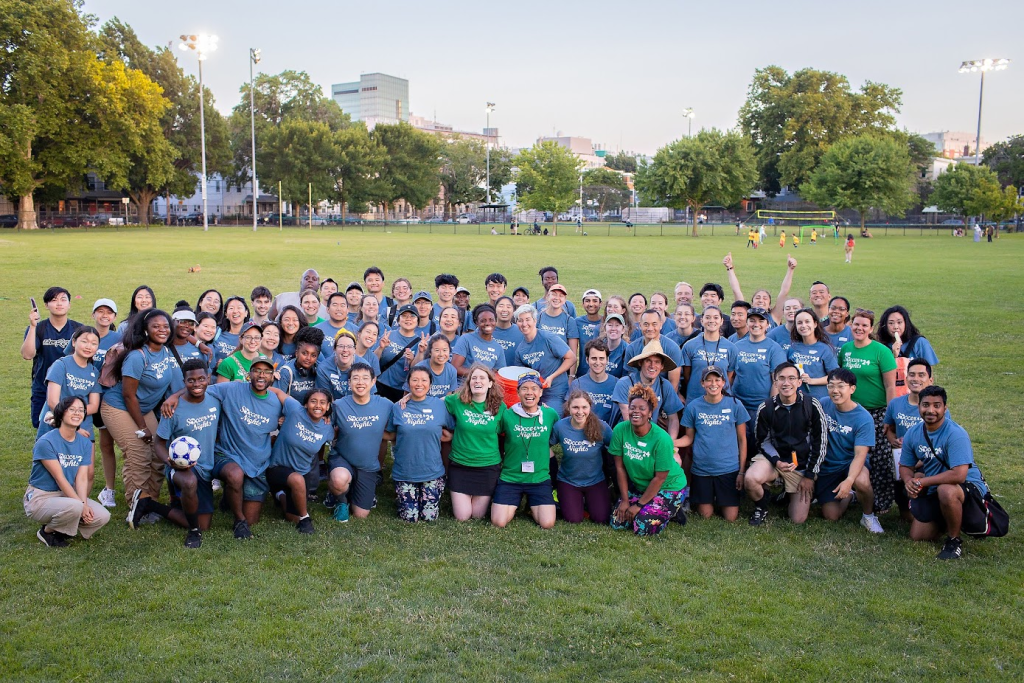
A centered approach to playing soccer would be inviting anyone who wants to play to gather at a local park on Saturday afternoon at three o’clock. In the diagram, those who show up are represented by the people whose arrows are heading toward the defined center, which is soccer. Those who do not show up to play are represented by the people whose arrows are turned away from the center. Some of those who show up may not be very good, but their lack of ability will not exclude them—their wanting to play shows their trajectory is toward the center.

I said to the students, “Suppose one of the players picks up the ball and starts running with it. What will the other players do?” A student responded, “They will say, this is not rugby, you can’t use your hands.” I asked, “What if the person does it again, and after further instruction does it a third time?” A student replied, “They will tell them they can’t play if they do not follow the rules.” I added, “Yes, because if they do not all follow the rules they will no longer be playing soccer. They will say, ‘we are playing soccer, you can come back whenever you are ready to play by the rules.’” 

Photo by Greta Schölderle Möller on Unsplash

Similarly, a centered church must lovingly confront, and at times exclude, those whose beliefs or behavior hinder the community from living out the way of Jesus (Gal. 6:1; I Cor. 5:12). By discerning trajectory, a centered church has more space than a bounded church to walk with people in messy situations, but it does not water down standards.

As students more fully understood, they become curious about application; they asked, “What is the centered approach to dealing with ______?” (many things filled that blank, e.g., disagreement with the church’s doctrinal statement, a couple living together, and poor attendance at worship team rehearsals). They asked, “What do you do about membership in a centered church?” or “Don’t some things, like recovery ministry, have to be bounded?” I had no resource to recommend to them. Eventually I decided to write the resource I wished existed. 

Before writing the book, I interviewed numerous church leaders practicing a centered approach. Their stories and insights fill the book. I invite you to read Centered-Set Church: Discipleship and Community Without Judgmentalism and join others in applying a centered approach to all aspects of ministry. 

Unity with Other Churches: A Centered Approach

An individual church practicing the centered approach must define its center. In part that means differentiating between things of primary importance and secondary things about which there can be disagreement. Churches that have Jesus as their center will define their centers differently. For instance, they will have different practices of baptism. Rather than focusing on differences, as a bounded approach might pull us to do, a centered approach fosters unity across churches by focusing on what we have in common. That unity will grow as we recognize, that in relation to that common center, we are all heading the same direction.

This is not, however, just about diagrams and using different language like “trajectory.” Fundamental to a centered approach is relationship with the center. The shift in my attitude toward others, in my church and in other churches, flows from Jesus. Resting in the security of Jesus’ loving embrace, I feel less need to gain security and status by putting others down. A centered approach facilitates that shift, but in the end it is the work of the Holy Spirit. 

Rather than being known as places of finger-pointing judgmentalism, my prayer is that we may become known for how we lovingly walk with people, toward Jesus, in their struggles and pain.


Diagrams taken from Centered-Set Church by Mark D. Baker. Copyright (c) 2021 by Mark D. Baker. Used by permission of InterVarsity Press, P.O. Box 1400, Downers Grove, IL 60515, USA. www.ivpress.com

Bio: Mark D. Baker is Professor Emeritus of Mission and Theology, Fresno Pacific Biblical Seminary. He now lives in Portland, Maine. He previously was a missionary in Honduras for ten years and a campus minister with InterVarsity Christian Fellowship at Syracuse University for three years. He has written a number of books in English and Spanish, including, Freedom From Religiosity and Judgmentalism: Studies in Paul’s Letter to the Galatians, and Ministering in Honor-Shame Cultures: Biblical Foundations and Practical Essentials.

Written by uniteboston · Categorized: Blog · Tagged: community, jesus, uniteboston, unity, university

Oct 27 2025

New Book Release! For the Love of Women

At UniteBoston, we are committed to building bridges across divides and strengthening the Church’s witness by reckoning with the deeper causes of division. This week, we’re excited to highlight a new resource that speaks to this mission: For the Love of Women: Uprooting and Healing Misogyny in America — a brand-new book released this week by local author and longtime Boston ministry leader, Dorothy Greco.

Dorothy and her husband, Christopher, have faithfully served the church in Boston for decades. In her latest work, Dorothy explores how misogyny continues to show up in subtle and harmful ways across everyday life — from healthcare and the workplace to media, government, relationships, and even within the Church itself.

Below, you’ll find a snapshot of Dorothy’s heart for this work and her invitation for all of us to recognize these patterns and pursue healing, equity, and justice — so that the Church can more faithfully follow Jesus and embody beloved community.

P.S. If you’re looking to re-imagine and re-form gender relations that move toward forgiveness, healing and the restoration of relationships, consider attending the upcoming Gender Equity & Reconciliation International training taking place in the Boston area.


Dorothy, can you share more about yourself and what led you to writing this book?

I’m in my mid sixties, a wife and a mother of three grown sons. I’ve spent the past forty years working as a photographer, writer, and serving in various capacities in church settings. At core, I’m a journalist with a pastoral heart. I’ve written two other books, Making Marriage Beautiful, and Marriage in the Middle, with the most recent focuses on misogyny. 

The inspiration for writing For the Love of Women emerged out of personal experiences, being proximate to ongoing sexual abuse in church settings, and the current political moment where women and children are routinely being mistreated. As I read and listen to women, so many are choosing to leave the church in part because some vocal church leaders are using their positions of authority to control and demean women. This breaks my heart and I think God wants more for his church and our culture.

How would you define misogyny?

It’s super important how we define this term. Though the literal definition is “the hatred of women,” that’s not the definitive or even the most helpful definition because many people who engage in misogynistic behaviors or hold misogynistic beliefs don’t hate women. Linguist Ben Zimmer notes that misogyny “has more to do with ingrained prejudices against women than a pathological hatred of them.”

Misogyny is a persistent, insidious belief that men’s ideas, wants, needs, and experiences are more important than women’s and that legal, religious, and social systems, as well as intimate relationships, should uphold this principle. This belief system subsequently influences the laws, policies, practices, and ethos of a given culture.

As I write in the first chapter of the book, “if we define misogyny too narrowly, we may be tempted to disregard or deny it. Misogyny encompasses more than specific, tangible acts committed by individuals who admittedly despise women. If we interpret violence or prejudice against women as random and label the Andrew Tates of the world as anomalies, we will fail to see the patterns. If we constrain the definition to include only violent, hateful acts, some men will distance themselves from the conversation and from having any responsibility to change it. We must understand the scope of the issue and expand the definition to fully encompass it.” 

What’s the thesis of the book? 

For the Love of Women examines six spaces in culture where misogyny has influenced laws, policies, structures, expectations, and behaviors: healthcare, the workplace, the government, entertainment and media, sexual relationships, and the church. The final two chapters explore how women and men can heal from the effects of misogyny and partner together to diminish it.

Because it’s easy to dismiss misogyny as a problem “over there,” I’ve focused on North America, primarily the United States, though the examples transcend geographic boundaries.

I wrote this book primarily for women who’ve had first-person experiences of misogyny. Because misogyny harms, shames, and tries to silence us, I wanted to give voice to and validate our experiences. But this offering isn’t only for women. Despite women’s courage, resilience, and strength, we won’t succeed in eradicating misogyny without men’s partnership, which is why I long for men to read this book with curiosity and humility.

Why does the Church need to address this topic?

I’ve been reading and studying Scripture for more than forty-four years. There’s still much I don’t understand, but I do think it’s clear that God loves women. Scripture tells so many stories about Jesus overturning prevailing cultural norms to care for and love women well. I think of the woman caught in adultery whom Jesus spared a certain death by helping the men to see their hypocrisy. Or when the woman who had been suffering from chronic health issues reached for him in the crowd, he blessed her faith and healed her. Further, as we read about the early church, women were released and blessed to lead alongside men in many different capacities, from deacons (Pheobe), to teachers (Priscilla), and patrons (Lydia). 

It didn’t take long for the church to revert back to pre-Pentecost ways. Since Constantine’s rule and decision to make Christianity the state church, women have been excluded from key leadership roles and have been vulnerable to abuse within hierarchical church structures. The church should be the safest place for women and the best place for them to flourish. Tragically, that’s not consistently been true. I think it’s long past time that we addressed these wrongs. 

How can this understanding benefit both individuals and the Church as a whole?

According to Jesus, the most important commandment is to love the Lord with all of who we are and then to love our neighbor as ourselves. Therefore, we need to be loving women as defined by 1 Corinthians 13. This is a radical mandate and one that requires us to regularly confess our sin, repent, and work to repair and reconcile. If the church could consistently love like this, Sunday services would be packed. 

Furthermore, men need to realize that protecting, advocating for, and supporting women is not simply a gospel mandate: their lives will be significantly better when they prioritize mutual flourishing. 

How can we interrupt and heal from misogyny?

The final two chapters of the book focus on what healing and repair from misogyny might look like. Everyone’s journey will be unique, but there are common practices that need to be in place. This includes men confessing any of the ways that they have contributed to misogyny, facing and healing from the trauma misogyny causes, grieving and lamenting in community, and ultimately, forgiveness. In spaces where there has been systemic abuse or injustice, we must not rush the survivors to forgive. It must be on their timetable. 

The goal is not simply to interrupt misogyny, but to stop it. This is no small thing, and women cannot do this alone. Men have to be willing to use their power and authority to benefit everyone, not simply themselves. This requires them to interrogate their stories, face any fears connected to losing power, and learn how to trust others. One practical way to frame male engagement is for men to become allies, advocates, and interrupters. Chapter nine has lots of practical ideas connected to this.

It will require all of us to image what it could look like to end misogyny in relationships, the workplace, the government, and the church. God has blessed each one of us with imaginations and given us access to the Holy Spirit. That’s a lot of potential. Let’s put it to good use.   


P.S. At UniteBoston, we respect the variety of convictions on the role of women in church leadership and we encourage individuals to have honest, courageous conversations of listening, learning and story-sharing with those they may disagree with to grow in our embodiment of Christian unity. We believe Dorothy’s book is an important message today for all of us to consider how we can honor women as image bearers; we encourage everyone to pick up a copy of her powerful message for the Church and society. Byron Borger’s bookstore, Hearts and Minds, is offering 20% off. Dorothy also regularly shares thoughtful reflections on her Substack, “What’s Faith Got to Do With It”

Written by uniteboston · Categorized: Blog · Tagged: christian unity, lent, reconciliation, uniteboston, unity

Oct 26 2025

Trauma Healing: Healing Is Public Work – Centering Community in Trauma Recovery

The Problem

The City of Boston has declared child trauma a public health emergency—and for good reason. Across our city, research and lived experience alike point to an undeniable truth: trauma is eroding our families, weakening our communities, and stifling our growth. It is stealing the futures of our children, distorting identities, and creating cycles of brokenness that ripple across generations.

We are witnessing what happens when unhealed trauma goes unacknowledged—how it plays out in our schools, on our streets, in our homes, and even in our sanctuaries. For too long, the pain has been treated as a private matter, but healing must be public work. It must be done together, in community, with compassion, strategy, and spiritual grounding.

The Word reminds us in 2 Timothy 1:7, “For God has not given us a spirit of fear, but of power and of love and of a sound mind.” This promise tells us that wholeness is possible. That healing is not just for some—it is for everyone, and it is the responsibility of the entire community to walk alongside those in need of it.

Where Do We Go From Here?

Are we at a nexus moment—a point in time where the truth is clearer than ever before? Can we finally recognize trauma not just as an emergency to respond to but as a call to action?

This is our invitation to stop reacting and begin rebuilding. Instead of merely treating symptoms, we are being called to dig deeper—to the root causes, the systems, the historical harms, and the spiritual wounds that keep us from thriving. Healing is not passive. It’s active, intentional, and communal. The question isn’t just “What’s wrong?”—the question now becomes: “What are we going to do about it—together?”

Why Boston Flourish?

Boston Flourish is the sacred space where community leaders, healers, teachers, pastors, parents, and young people come together. It’s where the work meets the workers, and where those doing the labor of healing can find support, prayer, and partners in the journey.

This year, we are honored to sit with leaders who are not only experts in their fields but are deeply committed to transformation. We will learn from:

Jermaine Tulloch, Director of Academic Mentoring Initiatives for Boston Public Schools, who is building bridges of mentorship across our schools and investing directly in the lives of students.

Rochelle Jones, Director of Education at Victory Generation, who is championing youth development through culturally-rooted, faith-filled educational approaches.

Together, we will hear stories of resilience, experience different models of counseling, and reflect on how faith and strategy can walk hand in hand to bring healing to individuals and entire communities.

Boston Flourish wants to bring together those who for decades have been addressing youth violence with conversations, introspection, and action rooted in cultural and spiritual truths.

Join the Movement

Boston Flourish 2025 takes place October 30, 2025, at IBEW Local 103 in Dorchester.

Tickets are available now for $99, Student rate for $75

👉 Register today to be part of Boston’s unfolding story: a story of faith, research, and collaboration that’s shaping the future of our city.

Written by uniteboston · Categorized: Blog · Tagged: collaboration, community, home, transformation, unity

Oct 24 2025

Civic Engagement – Bridging the Gap: Why Cross-Sector Collaboration Matters More Than Ever

This week’s article, written by Jerome Garciano, team lead of the Civic Engagement conversation, highlights one of the driving forces behind Boston Flourish 2025—the call for cross-sector collaboration that bridges faith, justice, and public life.  Jerome explores how followers of Jesus can bring grace, unity, and conviction into the civic arena through movements like the AND Campaign.

As Boston prepares to launch its local chapter, this article invites us to imagine what it looks like when Christians engage politics not through partisanship, but through the Gospel—seeking the common good so that our city may truly flourish.


I may have been one of the few evangelicals taking part in my local town’s No Kings Demonstrations last weekend, but I was somewhat surprised to see protest signs appealing to “religious” values.  These signs highlighted God’s commands and decrees to love the foreigner because we all were foreigners, and reminded us to ask ‘What Would Jesus Do?’ for our transgender neighbor? One sign especially resonated with me stating, “IT’S SO BAD EVEN THE INTROVERTS ARE HERE!” We need followers of Jesus to speak grace and unity into this moment of division and hatred and set forth a hope and vision for the common good grounded in the Gospel and God’s Word, and that’s why I think the AND Campaign is so important at this time in our history. 

As described in Compassion (&) Conviction: The AND Campaign’s Guide to Faithful Civic Engagement, the AND Campaign is a Christian civic organization that asserts the compassion and conviction of the gospel of Jesus Christ into the public square. It believes that Christians are called to promote social justice and moral order (rather than one or the other) in the sociopolitical arena, and to transcend both partisanship and political ideology. 

The AND Campaign has four primary objectives:

  1. Education – Raise civic literacy among Christians and help believers apply biblical values to the most pressing issues of the day.
  2. Representation – Represent and articulate a clear and credible biblical worldview that Christians can identify with in the public square.
  3. Coalition Building & Reconciliation – Organizing Christians to speak with one voice in the public square, and bridging racial and sociopolitical divides in the church.
  4. Advocacy – Promoting values and policies among policy makers and political decision makers that align with the biblical worldview.

Join us next week at the Boston Flourish Conference as we hear from AND Campaign founder and author Justin Giboney and meet with others who are passionate about seeing our City flourish. We will also mark this moment as the launch of the Boston Chapter of The AND Campaign. We can’t wait to see you there!

Join the Movement

Boston Flourish 2025 takes place October 30, 2025, at IBEW Local 103 in Dorchester.

Tickets are available now for $99, Student rate for $75

👉 Register today to be part of Boston’s unfolding story — a story of faith, research, and collaboration that’s shaping the future of our city.

Because when it comes to creating a Boston where everyone belongs, thrives, and flourishes — it starts with us.

P.S. If you’d like to learn more about the AND Campaign, check out the (&) Civic Revival 10 Disciplines  and the Civic Engagement Playbook

Written by uniteboston · Categorized: Blog · Tagged: collaboration, jesus, jesus christ, reconciliation, unity

Oct 10 2025

Deconstructing Anxiety: What Faith Means to a Generation Raised on Crisis

By the Boston Flourish NextGen Team

This week, we feature another article introducing one of the key conversations shaping Boston Flourish 2025—the Next Gen focus on faith and formation among young adults. Deconstructing Anxiety: What Faith Means to a Generation Raised on Crisis explores how Boston’s emerging generation is navigating uncertainty, rediscovering faith, and inviting the Church to reimagine discipleship for an anxious age. From the challenge of “generational precarity” to the hope of a quiet revival, the Next Gen Team shares how belief is taking new shape in our city and what it means for the future of the Church.


Across Boston and beyond, a generation is coming of age in the aftermath of disruption. They’ve watched recessions reshape opportunity, pandemics redefine community, and politics fracture belonging. They’ve inherited a world where the ground seems to shift faster than they can plant their feet.

Sociologists have named them “The Anxious Generation.” This describes young people growing up in an era marked by constant crisis—economic instability, social isolation, digital overload, and cultural upheaval—that has left many feeling uncertain, overwhelmed, and searching for solid ground. Yet in the language of faith, we might also call them the hopeful generation—because even in their fear and anxiety, they are reaching for something real.

They are growing up in what The Boston Flourish NextGen Team is describing as generational precarity— not as catchy, we know. But what we mean is there is a pervasive sense of instability that shapes how young people think about the future: where they’ll live, what they’ll do, and whether they belong. But juxtaposed to this precarity, something powerful is stirring: a revival marked not by noise or spectacle, but by authenticity—a quiet turning of hearts back to God in a search for meaning, belonging, and peace. 

A Generation Formed by Fear, Searching for Faith

According to recent Barna research, church attendance among Gen Z and young adults is actually on the rise—with younger believers now participating more consistently than older generations. Despite widespread narratives of decline, this data reveals a generation not abandoning faith but reimagining it—seeking spaces where authenticity, belonging, and truth can coexist.

Across Boston, we see this reality reflected in real time. Young adults are returning to church communities and faith conversations not out of obligation, but out of hunger—for meaning that speaks to their lived experience and for a faith that holds up under pressure.

To me, generational precarity means that many young people are trying to build stable lives in a world that feels uncertain,” said Taylor Perry of Kingdom Builders Church. “It matters because it affects how we dream, make decisions, and trust that our efforts will lead to something lasting.

Others, like Elise Vernely, see how this instability touches deeper questions of identity and belonging:

Generational precarity to me means an uncertainty of identity, purpose, and belonging. There are so many messages about who you should be based on your race, age, or background—and that isn’t helpful. 1 Corinthians 12 teaches me that everyone is unique, everyone is needed, everyone is valued, and when we come together, we thrive. That’s the message young people need to hear today.

These reflections capture the paradox of this moment: fear and faith are shaping each other in real time. The same instability that once pushed young people away from church is now drawing them toward an authentic encounter with God—one not built on performance or certainty, but on presence. Beneath the anxiety, there is a growing hunger for belonging, purpose, and a faith big enough to hold their questions.

Listening to the Voices That Matter

That conviction has driven our journey as the NextGen Team —pastors, mentors, nonprofit leaders, and young adults working together under the umbrella of Boston Flourish 2025. Over the past several months, we’ve been listening closely to those who live and lead in this tension.

Several members of our team—Cady Malkemes, Amaris Hernandez Diaz, Taylor Perry, and Joe Rivers—represent the very generation we’re seeking to serve. Their honesty, questions, and conviction have grounded our work in lived experience rather than distant observation. They remind us that this generation’s story cannot be told about them—it must be told with them.

Alongside them, leaders like Jason Adams and Pastor Reggie Smalls bring years of experience serving students and young adults across Boston. Jason’s work has spanned campus ministry at UMASS Lowell, mentorship at the International Fellowship House in Back Bay, and youth education programs for the Department of Education in East Boston. Reggie’s leadership through the DeVos Urban Leadership Initiative continues to equip young people for faith-based civic and community impact. Together, their work reflects the heartbeat of this initiative: forming young adults who are spiritually grounded, socially aware, and ready to lead.

We’ve also solicited insights from current campus ministry leaders across CRU, InterVarsity, and Chi Alpha, who affirm that while this generation’s struggles are real, there is also a growing hunger for belonging, purpose, and truth. Their experiences echo recent findings from Harvard’s Human Flourishing Program, whose research on generational precarity confirms what many of us see firsthand—that young adults are searching for anchors of meaning amid a culture of instability. Representatives from the program will join our Boston Flourish conversation to help shape a faithful response.

In that spirit, Elise Vernely offered a powerful theological reflection on this moment, drawing from 1 Corinthians 12:

“Generational precarity to me means an uncertainty of identity, purpose, and belonging. I thought of the scripture that says, ‘If the foot should say, “Because I am not a hand, I am not of the body,” is it therefore not of the body?’ There are so many messages about who you should be based on your race, age, or background—and that isn’t helpful. No one is a monolith. 1 Corinthians 12 teaches me that everyone is unique, everyone is needed, everyone is valued, and when we come together, we thrive. That’s the message young people need to hear today.”

She continued,

“I am excited to be part of this year’s NextGen conversation because I see this as an opportunity to really make meaningful change for this generation and those to come. I see this as a divine opportunity to share my talents, gifts, and knowledge in a way that serves our youth and even breaks cycles.”

For Cady Malkemes of Neighborhood Church Dorchester, the heart of this work is deeply missional:

My excitement to be part of the NextGen Conversation is rooted in Matthew 28:19. As I reflect on the Great Commission, I am blessed to be part of not just a conversation but a team that is working toward readying and engaging the present generation of disciples to further disciple the Church.

Through these conversations, our team has found that this generation isn’t faithless—it’s faithful differently. They want discipleship that’s lived out loud, not locked in a classroom; mentorship that’s mutual, not one-directional; and faith that’s curious enough to engage the world, not retreat from it.

Our Emerging Response: From Events to Ecosystem

In response, we’re beginning to reimagine what engagement could look like for a generation that learns through story, dialogue, and experience. The NextGen team is exploring a rhythm of quarterly citywide gatherings—spaces designed to bridge college and non-college young adults, spiritual and civic life, and faith with everyday formation.

Rather than relying on traditional programming, we’re envisioning creative discipleship laboratories—think of the energy of a TED Talk, the small group vibe and relational depth of an Alpha Course, and the authenticity of a live podcast conversation. Each gathering would pair short, idea-driven talks with honest dialogue, worship, discussion and community connection. The hope is not just to inform minds but to ignite imagination—giving young adults the language, faith, and community to make sense of their world through the lens of Christ.

Still, we know that lasting transformation happens in ongoing relationships, not in one-time gatherings. That’s why we’re hoping to partner with campus ministries like CRU, InterVarsity, and Chi Alpha, and community-based ministries such as The Boston Project’s Young Adult Ministry (led by leaders like Cady Malkemes). Together, these ministries could offer discipleship pathways and small-group environments where participants continue growing after each gathering—spaces where conversation turns into formation.

If realized, this rhythm could begin to form a citywide ecosystem—a collaborative network that cultivates connection, community, and courage throughout the year. It’s not about hosting more events; it’s about testing ways to build trust and belonging among young adults who are rediscovering faith in an anxious age.

As Rev. Devlin Scott, Managing Director of UniteBoston and convener of the team, shared:

We don’t just want to host an event; we want to cultivate an ecosystem where the next generation knows they’re seen, valued, and sent.

This idea seems to reflect what many across Boston are sensing: that a quiet revival is stirring—not defined by crowds, but by curiosity; not by production, but by participation. It’s faith that speaks the language of this moment while helping a generation rediscover what’s timeless.

Faith Beyond the Fear

The Next Gen team will bring this vision to the Boston Flourish Conference on October 30, joining hundreds of civic, business, and faith leaders to imagine a city where everyone can flourish. Together, we’ll name the problem of generational precarity—and propose a pathway of hope rooted in collaboration, discipleship, and love that casts out fear.

Because if this is indeed the anxious generation, then it is also the one through whom God may be revealing a new kind of faith—honest, embodied, and unafraid to question.

Raised in the shadow of disruption, this generation is teaching the Church something profound: faith isn’t the absence of fear—it’s what we build together in spite of it.

Because maybe the real story of our time isn’t the crisis that shaped a generation—it’s the courage and revival that’s shaping what comes next.

Written by uniteboston · Categorized: Blog · Tagged: lent, peace, transformation, uniteboston, unity

  • « Previous Page
  • 1
  • 2
  • 3
  • 4
  • 5
  • …
  • 70
  • Next Page »

Give to Further Christian Unity

DONATE!

  • Email
  • Facebook
  • Instagram
  • YouTube

Copyright © 2026 · UniteBoston · Built on WordPress