UniteBoston

Bridging Divides Across Christians for the Flourishing of the City

  • Home
  • Events
    • Submit Event
  • Join In
    • Beloved Community Lab
    • Migrant Care and Solidarity
    • The Church and Civic Engagement
    • The ATTIC
    • Kingdom Conversations
    • Worship & Pray
    • Boston Flourish
  • About
    • UB Board, Staff & Volunteers
    • Cohorts
    • Missional Letter
    • Annual Reports
    • History
    • Christian Unity
  • Forums
  • Blog
  • Give
  • Contact
  • Search

May 15 2026

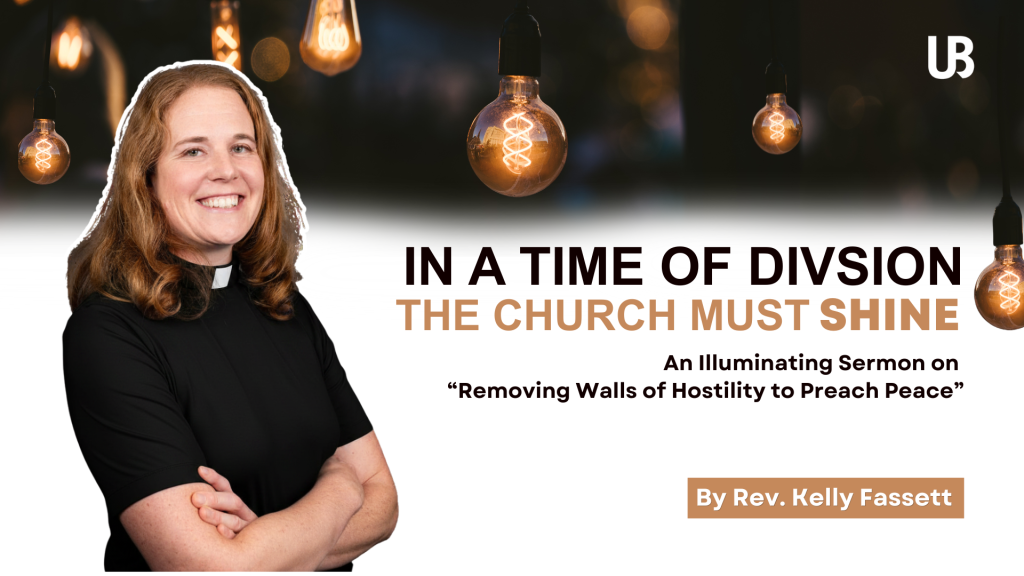
In a Time of Division, the Church Must Shine

Are Christians simply mimicking the divisions of our culture, or are we offering a counter-cultural witness?

In this week’s UB Newsletter, we are featuring an inspiring sermon from UB’s Executive Director Rev. Kelly Fassett on Ephesians 2:14-22. Originally delivered at the 2026 American Baptist Churches of Massachusetts (TABCOM) Annual Gathering, Rev. Kelly Fassett highlights how we can represent the gospel by moving past our internal divisions to become true agents of the hope and peace of Christ.

We invite you to read the full reflection below and listen to the complete sermon on Youtube, “Removing Walls of Hostility to Preach Peace.”

P.S. You can explore more photos and key talks from the 2026 TABCOM Annual Gathering here.

P.P.S. Don’t forget to mark your calendars—we would love to see you at our “Illuminate” fundraising celebration and community gathering on May 29!


In a Time of Division, the Church Must Shine: Tearing Down the Walls of Hostility

By Rev. Kelly Fassett, Executive Director of UniteBoston

We live in an age of fractures. Look around, and you can’t avoid seeing how our world is siloed by political affiliation, ideologies, and digital algorithms. The world is experts at erecting walls—walls of suspicion, walls of fear, walls of indifference—which only contribute to our growing polarization and underlying postures of hostility.

But what about the Church? For those of us who call Jesus “Lord,” the time has come to ask: Are we mimicking the divisions of our culture, or are we offering a radical, counter-cultural witness?

This is the core question that drives the mission of UniteBoston. My own journey as a bridge-builder began years ago. I arrived in Boston in 2008 as a young woman with dreams of joining an elite rowing team on the Charles River. One morning, however, I woke up with a complete lack of desire to row. I asked God, “Why am I here in Boston if I’m not here to row?” And I sensed God’s voice more clearly than anything else I had known before: “Kelly, you are here to unite My bride.”

Woah! What does that mean? This moment led me into a beautiful, messy, and challenging experiment that became UniteBoston. I became passionate about not only orthodoxy but orthopraxy – right belief and right practice – that in our divided world, us Christians need to not just “talk the talk” but “walk the walk” and put our commitment to neighbor-love into practice in the places where we live, work and play.

The urgency I feel today is captured powerfully in one of my favorite passages of scripture: Ephesians chapter 2. In our current, deeply polarized context, this letter feels as though it was written for our exact moment. In my preparation for this sermon, one verse, in particular, continued to stand out:

“Jesus came and preached peace to you who were far away and peace to those who were near.” (Ephesians 2:17)

This simple statement is a profound theological challenge. Are we, the modern-day “household of God,” preaching that same peace to those near and far from the Church today?

The Scandal of Our Disunity

We must take a hard, honest look in the mirror. When we analyze the witness of the Church today, the results can be sobering. The research confirms what many of us feel on a daily basis.

In the Great DeChurching, Jim Davis and Michael Graham tracked 40 million Americans who stopped attending church in the last 25 years. They found that hyper-politicization, inability to listen, and an emphasis on culture wars are among the top reasons people leave. Additionally, Barna research has shown that 87% of people view Christians as “judgmental,” and 85% see us as “hypocritical.” It is clear that there is a widening “witness gap,” where the grace of the gospel is drowned out by internal hostility, division, and fighting.

The primary criticism isn’t about our doctrine; it’s about our posture. It isn’t just about what we believe, but how we believe it. The world is watching, and what they see is often a “hostility” that looks identical to the divisions outside the Church.

I say this as a practical theologian: we cannot just talk the talk; we must walk the walk. To become the agents of peace Christ calls us to be, we must commit to three practical and difficult steps: grieving our disunity, finding our walls, and extending a hand of fellowship.

1. Grieve the Scandal of Disunity

When we think of ecclesiastical “scandals,” we usually imagine financial theft, abuses of power, or sexual misconduct. While these are truly grievous, Scripture suggests that our divisions, hatred, and hostility are just as offensive to God and are equally effective at distorting the core message of the Gospel (Eph 4:3).

The root of this sin is a posture our UniteBoston team calls “righteous hubris.” This is the insidious, often subconscious belief that “me and my people are the ones truly following Jesus, and those people (whoever they are) need to become like me to really be Christian.”

This hubris is not new. Ephesians 2 addresses this exact dynamic between two groups of people defined by a history of animosity: Jews and Gentiles. Gentiles often despised the Jewish people for their “otherness,” while the Jewish people saw themselves as the exclusive possessors of the only path to God. They considered the Gentiles “far away” spiritually, devoid of access to God, and inherently unclean.

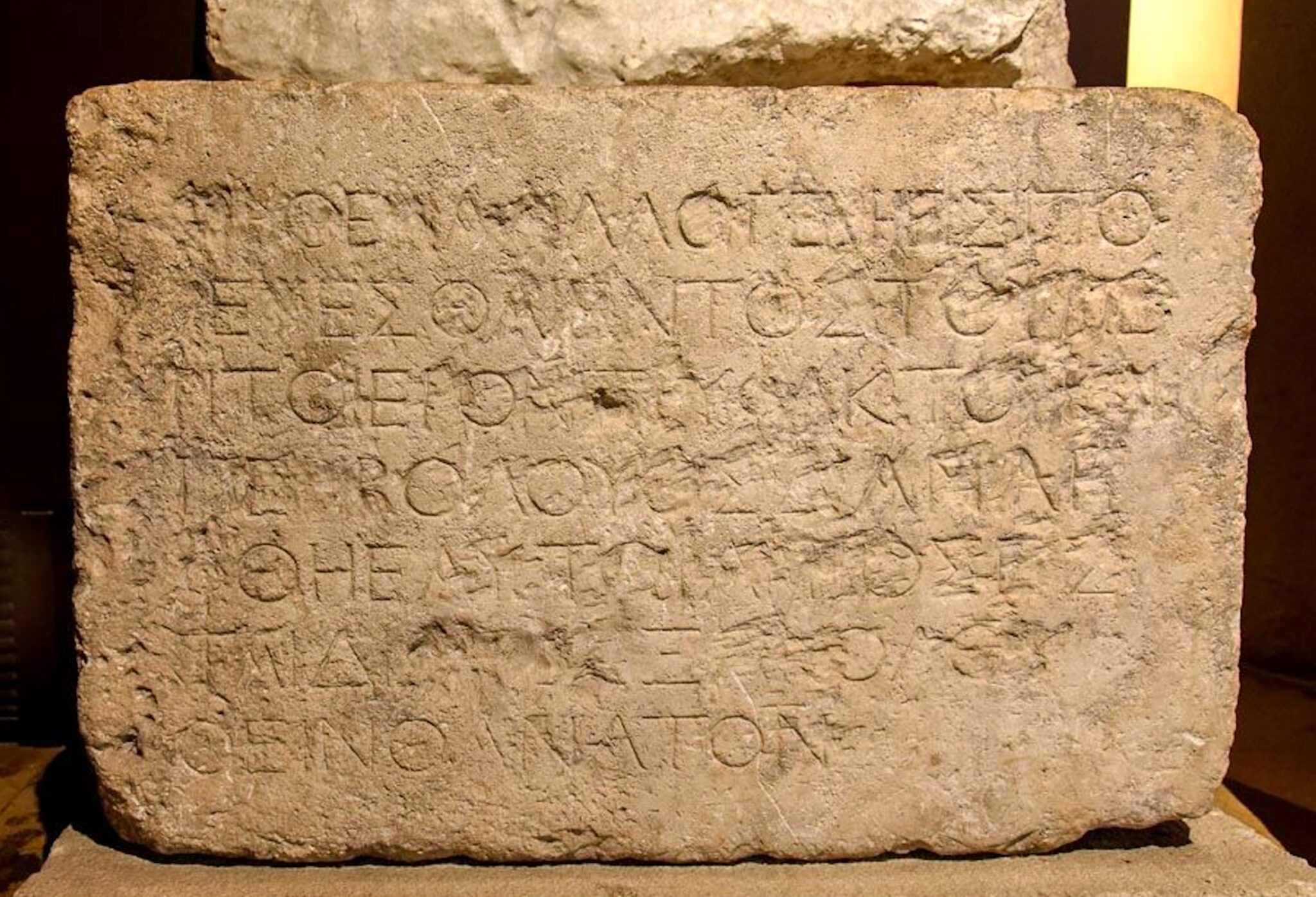
Archeologists have actually found a physical stone barrier that used to separate Gentiles from the holy parts of the temple. The wall stood five feet tall and bore a terrifying inscription: “Let no one of any other nation come within this fence around the Holy Place. Whoever is caught doing so will himself be responsible for his death.” This was a literal wall of hospitality that promised death to those who were “far away.”

Temple Warning Inscription. Copyright CBN Israel

This makes Paul’s message in Ephesians 2 truly radical. He looks at this historic, violent divide and makes an astonishing claim: because of Jesus Christ, there is an exchange, a transfer from hostility to fellowship.

  • To the Gentiles, God says, “You who were once far away are now brought near because of Christ.” (v. 13)
  • “For [Christ] himself is our peace, who has made the two groups one and has destroyed the barrier, the dividing wall of hostility, by setting aside in his flesh the law with its commands and regulations. His purpose was to create in himself one new humanity out of the two, making peace, and in one body to reconcile both of them to God through the cross, by which he put to death their hostility.” (v. 14-16)

This is ground-breaking! It means that “they” (whoever your “they” is) are actually part of our same family.

  • The hostility between Jews and Gentiles? Banished at the foot of the cross.
  • The hostility between Democrat and Republican? Eliminated by the cross.
  • The hatred between Liberal and Conservative? TORN DOWN by the cross.

When we preach peace to those who are near and far, we must remember that there is no longer a “closer to God” group and a “further from God” group defined by culture or politics. The cross is the great leveler. And why is it the leveler? Verse 12 is vital: because we were ALL enemies of God. Every single one of us was separate from Christ, excluded from citizenship, without hope, and without God. But now—only because of God’s grace—we are chosen. At the foot of the cross, we are all just God’s children in need of grace.

The Greek word Paul uses for “reconcile” in verse 16 is apokatallassō, and it implies this radical exchange—a transfer from hostility to intrinsic oneness. It’s not just a cease-fire; it is a declaration of belovedness that we must extend to all who are created in God’s image.

2. Find Your Wall of Hostility

If Jesus modeled this radical fellowship across dividing lines—purposefully choosing both Matthew the tax collector (who worked for the empire) and Simon the Zealot (who wanted to overthrow the empire) as his disciples—then we must do the same. We cannot model the kingdom of God monoculturally or monopolitically.

Yet, somehow, over the years, we always seem to lose our way. History is cluttered with the fragmentation of Christianity, from the Great Schism to the bloody slaughters of the Anabaptists. We might not be killing each other physically in Boston today, but we are too often ostracizing, publicly calling out without relationship, and acting out in destructive ways.

This issue of “righteous hubris” was made painfully clear to me last summer when I traveled to Northern Ireland to study peacebuilding. I learned about the Troubles, where hostility between Catholics and Protestants became so profound that in 30 years, 3,700 people were killed. I stood before “peace walls” that were 20 feet tall and extended for 21 miles. People told me that as they built the walls higher to “keep the peace,” others just threw larger stones and bombs over the top.

Peace Walls (Right)
Pastor Steven

But I also met a pastor named Steven, a youth worker who knew the walls had to come down. He told me, “I knew the youth had to grow up together because it’s hard to throw stones at someone you know.” He partnered with Tracy, a Protestant leader, and it took them eight years to build enough trust to start a joint youth group. But by God’s grace, transformation took place. This neighborhood that once saw 30 youths jailed annually now sees only one youth jailed every four years. Violence was replaced by community.

Pastor Steven said something that I will never forget: “We have to eliminate the word ‘themens’ from our language.” This is Irish slang for “them,” a word that conveys profound suspicion and a posture of inner hostility. He told me, “When you talk about ‘themens,’ remember you’ve got three fingers pointing back at yourself. It’s not something that happens out there, but ‘in here.’”

There Are No Walls in Heaven: What Peacemakers in Belfast Taught Me

This is our work. We must go back to the imagery of Ephesians 2 and find our own walls that are keeping some “in” and some “out.”

To “preach peace to those far away,” you must first be willing to consider the people you see as “far away.” Yet, the tricky things about walls is that they are often invisible.

You can ask yourself: Which groups do you avoid? Who feels threatened? Who makes you uncomfortable? Which particular group do you cringe at the thought of praising? Is there a people group where you feel the world would be better off if there were less of “those people” around?

I invite you to dig deeper and get curious about where this comes from. Howard Thurman once said, “Often the degree to which we oppose a thing marks the degree to which we do not understand it. Sometimes we use our opposition to an idea to cover up our own ignorance.” Some of us are carrying hurts and trauma that need the healing balm of the Holy Spirit, not the projection of our hostility onto others.

I invite you to pause and give God a moment to reveal your wall. What precious thing are you trying to protect with that wall? What “themens” are on the other side? What might be their story, their hopes and dreams?

3. Extend Your Hand of Fellowship (With Curiosity)

Once we find our wall and our “themens,” the answer is simple, ancient, and difficult: Beloved Community.

In the early Church, cities were divided into ethnic enclaves, with physical walls keeping groups separate. But in Antioch, they did something radical: they crossed those walls to worship, eat, and fellowship together. Historians believe it was this behavior—not their dogma—that made them notice they were “little Christs.”

UniteBoston is carrying out a holy experiment called the “Beloved Community Lab.” We have been in a multi-year process of listening to stories of unity and disunity in the Church, and have landed on some clear understandings and practices to help all of us live out God’s call for unity, justice, and reconciliation in the places where we live, work, and play. We currently have 16 group of incredible pastors from many backgrounds who are journeying together to do the hard, deep work of beloved community.

We are learning that this unity isn’t just about a “kumbaya” moment that papers over our differences or focuses on what we have in common. The unity we are called to runs through our divisions, not around them.

To build a strong bridge, our hearts must stay tender. We need to ‘tend to the wounds’ of our estrangement. Bridge-building can feel like finding the right tools and skillsets. Tending to wounds requires us to lean in close to someone who is hurting and ask, “What happened? What hurts? How can I help?”

By God’s grace, we are seeing the Holy Spirit shift postures of hostility into humility, hospitality, and curiosity.

  • We are seeing Black pastors challenge White siblings to stand with them in the face of the injustices they are facing in our city.
  • We are seeing Conservatives help everyone remember Scripture and stay centered on Jesus.
  • We are seeing dreams emerge of collaborations across churches that would never be possible if we stayed in our isolated silos.
  • People are saying, “I don’t get how it all works out—but I’m really starting to love and care for these kin in Christ and want their good over my own.”

This are signposts of Beloved Community. We’re not there yet, but in a season of profound polarization, our ability to gather across differences bears witness to Jesus’ prayer for oneness (Jn. 17:23), serving as a living sign of the Gospel and a powerful testimony to Christ’s reconciling work in the world.

Tending to the Wounds Through Curiosity

Our final tip for bridge-builders is this: When the going gets tough, get curious. Turn to wonder. Ask: What is going on inside of me causing this reaction? and Where is Jesus here? What is the gift I need to receive from this other person?

We are inviting all who are stirring with a desire to see this kind of unity and reconciliation to join us. We are beginning to offer training and coaching for pastors and congregations in the practices of the Beloved Community Lab.

What should Christians be known by? Scripture’s answer is simple: Love (Jn 13:35).

Love has always been the mark of the Christian church and our greatest apologetic.

May this be true of us today as we embody the radical grace of the gospel by grieving the disunity, finding our walls of ‘themens,’ and extending a hand of fellowship that turns hostility into curiosity, and preaching peace to all.

My closing blessing for you is a prayer by Fr Gerry Reynolds. Fr. Gerry led a movement called the Unity Pilgrims who traveled between Catholic and Protestant churches in Northern Ireland. He wrote this prayer for the Unity Pilgrims:

 Lord Jesus,
who on the eve of your death,
prayed that all your disciples may be one
as you in the Father and the Father in you,
make us feel intense sorrow over the infidelity of our disunity.
Give us the honesty to recognize,
and the courage to reject,
whatever indifference towards one another,
or mutual distrust,
or even enmity,
lie hidden within us. 
Enable us to meet one another in you.
And let your prayer for the unity of Christians,
be ever in our hearts and on our lips,
unity such as you desire and by the means that you will.
Make us find the way that leads to unity in you,
who are perfect charity
through being obedient to the Spirit of love and truth.
Amen. 


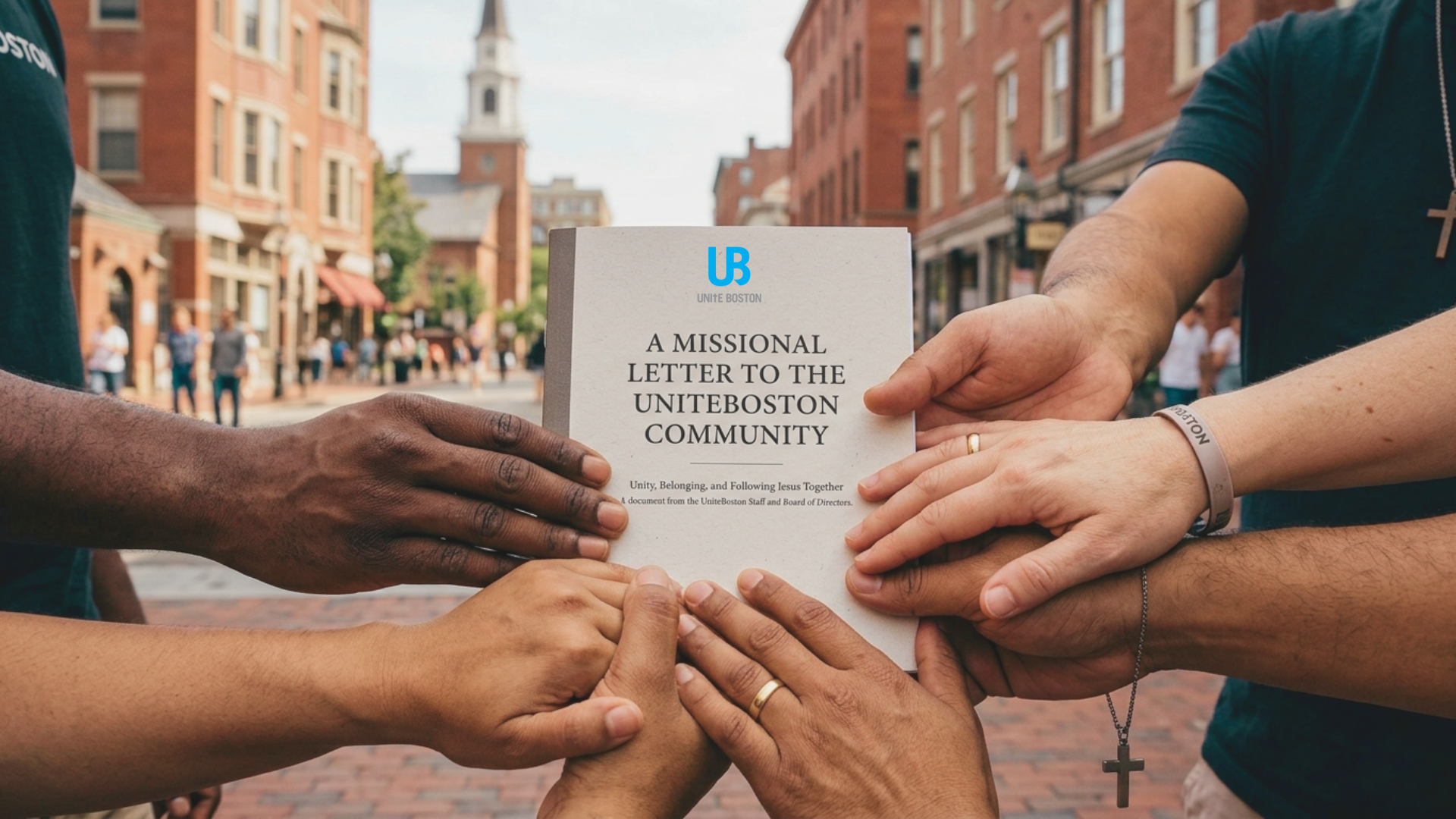
P.S. UniteBoston recently released a missional letter to clarify our calling as an organization, offer clarity about the values that hold our community together and what you can expect as you journey with us. Check it out below!

Written by uniteboston · Categorized: Blog · Tagged: lent, peace, transformation, uniteboston, unity

Feb 19 2026

Prophetic Leadership Principles

Greater Boston, this is a season for depth.
SPL1000: Prophetic Principles is the gateway course of the School of Prophetic Leadership — designed for believers who sense a call to hear clearly, discern biblically, and lead with integrity. In a time when voices are loud and clarity is rare, this course grounds you in Scripture, spiritual formation, and tested prophetic foundations.
This is not hype. This is formation.
Over this journey, you’ll explore how revelation, interpretation, and application work together. You’ll grow in discernment before declaration, character before commissioning, and structure before expansion. Whether you serve in church, marketplace, intercession, or culture, SPL1000 strengthens your spiritual depth and leadership maturity.
If you’re called to speak, lead, or build — but want to be rooted first — this is your next step.
Registration is open. Join us and build on foundations that last.

Written by Andrew Walker · Tagged: body of christ, boston, christian, christian event, healing, leaders, love, ministry, preaching, transformation

Feb 19 2026

Prophetic Leadership Principles

Greater Boston, this is a season for depth.
SPL1000: Prophetic Principles is the gateway course of the School of Prophetic Leadership — designed for believers who sense a call to hear clearly, discern biblically, and lead with integrity. In a time when voices are loud and clarity is rare, this course grounds you in Scripture, spiritual formation, and tested prophetic foundations.
This is not hype. This is formation.
Over this journey, you’ll explore how revelation, interpretation, and application work together. You’ll grow in discernment before declaration, character before commissioning, and structure before expansion. Whether you serve in church, marketplace, intercession, or culture, SPL1000 strengthens your spiritual depth and leadership maturity.
If you’re called to speak, lead, or build — but want to be rooted first — this is your next step.
Registration is open. Join us and build on foundations that last.

Written by Andrew Walker · Tagged: body of christ, boston, christian, christian event, healing, leaders, love, ministry, preaching, transformation

Jan 08 2026

Micah Service Learning Experience

Over the course of two days (Saturday night and all day Sunday) through a range of immersive experiences in Greater Boston, we will tie together the three elements of the famous passage – doing justice, loving mercy, and walking humbly with God.

Contextual Serving: Participants will respond directly to the needs of one or more of our organizational partners who serve communities struggling with homelessness and food insecurity.

Transformational Learning: Participants will engage with foundational principles of generosity and justice as described in scripture and will gain practical knowledge about justice issues in the greater Boston area and the organizations working with affected communities. 

Spiritual Equipping: Participants will be asked to process their service and learning experience in community by engaging in worship, prayer, and reflection that will help them to sustain ongoing transformation and commitment to action beyond our time together.

Written by Andrew Walker · Tagged: community, home, homelessness, transformation, unity

Dec 29 2025

UniteBoston’s Top 15 Photos of 2025

From hosting the United Gospel Experience Tour, to building and launching the Boston Immigrant Resource Dashboard, to hosting two leadership cohorts, and hiring our second full time staff person, this was an incredible year for UniteBoston! Check out our year in review for 2025 – Glory to God!


#15: Week of Prayer for Christian Unity – Clergy from many Christian traditions were invited to join for a prayer service by Archbishop Henning for the Week of Prayer for Christian Unity. Archbishop Henning shared, “I hope and pray that, in gathering together, we will all be strengthened in that same power of Gospel, in the midst of a world that is too often about violence, hatred, and taking, to give that witness of solidarity, of compassion, and faith in God.” Lutheran Bishop Nathan Pippho also shared a powerful sermon on how our belief in Jesus Christ is a witness to the world about God’s love.


#14: Partnership with Gordon College: Rev. Kelly was honored to share about UniteBoston with students in the new M.A. in Community Transformation program at Gordon College. We’re excited about the innovative ways they’re reimagining theological education—and their support for UniteBoston’s ministries as we collaborate together to seek the flourishing of the city.


#13: Maundy Thursday Prayer Service – On Maundy Thursday, hundreds of Christians from dozens of churches gathered for Churches Praying Together—a Spirit-filled night of worship, communion, and healing prayer where many lingered long after the service ended, moved by God’s presence.

This image has an empty alt attribute; its file name is 540594082_18376173439176364_4411100851462500236_n-1-1024x768.jpg

#12: “Prayers for Liberty” Walk. On Labor Day, Rev. Kelly Fassett and Rev. Devlin Scott joined 300+ people of diverse faith traditions to walk 11 miles from Lexington’s Town Green to the MLK “Embrace” monument on Boston Common with Prayers for Liberty. Together we reversed Paul Revere’s ride to publicly witness to the need to build just societies where every person is treated with dignity as beloved children of God, and to uphold the foundational commitments of our Constitution—principles of liberty, justice, and equality.


#11: UniteBoston Cohort Alumni Friendsgiving: Our UB cohort alumni gathered in November for a Friendsgiving-style reunion at Pho Que Restaurant in Dorchester — a small, pastor-owned Vietnamese restaurant with some of the best pho in the city. Around steaming bowls of soup, we reconnected with friends old and new and shared both the joys and challenges of ministry today.

P.S. Pho Quê doesn’t just serve delicious food — it is owned by a local pastor of an Assemblies of God church. Pastor Daniel has a party room in the back, which he would love to see as a space for Christians to gather in community!


#10: UB’s Sankofa Cohort – This cohort seeks to cultivate a common memory and nurture the spiritual vitality that has sustained the Black freedom movement—past and present—rooted in the liberating heart of the gospel. This spring, the cohort members are conducting living history interviews, pairing seasoned Black Christian leaders with our Sankofa team members to capture their experiences and insights for future generations. Stay tuned for a Boston Sankofa Showcase in Spring 2026—a Moth-style storytelling night featuring voices, art, and testimonies gathered throughout the year.


#9: UniteBoston BIPOC Island Retreat – In July, we hosted our four annual “Circle of Restoration” Island Retreat. This annual day of rest and restoration brought together over 30 BIPOC leaders from across the city for a time of connection, creativity, and care. From a powerful devotional to dancing, painting, massages, and more—it was a sacred space to breathe, laugh, and be renewed. 


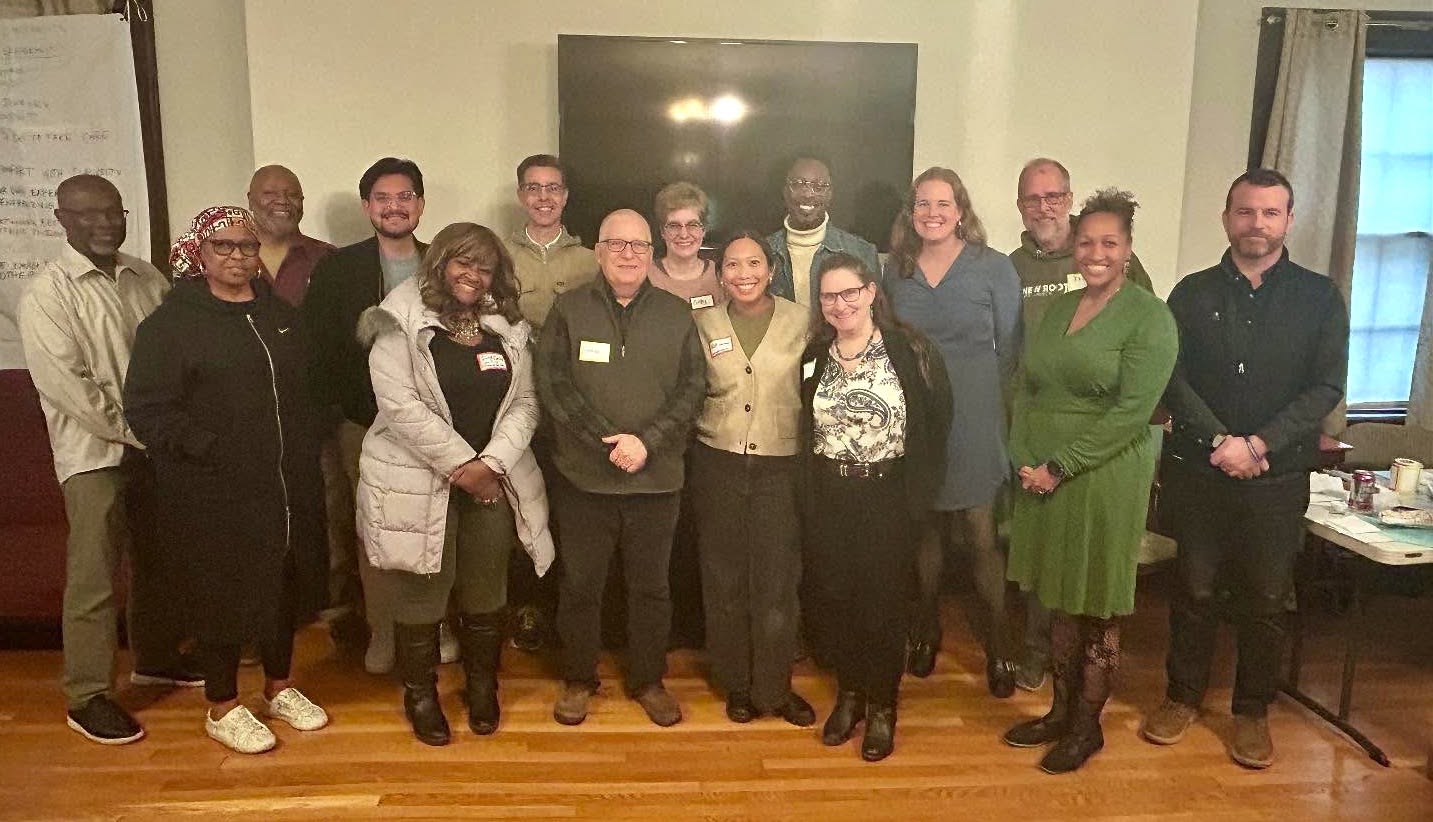
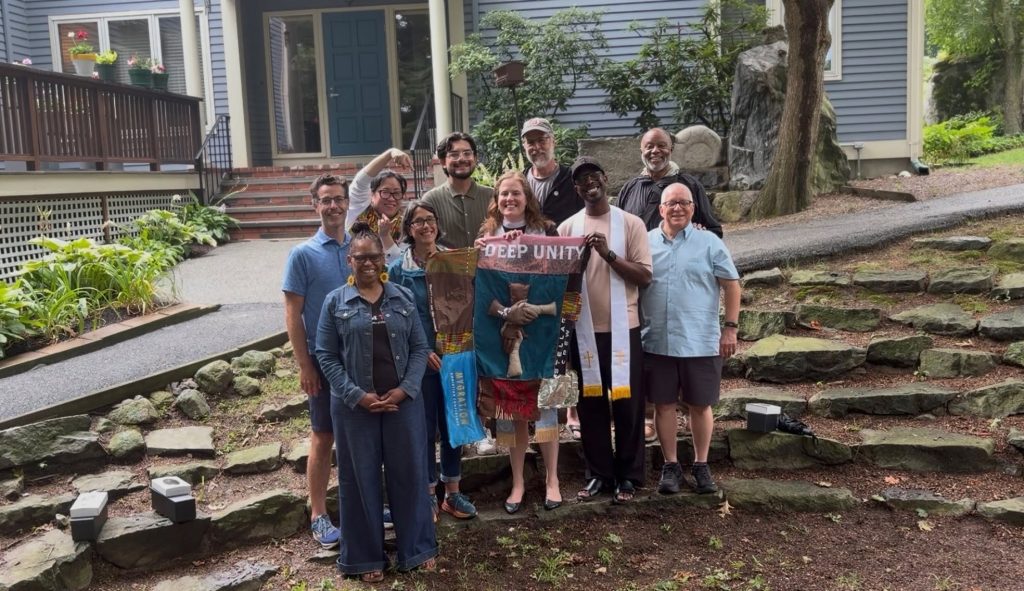
#8: Christian Unity Cohort Retreat – This group of thirteen Christian leaders gathered under the shared hope of building something that could help the Church become more whole. Month by month, conversation by conversation, they started co-creating a discipleship experience for those longing to see reconciliation in the Church and the world. Read their testimonies of how it was a journey of unity, truth, and transformation.


#7: Civic Engagement Pastors Cohort – This courageous group of local pastors committed to staying in relationship through a divisive political season. Beginning in Fall 2024 with a gathering of 80+ diverse Christian leaders, they chose to resist “us vs. them” narratives and model a Christ-centered way of civic engagement rooted in curiosity and respect. They met monthly for one year to listen and share stories with one another on race, political engagement, LGBTQIA+ inclusion, immigration, and more, seeking to explore how the way of Jesus meets this civic moment.


#6: Boston Flourish. In November, UniteBoston worked with other organizations to convene a conference where 266 leaders gathered across sectors to collaborate around essential issues facing our city. Here, Rev. Devlin leads the session on Next Generation Engagement.


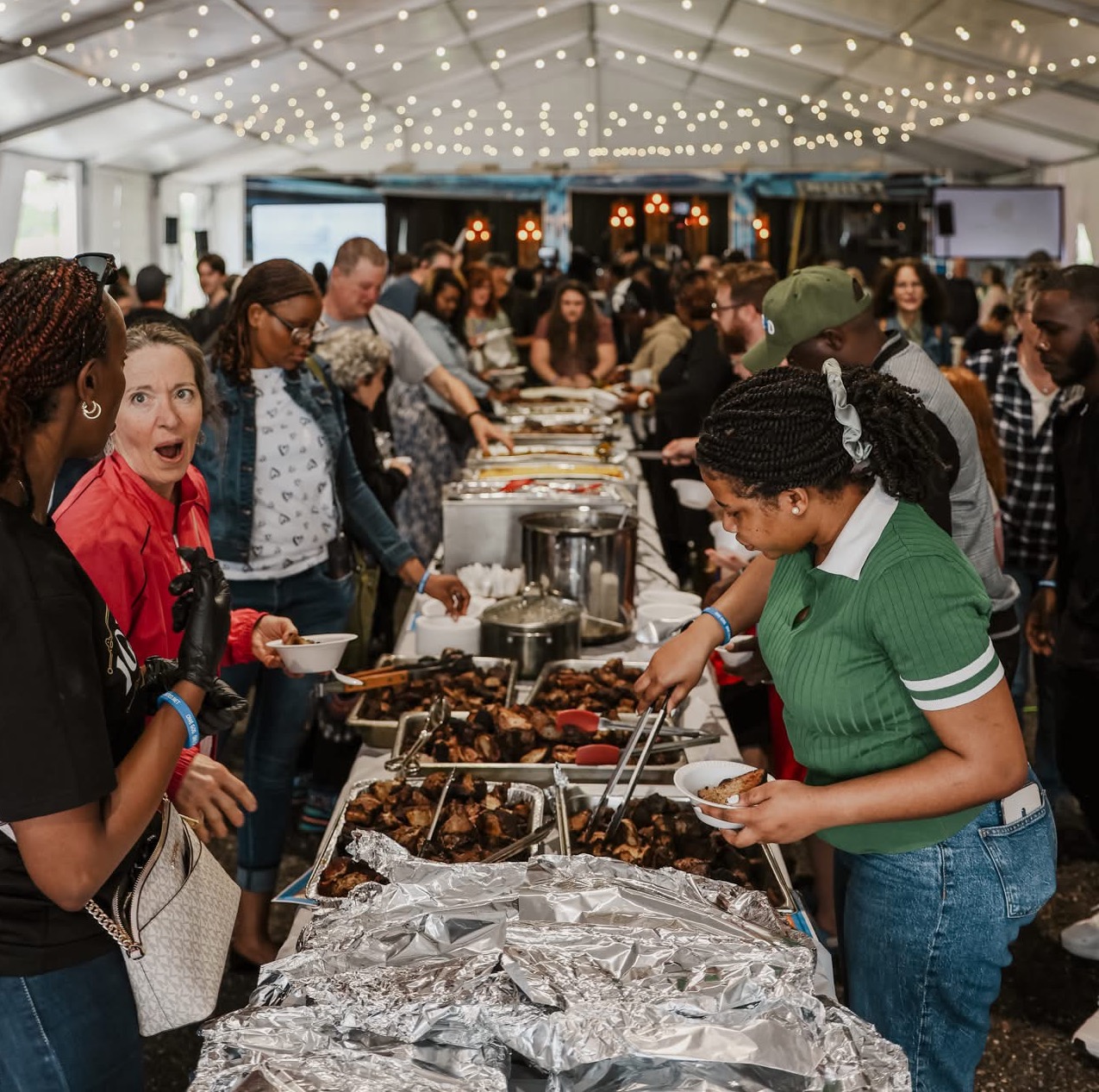
#5: “Fortify” Fundraising Party & Community Gathering – Over 100 people gathered together for an incredible evening where we enjoyed a delicious Caribbean BBQ meal, gained wisdom from a keynote talk by Rev. Michelle Sanchez, and heard a live music performance by Rev. Devlin Scott. We also met our fundraising goal, which enabled us to hire not just one but two full-time employees!


#4: Launch of the Beloved Community Lab cohort. This incredible group of pastors and leaders are a pilot cohort for our Beloved Community Lab, a new curriculum we’re working to develop to disciple leaders in holistic spiritual formation—loving God and neighbor, and living this love out in tangible ways, through belovedness, diversity, reconciliation, justice, and shalom. 🌿


#3: Hosting the United Gospel Experience Tour – 100+ college students from six campuses across the region have united this year for a United Gospel Experience Tour with four different concerts. There is something about being led in worship by 70+ young adults from diverse backgrounds, all part of a mass gospel choir that has strengthened each individual campus as well. Save the date for the next concert at February 21 in Lowell and April 18 at Morningstar Baptist in Boston!


#2 – Launching the Boston Immigrant Resource Dashboard – This year, UniteBoston catalyzed congregations and leaders to care for and accompany our new immigrant and refugee neighbors through continuing our “Sanctuary for Strangers” resource page and convening a breakout session at Boston Flourish. Additionally, Rev. Kelly and Rev. Melinda led a team from a variety of organizations to build and launch the Boston Immigrant Resource Dashboard, which provides real-time, accessible information on essential resources for immigrants, refugees, and service providers—ensuring timely and effective support. Please check it out and spread the word about this new resource!

#1: Christmas Eve Worship Service. More than 200 people gathered outside the ICE detention facility in Burlington to proclaim the Good News of Jesus’ birth at a Christmas Eve service co-hosted by the Massachusetts Council of Churches and UniteBoston—lifting up separated families and bearing witness to the light of Christ that shines even in places of deep pain, injustice, and darkness. Prayers, Scripture, and songs rose in Spanish, English, Haitian Creole, Cape Verdean Creole, and Portuguese. One especially powerful moment came as we lifted our hands toward the building and prayed for those held inside who are separated from their families this Christmas.

We were grateful to see so many people join us in worship and to see the media pick up this story: MSNow, GBH, and the Boston Globe. Follow us on Facebook/ Instagram for more highlights from this service. Detention walls and documentation status cannot divide the Body of Christ. As the diverse Church comes together, we can bear witness to the good news of Emmanuel—God with us.

It’s been incredible to see UniteBoston’s programs and impact grow in significant ways these past few years, glory to God! Thanks for joining with us – your prayers, participation, and finances have made this ministry happen! We look forward to seeing what God has in store for us in 2026!


Written by uniteboston · Categorized: Blog · Tagged: christian unity, reconciliation, transformation, uniteboston, unity

  • 1
  • 2
  • 3
  • …
  • 10
  • Next Page »


Give to Further Christian Unity

DONATE!

  • Email
  • Facebook
  • Instagram
  • YouTube

Copyright © 2026 · UniteBoston · Built on WordPress