UniteBoston

Bridging Divides Across Christians for the Flourishing of the City

  • Home
  • Events
    • Submit Event
  • Join In
    • Beloved Community Lab
    • Migrant Care and Solidarity
    • The Church and Civic Engagement
    • The ATTIC
    • Kingdom Conversations
    • Worship & Pray
    • Boston Flourish
  • About
    • UB Board, Staff & Volunteers
    • Cohorts
    • Missional Letter
    • Annual Reports
    • History
    • Christian Unity
  • Forums
  • Blog
  • Give to UniteBoston
  • Contact
  • Search

Apr 18 2018

Filled with Laughter Comedy Benefit

Bring your friends to this fun-filled evening of comedy and entertainment to help raise $25,000 for scholarships for women served by Hagar’s Sisters, who are striving to overcome their experience of domestic abuse.

The funds raised at this event will provide women with scholarships for full access to life-giving services including safety planning, legal consultation, referral to resources, prayer, and Biblically-based education and support.
Your ticket includes access to live comedy, silent & live auctions, musical entertainment, door prizes and a delicious dessert reception!

Tickets available here: https://hagarssisters.ticketbud.com/filledwithlaughter
Written by Andrew Walker · Tagged: christian unity, christiansinboston, community, faith, hope, transformation

Apr 12 2018

Ubuntu in Action: Trends in Today’s World Missions Movement

This week’s blog is written by Kelly Steinhaus, UniteBoston’s team leader. Kelly is currently a Masters of Divinity Student in Global and Community Engagement at Boston University. Gospel movement in Boston is just one small part of God’s work throughout the world – In this blog, she describes global trends that she is seeing in the world missions movement.
Declare God’s glory among the nations, his marvelous deeds among all peoples. (1 Chronicles 16:24)

While North America and Europe are seeing a decline in Christianity and church attendance, this trend is not reflected worldwide; rather, the center of Christianity has shifted to the Global South (1). Thus, to understand what is happening in the World Missions Movement, why not go to Africa and see it firsthand?

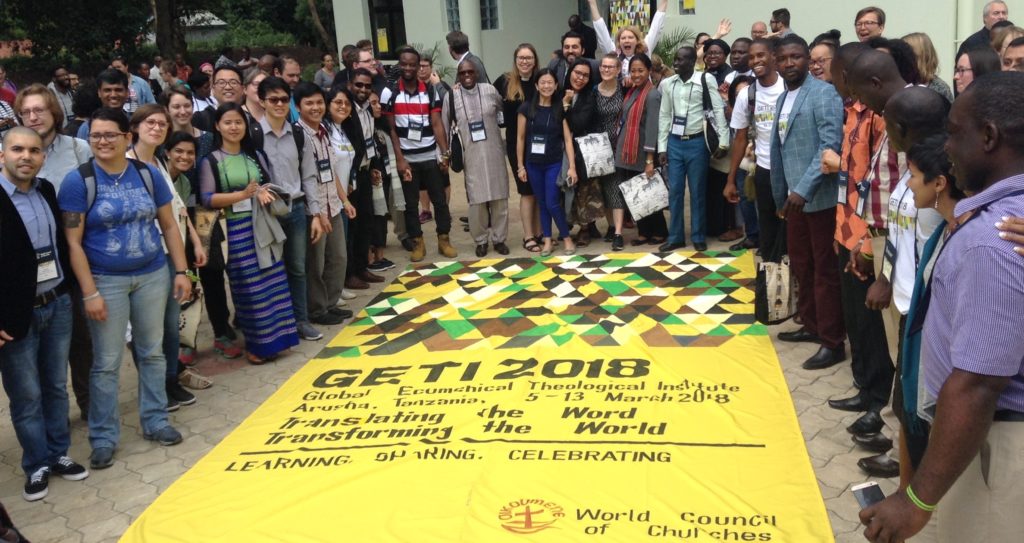
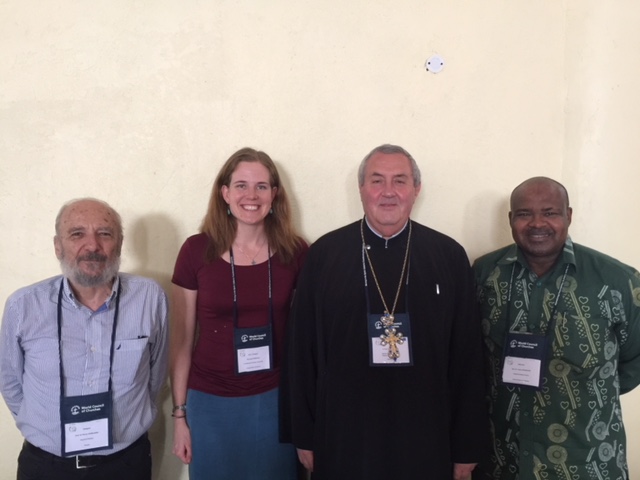
I had the privilege of attending the Global Ecumenical Theological Institute this past March, which was a short-term study exposure program with 110 students from 40 countries. My study group had young adults from Finland, Myanmar, India, Brazil, and Tanzania, and facilitators from Norway and Kenya. Our GETI program was paired with the World Council of Churches’ World Missions Conference. It was a globalized conference for a globalized Church in a globalized world: liturgy was read in multiple languages, the plenary presentations had headsets available for translation, and multiple times per day, we recited the Lord’s prayer in our own languages together at the same time, a cacophony of united prayer. The conference brought together many world Christian leaders, and I had the honor of sharing meals with prominent leaders such as Rev. Casely Essamuah from the Global Christian Forum, Dr. Rosalee Velloso Ewell from the World Evangelical Alliance, Father Ioan Sauca from the Ecumenical Institute in Bossey, and Professor John Mbiti, the man recognized as the founder of African theology.


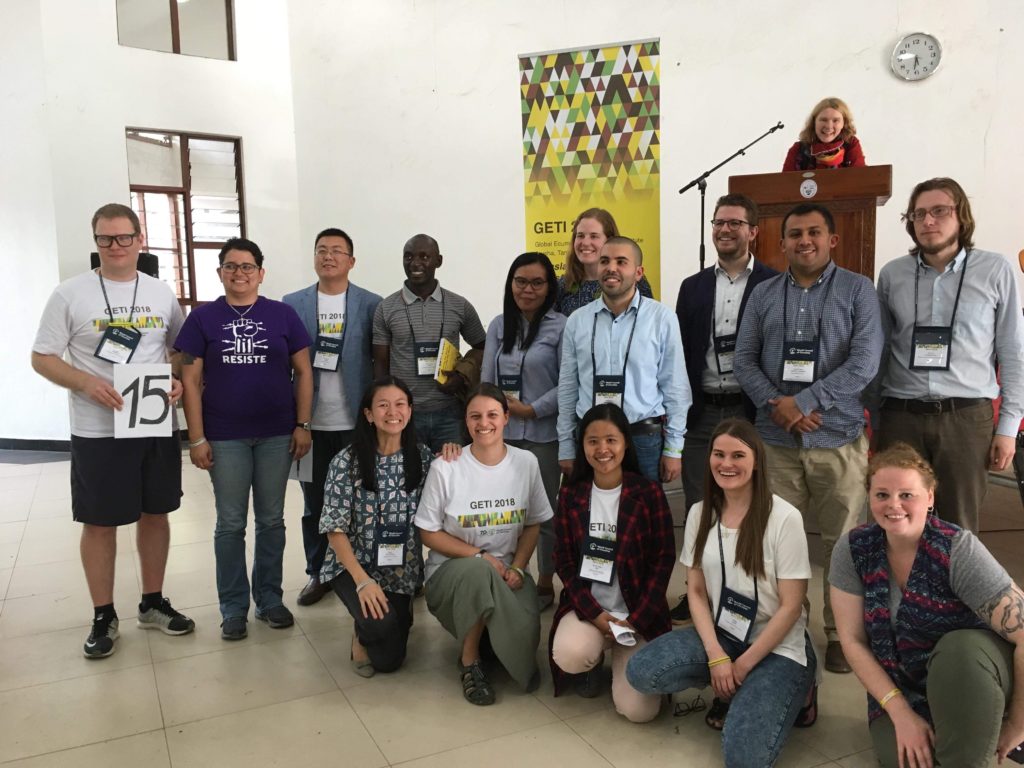
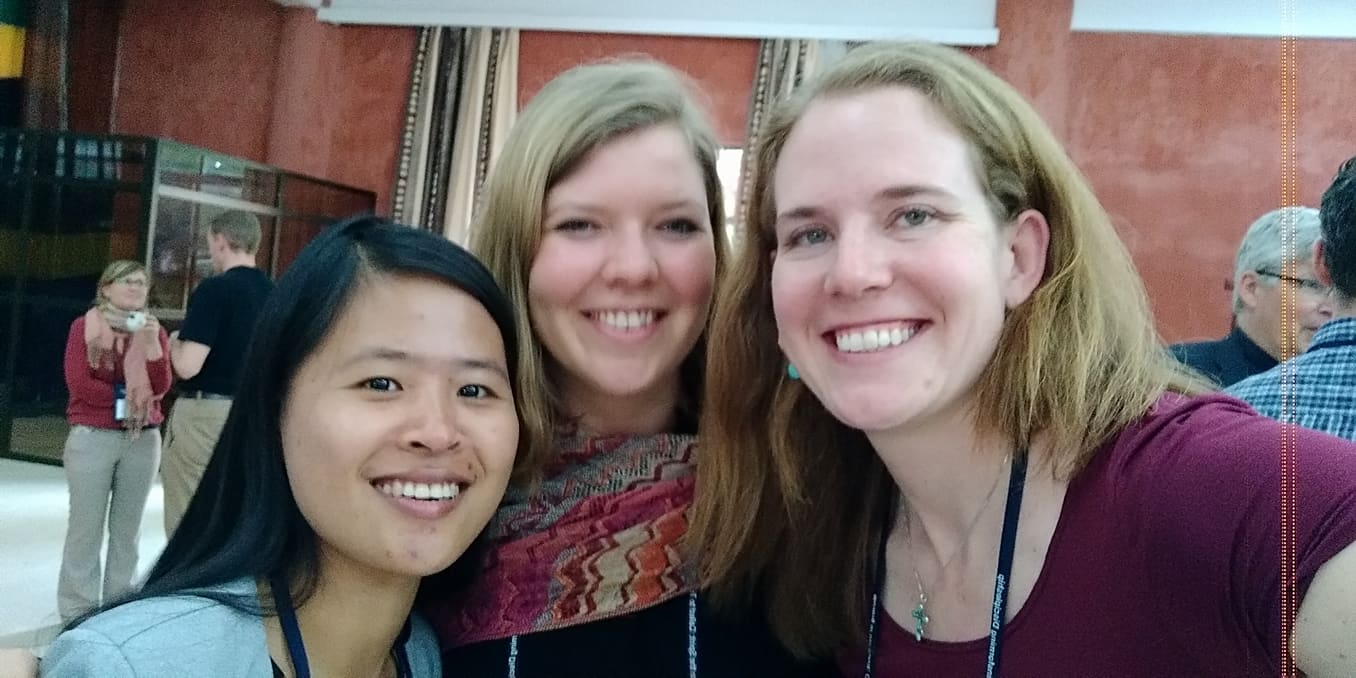
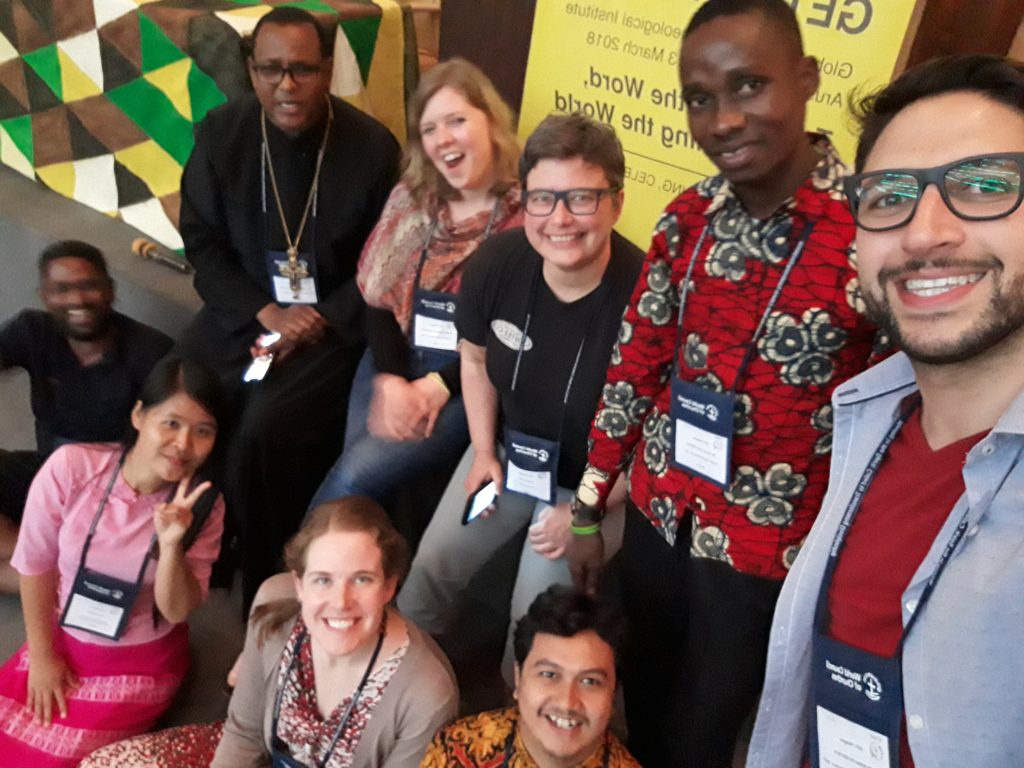
Photo of my study group


Professor Petra, myself, Father Ioan Sauca and Casely Essamuah after one of our evening meals.

One of the biggest influences within the conference was contextual theology. The 21st century has seen an increase in theological reflection coming from personal experience, which is based on the incarnational notion of God becoming enfleshed into humanity, with our varied cultures, backgrounds, and circumstances. I was amazed to the extent to which our unique context played a role in how each of us spoke of applying a particular scripture passage or theological concept. One of my favorite sessions was when our young adult program held a “living library,” where fifteen of us were given the opportunity to become “books,” and other people came to listen to our stories of faith and ask us questions. I was asked to be one of these living books, and I shared my faith journey based on the title of: “Liberals and Conservatives: Is Unity Possible?” Truly, our lives are the living letters that the Holy Spirit is writing to bring forth the gospel in our world today (2 Cor 3:3).

Another key theme was “ministry on the margins.” While in the past, some Christian groups have tended to approach mission in a dominating way that has erased local cultures, the current understanding of mission is that of empowering those on the margins. Jesus himself promoted the idea of God’s mission beginning from the lowly places and from the people to whom the world often forgets. As Christians, we evangelize but we are also the evangelized: We have to hold in tension the sharing of the good news of Christ with the willingness to be changed ourselves by seeing the face of God in those around us. One of the quotes that was mentioned frequently by the African people was, “White people came to share the gospel, and we closed our eyes to pray. When we opened our eyes, our land was gone.” Lord, have mercy.

During the last evening, each continent was given the opportunity to offer a cultural presentation: a song or dance to represent their country. The young adults from the United States met to consider what we would say or do. I proposed that the main thing we needed to say to the world was “I’m sorry.” I devised a short confessional statement about the ways in which we as Americans have promoted a gospel of arrogance rather than humility, the ways that we have rejected the gifts of people from other nations, and how we have been more concerned about our own well-being and protection, rather than God’s call to love our neighbor and to care for our common home.

The students who participated in the “Living Library”


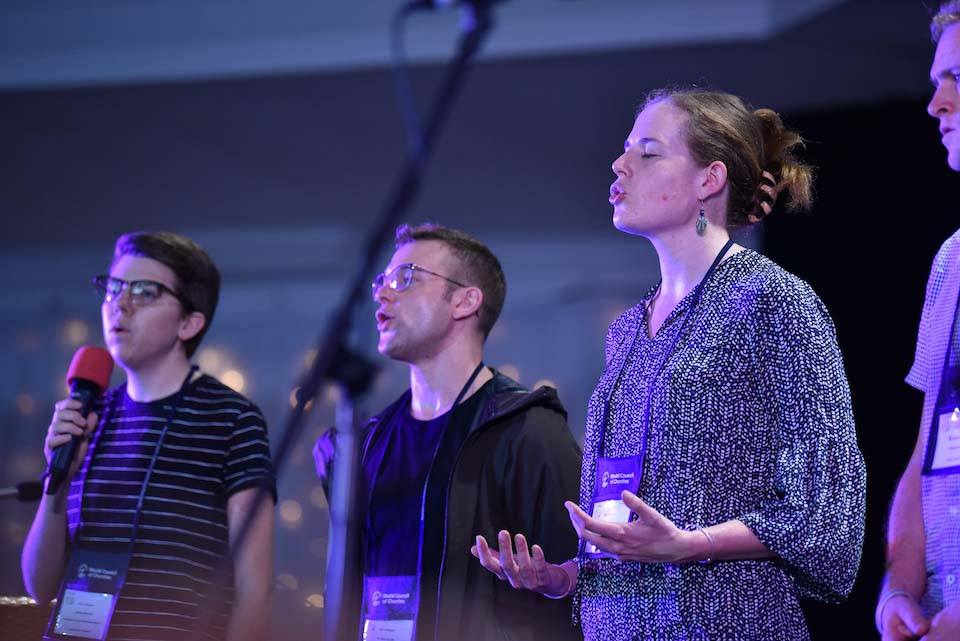
Singing “Wade in the Water” during the North American cultural presentation (Photo Albin Hillert/WCC)


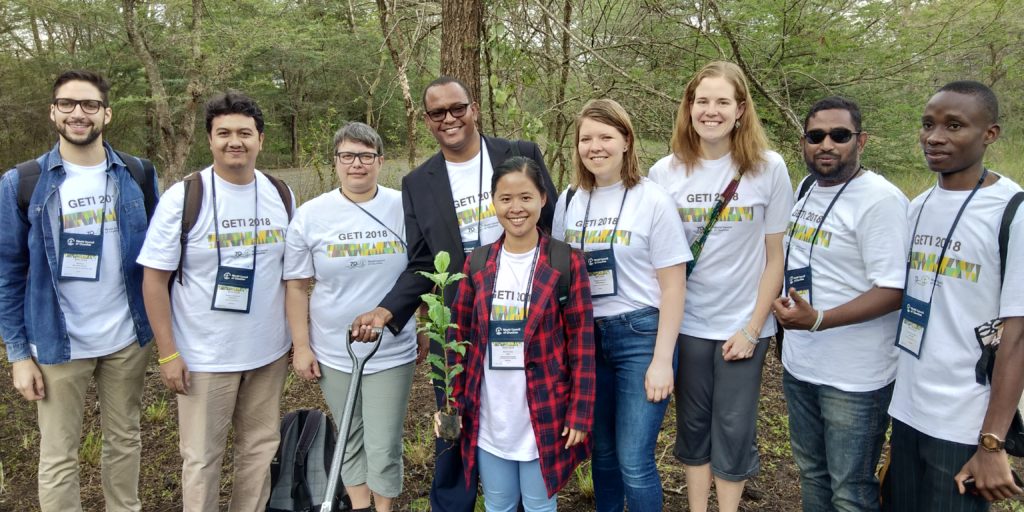
Each of our study groups planted a tree on the property of the university.


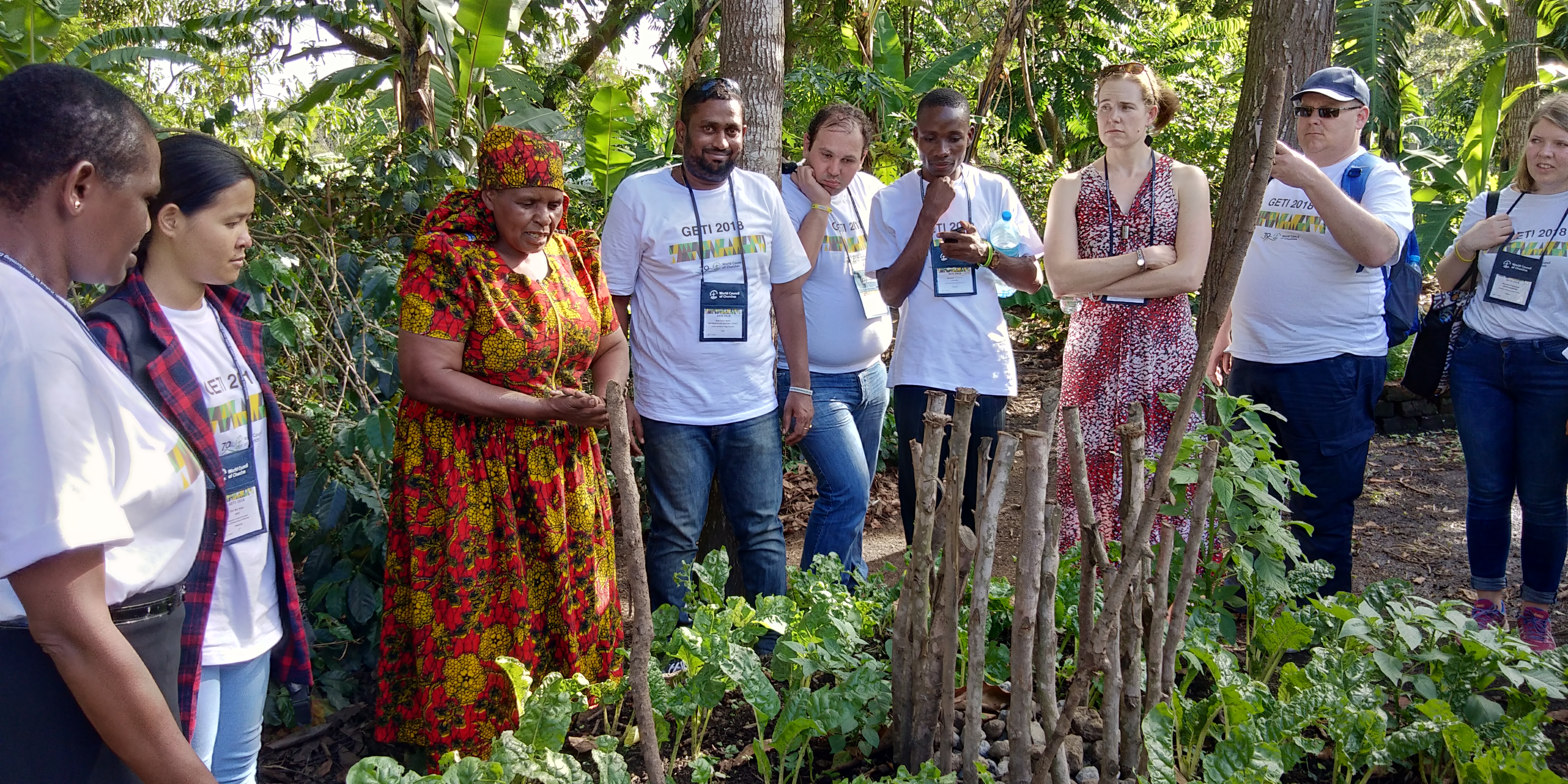
We were invited to the home of a Tanzanian woman who had created a sustainable farm with cows and biogas.

After this program, what will change for me, now that I’m back in America? There is something about meeting people from around the world that leaves deep impressions in your heart: you realize your small part within the great big world of God redeeming and restoring all creation. I am filled with great humility and the relational bonds also necessitate that I care about others around the world, rather than turning a blind eye to global injustices. It’s now harder for me to dismiss global warming, because at the forefront of my mind is a pastor in the Pacific Islands who is seeing the sea levels rise and flooding his church’s land. It’s harder for me to refuse caring for our earth, because now I think of my new friend from Myanmar and how her people depend on wood every day for cooking, building, and fuel. It’s harder for me to have a “neutral” stance on women leading in ministry after seeing the ways in which women are marginalized and shunned from leadership positions in other countries. We can refuse to act when we live out of distance from our neighbor, but when our lives become proximate, and our stories intertwine, everything changes.

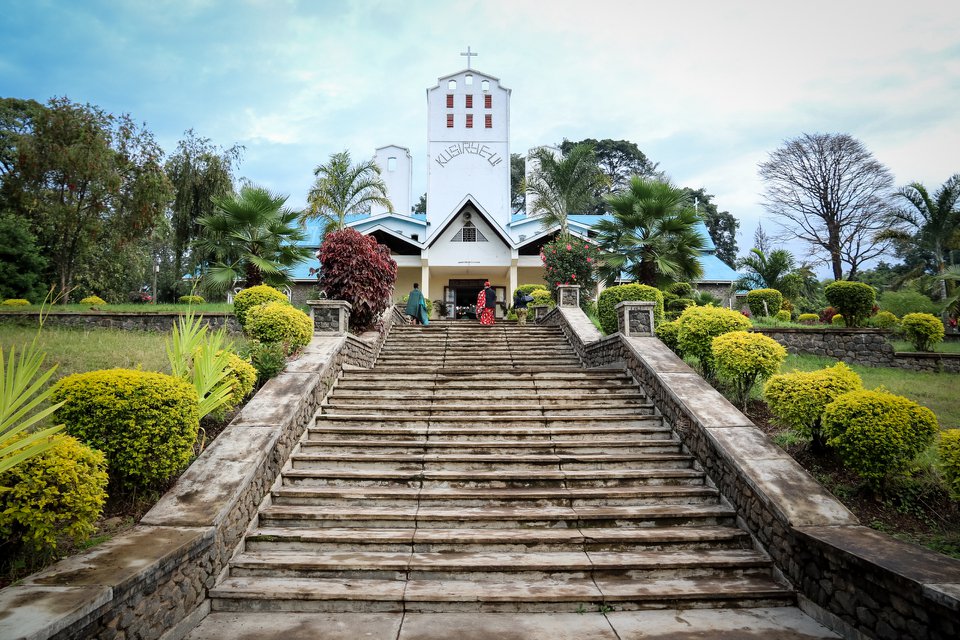
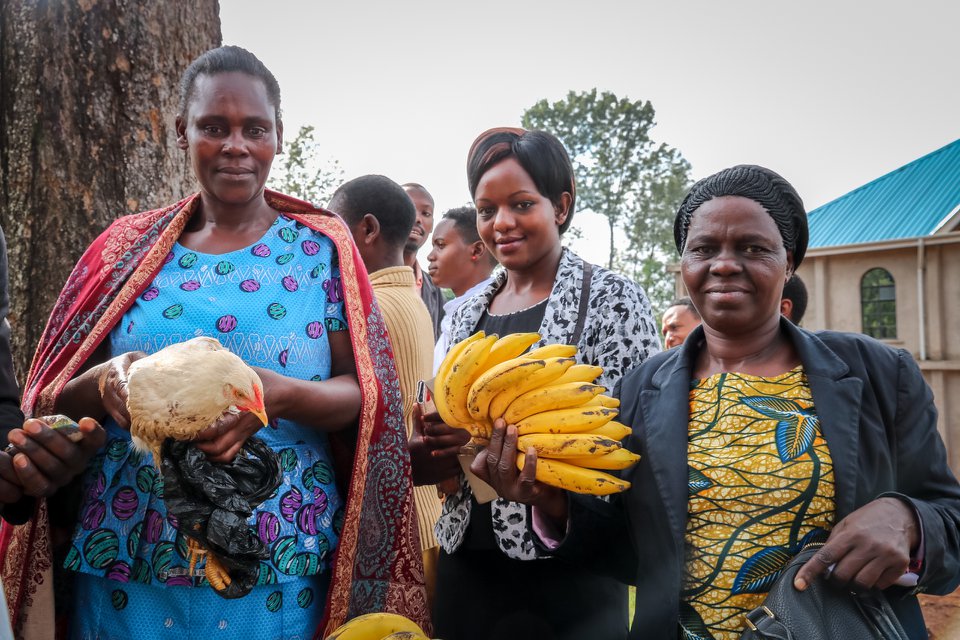
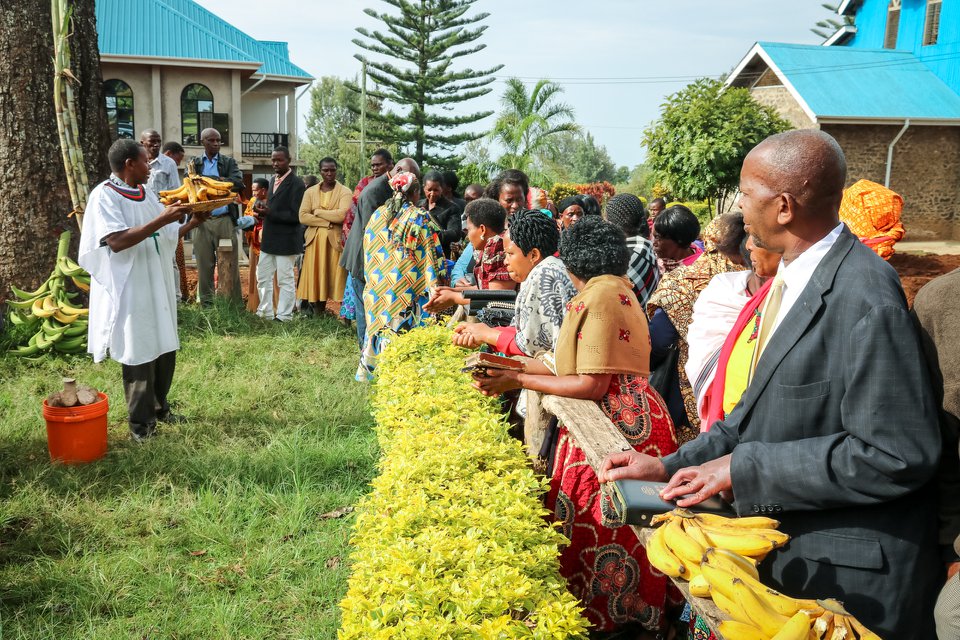
I gleaned much from the African way of sharing all for the common good (Acts 2:42). We had the opportunity to attend a Sunday worship gathering at a local church at the base of Mount Kilimanjaro (which I had actually climbed five years ago!)  During the offertory, the members of the church brought their gifts: not only money, but also the latest crops and even a chicken! These were then sold at the end of the service to anyone in need. There was a collective sense that “All that I have is not mine; it is God’s, and we need to take care of one another.” I had read about the African ubuntu notion that “I am what I am because of all that you are” in class, but that Sunday, it came to life. My capitalistic, self-oriented mindset in America needs to be refreshed by the open-handed approach to wealth and resources that many people in Africa embody.

Sunday service at Nkwarungo Lutheran Church. (Photo Albin Hillert/WCC)


Three women bringing their Sunday offerings to the church. (Photo Albin Hillert/WCC)


Selling the goods to anyone who was in need. (Photo Albin Hillert/WCC)


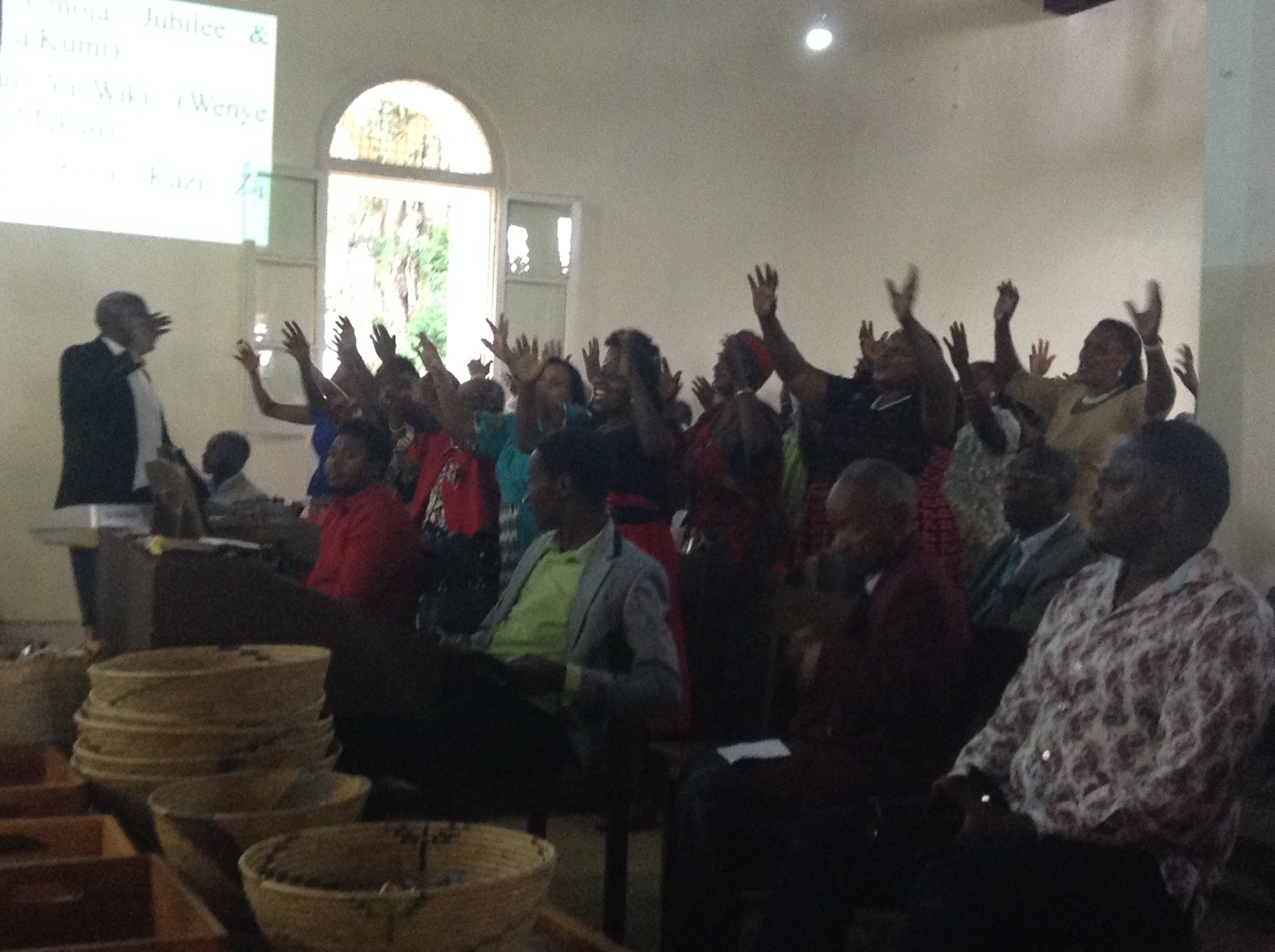
Vibrant Sunday worship

What I’m realizing is that Jesus lived out his kingship by inaugurating kinship. Through his humble obedience to God, he opens an invitation for all to live not for themselves but for God and others. Those with greater resources have responsibility to those in need; in our loving of one another, Christ’s gospel becomes visible (Jn 13:35).

While the theme of the conference was “transforming discipleship,” at times, I felt that the conference focused on communal liberation of social structures while neglecting what I understand to be the core of the gospel: a life-giving relationship with God through Jesus the Christ. There is nothing like knowing God personally and intimately – We are called to be God’s image bearers and be transformed into his likeness (2 Cor 3:18). In our attempts to contextualize the gospel and become all things to all people (1 Cor 19:22), we cannot lose the core message: the good news of God reconciling all to God’s self through the life, death, and resurrection of Jesus Christ. Christ’s gospel is holistic: it brings liberation and salvation in the fullest sense, yet it starts with each one of us and our commitment to follow Jesus.

God works from the inside-out, and Jesus modeled a life of deep communion with God the Father that resulted in the transformation of everyone He met. He modeled loving and serving the world’s most vulnerable. I believe that as we humbly give ourselves to one another in the likeness of Christ, we will bring ubuntu to life, and the glory of God will be seen in all nations.

New friends! Suk from India.


More new friends in my study group – Mikaela from Finland & Shi Yu Me from Myanmar


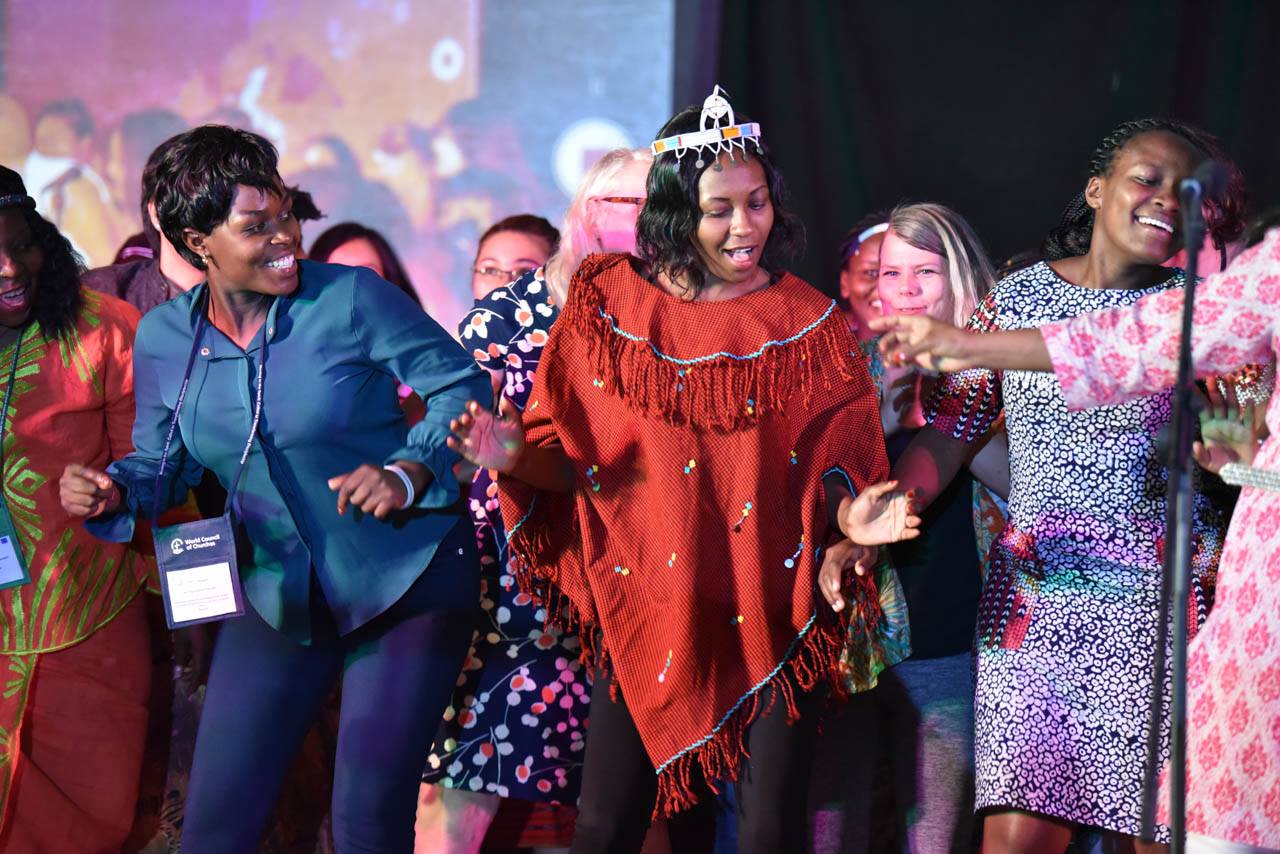
Women of various cultures dancing together at the celebration evening. (Photo Albin Hillert / WCC)


References:

(1) – Granberg-Michaelson, Wes. “Think Christianity Is Dying? No, Christianity Is Shifting Dramatically.” The Washington Post. May 20, 2015. Accessed April 02, 2018. https://www.washingtonpost.com/news/acts-of-faith/wp/2015/05/20/think-christianity-is-dying-no-christianity-is-shifting-dramatically/.

Written by uniteboston · Categorized: Blog · Tagged: community, transformation, uniteboston, united prayer, unity

Jul 12 2017

Hope for Your Block

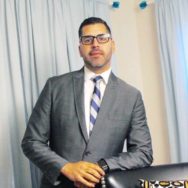
Our guest blogger this week is Rev. Davie Hernandez, Senior Pastor of Restoration City Church (Formerly Defenders Boston Church). Rev. Davie has a heart to see the city of Boston and surrounding towns experience true revival and restoration through the redemptive work of Jesus. Rev. Davie shares with us about his plans to share the love of Christ with our city, block by block.


There are bright summer days: the children are running around on the concrete sidewalks, basketball courts are full, play grounds are packed, folks are sitting on stoops, laughing and enjoying one another, as the sun starts to set…

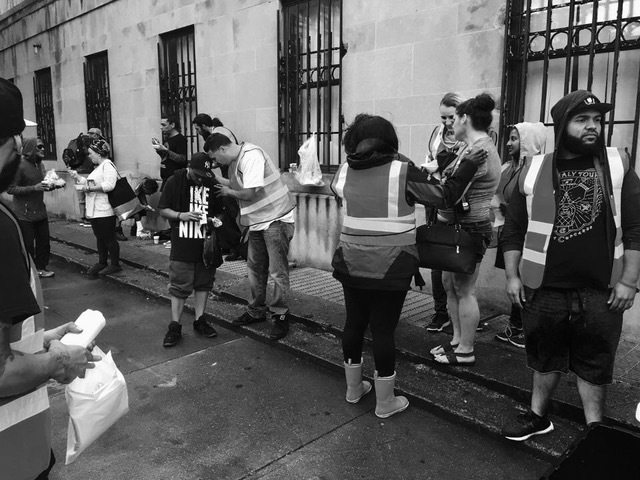
Not far from this, people struggling with homelessness gather by the highways, many addicted to drugs and feeling hopeless, doing anything to survive another day. Some are asking for money as they watch cars pass by, just waiting for another meal or a hit of drugs to cope with their reality…Sirens go off as another young man is brutally shot. As this blog was written, two young men were shot in our city, one being only 14 years of age.

We see both sides of our city. The irony is that both sides are just as much in need of hope, but in different ways. You see, Christ has has given us salvation, and in Him we have the love and hope we need. He has sent us out to be that hope! While some believe that being sent out means going to a far-off place, but I’m convinced that often it’s to be sent right outside your door. As we work the harvest that is here before us, all the people, regardless of socioeconomic class, will be impacted by this message of hope.

In the summer 2017, we were led to start a campaign entitled “Hope for your Block.” We see that it is our responsibility to reach out to our neighbors and communities block by block, claiming back our city for the Lord. To do this, we take a hand painted block and put a message of love, hope, faith and peace on each one. This block is taken by an individual or a family to any block in the city. They begin to pray for that block and place the message of hope where all could see. In this way, we are seeking to reach the lost the hurting and broken of our city with the Good News of Jesus Christ! So far, we have placed hundreds of blocks across our city.

Scripture tells us in Acts 1:8 that “You will receive power when the Holy Spirit has come upon you, and you will be my witnesses in Jerusalem and in all Judea and Samaria, and to the end of the earth.”

Where is your Jerusalem? Your Jerusalem is your block, your Jerusalem is your neighbor, and your Jerusalem is the local corner store, families, children and youth that surround you….

Additionally, in Luke 10:29, the man asks Jesus, “And who is my neighbor?” Jesus answers by telling the story of the Good Samaritan, inviting the man to compassionately serve and minister to those who are in our midst.

In essence, Jesus is saying, “Your neighbor is the next women selling her body to feed her children, your neighbor is that young man or woman crying out for help by that highway you drive by daily, your neighbor is that mother or father who has lost a child to the violence in our streets, your neighbor is that single mom who needs a roof over her head.”  It is our mission and our responsibility to feed the hungry, clothe the naked, hug the hurting and bring the Good News.

Our prayers are not only for those in our communities that are lost, hurting and broken, but also for the community of faith in our city. In our very own block, there are six different churches that need to come together as the body of Christ. This is seen across our city with blocks filled with communities of believers who largely function in isolation of one another. As we place the blocks with the words “Faith, Hope and Love,” I am reminded from scripture that love is the greatest of these. To love our neighbors, to love our brethren in the Lord and to love our city!

Romans 10:15 says, “And how can anyone preach unless they are sent? As it is written: “How beautiful are the feet of those who bring good news!”

Oh how beautiful it is that you and I were made for such a time as this, that you and I met the God who saved us through Christ, who anointed us and sent us out to share the gospel of hope, the gospel of healing, the gospel of restoration and transformation! Oh how beautiful it is to know that we have been called to this work. Your salvation is not for you, your privilege is not for you, and your gifts and skills are not for you alone. They are all meant to be for God’s glory! Be encouraged today and don’t let your neighbor pass you by.


Written by uniteboston · Categorized: Blog · Tagged: community, homelessness, peace, transformation, unity

Sep 03 2014

Healing the Land: Strategic Prayer for Boston

Over the past six years, Christ Otto and a team from his ministry Belonging House have been doing strategic prayer in Boston. They have seen a series of dramatic answers to prayer in the South End and in the area near the Massachusetts State House.

Today’s blog post is an excerpt from Christ’s report on these prayer initiatives called “Healing the Land.” The following points are the foundation of transforming prayer in cities and regions.
1. Listen to the Lord and Do what He tells you.
Effective prayer is a dialogue, and He who knows all is your best guide for each situation. We begin with scripture. Taking time for silence, waiting on God, and journaling has been helpful. I have found that God’s simple direction is better than a thousand strategic planning meetings.

2. Teamwork is essential.
The biggest breakthroughs have happened when someone gave me an insight I never considered. No one has all the answers and working in a team has helped us all hear God more clearly. The most helpful insights have come from people who live outside of Boston. Their fresh perspective often brought the breakthrough.

3. This is a ministry of healing and reconciliation.
Most of what we have done is address the specific things that release curses on the land–the shedding of innocent blood, sexual immorality, breaking of covenants, moving of boundary stones, and the breaking of relationships. When these sins are confessed and forgiven we can then invite God to heal the brokenness. You will notice that we did not hold large “reconciliation events.” Although we often had one person who represented the parties involved, we did not focus on trying to get parties together to have an event. All of the prayer has been strategic and precise, and often in almost secret.

4. There are no magic bullets.
One interesting aspect of this ministry has been hosting groups from outside Boston to pray in the city. Many times these visitors have come with the attitude that they have the “answer” and that if we would apply their “method” things would be done “right.” Most of the gimmicks have produced little or no lasting fruit. We have found that the long, low, humble road of obedience has been the game changer.

5. Being weird is not intercession.
My ministry Belonging House and the people I work with have a supernatural worldview. Sometimes we have had to depend on the simple direction of the Holy Spirit. Because I work with many groups I have seen how some have felt they needed shofars, flags, victory shouts, swords, or complicated “rituals” while they pray. Right up front, we have done all of these things at different times, but they are not the center. Sometimes prophetic acts are part of what we are doing as an expression of what God has already done.

6. The Cross of Jesus makes everything possible.
It is the finished work of the cross and applying of the Blood of Christ to the sin of the past that real change happens. As we openly confess sin, and our current agreement with it, and apply the forgiveness of the gospel, shifts begin to happen.

7. Listen to the Land.
We pray with our eyes open. We have taken time to learn the real history of where we are– and that means going into the library and doing research. It means getting to know the streets and terrain. It means knowing where and when things happened. Some of the delays in this process were because I did not do the right research in the beginning, and I trusted local “folklore” and polemical versions of history rather than accurate sources. Listening to the land has also involved noticing things like wildlife behavior, odd topography, and the wind. For example, we have noted dramatic gusts of wind during important breakthrough moments.

8. Praise and worship are our chief weapons.
Many times we have asked those with us not to enter into “intercession.” Most of this kind of prayer only reinforces the negative beliefs and judgements about a place or a situation. Praising God shifts the atmosphere in a given place and opens up our ability to pray and hear God. Entering into praise also gets us in tune with heaven, and God’s perspective. In praise we are able to pray from a place of triumph.

9. Authority comes from honor.
God directed me to spend almost two years giving honor to the people who prayed for me to come into New England, even though neither they nor I understood this at the time. I also sought permission to be on the land from the first nations people. By honoring and receiving this blessing, I have walked in a base level of authority that many ministries lack. Rebellion is the root of witchcraft. A culture of honor breaks this.

10. A large part of this ministry has been about “going low.”
We have taken the directions of Jesus to take the lower place at the banquet seriously. In praying on Beacon Hill, we chose to not take the road of political activism, and we have chosen not to build a ministry. We have simply walked and prayed. This story is a report of the outcome.

—-
Christ Otto has recently published a book entitled An Army Arising and is also available to lead prayer tours of Boston and to share how prayer and creativity is transforming New England. Learn more about Christ’s ministry at belonginghouse.org

Written by jasonjclement · Categorized: Blog · Tagged: beacon hill, belonginghouse, jesus in boston, jesus in the city, pray new england, prayer walk, reconciliation, transformation, uniteboston10

Apr 22 2014

The Testimony of Oneness: City Transformation in Lowell

Local pastors and leaders praying for Pastors Najem and Hernandez during the 2nd Annual School of Transformation in March 2014

The last prayer that Jesus prayed in the Bible concerned unity. What beautiful departing words Jesus spoke comparing the oneness between himself and the Father, to the oneness that was now possible within and among believers. His message was clear; the testimony of a people united in the love of God speaks a compelling story of love and redemption to future generations.

Jesus prayed, “I am not praying for these alone but also for the future believers who will come to me because of the testimony of these. My prayer for all of them is that they will be of one heart and mind, just as you and I are, Father—that just as you are in me and I am in you, so they will be in us, and the world will believe you sent me. I have given them the glory you gave me—the glorious unity of being one, as we are—I in them and you in me, all being perfected into one—so that the world will know you sent me and will understand that you love them as much as you love me.“ John 17:20-23 (TLT)

In this spirit, a group of 12 pastors in the Greater Lowell, Massachusetts area gathered at the invitation of Pastor Rafael Najem of Community Christian Fellowship, and Pastor Cecilio Hernandez of Iglesia Christiana Ebenezer Asambleas de Dios, to examine the prospect of working together. The two pastors presented the concept of a citywide church, an influential, evangelical church body that would bless the city and help to fulfill God’s purpose and will for it. Pastor Najem, a longtime proponent of church unity shared his heart with the group saying, “I cannot save the city, you cannot save the city; but together we sure can make a impact for the Kingdom of God here.”

The group responded enthusiastically and the pastors began to gather monthly to pray, fellowship, and strategize. Together they host annual events including a men’s conference, youth training and outreach, a citywide Block Party, and the School of Transformation designed to train and empower Christian leaders. They call their affiliation the Citywide Church of Greater Lowell – a catalyst to ultimately transform the City of Lowell into the City of God!

The Citywide Church of Greater Lowell (Citywide) strives to unify, empower, and mobilize God’s people to love with his heart and to serve with his hands. As Jesus expressed his love through both spiritual and practical means, so too does his church. The objectives of the Citywide church are to be: 1) Salt and Light in the City, 2) Prophetic Voice for Social Justice, 3) Catalyst for Church Building and Development, and 4) Catalyst for Cross-Cultural/Ethnic Unity.

The number of churches actively participating in Citywide has almost doubled with a wonderfully enriched membership of multilingual, multi-ethnic, and multi-denominational believers. This diversity reflects the population in the city of Lowell, and the differences among them are respected and appreciated. Since no one church can meet the needs of all people; diversity broadens the access for new believers to settle in a church that suits their individual expression.

The message of God’s love and redemption is preached through various means. In the case of Citywide, God is using the marvel of oneness.“ Jesus prayed, “I am not praying for these alone but also for the future believers who will come to me because of the testimony of these…”

Written by Donna Dougherty
donnad@AllWeatherGod.com
www.AllWeatherGod.com

www.ebenezerag.org

Click here to listen or download the messages from the School of Transformation

To learn more about Citywide Church of Greater Lowell please visit: https://www.facebook.com/CitywideChurchOfGreaterLowell

Pastor Rafael Najem, Community Christian Fellowship, www.ccfcca.com

Pastor Cecilio Hernandez, Iglesia Christiana Ebenezer Asambleas de Dios,

Signs held by Citywide church pastors & leaders around the city of Lowell

Written by jasonjclement · Categorized: Blog · Tagged: boston, christian unity, christianity, city, jesus, lowell, testimony, transformation, uniteboston

  • « Previous Page
  • 1
  • …
  • 8
  • 9
  • 10
  • 11
  • Next Page »


Give to Further Christian Unity

DONATE!

  • Email
  • Facebook
  • Instagram
  • YouTube

Copyright © 2026 · UniteBoston · Built on WordPress