UniteBoston

Bridging Divides Across Christians for the Flourishing of the City

  • Home
  • Events
    • Submit Event
  • Join In
    • Beloved Community Lab
    • Migrant Care and Solidarity
    • The Church and Civic Engagement
    • The ATTIC
    • Kingdom Conversations
    • Worship & Pray
    • Boston Flourish
  • About
    • UB Board, Staff & Volunteers
    • Cohorts
    • Missional Letter
    • Annual Reports
    • History
    • Christian Unity
  • Forums
  • Blog
  • Give
  • Contact
  • Search

Jul 03 2026

Responding to the TPS Ruling: How Greater Boston Churches Can Help

As our nation commemorates the 250th anniversary of the United States this week, we are invited to ask: Who belongs in America, and what do we stand for as a country? This question feels urgent as we reflect on the Supreme Court’s recent decision to uphold birthright citizenship, and another decision to end Temporary Protected Status (TPS) for Haitian and Syrian immigrants. Read below to hear reflections by local Christian leaders and action steps you can take to stand in solidarity.


As many Americans are celebrating the Fourth of July this week, a profound moral crisis is also unfolding in our own neighborhoods. Following the Supreme Court ruling on June 25, over 350,000 Haitian and Syrian nationals are facing the sudden termination of Temporary Protected Status (TPS), including approximately 45,000 with TPS status in Massachusetts.

For many in our pews, the reality of immigration is often obscured by political talking points. We often hear the refrains: “Come the right way,” or “Get in line.” In fact, many Haitians came to the United States through the CHNV parole process—a lawful process created because of the instability and humanitarian crises in those countries. They had U.S.-based sponsors. They were vetted. They received permission to enter and work. They did not sneak in… Then, because Haiti continued to collapse, many moved into TPS.

Rev. Dr. Daniel Montanez, UB Cohort Member and director of the Mygration Christian Conference, shares, “Many of these individuals have been here for well over a decade. They have made their homes, established families, and sought legal and viable pathways for citizenship. Now they are being told that those pathways are no longer welcome. The rules are being changed in the middle of the game, the ground is shifting beneath their very feet.”

Sarah Blumenshine of the Emmanuel Gospel Center’s Intercultural Ministries also points out the volatility of the situation, “One minute people have work permits, jobs, homes, and the next minute they do not. Can you imagine? You thought you had found safety, and then your hosts back out of the deal.” She notes that TPS holders are not a drain, but vital, tax-paying, law-abiding pillars of Greater Boston—working in churches, education, medicine, construction and transportation. 

The U.S. Department of State currently maintains a Level 4: Do Not Travel advisory for Haiti due to extreme violence, kidnapping, and instability. If a nation is too dangerous for U.S. citizens to visit, how can we declare it safe enough to deport hundreds of thousands of families back to? 

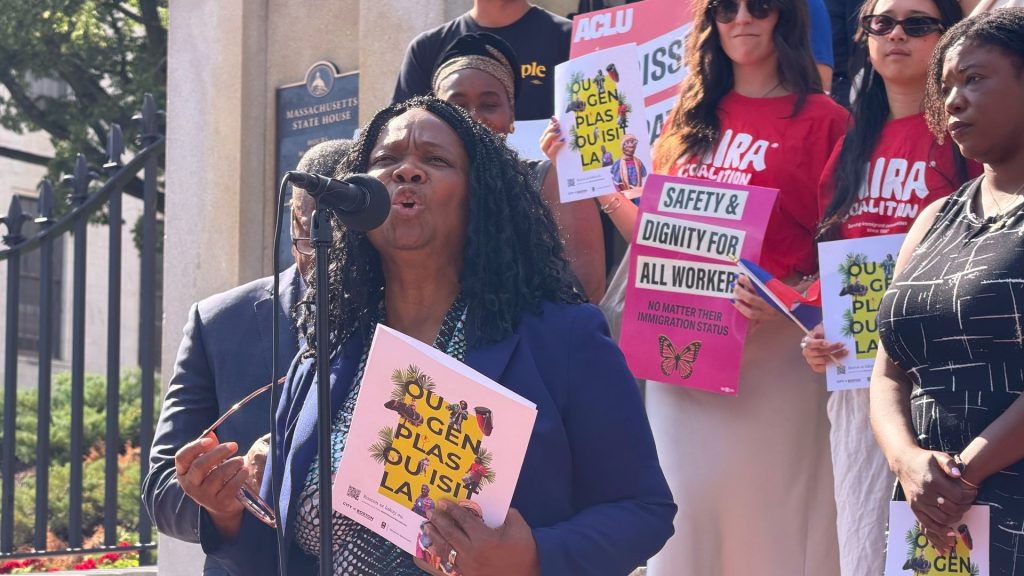
Dr. Gabeau, IFSI-USA’s Executive Director, delivers remarks at a rally outside the State House this week alongside Boston City Councilor Ruthzee Louijeune (right). Photo: Steph Solis/Axios

A Systemic Disruption to Our Communities

This decision forces individuals into a harrowing choice: return to unstable, dangerous conditions abroad, or remain in the U.S. in the hopes of future immigration relief. Many local Christian leaders are also speaking out with grief and conviction:

  • Pastor “Keke” Dieufort Fleurissaint, founder of the Mattapan-based True Alliance Center, reports being inundated with calls from TPS holders fearing sudden separation from their U.S.-born children. As he told The Boston Globe, “My hope was for compassion to prevail… How could anyone let children go back to Haiti like that—into such a dangerous situation?” He adds: “This abrupt termination threatens family stability, job security, and the well-being of thousands of hardworking individuals who have contributed to our economy, paid taxes, cared for our loved ones, and strengthened our neighborhoods. We call on policymakers to pursue humane solutions that recognize the dignity, contributions, and aspirations of those who have long called this country home.”
  • Bishop Nicolas C. Homicil of the Voice of the Gospel Tabernacle Church reports that the end of TPS for Haitians has caused significant economic and emotional distress within his congregation. Many members have received work termination notices, creating deep uncertainty about meeting basic living expenses like rent and food. This unemployment affects not only those in the U.S. but also their families in Haiti who rely on their support. Furthermore, some parents are making the heartbreaking decision to appoint Bishop Homicil as their children’s legal guardian should they face deportation and family separation.
  • Catholic Archbishop Richard G. Henning strongly condemned the revocation and shared a rare public statement calling the decision a “disaster” for local communities and encouraged people to raise their voices on behalf of the vulnerable.
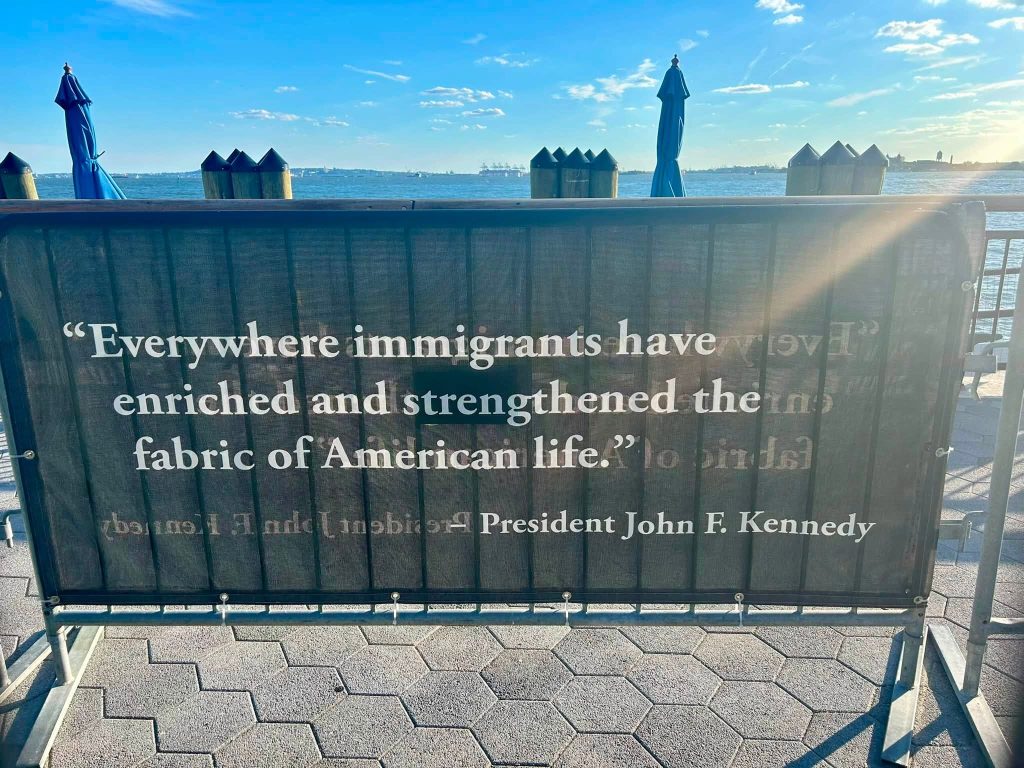
  • Rev. Kelly Fassett, shares, “Last week, while in New York for a conference, I was looking across the harbor toward the Statue of Liberty and Ellis Island and saw a quote by President John F. Kennedy about how immigrants have enriched and strengthened the fabric of American life. This is TRUTH – Yet there is so much misinformation spread about immigrants being a drain. In fact, research has shown that the taxes immigrants pay actually save the government trillions of dollars in real terms and fuel the entrepreneurship that keeps our local economies growing.”

How Christians in Boston Can Respond Right Now

This Fourth of July invites us to do more than celebrate; it calls us to reckon with how we are actually living out our Christian values. Does my ultimate allegiance belong to the Kingdom of God, or do I subtly put my hope in my political party? How can I better embody Jesus’ call to love my neighbor, recognizing that every person bears the image of God and is bestowed with inherent dignity? Finally, how can we navigate the tension between respecting our nation’s laws and fulfilling our biblical mandate to protect the vulnerable?

Damaris Velasquez, Director of Programs of Agencia ALPHA, shares, “This is the time for the Church of God—and I emphasize ‘Church’ with a capital ‘C.’ It is that Church, representing many races, languages, skin colors, and socioeconomic backgrounds, that needs to take a stand and reflect the values given by Christ: love, compassion, humility, grace, and placing others before ourselves. Let us not forget that we are testifying to the God we serve—to our families, neighbors, elected officials, and systems—every time we support or fail to support the call God has given us.”

Here are tangible ways you and your congregation can follow Jesus to stand in active solidarity with our Haitian and Syrian neighbors this week:

1. Individual Legal Aid and Emergency Planning

Ensure that the immigrant families within your sphere of influence are legally protected and prepare:

  • Understand: Know the state’s official guidelines and resources found on the Mass.gov Resources for Immigrants Page.
  • Legal Aid: Direct individuals to Immigrant Connection at Awaken City Church or  Catholic Charities Boston Immigrant Legal Services for trusted legal consultations.
  • Prepare: Help families establish a family emergency protocol and care plan:
    • Massachusetts offers an Emergency Planning Guide for Families in English, Spanish, Creole, and Portuguese. 
    • Agencia ALPHA offers a family emergency plan in English and Spanish.

2. Congregational Planning

Rev. Laura Everett, Executive Director of the Massachusetts Council of Churches, emphasizes the importance of preparing sacred spaces for potential ICE activity. 

  • Stay Informed: Review the Governor’s new statewide guidance for Houses of Worship. If you witness federal agent misconduct, please report it via the state’s official portal. The Massachusetts Council of Churches is hosting a training on this guidance on Tuesday, July 28 at 6 p.m.
  • Utilize Wisdom: A Boston-area pastor has developed a guide for pastors to support immigrant congregants before, during, and after detention: [English Version; Spanish Version].
  • Join the Chaplaincy of Presence Team: the Massachusetts Council of Churches coordinates a ‘ministry of presence’ in the parking lot of the Burlington ICE facility to support neighbors attending mandatory check-ins where unexpected arrests frequently occur. Chaplains provide listening, support, and prayer to those arriving and their families. As detentions are expected to rise with the end of TPS, clergy and board-certified chaplains are invited to join their weekday morning rotation (7:30–10:30 a.m.). Contact Rev. Dave Woessner at dave@masscouncilofchurches.org to sign up or for more information.

3. Advocacy and Education

  • Call Your Representatives: Reach out to your Senators and urge them to support S. 4814, a legislative pathway to extend TPS protections for Haiti. The 5 Calls Website and App is a fabulous resource to find your senators, with scripts to advocate for the issues you care about.  
  • Join the Boston Immigrant Resource Dashboard: Partner with local faith and community networks to share real-time updates, support initiatives, and coordinate localized responses for immigrant families.
  • Deepen Your Perspective: In his local pastoral reflection, For Such a Time as This, Gregg Detwiler explores the Church’s response to 2026 U.S. immigration policy, arguing that this is not merely a political issue, but a human, theological, and missiological one.

4. Financial Solidarity with Haitian-Led Organizations

Families are already being affected by the end of TPS. Now that the end of TPS has gone into effect on July 1st, Haitians have lost their work authorization, jeopardizing their ability to work and care for themselves and their families. With this in mind, the most pressing needs are funds to provide housing assistance, food assistance, and legal fees. 

Johane Alexis-Phanor of the Boston Haitian Resource Hub emphasizes the importance of supporting Haitian-led organizations. These groups provide essential, culturally competent services to the community and remain dedicated to long-term support even after the initial crisis fades.

Here are a few trusted and vetted Haitian-Led Organizations & Nonprofits:

  • Fellowship of Haitian Evangelical Pastors of New England led by Pastor Manny Daphnis
  • Voice of the Gospel Tabernacle Church led by Bishop Nicolas Homicil
  • True Alliance Center led by Pastor “Keke” Dieufort Fleurissaint
  • Association of Haitian Women in Boston 

5. Pray

Rev. Manny Daphnis, Migrant Resource Coordinator for the Fellowship of Haitian Evangelical Pastors of New England (FHEPNE), offers a powerful challenge to the Church: he urges Christians to pray fervently for mercy from government officials, asking that they suspend TPS deportations and halt enforcement actions that cause families to live in constant fear.

O God, we lift up our Haitian and Syrian brothers and sisters, as well as many immigrants who are facing deep uncertainty today. 

We pray for your protection to surround families who fear separation, and we ask for your mercy to rest upon our nation’s leaders, that they may choose compassion over harsh enforcement. 

Help us to live into our nation’s ideals of liberty and justice for all. 

Grant us, your Church, the courage to stand in the gap—to be a sanctuary of hospitality that welcomes the stranger, knowing that in caring for the ‘least of these,’ we are truly serving you.

Bind our community together in this work, and help us to trust that even in these harrowing times, your Kingdom of justice and belonging is near. We remember that Christians shall be known by our love; may that be said of us today. In Jesus’ name, Amen.

Written by uniteboston · Categorized: Blog · Tagged: community, home, jesus, neighborhood, unity

Apr 22 2026

Seeking Music Director (part-time)

The Music Director is a part-time role, 10-15 hours per week. The vision of Christ the King Dorchester is
to be a gospel-driven church seeking the renewal and flourishing of all people in Dorchester and beyond.
As a church based in Boston’s largest and most diverse neighborhood, we are seeking to hire a Music
Director who will help lead our worship services in ways that reflect the beautiful diversity not only of our
congregation, but also the community our church is rooted in. Our Sunday worship services include
varied musical styles drawing from gospel, hymns, and contemporary worship. CTK Dorchester is a
member of the Presbyterian Church in America (PCA).

We are seeking:
– A gifted musician, who is called and able to lead musical worship in ways that reflect the diversity
of our congregation and community.
– A developer of persons, who can lead our current group of music ministry volunteers and
continue to develop and grow this team as you lead worship together.
– A contributing member of our church staff team, who will help shape Sunday worship services, as
well as the broader life and ministry of our local church.
– A committed member of our church, who is energized and engaged in the mission and vision of
CTK Dorchester.

Responsibilities:
– Oversee music for Sunday worship services and special events. Our weekly worship service is at
4pm each Sundays at First Parish Dorchester, however we are currently exploring options to
move to a morning service time.
– Lead and develop a volunteer worship team who help lead each Sunday
– Have creative oversight over all musical and lyrical arrangements
– Organize and lead rehearsals of the music team
– Manage the scheduling of rotations for music ministry volunteers
– Collaborate with the Lead Pastor in choosing songs
– Provide improvisational transition music during services
– Prepare slides for Sunday services
– Lead music for additional special events, such as Good Friday, Christmas Eve, etc.
– Order music and maintain music library and ensure compliance with CCLI copyright laws.
– Attend weekly staff meetings

Qualifications:
– Have experienced the grace of Jesus Christ in your own life and responded in faith
– Be willing to make CTK Dorchester your church home by becoming a communing member
– Gifted in musical ability vocally or instrumentally (piano or guitar preferred)
– Ability to lead a congregation in musical worship both solo or with a team.
– Three to five years experience in leading musical worship
– Residing in, or willingness to relocate to, the neighborhood of Dorchester or surrounding
communities is strongly preferred

Written by Andrew Walker · Tagged: community, home, jesus, neighborhood, unity

Mar 12 2026

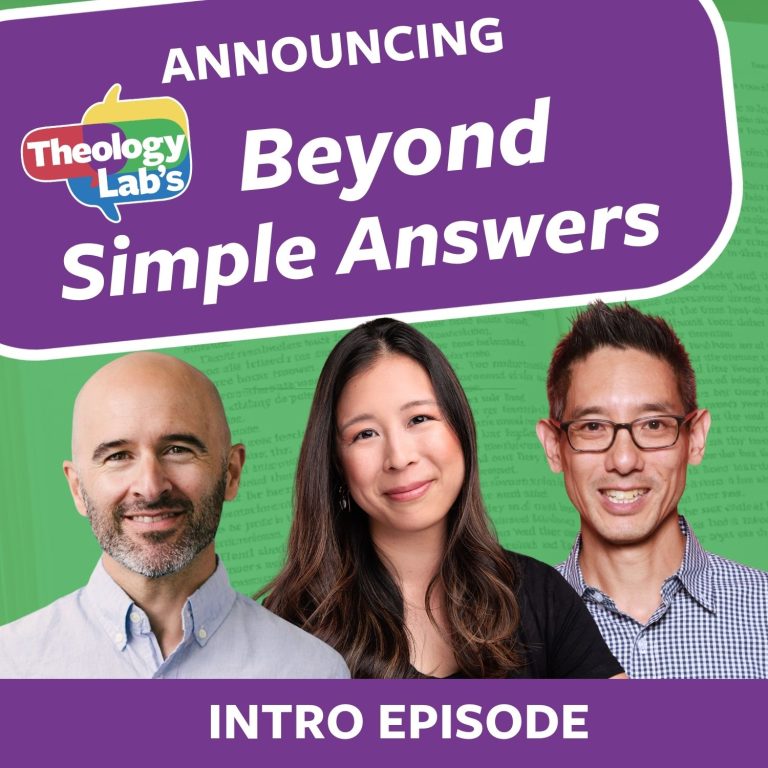
Beyond Simple Answers: Theology Lab’s New Video Podcast Series 

By Scott Rice, Kristin T. Lee and Greg Fung


How do we pursue a theological vision when simple answers aren’t enough? This is the core question behind a new podcast series from Theology Lab, called Beyond Simple Answers.

Today, Scott Rice (ThD) from Highrock Church offers two key insights to this central question. Below, he unpacks this exciting new series and how we can uphold God’s vision for unity and diversity by seeking nuance and curiosity in our faith.


Does Theology Matter?

For me, Beyond Simple Answers is more than a new podcast series. The vision behind this series tries to capture the gift I hope theology can be for everyday Christians, how theological conversations can be meaningful tools for discovery and spiritual growth. Personally, this is because theology has been such a necessary and practical thing for me. 

College was a challenging period in the thinking life of my faith. I encountered questions that caused me, for example, to reexamine how God speaks to us through the human authors of the Bible, people like you and me. I was also invested in off-campus ministry where I became close friends with people in situations of chronic poverty. The experiences they shared with me led to much grappling, theoretically and personally, with the problems of human suffering that surround us. 

Theology wasn’t so much a choice, but something I was compelled to do. It’s not that it wasn’t joyful – to the contrary, I found wonderful companions for reflection in both ancient Christian traditions and conversations with peers that have turned into longstanding friendships. But it did feel like something I had to do for the sake of honesty: I knew that for me to continue to pray, to participate in acts of worship, now required exploring questions about God’s goodness and what it means to trust an invisible God.  

God met me in these ventures. What’s more, conversations about faith spurred me into asking new questions, which I’ve found often leads to a more (not less) vibrant way of relating to God. These experiences also gave me new perspectives on my past. I came to appreciate the people in my faith life like Chris Eiesenman, a spiritual mentor of mine from high school, who embodied putting Christ in the center of all things. I didn’t realize it then but, to me, Chris exemplified a faith rooted in Christ that could be expressed in generosity toward others, in both actions and in how we exchange ideas with other people.

This has been my journey. Theology and community have been gifts that have sustained my faith. And I think it’s part of what inspires Beyond Simple Answers, a vision for faith and reflecting on belief today that Kristin, Greg (my co-hosts in this podcast) and I hope to convey in this joint venture. 

What’s Beyond Simple Answers about?

The motto of Beyond Simple Answers is this: seeking a theological vision when simple answers fall short. There’s two parts to this:

Beyond Simple Answers isn’t about going beyond the beautiful simplicity of faith. The beyond is more like what the Psalmist means in the line, the law of God “is sure, making wise the simple” (Psalm 19:7 NRSUVE). It’s the yearning that many have expressed – and which you could probably see in my story above – for a faith characterized by nuance and subtle reflection. For many, that comes through in words like deconstruction. In the story I shared above, it meant a deep desire for curiosity to play a more basic role in what it means for me to be Christian.  

The second part has to do with holding onto a theological vision, or continuing to think through such a vision. For some, facing doubts or a process like deconstructing (which admittedly means different things to different people) means belief moves to the margins of one’s life, or ceases to exist at all. But, often, it doesn’t. For many, the issue isn’t unbelief – rather, it’s about a variety of things that prompt us to seek out a way of navigating faith, doubts, and questions in community. 

I have shared how new questions both led to difficulties but also a new sense of rigor in my faith life. Questions like Who is God? or How do we grapple with the reality of suffering in the world? or How do we interpret the Bible? haven’t lost their urgency, although we might find ourselves thinking about them in deeper ways. For many, a theological vision still matters; it may even be the key to a revitalized faith.

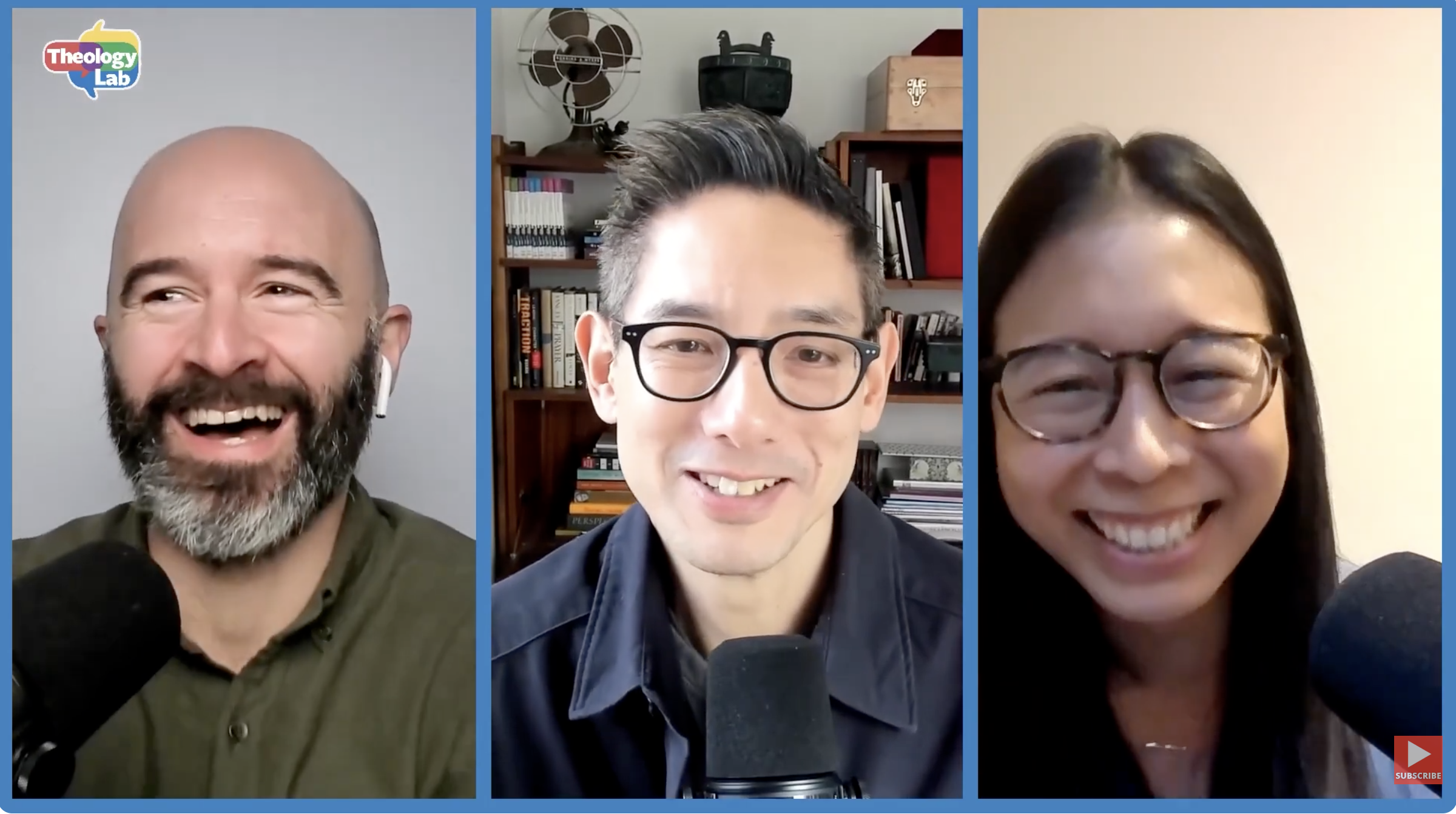
My co-hosts in this series are Kristin T. Lee and Greg Fung. We are part of Highrock Church, and in many ways, Beyond Simple Answers is our attempt to do in public something we’ve been doing in everyday conversations for years. When there are several, seemingly disconnected lines of thought in a given conversation, Greg is adept at identifying the signal among the noise. Kristin has a knack for naming the felt-need behind luminous theological concepts, and forging links between theological ideas and solidarity with people on the margins. 

Each of us cares about pursuing a theological vision within a faith community. We know that we won’t end up in the same place on every topic. Uniformity isn’t the goal. (For a lighthearted example of this, see Greg’s growing affinity for process theology in episode 3.) Rather, it’s to learn what Christ means for a vibrant, thinking faith – together. 

These last lines point to the importance of a lived notion of unity-in-difference in Beyond Simple Answers. This is, of course, also central to the mission of UniteBoston. In this spirit, I thought it would be appropriate to ask Greg and Kristin what unity-across-differences means to them as we begin this joint venture at Theology Lab. 

What Does Unity-In-Difference Mean to You?

Kristin: When I come up against thorny theological questions that stump me (and that have frankly stumped the entire world, unless someone has solved the predestination vs. free will conundrum), I find myself craving a multitude of viewpoints rather than a singular but unsatisfying ‘answer.’

For example, I was raised on the idea of penal substitutionary atonement as the one and only understanding of the cross—so normalized that it didn’t even have a name or label. It was the only explanation I was ever given for how and why Jesus had to die for our sins. As an adult, when I found myself troubled by aspects of this teaching, it was a relief to discover that there are actually a multitude of lenses through which we can understand the cross and its centrality to our faith, none of which likely encapsulates the entire glory of Christ but all of which can contribute to our understanding of God’s love. This pattern repeated itself over and over. At multiple points where my faith felt ready to break, it was listening to voices on the margins of the church that kept me hopeful and believing.

Thus, to me, unity is essential, because unity means embracing our diversity and not casting anyone out. It means keeping the table of theological discussions open to all who approach it out of love, especially bringing those to the table whose voices haven’t yet been platformed, who can nuance or trouble our too-easy explanations of God. Unity is an acknowledgement that we need every single one of us to be the living, breathing body and to better see the multifaceted brilliance of the God we worship.   

Greg: There was a time in my life when “unity across differences” meant gathering large groups of different people into one big event. I was in a para-church ministry and remember the vibrant energy of being a part of something larger. These large-scale events provided energizing visions of unity, but (understandly) were less adept in helping us reckon with differences that might enable us to go beyond ourselves. 

I would return home, inspired, but without ministry tools for navigating complex situations.  I needed a broader vision that could hold competing values in tension, but doing so would have required me to venture past my safe theological comfort zone, something I was not able or willing to do at the time.

Being open to change is hard for me. I’m especially resistant to frontal assaults on my worldview, and I respond poorly to coercive or manipulative efforts to make me change my mind. Yet, there have been unpredictable moments where I’ve grown. Most often, they are when I’m with people I trust, who have similar goals and values, but who don’t see the world exactly as I do. Something magical happens for me when there’s just a bit of grist in the midst of a safe place.

Which is why I’m excited about Beyond Simple Answers. It aims to make these random moments of growth more commonplace. One of our hopes is to foster, or perhaps better, try to embody the kind of growth that comes from bumping up against one another in relationship — not in spite of our differences but because of them. I’m not sure what the outcome will be, but I know it will involve growth, be a little messy, and be a whole lot of fun.  


Here at UniteBoston, we celebrate Scott, Kristin, and Greg’s efforts to cultivate conversations to take people deeper and grow in Christ “beyond simple answers.”

The Introduction episode is available on Apple Podcasts, Spotify and YouTube.

Episodes 1-5, addressing the question Why does God create a world with so much suffering? will be released during the months of March and April 2026. Subscribe or follow Theology Lab’s podcast or YouTube channel to receive the latest episodes!

Written by uniteboston · Categorized: Blog · Tagged: community, home, jesus, uniteboston, unity

Jan 08 2026

Micah Service Learning Experience

Over the course of two days (Saturday night and all day Sunday) through a range of immersive experiences in Greater Boston, we will tie together the three elements of the famous passage – doing justice, loving mercy, and walking humbly with God.

Contextual Serving: Participants will respond directly to the needs of one or more of our organizational partners who serve communities struggling with homelessness and food insecurity.

Transformational Learning: Participants will engage with foundational principles of generosity and justice as described in scripture and will gain practical knowledge about justice issues in the greater Boston area and the organizations working with affected communities. 

Spiritual Equipping: Participants will be asked to process their service and learning experience in community by engaging in worship, prayer, and reflection that will help them to sustain ongoing transformation and commitment to action beyond our time together.

Written by Andrew Walker · Tagged: community, home, homelessness, transformation, unity

Dec 15 2025

Would We Notice? Is There Room?

As we celebrate the birth of Jesus this week, we invite you to reflect on the wonder of Christ’s coming through “Would We Notice? Is There Room?”, a new Advent poem by Bill Ivanov. Bill is a nature photographer, poet, pianist, and Christian storyteller, seeking God’s presence in the beauty of creation. With Evangelical roots and a Catholic spiritual home, Bill is a journalist for UniteBoston to capture stories of faith and unity across the city and is currently developing a series of photography books exploring the presence of God in creation.

We invite you to read Bill’s poem below, which invites us to slow down, lift our eyes, and ask anew whether we are making room for Christ in our lives and in our world.


Tonight the skies shimmer with wonder—
a moon brushed in copper flame,
auroras lifting like veils of green fire,
comets stitching silver prayers into the dark.
The heavens still speak.
They whisper. They tremble. They sing.
But do we look up long enough
to listen?

Photo by Antonin Duallia on Unsplash

For once—long ago, Bethlehem breathed,
and the heavens carried another message.
Jupiter bowed toward Saturn,
a king inclining toward Israel
in the silent dark.
Mars drew near—
three wandering lights gathering like witnesses
to a story about to break the world open.
A comet burned for seventy nights,
a royal announcement written in fire.
Creation held its breath.
Heaven leaned toward earth.

And then, one night, it happened.
Not in a palace,
not in a city of gold,
but in a stable where no one had room,
where every door was shut
to the One who carved the galaxies.

Light broke through the cracks of the manger—
falling softly on a mother and her child,
radiance resting where heaven touched hay.
The baby stirred beneath its warmth,
and even the critters grew still.
A cow lifted its voice, low and reverent,
as if creation itself recognized
what had finally come to rest among it.

No trumpets,
no anthems of earthly choirs.
Only the soft cry of God
wrapped in swaddling cloths,
the hush of breath,
the crunch of hay beneath holy feet.

Breath met breath in the cold of night.
Mary pondered what her heart
could not yet hold.
Joseph stood silent beneath borrowed stars,
guarding a mystery too vast for words.
The weight of eternity slept between them—
small enough to cradle,
yet strong enough
to save the world.

“Joy to the World” by Paige Payne

The angels came—
not to kings or scholars,
but to shepherds
the world had already forgotten.
Heaven tore open above a field
and poured its glory on the poor.

Far away, wise men saw the star—
a brilliance unlike the others,
steady, insistent, calling them forward.
They stood in awe of what they saw,
knowing the heavens were pointing
to something the earth had never held.
And so they went—
leaving comfort for dust,
certainty for wonder,
following light wherever it led.

They carried gold for a King,
frankincense for a Priest,
myrrh for a Savior
who would offer the greatest gift
ever given.

Yet when He arrived,
only a handful knew.
The world slept on,
lost in its distractions.
To most,
nothing had happened.

And tonight—
with our faces lit by glowing screens
instead of the skies
still declaring His glory—
I wonder…

Would we notice
if heaven announced His coming today?
Would we lift our eyes long enough
to see the heavens dance again?
Would we recognize the divine in the stranger,
the holy in the unexpected,
the Savior in the place
we least expect?

If Christ came now,
is there room?

Who among us—
in this spinning, shimmering,
distracted, and broken world—
would be the first
to see
the light?

Mary and Joseph look with faith on the child Jesus at his Nativity By Elizabeth Wang

Bio: As a member of the Blue Nose Society, Bill has traveled as far north as the Arctic Circle, photographing grizzly bears, orcas, reindeer, and the luminous skies that declare the work of God’s hands. He also serves in the choir at the Apple Valley Catholic Collaborative and plays piano, believing that music, nature, and spirituality move in harmony to illuminate the human soul.

Bill is an open mic storyteller at the Harvard General Store, sharing narratives shaped by wonder, faith, and the beauty of the world. He is currently developing a series of photography books exploring the presence of God in creation—offering images, reflections, and meditative experiences that proclaim YHWH’s name and invite readers to fill their eyes with goodness so their lives may be full of light.

Inspired by Garrison Keillor, Bill aspires to continue telling stories that reveal the sacred in everyday life, blending art, music, and nature to awaken awe and reflection.

Written by uniteboston · Categorized: Blog · Tagged: home, jesus, lent, uniteboston, unity

  • 1
  • 2
  • 3
  • …
  • 12
  • Next Page »


Give to Further Christian Unity

DONATE!

  • Email
  • Facebook
  • Instagram
  • YouTube

Copyright © 2026 · UniteBoston · Built on WordPress