
At UniteBoston, we are committed to building bridges across divides and strengthening the Church’s witness by reckoning with the deeper causes of division. This week, we’re excited to highlight a new resource that speaks to this mission: For the Love of Women: Uprooting and Healing Misogyny in America — a brand-new book released this week by local author and longtime Boston ministry leader, Dorothy Greco.
Dorothy and her husband, Christopher, have faithfully served the church in Boston for decades. In her latest work, Dorothy explores how misogyny continues to show up in subtle and harmful ways across everyday life — from healthcare and the workplace to media, government, relationships, and even within the Church itself.
Below, you’ll find a snapshot of Dorothy’s heart for this work and her invitation for all of us to recognize these patterns and pursue healing, equity, and justice — so that the Church can more faithfully follow Jesus and embody beloved community.
P.S. If you’re looking to re-imagine and re-form gender relations that move toward forgiveness, healing and the restoration of relationships, consider attending the upcoming Gender Equity & Reconciliation International training taking place in the Boston area.

Dorothy, can you share more about yourself and what led you to writing this book?
I’m in my mid sixties, a wife and a mother of three grown sons. I’ve spent the past forty years working as a photographer, writer, and serving in various capacities in church settings. At core, I’m a journalist with a pastoral heart. I’ve written two other books, Making Marriage Beautiful, and Marriage in the Middle, with the most recent focuses on misogyny.
The inspiration for writing For the Love of Women emerged out of personal experiences, being proximate to ongoing sexual abuse in church settings, and the current political moment where women and children are routinely being mistreated. As I read and listen to women, so many are choosing to leave the church in part because some vocal church leaders are using their positions of authority to control and demean women. This breaks my heart and I think God wants more for his church and our culture.
How would you define misogyny?
It’s super important how we define this term. Though the literal definition is “the hatred of women,” that’s not the definitive or even the most helpful definition because many people who engage in misogynistic behaviors or hold misogynistic beliefs don’t hate women. Linguist Ben Zimmer notes that misogyny “has more to do with ingrained prejudices against women than a pathological hatred of them.”
Misogyny is a persistent, insidious belief that men’s ideas, wants, needs, and experiences are more important than women’s and that legal, religious, and social systems, as well as intimate relationships, should uphold this principle. This belief system subsequently influences the laws, policies, practices, and ethos of a given culture.
As I write in the first chapter of the book, “if we define misogyny too narrowly, we may be tempted to disregard or deny it. Misogyny encompasses more than specific, tangible acts committed by individuals who admittedly despise women. If we interpret violence or prejudice against women as random and label the Andrew Tates of the world as anomalies, we will fail to see the patterns. If we constrain the definition to include only violent, hateful acts, some men will distance themselves from the conversation and from having any responsibility to change it. We must understand the scope of the issue and expand the definition to fully encompass it.”
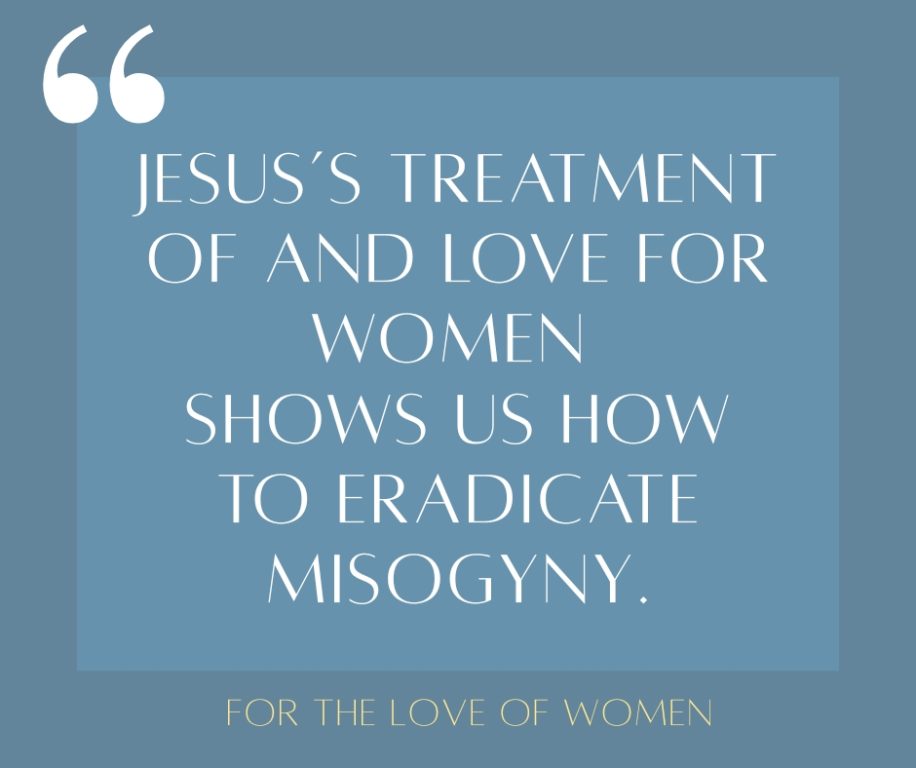

What’s the thesis of the book?
For the Love of Women examines six spaces in culture where misogyny has influenced laws, policies, structures, expectations, and behaviors: healthcare, the workplace, the government, entertainment and media, sexual relationships, and the church. The final two chapters explore how women and men can heal from the effects of misogyny and partner together to diminish it.
Because it’s easy to dismiss misogyny as a problem “over there,” I’ve focused on North America, primarily the United States, though the examples transcend geographic boundaries.
I wrote this book primarily for women who’ve had first-person experiences of misogyny. Because misogyny harms, shames, and tries to silence us, I wanted to give voice to and validate our experiences. But this offering isn’t only for women. Despite women’s courage, resilience, and strength, we won’t succeed in eradicating misogyny without men’s partnership, which is why I long for men to read this book with curiosity and humility.
Why does the Church need to address this topic?
I’ve been reading and studying Scripture for more than forty-four years. There’s still much I don’t understand, but I do think it’s clear that God loves women. Scripture tells so many stories about Jesus overturning prevailing cultural norms to care for and love women well. I think of the woman caught in adultery whom Jesus spared a certain death by helping the men to see their hypocrisy. Or when the woman who had been suffering from chronic health issues reached for him in the crowd, he blessed her faith and healed her. Further, as we read about the early church, women were released and blessed to lead alongside men in many different capacities, from deacons (Pheobe), to teachers (Priscilla), and patrons (Lydia).
It didn’t take long for the church to revert back to pre-Pentecost ways. Since Constantine’s rule and decision to make Christianity the state church, women have been excluded from key leadership roles and have been vulnerable to abuse within hierarchical church structures. The church should be the safest place for women and the best place for them to flourish. Tragically, that’s not consistently been true. I think it’s long past time that we addressed these wrongs.
How can this understanding benefit both individuals and the Church as a whole?
According to Jesus, the most important commandment is to love the Lord with all of who we are and then to love our neighbor as ourselves. Therefore, we need to be loving women as defined by 1 Corinthians 13. This is a radical mandate and one that requires us to regularly confess our sin, repent, and work to repair and reconcile. If the church could consistently love like this, Sunday services would be packed.
Furthermore, men need to realize that protecting, advocating for, and supporting women is not simply a gospel mandate: their lives will be significantly better when they prioritize mutual flourishing.
How can we interrupt and heal from misogyny?
The final two chapters of the book focus on what healing and repair from misogyny might look like. Everyone’s journey will be unique, but there are common practices that need to be in place. This includes men confessing any of the ways that they have contributed to misogyny, facing and healing from the trauma misogyny causes, grieving and lamenting in community, and ultimately, forgiveness. In spaces where there has been systemic abuse or injustice, we must not rush the survivors to forgive. It must be on their timetable.
The goal is not simply to interrupt misogyny, but to stop it. This is no small thing, and women cannot do this alone. Men have to be willing to use their power and authority to benefit everyone, not simply themselves. This requires them to interrogate their stories, face any fears connected to losing power, and learn how to trust others. One practical way to frame male engagement is for men to become allies, advocates, and interrupters. Chapter nine has lots of practical ideas connected to this.
It will require all of us to image what it could look like to end misogyny in relationships, the workplace, the government, and the church. God has blessed each one of us with imaginations and given us access to the Holy Spirit. That’s a lot of potential. Let’s put it to good use.

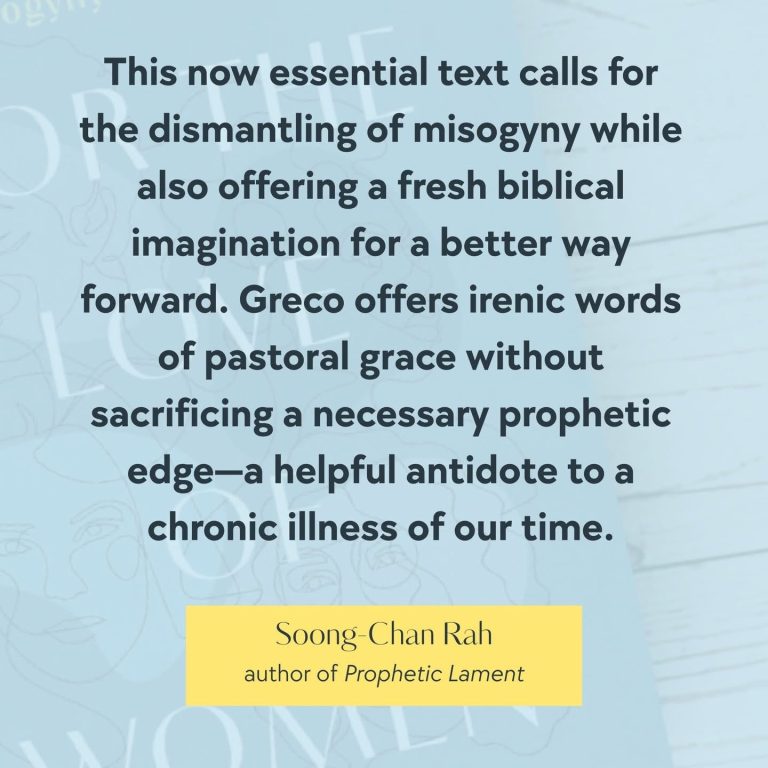
P.S. At UniteBoston, we respect the variety of convictions on the role of women in church leadership and we encourage individuals to have honest, courageous conversations of listening, learning and story-sharing with those they may disagree with to grow in our embodiment of Christian unity. We believe Dorothy’s book is an important message today for all of us to consider how we can honor women as image bearers; we encourage everyone to pick up a copy of her powerful message for the Church and society. Byron Borger’s bookstore, Hearts and Minds, is offering 20% off. Dorothy also regularly shares thoughtful reflections on her Substack, “What’s Faith Got to Do With It”


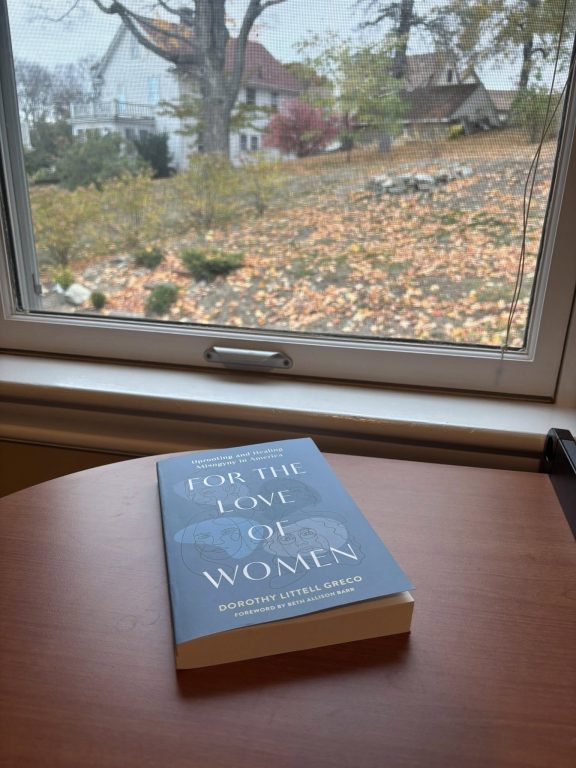
I definitely want to read the book, especially after just reading the interview with Dorothy. Her and her husband played important roles in my faith walk with this topic front and center. Dorothy’s a star that shines thoughtfully bright.
Awesome, we’re so happy to hear this Bill! Happy reading – we look forward to hearing what you learn!
Thanks Bill. Appreciate that. Hope you are well.