UniteBoston

Bridging Divides Across Christians for the Flourishing of the City

  • Home
  • Events
    • Submit Event
  • Join In
    • Beloved Community Lab
    • Migrant Care and Solidarity
    • The Church and Civic Engagement
    • The ATTIC
    • Kingdom Conversations
    • Worship & Pray
    • Boston Flourish
  • About
    • UB Board, Staff & Volunteers
    • Cohorts
    • Missional Letter
    • Annual Reports
    • History
    • Christian Unity
  • Forums
  • Blog
  • Give
  • Contact
  • Search

Jun 17 2018

The Art of Gathering

This week’s blog is written by Tony Lee, who attends Aletheia church and has been involved with UniteBoston’s worship team and neighborhood dinners. As a young professional in Boston, he is interested in finding Christian movements in the city and connecting people together. Read below to hear about how Tony understands gathering as an opportunity to gain, give, and grow. 
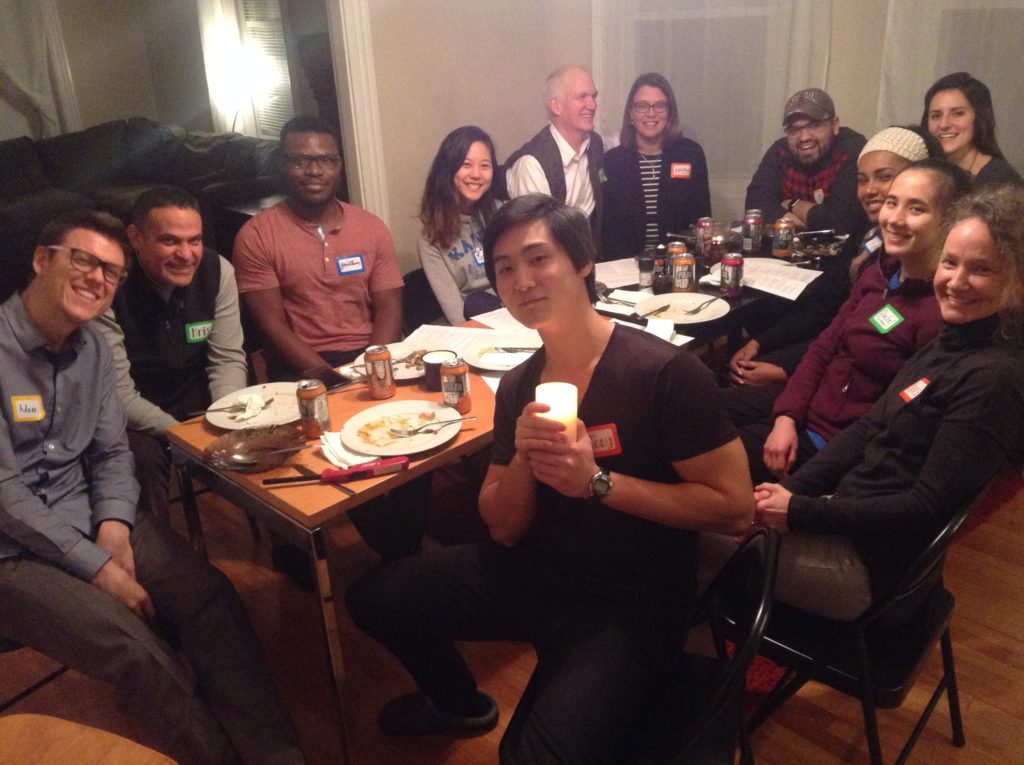

Neighborhood dinner gathering in Revere

I was a UB dinner coordinator this past year and had the pleasure of hosting a few dinners at my home in Revere. I got to coordinate strangers meeting other strangers for fellowship, and make them some good food. (Note: You can read Father Tom Ryan’s experience of attending a UB neighborhood dinner at Tony’s house here.) From these nights of gathering, I’ve picked up on a few themes that can illuminate the value of gathering, and the unifying potential it has.

To gather is to gain.

Gathering comes with perks. I’ll start with the food. I especially enjoy potluck gatherings (pro-tip: hosting a potluck usually correlates with extra treats later). In college, I was on a student leadership team and remember planning events to always involve food because that was the best incentive to get students to attend. Not surprisingly, this works the same for people after college. We like food and we like to go to things where food is present.

Whenever food and fellowship combine, good things happen. People are happy, and the social atmosphere is pleasant. I sincerely believe there is more potential for exciting conversations over hors d’oeuvres than over the phone. So by gathering, we also gain relationships. Every time I invited someone into my home, I was receiving their friendship by spending time with them. These dinners are now memories for us, and a point of empathy. In summary, I got a friend, a memory, and some empathy points from gathering. That’s pretty good.

To gather is to give.

I have the role model of my mother as a great giver. She was the homemaker in my family, and the most faithful, diligent, caring person in our house. Her hospitality was more like sacrifice. So whenever we came together for supper, the spirit of giving was evident. Now I’m doing the best I can to give like her.

Hosting a dinner for a large group is a commitment. I’d get worried about food, seating, or social comforts for the guests sometimes. But out of my anxiety, was an opportunity to give. Guests also may need to prepare their sides, or travel far distances. In the process of gathering, there are opportunities for us to give, or to give up. I’m sure we’ve all been the people who show up to a potluck empty-handed, or choose not to go to somewhere because of the commute. But like anything else, we can practice giving and grow in our sacrificial lifestyle. Even interpersonally, I try to focus on encouraging or motivating others in their own esteem than dig for what they can offer me. It just so happens that we meet others who also like to give, which is how we gain. The world teaches me to take, but my mom taught me to give. I believe this is what God desires to teach us as well.

To gather is to grow.

At the dinners, we were able to gain and give to one another. We practiced this with people we knew and strangers. Of course, it can be challenging to suddenly come to a point in a conversation with someone who has drastically different ideologies than me. One time, I caught myself becoming very defensive, and had to recalibrate my objective in the moment to prioritize unity. I got some growth points from that. It’s actually much easier to live without fixating on our differences, and rather seeking out our common denominators. To do this, I have to receive someone as a friend (gain), and be considerate to them (give). Because in the end, it’s not what divides us that matter.

As Rose from Star Wars 8 says, “we’re going to win this war not by fighting what we hate, but saving what we love.” This is critical. We as children of God are created in His image and have a deep connectedness that unifies us. Jesus was the model for the ideal unifier. He ate with outcasts on the margins and shared the gospel to those who needed it most. We have the same opportunities in our city. We can find a rhythm of gaining and giving, by staying open to friendships and paying it forward. There is much growth that develops from this rhythm.

I believe this is the direction our hearts and minds must go. It’s the direction of growth and wisdom. Gathering together is simply the vessel that allows us to get there, through practice and experience. But also, food can be a part of the journey.
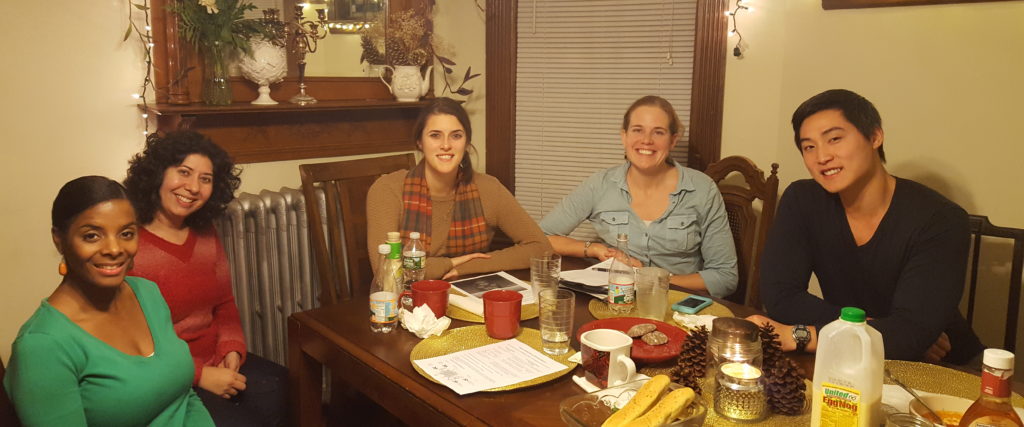
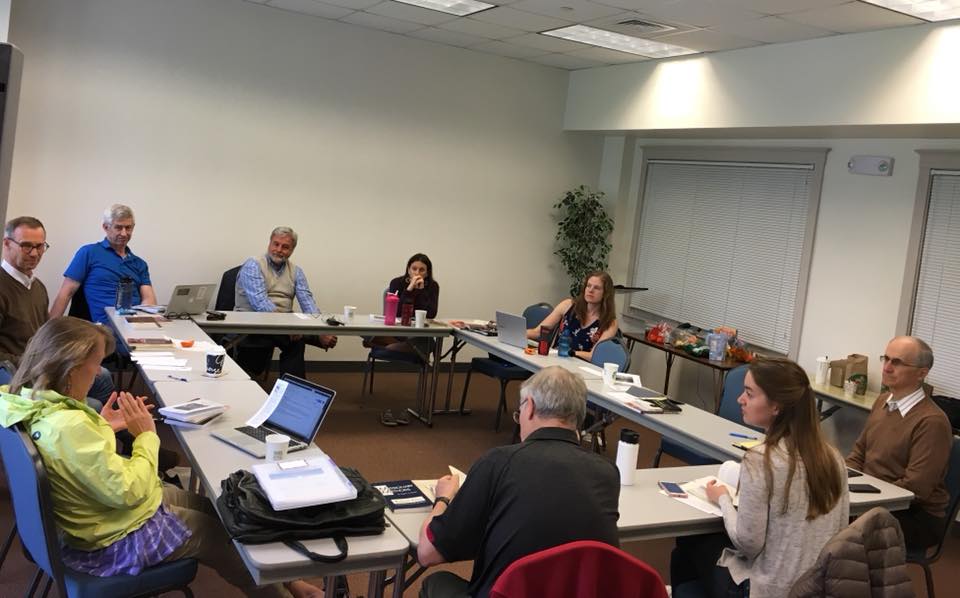
UB Dinner Coordinator Team, Spring 2018


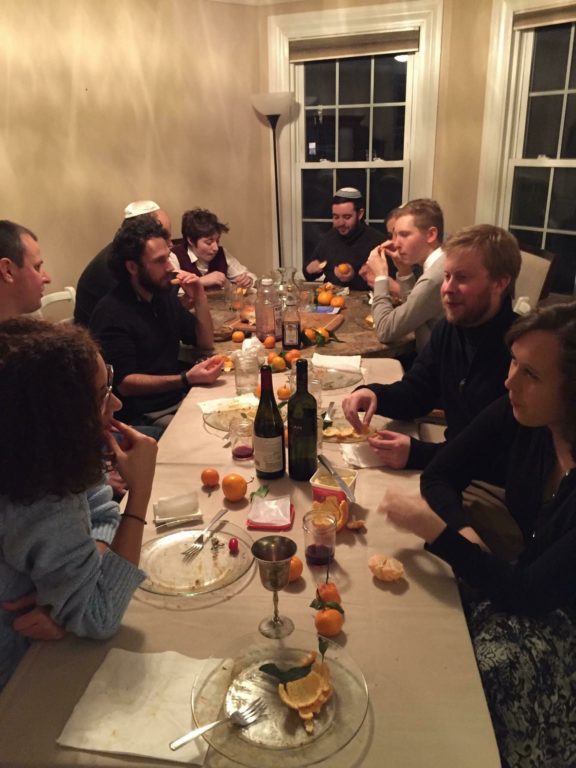
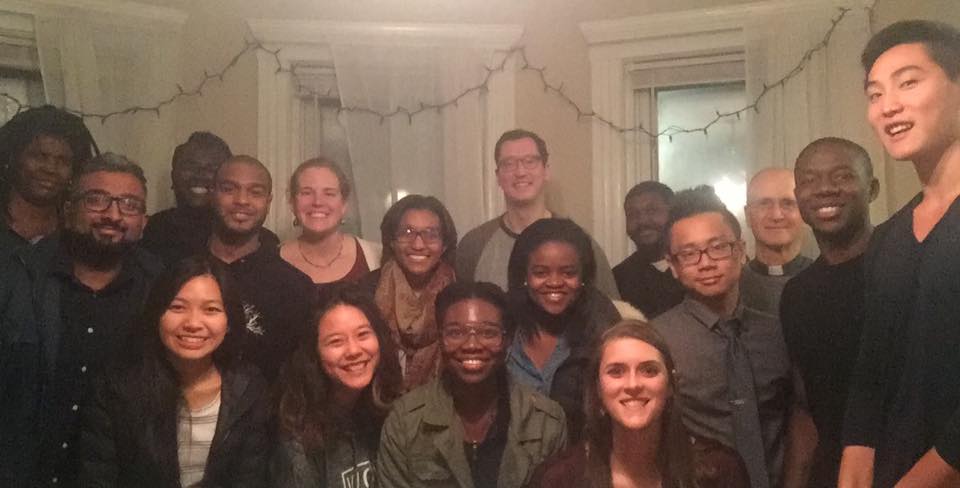
First UB Neighborhood Dinner at Tony’s house, November 2017

Learn more about UB neighborhood dinners here, and sign up so that we can contact you when one is happening in your neighborhood!


Written by uniteboston · Categorized: Blog · Tagged: home, jesus, neighborhood, uniteboston, unity

May 09 2018

Living Out Unity: Louisiana, Boston, and other Adventures

“Poking holes in one another’s theologies is easy; what is difficult is looking at someone who thinks about God in a completely different way than I do and finding a way to see its loveliness.”

Photo Credit: Brenda DuPont

This week’s blog is written by Elizabeth M. Smith, Ph.D. Elizabeth works as a pastoral associate at Holy Family Parish in Concord and is a Catholic systematic theologian and ecumenist in the Boston area. She received her doctorate from Catholic University in 2017, and also holds a Master of Philosophy, a Master of Divinity, and a Master of Sacred Music. In this blog, she describes the journey that God has led her through in her understanding of the work towards Christian unity.


I never liked the idea of practicing theology as an exercise in calling out those who don’t get it, or emphasizing those who aren’t in the club. My experience with fellow Christians in grad school was, unfortunately, often just such an exercise. Hoping to be aspiring apologists, I believe, I witnessed many well-intentioned Christians from various denominations in the DC area try to poke holes in one another’s theology and in one another’s traditions. These discussions – most of which were outside the classroom – always seemed to leave participants frustrated and drained. If we know a tree by its fruits, I was hopeful that I could find another tree.

I’ve always felt like a peacemaker. I feel more at home finding ways to describe similarities than confronting difference. More at home highlighting ways our differences complement each other rather than ways they separate us. I’m learning that the term for this is “receptive ecumenism.”

I felt the Holy Spirit create in me a deep desire to construct conversations that ran counter to the apologetics I heard in DC. While apologetics is a praiseworthy field, the movement of the Spirit doesn’t seem to reside in apologetics the way it did in the early centuries of the Church. The days of sorting out heretical positions have yielded, in my view, to a new age in which the Spirit beckons us to stop weeding, lest we uproot the entire garden.

I moved from DC to Boston in 2014, the time I began to write my doctoral dissertation. Although my major area up until this point was theology of God (mainly Trinitarian theology), I felt a strong move within myself pulling me toward ecumenism. As much as I loved pouring over the various views that theologians asked us to consider about who and what God is, I felt the Spirit telling me, “You’ve spent so much time trying to understand me, but do you understand you?” By “you,” in this case, I felt God meant “the entire Christian Church.” I spent years of my life discussing various understandings of God with other Christians, but I realized the conclusions didn’t matter if they divided Christians rather than united them. If our Christian theology draws us further from, instead of closer to, the maxim “they’ll know we are Christians by our love,” then it may be theology, but it isn’t all that Christian.

My dissertation seemed to pour out of me when I approached it as a reconciling tool rather than yet another exercise in making distinctions that divide. After graduating, I turned much of my paper into articles and a book. The Spirit seems to be working in the hearts of so many people I’ve encountered, because I’ve been invited to speak on my topic – mainly Anglican-Lutheran dialogues and their ecumenical successes in the US, Canada, and Northern Europe – in Louisiana, Minneapolis, Boston, and hopefully more. I know that our hearts are hungry for God, and if anyone is finding something attractive in my work, it isn’t of me; rather, it’s the Spirit of love that is of God, and I’m fortunate enough to be tapping into it as an ecumenist. That’s what people are attracted to, and I find that the more I open myself to it, the more opportunities keep springing up for me to do ecumenical work.

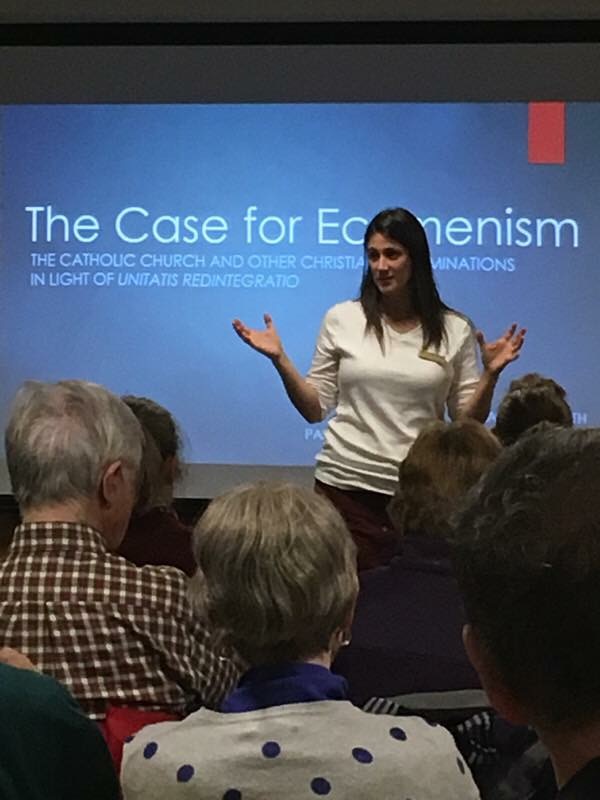
Elizabeth giving a talk at her parish (Holy Family Parish) on ecumenism

Poking holes in one another’s theologies is easy; what is difficult is looking at someone who thinks about God in a completely different way than I do and finding a way to see its loveliness. We are all unlovely in some way; yet, Christ died for all of us. What I’m learning in my work as an ecumenist is that the heart of Christian theology is to love the unlovely as Christ does, loving it into loveliness: “My song is love unknown; my saviors love to me. Love to the loveless shown, that they might lovely be.” We are all unlovely in some way, yet wholly lovable. The same is true for our theologies. This may sound like a watered down version of merely feel-good extractions from the cross of Christ; it is, in fact, the cross itself. 

I’m attempting to argue this point as a theologian and scholar. I’m continually working to adopt it as a way of life, as well. I’m thankful to those in my ecumenical cohort and to Unite Boston for helping me move towards that goal.

Elizabeth is participating in the ACT 3 Network Missional Ecumenism cohort here in Boston this spring, along with a number of other local clergy

Written by uniteboston · Categorized: Blog · Tagged: christian unity, home, peace, unity, university

Mar 21 2018

CityRuach: Where the Love of Messiah Yeshua (Jesus) and Jewish Life Unite

This week, Joe Miterko, graduate of Berklee College of Music and Talbot School of Theology, explains the importance of our Jewish heritage as Christians. He is a key leader at CityRuach, a new intentional Believing community in Brighton with Messianic Jewish Followers of Yeshua (Jesus). Read below to learn from our Messianic brothers and sisters about the roots of Judaism within Christianity.


The secret is out! Almost everyone knows about Jesus’ Jewishness. But have you considered:

  • …that His Twelve Disciples were all Jewish?
  • …that His later Followers were also Jewish? In fact, did you know His brother James’ real name is Jacob according to the Greek?
  • …that His mother Mary was really named Miriam, also 100% Jewish?
  • …that Peter and John still prayed at the Temple according to Jewish customs after His Ascension into Heaven (see Acts 3:1)?  
  • …that the New Testament was written primarily as a book by Jewish people for Jewish people? It’s so Jewish!

As a result, when someone asks, ‘Can you be Jewish and believe in Jesus at the same time?” the answer is a confident and hearty  “Yes!” This is what CityRuach is all about. (Ruach, pronounced Roo-ahk, in Hebrew means “Spirit”).

CityRuach is a new ministry based in the Boston area, desiring to promote an authentic encounter where the love of Messiah Yeshua (Hebrew name for Jesus – literally meaning “Salvation”) and Jewish life unite. In short, Messianic Judaism is defined as Jewish people who believe that Jesus-Yeshua is the promised Jewish Messiah. We are building a Messianic Jewish presence in Boston as a safe space where all people can come, no matter what. 

Many people move to Boston and have a hard time being away from family. In a completely new environment, finding new friends in an unfamiliar city can be challenging. Also, for college students, constant stresses and pressures of projects, papers, and academia can be daunting. We want to be a place where people can come and be supported with a warm, Yeshua-centered community. For Messianic Jewish college students within the Boston area, we will be a familiar face for their home practices. For Yeshua-Believers in the Church, we serve as a place where they can explore their Jewish heritage and faith more. And for non-Yeshua believing Jewish people, we provide a safe place where their questions can be answered and views can be expressed.

Jewish Life and Yeshua Faith go hand-in-hand. Through Shabbat (Sabbath) dinners, Holiday events, Bible Studies, Tikkun Olam (Repairing the World) initiatives, fun social gatherings in the city, and much more, we are trying to build a vibrant atmosphere where the gospel can be heard and people can feel at home.

Shabbat (Sabbath) Dinner at the Ruach House
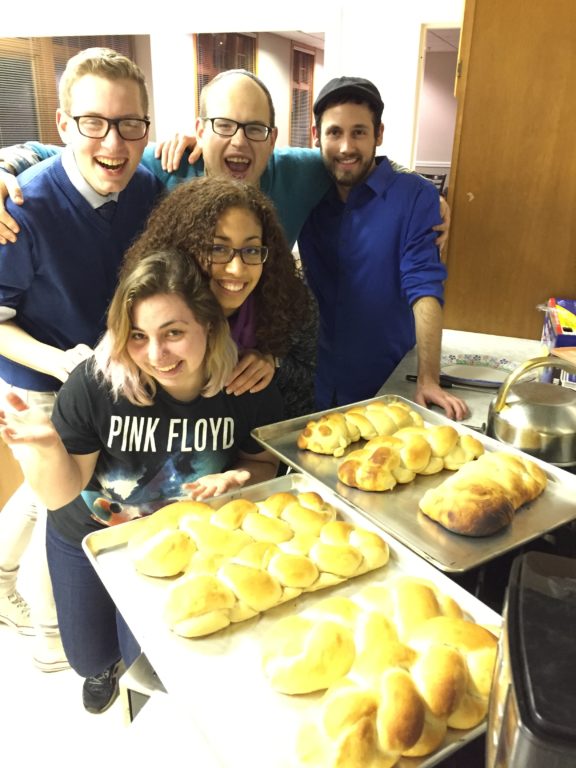
Some of our members made Challah (traditional egg bread) during our recent bread baking activity.


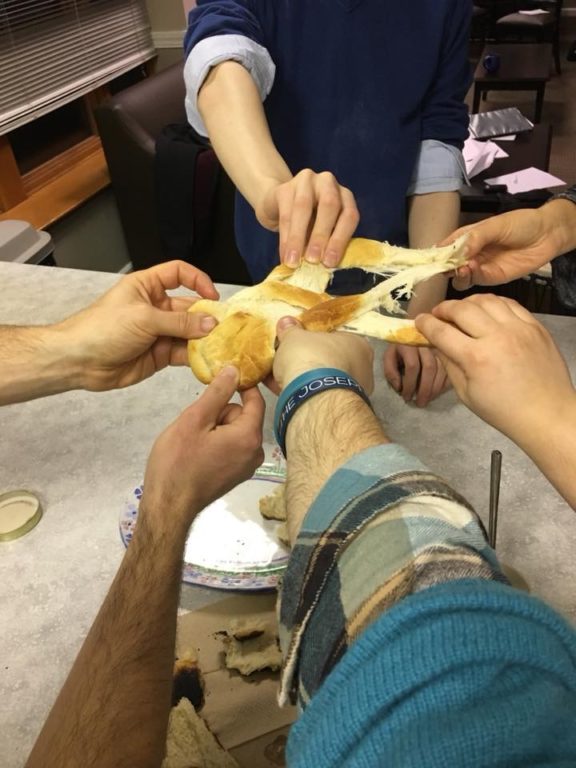
At the end of the evening, we broke bread together in the spirit of Acts 2:42.

Our ministry is birthed out of Congregation Ruach Israel in Needham. a longstanding Messianic Jewish Congregation (founded and established in 1979). For the average college student, it is a schlep (long way) to get out to the suburbs, with little to no public transportation, so we are taking the congregation to them as a satellite campus! Our home base is the Ruach House, a communal house located in Brighton, where our residents are the lead coordinators of the CityRuach team. Residents are also covenant members of the Synagogue and in good standing with Ruach Israel leadership.

We welcome non-Jewish people to come and see what we are about. Jesus was Jewish. As stated, He lived as a Jew and died as a Jew. By having those from the  nations  participating with us, we see Kingdom realities break loose. The prophet Isaiah not only says, “So all nations will flow to it (The House of the Lord)” (Is. 2:2) in the Last Days, but he also says, “For My House will be called a House of Prayer for all nations” (Is. 56:7). Jesus is One Man Israel and is the Light to the Nations. By joining with us, you can understand these realities in a deeper way.

Additionally, one of our team members can come present a Jewish Roots seminar for your Church or small group, such as Messiah in the Passover, Healing Prayer: A Jewish Approach, Messiah in the Fall Feasts, etc. It is important to remember that we are one body in Messiah and that Jews and Christians need to work together (Ephesians 2:11-22).

We encourage you to connect with us! If you are simply curious about what we do, have a question about modern Messianic Judaism, want to have one of our team members speak at your congregation or small group, or just want to discuss more, please send a note to cityruach@gmail.com or connect with us on our CityRuach Facebook page. We would love to help and collaborate with you! Yeshua simply said “Come and See” (John 1:39), so come and experience a new light to the Jewish people in Boston for Messiah’s glory!


Joe Miterko is a graduate of Berklee College of Music (B.M. Contemporary Writing & Production) and Talbot School of Theology (M.Div Jewish Studies). Born and raised in Connecticut, Joe is passionate about music, travel, and much more!

Written by uniteboston · Categorized: Blog · Tagged: boston, community, home, jesus, unity

Sep 09 2017

Turning God’s Mic Up in Boston

“I had hit rock bottom, but Jesus wasn’t done with me yet.”
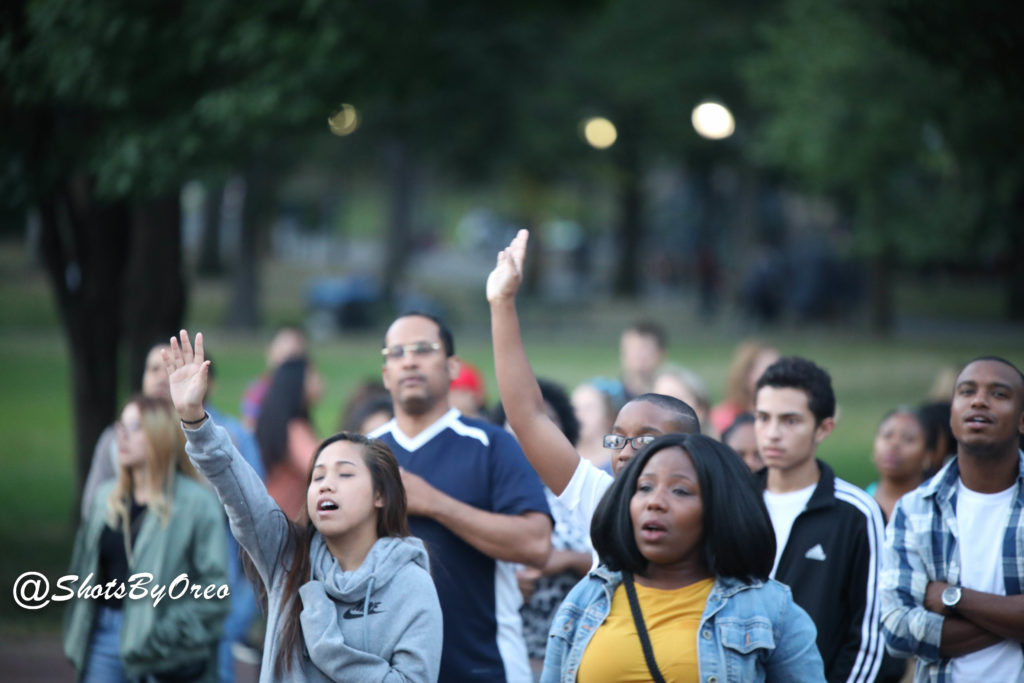
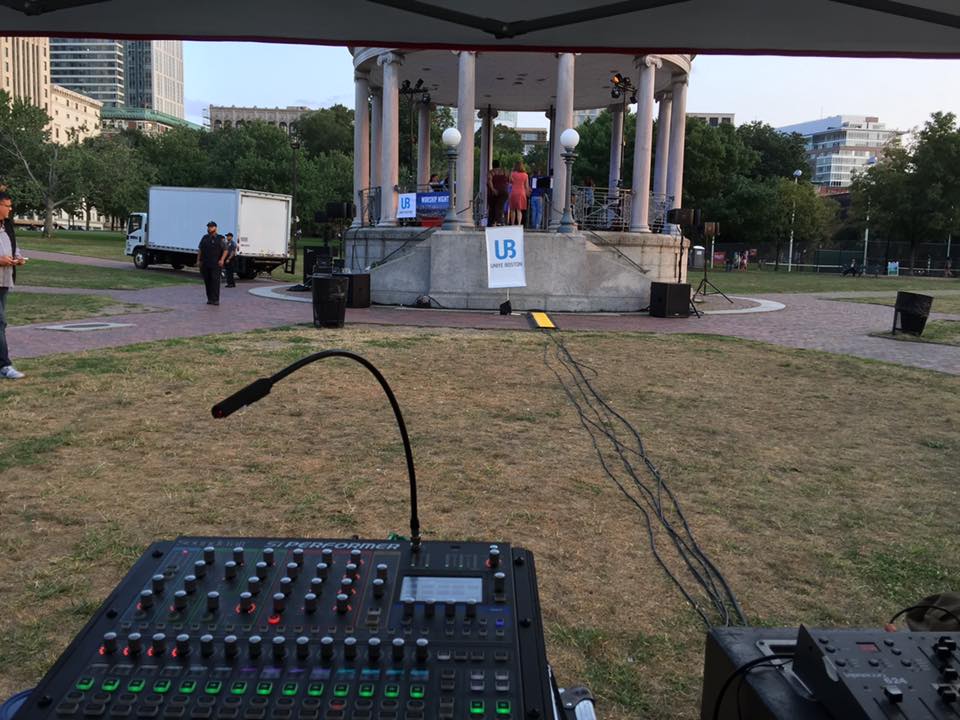
Erich Clark, our guest blogger this week, attends First Presbyterian Church in Ipswich and was on the logistics team to help set up the stage for our worship night in August. Erich writes about the significance of the worship night in his own spiritual journey of faith, and the power of God to transform hearts and lives, both personally and corporately.


I was the Assistant Sound Tech for the UniteBoston Worship Night on the Boston Common. During sound check and rehearsal with the Worship Team, I felt my past and present collide. To understand that, I need to tell you my story.

I’ve set up a lot of stages for a lot of bands.

I get there early, go over the plan, run the cables, note the channel numbers, wait for the musicians to arrive, sound-check, and start the show.

The last time I sound-checked in Boston, my life was collapsing. I worked for a heavy metal band from Rhode Island, and we had finally made it to Massachusetts. It was an important opportunity, but by the time the musicians were plugged in and ready, I was so drunk and stoned that the club’s in-house sound guy had to take over completely.

That was my pattern: set up, sneak off for some drugs, come back and drink until the night became a blur. The band had kept me on until that point only because I promised them that I would stay sober until after each gig. But I was out of control, and that was my last gig with them. At the end of the night, they told me never to contact them again.

I drove home drunk that night to an apartment where I was soon to be evicted. I’d spent all the money I earned (and a large sum I had borrowed) on my chemicals. I was soon to be fired another countless time. Then my car died, abandoned and spewing thick black smoke on the highway during a drug run. It was all over; my life was a write off, the end of the line, my rock bottom.

But Jesus wasn’t done with me yet. I checked into a Christian sober house, Place of Promise, because it was the only one that would take me. That’s where I gave my life to Jesus, for whatever limited use He could get out of me. It was the only thing I had left.

When I graduated from Place of Promise, I found a work-for-rent-position at First Presbyterian Church in Ipswich. They knew about my past, but they accepted me with open arms. They have become my family, supporting me in a myriad of ways as my life has healed.

I started running sound for the church, grateful to use my skills in a positive way. I’ve worked with the Middle School youth group for the last decade and passed on my sound skills to several young people.

One of my trainees was Benjamin Hills, a pastor’s son I’d met when he was 8. He’s a young man now, attending Gordon College, and the Head Sound Technician for the recent UniteBoston worship night on the Boston Common. Ben invited me on as his assistant, and I was intrigued by the prospect.

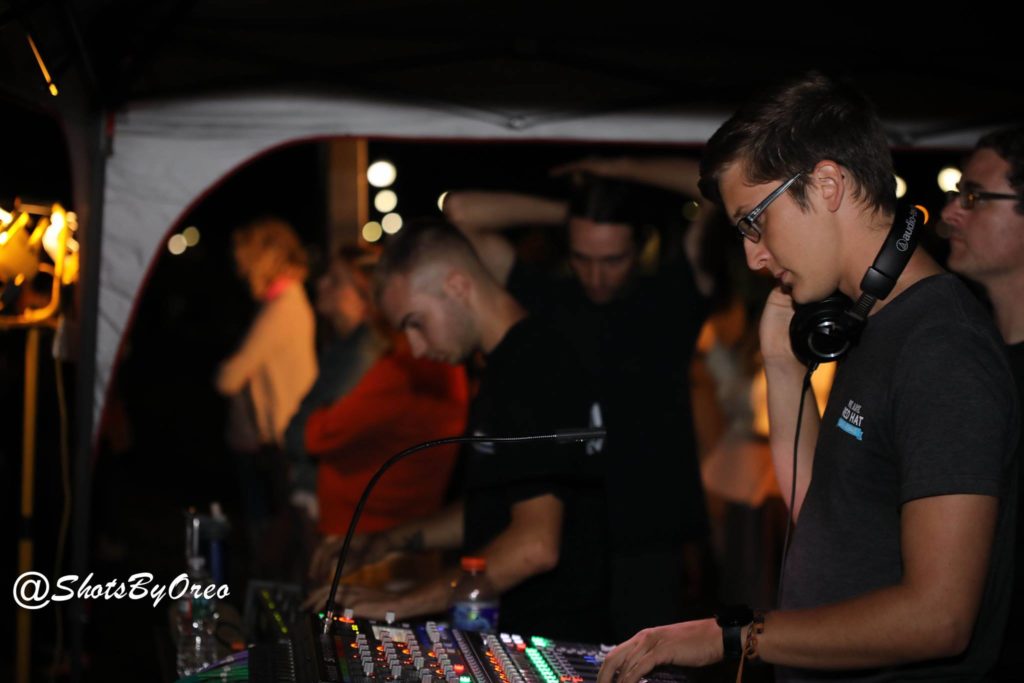
Benjamin Hills and Erich Clark working the sound board at the worship night.

On August 26th I found myself setting up a stage right in the center of Boston. I was checking connections and helping the UniteBoston worship team to arrange themselves and set levels. I was appreciating the quality band, the professional stage, the beautiful weather, the picturesque Boston Common. As I looked around at those musicians and volunteers and technicians lending their skills to the concert, it struck me:

This is God’s concert.  He’s playing right in the heart of our capital city, shouting out Grace, love, hope, and healing. The God I serve took this useless shell of a man and made him whole, happy, and useful. If He can heal me, I know that He can heal the children of this wounded city.

Let’s turn His mic up.

Written by uniteboston · Categorized: Blog · Tagged: boston, home, jesus, uniteboston, unity

Mar 24 2017

Coming More Alive This Lent

This week, we feature a guest blogger, Fr. Tom Ryan, CSP, who directs the Paulist North American Office for Ecumenical and Interfaith Relations in Boston.

Father Tom recently held a day of reflection entitled “What Will Bring Me More Fully to Life This Lent?” His words are important for us in this period where we are reflecting and considering our relationship with Christ.


CC-BY-2.0/ Susanne Nilsson Via Flickr

If you were to take that approach to Lent this year, you might ask: “What would bring me more alive?”

Keep your eye on the sun in this season. It will give you the primary cue as to what this period we call Lent is all about. In our northern hemisphere, Lent coincides with the turning of the earth towards the sun, the springing forth of life from the apparent death of winter’s frigid grasp.

The very word “Lent” comes from the Anglo-saxon “lencthen,” originally referring to the lengthening of the light. From this original meaning, confirmed in the movement from winter’s darkness to spring’s increasing vitality, we are invited to move out of our own personal lethargy to vitality, from ashes to the paschal feast. Lent, in short, is about coming to life in new ways. It is about growth.

Its spirit is better captured by the pouring of water at Easter baptisms than by the burning of palms on Ash Wednesday. The history of Christian worship reminds us that Lent exists as a time to prepare candidates for baptism and to invite all the baptized to renew their baptismal consecration at Easter. Once again, the emphasis is on new life.

If you were to take that approach to Lent this year, you might ask: “What would bring me more alive?” The practices of physical and spiritual disciplines you choose would be in light of Jesus’ words, “I came that you might have life and have it to the full!” (John 10:10). Yes, you might settle on a practice or two that has some “bite” in it, but it would be undertaken in the spirit of pruning a rose bush, of cutting back the branches that have grown too wild, in order to cultivate more blossoms that give glory to God.

If you approached your life in terms of a holistic spirituality, looking at your physical, mental, emotional and spiritual well-being to see where things have fallen out of balance, have grown wild, and need some pruning or fertilizer or watering, you might ask yourself some questions like these:

How is the balance between my active and contemplative life? Do I spend much more time “conjugating” the verbs doing, wanting, having than the verb being? What forms of prayer might help me restore some contemplative space to my living to allow my soul to breathe?

What is the balance between mind and body in my day? If the scale tips heavily towards major engagement of the mind but minor involvement for the body, what kind of physical exercise might I enjoy that would have the benefit of renewing my energy, enabling me to sleep better, and bring a more relaxed presence to those with whom I live and work?

Is there rough equilibrium between time invested in taking care of myself and time dedicated to taking care of others? If I cannot identify a clear service dimension somewhere in the deployment of my time and energy, what opportunities are there in my locale to assist the homeless, the hungry, the sick or the aged?

Is my relational life blossoming, or dying on the vine? Maybe laying in an evening a week to spend with spouse or friends would be like watering dry soil and bring alive your affectivity with laughter and tears.

What’s the balance between passive watching (as in television) and active reading (as in a good book that nourishes the soul)? Could Lenten fasting take the form of fewer sitcoms watched but more chapters read?

And what’s the ratio between the time my functional activities get and the time made available to nurture my creative energies? Maybe a good Lenten resolution would be to get out at least once a week to an art gallery or a museum, or to an inspiring play or movie.

Whatever you settle on in this season of a springtime for the spirit, keep your eye on the sun and imitate the earth in turning more fully towards the light. Do what will bring you and others more fully to life. There could be no better preparation for the Easter feast of water and light, no better offering to make at the altar, than a heart and spirit renewed and grateful to God for the gift of life both human and divine.


Note: This article was originally published in the Boston Pilot; republished with permission.

Written by uniteboston · Categorized: Blog · Tagged: boston, ecumenical, home, jesus, lent

  • « Previous Page
  • 1
  • …
  • 9
  • 10
  • 11
  • 12
  • Next Page »


Give to Further Christian Unity

DONATE!

  • Email
  • Facebook
  • Instagram
  • YouTube

Copyright © 2026 · UniteBoston · Built on WordPress