UniteBoston

Bridging Divides Across Christians for the Flourishing of the City

  • Home
  • Events
    • Submit Event
  • Join In
    • Beloved Community Lab
    • Migrant Care and Solidarity
    • The Church and Civic Engagement
    • The ATTIC
    • Kingdom Conversations
    • Worship & Pray
    • Boston Flourish
  • About
    • UB Board, Staff & Volunteers
    • Cohorts
    • Missional Letter
    • Annual Reports
    • History
    • Christian Unity
  • Forums
  • Blog
  • Give to UniteBoston
  • Contact
  • Search

Sep 05 2020

“Behold, I am Doing a New Thing”

This week, we feature a blog by Ruth Wong, the Program Director of the Boston Education Collaborative at Emmanuel Gospel Center. The Boston Education Collaborative (BEC) works with churches and Christian leaders to empower Boston’s next generation to succeed in school and in life. The BEC is also a featured ministry in UniteBoston’s upcoming Love Boston concert. Despite the challenges of the pandemic, Ruth shares stories about how God has been at work through church-school partnerships in nurturing new collaborations between churches and city institutions.


“Remember not the former things,
nor consider the things of old.
Behold, I am doing a new thing;
now it springs forth, do you not perceive it?
I will make a way in the wilderness
and rivers in the desert.”
~Isaiah 43:18-19

As the COVID-19 pandemic swept through our world and threw all the countries and their systems into chaos, a sense of awe and the fear of the Lord grew in me. God humbled mankind and put us in our place, reminding us of how limited and powerless we really are. In essence, I believe God called us to attention. There has been much suffering, loss, and death as a result of this pandemic. It has been a sobering season to say the least. Yet, many Christians would also attest that we have seen God work in amazing ways that demonstrate His greater purposes in allowing this crisis to happen. Through the Boston Education Collaborative (BEC) at Emmanuel Gospel Center (EGC), I have witnessed God bring His body together across racial, ethnic, and geographical lines in new ways that I could not have imagined or foreseen.

The mission of the BEC is to help churches support urban students (and their families) so they can thrive and reach their fullest God-given potential. Traditionally, many urban churches had already been involved in supporting schools or running their own programs to meet the physical, social, emotional, and academic needs of students. Since 2011, the BEC has helped to mobilize and support new church-school partnerships primarily with the Boston Public Schools (BPS) but has also worked beyond Boston. Churches have partnered with schools to provide supplies for classrooms, appreciate school staff, support the needs of families, and tutor/mentor students. God has divinely orchestrated so many connections and new partnerships that I am no longer surprised. Yet each time they happen, I continue to marvel at how His ways are infinitely higher than my ways (Isaiah 55:8-9). I am humbled by God’s favor upon the BEC in allowing us to build trust and so many relationships with local leaders in the area.

In early April, a series of personal connections led to an unexpected new ministry role for the BEC. I got connected to a director at the Salvation Army who was involved in statewide efforts to provide emergency and disaster relief. That introduction led to the BEC getting involved in helping to mobilize churches to meet diaper and other needs in Chelsea which was hit hard by the pandemic. Concurrently, I found out about various needs, including diapers, amongst the Spanish-speaking BPS families. This led me to pull in other EGC colleagues to meet with Agencia ALPHA, the social service agency of Congregación León de Judá, to explore ways to partner. ALPHA connected me with Pastor Johana Perez from Harvest Ministries of New England in Weymouth. One thing led to another, and soon, Pastor Johana and I found ourselves as partners in diaper ministry (aka diaper queens) for the Greater Boston region. 

What began as an effort to help Chelsea with diaper needs became a diaper and baby products ministry that has helped over 600 families that are connected to at least 18 churches and nine organizations in Boston and beyond. BPS families were able to benefit from these resources as well as many families that were being reached by local churches, most of them in the COPAHNI (the Fellowship of Hispanic Pastors of New England) and ALPHA networks. The families live in Boston, Chelsea, Lynn, Lowell, Waltham, New Bedford, Fall River, Brockton, Cranston (RI), and even on Martha’s Vineyard. We were tasked by the Massachusetts Voluntary Organizations Active in Disaster (VOAD) to manage a large donation of diapers from Baby2Baby, a charity organization. In addition, many individuals and several churches generously supported the ministry with financial and diaper donations, totaling close to $10,000. 

Through BPS, the BEC was also introduced to two parent coordinators who had brought to BPS’ attention the many needs of the families that they were connected to. It turned out that these two moms were active members and leaders in their churches. At the time, Iglesia Biblica Faro de Luz in East Boston and New Ministry Church in Roxbury were not connected with ALPHA or COPAHNI. Through the BEC, those two churches were able to get connected to the resources of these two networks. Harvest Ministries, ALPHA, and COPAHNI had been coordinating an amazing operation to deliver food bags and fresh produce to families every weekend from April through early August. Out of the 1000+ families that had received food at least once, 160+ of them were connected to these two churches. The churches also referred families to apply for the cash assistance program that ALPHA was running to help families most impacted by the pandemic. In addition, the BEC connected another 64 BPS families to receive food deliveries. 

It was amazing to see all the different churches who collaborated together for these efforts. While Harvest Ministries alone had 30 drivers to help distribute food to churches and hundreds of families, drivers from ALPHA and six other urban and suburban churches also pitched in to deliver to many homes. Besides the diapers that went to families connected to more than 10 Latino churches, there were diapers that went to families connected to several other churches representing different denominations and ethnicities.

This is just one story from the pandemic period. I know of other beautiful examples of churches partnering together for the first time and building relationships that will extend beyond this COVID-19 season. Furthermore, there were many other churches and leaders that collaborated with or supported the BEC during this time on other projects. The number of churches, organizations, and individuals who partnered in all the various projects is astounding. (I wish there was room to name them all here.) God’s fingerprints were all over the web of relationships, the timing of conversations that happened, and the catalytic events that led one thing to another. “You have multiplied, O Lord my God, your wondrous deeds and your thoughts toward us; none can compare with you! I will proclaim and tell of them, yet they are more than can be told.” (Psalms 40:5)

During UniteBoston’s webinar on how churches are missionally responding to COVID-19, Rev. David Wright, Executive Director of the Black Ministerial Alliance & Assistant to the Pastor at Peoples Baptist Church said something that really resonated with me: “I see Christians trying to get ‘through this’ so we can go back to our understanding of ‘normal.’ But God is intentionally leading us to a different place of doing and being the Church. We do ministry in our congregations, but how do we incarnationally engage the world for the kingdom of God? How do we see ourselves within an ecosystem of other churches so we can really be salt and light to the world? I see the body of Christ coming together in phenomenal ways; I’m just hoping that it continues and isn’t just an episodic thing because we had this crisis.” To this, I say, “Amen! Yes, Lord! May Your kingdom come and Your will be done on earth as it is in heaven.”


Currently, the BEC is busy working on initiatives to support BPS and other school districts in the upcoming school year, including mobilizing churches to assist teachers during Zoom classes, providing cloth masks for BPS students, sharing space with afterschool programs, hosting learning pods, and supporting parents/guardians in navigating the online platforms. Please join in on what God is doing through and in the churches as we seek to be His salt and light in our communities! To learn more about these initiatives, go to www.churchschoolpartners.org and contact me at rwong[at]egc.org.
Written by uniteboston · Categorized: Blog · Tagged: boston, christian, collaboration, home, uniteboston

Jul 16 2020

The Narrow Way of Racial Justice

“[There is] immense pressure, even in the Church, to prove our belonging to the “acceptable” group—a pressure that makes it easy to forget that justice often means longer term, un-sexy, behind-the-scenes labor in policy, paperwork, learning to love neighbors, and quiet, unseen conversations and prayers.”

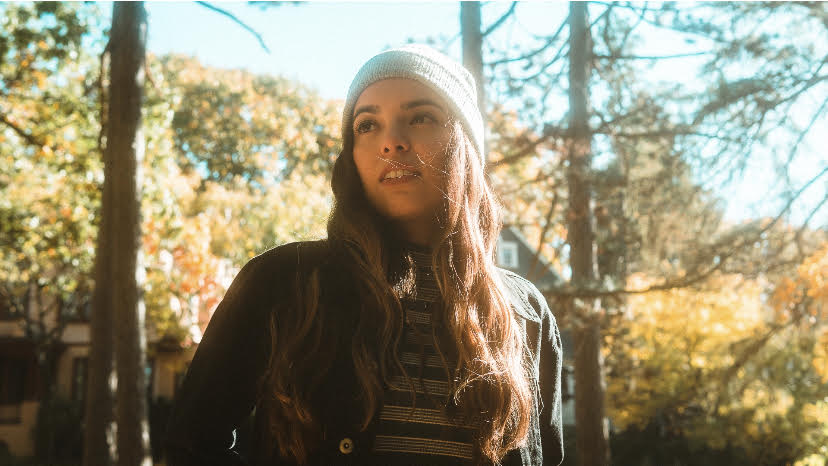
This week, we feature a blog by Lexi Carver, member of Church of the Cross. Lexi recently moved back to her hometown of east Arlington, where she lives with her husband Connor and their cat, Billboard. Trained as a mechanical engineer, Lexi spends her days writing engineering software user guides, where she obsesses about rigorous use of language and contemplates the magic of nanoscale design. She also enjoys long walks and reading theology from many traditions. Lexi shares a powerful perspective on the need for Christians to examine their underlying motives behind their work towards racial justice and the need for discernment about the consequences of current cultural trends.


Photo Credit: Elijah Mickelson

This past month, grappling with injustice against black Americans, I have learned and prayed much and still have much to learn and pray about. The ways in which churches continue to be complicit in racial injustice are heartbreaking; white Christians in particular are called to reflect on and repent of these sins, but also to act towards bringing forth a more fair and reconciled  society; and for Christians, this must first begin in the church. I am heartened to see how many white people (myself included) are beginning to better comprehend the long suffering of our black brothers and sisters. The charge to listen is a great one – it is imperative that each person takes seriously the aches, wounds, discomforts, and the long line of injustices back through history. The reminder that Christ alone is our hope is a much-needed anchor. The invitation to pray and lament is crucial.

But there is even more at stake than what we see on the surface, for the battle is not against flesh and blood. In the midst of increased work for justice and awareness, I have noticed increased social temptations: to send certain signals for the sake of social acceptability, making my motives about me instead of the problem at hand, to succumb to viewing others with suspicion by mimicking scenarios in which people are labeled “friend” or “foe” based on (dis)agreement, and to judge others and myself as “moral” or not based on choices of politics or preferred action.

I have seen that it has become very easy in Boston, even encouraged, to label other people “racist,” “white supremacist,” “ignorant,” “unresponsive,” and a whole host of other condemning (or even idealizing) labels. These labels often stem from perceptions of only a few choices: Did they attend protests or not? Who did they vote for? Do they want to defund the police? Are they using the right lingo? In some conversations these days, disagreement feels tantamount to personal betrayal.

In some cases, these assessments may be accurate. But the temptation to hastily assume others’ hearts or to wave self-righteous flags reflects a cultural pitfall of moralizing judgment, of separating the “acceptable” people from the “unacceptable,” often along political lines. This leads to immense pressure, even in the church, to prove our belonging to the “acceptable” group—a pressure that makes it easy to forget that justice often means longer term, un-sexy, behind-the-scenes labor in policy, paperwork, learning to love neighbors, and quiet, unseen conversations and prayers. We can easily forget that Jesus called us to close our doors, praying to the Father who sees what is done in secret.

Amid the obvious issues of racial injustice many of us are exploring in conversation, there are also much less-discussed tensions of economic oppression, cultural identity, and political motives. My husband lived in Jamaica Plain for 10 years before we got married. In the last few years of his living there, many of his black and Latino neighbors suddenly moved away and their former homes were gutted, quickly rehabbed, and resold, in many cases for upwards of a million dollars.

We noticed with dismay that this sharp increase in gentrification directly correlated with an equally sharp increase in the number of “Black Lives Matter” signs appearing on the lawns of the new, wealthier, mostly white residents. These college-educated transients who had just pushed out lifelong residents showed no interest in getting to know the remaining, less wealthy, neighbors. Given the circumstances, it was hard not to see the lawn signs more as a social signal, support for a specific organization and its political ties, or perhaps an attempt to associate with virtuous sentiments, than an effort for real justice.

This was – and is – hard to talk about in Boston, home to so many universities and egregiously high rent prices, and where economic oppression can go hand-in-hand with political signaling. Although this trend is obviously not limited to predominantly black neighborhoods, what happened to my husband’s street was a cautionary tale to me of how people fighting for certain causes may widely perpetuate other injustices.

I am sure I am not exempt from the temptation to this particular sin! None of us are. We realistically will rarely have perfect motives, and it requires humility to acknowledge this. A question we might ask ourselves before joining any cultural movement is, “Is this for God’s glory or my own sake? What am I gaining?”     

Yet discussions of issues like this can quickly turn bitter as political opinions become, more and more, all-encompassing labels of identity. In addition to the political label that can come with Black Lives Matter lawn signs, another label that comes to mind is the phrase “anti-racist.” Despite the commonality of this phrase, I find myself hesitant to define people overarchingly by what we are against. Jesus certainly stood against evil, but he defined Himself in terms such as the comforter, Savior, mediator, king, shepherd, bridegroom, deliverer—never the “Man Against Wickedness.” As my friend Kelly Madden recently pointed out, I want to be for justice, for cheering for the personal agency and authority of my black friends and neighbors and leaders, for the protection and exaltation of black lives, for the respect of black voices and churches and businesses, for support of black communities, for the liberation of black prisoners wrongly accused and unjustly sentenced, for better and fairer policies, for accountability without condemnation, for humble and ongoing learning and growth. Perhaps our challenge is to pause long enough and breathe deeply enough of the Holy Spirit to envision something to create, not only to tear down.

The Enemy would use this time, if we allow it, to tempt us to pit ourselves against each other, to drive our divisions deeper rather than work to heal them, to malign each other (or others not in the room) endlessly. But this is nothing new; as Jesus tells us, the path of the Kingdom of God is narrow, wending and twisting between landmines in our hearts and our societies.

I do not have the answers for how best to work for and discuss issues of racial justice, or any of the other forms of justice we need right now, while avoiding the evil that will inevitably follow from “standing in the synagogues and on the street corners to be seen by others” (Matt. 6:5). Of course, God can use even our most measly and self-serving actions to his own purposes and glory. But I believe these are questions that the church must grapple with. Following the way of Christ means allowing God to train us in shrewdness and innocence, prayerfully discerning where and with whom we are called to work, and digging beyond the surface of cacophonous news headlines, social pressures, and our own hearts. 

Pray with me:

 Lord, help us to seek, above all, your heart for our churches and our city. Plug our ears against the siren calls of selfishness, social acceptability, and condemnation of our neighbor; help us to learn the language of your Spirit; teach us narratives and ways that edify your children. Help us to take the time to sit with you, until we are filled with and compelled by your love. Empower us to pray for our enemies and love our opponents. Above all, help us to see your reflection in every human face, and show us your call to us in your mission of racial justice and other forms of justice in the world.

Written by uniteboston · Categorized: Blog · Tagged: boston, christian, home, jesus, neighborhood

Jun 27 2020

UB’s Love Thy Neighbor Campaign: Meet Who’s Making it Happen

The theme for this year’s summer campaign is entitled “Love Thy Neighbor,” which invites Christians to reach out to their neighbors in new and unexpected ways. Through providing groceries to combat food insecurity, racial justice initiatives, and interdenominational dialogues, we are encouraging people to contemplate who their “neighbor” is and how everyone can best “love their neighbor as themselves” during the difficult times we are facing. It has been a humbling experience to witness the campaign coordinators discern the best course of action for these initiatives, and to see Christians of different denominations and backgrounds connect with their neighbors in such profoundly gracious ways. 

Our team will also be creating and releasing collaborative videos that celebrate testimonies and worship experiences around people loving their neighbors, which will culminate into a virtual worship viewing party on September 12, 2020. Stay tuned for more information about this! 

Our “Love Thy Neighbor” summer team is a diverse group of Christians, working hard each week to discern and launch various initiatives. Meet the coordinators below as they reflect on what the theme of “Love Thy Neighbor” means to them! 


Name: Mike Hong

Position: Music Director

Home Church: City On A Hill Church

“Loving your neighbor is a holistic pursuit of your neighbor’s good in the same way you pursue yourself. We make plans for ourselves. We go on grocery trips. We make financial sacrifices and investments. We spend time growing in knowledge and maturing spiritually. We even vote and lobby for things that benefit ourselves. Loving your neighbor encompasses care of body and soul, anything less disregards the very way that God designed us as human beings.”


Name: Kelly Fassett

Position: Executive Director, UniteBoston

Home Church: River of Life Church

“‘Love thy neighbor’ is at the heart of Jesus’ message, and it calls for a radical orientation of one’s life to others rather than on oneself. I believe that loving our neighbor means that we intentionally listen to, care for, and lay our lives down so others can flourish.”


Chloe profileName: Chloe Gaydos

Position: Concert Co-Producer

Home Church: Reunion Church 

“Love thy neighbor is a high calling which Jesus instructed us to follow, and as we love our neighbor,  we are able to impact each other at the deepest level that we were made for. God puts many people in our lives who play various roles – and if we lack love for them, then we have fallen short of our calling as Christians. It’s important for us to take what we have and use it to love one another and to recognize our differences with an open heart and mind.”


Name: Kelly Shea:

Position: Co-Producer

Home Church: Highrock Church

“‘Love Thy Neighbor’ is a selfless way of being, whether we are consciously aware of it or not.  Often, as an act out of the love we have received from Jesus Christ, it is the next best step forward to serve someone else without condition or expectation of a return. To love thy neighbor is to care freely, and potentially wholeheartedly, for their well-being – to be a support for others in their time of need or distress, in any way we can.  And if you know Jesus, loving thy neighbor is to share the good news, through both word and deed as He has displayed.”


walcott

Name: Sharon E. Walcott

Position:  Public Relations

Home Church: Pentecostal Tabernacle, Cambridge

“In Galatians 5:14, it commands us to ‘Love thy neighbor as thyself.’ This commandment is a golden rule for me.  Specifically, I really try to love️ my neighbors who are in need, broken and invisible to most.”


Name: Peter Seremetis

Position: Communications Coordinator 

Home Church: Marsh Chapel at Boston University, and St. Nicholas Greek Orthodox Church in Wyckoff, NJ

“When I think of Christ’s call for us to “Love Thy Neighbor,” it reminds me to pay attention to all of the nuanced ways that God is at work in our lives. As Christians, we often talk about God acting “upon” us from heaven, or acting “through” us via the Holy Spirit. Yet, I find that God acts most deeply and profoundly “between” us through the relationships that we cultivate with each other. When we “love our neighbors” by checking in with, reaching out to, being present with, standing up for, and–when necessary–forgiving each other across boundaries, we take the first steps in aligning our acts with God’s acts, ultimately becoming part of the great work that God already has in motion.” 


Name: Joel Putnam

Position: Social Media & Projects Manager

Home Church: New City Church, MA and First United Methodist Church of Pinellas Park, FL

“Living out my Christian faith is not complete without following through on my own baptismal commitment of doing good works as a response to the love and grace God has given me. As my future takes me into vocational ministry, I must not lose sight of what God calls me to do as an individual. Our UniteBoston mission reminds me of how important it is to see others and care for others.”

Written by uniteboston · Categorized: Blog · Tagged: cambridge, home, jesus, uniteboston, university

May 16 2020

“Trust in You” – A New Song by Jen Aldana

When facing moments of difficulty, uncertainty, and change in our lives, it’s common for many to question “Why is life happening this way? Where is God in all of this?” Facing the implications of a global pandemic and social distancing, these questions can seem more prevalent in people’s hearts and minds than ever before. In the spirit of offering comfort and insight in these challenging moments, we’re excited to feature Jen Aldana’s second original music video: “Trust in You.” 


Released on May 15, “Trust in You” shares a relatable glimpse into the inner doubts one can experience and the resolve one can feel when deciding to trust in God in those moments of insecurity. Rather than showing this dynamic overtly by having a character overcome a monumental challenge, or through a series of relationships as depicted in Jen’s previous music video: “Heaven Rejoices,” “Trust In You” instead walks the viewer through the day to day activities during which individuals may be contemplating those subtle doubts–such as while going about a morning routine, driving, or walking through Boston. According to Jen, embedded in the video’s simplicity lies the conviction that “we have to make this decision every single day as we live our regular lives.” “It’s not just in the big things, it’s in the little things too,” Jen said. “I start off the video at home because those are the times when I feel like my mind gets jumbled with doubt. So that’s what I wanted to show, that even though I’m just starting my day, I have to make that decision of ‘God, I’m going to trust you for this day.’” 

Interpreting Jen’s explanation through the lens of the “Lord’s Prayer” in Matthew 6:9-13, one could almost view the scenes depicted in “Trust in You” as a living reminder that “as we give God our daily trust, God ‘gives us this day our daily bread.’” 

Since Jen herself is the only “character” in the video, viewers may correlate its themes and scenes with today’s social distance living. However, as Jen explained, this relatability to current events is unintended as the video was filmed in October 2019, and the song itself was written much earlier in 2018. That said, in response to the video’s release coinciding with the coronavirus pandemic, Jen encouraged viewers to see “Trust in You” as a reminder that “we’re gonna make it through” and to “keep trusting God the same way we did before this pandemic.” 

While circumstantially the timing of video and its messages may be coincidental, what enables “Trust In You” to maintain its relatability and authenticity across such a long period of time is the story behind it. Similar to her previous video: “Heaven Rejoices,” the song “Trust in You” was written in response to Jen’s own experiences maintaining her faith in God during challenging times. “I wrote this song during a time in my life where I was confused about my music career, had just ended a really long term relationship, and was honestly just unsure about where God was taking my life,” Jen said. “And despite all of that, I felt led to write songs of worship, and this song is one of the ones that came out of it.” In the midst of this confusion, Jen contemplated releasing the songs she had written, and questioned whether this was the right time. One of her mentors assured her, “Jen, this is exactly the time to do it. Because, you’re going to help so many people when you write from this place of pain rather than from a place of perfection. It is so much more impactful for you to say these words about trusting in God when you are in the middle of a wilderness in your life.” 

Reflecting on her journey and the video’s release, Jen hopes that “Trust In You” may serve as “an encouragement that people can share with anyone who may need this reminder.” Be on the lookout for Jen’s next music video: “Your Peace” being released on June 5th! Follow her Instagram @jenaldanamusic for the latest updates. 

Written by uniteboston · Categorized: Blog · Tagged: boston, home, lent, peace, prayer

Apr 25 2020

Lessons in coping personally and professionally during times of national crisis

Kelly Madden, Director of the Boston Fellows and member of the Church of the Cross, is our guest blogger this week. Kelly has a Master of Divinity from Gordon-Conwell Theological Seminary and a PhD in Political Theory from the University of York, England. He is the husband of Heather, the father of two adult children, Alex and Kathryn, and an ordained Anglican clergyman. Kelly reflects on the experiences in his life during times of crisis – Read below to hear his wisdom and advice on how Christians can faithfully endure the current COVID-19 pandemic.


Manila, PHILIPPINES – July 16, 1990

On July 16, 1990, I was sitting in an easy chair in the marble-lined lobby of an international hotel in Manila, Philippines, when someone behind me shook my chair. Turning around, I realized no one was there. The whole hotel was shaking. Out on the street I watched a large crack open up, bottom-to-top, 15 stories up the side of the building. The earthquake killed 1,600 people in the country. I was soon given responsibility for a global conference of 600 people, the reason we were there, and I was named to the leadership team for a summer-long series of events bringing together about 4,000 Cru staff members from around the globe. It was also an unusually strong season of typhoons. And before any of that, we were receiving death threats from a radical group, because of our evangelistic activities.

West Africa

On March 25, 1991, I returned from a ministry trip to my home, then in Mali, West Africa. As my colleague drove me home from the airport, we saw burning cars and tires, and smoldering buildings, with debris from rioting scattered along the road. That night the military (justly) overthrew a tyrannical dictator. We could hear mobs tearing down the house of the Minister of Education, about 100 meters away, stripping even the copper wire from the walls.  For a few weeks, the rule of law broke down. Some time in the next few days, on my 10-minute walk to work, I passed a body in the marketplace, killed during related rioting. My immediate supervisor was a prominent African pastor, soon named to a seven-member national transitional committee, responsible for ushering in a new form of government. 

Dakar, SENEGAL  (Photo from more recent events)

Several times in the late 1980’s, while I was responsible for a university ministry in Dakar, Senegal, students fought skirmishes with police, who used teargas, and eventually evacuated the campus by force, for several periods of several weeks each. Then from 1990 to 1994, I supervised university ministries in 15 countries, where national crises such as these were common.

All that was another season in my life. But I’ve been reflecting on the lessons learned then, for this new season. Maybe these observations are obvious. But maybe they can serve to “comfort those who are in any affliction, with the comfort with which we ourselves are comforted by God.” (2 Corinthians 1:4)

My takeaways:

  1. It’s a spiritual battle, too. Don’t be like me and wait until you see arrows sticking out of your body before you realize it. God is a God of order, Satan is a god of chaos. The devil’s biggest tool—maybe his only power, in the end—is deception. He is lying to you, constantly, about God’s goodness, God’s love for you, care for you, power to accomplish his purposes for you. Resist the enemy. As Jesus did, during his time in the wilderness, strike back at Satan with God’s Word: “It is written….” Proclaim it, out loud, in Jesus’ name, in bold denunciation of Satan’s lies.
  2. This too shall pass. All that we see is passing. We are mortal: Dust we are and to dust we shall return. God and his Word endures, our hope is in things we do not see. Beyond death is the Resurrection, death overcome by death. That is our end, our hope, our joy.
  3. For now, don’t plan too far out. I’m always tempted to come up with a big strategy. It’s good to think and dream. But in these times, take next steps, mostly, and be here, now. Life is what happens while you are waiting for life to happen.
  4. Be gentle with yourself. It’s stressful. Your productivity and capacity are greatly reduced. That’s just the way it is right now. Accept it. 
  5. Give yourself godly structure, and stick to it. Establish order, under God, for your life: Daily time with the Lord, working hours, exercise, healthy eating, worthwhile leisure, plenty of rest and margins. But be flexible, too, when things change. When things change.
  6. Take care of each other. Despite the difficulties of connecting, this is an opportunity to grow in love, through shared challenges.
  7. Stay away from trouble. American friends and family, who knew about my circumstances in the periods described above, often expressed concern. I told them: I’m safer here than I would be in parts of your city. There is no safer place than in God’s will. Just stay away from obvious trouble.
  8. Keep your sense of humor. I have a life-long interest in the humor of the Bible. It’s there, if you have eyes to see it. To see the humor in our situation is to see our limitations, and weaknesses, and failures, but also to honor God’s grace, and the safety it gives us. Just don’t use humor to hurt others. Godly humor is another way to defy the devil’s lies. 

Written by uniteboston · Categorized: Blog · Tagged: home, jesus, lent, unity, university

  • « Previous Page
  • 1
  • …
  • 7
  • 8
  • 9
  • 10
  • 11
  • 12
  • Next Page »


Give to Further Christian Unity

DONATE!

  • Email
  • Facebook
  • Instagram
  • YouTube

Copyright © 2026 · UniteBoston · Built on WordPress