UniteBoston

Bridging Divides Across Christians for the Flourishing of the City

  • Home
  • Events
    • Submit Event
  • Join In
    • Beloved Community Lab
    • Migrant Care and Solidarity
    • The Church and Civic Engagement
    • The ATTIC
    • Kingdom Conversations
    • Worship & Pray
    • Boston Flourish
  • About
    • UB Board, Staff & Volunteers
    • Cohorts
    • Missional Letter
    • Annual Reports
    • History
    • Christian Unity
  • Forums
  • Blog
  • Give to UniteBoston
  • Contact
  • Search

Nov 13 2020

Impacting the Digital Divide for Boston’s Most Vulnerable Students

Our blogger this week is Pastor Sam Acevedo from Congregation Lion of Judah. Sam Acevedo is the Executive Director of the Boston Higher Education Resource Center (HERC) since its founding in 1999. He also serves as one of the founding Co-Chairs of the Boston School Committee’s Opportunity and Achievement Gap Task Force. Today, Pastor Sam shares about the need to prayerfully repent and act to change the “Digital Divide” on behalf of our city’s most vulnerable children.


Graduating Seniors from the 2019 Boston Higher Education Resource Center Passport Program

So whoever knows the right thing to do and fails to do it, for him it is sin.  James 4:17 (ESV)

Sometimes it takes a crisis to inspire us to do what we ought to have done all along.  To do what was always within our power to do, but we lacked the will to do.  And it often takes an arc of years – decades, even generations – to appreciate the depth and devastation of what the ancients called our “sins of omission”.  Our “Lord, I should have . . .” sins.

Take, for instance, the “Digital Divide”.  The first time I heard that term was at a conference in Worcester some 17 years ago.   It was becoming evident that lack of access to data, and the technology that transmitted that data (personal computers and broadband), was opening a new and alarming gap in racial equity and economic opportunity; and that this “divide” threatened most devastatingly the children and youth of black and Latino households.  In the room, and at the podium, was a sampling of those who would arguably play an influential role in closing that divide: people in philanthropy; elected officials; corporate, non-profit, and academic leaders.  “We should do something about this,” they all concluded with great urgency, before we adjourned and went home.  But as late as last March 2020 – as school buildings closed in response to the global pandemic, hurtling 50,000 BPS children into compulsory “remote learning” – 1 in 3 Black and Latino households in America still lacked access to computers and broadband. 

What to do?  Within two weeks of the school closures, Boston Public Schools was distributing 20,000 new Chromebooks to home-bound students of color throughout Boston.  Another 10,000 Chromebooks went out to BPS families this Fall. No internet access?  Portable “hotspots” suddenly appeared in homes with no previous wireless access; cable companies, sounding magnanimous, waved contract fees and other barriers to connectivity.  Eureka.  A yawning “Digital Divide” – that everyone was aware had persisted for decades – was being bridged, seemingly overnight.  But where did all this stuff come from?  And why did it take so long?  And why did it take this – a global pandemic – to address it?

Now take Exam School admissions . . . It is axiomatic that black, Latino, and other students of color are woefully underrepresented among those enrolled in BPS’ elite schools.  It is so axiomatic that for generations – easily over 100 years – there has been one attempt or another to see more children of color enrolled in Boston’s top-shelf public schools, but little has ever changed.  It is, in fact, so axiomatic that eight years ago, when the organization I run – the Boston Higher Education Resource Center (HERC) – began sending Coaches into BPS classrooms to pave a path to college for first-generation BPS youth, we made a conscious decision to focus on “non-exam” high schools: 82% of Black and Latino kids attend a school other than an Exam School, we reasoned – and the few who did make it into an Exam School would be “fine”. 

So I was bewildered when God – and I am now quite convinced it was God – had me serving this summer on the Exam School Working Group, convened to do two things: (1) figure out how to do “Exam School” admissions in a year beset by interrupted learning, and where having masses of children sitting for an actual “exam” would be unwise; and (2) figure out, if possible, how to see more students of color admitted to BPS’ elite schools.  For six weeks, four hours a week, we poured over the data.  As we did, I sensed the Holy Spirit confronting me and convicting me, deeply.  The data shook what we knew, or thought we knew, about our black, Latino, and other historically-marginalized children, and their path to Boston’s Exam Schools.  A path, we saw, that was laden with disheartening obstacles as early as third grade.  “No wonder – why hasn’t anyone seen this before now?”  That data was telling us, as our hearts sank, that there would be no magic bullet, no quick fix.  We did what we could to recommend a path forward for the 1,100 children seeking admission to our Exam Schools in the wake of a global pandemic.  And we steeled ourselves for the long, and difficult, work of ending generations of inequity keeping our black and Brown children from the best education BPS has to offer. 

It can be done.  That is the good news.  It’s just going to take time.  And the will to do it. 

The COVID-19 crisis has shone a glaring beam of inescapable truth, exposing these long-ignored inequities to the surface, and eliminating “inaction” as an option.   It is just like God – the Defender of the powerless, the Voice of the voiceless – to do that.  “Now, you must see; now, you must mourn,” the Lord seems to be saying, “Now, you must act.”  As a community we can celebrate that, after decades, we are finding the way, the means, and the will, to do or at least begin to do, for our most vulnerable children, what we long ago should have done.   But we must also stand, in community repentance, for the countless generations of children whose lives might have turned out very differently, if we had done far sooner what a crisis is compelling us to do now. 

Students studying in the Boston Higher Education Resource Center

Whoever knows the right thing to do and fails to do it, for him it is sin.  The “Lord, I should have . . .” sins are often the hardest to identify, and repent of, and confess.   As a community.  And as individuals who will stand before the eyes of a holy God who sees into our hearts.  It is a wonderful act of grace that the Lord should reveal to us, and entrust us with, “the right thing to do”.  May He add to that, the grace to actually do it.

Prayer: Lord we bring to you our “I should have . . . “ sins.   Ours, and the “I should have . . . “ sins of our people.   We love our children, God, especially those who face seemingly insuperable hurdles to endure, to overcome, and to succeed.  And we thank you for the treasures you have bestowed on this community – the teachers, the administrators, those in government, those in philanthropy, those in academia, those in ministry, those who lead schools, those who lead businesses, those who lead churches – everything and everyone needed to execute the desires of your Heart, and to see your will done on earth as it is in Heaven.  Bless the children of Boston Public Schools.  And give us the means – and the will – to bless them, as well.  


More on Supporting Urban Schools

The Boston Education Collaborative is currently recruiting volunteers to remotely help teachers with their Zoom classes as well as tutoring in after school/before school programs – They are currently at 1/5 of the way of their goal to get 150 volunteers! More info here.

“Behold, I am Doing A New Thing” – a blog written by Ruth Wong about how God has been at work through the pandemic in nurturing new collaborations between churches and city institutions.

“The Church and the Village: The Value of Church/School Partnerships” – a blog written by Pastor Barry Kang about the value of churches supporting schools.
Written by uniteboston · Categorized: Blog · Tagged: boston, collaboration, community, home, unity

Oct 23 2020

Jesus’ Call to Love Our Enemies (Yes, even our political enemy!)

“In our current society, people who disagree with you about issues in life, especially political ones, are often regarded as “enemies”.  This is unhealthy for our nation in general, and it is especially so for our spiritual lives.  As followers of Christ, we cannot view others as enemies!”
-Pastor Dave Hill, Abundant Grace Church

Today, we want to share a devotional by Pastor Dave Hill from Abundant Grace Church in Brighton. He encourages us to consider our heart postures towards one another and those we consider as our “enemies.” Pastor Dave also shares a personal example of how he has engaged in conversation and listening across deep political divides with other pastors. This is a crucial message in a time of great division and political animosity to embrace a lifestyle of reconciliation.

Today I would like to look again at Luke 6, verses 27-29a: “But to you who are listening I say: Love your enemies, do good to those who hate you,bless those who curse you, pray for those who mistreat you. If someone slaps you on one cheek, turn to them the other also….”.

These are some of Jesus’ hardest instructions–love your enemies and do good to those who hate and hurt you.  This is completely counterintuitive and unnatural.  It goes against our natural instincts to defend ourselves and to retaliate.

In our current society, people who disagree with you about issues in life, especially political ones, are often regarded as “enemies”.  This is unhealthy for our nation in general, and it is especially so for our spiritual lives.  As followers of Christ, we cannot view others as enemies!  We must learn to love them and to pray for them.  While dying on the cross Jesus prayed, “Father, forgive them, for they do not know what they are doing.” (Luke 23:34)  His Spirit lives in you, and you must crucify your flesh and allow the Spirit to control your thoughts and actions.

Martin Luther King Jr. said this: “Love is the only force capable of turning an enemy into a friend.”  Representative John Lewis, who recently went home to be with the Lord, related how those involved in the struggle for civil rights chose to see their struggle as one against an unjust system, not against people.  “We wanted to win them over.  We saw them as our brothers.”  Wow, and amen!

This was spoken about people who were cursing them, beating them and jailing them.  Most of us do not have hurdles nearly that high in loving our enemies.  Let us take this to heart and seek the Lord.

Do not make the serious error of thinking of others “who need to hear this message”.  You and I need to hear it.  Are you offended with someone?  Posting things online that dishonor Jesus?  Avoiding someone because you simply do not like them?  Entertaining mean thoughts towards another?

“If you love those who love you, what credit is that to you? Even sinners love those who love them… But love your enemies, do good to them, and lend to them without expecting to get anything back. Then your reward will be great, and you will be childrenof the Most High, because he is kind to the ungrateful and wicked”(Luke 6:32&35, NIV).  We are privileged to be called children of the Most High, and we must make every effort to live up to that high calling.

Here is a way to put into practice what Jesus taught during this election:  ask someone you think or know does not share your political views why they are voting for president the way they are.  You will probably find that they have solid thoughtful reasons for why they vote as they do.  As believers, we must realize that there are other believers who love Jesus and believe in the Bible just as much as we do who will vote for someone we don’t like.  Seeking to listen rather than to judge honors Jesus.  You may not become convinced of their position, but it will help you get over viewing them as an “enemy”.  We are required by our Lord to love each other!

I pray with a dozen or so other pastors every Wednesday via Zoom.  With all that has gone one with racial issues and politics we decided to stay on for an hour once a month to hear each other’s perspectives on these issues.  We are a diverse group with whites, Asian Americans and African Americans.  One of the African American pastors, simply being honest, asked, “Can one of you explain to me why white Evangelicals like President Trump?”  That is being bold and blunt, which is what we need.  Because we all love and respect each other, he could ask that kind of question and we discussed it at length.  It was both informative and edifying.  It strengthened our relationships.  You actually will find yourself feeling closer to someone when you are willing to discuss a controversial subject in love.  That is what we did, and I hope you can be blessed by doing the same.

Father, I know these words of Jesus are true, but they daunt me.  Yet today I choose to humble myself and repent of evil thoughts, nursing grudges, proud put downs and viewing anyone as an enemy.  I want to be like You!  Please create in me a clean heart that is kind to the ungrateful and loves those who do not love me.  I need Your help.  I want to be free.  Thank you that what is impossible for me is possible with You.  For Your mercy and transforming grace I am truly grateful.  Amen.


Other Great Resources

Red & Blue Guide by Essential Partners, which offers great tips in how to engage in conversations with those of differing political viewpoints.

Guide to Election Preparedness, put together by the Black Ministerial Alliance of Greater Boston & Boston Ten Point Coalition, Islamic Society of Boston Cultural Center, Jewish Community Relations Council of Greater Boston, and the Massachusetts Council of Churches

AllSides.com, which “strengthens our democratic society with balanced news, diverse perspectives, and real conversation. We expose people to information and ideas from all sides of the political spectrum so they can better understand the world — and each other.”

Research and Tips for Church Leaders for Navigating Election Season – from Barna

https://www.masscouncilofchurches.org/wp-content/uploads/2020/10/FINAL-Guide-to-Election-2020-Preparedness-1.pdf?fbclid=IwAR1lPzEKy68TLgyoiBx4uBvjwntTyyt885BRpu80BrDpumCei2KvGcQBfco

Written by uniteboston · Categorized: Blog · Tagged: community, home, jesus, reconciliation, unity

Oct 13 2020

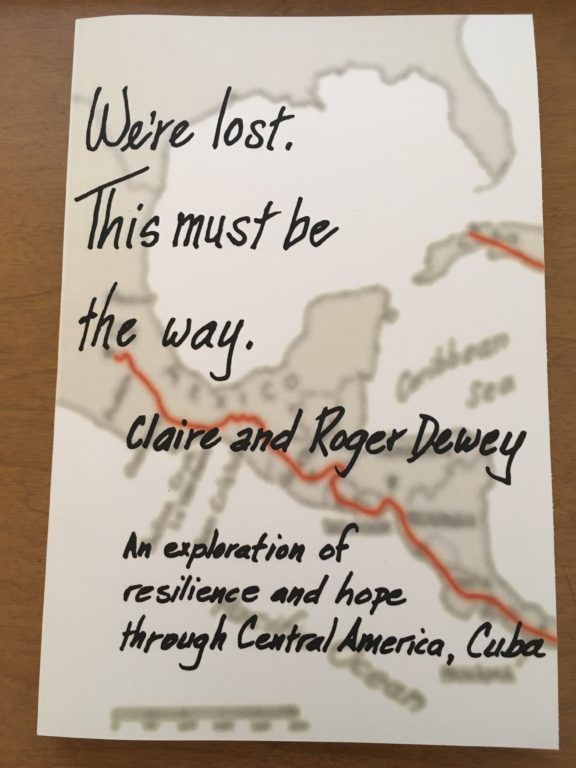
We’re Lost. This Must Be the Way.

“We deliberately sought to understand the histories of these countries. We wanted to help heal the fears that divide us from these resilient people. We hoped our style of travel could demonstrate that a real God exists who can be relied on in even the harshest insecurities.”

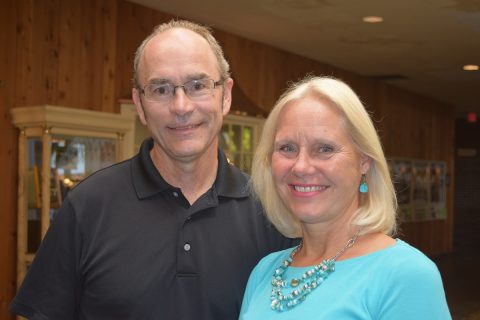
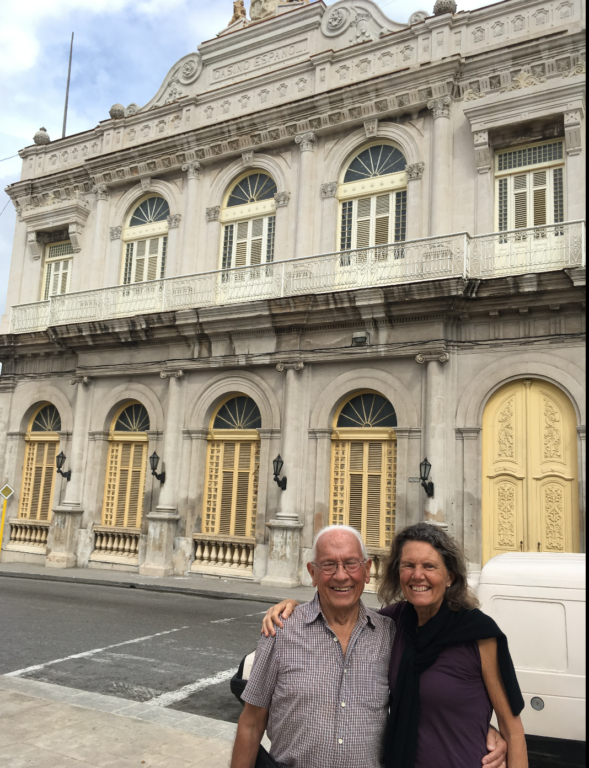
This week, we want to feature a blog written by Roger and Claire Dewey, who recently published a book based on their four-month ‘walk’ through Central America and Cuba. Roger was called in 1968 to work against the racism in the Church, founding Christians for Urban Justice. Claire joined him in 1977, teaching in the public schools and raising their family in Dorchester, where they still live. They are members of Reservoir Church in Cambridge, and all profits from their book entitled “We’re Lost. This Must Be the Way” will go to those in Central America who shared their stories of hope and resilience. 


Today we’d like to share the spiritual thinking behind our four-month ‘walk’ through Central America and Cuba. It was not to be a vacation. Instead, we wanted to explore the fears that divide so many of us from these resilient people. And it was largely unplanned—most nights, to find where to stay, we listened for “nudges” from God, while trying to understand the stories being lived all around us. We wanted our style of travel to demonstrate that a God exists who we actually can rely on in even the harshest insecurities.

Since our Mexican honeymoon 40 years earlier, we’d been in Latin America many times. We’d driven a rental car all around Guatemala with our children, scouted sites in Honduras for possible retirement, and visited friends throughout the region who are missionaries. Those countries have long been places of joy and adventure, and a resource for spiritual growth.

But we’ve watched their people become objects of fear for many Americans. It is sad to see those we love mischaracterized, those who welcome us into their homes fearfully excluded and humiliated. We feel God’s deep sorrow over our political division from so many members of Christ’s Body.

Before we left Boston, our plumber Mario, a humble believer from El Salvador, became unusually loquacious. “When you go” he said, “listen to what they have. They have what we here do not have, what we are losing in the shadows. They want what we have, but here we are under pressure to keep moving. The communication between us is what is important, not the work we do. That communication is love. So you go to another country, and see what they have that we need, and bring it back to us. Because we really need what they have.”

Though we both grew up as evangelicals, we are disturbed by today’s divisive Christianity, bothered by our religion’s search for security and power through the control of culture. Can’t our daily fears and anxiety actually be overcome by the God who walks with us? 

We perceived our journey as a practical exploration of life as a non-programmed walk with God. When lost we listened hard, looking for some hint of guidance. We were not always sure this trust was appropriate, or what, if anything, we heard. This “listening” is not very specific; it’s like learning piano by ear instead of reading music. 

A tightly planned trip would never have allowed us to discover the huge diversity of those we met, and then see them through God’s eyes. Like Eduardo, who once had a small but successful carpentry business in Guatemala. One by one, four of his brothers were killed as a result of extortion gone bad. He saw the caravans as his ticket to life and hope for him and his family. We heard from several missionaries that the ‘border invasion’ is mostly children of families like those they know, desperate to avoid being killed or trapped in the gangs.

On a tightly planned trip, we would never have visited the garbage dump in Guatemala City where 3,000 human beings live and work, scavenging trash, surrounded by muck and garbage. Many are Maya Indians who fled there for safety when their government burned and demolished 600 villages. For many, Jesus is their only trusted companion.

A Honduran woman told us her younger brother foolishly stole a bike, then learned it belonged to the son of a drug lord. He received death threats. His family raised money to help him escape to the U.S. She was proud of her brother, but talking about him made her depressed. “When everything goes wrong,” she said, “we can’t afford to be lamenting our situation if we don’t go ahead with the help of God. He is the only one who holds out an extended hand.”

We frequently felt lost. We lived a bit like strangers and immigrants, forced to play a game without knowing the rules. Change was constant. Yet our total insecurity, it turned out, was one of the best experiences of all. We gained empathy from generous families with virtually nothing. And we repeatedly sought Jesus’ counsel for loving those whose needs we could not meet, and loving the politicians who were part of their problems. Again and again, we experienced the security of God’s presence.

Near the end of our journey, we struggled to understand the complexity of Cuba. Easter Sunday, in Havana’s Ebenezer Baptist Church, we met 85-year-old Raul. In 1961, at the time of the U.S. sponsored invasion by Cuban exiles, he had been a Southern Baptist seminarian. He became a medic, and was wounded while defending his country. As a pastor in the ‘80s he led the Cuban Ecumenical Council, and in 1993 became the first Christian elected to the Cuban government. He wrote Martin Luther King Jr. for advice for living faithfully under a difficult government. He founded the MLK Center in Havana, and recounted his decades of struggle to live in the space between the goals of socialism and Jesus’ life of siding with the poor. We recorded our experiences each day, and compiled this record of our journey with a loving God, perhaps suggesting a way forward for Christians in our current troubled world. All profits will go to the whole-hearted people who opened to us their homes, their lives, and their wisdom. We think you will be encouraged by their simple stories of hope and resilience – you can click here to purchase the book.

Written by uniteboston · Categorized: Blog · Tagged: boston, cambridge, ecumenical, home, jesus

Oct 02 2020

Where do we go? [Original Video]

“I remember feeling grateful for all my blessings, but sickened by the inequities around us and empowered to make an effort to do something more….It is my sincere prayer that this song will both entertain and inspire everyone who hears it, to do more, for those who are less fortunate.”

This week, we want to feature a song co-written by Issa Bibbins, who is a pianist, rapper and content curator and former minister of music at Roxbury Presbyterian Church. “Where Do We Go” is the sixth release on the Treatment Project. This song addresses homelessness and how a lack of empathy, greed, and indifference perpetuate this growing problem. As COVID-19 has furthered economic inequities in Boston, this is a timely and crucial message for contemplation and action – Watch his video below!


Issa describes: “This song started from a conversation with producer, singer, and long time collaborator Sam Jones about two months ago. I had just released the fifth song on The Treatment Project, titled  ‘Superhuman DNA,’ and I reached out to Sam about producing the next song on the project. I remember spending a few minutes talking about music, and the conversation shifting from music business, to friends checking in about life. We spoke about the changing responsibilities we both have, as ministers of music at Roxbury Presbyterian Church and New Hope Baptist Church. We discussed COVID-19 and how it has impacted live performance opportunities for musicians in the city. As we all have faced uncertainty during these complex times, it is interesting how vulnerability can give way to both fear and anxiety but also serve as a unique tool to inspire empathy for those who are less fortunate.

A few days later, Sam sent me a rough draft of the composition. It was as if divine inspiration was deposited into my consciousness as soon as I heard the first measure. The song literally wrote itself! My heart erupted with so much emotion, I finishing writing the first verse in less than twenty minutes. I remember feeling grateful for all my blessings, but sickened by the inequities around us and empowered to make an effort to do something more. Sam called artist “ItsyourboyKR”, and I called good friend and artist Abria Smith, and they masterfully brought completion to this piece of art. I had the privilege to volunteer with my daughter at the Friday Cafe at First Church in Cambridge to take an extra step in fulfilling this call to do more, which came as a result of this collaborative experience. It is my sincere prayer that this song will both entertain and inspire everyone who hears it, to do more, for those who are less fortunate.


To watch other videos from the Treatment Project, check out Issa Bibbins’ Youtube channel here. Also, you can learn more about Issa Bibbins music ministry at pearlfortheworld.com

Written by uniteboston · Categorized: Blog · Tagged: boston, cambridge, home, homelessness, prayer

Sep 18 2020

Links to Re-Watch the Love Boston Concert

The incredible music that was produced at the Love Boston concert can be re-watched while you’re at work, cooking, or doing chores around the house!

On September 12, 2020 UniteBoston released our concert premiere entitled “Love Boston.” Amidst the challenges of today’s public health crisis and racial injustices, seven local Christian artists representing hip-hop, worship, soul, spoken word, and gospel genres united to share original artistic responses to the challenges we are facing as a city and nation. They challenged people to “love thy neighbor,” and inspired us in the action steps we can take forward together in this unprecedented cultural moment.

Featured artists include: Caleb McCoy, Shanell Alyssa, Ada Betsabè, Jen Aldana, Jeany Alcántara, Fugi, and Jalen Williams. Click here to meet the artists! Now more than ever, our souls need beauty and art that moves us toward faith, justice, and resilience, loving our neighbor, and toward Jesus in worship! Click on the artist names above to follow them & listen to more music by them!

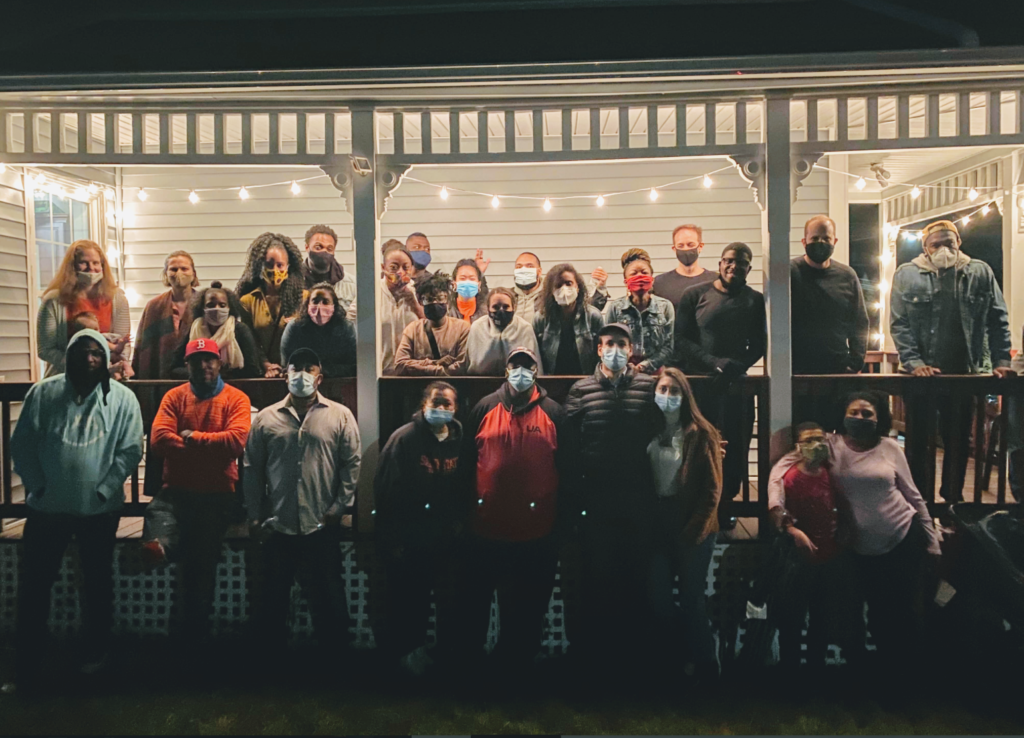
We also had a variety of viewing parties take place throughout the city – Here was the Dorchester backyard viewing party! You can’t see it, but we are smiling behind these masks!

While we missed having the opportunity to worship together physically in the Boston Common, the beauty of this year’s worship event is that all of the videos can be re-watched and shared. You can watch it while cooking, working from home, doing the dishes or folding the laundry, walking in the park, commuting on the subway, the list goes on and on!

Click here to watch the concert on Facebook – includes chat comments

Full concert

Music only version of the concert

Lori Dupre created a progressive painting where the artists place their handprints over words like global pandemic, economic stress, and fear, replaced by words of healing and hope and a cityscape of Boston. This painting will be auctioned off at our concert premiere

Finally, we wanted to take time to thank our concert sponsors – the Emmanuel Gospel Center, Resurrection Church, Restoration City Church, Grace Chapel, Standing Ovation Entertainment, and the Black Ministerial Alliance of Greater Boston, as well as everyone who contributed to our production costs! Also, thank you to everyone who donated to support the artists – The contributions for the artists totaled $1575, which will help to fuel and further their music ministries in this crucial moment! Thank you so much for joining into this united worship movement where people of every nation, people and language are coming together to worship Jesus! (Rev. 7:9!)

Written by uniteboston · Categorized: Blog · Tagged: grace chapel, home, jesus, uniteboston, unity

  • « Previous Page
  • 1
  • …
  • 6
  • 7
  • 8
  • 9
  • 10
  • …
  • 12
  • Next Page »


Give to Further Christian Unity

DONATE!

  • Email
  • Facebook
  • Instagram
  • YouTube

Copyright © 2026 · UniteBoston · Built on WordPress