UniteBoston

Bridging Divides Across Christians for the Flourishing of the City

  • Home
  • Events
    • Submit Event
  • Join In
    • Beloved Community Lab
    • Migrant Care and Solidarity
    • The Church and Civic Engagement
    • The ATTIC
    • Kingdom Conversations
    • Worship & Pray
    • Boston Flourish
  • About
    • UB Board, Staff & Volunteers
    • Cohorts
    • Missional Letter
    • Annual Reports
    • History
    • Christian Unity
  • Forums
  • Blog
  • Give to UniteBoston
  • Contact
  • Search

Sep 01 2017

“The Kiss of Peace” – UniteBoston’s 2017 Summer Worship Gathering

This week’s guest blogger is Rev. William David Nunez, a local Diocesan priest at Diocese of Christ the King and Community Building Coordinator at IBA Boston. Rev. Nunez attended our recent worship night on Boston Common, and reflects on his experience below.

You can follow Rev. Nunez’ blog at http://ancientfuturecoalition.blogspot.com


On August 19, I saw the power that abides in the midst of love and unity as I stood next to other ministers leading a march of over 40,000 people in Boston against hate and racism. Love was overwhelming and tangible everywhere you stood. People along the sidewalks would stop and give us water, ask for prayer, give hugs, wave their hands, send love gestures from their apartment windows.

I must admit, what really shocked me in this march was the reality of hate and racism. To stare in the eyes of hate brings such fear to the soul: fear of what’s to come, fear for our kids and the next generation that will soon be leading us into the future. As we arrived at the park where the free speech rally had just took place, I saw a group of men staring at me with a lot of hate. One of them spit on my shoe while the others mumbled words I couldn’t clearly hear but their face were filled with anger as they looked at me. Even vested in my black cassock and wearing my cross did not prevent the eyes of hate to look at the color of my skin, spitting on my shoes, mumbling words of hate. All I kept asking God as I walked was, is this what my kids are going to have to go through?

I left that march with such a heavy awakening, with my heart whispering every two seconds, “we must do more”. It just isn’t enough to meet on Sundays for a worship experience or have small fellowships in our homes once a week, and it isn’t enough to pretend hate and racism doesn’t exist because we haven’t experienced it personally.

So what do we do next?

That is the question that haunted my heart after that march. I saw this event someone shared on FaceBook titled“Peace for the City” by UniteBoston and decided to support because prayer was definitely something needed after that march.

Needless to say, this event was God’s answer to the question that haunted me. As I stood in the midst of the crowd in the Boston Common, enjoying God’s presence while a band composed of people from different denominations worshipping together in unity and love, I couldn’t help but look around. Everywhere I placed my eyes all I saw was people crying, praising, praying for one another, some standing, others kneeling, but everyone enjoying God’s presence in that park. A wonderful breeze brushed through us and at that very moment I felt peace…

This experience reminded me an ancient traditional Christian greeting, “The Kiss of Peace”. The New Testament refers to it as the holy kiss (en philemati hagio) and the kiss of love (en philemati agapes). It is beyond an act of greeting: St Augustine in one if his sermons calls it “the sign of peace” but also calls it “a powerful sacrament” because the kiss of peace is the visible sign of unity and love of Christ on earth. No matter if you’re rich or poor, a kiss is a universal act of love.

This expression of the Holy Kiss is still a part of worship today in many traditional churches and even in some Protestant churches. It was even believed that saints would share the holy kiss with one another before their martyrdom.

Why is all of this the answer to my question of what to do next? Martin Luther King once said, “Darkness cannot drive out darkness; only light can do that. Hate cannot drive out hate; only love can do that.” The early church understood this: that even though our hearts may know we are called to unity and love, this corresponds with an external act will seal our belief.

Unite Boston made the love of God visible in Boston on August 26th and God’s peace paid us a visit because It is only when we come together to love one another, that God’s peace will show up. Our unity that night was heaven kissing earth and God saying “Peace be with you” and us responding to one another “and also with you.” God kissing us while we responded by kissing creation. This is what a sacrament is all about, making heaven visible to humanity. There are so many things we can do but if we all just start by loving one another, breaking down walls of denominational separation and coming together in unity, God’s shalom (peace) will always be amongst us, in our communities, and in our city. Keep up the good work UniteBoston!


Prayer for the City of Boston

Look upon us, O Lord,
and let all the darkness of our souls
vanish before the beams of thy brightness.
Fill us with holy love,
and open to us the treasures of thy wisdom.
All our desire is known unto thee,
therefore perfect what thou hast begun,
and what thy Spirit has awakened us to ask in prayer.
We seek thy face,
turn thy face unto us and show us thy glory.
Then shall our longing be satisfied,
and our peace shall be perfect.

(Augustine, 354 – 430)


Written by uniteboston · Categorized: Blog · Tagged: community, peace, shalom, uniteboston, unity

Aug 19 2017

Meet the UB Worship Team

It’s been incredible to momentum growing for the upcoming UniteBoston worship night. Chloe Gaydos, UniteBoston’s intern this summer, has pulled together an incredibly talented team of individuals. One of the most beautiful aspects is the diversity of people represented in the team.

A few members of the band include:

  • An Asian exchange student from Berkeley playing the violin
  • A Catholic singer/songwriter
  • A Protestant drum teacher from Berklee
  • A Nondenominational Gospel Singer
  • A Boston-based Rap Artist
  • An Indie/Jazz Worship Leader 
  • A young man from one of the first Pentecostal churches in Indonesia

In light of the recent events in Charlottesville, this is a crucial time for us to lift up the message of love and peace found in Christ. We have been planning to have our worship night in the Boston Common for months, which turned out to be the same location that Saturday’s “free speech” rally took place. Our leadership team felt like this was a God-ordained opportunity for us to proclaim that Jesus unites, and Jesus is the true source of peace for the city, so we made “peace for the city” the theme of the worship night.

Meet the members of the worship team!


Name: Korleen Sheridan

Instrument: Guitar & Vocals

Home Church: St Cecilias Parish

“I am so excited to see God working in Boston and seeing so many Christians praising God together. This is so needed in a city where you walk by people every day and you don’t know their faith background.”


Name: Caleb McCoy  (http://www.welcometotheoak.com/)

Instrument: Vocals

Home Church: Neighborhood Church of Boston

“I am excited to worship with a diverse group of people from  different backgrounds. I think the fact that the worship team is represented by different races, denominations, and styles of worship will make this night extra special.”


Name: Anita Maldonado 

Instrument: Guitar & Vocals

Home Church: The City

“I’ve been in Massachusetts for 5 years, but it’s been tough for me to integrate into the city. As soon as I heard about UniteBoston’s worship night, I knew this was the event that I’ve been waiting for. It’s  beautiful that we can all worship our Father with no barriers, and I wanted to be a part of that.”


Name: Ola Olukorede

Instrument: Vocals

Home Church: Dayspring Chapel

“I am excited about experiencing God in a new dimension than before through worshipping with people from around Boston who have the same faith as me. Though sometimes we might feel like we’re alone, this night proves that God’s people are everywhere and God’s praise is real.”


Name: Ben Hills

Instrument: Sound Team

Home Church: First Presbyterian Church Northshore

“I’m excited to see a worship gathering on a place as public as the Boston Common. I can’t wait to see what God will do with it.”


Name: Calvin Limuel

Instrument: Keyboard

Home Church: Heart Change Fellowship

“There aren’t many events that bring together Christians very often, especially for public worship, and this is so needed in our city.”


Name: Tony Lee

Instrument: Vocals

Home Church: Aletheia Church

“My college was immensely supportive of diversity, and I got to witness some amazing things. I saw dance as worship, art as worship, spoken word as worship. Things that I never saw in church were happening on campus, and it was incredible to participate. As various cultures of students came together, I witnessed God’s creativity flowing through them. And let me testify, I felt an immense amount of joy when a congregation jives to a funky beat within the context of a new style of worship. In my life, I experienced this through corporate worship between Korean and American churches. We are made as limitless beings, and I know that unless we go beyond our boundaries, we will miss out on the glorious riches of this mystery, which is Christ in us, the hope of glory. I had heard about UniteBoston and wanted to be a part of it. I love worshipping… Any way that I can spend more of my waking hours worshipping draws me closer to God.”


UB Worship Team Dinner

Written by uniteboston · Categorized: Blog · Tagged: jesus unites, lent, peace, uniteboston, unity

Aug 04 2017

Running for Racial Reconciliation

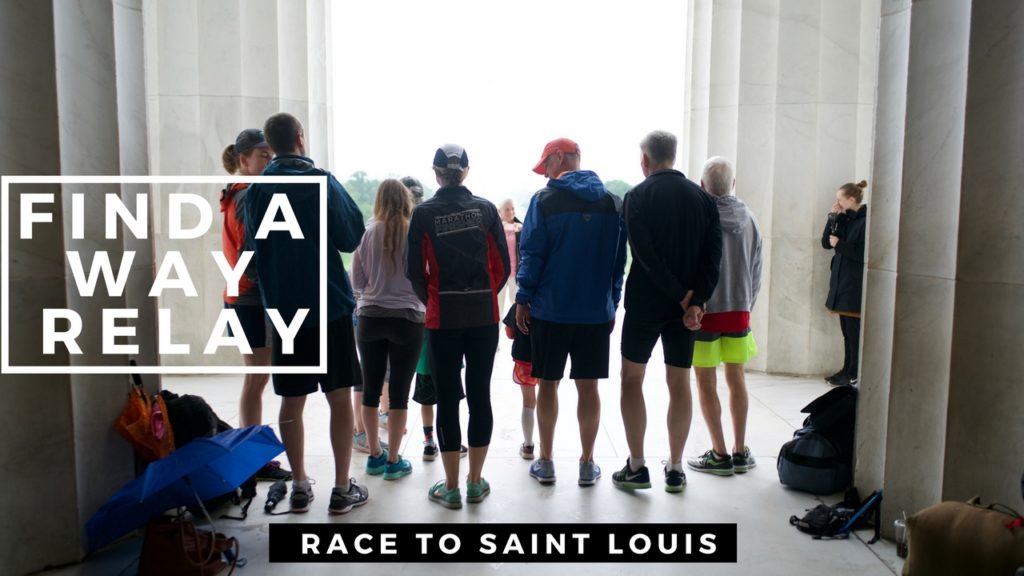
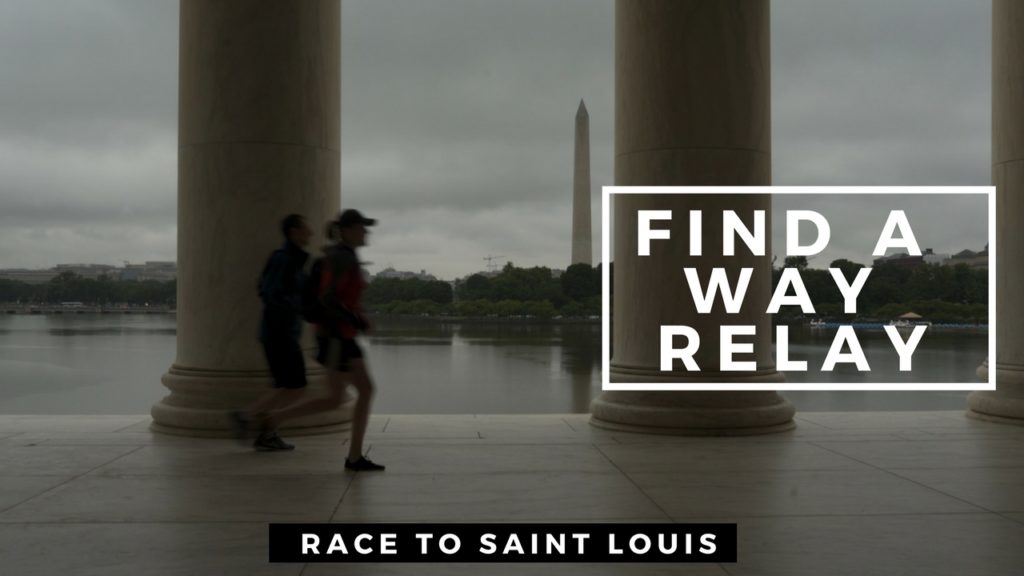
The Find A Way Relay was a journey, on foot and by bicycle, that ten people took from DC to St. Louis, where they participated in the Taize St. Louis Pilgrimage of Trust in May 2017. Together they crossed the countryside, receiving the hospitality of others, seeking to spotlight the injustice of racial violence. Vinny and Beth Mwano put together a video about the journey.

Full Version (13 minutes)

Trailer Version (2 mins) 

UniteBoston’s Executive Director Kelly Steinhaus was one of the key team members for this initiative. Below, she reflects on her own journey of learning about the reality of racial inequity and God’s heart for racial justice.


My rocking chair creaked as I sat in front of the kindergarten class in one of Boston’s public schools. As the students quieted down, dozens of faces looked up at me, expectant to hear the story of the day. I had chosen a book about a young man who has a dream about playing basketball, and through perseverance he defied the odds to make the team.

After I finished reading, I asked the students to share with me their dreams. One by one, each chimed in: “a teacher, a painter, a doctor.” I looked at each of the black and brown faces sitting in front of me, and encouraged them, “You can be anyone and do anything you set your mind to. It won’t be easy, but if you just persevere, you can accomplish anything in life.”

Those were the words that came out of my mouth, but this time there was a check in my heart. Was it actually true that these students could accomplish anything in life, in light of the obstacles in their path?

The message I shared that day was the narrative that I had been told all my life. My parents had continually encouraged me to dream big, supporting me in my pursuits of getting a 4.0, playing college volleyball, then trying to make the national rowing team. For me, my hard work paid off and my dreams came to fruition. This made it easy for me to believe that success is simply the result of hard work and perseverance.

When the shooting of Michael Brown happened, and Trevon Martin, and Tamir Rice, my first thought was how sad it was that those white policeman were so racist that they resorted to shooting. I had been caught up in the media’s portrayal of these incidents, and it wasn’t until later that I considered the police’s side of the story of when and where they use force. The Dolan Consulting Group found that police don’t disproportionately target African-American men in their use of force and in fact are responding to deadly force assaults, while other research shows that black people are 3x more likely to be killed by police, although they are more likely to be unarmed than white victims. I mention both of these articles to emphasize that this issue is incredibly complex and nuanced. We can easily generalize and stereotype people of certain races and professions based on specific incidents without examining the broader motivations and underlying factors.

The Black Lives Matter movement speaks a lot about implicit bias, which is a term that refers to our attitudes and associations that are often unconscious. When I took Harvard University’s implicit bias test, to my surprise I realized that I unconsciously associate negative concepts with black people. While I’m not clear as to how this implicit bias correlates with my behavior, this reality was striking, especially since I’m used to scoring well on tests!

While there are a multitude of factors contributing to police use of lethal force, I began to discover that beyond the important controversy over the use of force, the evidence showing unequal opportunities for people of color is undeniable:

  • I never knew that, at the time my mother was telling me that I could be whoever I wanted to be in life, black students my age were being told how to avoid being shot when stopped on the street. A black colleague of mine told me that “being pulled over is a life and death situation. Not only can I not carry a knife or gun because of the risk of getting shot to death, I cannot be thought to be carrying a knife or gun. My heart rate soars and I have a protocol of how to move and what to say to minimize anything escalating.” This fear is birthed from the reality that 40% of those who are incarcerated are black, even though they make up only 13% of the US population.
  • I learned in school that the U.S., although founded to be the land of the free, had slavery at its backbone based on a desire for cheap labor. But what I didn’t know was that the U.S. had also institutionalized laws that allowed people with white skin to gain greater opportunities for financial wealth and home ownership than those with black or brown skin.
  • I never knew that white households are worth roughly twenty times as much as black households. While the motive to pass down wealth from generation to generation is natural, it has resulted in an escalating disparity of financial resources and opportunity.
  • While I had lived most of my 32 years without thinking about race, I never knew that the majority of black people think about race every day. I didn’t realize that my ability to simply ignore racial prejudice was the result of being in the majority culture and was one of the greatest privileges that the color of my skin could offer me.

Once you see, you can’t not see… and what I began to see was that the deaths of a few black men that spurred on the Black Lives Matter movement was a symptom of racial injustice infecting America. While we will never know exactly what happened in these deaths, the societal injustice and inequity gripping America are clear. The problem was the vastly differentiated educational opportunities for Boston’s youth, it was the correlation I saw between race and income in different neighborhoods, it was the fear that I admittedly felt walking through a predominately black neighborhood, and on and on.

When I realized the extent to the problem, I became paralyzed at the vast inequity and its implications for everything. What could I do? My white skin had brought me so much, a white privilege, which admittedly was a term which I used to refrain from using. But over time, I began to realize that my initial offense at this term was a denial of the discrepancy between the world that I saw and the world as it actually is. My blinders had come off, and I couldn’t go back to the way I operated in the world beforehand.

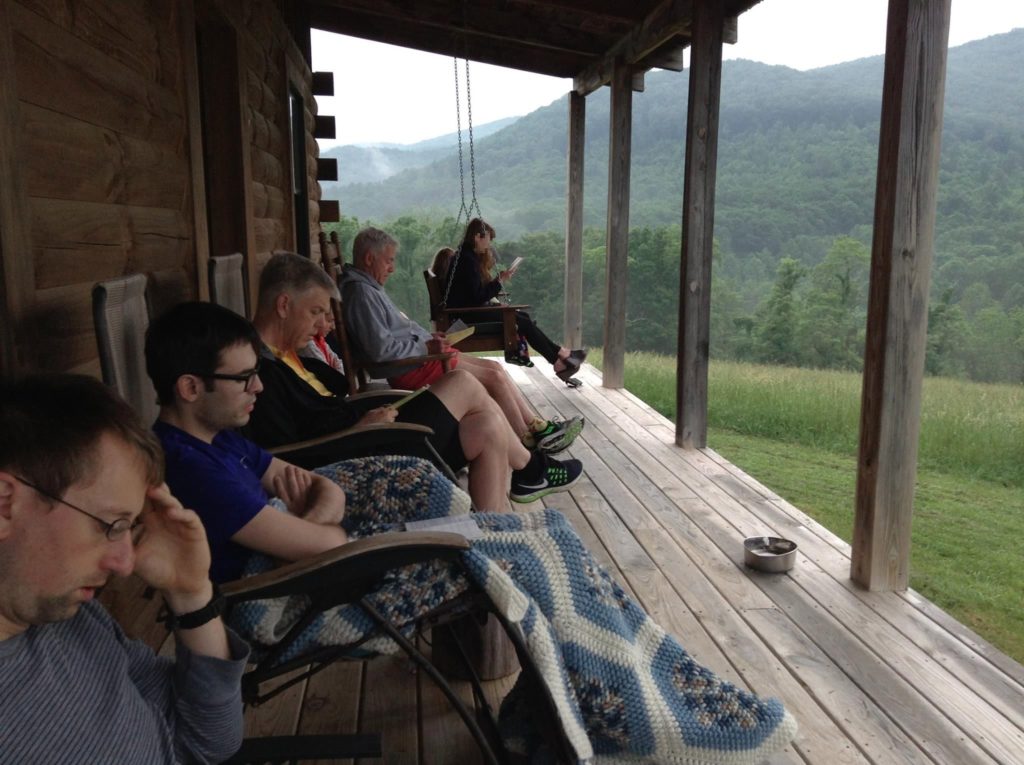
Yet, this white skin is all I have, and so I said “yes” to my friend and colleague Rev. Rita Powell when she mentioned running from Washington DC to St Louis to the worldwide Taize gathering in May 2017 focused on racial reconciliation. After the shooting of Michael Brown at Ferguson, the Archdiocese of St Louis asked the Taize brothers from France to host a “pilgrimage of trust” due to the escalating racial violence. Rather than flying to the event, Rev. Rita inspired us to pilgrimage, to travel with spiritual and sacrificial intentions. Ten of us ran and biked hundreds of miles throughout the South, offering our bodies as spiritual acts of worship as a sign of solidarity with victims of racial violence (Rom12:1). We prayed in the morning and evening and relied on the hospitality of strangers and churches along the way.

Taize Song and Prayer at our cabin the first night in Jefferson National Forest


Friends from Christ Church, Lexington KY


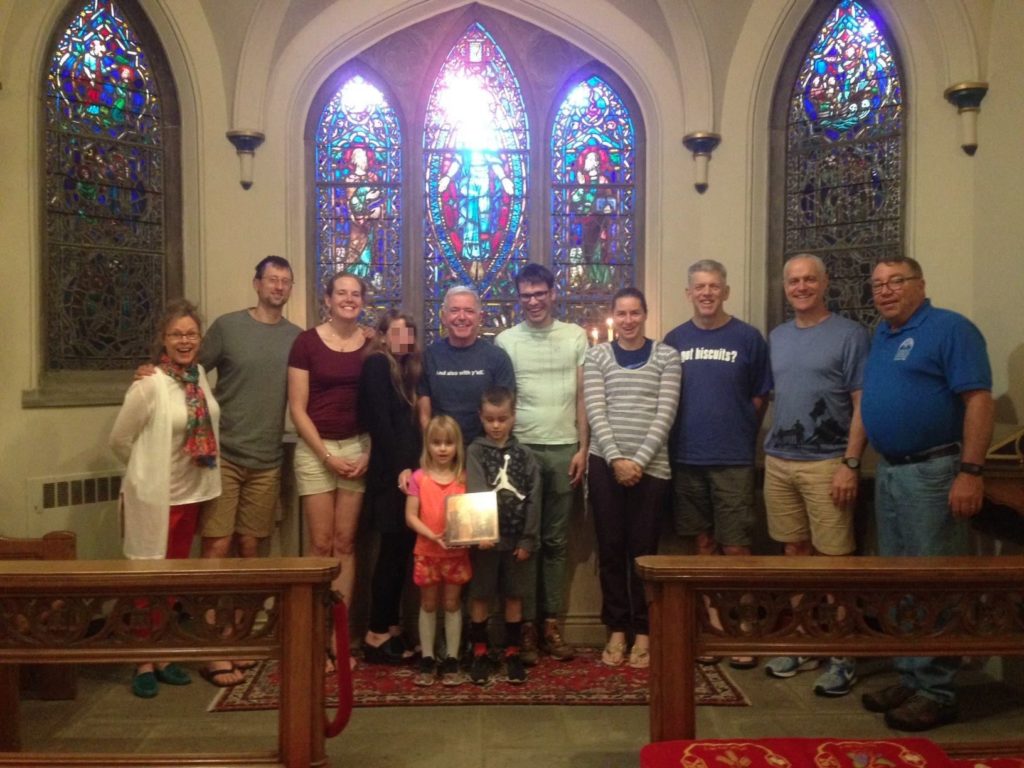
Group picture after our last run

One night it was mentioned how different our journey would be if we were ten black people taking this pilgrimage together. That statement stuck with me, because it wasn’t right and yet it was true. There is something about truth that inescapably rings in your mind and heart.

Throughout our journey, I began to see a wound of racial inequity that was deeper, wider, and more painful than I ever imagined, like pulling open a band-aid to find that our efforts towards “reconciliation” were only surface-level. I began to discover that racial justice requires more than an intellectual knowing; rather, it is an embodiment, a standing alongside, a listening deeply and committing to put my whole self in. Still, I kept asking, what could I do? My black and brown friends told me that what they needed most was for someone to hear their hurt and pain born out of their experiences to acknowledge the wrongdoing.

One pastor at Ferguson said, “We don’t just need white allies. We need people to put their bodies into the fight.” And so our team ran, for 510 miles, my feet pounding on the pavement, drawing me into solidarity with the young men whose pain was so much greater than mine.

Even after returning home, there is something different about my runs. I run more purposefully: every step as a prayer for change, justice, and hope on behalf of my black and brown brothers and sisters.

A racialized society begins, and ends, with racialized hearts. This is a call to courage: to bravely uncover the ways we are holding bias, consciously and unconsciously, and act for change. It will take all of us committing to do the hard work of challenging our implicit ways of seeing and being, that we might see the way forward, recognizing that the solution for holistic reconciliation can come from Christ alone.

“And God has committed to us the message of reconciliation. We are therefore Christ’s ambassadors, as though God were making his appeal through us. We implore you on Christ’s behalf: Be reconciled to God.” (2 Corinthians 5:19-20)

I will end by saying that I understand there may be some things in this article that have offended you. I encourage you to do your own research, to hear personal stories of people from various racial backgrounds regarding race and violence, and to draw your own conclusions. I believe we must not shy away from difficult dialogue but rather move toward it; in fact, I’ve found that discussing our differences is the key to healing political and racial division. We must all humbly admit that we see from the glass dimly (1 Cor 13:12); each of us are in desperate need of one another and God’s grace to uncover our underlying stereotypes and preconceived notions. I welcome you as a dialogue partner, and especially if you would send along any resources you’d like to share with me. You can contact me via email at kelly@uniteboston.com.

Next steps:

  1. Watch a CNN study  showing how children view racial bias
  2. Read an article about Racial Equity in America – How Far Have We Come? 
  3. Take the Harvard Implicit Bias test (click on race)
  4. Connect with Megan Lietz, Research Associate with the Emmanuel Gospel Center’s Race and Christian Community Initiative

Written by uniteboston · Categorized: Blog · Tagged: ferguson, racial reconciliation, reconciliation, uniteboston, unity

Jul 27 2017

Small New England Church?

This week’s guest blogger is Ellen Bass, Director of the Boston Capacity Institute at the Black Ministerial Alliance. Ellen is a member of River of Life Church and began an initiative last year which encouraged church members to visit other congregations’ worship services on Sunday mornings. Read below to hear church members’ insights and key learnings about the kingdom of God in Boston through worship and fellowship  across historic barriers.
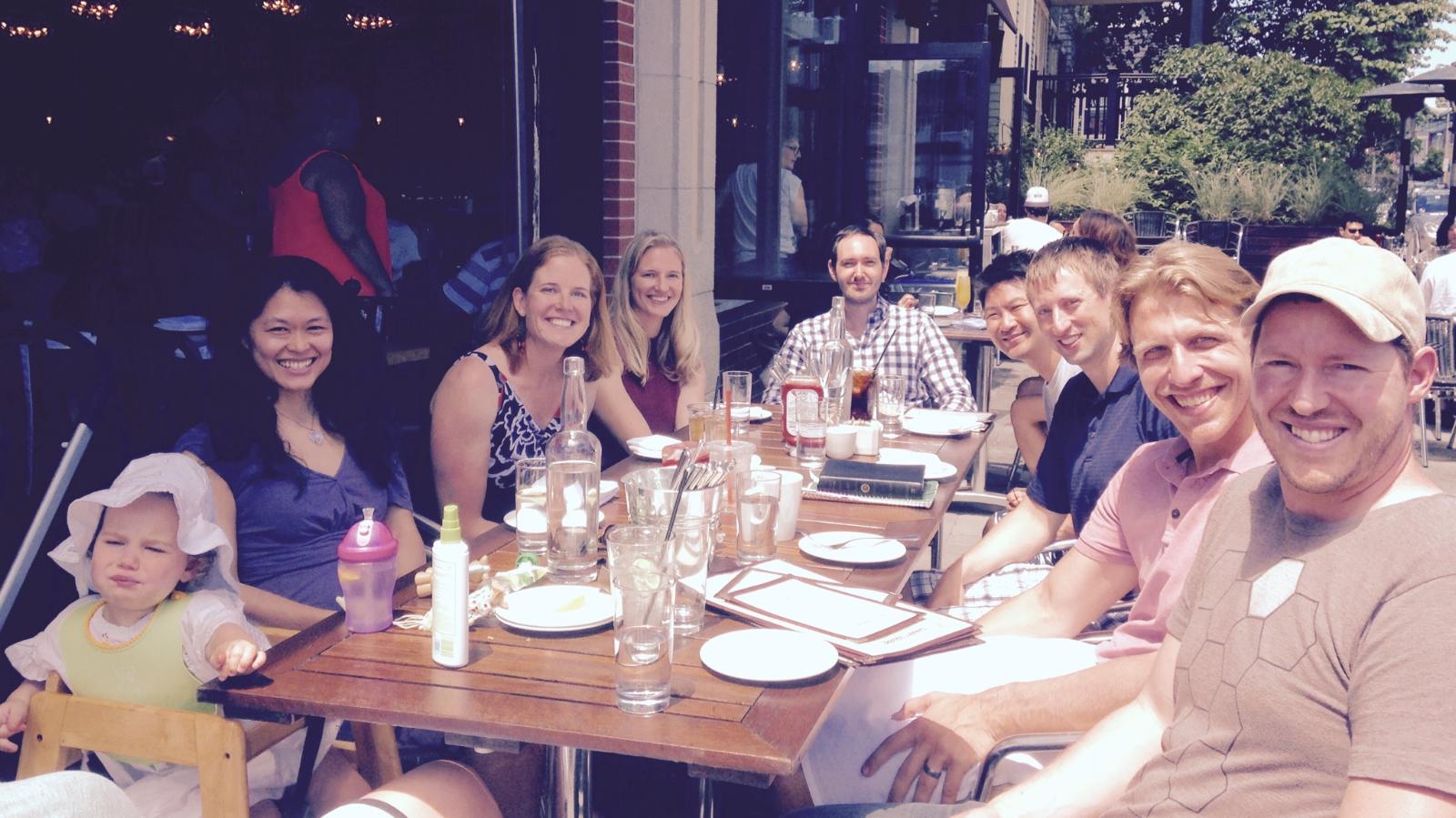

With about 60 members, River of Life Church in Jamaica Plain, Boston, is the typical size for a small New England church.[1]

You might be surprised to learn that a year ago, its leadership decided to send 10% of its members to visit other churches once a month. The little church wanted to experience worship and fellowship in different contexts from its own dually affiliated denominations of Christian & Missionary Alliance and American Baptist, as well as its own primarily white culture. The church’s leaders and members set out to connect with the rich diversity and unity of the broader Body of Christ in Boston.

A total of 17 different people visited the following churches over the course of the year:

  • People’s Baptist Church
  • Arabic Evangelical Baptist Church
  • Congregacion Leon de Juda
  • Bethel AME Church
  • First Baptist Church JP
  • Boston Chinatown Evangelical Church
  • Eternal Covenant
  • Roxbury Presbyterian Church
  • Holy Resurrection Orthodox Church
  • Community of St. Egidio at Mission Church
River of Life Church members eating lunch together at a neighborhood cafe

After each worship service, a small group from both churches often shared a meal together to get better acquainted. Anyone from our church was invited and encouraged to sign up to visit the churches they wanted to get to know better. Although it took some planning to get us to the right place at the right time, we learned a lot together!=

  • We loved the hospitality of People’s Baptist Church; they spend five minutes every Sunday during the worship service with everyone in the congregation vigorously greeting everyone else in the room!
  • The Orthodox Church had a beautiful family feel, with lots of people caring for all the children in the middle of the worship service, and plenty of acceptance for children’s noises and behaviors!
  • We experienced how a shared culture makes fellowship very deep and close in these churches: Bulgarian Orthodox, Arabic, Black, and Latino. We found Middle-Eastern culture to be especially hospitable.
  • Immigrant communities spoke about the challenges of language and culture, especially for their youth. These churches wanted to maintain an authentic culture within families across generations, but clearly the younger generations spoke a different language and had a different culture from the older generations. How do we all reach our youth effectively with the gospel?

Some people reflected on how being a minority was a new experience, and how valuable it would be to worship with co-ethnics if they were in the minority all week long. However, we were surprised by how easily and deeply we bonded with people we were so different from. There was a shared desire to maintain a close connection with many of these churches and continue building friendships.

Our plans for next year are still taking shape, but monthly visits are likely! We hope to focus our visits on other churches in its neighborhood of Jamaica Plain, to connect more deeply with our local churches and support what God is doing in our community.

River of Life Church is now confident that its small size isn’t a hindrance to connecting with the rich cultural and denominational diversity displayed in worship services across Boston on Sunday morning. What does your church want to learn and experience in the broader Body of Christ in Boston?

[1] Median US church size is 75. National Congregations Study, Duke University, 2007, p. 2, http://www.soc.duke.edu/natcong/Docs/NCSII_report_final.pdf

Written by uniteboston · Categorized: Blog · Tagged: community, lent, neighborhood, unity, university

Jul 12 2017

Hope for Your Block

Our guest blogger this week is Rev. Davie Hernandez, Senior Pastor of Restoration City Church (Formerly Defenders Boston Church). Rev. Davie has a heart to see the city of Boston and surrounding towns experience true revival and restoration through the redemptive work of Jesus. Rev. Davie shares with us about his plans to share the love of Christ with our city, block by block.


There are bright summer days: the children are running around on the concrete sidewalks, basketball courts are full, play grounds are packed, folks are sitting on stoops, laughing and enjoying one another, as the sun starts to set…

Not far from this, people struggling with homelessness gather by the highways, many addicted to drugs and feeling hopeless, doing anything to survive another day. Some are asking for money as they watch cars pass by, just waiting for another meal or a hit of drugs to cope with their reality…Sirens go off as another young man is brutally shot. As this blog was written, two young men were shot in our city, one being only 14 years of age.

We see both sides of our city. The irony is that both sides are just as much in need of hope, but in different ways. You see, Christ has has given us salvation, and in Him we have the love and hope we need. He has sent us out to be that hope! While some believe that being sent out means going to a far-off place, but I’m convinced that often it’s to be sent right outside your door. As we work the harvest that is here before us, all the people, regardless of socioeconomic class, will be impacted by this message of hope.

In the summer 2017, we were led to start a campaign entitled “Hope for your Block.” We see that it is our responsibility to reach out to our neighbors and communities block by block, claiming back our city for the Lord. To do this, we take a hand painted block and put a message of love, hope, faith and peace on each one. This block is taken by an individual or a family to any block in the city. They begin to pray for that block and place the message of hope where all could see. In this way, we are seeking to reach the lost the hurting and broken of our city with the Good News of Jesus Christ! So far, we have placed hundreds of blocks across our city.

Scripture tells us in Acts 1:8 that “You will receive power when the Holy Spirit has come upon you, and you will be my witnesses in Jerusalem and in all Judea and Samaria, and to the end of the earth.”

Where is your Jerusalem? Your Jerusalem is your block, your Jerusalem is your neighbor, and your Jerusalem is the local corner store, families, children and youth that surround you….

Additionally, in Luke 10:29, the man asks Jesus, “And who is my neighbor?” Jesus answers by telling the story of the Good Samaritan, inviting the man to compassionately serve and minister to those who are in our midst.

In essence, Jesus is saying, “Your neighbor is the next women selling her body to feed her children, your neighbor is that young man or woman crying out for help by that highway you drive by daily, your neighbor is that mother or father who has lost a child to the violence in our streets, your neighbor is that single mom who needs a roof over her head.”  It is our mission and our responsibility to feed the hungry, clothe the naked, hug the hurting and bring the Good News.

Our prayers are not only for those in our communities that are lost, hurting and broken, but also for the community of faith in our city. In our very own block, there are six different churches that need to come together as the body of Christ. This is seen across our city with blocks filled with communities of believers who largely function in isolation of one another. As we place the blocks with the words “Faith, Hope and Love,” I am reminded from scripture that love is the greatest of these. To love our neighbors, to love our brethren in the Lord and to love our city!

Romans 10:15 says, “And how can anyone preach unless they are sent? As it is written: “How beautiful are the feet of those who bring good news!”

Oh how beautiful it is that you and I were made for such a time as this, that you and I met the God who saved us through Christ, who anointed us and sent us out to share the gospel of hope, the gospel of healing, the gospel of restoration and transformation! Oh how beautiful it is to know that we have been called to this work. Your salvation is not for you, your privilege is not for you, and your gifts and skills are not for you alone. They are all meant to be for God’s glory! Be encouraged today and don’t let your neighbor pass you by.


Written by uniteboston · Categorized: Blog · Tagged: community, homelessness, peace, transformation, unity

  • « Previous Page
  • 1
  • …
  • 70
  • 71
  • 72
  • 73
  • 74
  • …
  • 82
  • Next Page »


Give to Further Christian Unity

DONATE!

  • Email
  • Facebook
  • Instagram
  • YouTube

Copyright © 2026 · UniteBoston · Built on WordPress