UniteBoston

Bridging Divides Across Christians for the Flourishing of the City

  • Home
  • Events
    • Submit Event
  • Join In
    • Beloved Community Lab
    • Migrant Care and Solidarity
    • The Church and Civic Engagement
    • The ATTIC
    • Kingdom Conversations
    • Worship & Pray
    • Boston Flourish
  • About
    • UB Board, Staff & Volunteers
    • Cohorts
    • Missional Letter
    • Annual Reports
    • History
    • Christian Unity
  • Forums
  • Blog
  • Give
  • Contact
  • Search

Jun 22 2019

Making Peace Visible: UB’s Summer Worship Night

The Lord’s Day Alliance’s latest e-Sunday magazine has the theme of “Sabbath, Sunday and Worship in transition,” where they are featuring various stories and reflections throughout the country, including UniteBoston! Check out the article below, that was written by UniteBoston’s Team Leader Kelly Fassett. You can also click here to read the entire eSunday Magazine.

Save the Date! UniteBoston is planning on having another summer worship gathering on Saturday August 17th, from 7:00 to 9:00pm at the Parkman Bandstand in the Boston Common.


Making Peace Visible: UniteBoston’s Summer Worship Night

Over the past eight years, UniteBoston has been building bridges across historic divides in the Christian faith, and we are seeing greater momentum than ever before, especially in our united worship events. These gatherings started in 2017, when Chloe Gaydos was serving as a summer intern with our organization. As she began her internship, I asked her to describe her dreams for Boston, and she expressed a desire to have a summer worship night in the Boston Common. The Boston Common has been a noteworthy location for famous preachers, such as George Whitfield in 1740, who drew a crowd of more than 23,000, and Pope John Paul II in 1979. Knowing that the spiritual roots of proclaiming Jesus in the Boston Common go deep, when Chloe described to me her dream of having a variety of Christians worship together in that place, I responded, “Let’s do it!”

In the next few weeks, as she began to reach out to find people to help lead worship, a number of Christians expressed interest, from all different denominational and ethnic backgrounds. These young, talented individuals, came together to form our worship team. We named our first worship night “Peace for the City” in light of the recent events taking place in Charlottesville and in Boston that highlighted the extent of racial division. However, the story doesn’t end there: In public worship, together Christians proclaim the gospel of reconciliation: that Jesus’ incarnation, death, and resurrection has reconciled us to God and to one another, forming an inseverable and eternal peace (Eph. 2:14).

This past year, we decided to host another summer worship night, and interest continued to grow. We were excited to receive endorsements for the event by the Highrock Church Network and the Catholic Archdiocese of Boston. After months of rehearsals, pizza dinners, phone calls and marketing emails, the evening finally came. It was attended by over 1,000 people, triple the size from the previous year. The worship team included gospel singers, a Catholic songwriter, a Messianic Jewish musician, a Pentecostal Indonesian jazz pianist, a Christian rapper, and a Latino worship leader. It was incredible to look across the crowd and see a wide variety of different races, cultures, languages, denominations and traditions, all united in their worship of and devotion to Jesus. There were also thirteen sponsored tables by local churches and organizations, a local artist painting a large canvas with our theme on it, and even a spontaneous dance party! You can watch a highlight video here.

Our team of amazing volunteers. Photo Credit: Koo Chung
UniteBoston worship night, with over 1,000 people in attendance. Photo Credit: Elijah Mickelson

The goal for the event was not simply to have a nice Christian concert in the Boston Common. Jesus’ prayer in John 17:23 points to the fact that our unity is to be a sign of God’s self-giving, reconciling love. Our biggest prayer was that others would see and experience the love and peace of Christ through the music and lyrics. We saw many people passing by who stopped by to listen to the music, who would perhaps not normally find themselves at church. Some people came up and asked for prayer or names of churches in the area, including one Muslim woman who expressed that she felt something different here.

While much of the world today might seem to be fraught with division, polarization, and hostility, in Boston, we believe there is another way. Unfortunately, Christians are often known for what we are against. Yet, public worship is an opportunity to witness to what we are for: for reaching across barriers, for love that welcomes and embraces all, and for a peace that is deeper and truer than words can convey. In public worship, as we all look to God together, bringing forth a unity that is a foretaste of heaven and shalomic peace. Dr. Vito Nicastro from the Office of Ecumenical Affairs in the Archdiocese of Boston described, “Our response to being created by God is to love Him and to share that with the city. As the lights came one in the buildings and the moon came up in the dark blue velvet sky, we planted God’s love in the heart of Boston.”


About the Author:

Kelly Fassett is the Executive Director of UniteBoston, a 501c3 non-profit organization that she co-founded in 2010. Kelly has a graduate certificate from Gordon-Conwell Theological Seminary, and a Masters of Divinity in Global and Community Engagement at Boston University with certificates in International Mission and Ecumenism and Religion and Conflict Transformation. She is seeking to be ordained in the American Baptist tradition. Kelly and her husband Andrew live in an intentional Christian community home in the Longwood area, and you can find them frequently biking around the city, swimming in the ocean, and climbing mountains.

The Lord’s Day Alliance seeks to encourage all people to receive God’s great gift of Sabbath rest and to encourage all Christians to worship the risen Lord Jesus Christ, on the Lord’s Day–Sunday–that they may be renewed in spirit and empowered to live lives worthy of the Gospel.

Written by uniteboston · Categorized: Blog · Tagged: lent, reconciliation, transformation, uniteboston, unity

Jun 06 2019

Volunteer Opportunities at the UB Worship Night

Last year, UniteBoston hosted our second summer worship night in the Boston Common, and we were blown away to hear story after story about how God met people through the public worship. We had around 1,000 people in the audience, and it was inspiring to see many onlookers who wouldn’t normally step into a church building experience the power of God through worship.

UniteBoston is planning to host another worship night on August 17, 2019 at the Parkman Bandstand in the Boston Common. Our goal is to create a unique worship environment for all to come together and experience the love of Jesus. From our diverse backgrounds, we can together witness to a new unified community whereby all human barriers and social problems are eradicated through Christ’s work of reconciliation.

One of the greatest joys of UniteBoston is seeing friendships develop between Christians from various denominational and ethnic backgrounds who join to make all aspects of the UB worship night a reality. We would love to have you involved! We’re currently recruiting for people to join these three teams:

  • 1. Development Team
    • Do you want to learn about the development and operations side of non-profit management? The development team helps with fundraising and works alongside the creative team on graphic design and branding. This is a great opportunity to see what it takes to plan and operate big concerts!
  • 2. Church Connection Team
    • Do you enjoy meeting new people? The church connection team works to help connect pastors and ministry leaders to the UB worship night through sponsored tables and endorsements. If you enjoy building bridges and getting to know the beautiful diversity of churches in the area, this team is for you!
  • 3. Prayer / Outreach Team
    • This team is for people who enjoy praying for God’s work in Boston or sharing about the Christian faith. This team gathers regularly to pray for the preparation of the worship night. They also coordinate prayer and outreach initiatives to minister to people at the worship night.

This volunteer opportunity can also be used as internships to build the necessary skills and experience for your career. There is a 1-4 hour a week commitment, with flexible hours. If you are interested in joining one of the teams, email Kelly Fassett, kelly@uniteboston.com.

Thanks for joining into Jesus’ united gospel movement throughout our city!

Written by uniteboston · Categorized: Blog · Tagged: community, jesus, reconciliation, uniteboston, unity

Mar 10 2019

Here’s how Christians in Boston are Participating in Lent

Churches take to the streets on Ash Wednesday, offering ashes on-the-go to busy Christians and passerby’s. Photo by the Roman Catholic Archdiocese of Boston, courtesy of Flickr

Lent is a time to intentionally create space for focusing more deeply on Jesus’ life, death, and resurrection. As Western Christians throughout the world have entered the Lenten season, and Eastern Christians will begin on March 11th, we’re sharing some ways in which Christians in Boston are participating in Lent.  There may be an idea that will spur you on in your own Lenten devotion and practice!

Here’s how Christians in Boston are participating in Lent:

A Catholic Perspective – “This year, Lent has particular significance for the leadership of the Church at every level, local, national and universal. Recently Pope Francis called bishops from every country in the world to come together at the Vatican for the Summit to Protect Children and Minors. The summit included powerful testimony from survivors of clergy sexual abuse, religious sisters and laypersons who made clear that a meaningful and effective response from the Church is long overdue and of critical importance…I have decided to implement EthicsPoint, a confidential, anonymous and third-party system, exclusively for the reporting of misconduct by a Cardinal, Bishop or Auxiliary Bishop of the Archdiocese of Boston.” Cardinal Sean’s Lenten Letter to the Archdiocese of Boston

An Evangelical Perspective – “Lent is a season of preparation. It’s a season where we give up good things so we can focus on better things. It’s not a rote ritual of fasting simply so we can fulfill a religious requirement. It’s an opportunity to give up some things for a season, so we can focus on Jesus and align our hearts with his.” Reunion Christian Church is participating in an “Experiential Fast,” where each day and week is focused on a particular element of fasting and devotion.

An Episcopal Perspective – “Throughout the six weeks of Lent, I will have a weekly conversation with a spiritual and/or grassroots leader to learn how they are understanding the connection between healing and justice – between repentance, forgiveness and justice. I want to strengthen my leadership by hearing how others tend to or pull at the root causes of this spiritual and social upheaval which I believe is racism. And I want to discover, how is the Spirit inspiring them to turn towards God and one another in bringing about healing and justice?” – Lenten Reflection from the Rev. Arrington Chamblis from the Episcopal City Mission

Resources from a Catholic Perspective– “I think really what fasting and Lent are all about is creating space in your life to focus more deeply, see more clearly, and act more authentically. It is the joyful preparation for Easter, where we take a good look at ourselves to get ready for the celebration. Fasting helps clear our vision but it also helps create space to be filled with other and better things than we usually fill ourselves with…Practices are meant to help draw us closer to God, to community, and to our best selves. So it’s not about extreme measures, perfect adherence, or spiritual status. Try to follow what seems right, challenging, and honoring to you.” Lenten Resources from the Paulist Center, including a list of practices and blogs

A United Church of Christ Perspective – “Rend your hearts,and not your garments” I’m embracing #visiblemending for Lent. Late last night, after #AshWednesday was over, I noticed how much the ash cross on my head looked like the #darned holes on my beloved, moth-eaten sweater. So here’s my Lenten practice: 40 days of repair. A daily commitment to mend or fix something, each day. I don’t have a grand plan or scheduled posts, just a clear sense that I need to do some repair work in this season. If you want to join in, #40DaysofRepair.” – Laura Everett from the Massachusetts Council of Churches

An Orthodox Perspective – “March 18 marks the beginning of the Great Lent. It is known in Greek as ‘Kathara Deftera’ or Clean Monday. The word kathara is closely related to catharsis or cleaning. Everyone needs cleanliness. Fortunately, scientific technology has given us many ways of achieving cleanliness, of keeping our bodies clean. Are our bodies entirely clean? Are our tongues clean? Is it not true that they speak words which are not clean, but are offensive, words which show malice or envy, or which indicate a hostile attitude to the progress of others? It is obvious that our tongues need to be cleaned… During Great Lent, our Church guides us to the cleanliness of our eyes and tongues, of our ears and hands, our feet, our hearts and minds, that is to say, to our whole being. Our church prepares us to approach the Cross and receive His Precious Body and Blood.”- Metropolitan Methodios, Archbishop of the Greek Orthodox Metropolis of Boston

A Catholic Young Adult’s Ministry – St. Mary’s of the Assumption Parish in Brookline is participating in  “Theosis in Action,” which is an online community to help provide resources for young adults to grow in their faith and opportunities for fellowship as they navigate through adulthood. Theosis in Action is hosting an online Bible study during Lent on Sunday evenings with the focus of “Journey Back to Christ” that all people are welcome to participate in.

An Evangelical Perspective – “Although Lent can be a season of sober reflection on the frailty of our souls, Lent is primarily about the counter-formation of our affections. As we reclaim our own belovedness in Christ, we reorient our love toward Christ. In this season, we’re going to commit to feasting on scripture together. One of the ways we’ll be do this is to memorize Psalm 23 in community. On Sundays during the gathering and through social media, we’ll share stories about how feasting on scripture is transforming the life of our community.” Lent Blog from Reality Church Boston

We’re also featuring a blog article written by Rev. Rita Powell, priest at Trinity Church Boston and UniteBoston board member. Rev. Rita shares about her Lenten practice of taking the daily office outside to God’s creation. If you’d like to add how you or your church are participating in Lent this year, email kelly@uniteboston.com  May God meet you deeply in this season of physical and spiritual devotion!


Taize Song and Prayer led by Rev. Rita Powell on the first night of a Taize Pilgrimage for racial reconciliation in Jefferson National Forest

Charged with the Grandeur of God

If you have ever gotten an email from me, you have seen this quote in my signature, “Nor can foot feel, being shod.”  It’s from the famous poem by Gerard Manley Hopkins called God’s Grandeur.  It is one of the anchoring texts in my life.  The opening line is “The world is charged with the Grandeur of God.” In that one phrase, Hopkins captures both the way that the world is filled with God as with electricity—an unseen but real force of energy and a fullness that shimmers—and the way in which we, as that world, are accountable to God.  We are “charged with”—filled with and responsible for—all the grandeur.

The poem goes on to reflect on all the ways in which we have obscured that noble calling.  Our world, our economy, our carelessness with the earth—all create a way of life that dulls the force of that electrical charge that is the divine life.  And so the poem brings us to the line in my email signature- “nor can foot feel, being shod.”  Our way of life swaths us in comforts and normal routines that blind us, dull us, diminish us.  We grow far apart even from our own bodies.  I wear shoes every day.  I am not connected to the earth or my own body the way I might be.  That line in my email is meant to remind me of this flaw daily.

So this Lent, I’ve decided to take my daily office (a distilled version of it with a big chunk of silence) outside.  To behold, in prayer, the God who is in creation.  I have found a small corner of a ruined foundation in the meadow behind my neighborhood, and am determined to pray out there each morning in Lent.  I have to say, the massive snowfall and plummeting temperatures are not quite what I had been hoping for!  And I will be wearing boots, thank you very much.  But I will try to begin again this season, to recall the charge we are placed under as members of the grandeur of God.


Written by uniteboston · Categorized: Blog · Tagged: lent, racial reconciliation, reconciliation, testimony, uniteboston

Mar 03 2019

What does it mean today to be ecumenical?

“The message we joyfully proclaim is that we are reconciled to God and to one another through the life, death and resurrection of Jesus. “Being ecumenical” means feeling a holy unrest at our failure to live consistent with our message, more interested in proving our “rightness” and the other’s “wrongness” than in seeking together to know what the Spirit is asking of us and to do it.”

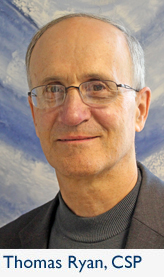
You may hear people using the term “ecumenical,” but what does it mean? The word “ecumenism” is used to describe the efforts to bring together Christians of varying traditions and backgrounds. This week’s blog is written by Father Tom Ryan, director of the Paulist Office for Ecumenical and Interfaith Relations in downtown Boston. Father Tom has valuable recommendations for how all Christians can be “ecumenical” in their day-t0-day lives. Read his post below to learn how you can take part in the healing movement of uniting God’s separated people.


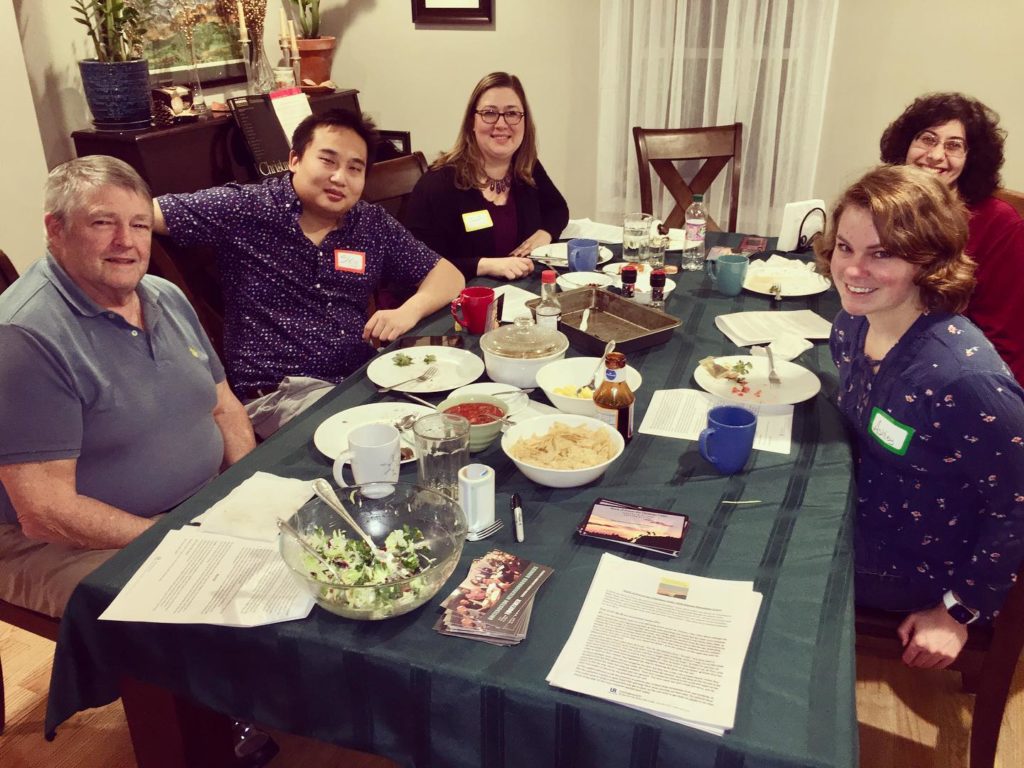
UniteBoston Neighborhood Dinner at Tony’s house in Revere, which Father Tom Ryan attended.

What Does It Mean Today To Be Ecumenical?

by Fr. Tom Ryan, CSP

Recently a friend asked, “What does being ‘ecumenical’ mean?” It was one of those questions that stop you cold because the answer goes off in so many directions you don’t know where to begin. Later, I took paper and pencil in hand and began to reflect on the lessons of my last 35 years in ecumenical work.

Here are some of the things which, in my experience, “being ecumenical” means:

1. To pray regularly for the unity of the Church, as Christ wills it and when he wills it. As theologian, Yves Congar, said; “The way through the door of unity is on our knees.” Prayer is important because prayer’s effect is in us. Prayer changes our hearts, and it is our hearts that most of all need to be changed.

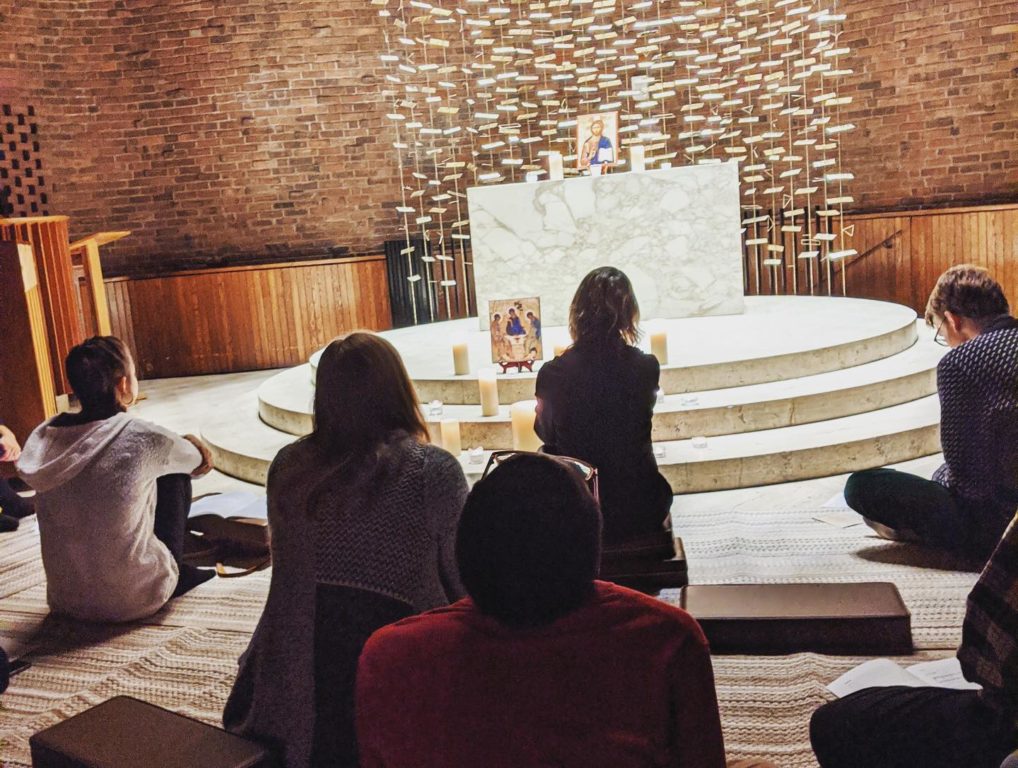
Photo at a Taize Prayer service, MIT Chapel


2. To be rooted in a particular Christian tradition, to know it well, and to be able to present to others the coherency of that tradition’s response to the Gospel. The genuine ecumenists are not at the margin of their church’s life, but at the heart of it. They know what is important in the Christian life and can recognize those elements in other churches even if they may be differently expressed.

3. To take an active part in the careful and honest appraisal of whatever needs to be done for the renewal of one’s own church. Ecumenism is not a specialty within the Church, but an expression of every dimension of its life. It helps the Church to be more the Church and to be faithful to her calling. Dialogue is the meeting of churches.

4. To be fascinated and curious about that which is different. Risk peeping out of our provincial perspectives and opening ourselves to the bigger picture. Ecumenism is a way of living that dares to think globally and live trustfully with differences in community.

5. To be willing to learn. Truth is seldom discovered in isolation but rather through dialogue in diverse community. Each Christian tradition has preserved better than others one or more aspects of the mystery of God’s work in Christ. The work of unity aims at restoring the fullness to our common appreciation of that mystery.

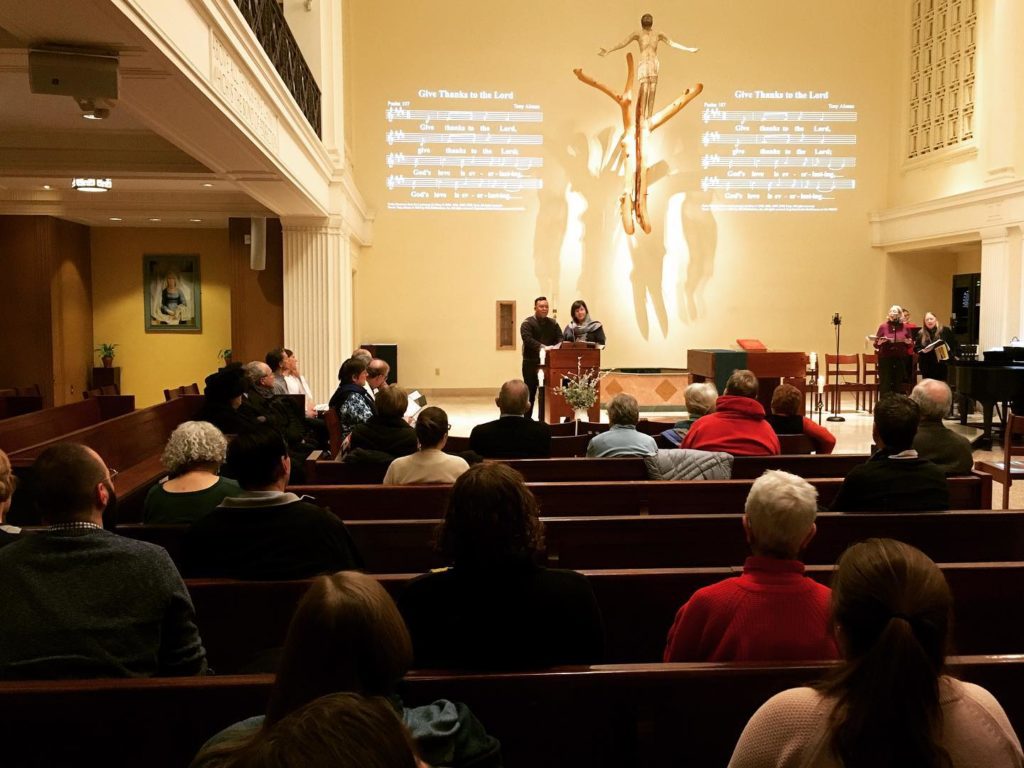
Photo from a prayer gathering at the Greek Orthodox service during January’s Week of Prayer for Christian Unity

6. To cultivate a historical consciousness. We’re on a journey. The church we have is not the church God wants. An ecumenically minded person refuses to worship false gods, and the present expression of the church is not God. Similarly, there is a refusal to make absolute a stage of development that is only the next step on the way to something greater.

7. To be ready to celebrate vitality in the body of Christ wherever it is found. What advances the reign of God in any church helps all churches. The churches are not like competing corporations in the business world, so that the stakes of one rises as the lot of others falls. Any loss of divine truth and life is a loss to Christ and his Church. The only triumph a Christian seeks is that of Jesus and his cross. Our rivalry is not with one another, but with sin.

8. To be willing to work together. Ecumenism is an understanding of human society that identifies fear of the “other” as one of the greatest evils we face. The principle given to all the churches for their life together is: Do everything together as far as conscience permits.

9. To feel the scandal of our divisions. Unity is for mission. Our primary mission is to announce the Good News. The message we joyfully proclaim is that we are reconciled to God and to one another through the life, death and resurrection of Jesus. “Being ecumenical” means feeling a holy unrest at our failure to live consistent with our message, more interested in proving our “rightness” and the other’s “wrongness” than in seeking together to know what the Spirit is asking of us and to do it.

10. To be open to God’s will for the Church. Our unity is God’s gift, and the way to give more visible expression to that gift will also be God’s gift. But we will have to empty ourselves of our self-righteousness and let go of our power games in order to let this be God’s work.

11. To appreciate the important role of provisional regulations and church structures in our evolution from alienation to reconciliation. To accept that the only constant is change and the only refuge is the insecure security of faith. To struggle against the temptation to live in a closed, safe, secure system that reduces our level of fear and satisfies our desires for control. God is a verb. And in the dynamism of the provisional, God’s Spirit is at work, endlessly correcting, improving, adjusting, reorienting.

12. To have an appreciation for the hierarchy of truths in Christian doctrine. A belief has greater or lesser consequence in the measure in which it relates to the foundation of the Christian faith. Grace has more importance than sin, the mystical aspect of the Church more than it’s juridical, the Church’s liturgy more than private devotions, baptism more than penance, the Eucharist more than the anointing of the sick. Placing the greater stress on those doctrines in closest relation to the heart of Christian faith enables us to build further agreement.

13. To try to understand others as they understand themselves. To avoid any expression, judgment or action that falsifies their condition. Ecumenical honesty means we do not look upon others through the prism of their weakest elements, or over-generalize their positions with statements like “Protestants say … Anglicans do … Orthodox are … Catholics will …” Rather, our ideals are put next to their ideals, our practices next to their practices, as opposed to our ideals next to their practices.

West Roxbury neighborhood dinner at Sally’s house

14. To be alert to the presence of God and the action of the Holy Spirit in the lives of other Christians and members of other living faiths. The Church of God does not have a mission as much as the mission of God has a church. The Church is the sign and sacrament of God’s presence in the world, but God’s activity is by no means limited to the Church and its members. The Church serves the advance of the Kingdom but is not tantamount to it.

15. To have a biblical patience. Biblical patience calls for creative waiting, doing now what we can instead of moaning about what church disciplines will not allow us to do. It means being willing to accept or absorb negativity so that the person who is the source of it will eventually go beyond it. Christ suffered for unity. At times so will we. Biblical patience involves staying with it, searching for the healing that comes from understanding and forgiveness. Everyone is in favor of Christian unity. Some are even willing to work for it. But few are willing to suffer for it.

Fr. Tom Ryan leads the Paulist National Office of Ecumenical and Interfaith Relations. You may find more information about the office, it’s newsletter/journal Koinonia, ecumenical retreats, and inter-congregational Gospel Call missions at tomryancsp.org

Written by uniteboston · Categorized: Blog · Tagged: christian unity, community, reconciliation, uniteboston, unity

Feb 15 2019

Transforming Hostility into Enemy-Embracing Love Sermon

Do you want to learn more about the theology behind Christian unity?

UniteBoston’s Executive Director Kelly Fassett preached at Gordon-Conwell Theological Seminary this past Wednesday. Her sermon was titled “Transforming Hostility into Enemy-Embracing Love.” Jesus redefined who we should associate with and modeled enemy-embracing love, even for the people that were nailing him to the cross. The sermon is centered on the scripture text Ephesians 2:11-22, which emphasizes Jesus’ reconciling peace, and the work of Christ that destroyed hostility between Jews and Gentiles.

“For he himself is our peace, who has made the two groups one and has destroyed the barrier, the dividing wall of hostility, by setting aside in his flesh the law with its commands and regulations. His purpose was to create in himself one new humanity out of the two, thus making peace, and in one body to reconcile both of them to God through the cross, by which he put to death their hostility.  He came and preached peace to you who were far away and peace to those who were near.” (Ephesians 2:14-17)

As Christians, how can people believe that we are reconciled to God, if we aren’t reconciled to one another? Kelly believes that there is one major component that is preventing unity and reconciliation: hostility. She highlights four steps we can take to uncover the hostility we may be holding towards other Christians by:

  1. Reflecting on which Christian groups we consider to be outside of the “true Christian church”
  2. Going with curiosity to learn from people and worship settings
  3. Reflecting and discerning which aspects of their faith that you want to adopt into your own Christian practice
  4. Speaking well of fellow Christians and treating them as if they were the living, breathing body of Christ

She states boldly that Christian unity is a process by which the church is brought to maturity (Eph 2:21-22, Eph 4:15-16). Our differences even among Christians seem to lead to intractable polarization and division – Listen to the sermon below to reflect, learn and grow together across the diversity of Christian belief and practice.


https://www.facebook.com/GordonConwell/videos/348460169333775/?t=2162


Written by uniteboston · Categorized: Blog · Tagged: christian unity, peace, reconciliation, uniteboston, unity

  • « Previous Page
  • 1
  • …
  • 9
  • 10
  • 11
  • 12
  • 13
  • …
  • 15
  • Next Page »


Give to Further Christian Unity

DONATE!

  • Email
  • Facebook
  • Instagram
  • YouTube

Copyright © 2026 · UniteBoston · Built on WordPress