UniteBoston

Bridging Divides Across Christians for the Flourishing of the City

  • Home
  • Events
    • Submit Event
  • Join In
    • Beloved Community Lab
    • Migrant Care and Solidarity
    • The Church and Civic Engagement
    • The ATTIC
    • Kingdom Conversations
    • Worship & Pray
    • Boston Flourish
  • About
    • UB Board, Staff & Volunteers
    • Cohorts
    • Missional Letter
    • Annual Reports
    • History
    • Christian Unity
  • Forums
  • Blog
  • Give
  • Contact
  • Search

Apr 08 2018

Martin Luther King’s Legacy Continues in Boston

Cambridge Community Fellowship Church Lives Out MLK’s Legacy

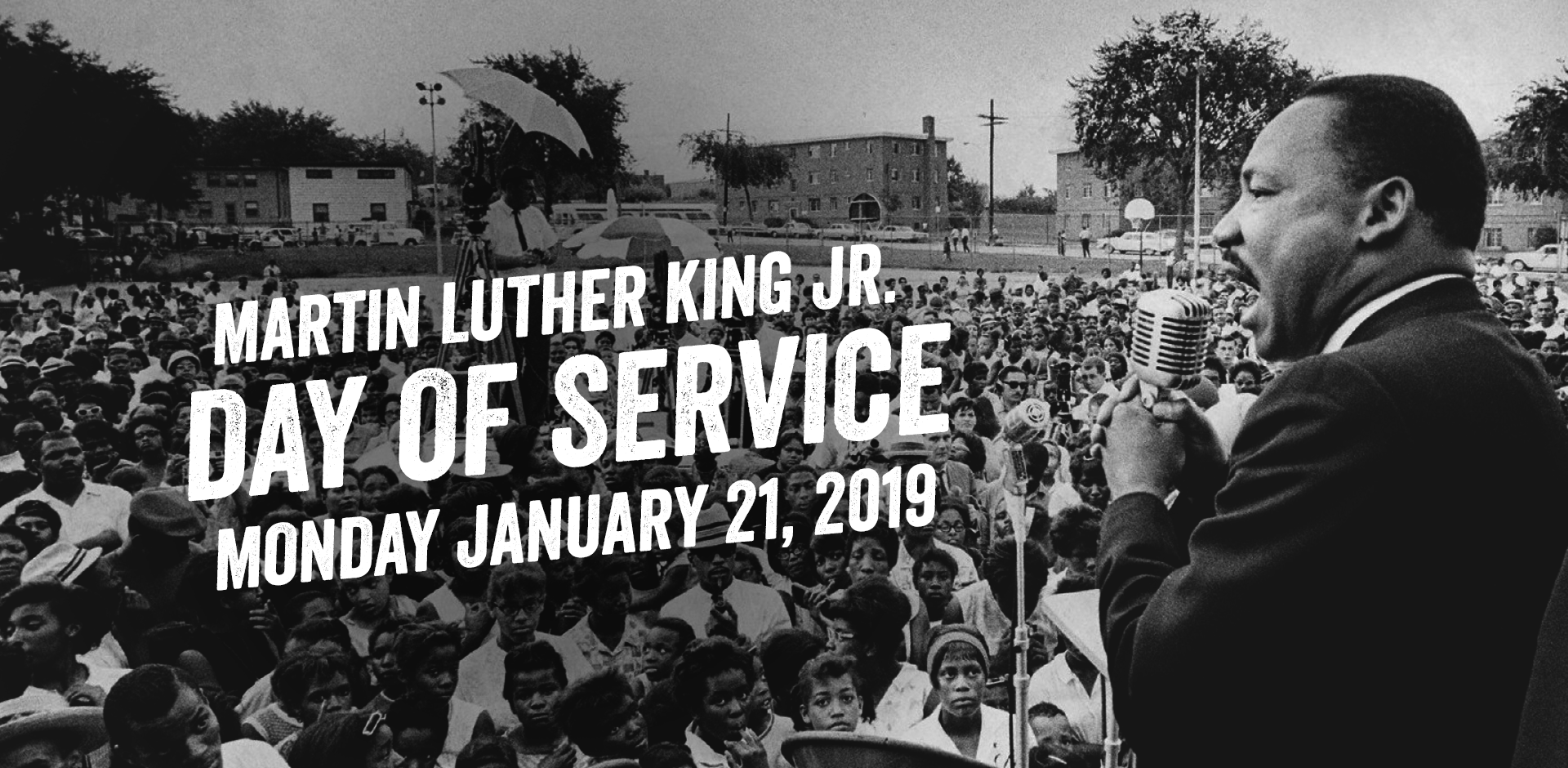
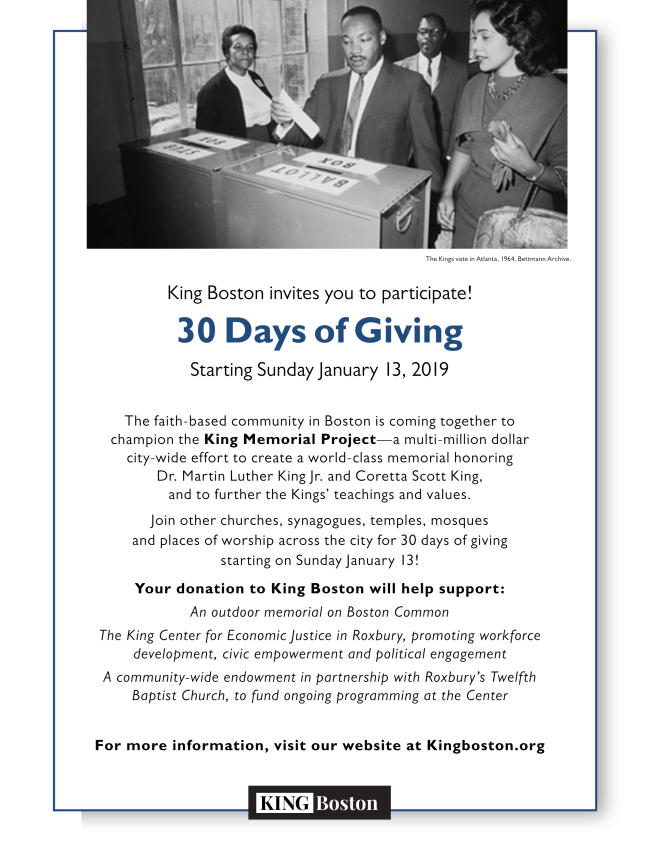
Martin Luther King was a doctoral student at the school of theology at Boston University, and lived in the South End. He was an assistant preacher at Twelfth Baptist Church. He led a mile-long civil rights march from the South End to the Boston Common.

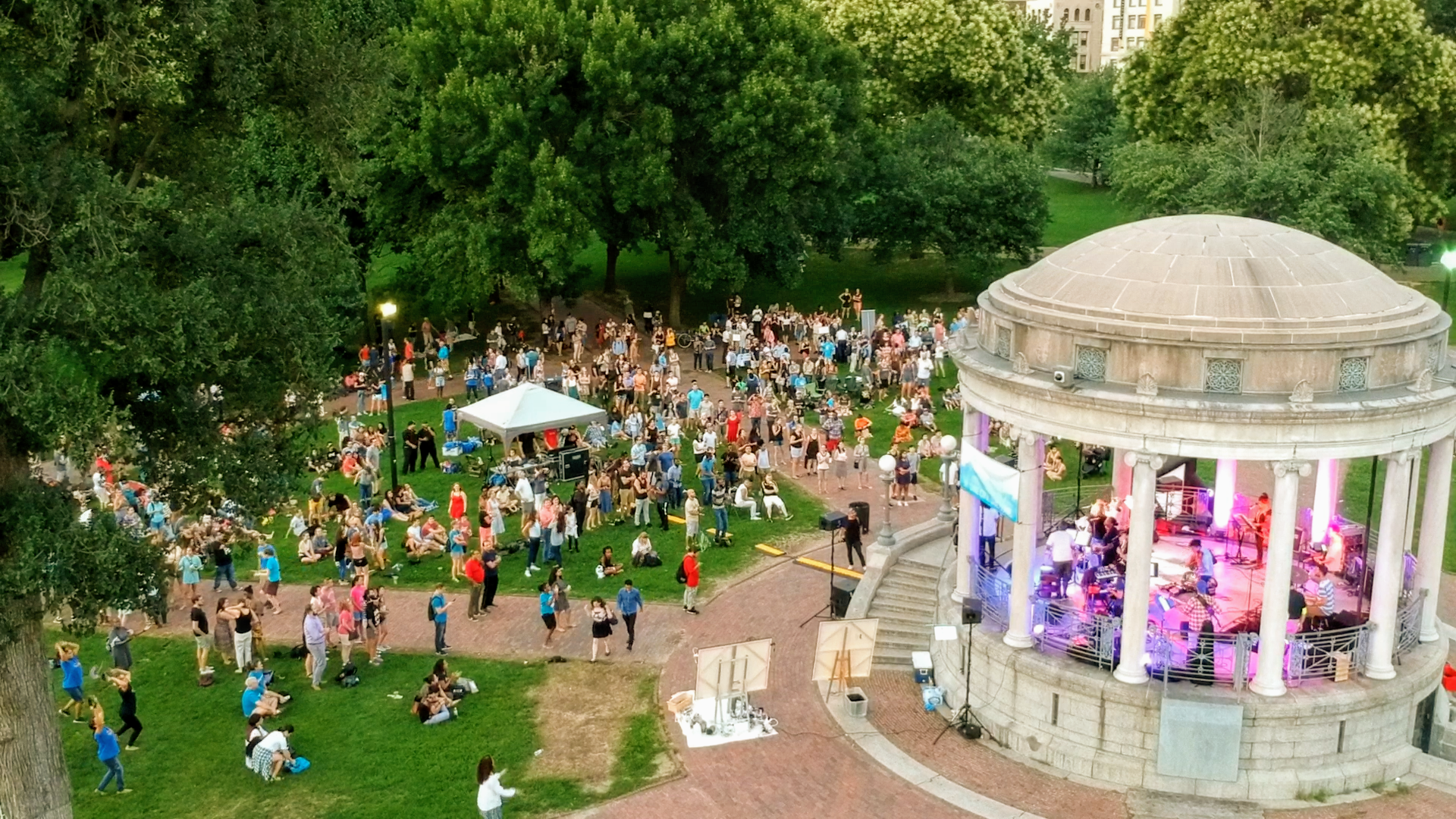
He also stood at the Parkman Bandstand, in front of 22,000 people, speaking to the racial divisions: “Now is the time to make brotherhood a reality. Now is the time. The vision of the new Boston must extend into the heart of Roxbury. Boston must become a testing ground for the ideals of freedom.’’

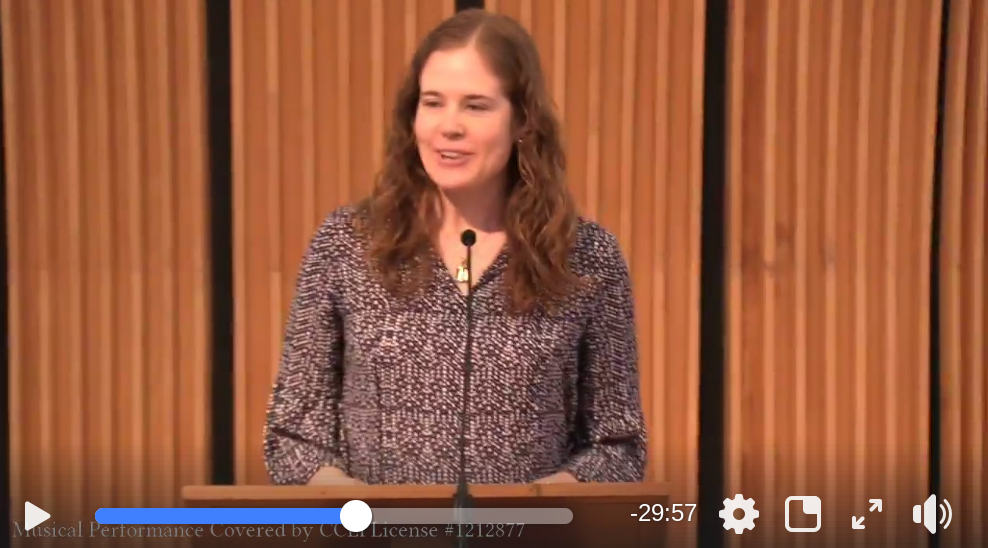
While this week, the world commemorated the 50th anniversary of his assasination, King’s legacy lives on in our city. Pastor Larry King from Cambridge Community Fellowship Church seeks to extend this legacy and shape the identity of his church around social justice and racial reconciliation. Their congregation was featured on Channel 10 News – Click on the above image to watch this!

Where Martin Luther King, Jr. Lived, Worked and Played in Boston 

Martin Luther King’s Prayer for the Church

We thank you for your church, founded upon your Word, that challenges us to do more than sing and pray, but go out and work as though the very answer to our prayers depended on us and not upon you.
Help us to realize that humanity was created to shine like the stars and live on through all eternity.
Keep us, we pray, in perfect peace.
Help us to walk together,
pray together,
sing together,
and live together
until that day when all God’s children
– Black, White, Red, Brown and Yellow –
will rejoice in one common band of humanity
in the reign of our Lord and of our God, we pray.
Amen.

Written by uniteboston · Categorized: Blog · Tagged: peace, racial reconciliation, reconciliation, south end, unity

Nov 25 2017

Thanksgiving = Friendsgiving?

In the American culture, holidays provide a unique opportunity for reconciliation because it’s not often that we intentionally spend time with those we are close to and those we might not normally connect with. Alexei Laushkin from the Kingdom Mission Society writes that Thanksgiving is an incarnate moment of Psalm 23:5:

You prepare a table before me in the presence of my enemies; You have anointed my head with oil; My cup overflows.

He goes on to describe that, “Thanksgiving often brings the juxtaposition of peace and reconciliation in the midst of ongoing brokenness in the life of any family. Thanksgiving puts relationships into sharp focus in a culture that doesn’t do relational intimacy very well.”

Research from The Barna Institute shows that often, Americans choose to celebrate Thanksgiving with friends. In fact, practicing Christians are 17% more likely to eat dinner with their neighbors than those with no faith.

Here is a snapshot of Barna’s research on how Americans interact with people in their neighborhood. Millennials are the most likely generation to say that their neighbors are like family (12%, compared to 3% and 5% among Boomers and Elders). In fact, 30% of Millennials include those who live nearby in their holidays or at their dinner tables.

This Holiday season, let’s be a Church that is known for loving and serving our neighbors. Here is a liturgical worship service that you can use in your congregation or small group to consider Jesus Christ’s call to love our neighbors.  https://www.faithandleadership.com/preparing-love-and-serve…


Written by uniteboston · Categorized: Blog · Tagged: jesus, neighborhood, peace, reconciliation, unity

Oct 11 2017

The 500th Anniversary of the Reformation: From Conflict to Communion

On Tuesday October 31, we commemorate the 500th Anniversary of the Reformation. This is a timely opportunity for all Christians to turn towards one another in efforts to help answer Jesus’ prayer in John 17 that we would “be one.”

Christians from all over the world will be gathering in Wittenburg this week to pray for 72 hours for healing and reconciliation in the Christian Church. UB Board Member Dr. Vito Nicastro and Scott Brill from the Institute for Christian Unity will be attending – please keep them in prayer.

Here are 5 key principles from the Wittenburg 2017 :

1.    The irresistible purpose of Jesus is to return to a united Church.
2.    The current reality is that the universal Church universal is divided – in heart, purpose, thinking, and organizational structures.
3.    Division weakens the universal Church.
4.    The universal Church should feel the pain of her divisions and grieve them.
5.    The universal Church should pray for reconciliation and unity.

The overall vision of Wittenburg 2017 is the beauty of a healed, mature, united body of Christ (John 17:20-26). They propose that the primary obstacle is hostility (Eph. 2:14), which divides God’s children and dims the glory of the Church.

There are more great resources from Wittenburg, including historical conclusions from both Catholics and Protestants, prayers for Christian unity, and a free online course on the history and nature of church divisions.

We encourage everyone to check out these events happening in the area.

Reformation-Focused events in Boston / Massachusetts:

Catholic Miracles in the Age of Reformations: a History of the Impossible – Carlos Eire, Ph.D., T.L. Riggs Professor of History and Religious Studies at Yale University, will discuss the Reformation and its impact 500 years after the publication of Luther’s 95 Theses on Friday, October 27, at 4:30 p.m. at 500 Salisbury St., Worcester.

Reformation Conference: Boston – A panel of guest speakers looking at the history of the Reformation and discussing why the Reformation still matters in 2017 and beyond. 10:00am to 3:00pm on Saturday October 28 in Quincy.

Reformation Commemoration Conference, 25 speakers on Martin Luther’s theology and actions for the life and ministry of the Church today, October 26 to 28, Gordon Conwell Theological Seminary, Essex MA.

“Now Thank We All Our God: A Celebration of Five Hundred Years of Continuing Reformation” at 3:00pm on Sunday, October 29, in the chapel of the Society of St. Margaret, in Duxbury, MA.

UniteBoston Dinner & Worship Night, community conversation around our shared mission as Christians and intimate time of worship on Sunday October 29 at 6pm in Revere.

Arts in Celebration! The Word in Color, Action, Music, and Form, an international symposium commemorating the 500th Anniversary of the Reformation with sessions on art, theology, and ecumenism from October 27-29 in Orleans, MA.

“Luther and the Reformation” Film and Discussion. Join the BU School of Theology for a showing of Rick Steves’ film Luther and the Reformation. A brief discussion follows the film, and a German-themed dinner is provided. Space is limited! UniteBoston has spots for five people to attend – Email kelly@uniteboston.com to RSVP. October 31 from 6 to 8pm at Marsh Chapel in Boston.

“An Evening with Martin Luther and Friends” experimental theater piece in commemoration of the 500th anniversary of the Reformation from October 31 to November 4 at Faith Evangelical Free Church in Acton, MA.

A Sunday Service in German Celebrate the 500th anniversary of the Reformation on November 5 at 2:00 pm at the Faith Lutheran Church, Cambridge (311 Broadway) followed by coffee at 3:00 pm. Children welcome! Contact Pastor Robin Lutjohann with questions: 617.945.4395.

Ecumenical Worship Service: 500th Anniversary of the Reformation on November 5 at 3:00pm at St Mary’s Cathedral, Fall River, MA.

Holy Spirit Weekend with Evangelical, Anglican, Catholic, and Pentecostal speakers on November 11 from 9:00am to 7:00pm in Lowell.

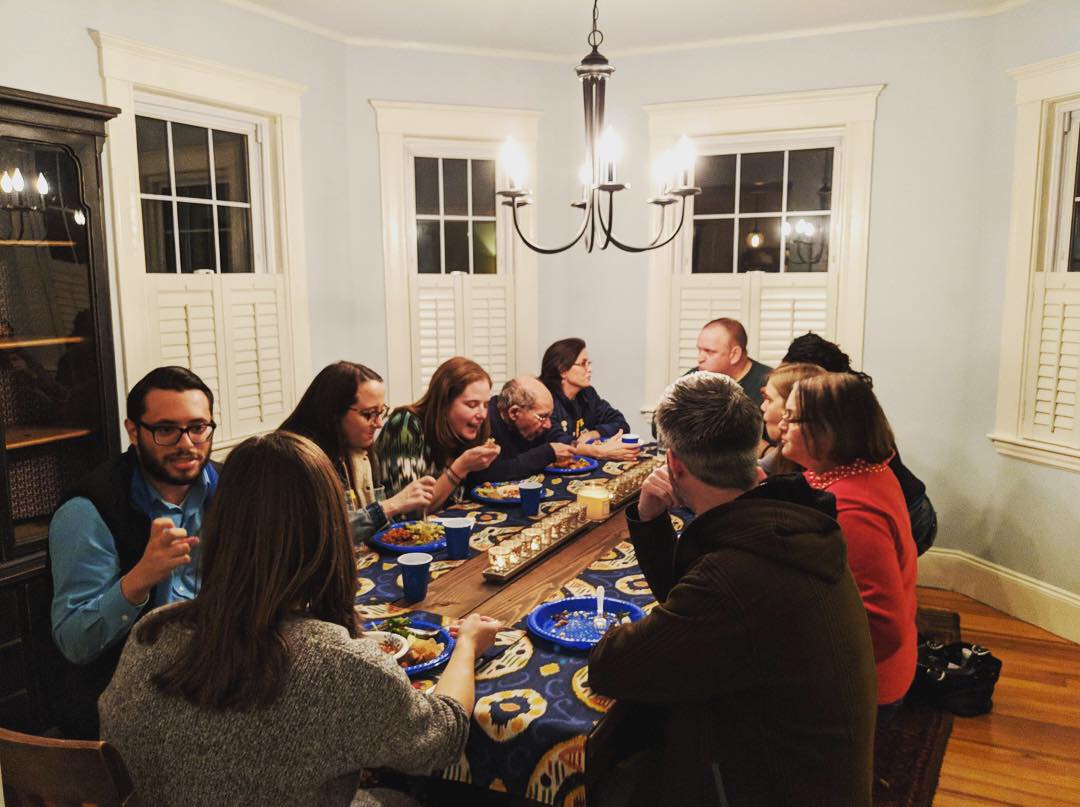
UniteBoston City-Wide Dinner Party – Christians from all denominational backgrounds are joining together to build relationships and let our relationships inform how we can better love our neighbors. At this gathering, the UniteBoston team will model the neighborhood dinners that we’re launching throughout the city. Wednesday November 15th at 6pm at Lion of Judah Church in Boston.

Learn more:

Faithlife has created a timeline covering over 1,300 years of Christian history. Martin Luther posted his 95 Theses on October 31, 1517, giving voice to ideas that had been stirring in Christendom. Join Faithlife for a Protestant, scriptural-based perspective in exploring the technology and history behind this historic event.

John Armstrong from ACT 3 Network writes on “How Shall We Remember the Protestant Reformation this year?” and “What Luther Means and How Can We Move Toward Unity Now?”

Lutheran-Roman Catholic Commission on Unity’s latest report “From Conflict to Communion” which encourages Catholics, Lutherans, and all Christians to look back on our history, the last 50 years of ecumenical dialogue, and how we can continue the movement towards the unity that Christ wills for His followers.

One perspective: The Advantages and Disadvantages of the Protestant Reformation by Joseph Mattera

Father Thomas Ryan, director of the Paulist North American Office for Ecumenical and Interfaith Relations in Boston writes that the 500th Anniversary of the Reformation is “A Year of Unparalled Opportunity.”

And something fun – “Who Said That?” quiz that tests your understanding of Luther’s utterances.

Written by uniteboston · Categorized: Blog · Tagged: christian unity, community, reconciliation, uniteboston, unity

Aug 04 2017

Running for Racial Reconciliation

The Find A Way Relay was a journey, on foot and by bicycle, that ten people took from DC to St. Louis, where they participated in the Taize St. Louis Pilgrimage of Trust in May 2017. Together they crossed the countryside, receiving the hospitality of others, seeking to spotlight the injustice of racial violence. Vinny and Beth Mwano put together a video about the journey.

Full Version (13 minutes)

Trailer Version (2 mins) 

UniteBoston’s Executive Director Kelly Steinhaus was one of the key team members for this initiative. Below, she reflects on her own journey of learning about the reality of racial inequity and God’s heart for racial justice.


My rocking chair creaked as I sat in front of the kindergarten class in one of Boston’s public schools. As the students quieted down, dozens of faces looked up at me, expectant to hear the story of the day. I had chosen a book about a young man who has a dream about playing basketball, and through perseverance he defied the odds to make the team.

After I finished reading, I asked the students to share with me their dreams. One by one, each chimed in: “a teacher, a painter, a doctor.” I looked at each of the black and brown faces sitting in front of me, and encouraged them, “You can be anyone and do anything you set your mind to. It won’t be easy, but if you just persevere, you can accomplish anything in life.”

Those were the words that came out of my mouth, but this time there was a check in my heart. Was it actually true that these students could accomplish anything in life, in light of the obstacles in their path?

The message I shared that day was the narrative that I had been told all my life. My parents had continually encouraged me to dream big, supporting me in my pursuits of getting a 4.0, playing college volleyball, then trying to make the national rowing team. For me, my hard work paid off and my dreams came to fruition. This made it easy for me to believe that success is simply the result of hard work and perseverance.

When the shooting of Michael Brown happened, and Trevon Martin, and Tamir Rice, my first thought was how sad it was that those white policeman were so racist that they resorted to shooting. I had been caught up in the media’s portrayal of these incidents, and it wasn’t until later that I considered the police’s side of the story of when and where they use force. The Dolan Consulting Group found that police don’t disproportionately target African-American men in their use of force and in fact are responding to deadly force assaults, while other research shows that black people are 3x more likely to be killed by police, although they are more likely to be unarmed than white victims. I mention both of these articles to emphasize that this issue is incredibly complex and nuanced. We can easily generalize and stereotype people of certain races and professions based on specific incidents without examining the broader motivations and underlying factors.

The Black Lives Matter movement speaks a lot about implicit bias, which is a term that refers to our attitudes and associations that are often unconscious. When I took Harvard University’s implicit bias test, to my surprise I realized that I unconsciously associate negative concepts with black people. While I’m not clear as to how this implicit bias correlates with my behavior, this reality was striking, especially since I’m used to scoring well on tests!

While there are a multitude of factors contributing to police use of lethal force, I began to discover that beyond the important controversy over the use of force, the evidence showing unequal opportunities for people of color is undeniable:

  • I never knew that, at the time my mother was telling me that I could be whoever I wanted to be in life, black students my age were being told how to avoid being shot when stopped on the street. A black colleague of mine told me that “being pulled over is a life and death situation. Not only can I not carry a knife or gun because of the risk of getting shot to death, I cannot be thought to be carrying a knife or gun. My heart rate soars and I have a protocol of how to move and what to say to minimize anything escalating.” This fear is birthed from the reality that 40% of those who are incarcerated are black, even though they make up only 13% of the US population.
  • I learned in school that the U.S., although founded to be the land of the free, had slavery at its backbone based on a desire for cheap labor. But what I didn’t know was that the U.S. had also institutionalized laws that allowed people with white skin to gain greater opportunities for financial wealth and home ownership than those with black or brown skin.
  • I never knew that white households are worth roughly twenty times as much as black households. While the motive to pass down wealth from generation to generation is natural, it has resulted in an escalating disparity of financial resources and opportunity.
  • While I had lived most of my 32 years without thinking about race, I never knew that the majority of black people think about race every day. I didn’t realize that my ability to simply ignore racial prejudice was the result of being in the majority culture and was one of the greatest privileges that the color of my skin could offer me.

Once you see, you can’t not see… and what I began to see was that the deaths of a few black men that spurred on the Black Lives Matter movement was a symptom of racial injustice infecting America. While we will never know exactly what happened in these deaths, the societal injustice and inequity gripping America are clear. The problem was the vastly differentiated educational opportunities for Boston’s youth, it was the correlation I saw between race and income in different neighborhoods, it was the fear that I admittedly felt walking through a predominately black neighborhood, and on and on.

When I realized the extent to the problem, I became paralyzed at the vast inequity and its implications for everything. What could I do? My white skin had brought me so much, a white privilege, which admittedly was a term which I used to refrain from using. But over time, I began to realize that my initial offense at this term was a denial of the discrepancy between the world that I saw and the world as it actually is. My blinders had come off, and I couldn’t go back to the way I operated in the world beforehand.

Yet, this white skin is all I have, and so I said “yes” to my friend and colleague Rev. Rita Powell when she mentioned running from Washington DC to St Louis to the worldwide Taize gathering in May 2017 focused on racial reconciliation. After the shooting of Michael Brown at Ferguson, the Archdiocese of St Louis asked the Taize brothers from France to host a “pilgrimage of trust” due to the escalating racial violence. Rather than flying to the event, Rev. Rita inspired us to pilgrimage, to travel with spiritual and sacrificial intentions. Ten of us ran and biked hundreds of miles throughout the South, offering our bodies as spiritual acts of worship as a sign of solidarity with victims of racial violence (Rom12:1). We prayed in the morning and evening and relied on the hospitality of strangers and churches along the way.

Taize Song and Prayer at our cabin the first night in Jefferson National Forest


Friends from Christ Church, Lexington KY


Group picture after our last run

One night it was mentioned how different our journey would be if we were ten black people taking this pilgrimage together. That statement stuck with me, because it wasn’t right and yet it was true. There is something about truth that inescapably rings in your mind and heart.

Throughout our journey, I began to see a wound of racial inequity that was deeper, wider, and more painful than I ever imagined, like pulling open a band-aid to find that our efforts towards “reconciliation” were only surface-level. I began to discover that racial justice requires more than an intellectual knowing; rather, it is an embodiment, a standing alongside, a listening deeply and committing to put my whole self in. Still, I kept asking, what could I do? My black and brown friends told me that what they needed most was for someone to hear their hurt and pain born out of their experiences to acknowledge the wrongdoing.

One pastor at Ferguson said, “We don’t just need white allies. We need people to put their bodies into the fight.” And so our team ran, for 510 miles, my feet pounding on the pavement, drawing me into solidarity with the young men whose pain was so much greater than mine.

Even after returning home, there is something different about my runs. I run more purposefully: every step as a prayer for change, justice, and hope on behalf of my black and brown brothers and sisters.

A racialized society begins, and ends, with racialized hearts. This is a call to courage: to bravely uncover the ways we are holding bias, consciously and unconsciously, and act for change. It will take all of us committing to do the hard work of challenging our implicit ways of seeing and being, that we might see the way forward, recognizing that the solution for holistic reconciliation can come from Christ alone.

“And God has committed to us the message of reconciliation. We are therefore Christ’s ambassadors, as though God were making his appeal through us. We implore you on Christ’s behalf: Be reconciled to God.” (2 Corinthians 5:19-20)

I will end by saying that I understand there may be some things in this article that have offended you. I encourage you to do your own research, to hear personal stories of people from various racial backgrounds regarding race and violence, and to draw your own conclusions. I believe we must not shy away from difficult dialogue but rather move toward it; in fact, I’ve found that discussing our differences is the key to healing political and racial division. We must all humbly admit that we see from the glass dimly (1 Cor 13:12); each of us are in desperate need of one another and God’s grace to uncover our underlying stereotypes and preconceived notions. I welcome you as a dialogue partner, and especially if you would send along any resources you’d like to share with me. You can contact me via email at kelly@uniteboston.com.

Next steps:

  1. Watch a CNN study  showing how children view racial bias
  2. Read an article about Racial Equity in America – How Far Have We Come? 
  3. Take the Harvard Implicit Bias test (click on race)
  4. Connect with Megan Lietz, Research Associate with the Emmanuel Gospel Center’s Race and Christian Community Initiative

Written by uniteboston · Categorized: Blog · Tagged: ferguson, racial reconciliation, reconciliation, uniteboston, unity

Feb 16 2017

Keep the Fire Burning: An Article from Koinonia Magazine

Tom Ryan, CSP

Some people have said that the Christian unity movement has been in an “ecumenical winter.” However, Father Tom Ryan, who directs the Paulist North American Office for Ecumenical and Interfaith Relations in Boston, contends that “the signs are there that the Holy Spirit is alive and active, lighting the fire in our hearts for more visible communion with one another as followers of Jesus.” Father Tom was one of the most consistent attendees during UniteBoston’s Week of Prayer for Christian Unity and in this article, he describes how encouraged he is about the movement he sees in Boston of Christians coming together to receive their calling as ambassadors for unity.

Originally posted here, republished with permission.


Keep the Fire Burning

by Thomas Ryan, CSP
February 6, 2017

The ecumenical movement spread through Christian churches like a wildfire in the late 1960s, through the 70s, and into the 80s, fanned significantly by the entrance of the Roman Catholic church after the Second Vatican Council into the work for Christian unity.

Around the turn of the millennium, there was a substantive reshaping of relationship among a significant number of churches. In 1997 the Evangelical Lutheran Church in America and the U.S. Episcopalian Church judged that their process of growth in agreement had reached sufficient maturity to enter into full communion with one another.

The Reformed Church in America, the United Church of Christ, the Presbyterian Church USA, and the Evangelical Lutheran Church in America also entered into full communion with each other with mutual recognition of ministries, sacraments, exchangeability of ministers and members.

And in 1999 the Roman Catholic Church and the Lutheran World Federation signed a Common Declaration on Justification by Faith, burying the hatchet on one of the core issues of the Reformation and creating a new context on the road to full communion between the Reformation Churches and the Roman Catholic Church.

Fire Dying Down
Prayer Service for Christian Unity

Prayer Service for Christian Unity

But in the first decade of the new millennium, one began hearing references to the “fire dying down” or to the “winter of ecumenism”. A variety of factors contributed to this shift in temperature: Diminishing congregational numbers resulting in increasing denominational self-focus and self-definition for the sake of survival. The increasing religious pluralism of the country with its call to interreligious encounter and engagement. The emergence from the culture wars of new church-dividing questions like the nature of sexuality and marriage, and who can be ordained?

Workshop on Christian Unity

Workshop on Christian Unity

What is needed in our time are reminders that the Church’s mission for unity has not been and cannot be shelved. The thematic scriptural passage for the January Week of Prayer for Christian Unity provided that reminder: “God reconciled us to himself through Christ and has given us the ministry of reconciliation.” (2 Cor 5: 18,).

In other words, the Church is the community of those who, because of Christ, are no longer separated. It is a contradiction in terms to speak of “separated Christians”, for reconciliation, unity, is the very nature of the Church of Christ. To be in communion of life with one another as Christians and bring that message of reconciliation to others is our baptismal vocation. In short, the Church we are called to be is the community of those who-–because of Christ—are no longer separated.

Energizing Reminders
coptic-choir
Coptic Orthodox choir

Do we need energizing reminders in these turbulent times that this call to unity, this vocation, is more real and needed than ever? Yes, we do. And the signs are there that the Holy Spirit is alive and active, lighting the fire in our hearts for more visible communion with one another as followers of Jesus.

Such signs were manifest in Boston during the January 18-25 Week of Prayer for Christian Unity. There was a prayer gathering in a different denominational church each night of the week. On the opening evening, Wednesday, Christians from around the city gathered in an Evangelical church. On Thursday evening, people came together in an Eastern Orthodox church. And on Friday evening there was an energizing service of song and prayer in a Pentecostal church.

Co-Presiders at prayer service

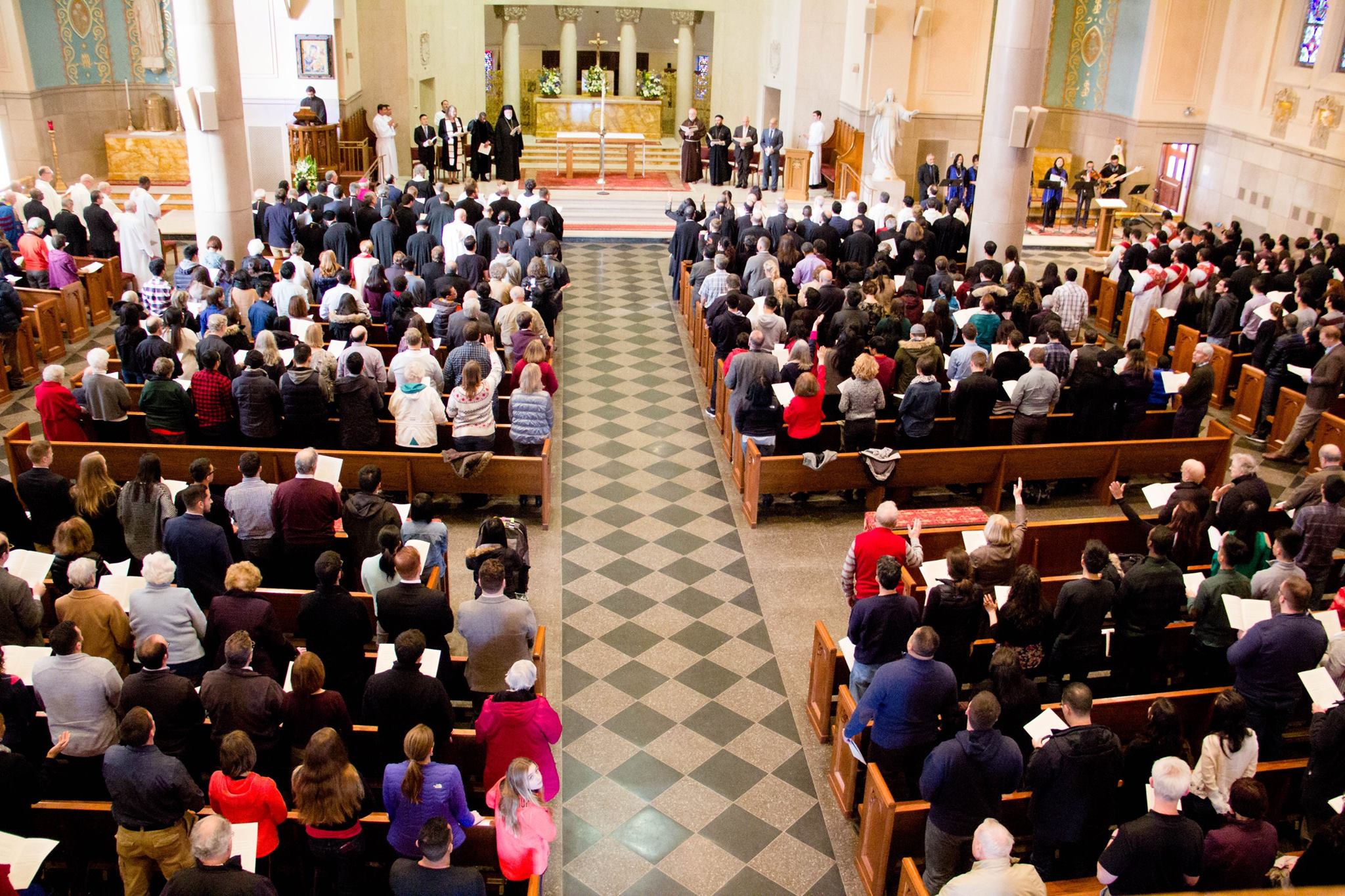
Then, on Saturday afternoon, over 800 people from a broad spectrum of denominations came to a Catholic church to meet and talk over lunch, share faith in workshop discussions,  join their hearts and voices in a prayer service, and after, to participate in a mission and volunteering fair in the church hall. The variety of music served as a symbol of the richness of gifts within the Christian family, led in turn by a Pentecostal worship team, an Orthodox Byzantine choir, a Coptic Orthodox choir, a Taizé chant group, along with regular Catholic/Protestant hymnody. The service was co-presided by eight church leaders, and in his homily Cardinal Sean O’Malley reminded those present that we are all members of the one body of Christ through our common baptism, and that “our divisions are an impediment to our announcing the gospel and prevent people from accepting the good news.”

Cardinal Sean O'Malley
Cardinal Sean O’Malley

On Sunday evening, students at the Massachusetts Institute of Technology led an evening of sung prayer in the style of the ecumenical community of Taizé. On Monday evening, Asian Evangelicals hosted a prayer gathering. On Tuesday evening, Catholics and Lutherans co-hosted a service in the Paulist Center chapel commemorating the 500th Anniversary of the Protestant Reformation. And Episcopalians brought the week to a close in their church with an Evensong service for all. Each evening, after the service, there was a reception with refreshments, and those present were encouraged to go and meet some fellow Christians they’d never met before and learn something about each other’s church communities.

Scott Brill, Bishop Arthur Kennedy, Vito Nicastro

We need to hear good news like this and draw inspiration from such events to keep the fire for Christian unity alive and well in our own towns and cities. All these events were stimulated and overseen by two new local ecumenical networks founded in 2012 by individuals in whose hearts the fire for unity burns: UniteBoston (Kelly Steinhaus), and the Ecumenical Institute (Vito Nicastro and Scott Brill).

“God reconciled us to himself through Christ and has given us the ministry of reconciliation…. We are ambassadors for Christ, since God is making his appeal through us” (2 Cor 5: 18,20).  When we accept our role as ambassadors for unity, the Holy Spirit will use us in ways unimagined to keep the fire burning.

What might you do?


Fr. Thomas Ryan, CSP, directs the Paulist North American Office for Ecumenical and Interfaith Relations in Boston. 

Written by uniteboston · Categorized: Blog · Tagged: christian unity, lent, reconciliation, uniteboston, unity

  • « Previous Page
  • 1
  • …
  • 11
  • 12
  • 13
  • 14
  • 15
  • Next Page »


Give to Further Christian Unity

DONATE!

  • Email
  • Facebook
  • Instagram
  • YouTube

Copyright © 2026 · UniteBoston · Built on WordPress