UniteBoston

Bridging Divides Across Christians for the Flourishing of the City

  • Home
  • Events
    • Submit Event
  • Join In
    • Beloved Community Lab
    • Migrant Care and Solidarity
    • The Church and Civic Engagement
    • The ATTIC
    • Kingdom Conversations
    • Worship & Pray
    • Boston Flourish
  • About
    • UB Board, Staff & Volunteers
    • Cohorts
    • Missional Letter
    • Annual Reports
    • History
    • Christian Unity
  • Forums
  • Blog
  • Give
  • Contact
  • Search

Jan 17 2017

Christian Unity in the News

It’s the Week of Prayer for Christian Unity!

Pope Francis Embraces The Rev. Martin Junge, General Secretary Of The Lutheran World Federation, During An Ecumenical Prayer Service At The Lutheran Cathedral In Lund, Sweden, Oct. 31. (CNS Photo/Paul Haring)
Caption: Pope Francis Embraces The Rev. Martin Junge, General Secretary Of The Lutheran World Federation, During An Ecumenical Prayer Service At The Lutheran Cathedral In Lund, Sweden, Oct. 31. (CNS Photo/Paul Haring)

Below are a few articles that have been published in the past week related to Christian unity.

We look forward to seeing you at the prayer gatherings hosted by a diverse cross-section of Christian churches around the city, nightly from January 18 to 25. All are welcome!

week-of-prayer-for-christian-unity-1


Pope Francis and the Evangelicals by Bishop Robert Barron

“Being a Christian is not the result of an ethical choice or a lofty idea, but the encounter with an event, a person, which gives life a new horizon and a decisive direction.”


Events Mark Week of Prayer for Christian Unity  posted on the front of the Boston Pilot, and includes a full schedule of the prayer gatherings

“Only full unity between us is enough. Only full unity is true to the nature of the Triune God as communion. Only full unity obeys the will of Jesus, and therefore loves Him. Only full unity is the goal set by our Church’s teachings. Only full unity honors the bond of our Baptism and eternal relation in Christ. Only full unity is coherent with the message of the Gospel of reconciliation. Only full unity empowers our compassion and unfetters our evangelization.”


Commemorating the Reformation: Churches Looking Towards 2017 – And Beyond by Fr. Tom Ryan, CSP, who directs the Paulist North American Office for Ecumenical and Interfaith Relations in Boston

“This anniversary is an unparalleled opportunity for both church leaders and laity to enter into the process of healing and reconciliation at both juridical and grassroots levels. It is important that we capitalize on this opportunity to render more effective the mission and witness in the world of a Christendom united.”


The Protestant Reformation: Positive Aspects by Fr. Tom Ryan, CSP, who directs the Paulist North American Office for Ecumenical and Interfaith Relations in Boston

“The question before both Catholics and Protestants today is: What does it mean to be church, and how may we live together as church in ways that better manifest our unity?”

“A Protestant-Catholic common commemoration presents us with the opportunity to offer a joint witness of faith.”


Written by uniteboston · Categorized: Blog · Tagged: boston, christian unity, jesus, reconciliation, unity

Dec 26 2016

Guest Blogger: Costly Vs. Cheap Unity

This week, we feature a blog written by Scott Brill, Assistant Regional Director of InterVarsity New England and co-director of the Institute for Christian Unity. Scott uses Dietrich Bonhoeffer’s language as he examines and contrasts ‘costly unity’ with ‘cheap unity.’ His analysis is full of rich wisdom and is a must-read for those who are working towards a more reconciled Christian Church in Greater Boston.

For more great reading on Christian unity, check out Scott’s “Recapitulare” Blog here: https://recapitulareblog.wordpress.com/

As someone whose life calling is to foster unity, I’ve been wrestling with how I should respond to the events of the past few weeks and months. Division and divisiveness seem to be everywhere. The country is divided; the political landscape is divided; Christians are divided; even structures within the Church that share a common mission and doctrinal basis are divided. People all around me – in person and on social media – are asking questions about unity and throwing around thoughts and ideas. I don’t think I’ve ever seen a deeper longing for unity or a greater sense of how far we are away from it. I’ve sensed the need to formulate some kind of response.

unity-as-pretext-spectrummagazine-org

Up until this point, though, I’ve mostly been listening in silence. Which has felt like something of a spiritual discipline. Similar to the Jewish practice of “sitting Shiva”, I’ve wanted to grieve myself, as well as honor others who are grieving this brokenness. And I’ve wanted to create space to wait for a word from the Lord rather than offer quick solutions.

But finally I feel compelled to say something. I want to be able to answer the question: “why should we even work for ‘unity’ at a moment like this?” Does the word have any meaning, any power, any motivating energy? Is unity dead? Like Jairus, the synagogue ruler in the fifth chapter of Mark’s gospel, should we not trouble Jesus any more – just give up and go home? I believe at this moment (as for Jairus at that moment in the Gospel), Jesus has spoken a word of hope and faith to me. And I want to speak that word of hope out loud now. This is my “apology” for pressing on for unity – right here; right now:

I am focusing my comments particularly on the Christian community. While there are compelling reasons to work for unity on a broad national or global scale, the Church is the place I am most familiar with, and it is a place where there is a special mandate for unity (see Jesus’ prayer in chapter 17 of the gospel of John). Ideally, we should be both a sign of hope and a model to the larger world of how to live out unity.

But our community seems particularly stuck, paralyzed by our inability to be unified but not wanting to admit that we can’t figure it out. At this moment of awareness of our deep division and brokenness, Christians appear tempted to minimize them. In posts and articles and conversations, I hear us again and again wanting to (in the words of the prophet Jeremiah) “dress the wound of my people as though it were not serious” and pronounce, “’Peace, peace,’ when there is no peace.” We seem drawn to move forward quickly, avoiding the actual pain of division and pronouncing some form of surface-level healing.

In response, I want to borrow a familiar framework from Dietrich Bonheoffer’s Cost of Discipleship, and to say that we are at this critical moment supremely tempted to opt for “cheap unity.” The urgent antidote, then, for this moment has to be “costly unity.” But what is costly unity over against cheap unity? Here are some characteristics of cheap unity that have come to my heart and mind:

  • Cheap unity avoids conflict. It is uncomfortable with sharp disagreement, and seeks to diminish strong emotions and firm convictions. It elevates attempts to feel better over honest expressions of problems.
  • Cheap unity finds a “least common denominator” and stops there. It looks for something innocuous we can all agree on, and declares “reconciliation” too soon
  • Cheap unity draws the circle of community too tightly. One of the solutions it offers is to shrink the number of people who need to be reconciled. If there are fewer true brothers and sisters, then those folk furthest away from our perspective can be dismissed as heretics, non-believers, or apostates.
  • Cheap unity also refuses to talk about holiness. In contrast to drawing the circle too tightly, this type of cheap unity wants to ignore decisions of conscience and exclude some from the conversation for being too inflexible or overly obsessed with keeping the rules.
  • Cheap unity reduces conflict to concepts and ideas and avoids the messiness of the human heart and human relationships. It proposes that the problem of division lies primarily in a lack of intellectual or organizational rigor.
  • Cheap unity diminishes power dynamics and minimizes the cost to some (usually the minority voices) of “staying at the table.” It presumes a level playing field in the conflict and that both sides must make the same amount and types of sacrifices in order to bring about healing and restoration.
  • Cheap unity wants to move on too quickly, and ignore the painful history of the past. It insists that those who are wary or distrustful of reconciliation based on their past experiences need to “get over it.” It overemphasizes optimism for the future and detaches forgiveness from sorrow for sin.

There are probably more, but identifying aspects of cheap unity is only half the battle. Embracing and living out a more costly unity is the essential act of repentance from cheap unity. Costly unity moves away from what I just described above. It presses into conflict, it avoids declaring victory too soon, it accepts the tension between hospitality and holiness, it seeks the “messy middle”, it acknowledges injustice, it sits with pain. And then it begins to work slowly and honestly through what divides: listening, praying, learning, building trust, seeking the interests of those on the “other side”

I believe it is our real hope for moving toward the unity Jesus longs for us to experience. It is this kind of unity that will give the larger world hope and model the message of the gospel. Pursuit of costly unity will lead us more deeply into the discipleship Jesus has called us – “for whoever seeks to save their life will lose it, but whoever loses their life for my sake and the sake of the gospel will find it.” (Mark 8). And it lives a life worthy of that gospel, “struggling together to remain faithful” to it (see Philippians 1:27 CEB). It embodies the self-emptying servant life of Christ that Paul goes on to describe in the next chapter of that epistle.

This is because ultimately costly unity forces me, forces all of us, out of ourselves. Costly unity presents a challenge to me to “count the cost” of pursuing my brothers and sisters and seeking their good. For one more time to borrow images from Scripture (this time from Luke’s gospel): Costly unity looks for the lost sheep without which the flock is not complete; it seeks the missing coin that is needed for the full value of the others; it pursues the separated siblings and invites them “in” – to life and celebration and relationship.

This commitment to costly unity is unilateral. It is a following in the way of Jesus to seek others in love. But this is the kind of unity I can be hopeful for. It won’t come easily and it will require discipline on the part of many of us. This is the kind of unity I am committed to spending the rest of my life working for. I invite you to join me.

Originally published here: https://recapitulareblog.wordpress.com/2016/12/12/cheap-unity-v-costly-unity/; re-posted with permission.

Written by uniteboston · Categorized: Blog · Tagged: christian unity, community, peace, reconciliation, unity

Nov 28 2016

Week of Prayer for Christian Unity

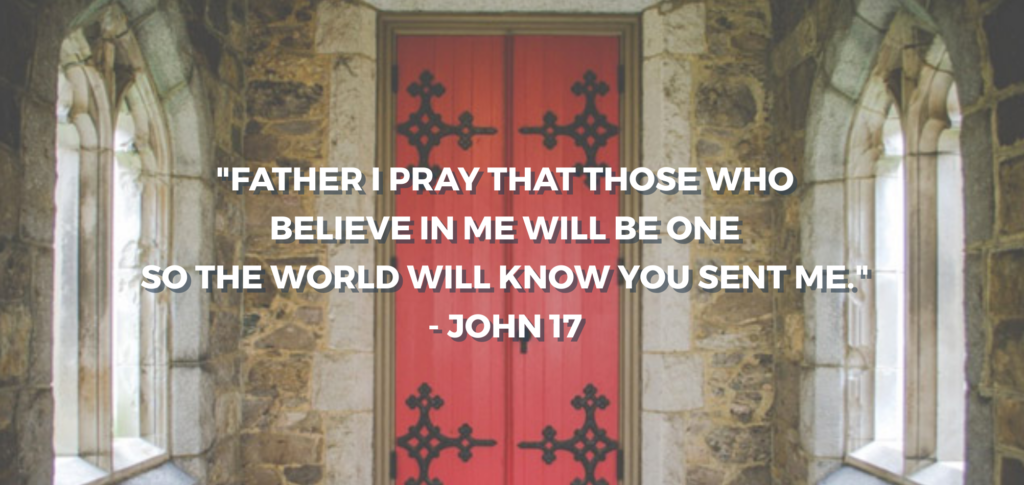
The Week of Prayer for Christian Unity is an international initiative where Christians worldwide are reminded of Jesus’ prayer for his disciples that “they may be one so that the world may believe” (John 17:21). Locally, UniteBoston coordinates evening collaborative gatherings of fellowship, prayer and worship from January 18-25 annually.

This Year’s Theme: Drawing from the resilience and liturgical richness of the Christians of Armenia—Oriental Orthodox, Catholic, and Evangelical—this year’s Week of Prayer for Christian Unity invites us to reflect on Ephesians 4:4: “There is one body and one Spirit, just as you were called to the one hope of your calling.” As the first nation to officially embrace Christianity in 301 CE, Armenia offers a profound witness to unity that has survived centuries of persecution and displacement. The materials for 2026 highlight that our shared identity is rooted in a ancient covenant, symbolized by the safe arrival of Noah’s Ark on Mount Ararat and the promise of the rainbow. By focusing on our common vocation and the “one hope” of salvation, we are challenged to move beyond historical divisions toward a conversion of heart, practicing a unity that embraces diversity while remaining steadfast in the love and mission of Christ.

Mark Your Calendars – You are invited to mark your calendars and plan to attend the evening gatherings! In this time of Epiphany, we encourage you to receive the manifestation of Jesus Christ through those of different denominations, races and cultures. Let’s make the most of these opportunities in order to truly be the family of God and serve as the body of Christ in the world. Let’s also pray with our feet – consider how our beliefs can come together in common action and witness.

Spread the Word – We also appreciate help spreading the word to people in your congregation, family, friends, and neighbors. A personal invitation goes a long way.

UB Board Devotionals – This year for the Week of Prayer, the UniteBoston Board and Staff will be sharing video devotional and prayers, which will be shared on our social media. Follow us on Facebook and Instagram!

Calling to mind our common commitment to ‘love thy neighbor,’ may the Week of Prayer for Christian Unity, January 18-25, 2025 be full of moments of conversion of heart through our encounters, so that “all may be one.”

Resources for Your Week of Prayer Experience

Litany for Christian Unity

Christian Unity Daily Prayer Guide – Created by the Greymoor Institute or The Initiative

Introduction on the Theme from Greymoor Ecumenical & Interreligious Initiative

As you are able, please also share this invitation with other churches and communities in your network so that more communities may gather to pray at this pivotal time in our country and city.


Schedule for Gatherings in Boston & New England

*All events are free and open to all.*

Thurs January 15  – Taizé Prayer with the Sisters of St. Joseph 

7:00 to 7:45pm at Motherhouse Chapel of the Sisters of St. Joseph, 637 Cambridge St, Brighton, MA 02135

Taizé prayer is a simple form of Christian prayer centered on scripture, silence, and song based on the daily prayer of the religious community in Taizé, France. As women rooted in the Gospel whose mission is to deepen relationships with God and neighbor, the Sisters of St. Joseph invite you to join in praying for unity and love in our world and in our own hearts.

Mon January 19 – Rev. Dr. Martin Luther King, Jr. Day

 We encourage you to join into many different opportunities to remember the life and legacy of Rev. Dr. Martin Luther King Jr.. Events listed with Meet Boston, City of Cambridge. Various volunteer and service opportunities listed through Boston Cares and City Year.

Tues January 20 – Tuesday Noontime Prayer

12:00 to 1:00pm at Currie Chapel, Tremont Temple Baptist Church, 88 Tremont Street, Boston MA 02108

Based on the model of the 19th century noontime city prayer meetings preceding the Third Great Awakening, the Navigators host a noontime prayer meeting at Tremont Temple Baptist Church every Tuesday. We gather to offer prayers of adoration and supplication with an emphasis on awakening and revival in the city of Boston and beyond.  All are welcome. Contact: Craig Parker, craig.parker@navigators.org

Tues January 20 – ‘It Ain’t Over:’ Music for Hope, Joy and Justice 

6:30 – 8:30pm At First Congregational Church of Wareham, 11 Gibbs Ave, Wareham MA 02571

Join the First Congregational Church of Wareham, UCC and the Arts at the Stone Church ministry for an evening of music, story, and reflection with Rev. Devlin Scott on Tuesday, January 20 in the Greozinger Room (11 Gibbs Ave, Wareham). A singer-songwriter, pastor, worship leader, and choir director, Devlin Scott’s music bridges faith, culture, and justice with honesty and hope, featuring songs from his debut single It Ain’t Over, which speaks to resilience and God’s presence in both joy and struggle. Light meal at 6:30 PM, performance at 7:30 PM. Free and open to all; donations welcome, with free parking available.

Wed January 21 – Forgiveness: An Alternative Account 

 6:00 to 8:00pm at the Cathedral Church of St Paul, 138 Tremont Street, Boston, MA 02111

Rev. Dr. Matthew Ichihashi Potts explores the complex moral terrain of forgiveness from his book ‘Forgiveness: An Alternative Account.’ Though forgiveness is often linked with reconciliation or the abatement of anger, Potts resists these associations, asserting instead that forgiveness is simply the refusal of retaliatory violence through practices of penitence and grief.  Join us at 6:00 PM for refreshments; the talk begins at 6:30 PM. Free and open to all. Sign up HERE

Thurs January 22 – United as One Body Worship and Prayer Night

6:00 to 8:00pm at NewCity Church, 1135 Walnut Street, Newton MA 02461

Join us for a powerful worship and prayer night hosted by Rev. Devlin Scott from NewCity Church as we focus on the Ephesians vision of one body in alignment with the theme of the Week of Prayer for Christian Unity. Childcare will be provided; contact Rev. Devlin to request, devlin@newcitychurch.cc.

Thurs January 22 – Prayer for Christian Unity

7:00 to 8:00pm online – Zoom Link here

You are warmly invited to join pastors and leaders from the United Methodist and Episcopal Churches in New England for a prayer service for Christian Unity. We are honored that Bishop Thomas Brown, Bishop of the Episcopal Diocese of Maine, will preach and share the gospel with us. Bishop Thomas Bickerton, Bishop of the New England Conference (UMC), will also be present. Join via Zoom here

Sat January 24 – Building Bridges Workshop 

9am to 2:30pm at First Federated Church, 200 Central Street, Hudson, MA, 01749  

Grounded in Ephesians 2:19–22, this gathering celebrates our shared identity as “one household” in God, with Christ as the cornerstone. We are honored to welcome Dr. Virginia Ward as our keynote speaker. A dynamic pastor and educator, Dr. Ward will inspire us to build bridges of grace and unity across our diverse cultures and generations. $30/person or $100 for a group of any size. Register here.

Sun January 25 – Week of Prayer for Christian Unity Prayer Service

7:00pm at St. Paul’s Episcopal Church, 61 Wood St, Hopkinton, MA 01748

Join pastoral leaders in the Hopkinton area for liturgical prayer using the International Week of Prayer for Christian Unity worship service. Fr. Len Cowen from the Abbey of the Way will be the homilist.

Mon Jan 26 – Taize prayer with The Crossing

 7:00 to 8:00pm at the Cathedral Church of St Paul, 138 Tremont Street,  Boston, MA 02111

Join the Crossing Community for Taize prayer, a simple form of Christian prayer centered on scripture, silence, and song based on the daily prayer of the religious community in Taizé, France.

Thursday February 12 – Christian Unity Prayer with St. Mary’s Hakuna

7:30 to 9:00pm at St. Mary of the Assumption Parish, 134 Norfolk St, Cambridge, MA 02139

Join for worship, prayer and adoration on Christian unity, followed by an informal social hangout. Hosted by St. Mary’s Hakuna group which seeks to cultivate a “Eucharistic lifestyle” by following Christ through joyful community, music, and a commitment to seeing God’s beauty in all aspects of life.


Photos from Previous Years

In 2017, we coordinated a large worship service on January 21st in alignment with the 500th Anniversary of the Reformation, that had over 8 co-sponsors and was attended by over 800 people.
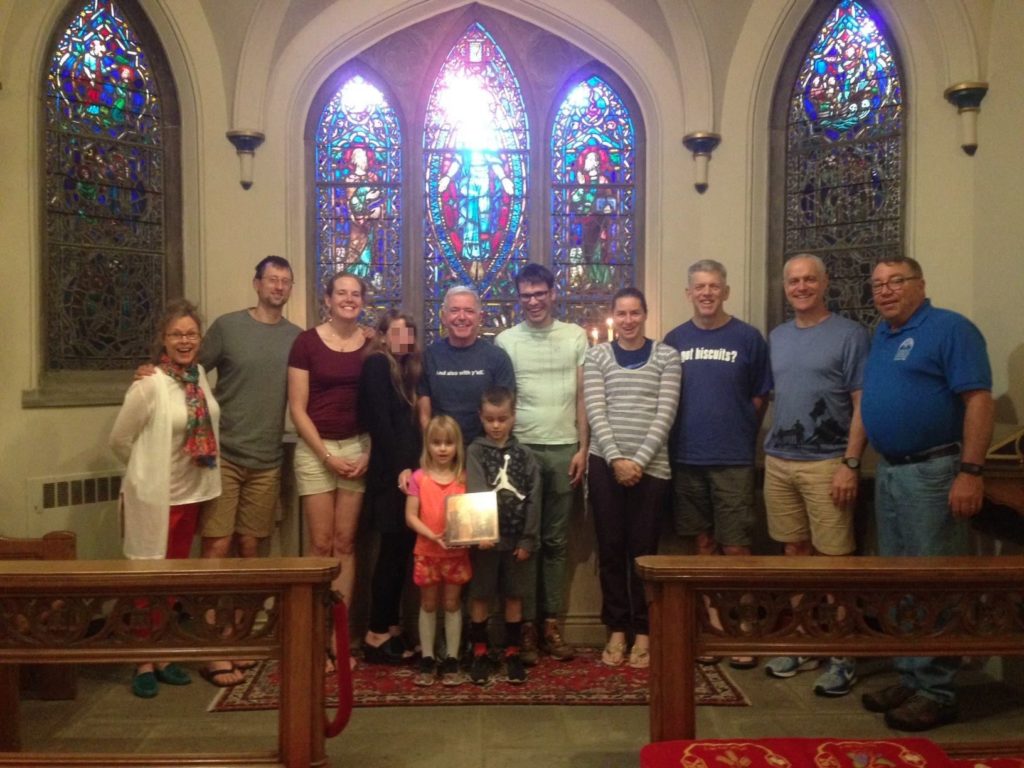
Here are many of the leaders hosting gatherings for the 2019 Week of Prayer for Christian Unity
UB City-Wide Dinner Launch – November 2017
UniteBoston dinner at Sally’s house in West Roxbury
Prayer Gathering at the Greek Metropolis of Boston
Neighborhood Dinner at Adam’s house in East Boston
Co-presiders from various Christian traditions at the 2017 Week of Prayer Anchor Gathering

Written by uniteboston · Categorized: Blog · Tagged: christian unity, reconciliation, uniteboston, unity, worship and prayer

Oct 31 2016

Happy Reformation Day!

reformation

It’s not just Halloween – I also want to wish you Happy #ReformationDay!

It’s the 500th Anniversary of Martin Luther nailing his 95 Theses in Wittenburg, Germany. This eventually gave rise to what has become known as the Protestant Reformation, which changed the world forever.

As of today, a year of events worldwide has begun to herald growing cooperation between Protestants and Catholics: http://www.wittenberg2017.us/

UniteBoston is joining into this vision for a reconciled Church by hosting nightly prayer gatherings throughout Boston with the Week of Prayer for Christian Unity on January 18-25, and coordinating a city-wide day of community service on May 6, 2016.

Pope Francis encourages Christians worldwide in the following: “While theologians continue their dialogue in the doctrinal sphere, continue insistently to seek opportunities to meet each other, to get to know each other better, to pray together and to offer your help to each other and to all those who are in need. In this way, freed of every prejudice and trusting only in the Gospel of Jesus Christ, that announces peace and reconciliation, you will be true protagonists of a new season in this journey that, with God’s help, will lead to full communion. I assure you of my prayer, and ask you, please to, pray for me, as I am in need. Thank you.”

Truly, the irresistible purpose of Jesus is that we might return to a united universal Church. Here are more of the principles posted by Wittenberg 2017:

1.    The irresistible purpose of Jesus is to return to a united Church universal.

2.    The current reality is that the Church universal is divided – in heart, purpose, thinking, and organizational structures.

  • a.    Each division has a story.
  • b.    Every division brings pain to God’s heart.
  • c.    No division can be simply “undone.”
  • d.    Any division can be healed and reconciled with the power of God.

3.    Division weakens the Church universal.

  • a.    Jesus said, “Any kingdom divided against itself will be ruined, and a house divided against itself will fall.” (Luke 11:17) We certainly don’t believe that the kingdom of God is ruined or will fall, but do believe that Jesus’ principle is clear: division weakens.
  • b.    St. Paul said, “Now to each one the manifestation of the Spirit is given for the common good … there should be no division in the body.” (1 Cor. 12:7,26)
  • c.    Externally imposed sameness also weakens the Church. St. Paul also said, “There are different kinds of gifts, but the same Spirit … Now the body is not made up of one part but of many … in fact God has arranged the parts of the body, every one of them, just as he wanted them to be. If they were all one part, where would the body be?” (1 Cor. 12:4, 20, 24-25) Manmade uniformity is not the same as God-inspired organic unity. As opposed to division and uniformity, which both weaken the church, diversity strengthens and enriches the Church.
  • d.    Jesus tells his diverse group of disciples, “By this shall all men know that you are my disciples, if you love one another” (John 13:35).  Then Jesus prays “that they may be one even as we are one … that the world may know” (John 17:23).  Thus Jesus ties the need for unity to the credibility of the Church’s witness.  In our day, the divisions in His Church are a commonly cited reason to doubt Jesus and His message.
  • e.    There is cause for great hope! The New Testament addresses division (between the Jewish and Gentile followers of Jesus) and presents the Christ-centered model for transforming division into a reconciled diversity.   “His purpose was to create in himself one new humanity out of the two, thus making peace, and in one body to reconcile both of them to God through the cross, by which he put to death their hostility.” (Ephesians 2:15-16, see also Acts 15:1-35).

4.    The Church universal should feel the pain of her divisions and grieve them.

  • a.    Grieving is a public posture of lament before God.
  • b.    Grieving requires memory.
  • c.    Grieving requires emotion.
  • d.    Jesus grieved the division of people of Jerusalem, longing to “gather their children together.” (Matt 23:37) Does he not also grieve the division among his followers and long to gather us together?
  • e.    Grieving does not solve the problem of division. It recognizes the gravity of that problem, and presents it to God the Father for His solution.
  • f.    Grieving does not dishonor people or traditions.

5.    The Church universal should pray for reconciliation and unity.

  • a.    Jesus did it. (John 17)
  • b.    St. Paul did it. (Romans 15:5-6)
  • c.    The Church historically has done it. For example, the following prayer is from the Catholic Liturgy of the Hours:
  • Lord, hear the prayers of your people and bring the hearts of believers together in your praise and in common sorrow for their sins. Heal all divisions among Christians that we may rejoice in the perfect unity of your Church and move together as one to eternal life in your kingdom.
  • d.    In our day the Holy Spirit is inspiring a mighty wave of worship and prayer. Much of this prayer is directed towards asking God to heal the wounds of the Church and create a united body of Christ.
  • e.    Prayer requires faith, not ingenious solutions. A seemingly unsolvable problem is not unprayable. Prayer about such subjects is the glory of the Church, because it requires faith and a reliance on the power of God. Prayer asking God to unify His Church is prayer about a problem that cannot be solved by a clever idea, a charismatic leader, or a carefully thought out program. It must be God, or it will not happen.
  • f.    Jesus came to restore relationships – our relationship with the Father, and also our relationships with one another – “until we all attain to the unity of the faith and of the knowledge of the Son of God, to mature manhood, to the measure of the stature of the fullness of Christ.” (Ephesians 4:13).  When we pray with sincere hearts, God will show us our part in the process of restoration. Our response will require the good and hard work of repentance and reconciliation.  This will take place person to person, leader to leader, group to group, faction to faction, church to church, culture to culture, and ultimately one historic stream of the Church to other historic streams of the Church.  In this process, we repent for the sins of our own faith stream, not the streams of others.  We honor other faith streams.
  • g.    Christian unity is a natural outcome of Christ-likeness.  As we mature in Christ-likeness, we mature in our capacity to celebrate and strengthen diversity; prevent diversity from becoming division; and take steps towards healing the divisions that are damaging the Church. “Make every effort to keep the unity of the Spirit through the bond of peace.” (Ephesians 4:3)

Written by uniteboston · Categorized: Blog · Tagged: christian unity, reconciliation, uniteboston, unity, worship and prayer

Oct 29 2016

Resources for Upcoming Election

The Presidential election is right around the corner! We encourage all Christians to pray for the leaders of our country, and prayerfully consider how your faith in Christ informs your vote.

Samuel Adams said, “Let each citizen remember at the moment he is offering his vote … he is executing one of the most solemn trusts in human society for which he is accountable to God and his country.”

Additionally, 1 Timothy 2 states “Therefore I exhort first of all that supplications, prayers, intercessions, and giving of thanks be made for all men, for kings and all who are in authority, that we may lead a quiet and peaceable life in all godliness and reverence.” 

The MyFaithVotes.org website is a great resource for information about party platforms.

Whatever your emotions are leading up to the election, I’d encourage you to read author Max Lucado’s blog about his prediction for November 9th. He encourages us to remember God’s sovereignty and that, regardless of the outcome, “Our good God rules the world.”

The Emmanuel Gospel Center suggests that we pray for the Church in Boston during this election season; and that there will be a display of love and unity among Christians even in the midst of disagreement. Pray that we can promote peace, compassion, and justice that transcends political parties. Pray for healthy dialogue that concerns kingdom values, and not just American values.

The Archdiocese of Boston encourages everyone to vote NO on #4. The Archdiocese is particularly concerned about the serious risks to youth that would follow enactment of this proposed law. We feel an obligation to do all that we can to prevent this from occurring. Click here for more resources, including a statement from Mass Medical Society, Massachusetts Chiefs of Police, and other organizations, who strongly oppose #4.

Additionally, the Massachusetts Council of Churches have provided a few some resources to help Massachusetts voters:

Ecumenical Ballot Question Guide

The Massachusetts Council of Churches have created this guide to be honest, specific, and to present the best in each side.

Download the Ecumenical Ballot Question Guide here.

Prayer Services for Election Eve and Election Day –

Resource from the Massachusetts Council of Churches

As November 8 approaches, consider holding a prayer service in your community. The Disciples of Christ Council on Christian Unity has developed this beautiful Liturgy for an Ecumenical Prayer Service for Election Day or Eve.  This communion liturgy might be useful to you in planning worship for November 6 or 13 as well.

Here are prayer services taking place in the Greater Boston area; check back with the Massachusetts Council of Churches’ Facebook page for an updated list, or email info@uniteboston.com to add your service here!

 Arlington
Monday 11/7 Election Eve Prayer, 7pm at Covenant Church

Boston

Tuesday, 11/8 Prayer Vigil 8:30 AM – 6:30 PM Trinity Church in the City of Boston
Tuesday, 11/8 Prayer Vigil, Services of Patriotic Music 12:00 PM & 5:00 PM Old South Church

Tuesday, 11/8 Taizé Services 8:30 AM, 12:10 PM and 5:30 PM Trinity Church in the City of Boston

Brookline

Tuesday, 11/8 7:00 AM All Saints
Tuesday, 11/8 12:00 PM Church of Our Saviour
Tuesday, 11/8 8:00 PM St. Paul’s

Cambridge

Monday 11/7, at Christ Church:

-8am: Morning Prayer Service of Trust
-12pm: Midday Prayer Service of Silence and Intercession
-5:15pm: Evening Prayer Service of Repentance and Deliverance
-6pm: Contemplative Prayer Service of Silence and Intercession 6pm

Tuesday 11/8 at Christ Church:
8am: Morning Prayer Service of Unity and Reconciliation

Tuesday 11/8 – 9am to 8pm at Reservoir Church –  Day of Prayer

Lexington

Monday, 11/7 7:00 PM Church of Our Redeemer

Medford

Monday, 11/7 7:00 PM Grace Episcopal Church

Waltham

Monday, 11/7 6:30 PM (communion) Christ Church

Watertown

Monday, 11/7 7:00 PM (interfaith service) Church of the Good Shepherd, Watertown

Finally, the Episcopal bishops in the Commonwealth of Massachusetts call for a vigil period of intense prayer from noon on All Saints Sunday, Nov. 6 through noon on Election Day, Tuesday, Nov. 8.

Written by uniteboston · Categorized: Blog · Tagged: christian unity, peace, reconciliation, uniteboston, unity

  • « Previous Page
  • 1
  • …
  • 12
  • 13
  • 14
  • 15
  • Next Page »


Give to Further Christian Unity

DONATE!

  • Email
  • Facebook
  • Instagram
  • YouTube

Copyright © 2026 · UniteBoston · Built on WordPress