UniteBoston

Bridging Divides Across Christians for the Flourishing of the City

  • Home
  • Events
    • Submit Event
  • Join In
    • Beloved Community Lab
    • Migrant Care and Solidarity
    • The Church and Civic Engagement
    • The ATTIC
    • Kingdom Conversations
    • Worship & Pray
    • Boston Flourish
  • About
    • UB Board, Staff & Volunteers
    • Cohorts
    • Missional Letter
    • Annual Reports
    • History
    • Christian Unity
  • Forums
  • Blog
  • Give
  • Contact
  • Search

Dec 01 2023

Advent Resources: Waiting, Longing and Yearning for God Together

“In Advent we are ushered into a time of waiting where we are connected again with our desire, our longing, and our yearning for God.”

This Sunday is the first Sunday of Advent, where Christians throughout the world are anticipating Jesus’ arrival and contemplating what it means for the God of the universe to be present with us. Katie Oxley, former director of the Young Adults Ministry at the Paulist Center (a Catholic community in downtown Boston) offers these resources and practices for all Christians to ready our hearts for the coming of Christ.

(This article was originally posted in 2018 and has been updated)


With Thanksgiving suddenly behind us, we are launched full-force into the Christmas season. Stores are all playing Christmas music, Starbucks has brought out their red cups, and Christmas Tree lots are popping up on every abandoned roadside corner.

Yet amidst the inevitable hustle and bustle of this time of year (this “getting ready” for Christmas), we often neglect the most important preparation we need to be doing–readying our hearts and lives for the coming of Christ. This is why remembering the season of Advent is important. In Advent we are ushered into a time of waiting where we are connected again with our desire, our longing, and our yearning for God. Joan Chittister, in the book The Liturgical Year, comments: “The year opens with Advent, the season that teaches us to wait for what is beyond the obvious. It trains us to see what is behind the apparent. Advent makes us look for God in all those places we have, until now, ignored.”

Advent is a time when we, too, are invited to sink deeply into ourselves and re-orient ourselves to the world and to God. It is a humble time of recognizing one’s need, and yearning for God’s powerful presence to break into the world.

The waiting we are called to do during Advent is not the busy, numbing, frenetic kind of waiting, but the stilling, germinating kind that connects you deeply with the present and your true self. We await the celebration of the human arrival of Jesus and we anticipate the eventual Second coming of Christ, but more profoundly, we open ourselves up to await the in-breaking of God into our own personal lives and communities here in the present. It is a time to connect with our hope and our desire.

Desire is more than wanting; it is longing, yearning, a deep-seated hope that has the power to burn into being a multitude of things. Theologian Wendy Farley, author of The Wounding and Healing of Desire, wrote, “Desire is the absurdity that holds open the infinity of possibility.” From experience, many of us have learned that desire itself often feels foolish. We are all familiar with the devastation of disappointment and have, in turn, used it to disown, numb, and shrink our desire.

Advent is a season for us to settle down deeply into ourselves–to hear our heart cry, to find that spark of life and hope deep within the darkness of unknowing. Desires unfulfilled. Hope unmet. Longing unsatisfied. It is a time of discernment, of waiting, of being present. It is an active waiting. Because of this, it seems appropriate that in the northern hemisphere, this is the darkest time of year.  I’ve heard that that is one of the reasons why the celebration of Christmas was set for end of December. Because in a very real way, it is the Christ child that ushers in the light.

Just as in the Jewish tradition, each day begins at sunset, begins with darkness, so it seems appropriate that the beginning of the church calendar would likewise begin in stillness and the dark, with us facing our deepest fears and desires, cultivating our hope for the light. In the silence and the darkness, we hear our own heart’s cry, our own flame of desire, our own longing for God.

During the season of Advent I invite you to not get caught up in the frenetic chaos of holiday preparation, but do the work of preparing your soul, of reconnecting with yourself and your desire.

Practices

For Waiting:

–Advent Calendar: Whether it’s a common chocolate-filled one from the grocery store, or something you make yourself, have an Advent Calendar is a great way to mark the days of Advent and slow your pace in preparation for Christmas. This daily reminder of the season invites us to show up each day to reveal what lies hidden and trust that there is goodness even in darkness.

–Slow Decorating:  Although the stores are already filled with Christmas lights and decorations, consider taking a slower approach in your own home. As tempting as it is to jump right into all the Christmas cheer, carve out space and time for Advent -intentional preparation. Consider waiting to listen to Christmas Music, or decorate your home with Advent decor instead of Christmas lights. One nice practice is to get a tree, but to slowly decorate it -one ornament a day to let to the preparation for Christmas be a slow build. And to remind us of the process of preparing.

-Scripture: (From Park Street Church) How would you define hope? Did you know that the word doesn’t appear in the Bible until Ruth 1:12, when Naomi uses it? After that, it occurs 184 times. Interestingly it is often translated “wait”!
See if these verses help you come up with a definition of hope. Notice how they incorporate both the saving and judging nature of God’s two comings.

  • Job 13:15-16
  • Psalm 25:3,6,7
  • Psalm 42:5
  • Lamentations 3:19-25
  • Rom. 5:1-6
  • 1 Thessalonians 1:2, 3
  • Hebrews 6:17-20
  • 1 Peter 1:13

Also, meditate on (i.e. savor, chew slowly, ponder, repeat, reflect upon) Romans 8:22-25:

We know that the whole creation has been groaning as in the pains of childbirth right up to the present time. Not only so, but we ourselves, who have the firstfruits of the Spirit, groan inwardly as we wait eagerly for our adoption as sons, the redemption of our bodies. For in this hope we were saved. But hope that is seen is no hope at all. Who hopes for what he already has? But if we hope for what we do not yet have, we wait for it patiently.

– Reflection: Last, this one page PDF from Leadership Transformations invites you to consider God’s invitation to watch and wait this Advent season. Download it here and spend some slow and spacious time in prayerful reflection.

For Remembering:

-The Jesse Tree: This ancient practice is a great way to prepare for Christmas through Storytelling. A Jesse tree is typically a bunch of bare branches collected in a jar or vase, and then hung with different items or ornaments throughout Advent. Each of these ornaments is a symbol of a particular Bible story or Character. (like an Apple for Adam, or some wheat for Ruth) Each day as you hang the ornament reflect on that story, part of the Genealogy of Christ, and part of our own spiritual ancestry.

–Nativity Scene Journey: Sink into the story of Christ’s birth slowly by allowing your nativity scene to play out the story across your living room. Start with the Angel and Mary for the annunciation, then the journey to Bethlehem. The wise men can be traveling from the bedroom or some other location. Move each set along every few days throughout Advent and until Epiphany (when the Wise Men arrive).

For Preparing:

-Make an Advent Wreath: This is a practice often done in community at your local Parish, but can just as easily be done at home too. One of the best ways to do it is by going on a walk near your home and gathering items to make your own wreath –Fallen greens, berries, pine cones, etc. Once it’s made, set 4 candles (safely) in it and light one each week as you read the Scriptures for the week. Or as a way to intentionally reflect on the 4 markers of Advent: Hope, Peace, Joy, Love.

-Lectio Divina: Also called “sacred reading” Lectio divina is the process of sitting with a text and allowing God to speak to you through it. This is a great way to come into connection with God and to prepare you heart during the Advent Season. Try doing Lectio Divina during Advent with the O Antiphons or with the verses of O Come O Come Emmanuel.

Feast days/practices

-St. Nicholas -December 6th (Gifts in Stockings and Cookies)

–Immaculate Conception -December 8th (Song of Mary)

-St Lucy’s Day -December 13th (Make a Special Breakfast)

Thoughtful Blog posts, articles, and videos:

Check out the Zeteo Resource Guide for Advent to find links to a number of different Advent series ideas, including worship liturgies, prayer guides, sermons, candle series, and more.

Collection of art and reflections for the 4 weeks of Advent

http://adventdoor.com/

Blogposts, podcasts, and resources

https://www.asacredjourney.net/advent-practices-resources/

Small video description of Advent

http://bustedhalo.com/video/watch-advent-two-minutes

A digital Advent Calendar with new reflections and resources each day

https://advent.bustedhalo.com/

Great collection of resources: videos, reading material, and practices:

http://bustedhalo.com/?s=Advent

Another digital Advent Calendar with new reflections and resources each day

http://grottonetwork.com/advent-calendar/

Collection of resources: videos, reading material, and practices:

https://godinallthings.com/?s=advent

Great collection of resources: videos, reading material, and practices:

https://www.ignatianspirituality.com/?s=Advent

Collection of Essays/posts about Advent

https://theseattleschool.edu/?s=Advent&submit=Search

Collection of resources: videos, reading material, and practices:

http://www.missioalliance.org/search/Advent/

Practice ideas: including food & music & options for kids

http://www.carrotsformichaelmas.com/2017/11/30/liturgical-living-at-a-glance-december-2017/

Reading Material:

Preparing for Christmas -Richard Rohr

To Dance with God -Gertrude Mueller Nelson

The Liturgical Year -Joan Chittister
Written by uniteboston · Categorized: Advent, Blog, RESOURCES, SPIRITUAL FORMATION & EVANGELISM · Tagged: community, jesus, peace, transformation, unity

Mar 16 2023

Turning Enemies into Friends: Reaching Across Church Divides in Northern Ireland

What does it mean to embody God’s call toward conflict transformation? Today, Lexi Carver shares some insights she  gained on her journey studying peacebuilding in Northern Ireland. Lexi is a member of the Church of the Cross and is passionate about understanding how the Church can be a force for peace building rather than violence. Read below to hear her share about some people she met who are actively living out God’s call to “love your enemy (Mt. 5:44).


Last year, I was lucky to take a short class about conflicts in Northern Ireland for my studies in conflict resolution. I knew the Northern Ireland conflict wasn’t “over,” as reverberations were still felt by all who’d lost loved ones during the Troubles (the period of widespread violence that lasted from the 1960s into the 1990s), and many who still suffered from systemic injustices, safety concerns, and bitterness. 

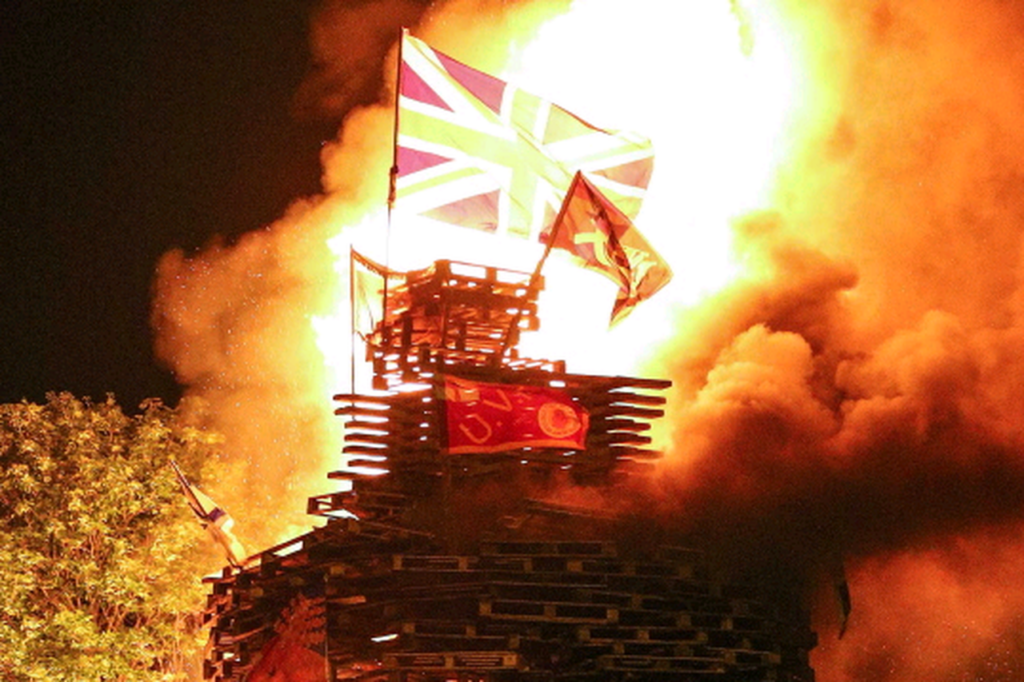
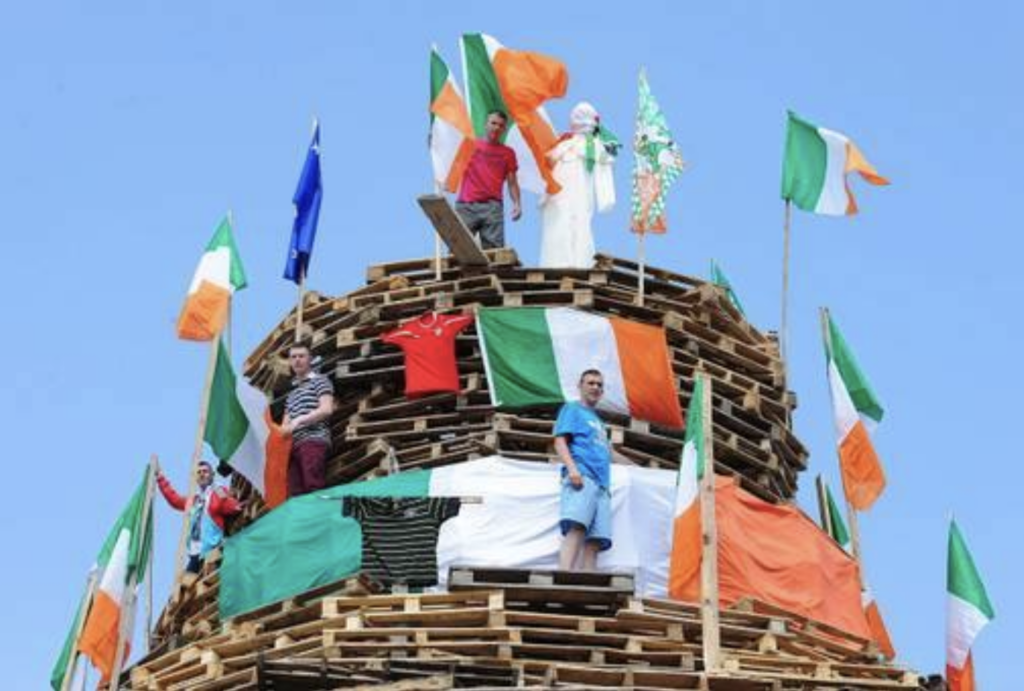
Even symbols were still a point of major contention, with flag-burning being something of an annual pastime, considered by some to be a “harmless” way to vent feelings of aggression and dislike of the “enemy” group.

A nationalist (pro-Irish) bonfire stack with the Union Jack and other British symbols burning on it. (Image Credit)
A loyalist (pro-British) bonfire stack decked out Irish tricolor flags and other nationalist Irish symbols, which will be burnt at the loyalists’ annual summer holiday.
(Jtcorscadden, CC BY-SA 4.0; image credit Wikipedia Commons)

The Irish nationalist/Republican residents were primarily Catholic, while the pro-British loyalist/Unionist residents were primarily Protestant. In visiting Northern Ireland, I wanted to know most of all how people drew on their faith in responding to violence, injustice, and ethnic division and discrimination when it occurred across ecumenical lines. So I went to Northern Ireland looking for the Church.

Spoiler alert: Much of what I saw wasn’t very pretty, but its strong parts glow brightly with the love of Christ.

As is often the case in conflicts and oppressive systems that operate on a nation-wide scale, the loudest voices are often ugly or impotent or full of excuses and nice buzzwords that don’t mean much. But the quietest voices are often the best ones to learn from. 

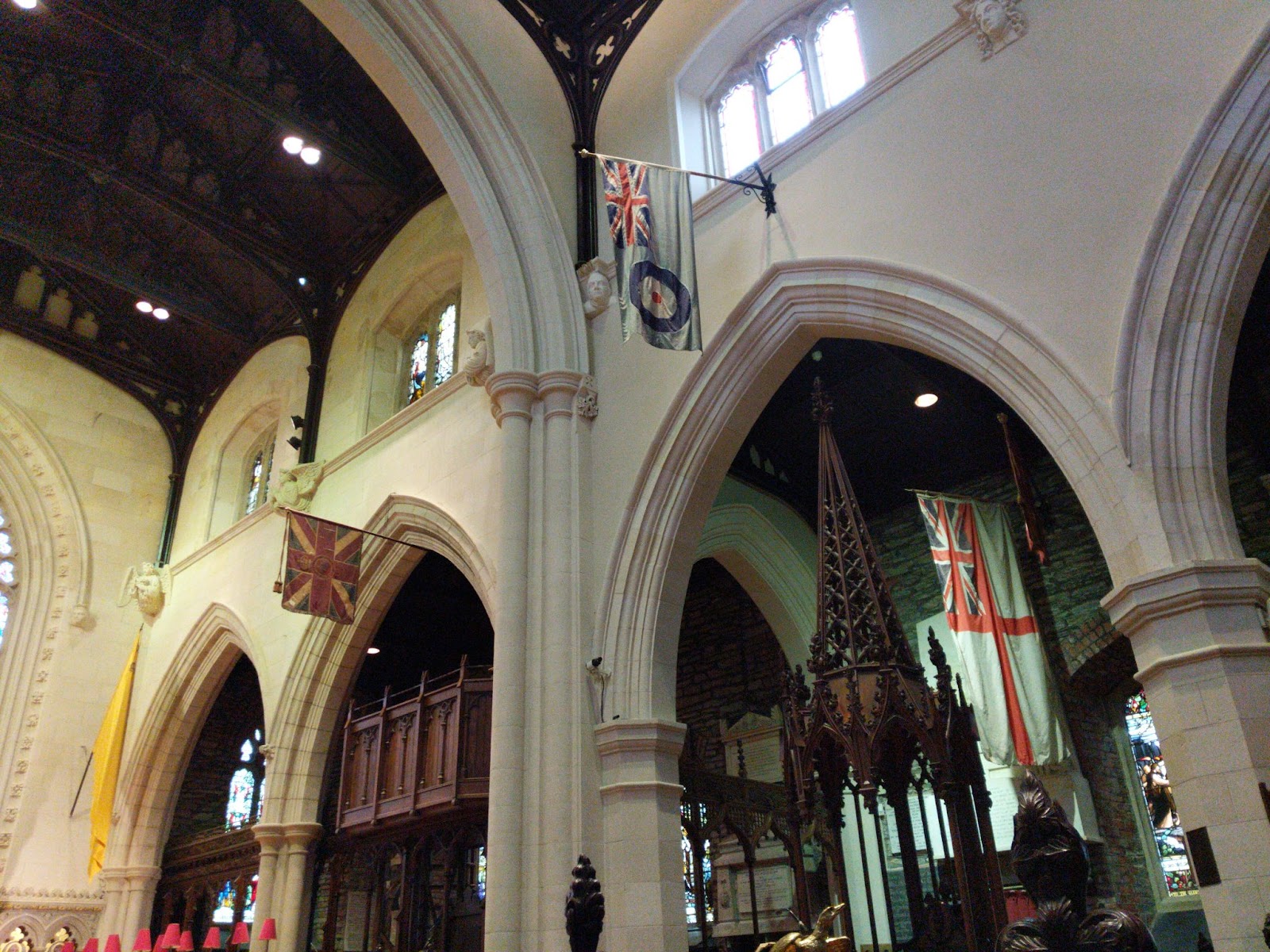
I was frequently taken aback by how much of the church décor, sermons, and attitudes were political—even while some priests repeated a refrain insisting that the conflict was “not religious” in nature, as if this absolved them of responsibility. I left many interviews deflated by the clergy’s unwillingness to lead their parishioners in the challenging ways of Christ’s love, including ecumenical respect for their neighbors. 

Union Jack flags hanging in an Anglican cathedral in Derry/Londonderry.
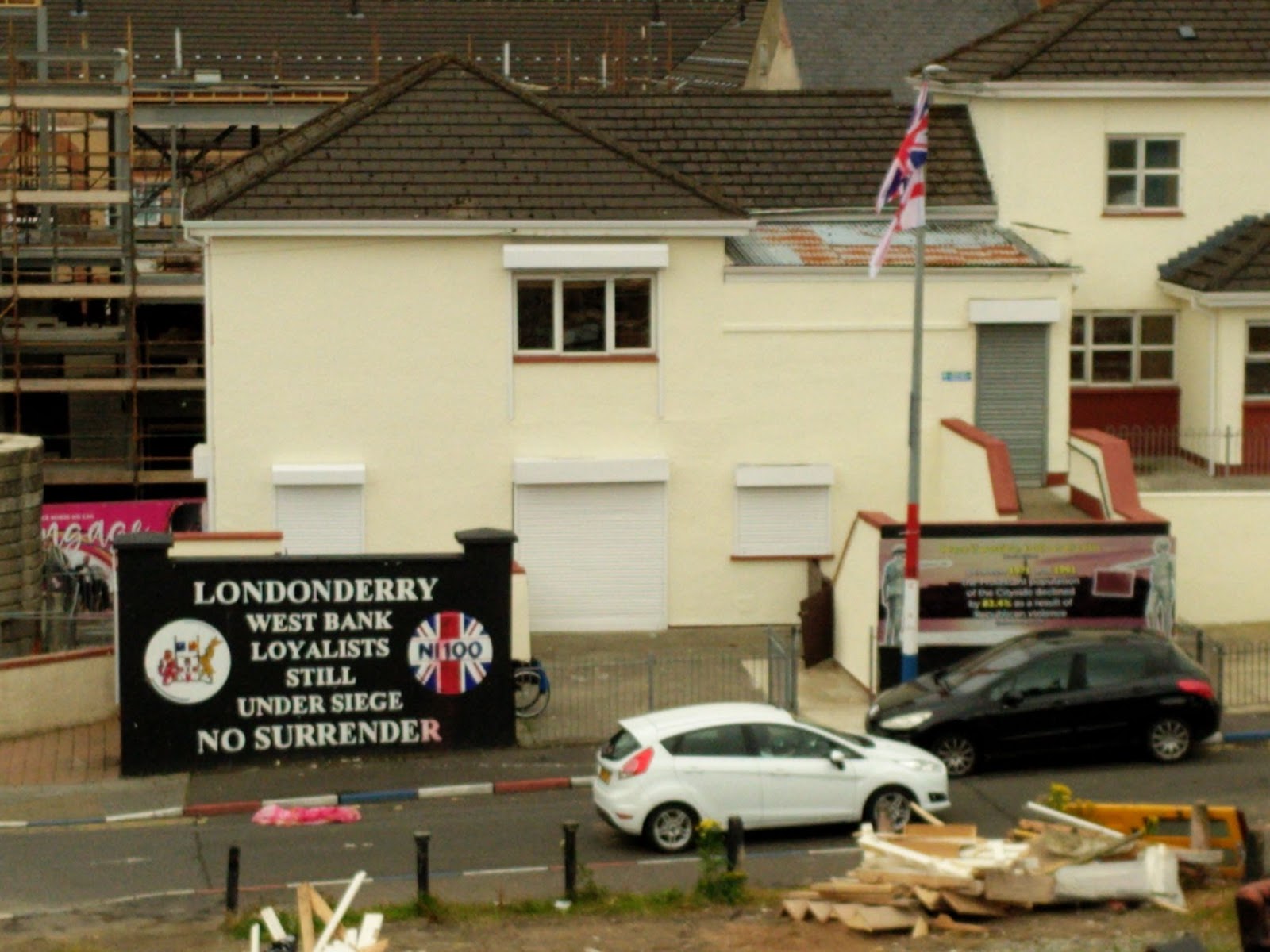
A sign at the border of a loyalist area of the city that says “LONDONDERRY WEST BANK LOYALISTS STILL UNDER SIEGE. NO SURRENDER.” In addition to the controversy that swirls around flags, the name of the city is contested: it is “Derry” to its Catholic/Republican nationalist citizens, “Londonderry” to its Protestant/Unionist loyalist citizens, and called by the somewhat clunky but reasonably nonpartisan name “Derry/Londonderry” by those in the peacebuilding vocation.

By the end of the week, I’d seen many corollaries in Northern Ireland to the sorts of injustice and religious nationalism that make headlines within the US, reminding me of oppression, cross-cultural blindness and obstinacy, and ingrained mistrust back home.

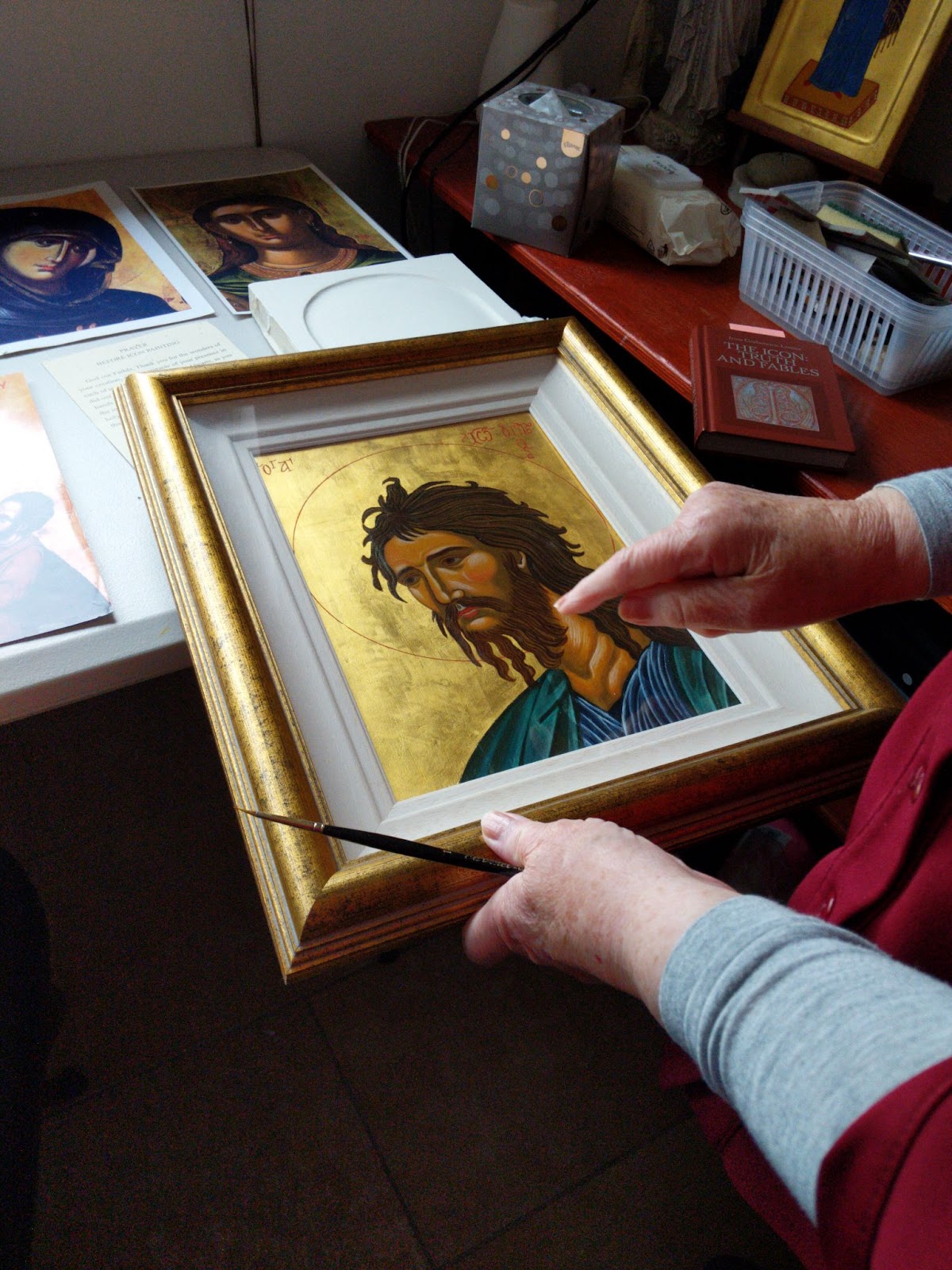
Perhaps the priests themselves, I thought dejectedly, weren’t great examples of reconciliation work. Some of the laity, however, were more open-hearted. I met an inspiring Catholic who’d been a therapist during the Troubles and practiced iconography in the Eastern Orthodox style to help her get through that difficult work:

Marina Sweeny, iconographer and therapist, explaining her iconography practices while holding an icon of John the Baptist.

But I wanted to find someone who was leading reconciliation work between churches, and I knew this would need to involve the clergy or at least happen with their blessing. Finally, at Clonard Monastery in Belfast, I found what I was looking for.

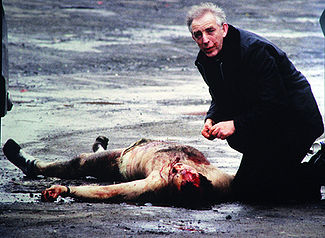
The priest who welcomed me beamed with a Christly peace and joy. I discovered that he was one in a line of many at Clonard who intentionally avoided the common attitudes, prejudices, and hand-wavy non-solutions, and instead did the slow work of walking through difficult conflicts in close, loving relationships with their so-called “enemies”. His mentors and predecessors had been willing to lay down their lives for it, including a pair of priests – one Protestant and one Catholic – who had agreed many times that whoever outlived the other would bear the coffin and speak at the other’s funeral1. Another Catholic priest at Clonard had won the trust of both sides’ political leaders and helped to facilitate the 1994 peace agreement—the same one who was known for the then-radical act of performing last rites in the street for a pair of Protestant British soldiers who were killed when they attacked the Catholic funeral of an IRA member.

Fr. Alec Reid performing last rites for British Army Corporal David Howes in Belfast, 1988. By David Cairns (Image Credit)

The darkest days of violence were over, the new priest told me, but the conflict remained; ongoing reconciliation was still needed. He told me sadly that many local Protestants and Catholics (both clergy and laypeople) had been furious with the monastery (and the Protestant churches they worked with) for their reconciliation efforts. Despite the fact that the most violent aspects of the conflict had died down some years ago, working with the other group was still viewed as traitorous. No matter; he continued his work. He had recently helped to organize inter-denominational prayer services (a more radical and fraught endeavor in that setting than it would be in the US). He spoke highly and tenderly of his Protestant counterparts, with whom he clearly had real, abiding friendships and genuine respect. When I asked if he would vote for Northern Ireland to join the nation of Ireland, he shook his head and said that even though he wanted it, he would not vote for it unless he believed his Protestant brethren could live peacefully with it. Perhaps one day, they would, but not now.

When I asked if I could take home any incense from the monastery, his face lit up: “Never have I had a Protestant visitor ask me for incense!” He generously insisted on giving me roughly an entire pint of it (thankfully, airport customs didn’t question me about the copious amounts of glittery powder in my luggage). Leaving Belfast that day, my heart was gladder: I’d found the Church as I’d hoped it would be, casting Christ’s light into the world beyond its own doors.


1 Fr Gerry Reynolds, a Catholic priest, and Ken Newell, a Presbyterian minister, were known for their extraordinary and tireless partnership in the work of reconciliation in Northern Ireland. For more about their work, I recommend the book Unity Pilgrim: The Life of Fr Gerry Reynolds CSsr by Gladys Ganiel.

2 Comic relief, while not always polite, is one way the locals deal with the tensions. This video from The Blame Game deals with flags and accents.


P.S. If you’re interested to hear more about a structured conversation model to help churches, individual Christians and communities to engage in conversations across deep divides with greater courage, equity, healing, and fruitfulness, click here to learn about the consulting work we offer on kingdom conversations.

Written by uniteboston · Categorized: Blog · Tagged: lent, peace, reconciliation, transformation, unity

Mar 02 2022

How to Pray for Peace in Ukraine

“We must pray for peace in Ukraine, but we must pray for the kind of peace that accompanies justice and virtue and truth—even if that takes time and, perhaps, some fighting to secure.“

Today, we want to offer a reflection on how we can be praying amidst the growing conflict between Russia and Ukraine. Our guest blogger is Greer Bates Cordner, who is a Ph.D. student at Boston University School of Theology and a former missionary in southern Ukraine. Read below to hear her suggestions on what it means to pray for peace in Ukraine right now.


(Photo: Nadya Ershova is originally from St. Petersburg, Russia and here stands in support of Ukraine at a rally in front of the Massachusetts State House. Photo by Pat Greenhouse / Boston Globe)

Many people have committed to fast and pray or attend special worship services to ask God for peace in Ukraine. As we prepare for those important devotions, though, I felt an urge to share a caution that I received during some of my own pleadings. 

It is important to consider what kind of “peace” we desire for Ukraine. More specifically, I think that we need to pray for a “peace” that means something much more than an end to the armed conflict. 

The war needs to end—absolutely. The shelling and killing and destroying must stop. But there are many ways for the conflict to end, and not all of them constitute “peace,” in my mind. 

After all, if Ukraine surrenders, gives in to Putin’s puppet government, yields her territory, and turns vassal, the fighting might end. But would that mean “peace”? If Ukraine falls (without surrender), and time passes before any meaningful pods of resistance can form, there might be a lapse in armed conflict for a while. Would that interim be a time of “peace”? Has there been “peace” in Ukraine for the past several years while the fighting and occupation have simmered out of sight from our headlines and news feeds? Was there “peace” in the months leading up to this most recent invasion, before the fighting broke out? 

We must pray for peace in Ukraine, but we must pray for the kind of peace that accompanies justice and virtue and truth—even if that takes time and, perhaps, some fighting to secure. 

Let us pray that the armed conflict ceases without the destruction of Ukraine’s sovereignty. 

Let us pray that the invaders’ hearts will sicken at the realization of their actions, and that anyone with an ounce of authority over the troops will begin to pull back, resist Putin’s commands, and leave their neighbors be. 

Let us pray that the defenders’ hearts will strengthen to endure whatever amount of fighting it takes to achieve the kind of peace that doesn’t mean victory for the abusers.

Let us pray that the civilians will find shelter and support, that international aid will rally behind them, that countries will embrace the refugees, and that families can somehow be reunited and live in enduring security. 

Let us pray that in the aftermath of this war, Russia, Ukraine, and the rest of our nations take hard stock of our governments, and begin (or continue) the process of rooting out corruption, self-interest, and greed. 

Let us pray that this war doesn’t set up a precedent of inaction by those of us whose personal security affords us the option to look away, or to call for the speediest end to the fight, no matter the cost to a faraway country. 

Let us pray for the stomachs to fight for hard peace instead of the absence of conflict. 

Oh God, pour out peace on Ukraine, on the world, but please let it be this kind of peace—even if it takes time and some fighting to reach. And if the road to hard peace isn’t fast or free of conflict, then pour out strength and courage and faith on anyone who battles for what’s right and true. 

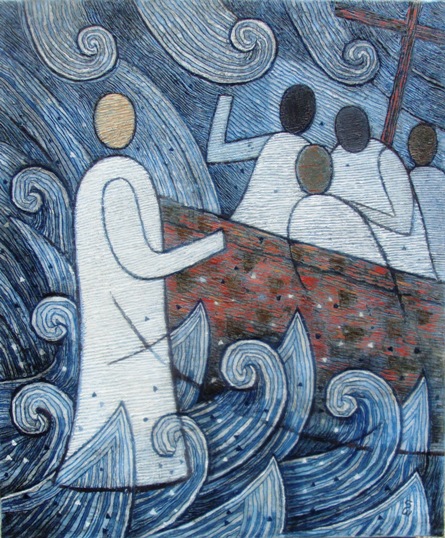
“Ego eimi, I am, Do not be Afraid,” by Soichi Watanabe.

О Боже, дай Украине настоящий, тяжёлый, справедливый мир. И дай ей храбрость бороться для него. Пусть это будет в Украине по словам Твоего Сына: «Мир оставляю вам, мир Мой даю вам; не так, как мир даёт, Я даю вам. Да не смущается сердце ваше и да не устрашается.» Во имя Иисуса Христа, аминь. 

[Translation: Oh God, give Ukraine a real, hard, just peace. And give her the courage to fight for it. Let it be in Ukraine according to the words of Thy Son: “Peace I leave with you, my peace I give unto you; not as the world giveth, give I unto you. Let not your heart be troubled, neither let it be afraid.” In the name of Jesus Christ, amen.]

Written by uniteboston · Categorized: Blog · Tagged: boston, jesus, jesus christ, peace, university

Jan 13 2022

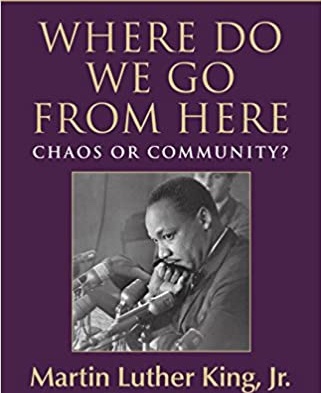
Where do we go from here: Chaos or Community?

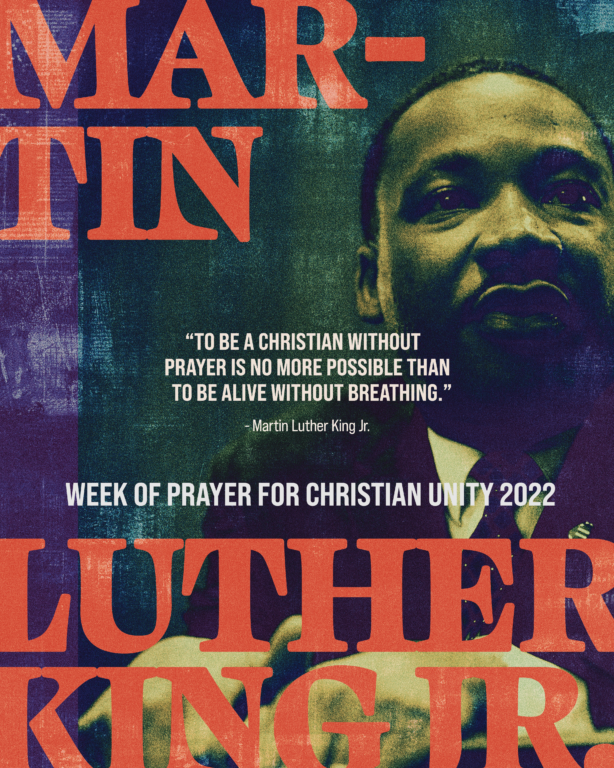
This week, we’re featuring a blog written by UniteBoston’s Communications Administrator Rev. Devlin Scott. Devlin shares six reflective prayer points based on Rev. Dr. Martin Luther King’s book “Where Do We Go From Here? Chaos or Community?,” to start off the Week of Prayer for Christian Unity. We recommend using these prayer points this week in personal devotional times, with your community group, or during your Sunday worship gathering. Read more below!


To be a Christian without prayer is no more possible than to be alive without breathing.

Rev. Dr. Martin Luther King Jr.

Many know the Rev. Dr. Martin Luther King, Jr. as a great civil rights leader, but fewer know him as a brilliant intellectual, keen observer of and prophetic voice to American society. His voice was often like a “north star,” guiding those seeking to behold a world that looks more like the one God, our Creator, intended. His final book before he was murdered, Where Do We Go from Here: Chaos or Community?, points to the need for deep and lasting change. This provided hope of reaching the place we all long for this world to be – the united church, as Jesus’ hands and feet, leading the way to reveal The Great Hope that knits us together – The Messiah. 

With this book, we are exposed to ideas from 55 years ago presented with such clarity and elegance that they continue to have great relevance to our society today, especially amidst the division, discord, and inequities that have only grown during the pandemic. Unfortunately, we are still waiting on the change he prophetically called us to embrace.  When considering the unity of Christians around the world, consider what often causes that unity to feel distant and hard to reach.  Ask yourself, “how can Boston become a better place for people of ALL backgrounds?” Prayer that is guided by the wisdom of Rev. Dr. King’s book is a wonderful starting point for this week. 

With this in mind, we invite you to use these six prayer points, contextualized by the chapters of Rev. Dr. King’s book, to start off your Week of Prayer for Christian Unity.

  • Prayer Point One:

In Chapter 1, Dr. King asked the question, “Where Are We?” By 1967, white Americans were ready to stop outright cruelty, but were not committed to full equality and dignity for African Americans.  Allyship is necessary. God, call those who aren’t affected by racism and injustice to have heart for it to change. Break our hearts with the things that break yours.

  • Prayer Point Two:

In Chapter 2, Dr. King discusses “Black Power.” His point is centered around the struggle to both find common ground across race and class lines and also help oppressed people experience their own empowerment and self-determination. Many BIPOC people are exhausted from the consistent fight for justice, equity and equality. Holy Spirit, refresh those who are weary and restore safe spaces to be recharged.

  • Prayer Point Three:

In Chapter 3, Dr. King acknowledges the common tango of the fight against racism and backlash from white people.  In the words of Frederick Douglass, “Power concedes nothing without a demand. It never did and it never will” (Frederick Douglass, 1857). Protests and demonstrations were met with intense backlash; this cycle/ pattern has deepened the wounds in the relational history of BIPOC and white Christians. Oh God, may mercy be our response, as it was Christ’s response. May grace avail, as it does for You. 

  • Prayer Point Four:

In Chapter 4: Dr. King describes the dilemma of African Americans.  King says, “Those who start behind in a race must forever remain behind or must run faster than those in front.”  This is not what God intended for mankind – not one of them. No race, ethnicity, gender or person was created to be beneath another human.  God created them in His image. God, may there be reparation to repair the deep systemic injustices in our world. May I be used as a voice in the wilderness. 

  • Prayer Point Five:

In Chapter 5, Dr. King asks the question, “Where Are We Going?” The way to end racism is through collaborative action that depends on mutual gain and sacrifice among diverse groups. The interests of multiple parties must be served. When they are served by ending racism, racism will end. What is the mutual benefit for Christains to see an end to mistreatment of God’s people? It is not our witness that the whole world may know His love? God, please reveal to us what it would take to end racism and injustice and give us the courage to act on it so that You may be glorified. 

  • Prayer Point Six:

Finally, in Chapter 6, Dr. King envisions “The World House.”  King describes the civil rights movement as part of a world struggle against racism, poverty, and militarism. To achieve genuine liberation, the U. S. movement and its allies must build a coalition that can cross borders and achieve international peace and prosperity. The challenge is whether Americans will see their self-interest in supporting this world movement leading to community — a great “world house” — or oppose it leading to a world of chaos. Peace and progress in the U.S. alone is not the answer.  Peace on earth and good will toward ALL people is God’s intent. 

This year’s Week of Prayer for Christian Unity was developed by the Middle East Council of Churches and, in particular, churches in Lebanon. Present times in Lebanon are extremely difficult and economically disastrous. All this combined with the effects of the COVID-19 pandemic have made the situation tremendously stressful. The power of prayer in solidarity with those who suffer is a demonstration of Christian unity and a sign of communion.

God, be with Your children who are suffering all over the world. I acknowledge my privilege and the blessings You continue to allow me to enjoy in America. I pray for change to come to the most marginalized places and people groups around the world, and may the change start with me.

Let us be those creative dissenters who will call our beloved nation to a higher destiny, to a new plateau of compassion, to a more noble expression of humanness.

Rev. Dr. Martin Luther King Jr., Where Do We Go From Here: Chaos or Community?

Written by uniteboston · Categorized: Blog · Tagged: christian unity, community, peace, uniteboston, unity

Jan 05 2022

Peace in the Midst of Tribulation

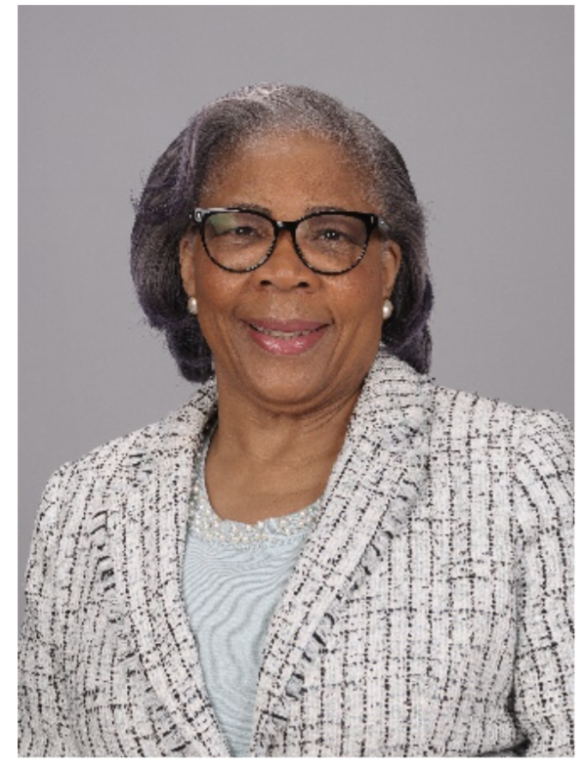
This Sunday, we’re featuring a reflection on peace by Rev. Dr. Moreen P. Hughes. Rev. Hughes is an ordained minister with the American Baptist Churches, USA and serves as Associate Pastor and Minister to Women at the Concord Baptist Church of Boston in Milton, where her husband, the Rev. Dr. Conley Hughes, Jr. is Senior Pastor. As Christians worldwide begin the season of Epiphany, she shares a timely reflection on finding peace in Christ in these challenging times.


Photo by Diana Simumpande on Unsplash

He will judge between the nations and will settle disputes for many peoples. They will beat their swords into plowshares and their spears into pruning hooks. Nation will not take up sword against nation, nor will they train for war anymore. Come, O house of Jacob, let us walk in the light of the Lord. (Isaiah 2:4-5)

During this festival of Epiphany, reflecting upon the manifestation of Christ to the Magi, we’ve come to the close of the Advent season, celebrating the birth of Christ, our hope and our salvation, the coming Messiah – the ‘Prince of Peace.’  

But it is riveting to see, regardless of our faith or spiritual beliefs, that the world news keeps repeating the same stories – despair, tragedy, and warfare; pain and human suffering. There is the injustice of hunger and poverty…the senselessness of brutal murders and violence. People look to the sciences and in space exploration to find satisfaction, and in education and personal achievements for human fulfillment. 

How ironic, that one of the words we associate most at this time of the year is ‘peace’ – “Peace on Earth.” We sing joyously Christmas Carols of Jesus being the “Prince of Peace.” However, the mood in our country and around the world is far from peaceful. 

Photo by Yohann LIBOT on Unsplash

This year, many of us will approach Ephiphany with a sense of loss much due to the severity of this world’s pandemic. Persons are engulfed and preoccupied with worries, grief and pain that seems to peak during what should be a time of joy and celebration. Our souls long and hunger for an inner peace that cannot be achieved through human efforts, but can only come from God, as we seek his guidance. 

The words coming from the Prophet Isaiah, describes the time when God’s promise of salvation will be a reality, not just for the house of Jacob, but for all nations, for all people. This dream of peace and an end to conflict will cease. The Prophet Isaiah invites us to anticipate a time when all peoples and nations will turn toward God and live-in peace, as we “ walk toward the Light of the Lord”. May you find peace in his promises.

 Thought: “Lord, make me an instrument of your peace.” (Saint Francis) 

Photo by eberhard ???? grossgasteiger on Unsplash

Written by uniteboston · Categorized: Blog · Tagged: boston, christian, jesus, light, peace

  • « Previous Page
  • 1
  • …
  • 5
  • 6
  • 7
  • 8
  • 9
  • …
  • 17
  • Next Page »


Give to Further Christian Unity

DONATE!

  • Email
  • Facebook
  • Instagram
  • YouTube

Copyright © 2026 · UniteBoston · Built on WordPress