You’re invited to an intimate and vibrant evening at Arts at the Armory! Come enjoy an unforgettable night of music, good energy, and a relaxed, welcoming atmosphere. It’s the perfect way to kick back. Bring a friend and get ready to vibe to some uplifting and faith filled music with fellow belivers. This in-person listening party is a great opportunity to be introduced to new music and artists, network, and find community. Come rock out with Ya Boy J-boogie, connect, have a good time while enjoying light refreshments. This is one night you won’t want to miss!
German Christmas Service
Hi everyone,
In two weeks we are celebrating Christmas, and Faith Lutheran Church in Cambridge will once again hold our annual Christmas service in German!
Since our own building sadly burned down a year and a half ago we cannot worship there yet, but one of our sister congregations, the Lutheran Church of the Redeemer in Woburn, generously offered us their building this year, so we will meet at 60 Forest Park Road in Woburn, MA, at 3:00 p.m. on Christmas Eve for our family service in German.
You are all invited to celebrate this service with us, and please also invite anyone you know who is from the German-speaking parts of the world, would like to practice their German, or is simply interested in German-language traditions! There is plenty of parking and seating, the building is wheelchair/stroller accessible, and the service is child-friendly and will take about an hour, so we will be done with plenty of time until dinner.
Please contact us with any questions: info@faithcambridge.org, and see you on Christmas Eve!
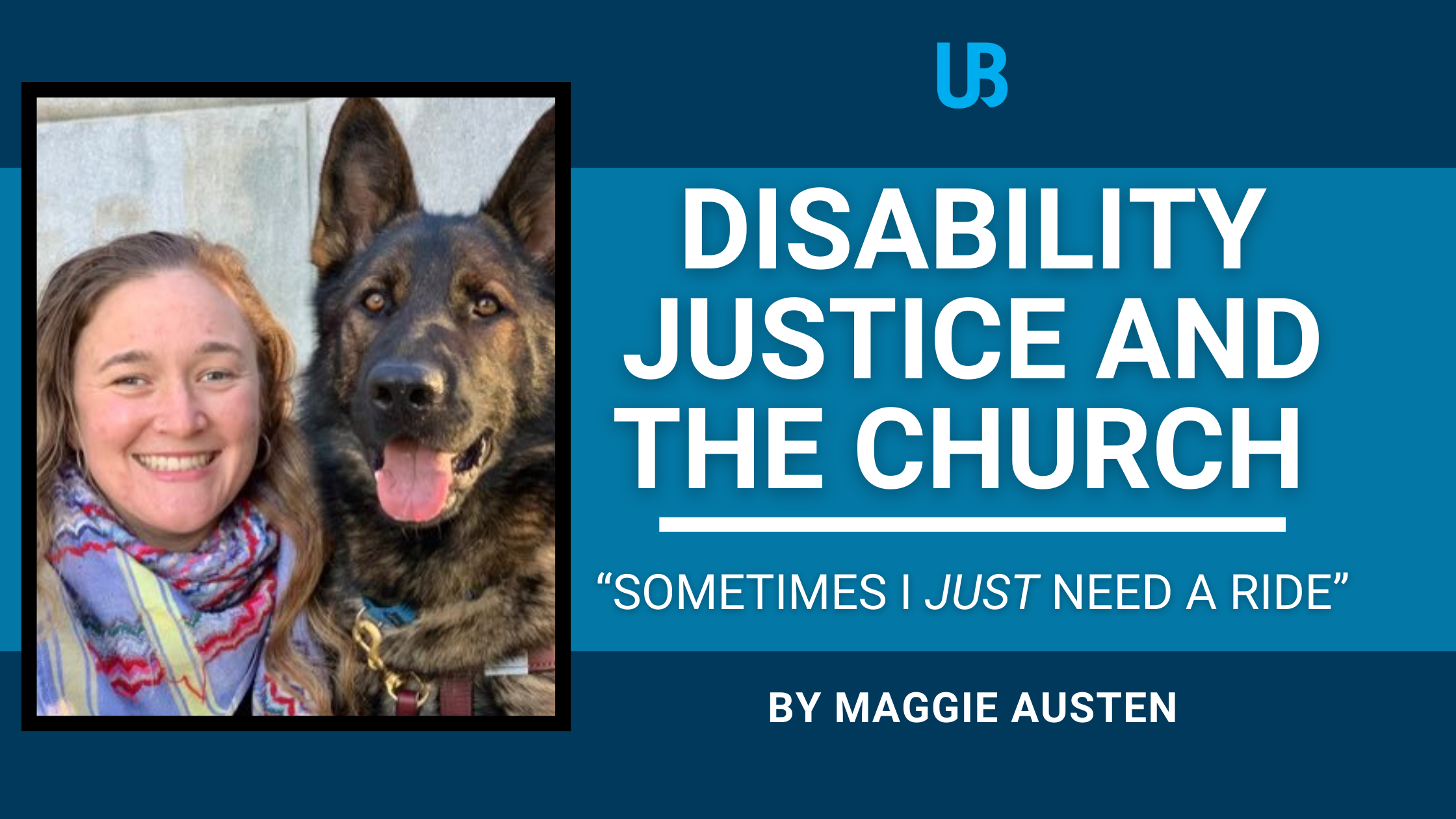
Disability Justice and the Church Sometimes I ‘Just’ Need a Ride
Jesus told us that when we have a banquet, we should invite the poor, crippled, the lame and the blind (Luke 14:13-23), yet would these neighbors feel welcomed and desired in our churches today?
We are honored to have Maggie Austen as our guest blogger this week, in the wake of July’s Disability Pride Month. Last month, Maggie called a group of leaders together to have a conversation on Ableism, Racism and the Church with Dr. Lamar Hardwick. Maggie is a member of Reality Boston and describes herself as a “daughter, sister, friend, neighbor, and attorney.”
Below, Maggie takes us into a real-life scenario that she faces and invites us to consider how we might show God’s welcome to those in our community that society has failed, ignored, excluded, or abandoned.

(ID: Rainy city sidewalk, left foreground includes a silhouetted person crouched on the sidewalk and center midground includes shoppers on the curb with some parcels.)
One steamy morning this July, I stood red faced, with two full bags of groceries in my cart, on the curb in front of a local grocery store. I am legally blind, born (in September 1990) with underdeveloped optic nerves, severely impacting my visual acuity and depth perception. Importantly, I do not drive. You might ask, like many youngsters in grocery store check out lines, “how are you going to get your groceries home?” Most days I harness my guide dog, walk the mile to the store, purchase only the amount I can carry, and walk the mile (uphill) back home.
This sticky July morning, my trip to the store was a bit more unexpected. So I was a little further from home, it was a lot hotter than I realized, and I had purchased more than I could carry. So I pulled out my phone and requested an Uber, the cost of which would be subsidized by the MBTA’s Ride Pilot program. When the driver arrived, he took one look at my red vested, German shepherd service dog and said NO, he would not take the dog (which means he wasn’t taking me either). You thought my face was red before.
I tried to argue, tried to explain that the law and Uber’s policies required him to take me and my service dog (a scenario I do generally try to avoid for just this reason). Another shopper stopped and tried to explain it to him too. Despite my best legal arguments (Did I mention I am an attorney by trade?), the driver just wasn’t going to take me home.
I eventually made it home. A friend had come shopping with me so thankfully she was able to take me, my service dog, and my bags of groceries home. For me, this was allyship in action, that felt akin to the friends in Mark 2 lowering the paralyzed man down through the thatched roof to be healed by Jesus.

(ID: Maggie and guide dog O’Bella, both dressed in Juris Doctorate graduation regalia, cross the stage.)
I wish I could say being excluded because of my abilities was rare, that it didn’t happen that often. Yet in 2022, JetBlue wouldn’t let my service dog and I on a flight home because I hadn’t submitted the proper paperwork in time (a symptom of the new ACAA regulations – thank you emotional support peacocks). I fought to get the accommodations I needed to take the Bar Exam, and enter a profession I had studied for years to achieve. I stayed unemployed for months after graduating law school and passing the bar, while my classmates and colleagues all started meaningful work in our field.
I hope it does not seem like I am complaining, I am simply telling it as it is. Oftentimes the people who need something the most (like a simple ride home from the grocery store), are the one’s denied or excluded.
What does this have to do with church unity?
I think, like me, Jesus was disabled. Jesus was fully God, and fully man (Luke 4:1–13). Yet Jesus chose a physical existence that likely limited, or disabled, some of his holy abilities. Jesus was beaten and crucified, and when he rose from the grave, his resurrected body bore the marks of his injuries (John 20:27-29). (For more theology on a disabled Jesus, and disability liberation, see Nancy L Eiesland’s The Disabled God or Chapter 6, p. 101, of Dr. Lamar Hardwick’s How Ableism Fuels Racism).
Somehow when I am standing there, red faced and frustrated, not sure how I am going to get home with my groceries, it is a disabled Jesus that meets me there. A Jesus who lived in a society where the laws allowed him to be betrayed, beaten, abandoned, and sentenced to death, just for being who God created him to be. A society where Jesus healed the blind, the lame, the deaf, and the sick – because otherwise they were usually ignored, excluded, abandoned, and ostracized.
But Jesus’ disabled body is also his resurrected body. A body marked by the brutality of an exclusive, inaccessible, and opportunistic society and yet capable of more than we can ask or imagine (Ephesians 3:20).
Today, the Church in Boston has the opportunity to BE the resurrected body of Jesus in our city; the opportunity to do whatever it takes (like making a hole in someone’s roof, Mark 2:4, or dealing with some left behind dog hair in your Uber) and help our disabled friends and neighbors meet Jesus.
Consider who in your community has society failed, ignored, excluded, or abandoned. Who is standing on a curb in our city, with their baggage and their anger, and their disabilities on display for all to see – and just needs a ride home?
What could you and your Church do?
Besides the obvious, coordinating rides to church for elders or other participants that do not drive a car, there are many other ways your community can BE the resurrected Jesus and DO disability justice (Micah 6:8).
- Create Social Stories, ‘Know Before You Go,’ or ‘What to Expect’ content for your website and events. Using easy read / plain language, pictures (w/ alt text), and/or videos to help people with disabilities know what to expect before attending your service or event could be an incredibly inclusive addition to your marketing strategy.
- Provide Sensory Bags that families can check out during your services or events or provide fidget toys to allow participants with sensory processing disabilities a way to stay engaged.
- Design sensory friendly spaces at your services and events, areas where guests know they will not be hugged or touched, or areas where overstimulated brains can rest and re-engage.
- Involve your congregation and community. 1 in 4 Americans have a disability, they are already going to your church and in your community. Invite them to be a part of an inclusive advisory counsel that has real change-making authority.
- Celebrate Disability Justice landmarks as a community, i.e. April is Autism Awareness Month (4/2 is light it up blue), July is Disability Pride Month (7/26 is the ADA’s Birthday), October is National Disability Employment Awareness Month, and many more.
- Do your research, then do the work. My suggestions end here, because now it is your turn. Get on google, find some reputable resources, ask your community, and stop leaving us on the curb.
Disclaimer: The links provided on this blog are for informational purposes only. While we strive to ensure that the content of external websites linked to is accurate and relevant, we cannot guarantee the completeness, accuracy, or reliability of these external sites. The inclusion of a link does not imply endorsement of the linked website or its content by us.
Jesus Needs a Place for the Day

Amidst the number of new immigrant and refugee families arriving to our city, many churches are opening their doors and hearts to serve and care for our new neighbors. One of these churches is St. Michael’s Episcopal Church in Milton with Pastor Hall Kirkam, which served as a day shelter site for many of our new community members from Haiti.
Read below to hear Pastor Hall’s reflection on the experience and how they have lived out Jesus’ call to welcome the ‘least of these.’
P.S. While the state has asked IFSI to pause on day center services until further notice, there are two urgent opportunities for congregations to serve our new neighbors:
- Coordinating a Neighborhood Support Team, with up to $10k grant funding for teams that apply by 7/31
- Coordinating an Intensive English class with IFSI, where churches provide space and volunteers for a three to six hour session so individuals can practice English towards job readiness. Contact Sheldine Jean-Baptiste to set up a call to discuss the details!
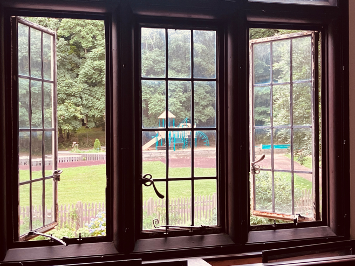
I open my windows on days like this, sunny and warm in June while kids are still together before summer, in order to hear the preschoolers on a playground made tidy and furnished with games and such by The Village School, which rents space from us. I watch as a little one wears butterfly wings and chases another who’s on a tricycle (without a hint of the danger that butterflies face from moving vehicles on the highway).
Mark 9:30-37 tells us that Jesus was on his way to Capernaum in Galilee when he told his disciples a second time that he was going to be handed over to the authorities at some point and be killed. After they arrived, he asked them what they were talking about on the road, and they were quiet, because they’d been talking about who was the greatest among them. He told them, “Look, if you want to be ‘first’ as it were, you will need to be ‘last’, the servant of all. Like this child before me: If you welcome one of these children, you welcome me, and you welcome the one who sent me.”
I listen as families from Haiti, parents and preschool children working with Immigrant Family Services Institute (IFSI), make their way through our Memorial Chapel into the Lower Parish Hall for instruction, administrative help, a hot meal, and maybe a suitcase or clothes or a blessing bag of personal hygiene items, safe from the streets and from the gangs they have escaped back home, safe for now anyway in a place that is beautiful, well- and lovingly-cared-for, and made welcome, by the good people at St. Michael’s.

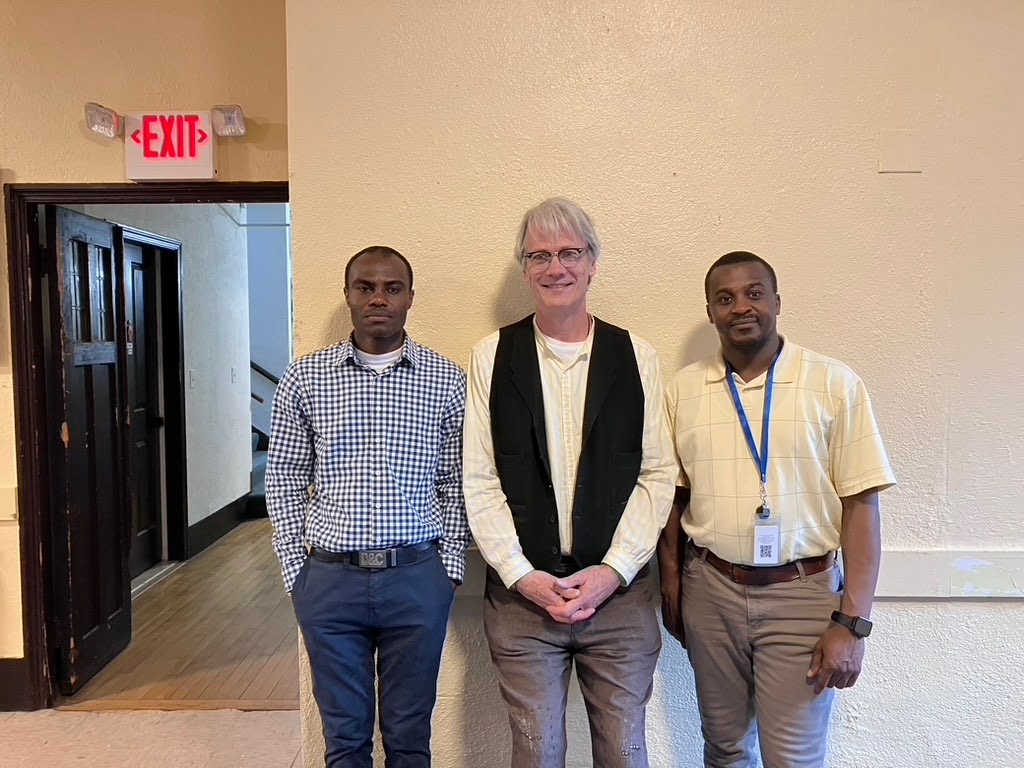
The children who file in are, well, children, thankfully curious and mischievous, mostly ready to play and eager for whatever is next. They, too, are butterflies, chasing one another or peering from a doorway, and on the playground after school has let out.
We began hosting families in our Lower Parish Hall early April 2024, when Rev. Laura Everett from the Massachusetts Council of Churches reached out to parishes in the Milton area to see if any wanted to learn about sharing space. I did, my parish responded to the plan I shared first with Wardens and then Vestry, and then members gamely raised their hands to offer ESL skills, daytime availability to play with kids, and cars for transporting food prepared at Church of the Holy Spirit in Mattapan. We assembled a Signup Genius and an Amazon wish list.
It wasn’t easy. There were challenges with the increasing flows of traffic, which was alleviated as a few parishioners signed up as cab-wranglers to help manage the coming and going of Haitian families while school families were coming and going as well.
In early June, IFSI decided to ‘pause’ at this location, perhaps as things with MassPort, IFSI, the Commonwealth, Haiti, and all the constituent details seem to float in unpredictable patterns and each day brings – as each brought – something unexpected. The generosity of spirit of St. Michael’s parishioners, and then of The Village School, has helped many of us to open our eyes in order that we open our hearts to hold space, resources, and compassion for folks who come to our door.
Matthew 25:40 tells us that, when we welcome the least, we welcome the King.
And Elizabeth Barrett Browning reminds us that:
Earth’s crammed with heaven
And every common bush afire with God
And only he who seeks takes off his shoes
The rest sit around and pluck blackberries.
Our world is hard, butterflies get smooshed by trucks, and people get hunted, tossed aside, and executed by greed and prejudice. Fear turns his wheel indeed, again and again, like Yeats’ widening gyre. “Be not afraid”, Jesus encourages.
If we can allow the possibility of solidarity with the least of Jesus’ siblings – the vulnerable, hungry, and stranger – we’ll discover God without having to squint so hard.
White Jesus, You Scare Me
Ed Gaskin is our featured blogger this week. Ed is a Black Protestant Christian running Greater Grove Hall Main Streets; he attends Temple Beth Elohim in Wellesley as well as Reservoir Church in Cambridge. He has also co-taught a course with professor Dean Borgman called, “Christianity and the Problem of Racism” at Gordon Conwell Theological Seminary for over 25 years. Read below to hear Ed describe his reflection on a billboard on I-93.
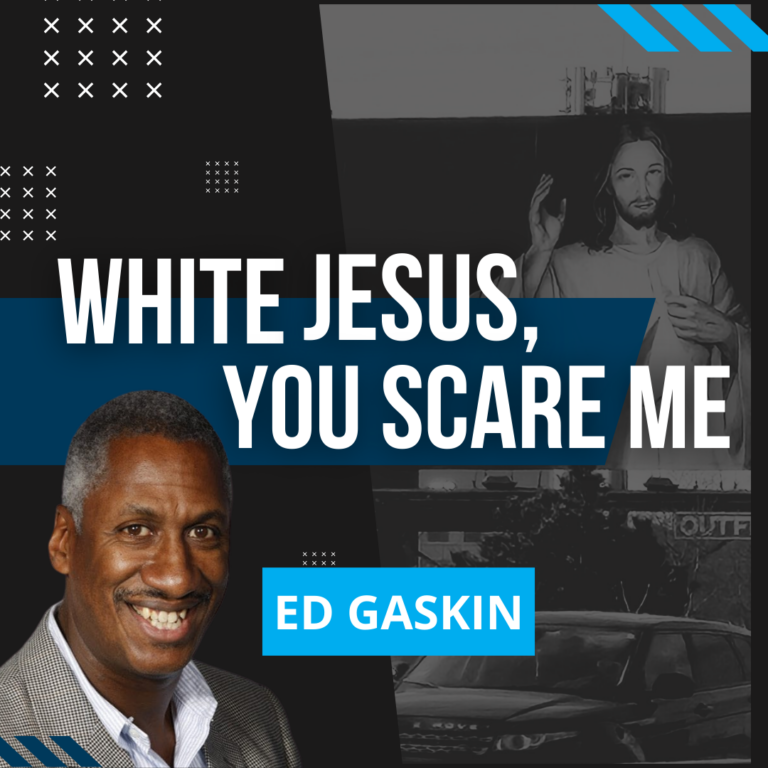
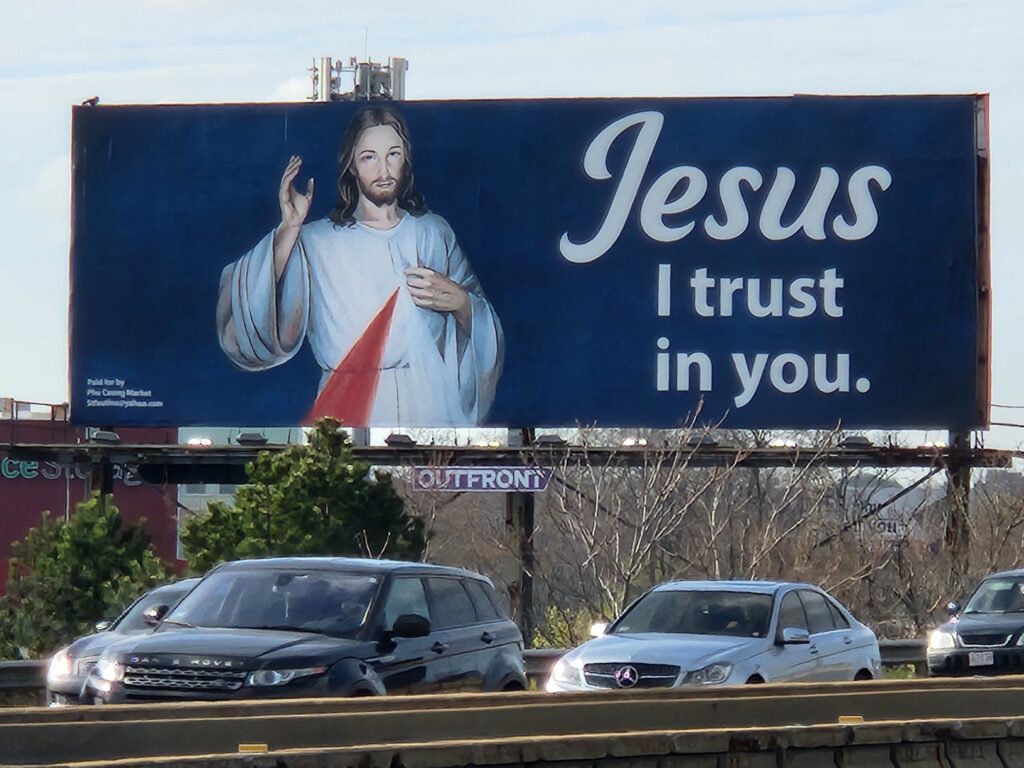
As I drive along I-93, I see a billboard in Dorchester of a white, pale Jesus who looks more like a scary ghost from a horror movie than the Jesus I have come to know in my spiritual journey. I consider myself a Judeo-Christian, practicing both Judaism and Christianity. On any given weekend, you will find me at Shabbat services on Friday and in church on Sunday. I am a conservative Christian who believes in the fundamentals of the Christian faith when it comes to traditional Christian doctrine.
When I see a ghost-like Jesus, it scares me, and it should scare you too. The ghost-like Jesus is a political statement, and the political values and ideas it represents are scary: primarily white supremacy and white nationalism. In my article, “Whitewashed: How a Jewish and brown Jesus became an Aryan,” I explain the history and politics around the creation of the white Jesus.
That white Jesus has always been on the wrong side of history, starting with Martin Luther, the father of the Protestant reformation, who was deeply antisemitic. Some scholars have said the Holocaust would not have been possible without his teachings. White Supremacist thinking reflected in the church and state led to the Doctrine of Discovery, which established a religious, political, and legal justification for colonization and seizure of land not inhabited by Christians.
The Doctrine of Discovery was a church doctrine, not a national political policy, yet it was cited in U.S. Supreme Court decisions as late as 2005 and formed the basis for the 19th century concept of Manifest Destiny — the belief that the United States was destined by God to expand its dominion and spread democracy and capitalism across the entire North American continent. Through Manifest Destiny, the United States justified the forced removal of Native Americans and other groups from their homes. Similarly, the notion of American exceptionalism argues that the United States is uniquely virtuous and superior to other nations, in part due to its historically Christian roots.
It should be no surprise, then, that Germany claimed to be practicing conservative Christian values when following Hitler. Nazis worshipped the white Jesus.
Such beliefs mixed with Christian nationalism and white supremacy form a toxic Kool-Aid ingested by too many Christians today. They worship an orange Jesus, who gazes out from billboards with his fake tan. Despite the four years of his presidency — and more on the campaign trail — during which he was documented as telling more lies than any president in history, many people who identify as Christians are still willing to say with a straight face that this grifter, this orange Messiah, best represents the Christian faith and is the person they want as commander in chief.
Indeed, the Ku Klux Klan is a Christian organization, and those who participated in the January 6 insurrection describe themselves as patriots in the Christian fight for God and country. The John Birch Society, claiming God was on its side, promulgated the fear that communists had infiltrated the government in the 1950s and 1960s, leading to official steps aimed at removing them, including a blacklist.
In contrast, consider the revolutionary groups of the 1960s: Black Power groups and others that wanted to overthrow the government. None of them, not even modern-day socialists or anarchist groups such as antifa have traveled an inch in their journey relative to Trump followers, who successfully infiltrated every aspect of our government, from the legislative branch to the Department of Justice, the judiciary, and every level of the executive branch, including the White House.
The term “Christian terrorism” should be an oxymoron, but sadly it is not. When the extent of the planning involved in the January 6 attempt to overthrow our government was exposed, it demonstrated that Christian insurrectionists were the pros, and all the others were mere paper tigers. We should have been fearing conservative Christians in government all along, not communists or anarchists.
The Founding Fathers understood this. In reviewing the sweep of history, they saw that consolidating religious and political power was too dangerous, so they required the separation of church and state.
Now you know why the white Jesus scares me.
- « Previous Page
- 1
- …
- 3
- 4
- 5
- 6
- 7
- …
- 12
- Next Page »