UniteBoston

Bridging Divides Across Christians for the Flourishing of the City

  • Home
  • Events
    • Submit Event
  • Join In
    • Beloved Community Lab
    • Migrant Care and Solidarity
    • The Church and Civic Engagement
    • The ATTIC
    • Kingdom Conversations
    • Worship & Pray
    • Boston Flourish
  • About
    • UB Board, Staff & Volunteers
    • Cohorts
    • Missional Letter
    • Annual Reports
    • History
    • Christian Unity
  • Forums
  • Blog
  • Give
  • Contact
  • Search

Mar 18 2024

Hospitality, Not Hostility: Building Bridges to our Immigrant Neighbors

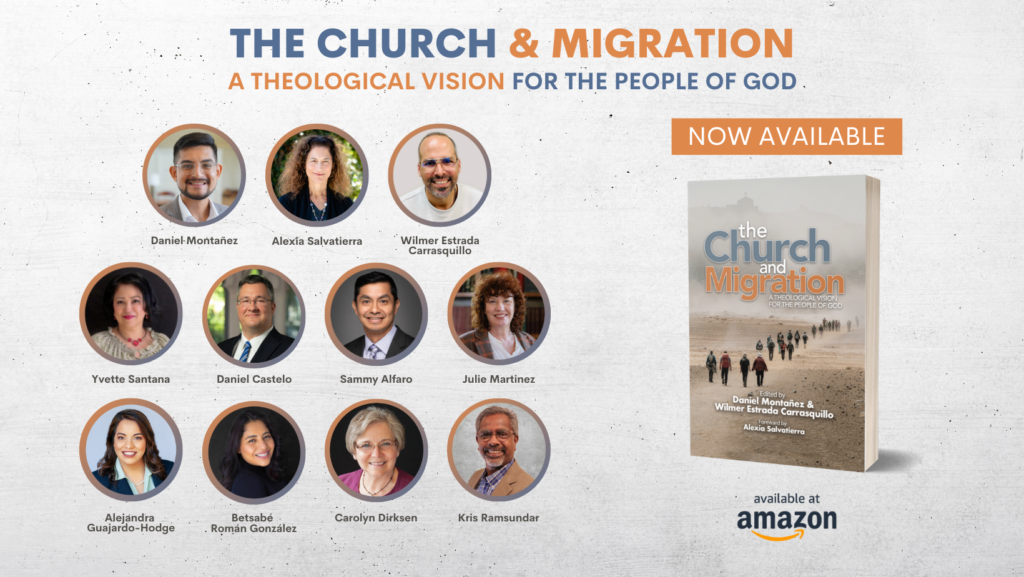
To Commemorate Migrant Sunday, we are sharing a blog that is written by local author and theologian Daniel Montañez. Daniel is founder and director of Mygration Christian Conference, a PhD student at Boston University School of Theology, and the coeditor of “The Church and Migration: A Theological Vision for the People of God.” Read below to hear Daniel share about the Christian ethic of bridge-building based out of Ephesians 2.


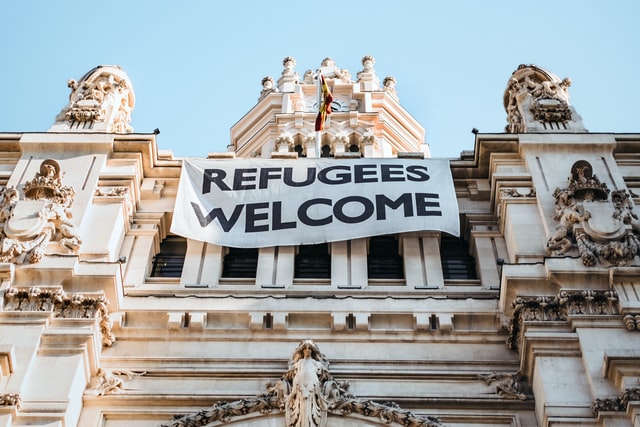
What are the walls of hostility we erect to exclude our immigrant neighbors? Walls can be physical, such as the 1,954-mile wall along the US-Mexico border. Hard and heavy walls made of bricks, metals, wires, and wood represent a division between people, culture, and national citizenry. Walls can also be mental or emotional, often resulting from difference in thought or feelings of fear toward those whom one may disagree with or not understand. In this way, walls can serve as a means of self-preservation and protection from the “other.” Finally, walls can be spiritual, as all too often Christians have excluded those who hold differing beliefs and convictions on religious matters. There is no shortage of reasons that feed the human proclivity to build walls; however, there are several reasons Christians are called to rise above the walls we build.

The book of Ephesians introduces us to a Christian ethic of bridge-building. In chapter 2, verses 14–18, Paul writes,

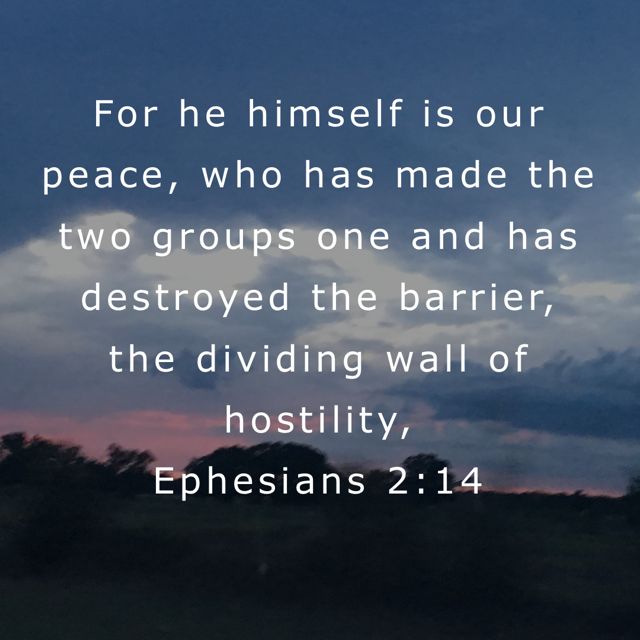
“For he himself is our peace, who has made the two groups one and has destroyed the barrier, the dividing wall of hostility, by setting aside in his flesh the law with its commands and regulations. His purpose was to create in himself one new humanity out of the two, thus making peace, and in one body to reconcile both of them to God through the cross, by which he put to death their hostility. He came and preached peace to you who were far away and peace to those who were near. For through him we both have access to the Father by one Spirit.”

The two groups Paul describes are Jewish and Gentile believers. There was much hostility between these two people groups in the Old Testament, as the Jews were considered God’s chosen people, according to the covenant relationship established with the nation of Israel. The practice of circumcision served as a physical sign of Israel’s covenant relationship with God and operated as a means of citizenship into the Israelite community and inheritance of God’s promises. Because the Gentiles were uncircumcised, they did not belong to the covenant community, as they were, as Paul describes, “without hope and without God in the world” (Eph 2:12).

However, while the Gentiles were not included within the promises of the Mosaic covenant, this is not to say that God was not at work building bridges between Jews and Gentiles in the Old Testament. The Greek word for Gentiles is “ethnos,” meaning nation or people. It is within the Abrahamic covenant that God promises to Abraham that “through your offspring all nations on earth will be blessed,” (Gen 22:18), signaling the coming together of Jews and Gentiles through a messianic figure from Israel. Jesus Christ is the fulfillment of this messianic promise and the one who builds bridges between Jews and Gentiles, establishing a model and an ethic for Christian living.

Many biblical scholars believe the wall Paul was referring to in this passage was “the Mosaic law itself with its detailed holiness code.” It served as an ideological fence around Israel, keeping outsiders and foreigners from participating in the social, cultural, and religious life of the community. The crucifixion of Christ served to destroy the wall that separated Jews and Gentiles from fellowship with one another. Furthermore, Christ’s sacrifice on the cross served as the atonement for humanity’s sins and the restoration of their relationship with God the Father. For this reason, it can be stated that Jesus Christ did not come to build a wall, but a bridge between God and humanity, and between Jews and Gentiles. It was a project so costly that only the riches of heaven could pay for this bridge through Christ’s blood on the cross.
What, then, are the implications of a Christian ethic of bridge-building for our world today? First, it calls us to move from an ethic of exclusion to embrace. In “The Church and Migration: A Theological Vision for the People of God, which I coedited with Wilmer EstradaCarrasquillo, Estrada-Carrasquillo posits an ethic of hospitality as a necessary component for embracing our immigrant neighbors. He writes, “Hospitality to migrant communities can take many shapes and forms. But to serve them well, we must look beyond the surface. We must make a concerted effort to know them and develop intentional relationships.” It is only by embracing an ethic of encounter with our immigrant neighbors that we discover the common ground on which we stand, and the prospect of embracing one another as members of the kin-dom of God.

Second, a Christian ethic of bridgebuilding calls us to move from a mindset of scarcity to opportunity. All too often we hear negative rhetoric of immigrants stealing American jobs and the economic burden immigrants have on the US economy. While these claims are often unsubstantiated, what is frequently overlooked is the revitalization immigrants are bringing to the life of the church. The Latino immigrant church, for example, is rapidly growing in the United States, buoyed by a Hispanic population that is expected to grow to 110 million by 2060.

Carolyn Dirksen argues, “If the American Church can embrace their spiritual brothers and sisters in this great migration, they will reaffirm their commitments to Christ and invite a kind of rejuvenation the Church has seldom seen.” To move from scarcity to opportunity means to believe that not only are there enough materials for building bridges, but that we can also partner in the work of building a better future together.

Finally, a Christian ethic of bridge building demands that Christians move from a place of fear to faith. According to Alejandra Guajardo-Hodge, “Fear may be a natural response to these modern-day challenges but is not the response that God demands of us. Love is the only way to face the challenge of the shifting world in God-honoring ways.” To choose faith over fear means to tear down the hostile walls of partisan politics that divide our nation, and to cast a new vision for the role of the church in the public square—“not to further exacerbate the problems of this world, but to become a part of the solution,” as we write in The Church and Migration.

The social ethic that Christ sets before us is a call to embrace the opportunity by faith to tear down the walls of hostility that divide us from our neighbors and to build bridges toward a holistic vision of peace, justice, and the flourishing of all humankind.


This article was originally published in the Boston University School of Theology 2023 Magazine entitled “Reaching Across.” You can also check out Daniel Montanez’ book “The Church and Migration,” which serves as an accessible and educational guide for pastors, church leaders, and parishioners to better understand what the Bible says about God’s heart towards people on the move and how these truths can be applied in our modern world. It is available for purchase in English and Spanish. 
Written by uniteboston · Categorized: Blog, Immigration & Belonging · Tagged: community, jesus, peace, unity, university

Nov 17 2023

Job Openings: College Access Program Coach

Position: Program Coach, Passport to College


Organization Information: The Boston Higher Education Resource Center (Boston HERC) is a Boston-based non-profit organization that works to equip first-generation youth to succeed in higher education institutions, break the cycle of poverty, and become agents of change in their communities. Programmatically, the Boston HERC’s Passport to College Program places well-trained Program Coaches in 10 non-exam Boston Public High Schools to help students navigate the processes of applying to college, securing financial aid, and preparing for the start of their college career.


Position Overview: The Program Coach is assigned to one or two Boston Public High Schools, and, from an in-school setting, supports, mentors, and resources 1st generation students of color in the college application process and for career readiness.


Responsibilities:

  • Relationship management and mentorship of students and student cohorts between 9th and 12th grade
  • Relationship management of school and programmatic partners
  • In-school content and workshop delivery on topics related but not limited to:
    • College application and selection process
    • FAFSA and financial aid
    • Career exploration and readiness
  • Data collection and management
  • Summer melt prevention and Alumni Success Program support


Qualifications and Requirements:

  • Bachelor’s degree or equivalent
  • Mission driven – passionate about service, urban communities, and youth of color
  • Relational – ability to build and maintain strong relationships with students, community partners, and other professionals
  • Entrepreneurial – ability to work in fast-paced and varied environments
  • Organized – commitment to systems and timelines
  • Solution-oriented – ability to take initiative to resolve internal and external challenges
  • Team-oriented – commitment to the team and partnering academic institutions
  • Committed to Christian principles


Preferred Skills:

  • Bilingual – ability to host workshops and engage in 1:1 conversation in Spanish OR Haitian Creole
  • Experience as or serving 1st generation students of color
  • Experience with student and classroom management
  • Familiarity with urban classroom settings, experientially or professionally
  • Familiarity with college application and financial aid processes
  • Familiarity with Salesforce


Terms of Position:

  • Position Start Date: As soon as possible.
  • Full-Time: 35 hours/week, times vary per school placement schedule (average 7:30 AM – 4:00 PM)
  • Location: Each Coach will be placed at one or two Boston Public High Schools. The majority of work hours will take place at high school placements, with remaining work hours completed at the Boston HERC office. Occasional requests will be made of Coaches to participate in programmatic events and activities on weekends or evenings.
  • Minimum of 2 Years Commitment in the role
  • Reports to: Passport to College Program Director
  • Benefits: Health, dental, and vision


Send a resume and cover letter to: Chief Executive Officer, Carolina De Jesus, cdejesus@bostonherc.org and Program Director, Junardy Jean-Charles, jjeancharles@bostonherc.org  to apply.

Written by Andrew Walker · Tagged: boston, boston public schools, christian, university, youth

Aug 31 2023

Sattler College – Open House

Deciding where to go to college can feel daunting. Questions about dorm life, financial aid, living in Boston, student community, classes, and impact on faith abound. That’s why Sattler College is inviting you to join us for two days in Boston to visit our campus, participate in student life, and tour the city of Boston. If you are a prospective student or a parent, pastor, or teacher of a prospective student, you won’t want to miss it!  Here is some of what we have planned:

Friday (Oct. 13) 9:30 AM – 5:00 PM

On Campus

-Participate in campus life

-Worship with the Sattler Community

-Learn about our academic programs and discipleship program

-Break bread and share stories with our students, faculty, and staff

-Explore our student services, clubs, and programs

-Get a firsthand experience of our curriculum via sample classes and senior capstone presentations

-Comprehensive campus tour

-Engage in a candid Sattler leadership Q&A session

Saturday 9:00 AM – 1:00 PM.

Explore life in the city of Boston. 

-Learn why Sattler is located in Boston.

-Enjoy Sattler’s unique Christian history walking tour.

-Take a ferry ride to tour the USS Constitution and visit the public library. (After 1:00 pm)

For more information: https://events.sattler.edu/event/sattler.events.350134

Written by Andrew Walker · Tagged: christiansinboston, university

Aug 25 2023

A Practice for Loving Those We Disagree With

Community members from The Initiative

“When I pray, ‘Lord, bring me into your oneness and align my will to yours,’ I find that this moves me toward others, even those that I disagree with, and it leads me to draw closer into relationship with Jesus.”

As Christians, what should our posture be towards those that we disagree with? Scott Brill is our guest blogger this week, providing some insights into navigating the tension between agreement and friendship that doesn’t end in stalemate. Scott is the director of The Initiative, where individuals “covenant together to live in an intentional initiative, practicing deep and growing friendship with God and others, that the love of Jesus might exceed all divisions.” Read below and watch the video to hear his insights on how the practice of cultivating friendship through disagreement embodies the way of the Trinity.

P.S. The Initiative is hosting a local retreat in Worcester on September 15 & 16. If you’re interested in learning more about how we can live out this unity as Christians, join us!


Scott Brill, on the tension between agreement and relationship

Even though it might seem mutually exclusive, I have grown to be an ecumenist because I am an evangelist. I’ve worked for the past 40 years on InterVarsity Christian Fellowship staff in New England, with a desire to see college students have a life-transforming encounter with the love of Jesus (and I still work ¼-time for IVCF).

I’ve had various roles with InterVarsity throughout the region, but for the past twelve years, I’ve been working with Catholic campuses and Catholic students and staff. Ministering as an evangelical Protestant in Catholic spaces has brought into focus the unavoidable reality that the disunity and division of followers of Jesus significantly hinders our witness to Jesus.

I’ve learned that our divides (and divisiveness) are not so much a failure to agree with one another, but a lack of love for one another that should be expressed in a humble willingness to receive folk who we disagree with.

Those experiences have led me to The Initiative, which I have had the privilege of serving as its Director for the past two years. The name of our community is simply the beginning of our ‘rule of life’ which is “to take an intentional initiative to walk in friendship with Jesus and his followers so that the love of Christ might exceed all divisions.” 

This rule has three practices:
1. Praying daily for a radical increase of love in the whole Body of Christ
2. Sharing our lives with Christians from traditions other than our own
3. Working proactively for greater missional unity in the Church

One of the ways that we live this out is to gather together in various parts of the U.S. for actual encounters across difference in order to pray, share our stories, and encourage each other to live out “love greater than division” in our contexts. We’re having one of those gatherings of encounter at Assumption University in Worcester September 15th and 16th. We’d love to have members of the UniteBoston community join us for this experience of prayer, lectio divina, worship, small groups, exploring our way of life, and building friendships across difference.

If this sounds intriguing to you, you can find some more details and registration information on the Join Us page of our website. I look forward to seeing you around the city as together we pray and work towards a radical increase of love in the whole Body of Christ!

Written by uniteboston · Categorized: Blog · Tagged: community, jesus, uniteboston, unity, university

Jul 19 2022

The Church and Migration

(Photo by Maria Teneva on Unsplash)

Today, we are featuring an excerpt from a new book entitled The Church and Migration: A Theological Vision for the People of God. Local theologian Daniel Montanez is a PhD student at the Boston University School of Theology and is the primary editor for this book, which explores the theme of human migration throughout the grand narrative of Scripture.

Read the excerpt below by Rev. Alexia Salvatierra, Academic Dean of Centro Latino & Associate Professor at Fuller Theological Seminary, who reminds us of the need to start any conversation about migration from the perspective of our faith in order to foster unity and reconciliation.


“What about illegal do you not understand?” I have received this question and similar questions after multiple presentations about immigration in different churches over the past forty years. The questioners have been angry, frustrated, sometimes confused. It seems obvious to them that there is no acceptable reason for crossing a border without legal documentation or overstaying a VISA. At the same time, however, there are often people in the same audience (if the church is large enough) or at a minimum in the same Church denomination, who have personally experienced a broken immigration system and who empathize deeply with those who have ended up on the wrong side of that system. Many churches and denominations owe the majority of their growth over the past decades to immigrant Christians and to immigrants who become Christians through the missionary efforts of migrant believers. This is a family fight, a conflict between children of the same God, brothers and sisters, members of the same Body of Christ. The battle is often fought on political grounds, with little to no input from the scriptures that they share.

This book reminds Christians that we are standing on common sacred ground. If we are to have any hope of reconciliation, we must start any conversation about migration from the perspective of our faith. That perspective includes theology, of course, disciplined reflection on the Word and will of God. The authors in this book are grounded in orthodox Christian theology. They are also creative. I have been working with and teaching about these issues for many years, yet I found myself moved, inspired and provoked. The contents of this book go beyond theology to spirituality. The authors of these chapters call us to the deepening of our faith, hope, and love. Most of this book is written by people who have experienced migration, either through their own personal journey and/or through the experiences of their loved ones. They call us to incarnate the heart of God as we approach not only the issue but the people who are impacted by it. For that reason, it also goes beyond asking us to reconsider how we think about migration to how we practically respond to the plight of migrants.

To fully receive the gift of this book, approach it with both an open mind and an open heart. If you are a migrant, you may be encouraged and perhaps even healed from some of the wounds of shame, slander, and rejection. If you are confused about migration, you may attain some clarity. If you are angry about migration, you may hear a challenging but important message that could deepen your faith. Regardless, you will be blessed.


Get your copy of “The Church and Migration” today!

Written by uniteboston · Categorized: Blog · Tagged: boston, christian, reconciliation, unity, university

  • « Previous Page
  • 1
  • 2
  • 3
  • 4
  • 5
  • 6
  • 7
  • Next Page »


Give to Further Christian Unity

DONATE!

  • Email
  • Facebook
  • Instagram
  • YouTube

Copyright © 2026 · UniteBoston · Built on WordPress