UniteBoston

Bridging Divides Across Christians for the Flourishing of the City

  • Home
  • Events
    • Submit Event
  • Join In
    • Beloved Community Lab
    • Migrant Care and Solidarity
    • The Church and Civic Engagement
    • The ATTIC
    • Kingdom Conversations
    • Worship & Pray
    • Boston Flourish
  • About
    • UB Board, Staff & Volunteers
    • Cohorts
    • Missional Letter
    • Annual Reports
    • History
    • Christian Unity
  • Forums
  • Blog
  • Give
  • Contact
  • Search

Aug 09 2022

How to Navigate Life

On UniteBoston’s blog this week, we are introducing a new book, “How to Navigate Life: The New Science of Finding Your Way in School, Career, & Beyond (published by St. Martin’s Press).  The book is a practical guide for students, families, educators, and professionals to “cut through stress and performance pressure, and find a path to purpose.” Already, in the first week the book has hit #1 Amazon Bestseller, Fortune Magazine Recommended Reads, and has been featured on NPR’s Here and Now. Dr. Belle Liang is co-author,  professor of counseling psychology at Boston College, and a clinical psychologist. She is also founder of the Purpose Lab, and member of Grace Chapel. Read an excerpt from the book below, where she shares her own journey of finding a sense of calling and belonging.
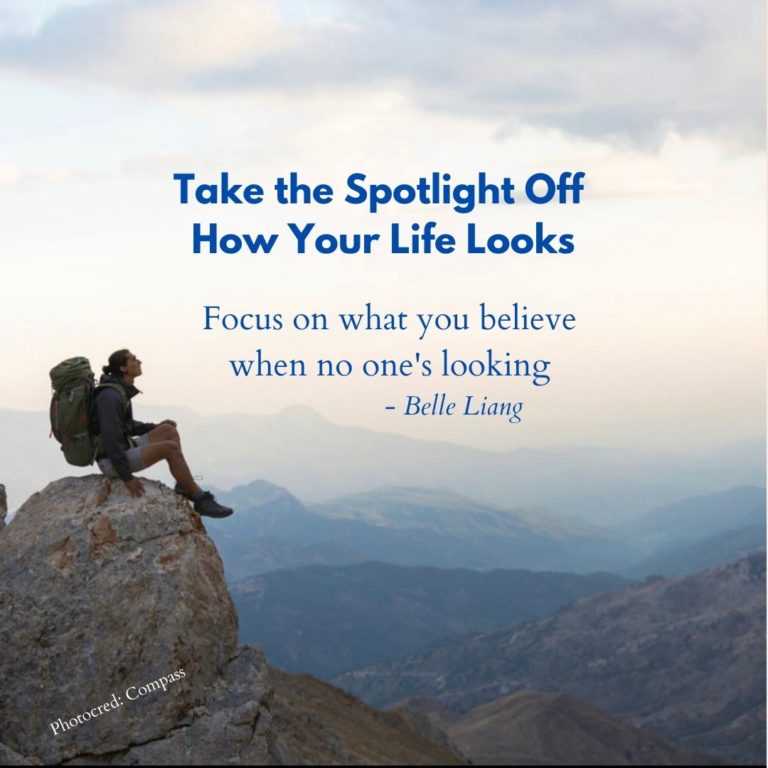

This is a book about how to equip young people to navigate school, career, and life with joy and excellence. The first step to doing this job well as parents, educators, or life mentors is to know ourselves. We have to be students of ourselves—by learning who we are, where we came from, what we believe, and where these beliefs came from. How we raise and guide our people is deeply influenced by our own stories. If we’re aware of the core values and scripts that were passed on to us from our families of origin, we can be compassionate toward ourselves—understanding our knee-jerk reactions to our students and their life choices. We can be intentional about what we choose to pass on to the next generation. This has been true for us, as you’ll see from our stories.

Belle’s story: I am the middle daughter of first- generation Chinese immigrants who, like their compatriots, sacrificed heroically so that my brothers and I could get an education in the United States. My father borrowed the little money his sister had to come to the United States to pursue his graduate degree on a student visa. This decision came with another, more significant cost: leaving behind his wife and six- week- old firstborn child, my brother. It was two years before they were reunited on American soil. My mother abandoned her career aspirations when she arrived in the United States, leaving her family and home to live in the United States to pursue his graduate degree on a student visa. This decision came with another, more significant cost: leaving behind his wife and six- week- old firstborn child, my brother. It was two years before they were reunited on American soil. My mother abandoned her career aspirations when she arrived in the United States, leaving her family and home to live in a country where she struggled to work, communicate, and feel a sense of belonging.

She pushed through language barriers to befriend neighbors, so I would have neighborhood playdates. She clipped coupons, so I could buy trendy clothes. All of this probably helped me fit in with the popular kids at my affluent suburban high school. My parents relished the thought that I was a teacher’s pet, two-time homecoming princess, student leader in clubs, class government officer, and a graduation speaker at the John F. Kennedy Center. These “achievements” were shamelessly evoked at afternoon tea with the aunties, because they satisfied every-one’s expectations for me. They were proud that I “fit in” so well.

All their dreams and efforts to make ends meet were fueled by hopes that my brothers and I could achieve more. They expected that we would. It was never a question of “whether I would go to college,” it was a matter of where I went and what I did there to become “successful.” I internalized the cultural value that the point of education was to achieve financial security and respect in society. Like other “first-gen” people, we bought into Horatio Alger’s myth that if you worked hard, you could achieve the American dream, not only for yourself, but to validate your parents’ sacrifices. All of this prepared me to be the most successful student I could be. A rule-following, risk-averse, people-pleasing success. I was the opposite of Cheryl Strayed in the wild, driven by a free spirit to conquer the dangers of the Pacific Crest Trail. My ambition was to take the safest path to financial security and prestige.

I had gleaned from my upbringing that there were certain careers that were especially acceptable. Doctor, lawyer, engineer. I later realized that these were actually the acceptable choices for boys, but that there were alternatives for girls.

Up to this point, whenever faced with a big decision about school, work, and life at large, I asked myself: “What should I do?” Often, the answer that felt right to me was the one that matched the expectations of those around me. After two years of bouncing around multiple majors in the hard sciences and internships in health fields, a well- meaning auntie offered me this career guidance: “Don’t work so hard, you’ll prematurely age and lose your beauty. Just take good care of your hair and skin (your best assets), marry a doctor, and you’ll be fine.”

Imagine how those words landed on an American college woman. Yep, just the nudge I needed to begin listening more closely to my own heart. And trusting the wisdom and direction that could be found there. The women in my life were smart and competent, while content to sit in the back seat. Few were trailblazers, civic leaders, public speakers. With the most honorable intentions, they sacrificed personal goals and de-rived their identities from others. I realized that the standard- bearers I had followed were no longer a perfect match with my own journey. My spiritual-faith adventure provided fresh insight and courage for rewrit-ing the script, following my call.

When I announced to the family that I planned to pursue a career as a psychologist, it was as if I had announced that I was dropping out of college. Had I thought this through? Could I get a job doing such a thing? They saw a huge distinction between doctors who focused on people’s mental health versus those who treated their physical health. But they comforted themselves thinking girls shouldn’t work too hard, and that I would be fine as long as I married a real doctor, who could take care of me.

My transformation continued during graduate school, where I met a mentor and role model who believed in me and nurtured my creativity and confidence. She introduced me to community psychology, a field focused on addressing systemic injustices and partnering with disadvan-taged and marginalized people. I felt such a sense of mission . . . Here was a way that my values, strengths, and skills aligned with meaningful work that could make a difference in the world.

I need to say that as I write this, I am so genuinely grateful to my cultural roots, family, and mentors for watering the seeds of my purpose today. At the same time that there are cultural and moral virtues to my story that I deeply cherish (like respect for your elders and sacrifice for others), there are imperfections. And all of it inspires my current work. I see that while the world is progressing, stories like mine reflect an ongoing ethos that reaches beyond the immigrant experience. In hundreds of our research interviews and surveys, adolescents (and their parents) lamented: “I’m living someone else’s life. I don’t know who I really am and what I’m really living for, apart from others’ expectations of me.” Similarly, I’d been basing my identity on what others told me about myself when I was a child. Trying to mold myself into someone’s stereotype of me left me exhausted and confused. But as my understanding of who I am came into sharper focus during my later college and adult years, this understanding became my guide. It continues to shape what I value and believe, and how I feel, act, and connect. Brené Brown calls this embracing of who you really are true belonging:

True belonging is the spiritual practice of believing in and belonging to yourself so deeply that you can share your most authentic self with the world and find sacredness in both being a part of something and standing alone in the wilderness. True belonging doesn’t require you to change who you are; it requires you to be who you are.

She goes on to say: “True belonging is not something that you need to negotiate externally, it’s what you carry in your heart.”* This internal belonging, this sense of understanding who I was—what I stood for, what I had to offer in the world—began to free me from the need for external approval. It’s been a glorious adventure to discover my innermost being, and to realize that what I’ve turned up there can meet a great need in the world.
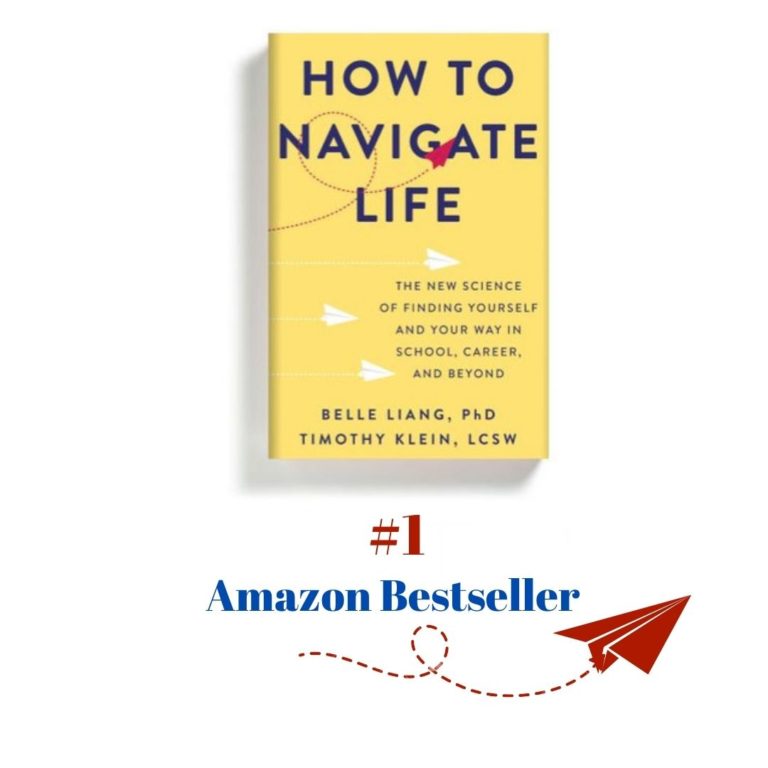
This book offers a practical guide which provides shared language and approach for identifying your purpose. Click above to buy the book on Amazon!

Written by uniteboston · Categorized: Blog · Tagged: community, grace chapel, transformation, uniteboston, unity

Jun 05 2022

Bible Studies in the Suffolk County Jail

Pre-pandemic, a team of us sponsored by the Boston Dream Center co-led “Soul Care” Bible Studies at the Suffolk County Jail, 200 Nashua Street for about 5 years.  Over 700 men participated. Although there is still a COVID masking restriction, there is a new possibility for volunteers to serve at the jail following background check and orientation.  We have been invited to relaunch Bible studies as soon as we can get a team together and get ourselves organized.  I invite you to a ZOOM information meeting June 9 – 7-8PM to explore this possibility with you.  (If you are unable to join the ZOOM meeting, but are still interested please contact me).
Craig Parker
Boston City Director – The Navigators
craig.parker@navigators.org

Written by Andrew Walker · Tagged: christian, collaboration, injustice, transformation, volunteering

Mar 05 2021

Meet Rev. Percy, the New UB Staff Member!

“I have been on a long journey to arrive at this point, but I am finally planted in New England to be a Pastor in Providence and a Bridge Builder in Boston for many years to come.”

After ten years with only one staff person, we are grateful for God’s provision to be able to hire Rev. K. Percy Ballah to the UB staff! Percy considers his life-long calling to be a bridge-builder. He brings skills in administration, leadership, and racial reconciliation to UB. Read below to hear Percy’s story of moving to Boston as a young adult, then pastoring at Impact Center Providence, and now his journey back to Boston to work with UB.


Coming Home: My Journey Back to Boston!

Hello UniteBoston Family!

Thank you for welcoming me to your team. My name is Percy, and I am excited to join this beautiful community! I am grateful to the faithful donors who made it possible for me to assist Rev. Kelly in the mission of nurturing Christian unity for the flourishing of the city.

Background

I was born in the country of  Liberia, which is located in West Africa. I moved to America at twelve years old after surviving three brutal civil wars over a ten-year span.  It was an epic journey that I’d love to tell you about at another time! Unlike most children in my country, I was allowed to come to America because my mother was a hard-working resident in the South Jersey and Philadelphia area for many years. I lived with her for most of my teenage years before God called me to move to New England. 

Currently, I reside in Providence with my wife Katie and our three children Sophia, Oliver, and Mia! As my kids would say, together, we are Team Ballah! Our team takes pride as a family unit on a mission to glorify God and bring wholistic transformation to people and communities through Christ. In 2019, we planted a church on the Southside of Providence. And recently, we merged our church with an older congregation. Now, we are excited that I will be working with Kelly to fulfill UniteBoston’s vision in a city that is close to our hearts.

Before moving to Rhode Island, we lived in Boston for five years. I served in ministry at The Boston Project Ministries and Morning Star Baptist Church. This season shaped us in incredible ways. We learned how to impact communities holistically and to strategically serve those living in disenfranchised communities. We learned how to be parents: two of our kids were born at Brigham and Women’s Hospital. God used the experiences and lifelong friendships we developed in Boston to shape our identity as a ministry family. Even though I was not a native Bostonian, I adopted Boston as my home city! 

Fun Facts 

One of my favorite characteristics of Bostonians is their passion for local sports teams. This culture resonates with my love to cheer for the Philadelphia Eagles and Sixers. For many years,  I watched the New England teams win championships ngnyear after year, while my teams always had heartbreaking losses. After endless debates about which teams were better, I finally accepted the reality that Boston had the best sports teams in the country. I still support my Philadelphia teams, but I don’t root against the New England teams in the playoffs because of their championship pedigree. 

I am even more passionate about playing sports than watching it. When I lived in Dorchester, I enjoyed playing basketball at the local parks, participating in flag football games between various churches, and coaching young men during the summer league. However, some of the best parts about sports transcends actually playing together: we built friendships and learned essential life skills such as managing our emotions and being people of integrity.

Additionally, I also appreciate the emphasis Bostonians place on education and critical thinking–this resonates with my love for reading and playing competitive chess. I loved going to Harvard Square and the public library in Roxbury to play against great players. Nowadays, when I am not playing sports, reading, or competing in chess, I am usually hanging out with family and friends.

How you got involved with UB and what you love about UB

Since I left Boston to pursue God’s calling to be a pastor, I always stayed connected to the Holy Spirit’s work in the city of Boston. As I conversed with various groups of people and ministries in my Boston network, I realized they had one thing in common — they were all connected to UniteBoston. I was intrigued by this organization’s ability to gather Christian leaders and churches from diverse backgrounds. According to Reverend Kelly, UniteBoston is “called to unite the bride of Christ” to fulfill Jesus’ prayer of unity and oneness in John 17. While Christians can often be divided over various issues, UB is building bridges to connect believers.UB creates a space for the body of Christ to experience healing from self-inflicted wounds and a safe place to have conversations that will bring reconciliation. 

Therefore, when the opportunity came for me to work for this incredible organization, it was a no-brainer because they aligned with my lifelong calling to be a bridge-builder. Even though my various ministry experiences equipped me with the skillsets to support Rev. Kelly at UniteBoston, I am more excited about the opportunity to learn from her and the UB community about building bridges and connecting Christians.

I have been on a long journey to arrive at this point, but I am finally planted in New England to be a Pastor in Providence and a Bridge Builder in Boston for many years to come. God is the author of my story, and I am excited to live the next chapter in working with UniteBoston. Most of all, my heart is happy because God is allowing me to serve the city that welcomed me with open arms and the place I have adopted as my home city. 

Written by uniteboston · Categorized: Blog · Tagged: christian unity, racial reconciliation, reconciliation, transformation, uniteboston

Feb 06 2021

“Your Pastor – Stepping Behind the Pulpit”

“By examining the vocation of pastoral leadership, laity and ministers can come together to better understand, appreciate, and support each other. Through better understanding each other, both pastors and congregants can have a renewed spirit to push forward together in these difficult times.”

This week, we would like to feature a blog written by Joel Putnam, who is a United Methodist and who served as an intern with UniteBoston last summer and fall with his Masters of Divinity program at the Boston University School of Theology. Joel has been interviewing pastors to learn more about pastoral ministry in this unique time. Read below to hear his insights on pastors in the city!


Photo by Nycholas Benaia, unsplash.com

This semester, I chose to do my contextual education experience with UniteBoston to discover more about the vocation of ministry and the unique calling of a Christian leader. Seminary prepares us for the academic study of theology and gives us tools that are vital to various ministry settings, but I wanted to know what our pastors experience and do week to week. It has been a blessing to interview several pastors, all who have been happy to talk honestly about the good and challenging aspects of full-time ministry. As I sat down (virtually) with these faith leaders to discuss the vocation of ministry, sermon writing, and the struggles and blessings that have come with 2020, I wanted to also share these insights with you, the UniteBoston community.

As many of us have experienced, church life has shifted to being remote, virtual, and socially distanced. This has been especially difficult for smaller, rural, and elderly congregations. Without the necessary resources and know-how to radically shift the way we experience congregational and community life together, many churches are struggling with this “new norm.” In shifting to online services, Pastor Devlin Scott of NewCity Church shared with me his struggles with finding ways to record and broadcast using technology they had to purchase and learn how to use. Pastor Scott lives into his idea that “the message and ministry of the church never changes, but our methods ought to.” NewCity church was able to find a local resource for renting video equipment and switched to pre-recording services after technical difficulties with live streaming. Many churches have experienced similar trial and error periods through these shifts, but the pastors I spoke with are encouraged that these new methods will prove useful for their community in the future.

Creating the experience of communal worship and measuring the impact and spiritual growth happening in people’s faith lives happens radically different through our screens and devices. Many pastors shared with me stories of the innovation and resilience that has emerged in this time. Pastor Gregg Detweiler from Intercultural Ministries at the Emmanuel Gospel Center, shared that, “Disruption can be a good thing. It forces you to reexamine and innovate new ways, but the grind and fatigue of this tests that idealism. The fatigue of life on zoom is real.” Churches have begun utilizing virtual meeting platforms for Bible study, hosting social gatherings, and small groups. Many are pre-recording prayers, readings, and greetings for use as various parts of the worship service. As a safe alternative to virtual spaces, congregations have hosted outdoor services and community gatherings in parking lots. Pastor Eungil Cho of Milan Community United Methodist Church stated, “[In regards to going virtual,] everything was from ground zero; I had to build it up. I had to bring everything I had learned into the church.” These and other innovations from church leadership have continued to guide our local congregations through this difficult year.

Yet even with the struggles of 2020, there have been unexpected blessings. Many pastors shared how they have been able to reach people outside of their local communities. Pastor Seth Fortier, United Methodist Pastor of two New England churches, shared, “You have to be in the community as a church. If the community doesn’t know that you exist, you are not going to survive as a church.” The accessibility of online gatherings enables the participation of people locally as well as from across state lines. For some churches, new resources have opened up as they were forced to downsize things like education and community meals. One local church was even able to find a new building that became available through the unique season of quarantine! By redirecting energy and resources towards other important ministries like their food support and financial assistance, churches have responded to the impacts of the pandemic.

Photo by Annie Spratt, unsplash.com

I was also particularly interested in sermon preparation and sharing. I recognized the value of sermons to provide spiritual guidance, but I wondered how pastors know what to say when they step in front of the crowd to deliver insight on God’s word. Pastor Robin Lutjohann of Faith Lutheran Church in Cambridge shared “Preaching ought to be sacramental. it ought to do what a sacrament does, to give you Jesus.” Through my interviews, I learned that much of the training necessary to write and deliver sermons comes from a combination of schooling, life experiences, exegetical work, and through years of practice refining the process of writing sermons that works for them.

In my interviews, pastors shared a variety of emotions in their preparation and experience of preaching, from a spiritual connection to God and God’s people, to five years of excruciating work every week. Many pastors are responsible for crafting unique sermons every week with little time off throughout the year. If a leader of a small church takes a vacation, they must find someone to lead the congregation in worship and in the sacramental duties for the community that go beyond Sunday services. Some churches have ministry teams with several talented preachers, and there are often members of the congregation who can step in to fulfill these roles. Assistance from laity, fellow pastors in nearby churches, and retired clergy within the congregation are often called upon to provide a break for the current ministers. Pastor Robin Lutjohann shared that they have partnered with a nearby church to share in worship where leaders share the responsibilities of weekly worship. This has helped with the weekly tasks of each minister, and brings communities together to share in worship.

Writing a sermon takes time. The process for each person is different, but there are many similarities. I found these common elements of weekly sermon preparation:

  • Maintaining personal spiritual practices and devotionals to stay grounded in God’s word
  • Reading and praying on the selected scripture
  • Exegesis on the passages, including contextualizing the historical and present day meanings, language and translation studies, and placing it in conversation with other passages
  • Connecting to the community of theologians through commentaries and online resources

In bringing together all of these ideas and listening for God’s message, our pastors continue to bring us valuable insight to the scripture. What is most encouraging to me is that while each person is doing this work individually, they remain in community with thousands of years of past and present theological insight while bringing in our present-day concerns. 

There is more to being a pastor than delivering impactful, wise, and contextualized sermons each week. Our pastors serve the entire community in all aspects of life and ministry. However long and whichever school one chooses for seminary, they cannot possibly prepare us for all of the challenges that we will find in ministry. Many of the pastors I interviewed shared with me how they felt unprepared for the training, experience, and education necessary to run a church that is in many ways similar to a small business. Pastor Chuck Smith of First UMC in Pinellas Park shared, “Nothing in seminary prepared me for the nuts and bolts of ministry; the financial challenges and business knowledge necessary.” There is also never an end to the knowledge and insight one can gain from God’s word, and different schools focus more or less on the scripture than other aspects of theology and ministry. A few pastors wished that their seminaries had provided more scriptural courses, while others felt their education lacked practical application skills like maintaining personal well-being, conflict transformation, and budgeting.

Not all of the skills lend themselves to an academic curriculum. An important aspect of preaching and ministry that is difficult to teach is the trust necessary to connect to a congregation. There is a certain amount of respect that comes from standing behind the pulpit, but in order to really challenge people with new hermeneutical insights, there must be trust established between the pastor and the congregation. Pastor Robin shared, “You can’t challenge people until you have proven to them that you love them.” This trust is earned through compassion and presence in the community. It is not easily measured and not often spoken out loud. 

It is my hope that by examining the vocation of pastoral leadership, laity and ministers can come together to better understand, appreciate, and support each other. Through better understanding each other, both pastors and congregants can have a renewed spirit to push forward together in these difficult times. My takeaway from these interviews is that school cannot provide all of the necessary preparation for the vocation of pastoral ministry; rather, it is by God’s grace and a continued spirit to serve others that pastors learn and grow into their calling.

Written by uniteboston · Categorized: Blog · Tagged: community, lent, transformation, uniteboston, unity

Jun 01 2020

Summer Prophetic Courses: Online

PureSpring Institute (PSI) is now offering Ten-Week Online Summer Courses! Through the School of Prophetic Leadership these intensive online sessions will address the critical disciplines prophetic leaders must develop and the specific challenges prophetic leaders face in a changing world. Join us this summer online and ignite your prophetic vision and voice for greater impact in a changing world! Courses starting June 7th (revised start date). Enroll Today!
Also, featured this summer is our Prophetic Mastery Level I & II Certification Program. Register for an online course in conjunction with individualized coaching and receive PM Certification. For alumni interested in receiving Prophetic Mastery Certification based on prior courses taken please submit a Request for Certificate HERE, and we will contact you with next steps.
PSI’s School of Prophetic Leadership is a specialized discipleship program based in New England for training prophetic ministers to engage ministry locally and globally.

Written by Andrew Walker · Tagged: @egcboston, @justiceboston, 10daysboston, awakening, black ministerial alliance, boston, christians, christiansinboston, christisrisen revivalinboston, community transformation, glory, gospel, intercession, missions, prayer, revival, transformation, worship and prayer

  • « Previous Page
  • 1
  • …
  • 5
  • 6
  • 7
  • 8
  • 9
  • 10
  • Next Page »


Give to Further Christian Unity

DONATE!

  • Email
  • Facebook
  • Instagram
  • YouTube

Copyright © 2026 · UniteBoston · Built on WordPress