UniteBoston

Bridging Divides Across Christians for the Flourishing of the City

  • Home
  • Events
    • Submit Event
  • Join In
    • Beloved Community Lab
    • Migrant Care and Solidarity
    • The Church and Civic Engagement
    • The ATTIC
    • Kingdom Conversations
    • Worship & Pray
    • Boston Flourish
  • About
    • UB Board, Staff & Volunteers
    • Cohorts
    • Missional Letter
    • Annual Reports
    • History
    • Christian Unity
  • Forums
  • Blog
  • Give to UniteBoston
  • Contact
  • Search

Aug 14 2020

Press Release: Love Boston Virtual Concert

Boston, We’ll Keep On Loving You!

Boston, MA –  On September 12th, at 7:00pm, Boston’s top Christian artists are rising up to share original responses to the challenges of a global health crisis and racial injustices in a virtual concert event. In this “Love Boston Virtual Concert,” artists of diverse backgrounds are performing original songs of justice, faith, and resilience that inspire audiences to “Love Thy Neighbor” during times of great adversity.

Singer Shanell Alyssa

Local performing artists will feature music representing hip-hop, worship, soul, and gospel genres. “We wanted to bring forth a unique response to the current world events, and that uniqueness lies in what each artist brings to the table,” said singer Shanell Alyssa. “From varied demographics, backgrounds, and musical styles, we wanted to share a response that would speak to the hearts of people in all their diversity.” 

This concert is the culminating event of a broader “Love Thy Neighbor” summer campaign coordinated by UniteBoston, in which people were encouraged to demonstrate love and connect with their neighbors in new and unexpected ways. In May, UniteBoston launched a COVID Grocery Delivery program which connects volunteers with COVID-positive households to provide groceries, and in June, UniteBoston hosted a large gathering in the Boston Common for racial justice. “Amidst all that is happening in our world today, we see many people responding by disparaging others with different viewpoints and backgrounds,” said Kelly Fasset, Executive Director of UniteBoston. “Rather than mimicking these divisive approaches, we feel called to look outward in love and care for one another, especially to those who are vulnerable or oppressed. I am convinced that there is no better time to Love Thy Neighbor than today.”

Featured artists include: Shanell Alyssa, Ada Betsabe, Jen Aldana, Caleb McCoy, Jeany Alcantara, and Jalen Williams. This year’s concert will be streaming LIVE on UniteBoston’s Facebook Page. To get access to this free streaming concert and neighborhood-based viewing parties, visit http://love-boston.eventbrite.com

About UniteBoston:

UniteBoston is a local nonprofit dedicated to bridging the historic divides among Christians from various denominations, races and generations and making “Love Thy Neighbor” a lifestyle. The “Love Thy Neighbor” event builds on their previous annual summer concerts in the Boston Common, which have been attended by over 2,000 people. Read more about the Love Thy Neighbor campaign and sign up to participate here.
Written by uniteboston · Categorized: Blog · Tagged: boston, christian, neighborhood, uniteboston, worship

Aug 07 2020

Keys to Healing Dialogue: Intention, Reflection, Observation, and Need

“If we who call ourselves part of the one body of Christ are to be agents of healing and unity, then we must be skilled at engaging in dialogue that heals.“

This week, we feature a blog by Steve Tumolo of Quincy. Steve is the principal of the Center for Receptive Communication and Executive Director of Heart to Heart. Through these two organizations, he helps people to heal, thrive and lead, cultivating vital communication and leadership skills for diverse learners, including church leaders, male survivors of sexual abuse, incarcerated adults, parents, and teachers.
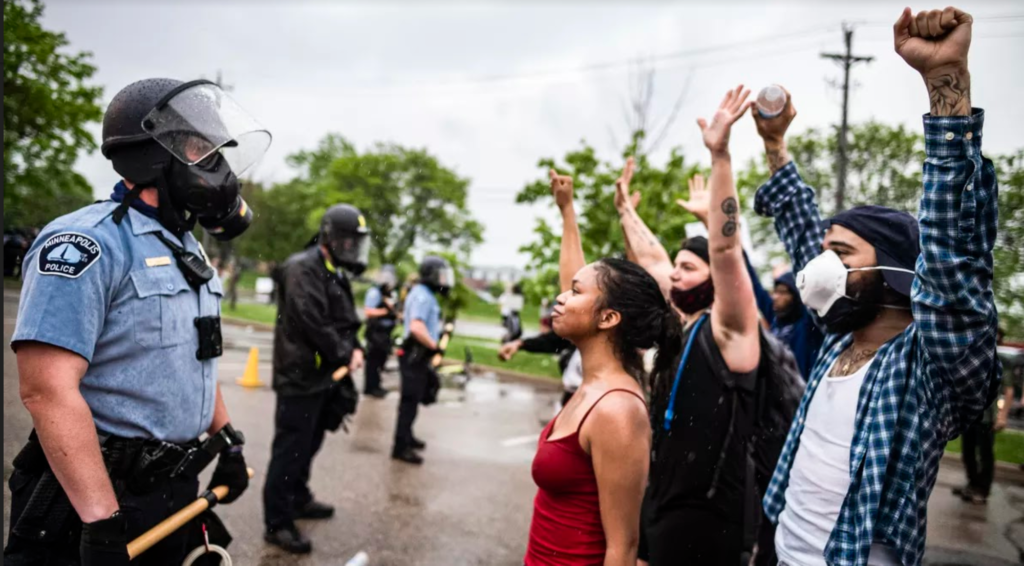
While many forms of communication result in division and polarization, Steve shares four keys to dialogue that can lead to greater reconciliation and healing, a crucial practice if Christ-followers are to learn and embody the reconciling power of the gospel.


Photo Credit: Richard Tsong-Taatarii/Star Tribune via Getty Images

“As IRON sharpens IRON,
so a friend sharpens a friend.”

(Proverbs 27:17)

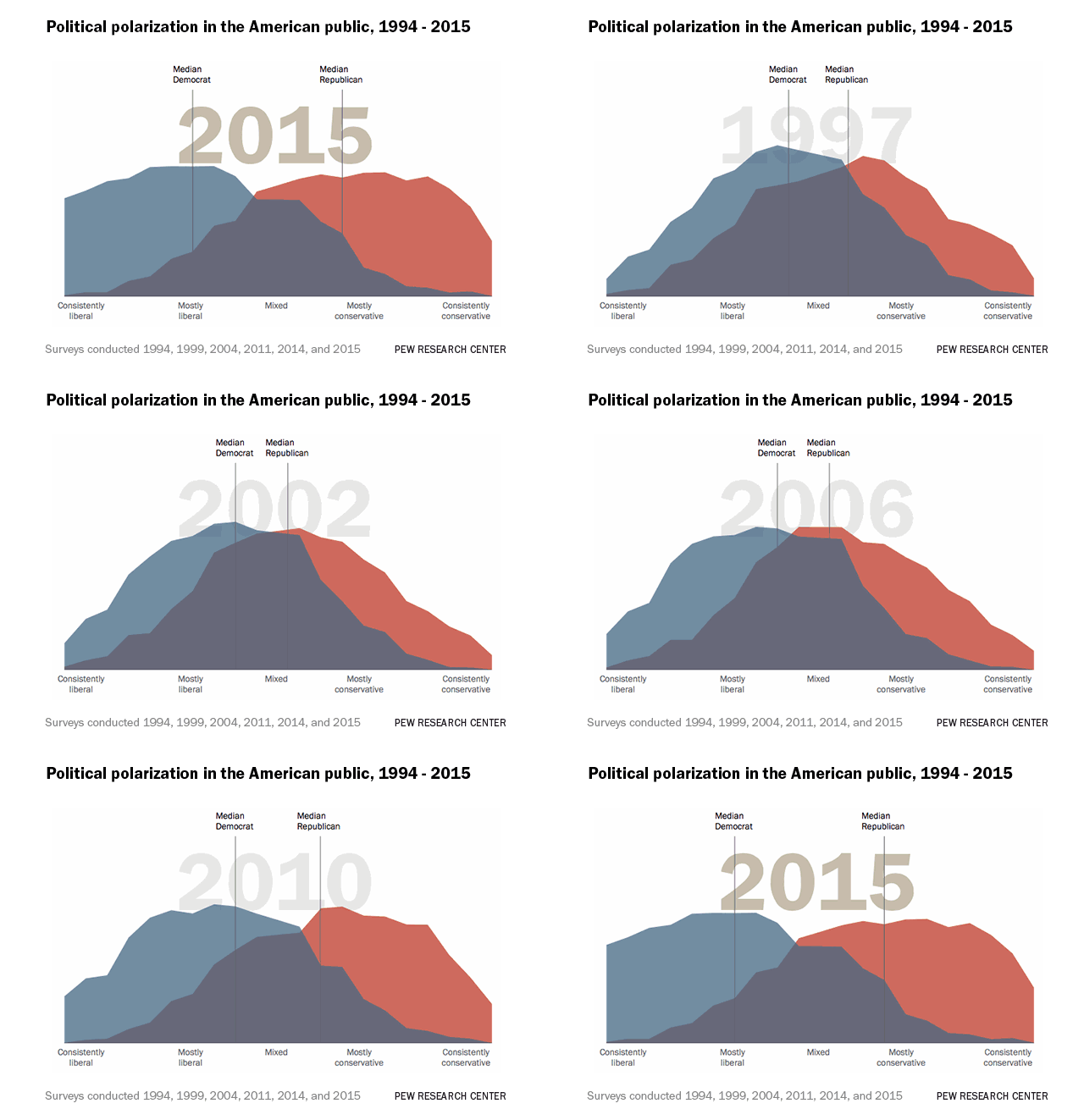
The times in which we live reveal a growing polarization in the United States. Red vs. Blue, All Lives Matter vs. Black Lives Matter, Conservative vs. Liberal, Pro-Life vs. Pro-Choice are just some of the camps upon which Christians find themselves also divided. If we who call ourselves part of the one body of Christ are to be agents of healing and unity, then we must be skilled at engaging in dialogue that heals.

Dialogue, authentic engagement with another in which we are willing to be changed by the encounter, is essential to healing the divisions in our country. I see, through the help of Marshall Rosenberg’s Nonviolent Communication and other sources, four keys to dialogue that are foundational. The acronym IRON can introduce these keys, named as Intention, Reflection, Observation, and Need. We can sharpen each other and strengthen one another through practicing these keys to healing dialogue.

Intention

It is important to enter dialogue with a leading intention to connect, appreciate and understand. These intentions suggest that we value relationship more than proving ourselves right and someone else wrong. Prioritizing relationship is God’s Trinitarian template. It is the Trinity’s relationship that creates. The Trinity, I suggest, does not relate for utilitarian motives, but out of love. Through loving, through Trinitarian relating, a universe was born. If God’s priority is relationship, why not make it ours as well? 

This does not mean questions of what is good or what is just are not raised. It simply suggests that we start by listening and learning. This helps us to meet people where they are, not where we may want them to be. As Marshall puts it, “people often need empathy before they are able to hear what is being said,” (p. 171). The intention to connect, listen, and empathize, especially with people who have different experiences and perspectives, those who we may see as “other,” makes true encounter possible.

Reflection

The second key flows directly out of the intention to encounter and connect with another. It is the ability to distinguish reflecting from responding. Reflecting involves communicating back to the speaker the heart of what you hear them saying. This one action has multiple gifts. It can help the speaker experience being valued and heard. It can help the listener get clarity and understanding. This is especially true when what is reflected is not the speaker’s intent. This gives the speaker the chance to say, “well, that’s not exactly what I meant. It’s more like this…” The act of reflection can build a bridge of understanding, so that the heart of what is expressed is heard and experienced.

Responding has its place in dialogue. It is simply different than reflecting. Responding involves communicating what is stirred in me as I listen to you. Most of the conversations I hear sound like this: expression-response-response-response-response-response-reponse. We seem to be hooked on getting across our point. With two people, each trying their best to make their point, neither may experience being heard. Reflecting, however, slows down the conversation, creating opportunities to live into our intention, opportunities to experience connection and understanding.

Observation

The third key in healing dialogue is to distinguish observable facts from our interpretations and evaluations. Many of us have been brought up in the language of judgment. Yet judge not, Jesus commands, for the judgments you make upon others will turn back onto you. (Matthew 7: 1-2) 

Mixing our judgments and evaluations with our observations contributes to the great confusion that divides Christians and our country. Keeping communication simple and focusing on what is pierces through the confusion and builds bridges of shared understanding. Learning to communicate in clear observations is key to dialogue across difference. 

Presenting the raw facts has a power all its own. George Floyd was killed after a police officer kept his knee on his neck for close to 8 minutes. This is an undeniable fact. Two people can disagree on their evaluations but beginning with the same observable fact can be a vital starting point. From there, feelings can be communicated without evaluation as well. When I think of what happened to George Floyd, Breonna Taylor, Ahmaud Arbery, Michael Brown, Eric Garner, Philando Castile, Alton Sterling, Trayvon Martin and so many more of my Black brothers and sisters, I get choked up. I feel a mix of grief and shock and outrage. Sharing my raw truth, without judgment, can help me be heard and understood by another person who may have a different perspective than me. When people with different life journeys can share their experiences and perspectives, a shared understanding can emerge.

Need

The heart of what is being said goes deeper than feelings. Underneath every feeling is a need. Needs, Marshall Rosenberg suggests, are what motivates all of us to speak or act (pp. 52-55). When a need is met, we have a feeling we often enjoy. When a need is not met, we have a feeling we often do not enjoy. Feelings have this essential purpose of indicating the state of our needs.

When I think about George Floyd’s death, a deep need for justice arises. This need I believe is widely held and that all humans desire justice. Marshall considers core needs as universal and an expression of the divine (p. 130). We might say they are God-given. God created humans to long for and be motivated by the same core needs and desires of the heart. For example, to survive, we all need air, water, food, and safety. To thrive we need love, belonging, acceptance, freedom, respect, justice, and more.

If our dialogues are to connect us and bring about the unity for which we have been created, then we must get to the heart of what is being expressed. This means getting to the need, the heart’s desire. When I speak and name my core needs, when I listen and hear the needs of others, then we can see that we all long for the same things. We who say, “Black lives matter” want every Black woman, man and child to experience mattering, safety, respect, and justice. And perhaps those who say all lives matter have a need to experience mattering themselves. This need of mattering is something we all share.

Taking the time to listen and hear the need underneath what is being said is the fourth foundational key to dialogue that heals. Hearing and connecting around commonly held needs is a unifying practice. Together, these four keys, our intention to connect first, distinguishing reflecting from responding and observing from evaluating, and hearing and speaking to the need, lay the foundation for healing dialogue. If we Christians are to be agents of healing and unity, then, I believe, it is our call to engage in such dialogue with our families, our churches, and our world.

Photo: Priscilla Du Prezz on Unsplash

____________

The Center for Receptive Communication helps people and organizations heal, thrive and lead. They facilitate transformative learning for faith communities and schools and their leaders. The Center for Receptive Communication’s newest project is Sobrevivir, accompanying men who survived childhood sexual trauma in their journey through healing to thriving and leading. .

Heart to Heart helps people affected by violence to hear and follow Life’s calling, transforming people and systems . Heart to Heart is building on its 30 years experience working in prisons to support incarcerated people, returning citizens, children affected by a household member’s incarceration, and their parents, caregivers and teachers. It’s newest project is Heart to Heart Families and Heart to Heart Schools.

For more on Nonviolent Communication, see Rosenberg, Marshall B. 2015. Nonviolent Communication: A Language of Life. 3rd Edition. Encinitas, CA: Puddledancer Press or go to www.cnvc.org 

Written by uniteboston · Categorized: Blog · Tagged: christian, jesus, lent, reconciliation, unity

Jul 16 2020

The Narrow Way of Racial Justice

“[There is] immense pressure, even in the Church, to prove our belonging to the “acceptable” group—a pressure that makes it easy to forget that justice often means longer term, un-sexy, behind-the-scenes labor in policy, paperwork, learning to love neighbors, and quiet, unseen conversations and prayers.”

This week, we feature a blog by Lexi Carver, member of Church of the Cross. Lexi recently moved back to her hometown of east Arlington, where she lives with her husband Connor and their cat, Billboard. Trained as a mechanical engineer, Lexi spends her days writing engineering software user guides, where she obsesses about rigorous use of language and contemplates the magic of nanoscale design. She also enjoys long walks and reading theology from many traditions. Lexi shares a powerful perspective on the need for Christians to examine their underlying motives behind their work towards racial justice and the need for discernment about the consequences of current cultural trends.


Photo Credit: Elijah Mickelson

This past month, grappling with injustice against black Americans, I have learned and prayed much and still have much to learn and pray about. The ways in which churches continue to be complicit in racial injustice are heartbreaking; white Christians in particular are called to reflect on and repent of these sins, but also to act towards bringing forth a more fair and reconciled  society; and for Christians, this must first begin in the church. I am heartened to see how many white people (myself included) are beginning to better comprehend the long suffering of our black brothers and sisters. The charge to listen is a great one – it is imperative that each person takes seriously the aches, wounds, discomforts, and the long line of injustices back through history. The reminder that Christ alone is our hope is a much-needed anchor. The invitation to pray and lament is crucial.

But there is even more at stake than what we see on the surface, for the battle is not against flesh and blood. In the midst of increased work for justice and awareness, I have noticed increased social temptations: to send certain signals for the sake of social acceptability, making my motives about me instead of the problem at hand, to succumb to viewing others with suspicion by mimicking scenarios in which people are labeled “friend” or “foe” based on (dis)agreement, and to judge others and myself as “moral” or not based on choices of politics or preferred action.

I have seen that it has become very easy in Boston, even encouraged, to label other people “racist,” “white supremacist,” “ignorant,” “unresponsive,” and a whole host of other condemning (or even idealizing) labels. These labels often stem from perceptions of only a few choices: Did they attend protests or not? Who did they vote for? Do they want to defund the police? Are they using the right lingo? In some conversations these days, disagreement feels tantamount to personal betrayal.

In some cases, these assessments may be accurate. But the temptation to hastily assume others’ hearts or to wave self-righteous flags reflects a cultural pitfall of moralizing judgment, of separating the “acceptable” people from the “unacceptable,” often along political lines. This leads to immense pressure, even in the church, to prove our belonging to the “acceptable” group—a pressure that makes it easy to forget that justice often means longer term, un-sexy, behind-the-scenes labor in policy, paperwork, learning to love neighbors, and quiet, unseen conversations and prayers. We can easily forget that Jesus called us to close our doors, praying to the Father who sees what is done in secret.

Amid the obvious issues of racial injustice many of us are exploring in conversation, there are also much less-discussed tensions of economic oppression, cultural identity, and political motives. My husband lived in Jamaica Plain for 10 years before we got married. In the last few years of his living there, many of his black and Latino neighbors suddenly moved away and their former homes were gutted, quickly rehabbed, and resold, in many cases for upwards of a million dollars.

We noticed with dismay that this sharp increase in gentrification directly correlated with an equally sharp increase in the number of “Black Lives Matter” signs appearing on the lawns of the new, wealthier, mostly white residents. These college-educated transients who had just pushed out lifelong residents showed no interest in getting to know the remaining, less wealthy, neighbors. Given the circumstances, it was hard not to see the lawn signs more as a social signal, support for a specific organization and its political ties, or perhaps an attempt to associate with virtuous sentiments, than an effort for real justice.

This was – and is – hard to talk about in Boston, home to so many universities and egregiously high rent prices, and where economic oppression can go hand-in-hand with political signaling. Although this trend is obviously not limited to predominantly black neighborhoods, what happened to my husband’s street was a cautionary tale to me of how people fighting for certain causes may widely perpetuate other injustices.

I am sure I am not exempt from the temptation to this particular sin! None of us are. We realistically will rarely have perfect motives, and it requires humility to acknowledge this. A question we might ask ourselves before joining any cultural movement is, “Is this for God’s glory or my own sake? What am I gaining?”     

Yet discussions of issues like this can quickly turn bitter as political opinions become, more and more, all-encompassing labels of identity. In addition to the political label that can come with Black Lives Matter lawn signs, another label that comes to mind is the phrase “anti-racist.” Despite the commonality of this phrase, I find myself hesitant to define people overarchingly by what we are against. Jesus certainly stood against evil, but he defined Himself in terms such as the comforter, Savior, mediator, king, shepherd, bridegroom, deliverer—never the “Man Against Wickedness.” As my friend Kelly Madden recently pointed out, I want to be for justice, for cheering for the personal agency and authority of my black friends and neighbors and leaders, for the protection and exaltation of black lives, for the respect of black voices and churches and businesses, for support of black communities, for the liberation of black prisoners wrongly accused and unjustly sentenced, for better and fairer policies, for accountability without condemnation, for humble and ongoing learning and growth. Perhaps our challenge is to pause long enough and breathe deeply enough of the Holy Spirit to envision something to create, not only to tear down.

The Enemy would use this time, if we allow it, to tempt us to pit ourselves against each other, to drive our divisions deeper rather than work to heal them, to malign each other (or others not in the room) endlessly. But this is nothing new; as Jesus tells us, the path of the Kingdom of God is narrow, wending and twisting between landmines in our hearts and our societies.

I do not have the answers for how best to work for and discuss issues of racial justice, or any of the other forms of justice we need right now, while avoiding the evil that will inevitably follow from “standing in the synagogues and on the street corners to be seen by others” (Matt. 6:5). Of course, God can use even our most measly and self-serving actions to his own purposes and glory. But I believe these are questions that the church must grapple with. Following the way of Christ means allowing God to train us in shrewdness and innocence, prayerfully discerning where and with whom we are called to work, and digging beyond the surface of cacophonous news headlines, social pressures, and our own hearts. 

Pray with me:

 Lord, help us to seek, above all, your heart for our churches and our city. Plug our ears against the siren calls of selfishness, social acceptability, and condemnation of our neighbor; help us to learn the language of your Spirit; teach us narratives and ways that edify your children. Help us to take the time to sit with you, until we are filled with and compelled by your love. Empower us to pray for our enemies and love our opponents. Above all, help us to see your reflection in every human face, and show us your call to us in your mission of racial justice and other forms of justice in the world.

Written by uniteboston · Categorized: Blog · Tagged: boston, christian, home, jesus, neighborhood

Feb 27 2020

Esther: For Such A Time As This

This April 2020 New Life Fine Arts Musical Theater presents an original musical adaptation “Esther: For Such A Time As This” at the Groton Dunstable Performing Arts Center, 344 Main St. Groton, MA. (Use 343 Main St for GPS directions)

The story of a girl with two names; one hidden.

The story of two kings; one hidden.

A story of two decrees: one to destroy a people, the other to save a people.

That which is hidden comes to light in this new musical adaptation of the Biblical story of a Jewish orphan who becomes Queen to the Persian Emperor, King Ahasuerus (Xerxes) at a time when his reign has become plagued with political intrigue, plots of sabotage and genocide that threaten the unity of the Empire.

A company of 80 actors, singers, and dancers with a live orchestra will transport audiences to the magnificent winter palace of King Ahasuerus in the 5th century BC Persian capital city of Susa.

Eight Performances: April 17-26
Evenings at 7:30 p.m. April 17,18, 24,25
Matinees at 2:30 p.m. April. 18,19, 25, 26

Visit our tickets (http://www.newlifefinearts.org/tickets) page for online ordering, more details and special pricing offers.

“Esther: A New Musical Drama” is directed by Concord composer, David MacAdam. Music arranged, orchestrated and conducted by Peter Vantine

Written by Andrew Walker · Tagged: christian, new england

Jan 23 2020

2020 Vision Board Workshop

Envisioning God’s Plan – 2020 Vision Board Workshop

In the hustle and bustle of our busy lives, it can be challenging to take a step back and reflect on our goals and convictions. The perfect time to do that is in the new year! Did you make any new-year’s resolutions? Are you looking to be more intentional in your faith walk? More bold or courageous? Loving? Self-controlled?

Please join us! Together we will visualize what we want for our spiritual growth this year and renew our determinations. Let’s pump out those creative juices and find fellowship with a community of like-minded believers. This can be the year you finish strong and make good on the things you began.

“The end of a matter is better than its beginning, and patience is better than pride.” Ecclesiastes 7:8

and, “Commit tot he Lord whatever you do, and he will establish your plans.” Proverbs 16:3

What is a Vision Board?
A vision board is a fun is a board or poster that visually displays the things you desire or dream about. It’s fun to make and is a helpful tool because when you see it every day, you can be reminded of and motivated to accomplish the things you decided to do.

Please feel free to bring your own craft supplies, poster boards, magazines, stickers, etc. We will have supplies available as well.

Written by Andrew Walker · Tagged: christian, fellowship, friends, jesus, prayer

  • « Previous Page
  • 1
  • …
  • 28
  • 29
  • 30
  • 31
  • 32
  • …
  • 38
  • Next Page »


Give to Further Christian Unity

DONATE!

  • Email
  • Facebook
  • Instagram
  • YouTube

Copyright © 2026 · UniteBoston · Built on WordPress