UniteBoston

Bridging Divides Across Christians for the Flourishing of the City

  • Home
  • Events
    • Submit Event
  • Join In
    • Migrant Care and Solidarity
    • The Church and Civic Engagement
    • The ATTIC
    • Kingdom Conversations
    • Worship & Pray
    • Boston Flourish
  • About
    • UB Board, Staff & Volunteers
    • Cohorts
    • Christian Unity Canvas Prints
    • History
    • Christian Unity
    • Annual Reports
  • Forums
  • Blog
  • Give
  • Contact

Mar 06 2025

Lent with Irenaeus of Lyons

“We need to be more self-reflective than ever.  Marketing has long drawn us into greed.  Algorithms now draw us into fear and outrage.  Politics draw us into viciousness. But those vices feed a foe within us — one more subtle and terrible than any foe without (Romans 7:14 – 25).  How will we – as Christians in Greater Boston – endure the change and hardship coming while relating more deeply with Jesus? “

Lent is upon us, a season of spiritual discipline, reflection, and self-examination. In this week’s newsletter, we’re featuring Lent with Irenaeus, a new book by local author Mako Nagasawa, who is also an elder at Neighborhood Church of Dorchester.

Irenaeus of Lyons, a second-century bishop, confronted distorted beliefs and emphasized the wholeness of body, soul, and creation in the Christian faith. Read an excerpt of his book below to explore his timeless insights on spiritual formation to deepen your faith from the darkness of Lent to the light of Eastertide.


Lent is the forty day period before Easter — that is, Resurrection Sunday. Lent begins with Ash Wednesday, when Christians often mark our foreheads with ash to remind us that we are mortal and will return one day to the dust. Lent ends with Holy Week – we recall Jesus’ entrance into Jerusalem as king, confronting the powers, only to face anguish at Gethsemane, be crucified on Good Friday, and then, at last, be raised on Resurrection Sunday into an immortal life.

During this period in his life, Jesus journeyed to give and to gain. He went to give something up – his very life. He also went to gain something infinitely valuable — his humanity purified and perfected, and a way for us to share in what he accomplished. The letter to the Hebrews says Jesus endured the cross, scorning its shame, for the joy set before him (Heb.12:2).

Lent is like a spiritual fitness routine. In order to more fully appreciate the significance of Jesus’ journey during Lent, Christians typically give something up — often a comfort item: meat; sugar; coffee; video games; social media. We let ourselves feel a physical or emotional pang of desire. We let this desire remind us of a deeper desire: the desire for a deeper connection with Jesus. Lent is, therefore, a season where we hope to gain things: a deeper hunger and thirst for Jesus and his righteousness (Mt.5:6), and strength over our lesser cravings – even if those lesser cravings help us cope with pain or loss. Perhaps especially if so.

Irenaeus is an outstanding guide in this Lenten journey. He was a Christian leader in the second century. He had been mentored by Polycarp of Smyrna in western Asia Minor, the region where Jesus’ apostles – his earliest followers – had spent the most time investing in new communities. Polycarp had been mentored by the apostle John, so Irenaeus’ pedigree was impressive. He might have died as a martyr, but certainly he was ready to, as his predecessor Pothinus of Lyons and mentor Polycarp of Smyrna both died by martyrdom. How did he come to love Jesus that much?

Irenaeus defended the Christian faith against “gnostic” influences — those who believed the body was evil or worthless or didn’t matter as much as the soul and the mind. So-called “gnostic Christians” then argued that Christian faith was about simply believing certain ideas while giving up on changing much of anything. It would have been the easier way to live, frankly. But Irenaeus knew that our journey with Jesus had to be more fully embodied, and involve a retraining of our whole being. For we are, as Irenaeus understood, human becomings.

Most of these reflections come from the fourth book of Irenaeus’ five volume work, Against Heresies. In this book especially, Irenaeus connects the stories and practices of the Old Testament to Jesus. The gnostics wanted to disconnect Jesus from the ancient Jewish story and community. Irenaeus points out that Jesus’ physical humanity was dependent on the Jewish community from which he came. God had shaped and trained ancient Israel in certain ways, with their partnership. Jesus embraced that training and journeyed further.

I hope Irenaeus’ reflections on this journey with Jesus helps you this Lenten season. For this early Christian leader – Irenaeus – believed it was a journey of becoming truly human.

Reflection 2:  We Ascend to God or Descend to the Animal

We often think of Lent as a season where we give up something, which is often a comfort item:  meat; sugar; screen time; chocolate.  We let ourselves feel the loss or lack of that thing.  We let this lack lead us to feel desire, and this desire reminds us that our deepest desire is for Jesus.  So during Lent, we hope to gain things:  a deeper hunger and thirst for the righteousness of Jesus (Mt.5:6), and strength over our lesser cravings – even if those lesser cravings help us cope with pain or loss.

Irenaeus speaks of this training of our desires.  He says we either ascend towards God, or descend towards the animal – or, at least, certain types of wild animals.  As finite beings created and loved by the infinite God, we are meant to grow infinitely in relation to God… Yet, the apostle Peter said that those who sin without repenting eventually become “slaves to corruption, for people are slaves to whatever masters them” (2 Pet.2:19).  Peter, quoting King Solomon in Proverbs 26:11, says that such people are like dogs that return to their vomit or pigs that return to mud.  Irenaeus, citing Peter, explains it in terms of desires and longings: “Now, spiritual men shall not be incorporeal spirits; but our substance, that is, the union of flesh and spirit, receiving the Spirit of God, makes up the spiritual man.  But those who do indeed reject the Spirit’s counsel, and are the slaves of fleshly lusts, and lead lives contrary to reason, and who, without restraint, plunge headlong into their own desires, having no longing after the Divine Spirit, do live after the manner of swine and of dogs; these men, [I say], does the apostle very properly term “carnal,” because they have no thought of anything else except carnal things.”  (AH 5.8.2, italics mine, quoting 2 Pet.2:12 – 22; Prov.26:11; cf. AH 4.4.3, quoting Ps.49:12)

Consider how we might “live after the manner of swine and of dogs” as Peter and Irenaeus mention, unpleasant as that might be.  We can make our habitats – our families, friendships, and organizations – morally and spiritually unhealthy.  For example, if we make a home for toxic favoritism or disdain, allow gossip and conflicts to fester in our presence, or get defensive when we are wrong, then we are like those pigs who sit in the mud and their own excrement.  If we are in leadership and allow sins to go unaddressed, we contribute to an unhealthy environment where other people suffer.

We need to be more self-reflective than ever.  Marketing has long drawn us into greed.  Algorithms now draw us into fear and outrage.  Politics draw us into viciousness.   But those vices feed a foe within us — one more subtle and terrible than any foe without (Romans 7:14 – 25).  How will we – as Christians in Greater Boston – endure the change and hardship coming while relating more deeply with Jesus? 

Written by uniteboston · Categorized: Blog, Devotionals, Lent, SPIRITUAL FORMATION & EVANGELISM · Tagged: community, jesus, lent, neighborhood, unity

Feb 28 2025

Kelly’s Corner: A Day in the Life

What does a “typical” day at UB look like? Well, no two days are ever quite the same! But I’d love to take you through one particularly unique day last week—one that was especially full of meaningful conversations and Spirit-led moments.

5:30am – Coffee with Jesus. I’m an early riser, waking up before the sun most days to pray, reflect and read the news before the hustle and bustle of the day begins. 

6:57am – Cross country ski in Franklin Park. I start most days with exercise, as I find that when my body moves, then I can think much more clearly. Contemplating God’s word for today with the “Pray as you Go” devotional and the Holy Post podcast. Jamming out to the song “Kingdom of Jesus” which has been hitting me deep these days: “He’s chosen the small things to outlast the great, the meek and the merciful to shine through the hate… Oh say can’t you see we have one allegiance? It’s to the Kingdom of Jesus.”

10:34am – Coffee and pastries with Rev. Arrington Chamblis at Homestead Bakery. So meaningful to hear about her own personal journey meeting Jesus and following in his footsteps, now at Episcopal City Mission. One thing she shared that I’m holding onto is that, “Personal and social transformation must go hand in hand—without a change of heart, nothing will truly change.”

12:17pm – Lunch with Liza Cagua-Koo at Fresh Food Generation. Liza has a deep understanding of systems practice. Her perspective on bringing people from diverse backgrounds together to collaborate and drive meaningful change is so inspiring to me and crucial to UniteBoston’s ministry.

2:35pm – Meeting with Jerome Garciano from Highrock Church, where we brainstormed and schemed about a collective call to moral leadership. Our hope is to invite Christians from across the political spectrum to reconfirm ourselves and call our leaders to a higher standard—one that reflects the hope, faith, and love at the heart of the Gospel.

Lots of administrative work in the afternoon, including planning an upcoming cohort case study and ordering supplies for a UniteBoston gathering, followed by dinner with my family!

 I crashed early this night, and then woke up the next morning to coffee with Jesus again… the slow, rooted, connecting work of UniteBoston continues. 

Move slow enough to notice
Wherever God shows up today,
may I not be too hurried to notice,
nor too aloof to care.
When the Sacred surprises me
like an unexpected guest,
may I not hesitate to greet Them with open arms.
Let not my bias be a barrier,
to embracing The Holy’s mysterious ways.
May I be hospitable to God enfleshed
in even the dullest circumstances,
and the hardest situations,
and the strangest of places.
I am open
to encountering Love,
to meeting with Justice,
to being held by Awe.
May it be so.

– Rev. M Jade Kaiser, enfleshed

Written by uniteboston · Categorized: Blog, FROM THE UB LEADERSHIP · Tagged: boston, home, jesus, transformation, uniteboston

Feb 26 2025

Uniting Boston and the Power of Dialogue

We are honored to share a podcast episode with Jennifer Nassour, Boston resident, former chairwoman of the Massachusetts Republical Party, and host of Political Contessa. She welcomes Shelton Oakley Hersey, a local Spiritual Director and Dialogue Consultant passionate about fostering fruitful conversation and the reconciling presence of Jesus through UniteBoston and beyond. 

With a Master’s from Fuller Theological Seminary in Intercultural Studies and extensive experience in interreligious and community dialogue, Shelton shares insights from her work in both South Africa and the U.S. Together, she and Jennifer explore how structured conversations with clear ground rules can transform heated conversations into opportunities for deeper understanding of ourselves, others, and even God. And, how it can and must include each of us embodying the Fruit of the Spirit with one another in our daily lives.

Tune in as they discuss the necessary culture shift from fear-based motivation to values-driven mutual respect of one another, the essential role of adults in modeling and teaching skills like humility, curiosity, grace in action, etc., and how community-level conversations can create lasting change. Whether you’re navigating tough discussions at home, work, or in your church community, this episode will equip you with practical tools to foster respect and a sense of unity in a divided world.

Listen now and join the movement for healthier conversations, meaningful engagement, and one way to embody Christ in these polarized times!

LISTEN NOW
EXPLORE KINGDOM CONVERSATIONS

Written by uniteboston · Categorized: Blog, FAITH & JUSTICE, Unity & Reconciliation · Tagged: community, jesus, uniteboston, uniting boston, unity

Feb 06 2025

A Unity of Strength – or Weakness? 

Below, UniteBoston’s Executive Director Rev. Kelly reflects on the concept of “unity” as proposed by the new federal administration and shares her perspective on how biblical unity embraces diversity, disrupts unjust systems, and prioritizes the most vulnerable.

Note: These reflections are offered by a Christian leader in Boston and do not necessarily represent the official views of UniteBoston as an organization. Our city is home to many faithful, God-fearing, Bible-believing Christian leaders, and our blog exists as a space to “gather all the voices”—a place where individuals can come as they are, share authentically and vulnerably, and engage in learning together. As we seek to be the people of God, on the mission of God, for the flourishing of our city, we encourage honest and courageous conversations—rooted in truth-telling, listening, and story-sharing— with those we may disagree with. If you’d like to share a response or continue the conversation, feel free to reach out to us.


The numerous federal enactments and proclamations over the past two weeks, especially those framed under the banner of “unity,” have been unsettling to me. For example, last Friday, the U.S. Department of Defense announced the elimination of all official monthly celebrations related to race and identity, stating, “Identity Months Dead at DoD. All official monthly celebrations related to race and identity in the Defense Department are banned effective immediately.” 

In an interview with Fox News, Defense Secretary Pete Hegseth added, “We don’t have time for emphasizing differences. One of the dumbest phrases in military history is ‘our diversity is our strength.’ Our diversity is not our strength. Our unity and our shared purpose is our strength.”

When we hear this, alarm bells should go off. This isn’t just about DEI or identity politics, this is about a core principle that our nation is built on: E pluribus unum – Out of many, one. This means that Americans are to cultivate a sense of ‘we’ that preserves, rather than erases, our differences, because there is no real “unity” unless we see and honor one another in all our beautiful, God-given distinctions. Without our diversities, unity dissolves into uniformity, which distorts the imago Dei and weakens our God-given right to flourish.

Have you been shaped by being with people and cultures different than your own? I sure have. I currently live in an intentional Christian community home in a predominantly Black community in Dorchester, and I worship at a church that has people of many different ethnic backgrounds. I’ve learned that our differences are what make our world stronger, brighter, and truer – if we let them be.  

Yes, it can make things a little more complex, and there is the give-and-take of working out our differences that can be challenging at times. Yet, being in close relationships with people different than me has made me see my blind spots more clearly and recognize my own privilege as a White woman. I feel incredibly blessed to work with Rev. Devlin, a Black pastor originally from Chicago. His differing perspective, background, and life experiences has made me a better leader and has strengthened UniteBoston’s mission significantly. 

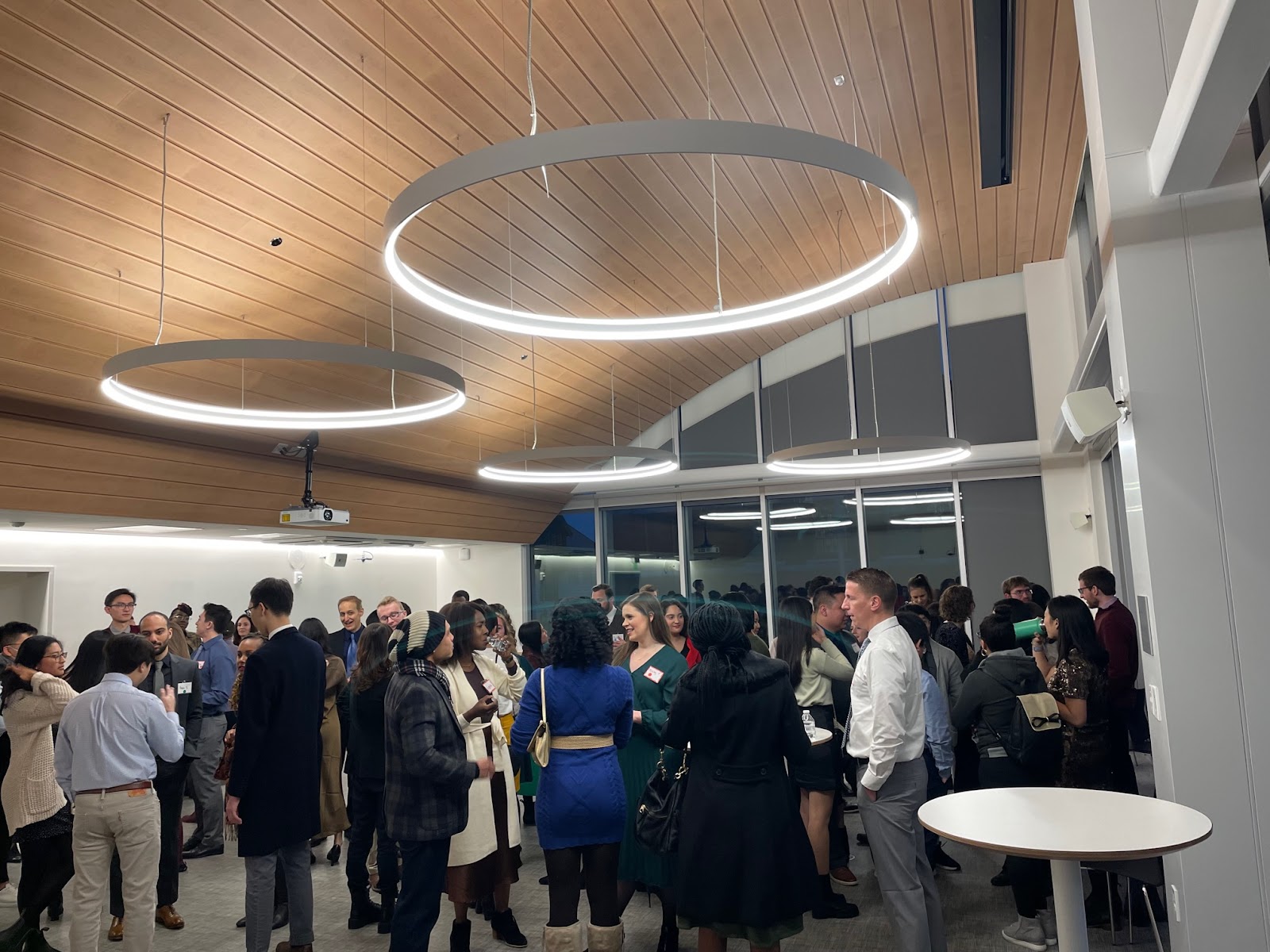
Above: The UniteBoston Community at a recent worship concert

Furthermore, research has shown that our diversity is a valuable national asset: immigrants contribute a collective impact of $100 billion in the Boston area. Diversity also makes teams smarter by enhancing organizational performance, decision-making, and innovation. In fact, companies with greater gender diversity on executive teams were 21% more likely to experience above-average profitability.

We need diversity not just for diversity’s sake, or to be “woke,” but because a world without a variety of voices present limits our imagination and what we can accomplish together. Like the tensile strength of a spiderweb, deep unity holds complex realities in tension, which makes it strong. 

The Biblical Model of Unity

Let’s be clear: a unity without diversity isn’t only ineffective and weak, it is unbiblical. Scripture is clear that unity does not mean uniformity. A key foundation of Christianity is that we are all made in God’s image, bestowed with inherent immeasurable dignity and worth (Gen 1:27). We are all parts of a larger body, where none of us are dispensable; in fact, the real sin is saying to another ‘I don’t need you’ (1 Cor 12:21-23). Our unity comes when we give greater honor and concern to the parts that are weak, lacking or suffering (1 Cor 12:21-26). In our world today, this includes the unborn, the very young, those living in poverty or with disabilities, refugees, immigrants, the LGBTQ community, and other vulnerable groups.

I’ve also learned that the term “unity” is not neutral; while it has always been a positive word for me, my friends of color have let me know how often their cultures and backgrounds have been left behind under the banner of “unity.” Unity can create an illusion of togetherness, the “hues in the pews,” while silencing differences and excluding marginalized voices, effectively turning ‘them’ into ‘us.’ Too often, “unity” often conflates into a White, western way, where whiteness operates as the default standard, exerting power and control to uphold narrow interests rather than the collective good.

Our nation is built on the idea that we are “one nation, indivisible, with liberty and justice for all.” True biblical unity calls us to uphold justice, dismantle inequities, and seek the flourishing of all people, especially the most vulnerable (Zechariah 7:9-10, Ezekiel 22:7) because “we are caught in an inescapable network of mutuality, tied in a single garment of destiny. Whatever affects one directly, affects all indirectly” (Rev. Dr. Martin Luther King, Jr.)  Let’s be clear on this: Unity is not only an encompassing of diversity but also an abolition of unjust systems. A unity that does not recognize the systems and structures that allow some to flourish, and others to struggle to survive is not unity at all. Unity without justice is oppression in disguise. 

Distorted Unity and “America First”

Despite canceling official diversity celebrations, President Trump issued a proclamation for Black History Month. However, his statement omitted references to slavery, the Civil Rights Movement, or key civil rights legislation.

More troubling, recent executive orders have suspended U.S. foreign aid, halted refugee admissions, and begun dissolving USAID, placing global staff on administrative leave. Secretary of State Marco Rubio outlined a new framework for foreign aid, asking, “Does it make America safer, does it make America stronger, does it make America more prosperous?” 

Make no mistake: There is nothing Christian about “America First.” Christians are to be united “in one spirit and one mind” by”valuing others above yourselves, not looking to your own interests but each of you to the interests of others” (Phil 2:2-4). While eliminating government waste is important, the priority should be given not to America, but to those most vulnerable among us: the poor, the widows, and the foreigners (Zec 7:10, Deut 10:18) so that there might be equality (2 Cor 8:13-15).

By halting the equivalent of less than 1% of the US budget, we are jeopardizing programs providing clean water, job training, education, and medical aid to 120 countries—initiatives that have long enjoyed bipartisan support. These initiatives do not only promote global stability and security but also serve American interests. Christian leaders of many backgrounds including Catholic Bishops, Episcopal Church leaders, Evangelicals, South African Church Leaders, and even Pope Francis have all spoken out against eliminating USAID and changing policies regarding immigration. Jesuit Fr. James Martin writes: “In its simplest terms, the apparent demise of USAID is the result of the world’s richest man ending a program that helps millions of poor people. You don’t need a Ph.D. in moral theology to see why this is evil. You can just read Jesus’ parables on the rich and the poor.” 

What is most tragic for me is how the Bible is being used to support these decisions and “America First” principles. JD Vance’s interview on Fox News describes, “there is a Christian concept that you love your family and then you love your neighbor, and then you love your community, and then you love your fellow citizens, and then after that, prioritize the rest of the world.” America is not the apple of God’s eye; Just as Jesus never restricted His commitment to Judea or Israel, we must not limit our moral responsibility to the borders of our 50 states.

A Call to Action

The Rt. Rev. Mariann Budde is right: Our world needs a kind of unity that is humble, upholds dignity, extends mercy to the most vulnerable including our LGBTQ and immigrant neighbors, and serves the common good.

Jesus made it clear: We will be judged by how we treat “the least of these” (Matthew 25:41-43). President Trump may have the power to put forth executive orders, but he does not have the power to silence the American people for standing up for what is right, good, just, and Biblical. May we stand courageously for the unity that reflects the heart of Christ. A unity that embraces diversity, disrupts unjust systems, and prioritizes the most vulnerable is not a ‘woke’ agenda—it is God’s agenda.

“The people of the land practice extortion and commit robbery; they oppress the poor and needy and mistreat the foreigner, denying them justice. I looked for someone among them who would build up the wall and stand before me in the gap on behalf of the land so I would not have to destroy it, but I found no one.” (Ezekiel 22:29-30)

Dr. Reggie Williams compares our moment to Bonhoeffer’s era, warning, “The most glaring similarity between then and now is that too many well-meaning people of faith stared evil in the face and did nothing.” Here’s how we can take action:

  • See and Honor One Another: We can check in with friends and neighbors in these challenging times, welcoming one another and building diverse friendships. We can honor one another, their particular culture and backgrounds and share the value they add to our lives. 
  • Give Generously: Recent executive orders cut off and threaten federal funding for the most basic assistance for families acutely suffering and in need of food, shelter, and medical care. We can support organizations that are serving locally, nationally and internationally, such as World Relief.
  • Hold Elected Officials Accountable: Our system is being flooded with new policies and orders which can leave people feeling isolated, disorientated, fearful, and powerless. We can resist this tactic by staying engaged and speaking out, especially on policies that are being proposed that are unconstitutional or unbiblical, remembering that politicians act by what is demanded of them by the people. Democracy thrives when people refuse to be silenced. I also recommend this piece by Ezra Klein, where he urges Americans to closely examine the first two weeks of Donald Trump’s second term to see a reality that may differ from what is being presented.
  • We can be clear about the Way of Jesus. Jesus prioritizes kingdom over empire: “Jesus was not killed by atheism and anarchy. He was brought down by law and order allied with religion, which is always a deadly mix. Beware those who claim to know the mind of God and are prepared to use force, if necessary, to make others conform. Beware those who cannot tell God’s will from their own.” – Barbara Brown Taylor

Graphic Credit: Radici Studios


a blessing for when you’re tired of broken systems – by Kate Bowler

Oh God, I am done with broken systems
that break the very people
they are meant to serve.
Harness this anger.
Channel it into worthy action and show me
what is mine to fix and what boundaries to patrol
to keep goodness in and evil out.
Blessed are we who are appalled
that brute ignorance can so easily dominate
over decency, honesty, and integrity.
Blessed are we, who choose not to look away
from systems that dehumanize, deceive, defame, and distort.
We who recognize that thoughts and prayers are not enough.
We who stand with truth over expediency,
principle over politics,
community over competition.
Oh God, how blessed are we who cry out to you:
empower us to see and name what is broken,
what is ours to restore,
guide us to find coherent and beautiful alternatives
that foster life, hope, and peace.
Help us use our gifts with one another in unity.
Blessed are we who choose to live in anticipation,
our eyes scanning the horizon,
for signs of your kingdom—
heaven-come-down—
as we wait in hope
and act with courage.
~ Kate Bowler

Written by uniteboston · Categorized: Blog, FROM THE UB LEADERSHIP, Unity & Reconciliation, Who is My Neighbor? · Tagged: community, lent, peace, uniteboston, unity

Feb 05 2025

Highlights from the 2025 Week of Prayer for Christian Unity

From January 18 to 25, Christians worldwide gathered for the Week of Prayer for Christian Unity, a time to reflect on Jesus’ prayer “that they may be one” (John 17:21) through fellowship, worship, and shared faith. This year’s theme marks the 1,700th anniversary of the First Ecumenical Council at Nicaea, celebrating the Nicene Creed as a foundation of Christian unity while acknowledging the divisions that still exist today. Read highlights and testimonies below from this year’s inspiring prayer gatherings in Greater Boston!


Click above to watch a reflection on the significance of the Nicene Creed from Dr. Elizabeth M. Woodard, Catholic theologian, musician, author, speaker, spiritual director, and ecumenist. She is a member of our Christian unity cohort and considers her vocation as bringing people to God and to each other. 

Our week began with a pre-inauguration vigil hosted by the Cathedral Church of St Paul. Dozens of people and leaders from a variety of Christian traditions gathered to pray for our county and its leaders preceding the inauguration. We recommitted to uphold our baptismal vows to “seek and serve Christ in all persons, loving our neighbor as ourselves” and heard testimonies of tangible actions by leaders committing to do just this including Jimmy Lim from the Crossing Congregation, Rev. Arrington Chambliss from Episcopal City Mission, Sandra Soto from St. Mark’s Dorchester, and Rev. Canon Jean Baptiste Ntagengwa from Immigration and Multicultural Ministries. There was a time of sharing stones of our burdens and also a passing of the light.

Rev. Devlin Scott (NewCity Church & UniteBoston), Rev. Kelly Fassett (UniteBoston), Fr. Tom Ryan (The Paulist Center), and Very Rev. Amy McCreath (Cathedral Church of St Paul) at the pre-inauguration vigil.

On Tuesday, a variety of clergy from many Christian traditions were invited to join for a prayer service by Archbishop Henning. Greek Orthodox Metropolitan Methodios presided over the gathering, a testimony of the value that the Archbishop places on ecumenical relations. Archbishop Henning described, “I hope and pray that, in gathering together, we will all be strengthened in that same power of Gospel, in the midst of a world that is too often about violence, hatred, and taking, to give that witness of solidarity, of compassion, and faith in God.”

Lutheran Bishop Nathan Pipho preached the homily, sharing that, “Our unity in Christ, in the faith, is our proclamation of faith to a world, as the archbishop said, who needs to see people who can get along, who can love one another, who can unite with one another, who can persist with one another, who can be in relationship with one another.” Read more in the Article in the Catholic Pilot.

On Tuesday, a small group also gathered at Tremont Temple for a powerful noontime prayer service, led by Craig Parker from the Navigators. We were grateful to offer their regular Tuesday noontime prayer gathering as part of our Week of Prayer events.

On Thursday evening, Rev. Devlin hosted a moving prayer service at NewCity Church, joined by members of the Boston Catholic Focolare Community.

“Thank you again for a beautiful evening together in prayer at your church. You could see that none of us wanted to leave! The incredible reflections, song and movement created a Well of Faith to drink from that was wonderful to share and deeply edifying. I wanted to share personally that last night’s time with all of you renewed a deep sense of hope that I was lacking and needed; and that it really has me digging deeper with the question that Jesus asks Martha at the tomb. Do I really believe this (no, I mean, really, really)?…believe that our Savior has got this. Got it all…So thank you all for being that catalyst for me. It is a precious gift to journey and grow in faith together.” – Janis Pochini, Focolare Community

The week closed out with a neighborhood dinner hosted by Cleo Muhammad. We were blessed to be in the company with a few long-time Dorchester Christian pastors. Through a nourishing meal, conversation and prayer, we celebrated our common faith and prayed into the areas of discipleship and common mission for the coming days.

“Personally, I experienced it as a very rich and meaningful time, and I’ve heard similar sentiments from some of you. Seeing us come together representing different generations, churches, and racial backgrounds was beautiful. I especially enjoyed hearing from those I affectionately call the “seasoned saints” (those who’ve been walking with the Lord for a long time). Your continued commitment to the gospel and to running your race and helping others run their race is truly inspiring and extremely refreshing! As the year progresses, I pray we continue to wrestle with, pray about, speak on, and take action regarding the themes that came up in our time together: unity, discipleship, our response in these times, and the challenge to believe in Jesus’ revelation of Himself. To this last theme, may we give a wholehearted and emphatic “Yes Lord, I STILL believe!” – Cleo Muhammad

“It was a real blessing to be able to have Pastors Rocklyn and Eva, Mark and Jay attend; each of you are a wealth of knowledge and wisdom. I echo Cleo’s prayer for unity, justice and reconciliation, at this pivotal time in our country and city.  I wholeheartedly agree—it was such a meaningful evening of encounter and receiving one another’s faith, passions, and life experiences! While ‘Christian unity’ can seem like a far-off ideal, Friday night makes it feel a little more tangible, leaving me feeling more hopeful.” – Rev. Kelly Fassett

“In addition to all the powerful stories of love & prayer greater than division from around the Boston area, I was deeply encouraged by similar encounters across difference taking place that week all around the country – from Connecticut to Chicago to St. Louis to Tuscon to Los Angeles.” – Scott Brill, The Initiative


We also offer this video where Episcopal Bishop Mariann Edgar Budde share a homily on the foundation of unity at the Inauguration Service. She describes the need to pray for unity as a people and a nation — not for agreement, political or otherwise — but for the kind of unity that fosters community across diversity and division and the need to respect the honor and dignity of every human being.

In today’s new era in our national life, let us heed this prayer by Rev. Dr Martin Luther King,

“Most gracious and all wise God, before whose face the generations rise and fall; You in whom we live, and move, and have our being. We come before you painfully aware of our inadequacies and shortcomings. We realize that we stand surrounded with the mountains of love and we deliberately dwell in the valley of hate. We stand amid the forces of truth and deliberately lie. We are forever offered the high road and yet we choose to travel the low road. For these sins, O God, forgive. Break the spell of that which blinds our minds. Purify our hearts that we may see you. O God, in these turbulent days when fear and doubt are mounting high give us broad visions, penetrating eyes, and power of endurance. Help us to work with renewed vigor for a warless world, for a better distribution of wealth and for a fellowship that transcends race or color. In the name and spirit of Jesus we pray. Amen.”

Written by uniteboston · Categorized: Blog, EVENTS & YEAR HIGHLIGHTS, Unity & Reconciliation, Worship & Prayer · Tagged: christian unity, lent, reconciliation, testimony, uniteboston

  • « Previous Page
  • 1
  • …
  • 6
  • 7
  • 8
  • 9
  • 10
  • …
  • 89
  • Next Page »

Give to Further Christian Unity

DONATE!

  • Email
  • Facebook
  • Instagram
  • YouTube

Copyright © 2026 · UniteBoston · Built on WordPress