UniteBoston

Bridging Divides Across Christians for the Flourishing of the City

  • Home
  • Events
    • Submit Event
  • Join In
    • Beloved Community Lab
    • Migrant Care and Solidarity
    • The Church and Civic Engagement
    • The ATTIC
    • Kingdom Conversations
    • Worship & Pray
    • Boston Flourish
  • About
    • UB Board, Staff & Volunteers
    • Cohorts
    • Missional Letter
    • Annual Reports
    • History
    • Christian Unity
  • Forums
  • Blog
  • Give to UniteBoston
  • Contact
  • Search

Mar 18 2024

Hospitality, Not Hostility: Building Bridges to our Immigrant Neighbors

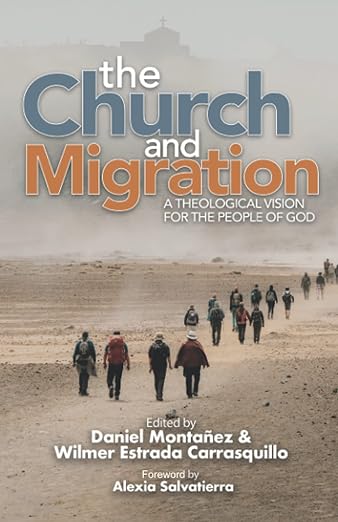
To Commemorate Migrant Sunday, we are sharing a blog that is written by local author and theologian Daniel Montañez. Daniel is founder and director of Mygration Christian Conference, a PhD student at Boston University School of Theology, and the coeditor of “The Church and Migration: A Theological Vision for the People of God.” Read below to hear Daniel share about the Christian ethic of bridge-building based out of Ephesians 2.


What are the walls of hostility we erect to exclude our immigrant neighbors? Walls can be physical, such as the 1,954-mile wall along the US-Mexico border. Hard and heavy walls made of bricks, metals, wires, and wood represent a division between people, culture, and national citizenry. Walls can also be mental or emotional, often resulting from difference in thought or feelings of fear toward those whom one may disagree with or not understand. In this way, walls can serve as a means of self-preservation and protection from the “other.” Finally, walls can be spiritual, as all too often Christians have excluded those who hold differing beliefs and convictions on religious matters. There is no shortage of reasons that feed the human proclivity to build walls; however, there are several reasons Christians are called to rise above the walls we build.

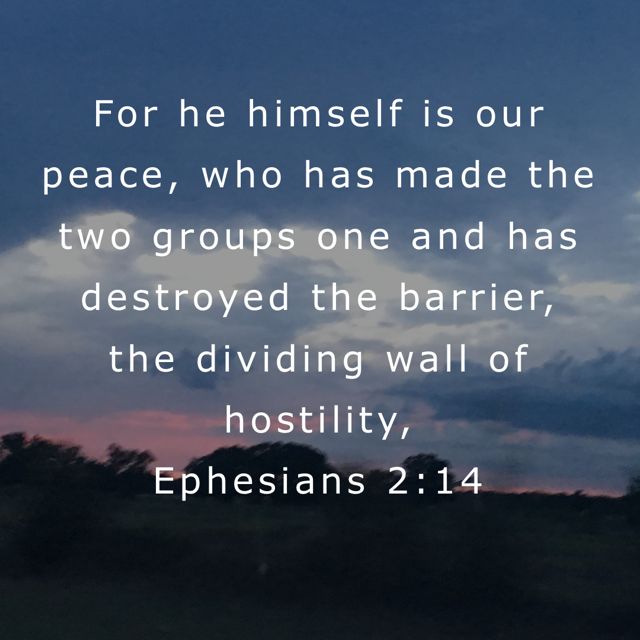
The book of Ephesians introduces us to a Christian ethic of bridge-building. In chapter 2, verses 14–18, Paul writes,

“For he himself is our peace, who has made the two groups one and has destroyed the barrier, the dividing wall of hostility, by setting aside in his flesh the law with its commands and regulations. His purpose was to create in himself one new humanity out of the two, thus making peace, and in one body to reconcile both of them to God through the cross, by which he put to death their hostility. He came and preached peace to you who were far away and peace to those who were near. For through him we both have access to the Father by one Spirit.”

The two groups Paul describes are Jewish and Gentile believers. There was much hostility between these two people groups in the Old Testament, as the Jews were considered God’s chosen people, according to the covenant relationship established with the nation of Israel. The practice of circumcision served as a physical sign of Israel’s covenant relationship with God and operated as a means of citizenship into the Israelite community and inheritance of God’s promises. Because the Gentiles were uncircumcised, they did not belong to the covenant community, as they were, as Paul describes, “without hope and without God in the world” (Eph 2:12).

However, while the Gentiles were not included within the promises of the Mosaic covenant, this is not to say that God was not at work building bridges between Jews and Gentiles in the Old Testament. The Greek word for Gentiles is “ethnos,” meaning nation or people. It is within the Abrahamic covenant that God promises to Abraham that “through your offspring all nations on earth will be blessed,” (Gen 22:18), signaling the coming together of Jews and Gentiles through a messianic figure from Israel. Jesus Christ is the fulfillment of this messianic promise and the one who builds bridges between Jews and Gentiles, establishing a model and an ethic for Christian living.

Many biblical scholars believe the wall Paul was referring to in this passage was “the Mosaic law itself with its detailed holiness code.” It served as an ideological fence around Israel, keeping outsiders and foreigners from participating in the social, cultural, and religious life of the community. The crucifixion of Christ served to destroy the wall that separated Jews and Gentiles from fellowship with one another. Furthermore, Christ’s sacrifice on the cross served as the atonement for humanity’s sins and the restoration of their relationship with God the Father. For this reason, it can be stated that Jesus Christ did not come to build a wall, but a bridge between God and humanity, and between Jews and Gentiles. It was a project so costly that only the riches of heaven could pay for this bridge through Christ’s blood on the cross.
What, then, are the implications of a Christian ethic of bridge-building for our world today? First, it calls us to move from an ethic of exclusion to embrace. In “The Church and Migration: A Theological Vision for the People of God, which I coedited with Wilmer EstradaCarrasquillo, Estrada-Carrasquillo posits an ethic of hospitality as a necessary component for embracing our immigrant neighbors. He writes, “Hospitality to migrant communities can take many shapes and forms. But to serve them well, we must look beyond the surface. We must make a concerted effort to know them and develop intentional relationships.” It is only by embracing an ethic of encounter with our immigrant neighbors that we discover the common ground on which we stand, and the prospect of embracing one another as members of the kin-dom of God.

Second, a Christian ethic of bridgebuilding calls us to move from a mindset of scarcity to opportunity. All too often we hear negative rhetoric of immigrants stealing American jobs and the economic burden immigrants have on the US economy. While these claims are often unsubstantiated, what is frequently overlooked is the revitalization immigrants are bringing to the life of the church. The Latino immigrant church, for example, is rapidly growing in the United States, buoyed by a Hispanic population that is expected to grow to 110 million by 2060.

Carolyn Dirksen argues, “If the American Church can embrace their spiritual brothers and sisters in this great migration, they will reaffirm their commitments to Christ and invite a kind of rejuvenation the Church has seldom seen.” To move from scarcity to opportunity means to believe that not only are there enough materials for building bridges, but that we can also partner in the work of building a better future together.

Finally, a Christian ethic of bridge building demands that Christians move from a place of fear to faith. According to Alejandra Guajardo-Hodge, “Fear may be a natural response to these modern-day challenges but is not the response that God demands of us. Love is the only way to face the challenge of the shifting world in God-honoring ways.” To choose faith over fear means to tear down the hostile walls of partisan politics that divide our nation, and to cast a new vision for the role of the church in the public square—“not to further exacerbate the problems of this world, but to become a part of the solution,” as we write in The Church and Migration.

The social ethic that Christ sets before us is a call to embrace the opportunity by faith to tear down the walls of hostility that divide us from our neighbors and to build bridges toward a holistic vision of peace, justice, and the flourishing of all humankind.


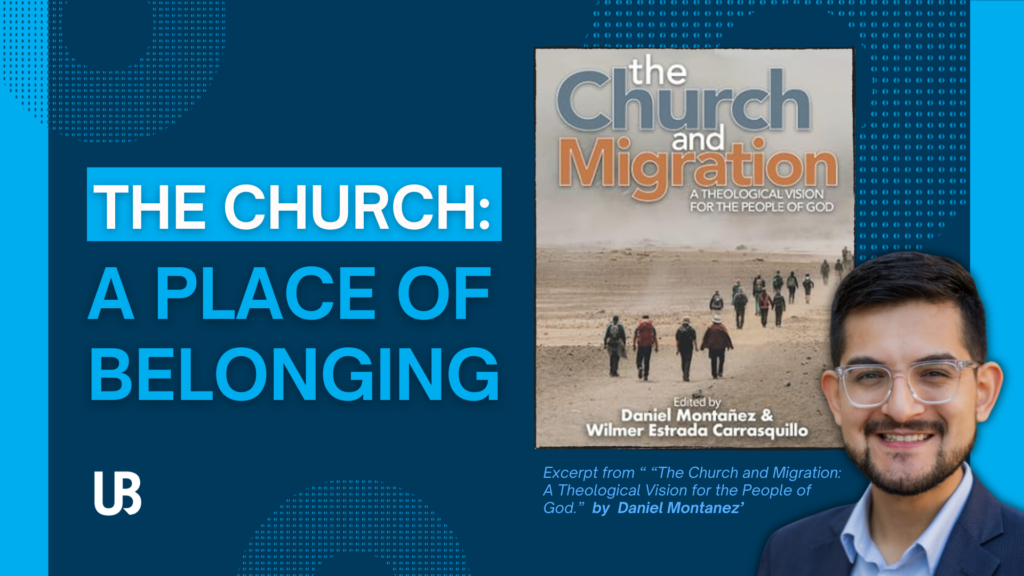
This article was originally published in the Boston University School of Theology 2023 Magazine entitled “Reaching Across.” You can also check out Daniel Montanez’ book “The Church and Migration,” which serves as an accessible and educational guide for pastors, church leaders, and parishioners to better understand what the Bible says about God’s heart towards people on the move and how these truths can be applied in our modern world. It is available for purchase in English and Spanish. 
Written by uniteboston · Categorized: Blog, Immigration & Belonging · Tagged: community, jesus, peace, unity, university

Feb 19 2024

The Church: A Place of Belonging

In an age of global migration and mass displacement, what is the responsibility of the Church to respond to the needs and realities of migrant and displaced communities? All too often, the narrative surrounding immigration is depicted within mainstream media as highly political and divisive. In evangelical and charismatic circles, many Christians are more likely to be influenced by what the media says about immigration than the Bible.

For our week on “Believe,” we are sharing a piece entitled, “The Church: A Place of Belonging” which is a chapter from local author Daniel Montanez’ book entitled, “The Church and Migration: A Theological Vision for the People of God.” The book seeks to transform the narrative of immigration by approaching it from the larger lens of human migration. By exploring the theme of human migration throughout the grand narrative of Scripture, this resource sets forth a theological vision for understanding migration from a Biblical-theological perspective. Read below to hear some practical ways in which Christians can get involved in serving migrant and displaced communities.


The Sojourner, the alien, the foreigner, the exile, the refugee, the immigrant, or whatever name is used to refer to those who may not be like us or from among us, still refer to persons who are created imago Dei and deserve the treatment afforded to everyone created as such. Just as the Temple in Jerusalem, with its imposing structure and radiant splendor, stood as a representation of the God to whom it is was constructed and dedicated, so also is the Body of Christ, the Church, the representation of God in the world today. It is, therefore, the responsibility of the Church to be Christlike in its actions and treatment of people. And the church, as a building or locale is to be equally welcoming to those who may not be part of the Body of Christ—the “other.” 

Immigrants make the move from one country or location to an other because they might be seeking safety from a dangerous situation in  their own land, looking for employment to help provide for their families, looking to start a new life in a foreign land, etc. Despite the variety of those mainly extenuating circumstances in which the immigrant population finds itself, the Bible gives only one way in which to treat them—with love and compassion—because the God is the One who loves them, and the Body  of Christ follows the Head of the Church. Additionally, Israel was constantly reminded that they, too, were sojourners: “Love the sojourner, therefore, for you were sojourners in the land of Egypt”(Deut 24:14). When they went to the temple to make their sacrifices they were to “declare before the  LORD your God: ‘My father was a wandering Aramean, and he went down  into Egypt with a few people and lived there and became a great nation, powerful and numerous'(Deut 26:5). In Leviticus, Israel is commanded, “When a stranger sojourns with you in your land, you shall not do him wrong. You shall treat the stranger who sojourns with you as the native among you, and  you shall love him as yourself, for you were strangers in the land of Egypt: I am the LORD your God (Lev. 19:33-34).” 

Creating Places of Belonging  

How does the church become a place of inclusion for immigrants? What are their needs? How are they to be treated, and how can the church effectively minister to them? The parable of the good Samaritan (Luke 10:23-37) is a powerful example of inclusion and ministry and answers the question about how to  practice inclusion. That is done by showing compassion to the other when  the other is a stranger and even an enemy. The actions of the good Samaritan are non-judgmental and carried out only in compassion for the person in need. There is no questioning of the legality of travel, or intentions at  point of destination, or even of the moral character of the wounded person,  i.e., whether or not he is a “bad” person and not worthy of assistance. Help is rendered based on the need of the person and goes way past the bandaging of his wounds to his healing and wellbeing. 

Miroslav Volf, in what is probably his most popular work, Exclusion and Embrace: A Theological Exploration of Identity, Otherness, and  Reconciliation shows his own wrestling with showing compassion to the other: that as he tries to answer the question posed to him by his Professor Jürgen Moltman about embracing his enemy—the Serbian fighters: “But can you embrace a četnik?” After giving it some thought, he knew that his response would be: “No, I cannot—but as a follower of Christ I think I should be able to”(9). The church in this country has not always been a place of inclusion. It is a reflection of the society in which it finds itself. But there is hope that we can become a place of belonging. Tex Sample has said that in dealing with those who are different to us we must “deal respectfully, authentically, and transformatively.” To do so “could lead to a quantum leap in the way the church understands the faith, reckons with and makes moral decisions, celebrates Christian faith, and moves in a mission to the world” (139).

That mission to the world is to minister to its needs. Faith is not detached from providing tangible ministry to those in need, as so clearly explained in James 2:14-26. Martin Luther King, Jr. in his book Strength to Love argues that “A religion that professes a concern for the souls of men and is not equally concerned about the slums that damn them, the economic conditions that strangle them and the social conditions that cripple them, is a spiritually moribund religion” (250).

A church can do the following to become a welcoming place of belonging to immigrants: 

  1. Be a welcoming by opening its doors to them. Have programs and  resources that they need even without preaching to them: ESL classes, GED classes, computer classes, child-development classes, after-school classes, and care, etc. 
  2. Help with their specific needs. To do so effectively, the church needs to know who lives in the community, town, or city. Who  are they trying to reach? Who can they reach most effectively with  their resources and human capital (members and workers)? Immigrants in the neighborhood need access to immigration assistance and information, child-care, translation services, food and  nutrition, clothes, furniture, etc. As a church in a neighborhood that is 73% Hispanic with a majority being first generation immi grants from Central America and Mexico, our church aims specifically at reaching that population and those who help ministering to their needs. We share resources with the “Clínica Santa María”  next door and try to minister to their staff also as caregivers.
  3. Adopt a family, mentor parents, teens, etc. Recently arrived families can be paired with families who have been in church for a while and who can help them during their adjustment period. Mentoring programs for family members and, especially, teens  are very effective. 
  4. Make church a host site for workshops, conferences, community action and meetings on issues that have to deal with immigration,  social justice, racism, etc. Offering the use of the local church  building and facilities is a good way to get the community to feel  welcome and have a sense of belonging to this important house of faith in their community. There are always social work organizations, educational institutions, various non-profits, etc., that are looking for spaces in the community to offer their programs.
  5. Be a friend and loving neighbor. Recognize important dates in the community and celebrate the heritage of the members of the community. Celebrating Hispanic Heritage and Black History Month, Independence Days, etc. help the community see the church as a place to which they belong, and which shares their moments of  joy and celebration. 

As a recently arrived international student in a small southern town which has its history of struggles against racism, I was welcomed by a church and a family that “adopted” me and helping me get acclimated to life in this country demonstrating the love of Christ. In difficult moments, they served as advocates helping to fight for justice and even opened their home when I was unable to afford to live in campus housing. The “Adopt-a-Student” program of that church gave me something to which I could  belong—a family, a church, a denomination, and the Body of Christ. It was a tangible way for a local church to embrace an immigrant.

Churches must continue to envision and embrace a world and their communities with more immigrants and accept their mandate to represent Christ and be a place of belonging for sojourners, aliens, and immigrants.


But Wait! There’s More…

This is a chapter from Daniel Montanez’ book “The Church and Migration,” which serves as an accessible and educational guide for pastors, church leaders, and parishioners to better understand what the Bible says about God’s heart towards people on the move and how these truths can be applied in our modern world. It is available for purchase in English and Spanish. 
Our page “A Sanctuary for Strangers” also has a variety of other pressing action steps that churches can take to support our new neighbors.

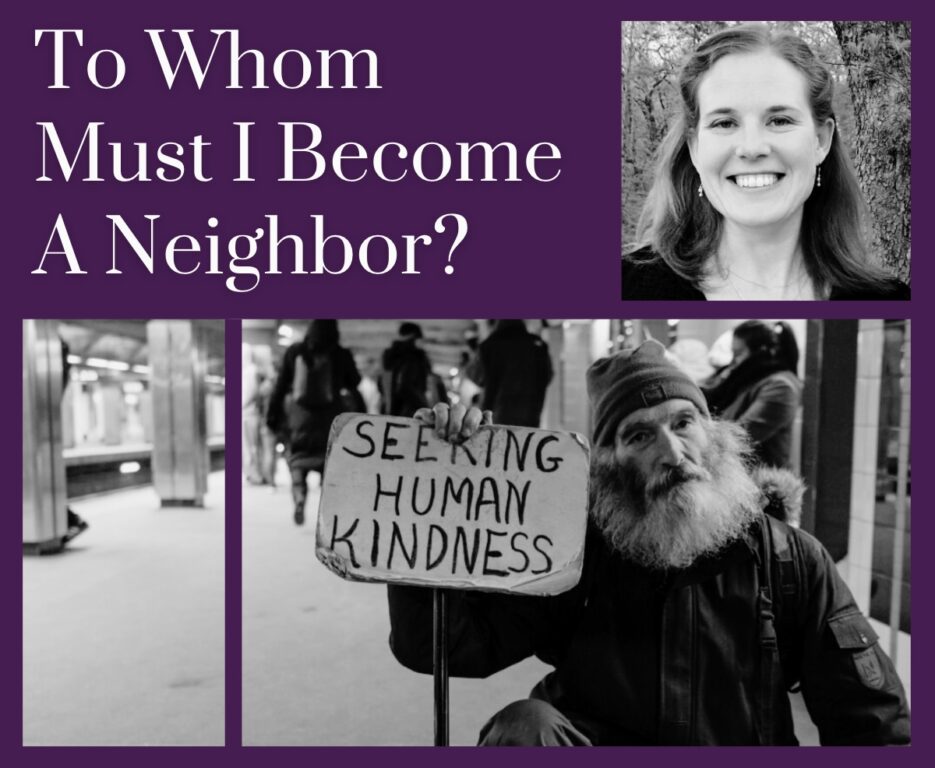
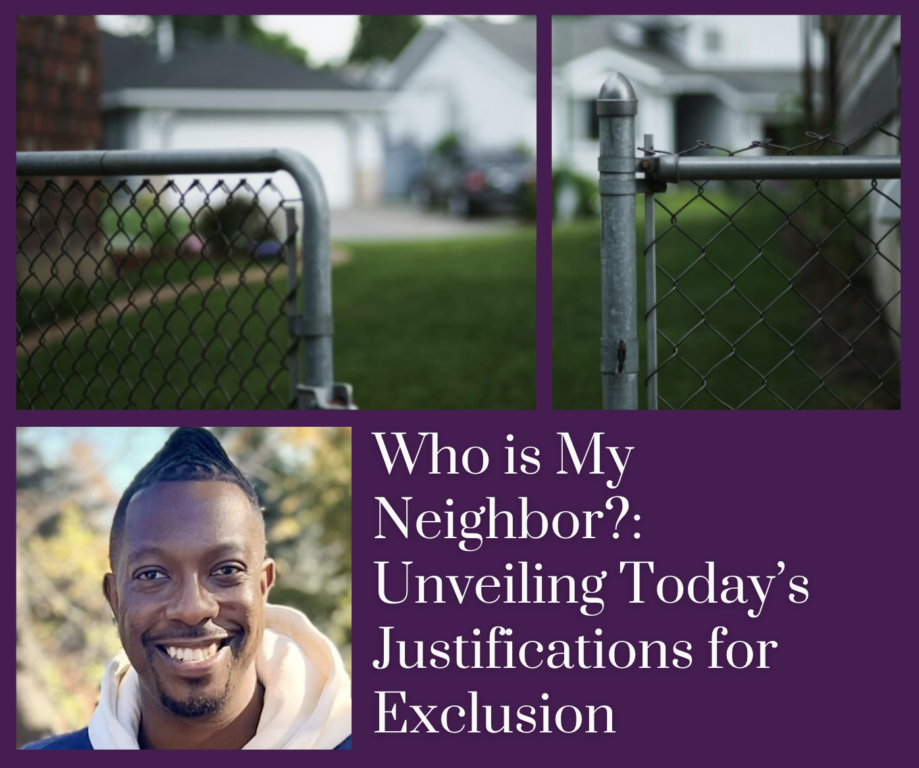
There have been two other articles written by UniteBoston Staff exploring themes in the Good Samaritan: Rev. Kelly Fassett invites us to consider, “To whom must I become a neighbor?” and Rev. Devlin Scott challenges us to consider how we might inadvertently seek to justify ourselves instead of fully embracing Jesus’ radical acceptance.

Written by uniteboston · Categorized: Blog, FAITH & JUSTICE, Immigration & Belonging, Who is My Neighbor? · Tagged: community, neighborhood, reconciliation, uniteboston, unity

Feb 07 2024

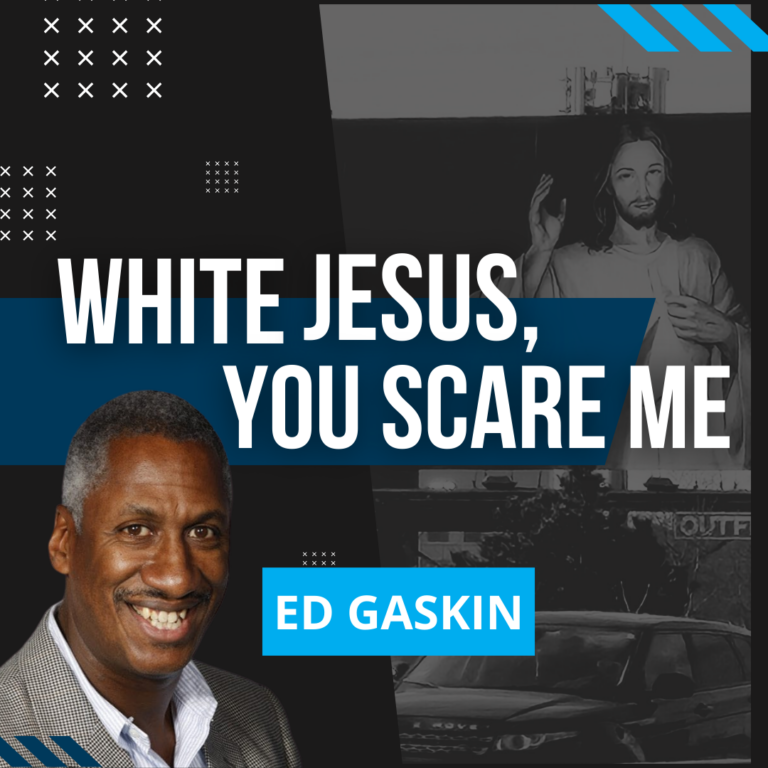
White Jesus, You Scare Me

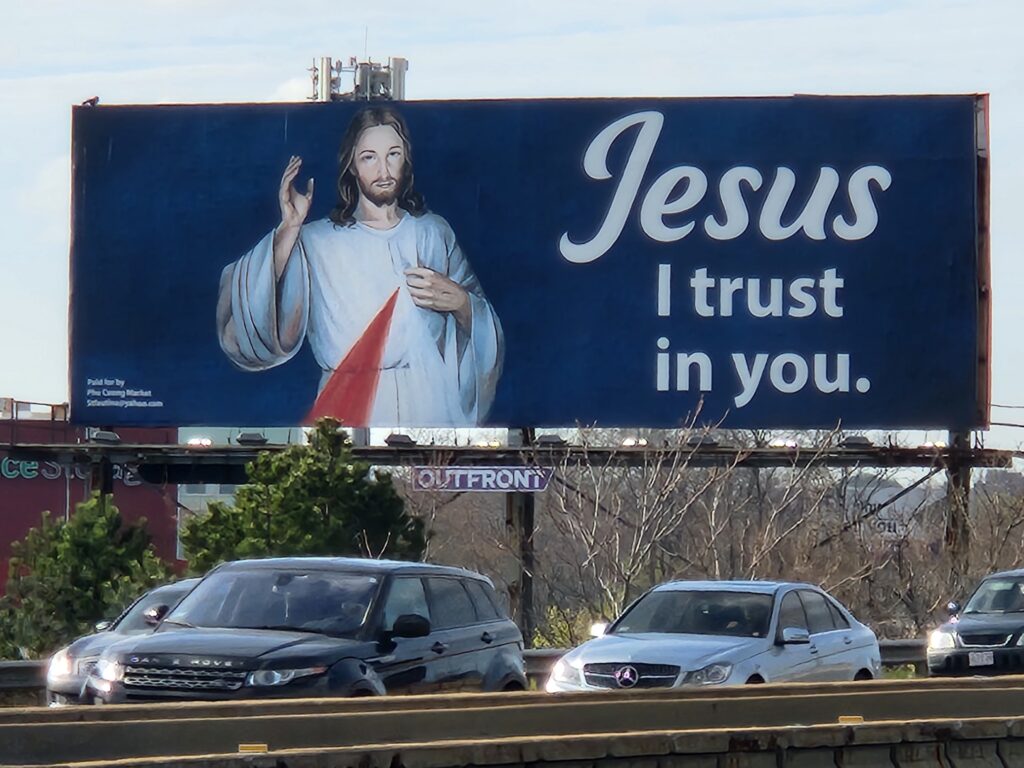
Ed Gaskin is our featured blogger this week. Ed is a Black Protestant Christian running Greater Grove Hall Main Streets; he attends Temple Beth Elohim in Wellesley as well as Reservoir Church in Cambridge. He has also co-taught a course with professor Dean Borgman called, “Christianity and the Problem of Racism” at Gordon Conwell Theological Seminary for over 25 years. Read below to hear Ed describe his reflection on a billboard on I-93.


As I drive along I-93, I see a billboard in Dorchester of a white, pale Jesus who looks more like a scary ghost from a horror movie than the Jesus I have come to know in my spiritual journey. I consider myself a Judeo-Christian, practicing both Judaism and Christianity. On any given weekend, you will find me at Shabbat services on Friday and in church on Sunday. I am a conservative Christian who believes in the fundamentals of the Christian faith when it comes to traditional Christian doctrine. 

When I see a ghost-like Jesus, it scares me, and it should scare you too. The ghost-like Jesus is a political statement, and the political values and ideas it represents are scary: primarily white supremacy and white nationalism. In my article, “Whitewashed: How a Jewish and brown Jesus became an Aryan,” I explain the history and politics around the creation of the white Jesus. 

That white Jesus has always been on the wrong side of history, starting with Martin Luther, the father of the Protestant reformation, who was deeply antisemitic. Some scholars have said the Holocaust would not have been possible without his teachings. White Supremacist thinking reflected in the church and state led to the Doctrine of Discovery, which established a religious, political, and legal justification for colonization and seizure of land not inhabited by Christians. 

The Doctrine of Discovery was a church doctrine, not a national political policy, yet it was cited in U.S. Supreme Court decisions as late as 2005 and formed the basis for the 19th century concept of Manifest Destiny — the belief that the United States was destined by God to expand its dominion and spread democracy and capitalism across the entire North American continent. Through Manifest Destiny, the United States justified the forced removal of Native Americans and other groups from their homes. Similarly, the notion of American exceptionalism argues that the United States is uniquely virtuous and superior to other nations, in part due to its historically Christian roots. 

It should be no surprise, then, that Germany claimed to be practicing conservative Christian values when following Hitler. Nazis worshipped the white Jesus. 

Such beliefs mixed with Christian nationalism and white supremacy form a toxic Kool-Aid ingested by too many Christians today. They worship an orange Jesus, who gazes out from billboards with his fake tan. Despite the four years of his presidency — and more on the campaign trail — during which he was documented as telling more lies than any president in history, many people who identify as Christians are still willing to say with a straight face that this grifter, this orange Messiah, best represents the Christian faith and is the person they want as commander in chief.  

Indeed, the Ku Klux Klan is a Christian organization, and those who participated in the January 6 insurrection describe themselves as patriots in the Christian fight for God and country. The John Birch Society, claiming God was on its side, promulgated the fear that communists had infiltrated the government in the 1950s and 1960s, leading to official steps aimed at removing them, including a blacklist. 

In contrast, consider the revolutionary groups of the 1960s: Black Power groups and others that wanted to overthrow the government. None of them, not even modern-day socialists or anarchist groups such as antifa have traveled an inch in their journey relative to Trump followers, who successfully infiltrated every aspect of our government, from the legislative branch to the Department of Justice, the judiciary, and every level of the executive branch, including the White House. 

The term “Christian terrorism” should be an oxymoron, but sadly it is not. When the extent of the planning involved in the January 6 attempt to overthrow our government was exposed, it demonstrated that Christian insurrectionists were the pros, and all the others were mere paper tigers. We should have been fearing conservative Christians in government all along, not communists or anarchists. 

The Founding Fathers understood this. In reviewing the sweep of history, they saw that consolidating religious and political power was too dangerous, so they required the separation of church and state. 

Now you know why the white Jesus scares me. 

Written by uniteboston · Categorized: Blog, FAITH & JUSTICE, Racial Justice · Tagged: cambridge, christian, home, jesus, united

Feb 02 2024

Highlights from the 2023 Week of Prayer for Christian Unity

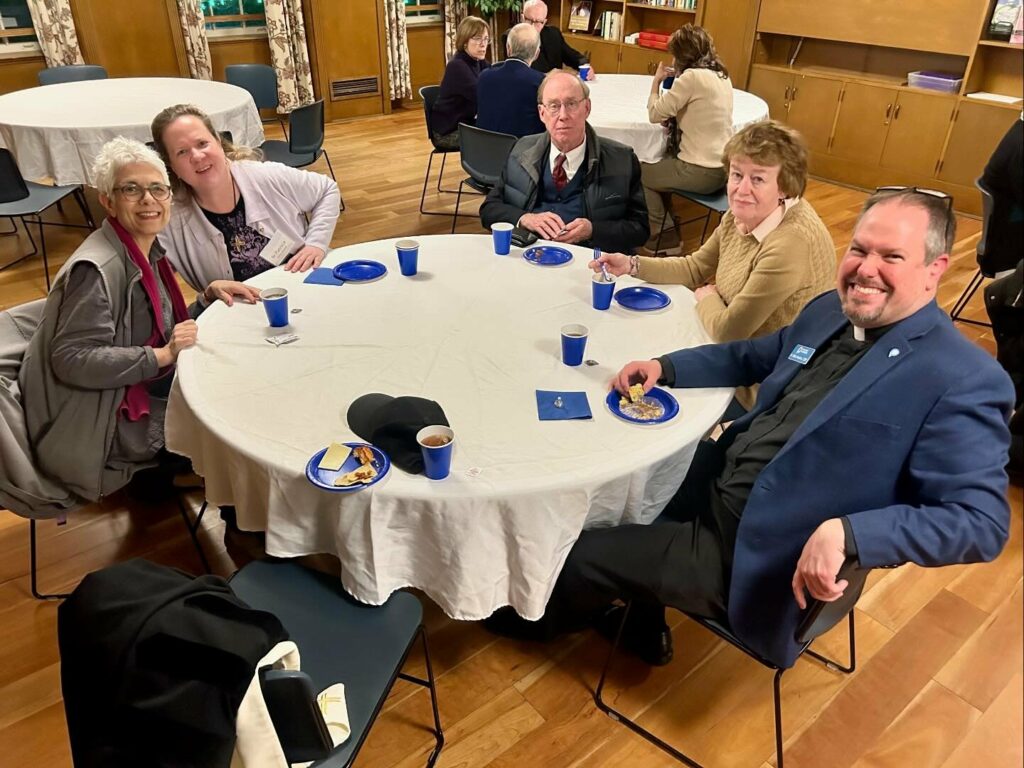
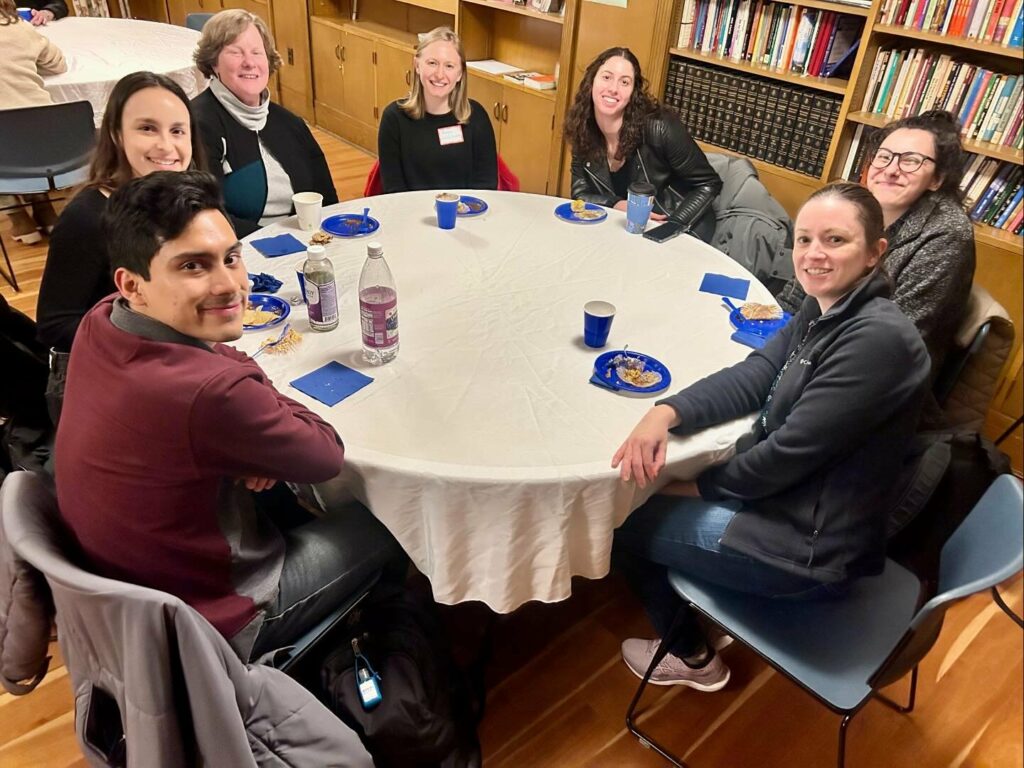
Thanks to everyone who participated in this year’s Week of Prayer for Christian Unity! This year’s theme and liturgies were developed together by Christian churches from Burkina Faso in western Africa, based on the text from the Gospel of St Luke: “You shall love the Lord your God … and your neighbor as yourself” (Luke 10:27). UB was honored to host a variety of gatherings this year, including prayer, fellowship, and also service initiatives that aligned with this theme.

UniteBoston staff members Rev. Kelly Fassett and Rev. Devlin Scott also wrote blogs exploring what this theme might mean practically for Christians in Boston. Rev. Kelly Fassett invites us to consider, “To whom must I become a neighbor?” and Rev. Devlin Scott challenges us to consider how we might inadvertently seek to justify ourselves instead of fully embracing Jesus’ radical acceptance.

Lord Jesus, who prayed that all might be one, we pray to you for the unity of all Christians, according to your will, according to your means. May your Spirit enable us to experience the suffering caused by division, to see our sin and to hope beyond all hope. Amen.

Saturday January 20 – Loving Our Unhoused Neighbors: Miracle Mile Service Opportunity

Miracle Mile Ministries is a collaborative of churches devoted to a sustained, deliberate, strategic response to the area we call “Miracle Mile,” a roughly 2-square-mile area in the South End of Boston often referred to as “Mass & Cass” or “Methadone Mile.”  It is led by a core group of six Boston-area Lead Churches (Congregación León de Judá, Antioch Community Church Brighton, Cornerstone Church, Restoration City Church, Hilltop Church and Symphony Church) and also involves a dozen or so churches and parachurch ministries from throughout Boston’s neighboring communities who faithfully support this effort, week after week.

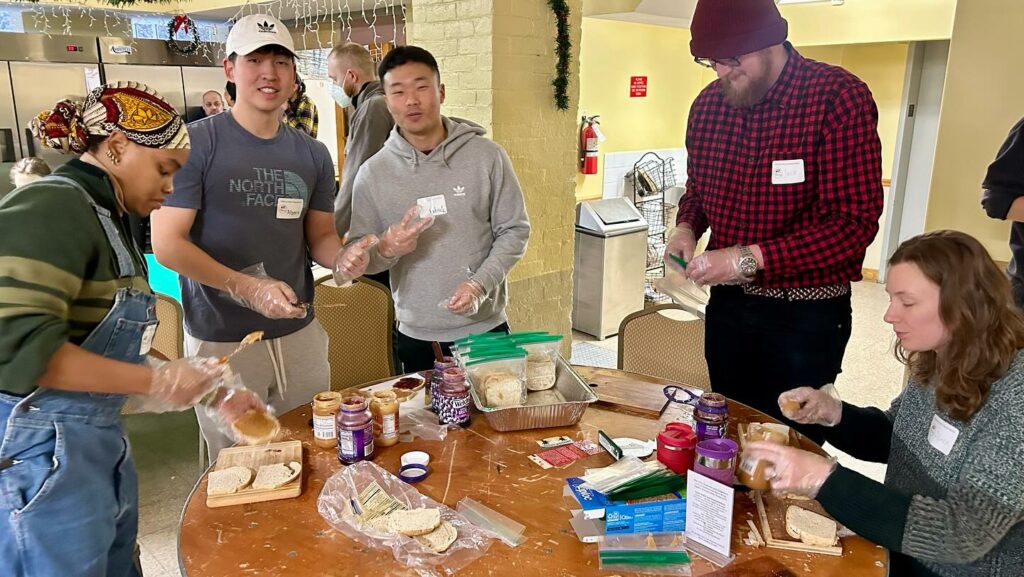
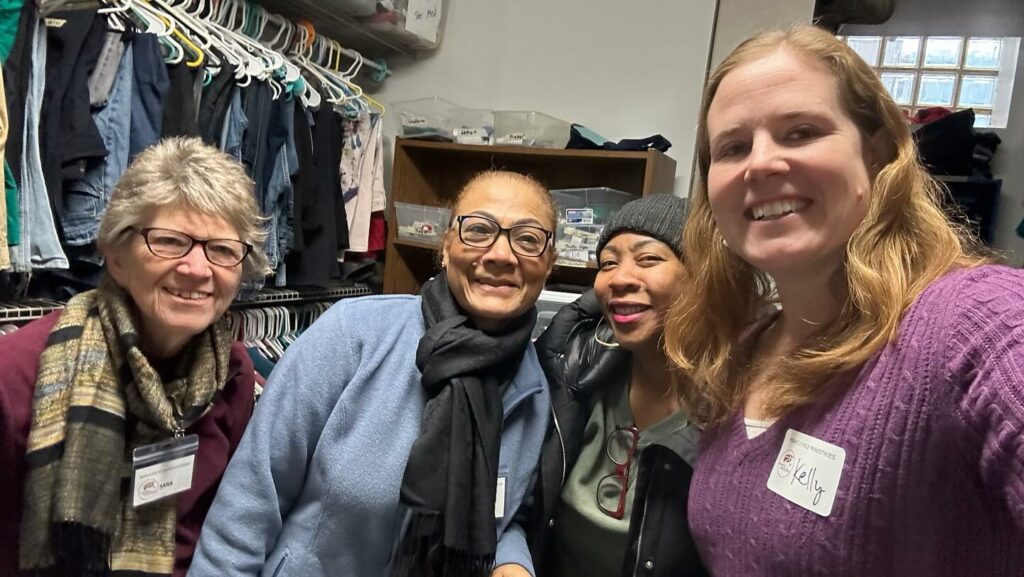
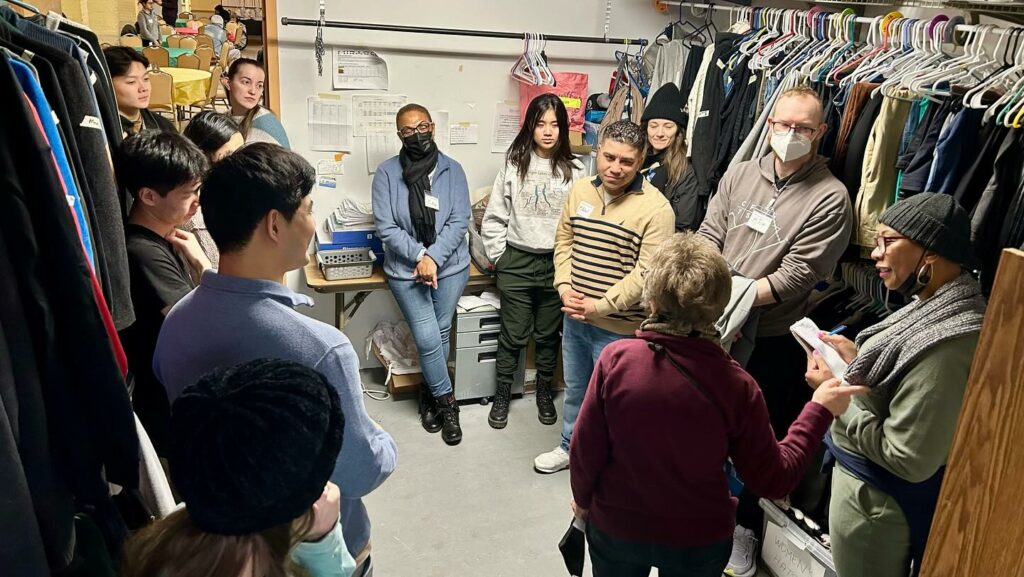
On Saturday January 20, 53 volunteers from 17 different churches served dozens of guests with a hot cup of coffee, a nourishing meal, clothing, conversation, and spiritual care. You can learn more about Miracle Mile Ministries here, and this is a regular service opportunity that you can participate in any Saturday morning! You can sign up to volunteer here. For questions, email Heidi, heidi.marie99@aol.com

“God of welcome, grant us the grace to risk embracing the stranger, tending their wounds and standing in solidarity with them. Strengthen our resolve to be kind and merciful and to act towards our brothers and sisters at all times as you do towards us.”

Sunday January 21 – An Afternoon of Christian Unity with The Focolare and Chemin Neuf Communities

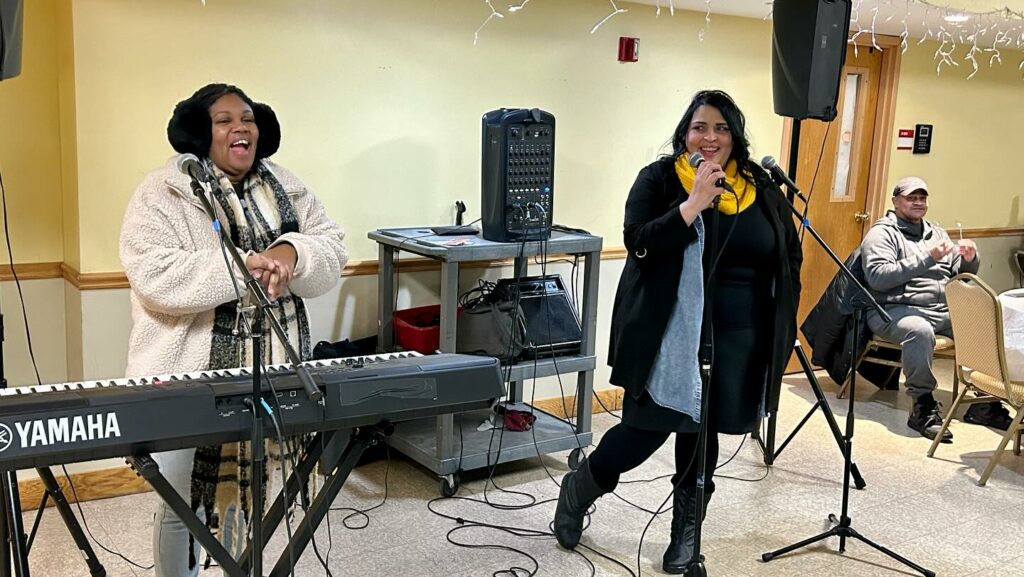
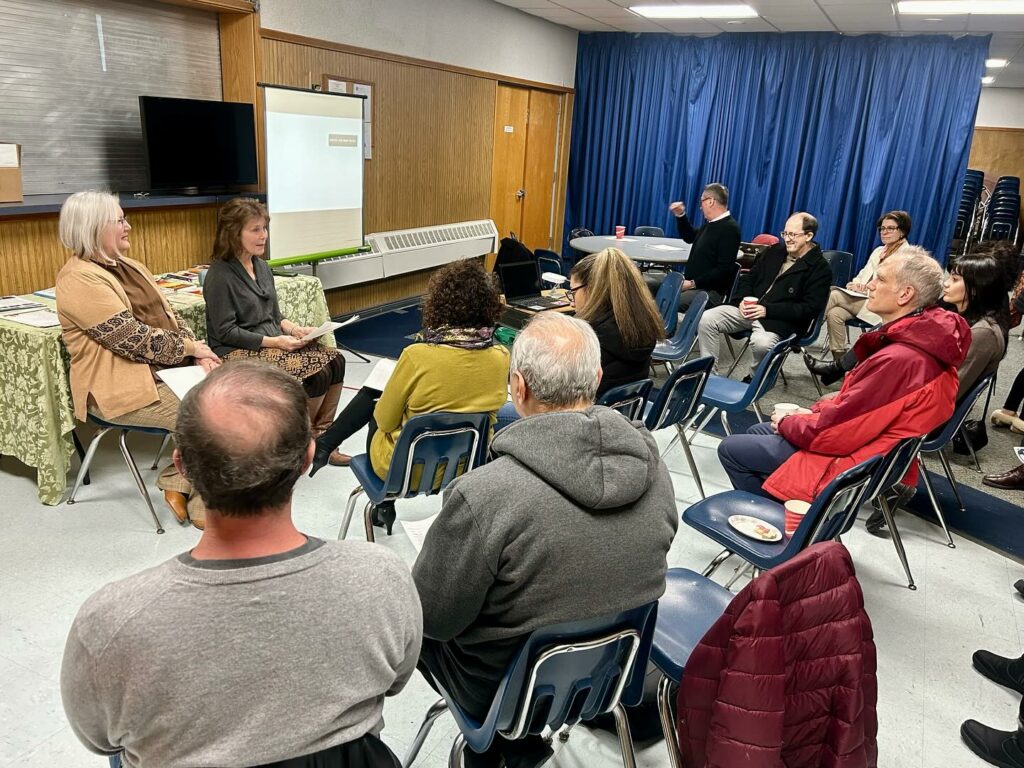
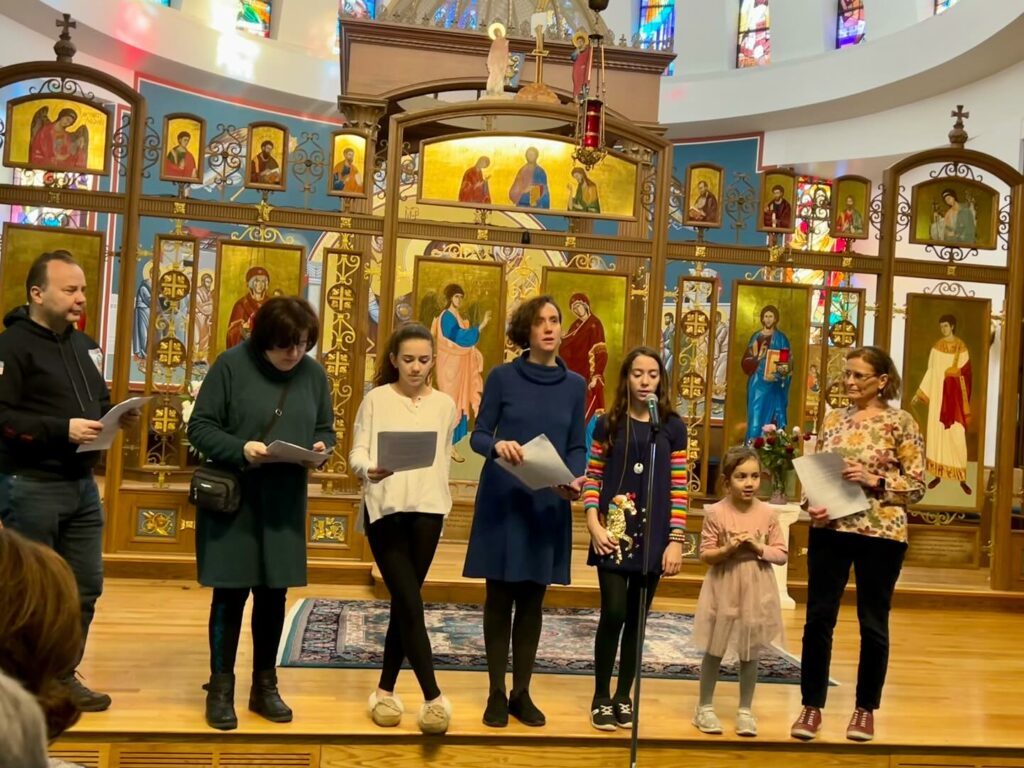
We gathered with the Focolare and Chemin Neuf communities for activities and prayer around the “love your neighbor” theme. We learned from Chiara Lubich that we must be the first to love, as that is what Christ did for us. We must develop the capacity to love Jesus in every person, as what we do or say to them we do to Jesus. The day ended with a liturgical prayer gathering in the beautiful sanctuary, including the youth leading us in the melodic choruses of “Baba Yetu / Our Father” song in Swahili.

Monday January 22 – “Love Your Neighbor” Neighborhood Dinner

Cleopatra Muhammad hosted a neighborhood dinner on Monday evening centered on the theme of “Love Thy Neighbor.” It was as intimate gathering where they ate, got to know one another and took a creative look at what it means to love our neighbor. She said, “My favorite part was hearing and seeing people’s creative take on the story of the Good Samaritan – through poetry, re-imagining the story in a modern day setting, free write, and drawing.”

Tuesday January 23 – Taize Prayer Gathering

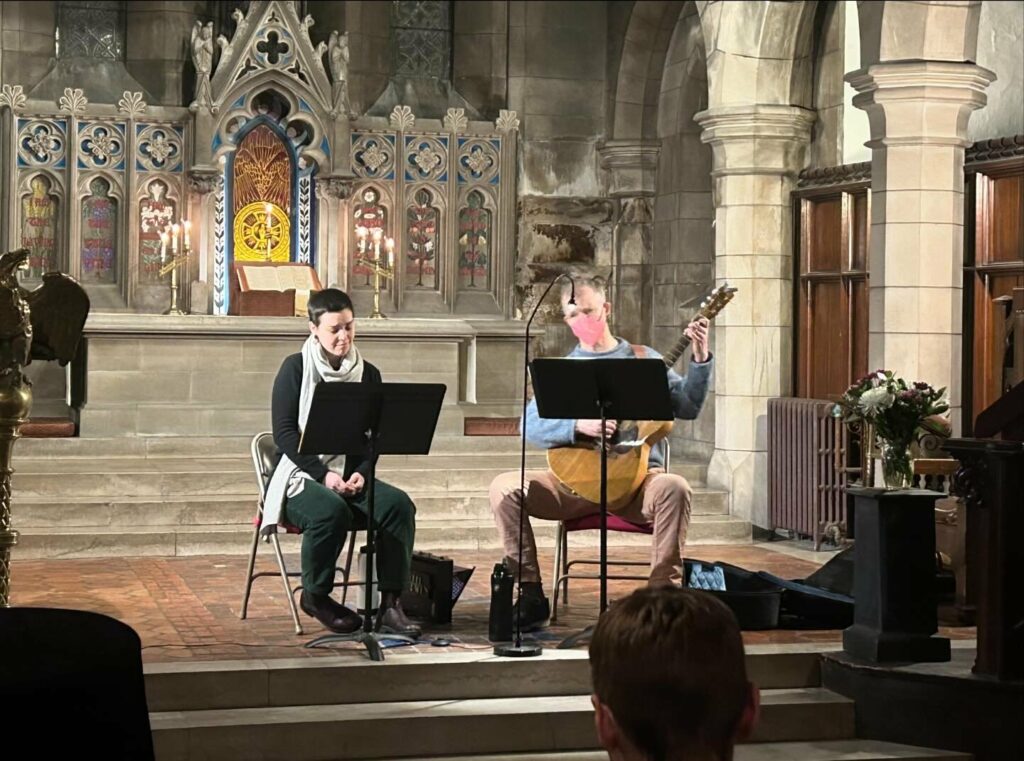
Tuesday evening’s Taize prayer service in Cambridge was absolutely beautiful visually and musically. It incorporated meditative song, silence and prayer around Jesus’ call to love our neighbor. The Taizé Community is an ecumenical Christian brotherhood in Burgundy, France, composed of over 100 brothers from all over the world, from Catholic and Protestant traditions, a true “parable of community” that wants its life to be a sign of reconciliation between divided Christians and between separated peoples.

Thursday January 25 – Christian Unity Prayer Gathering

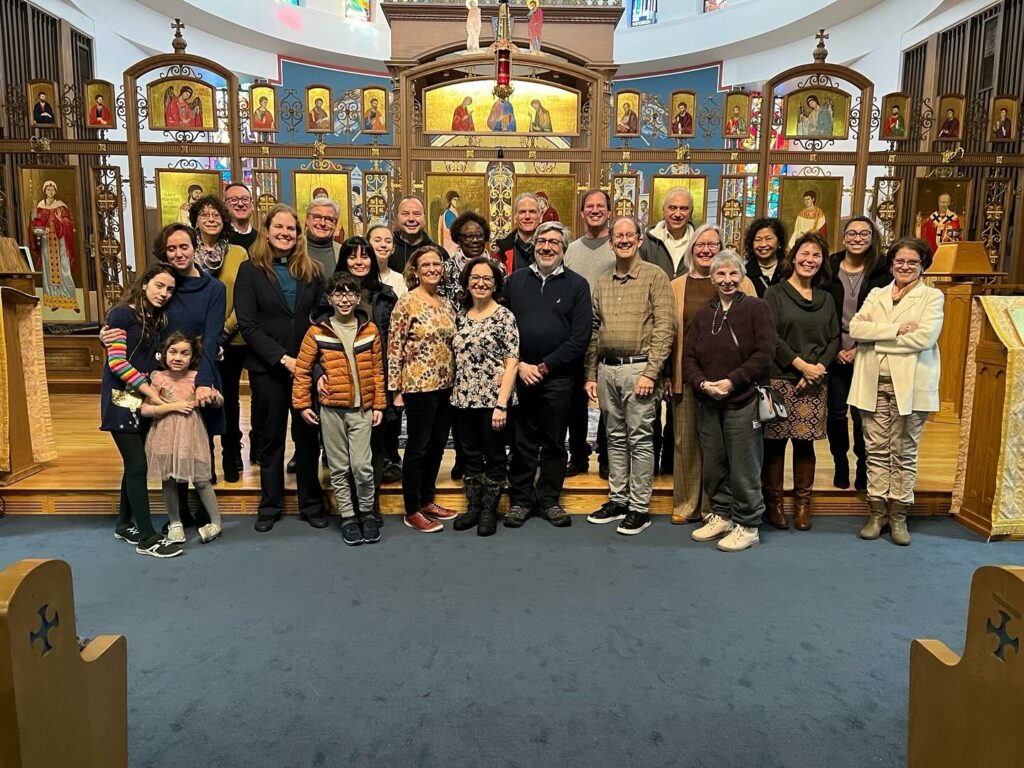
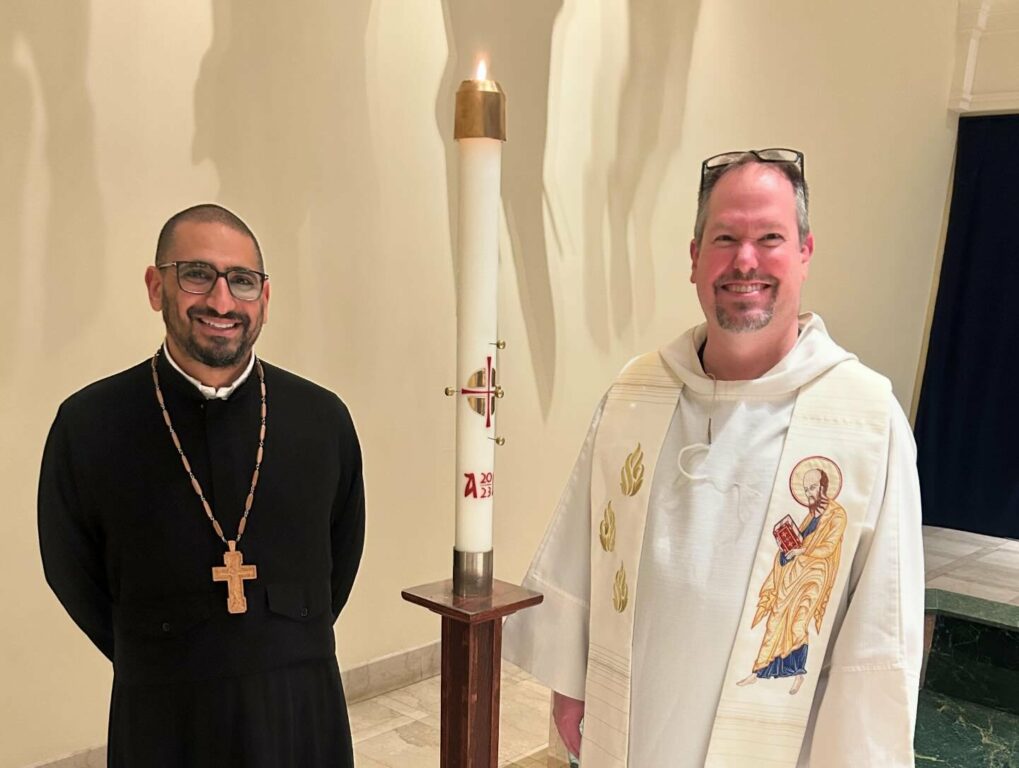
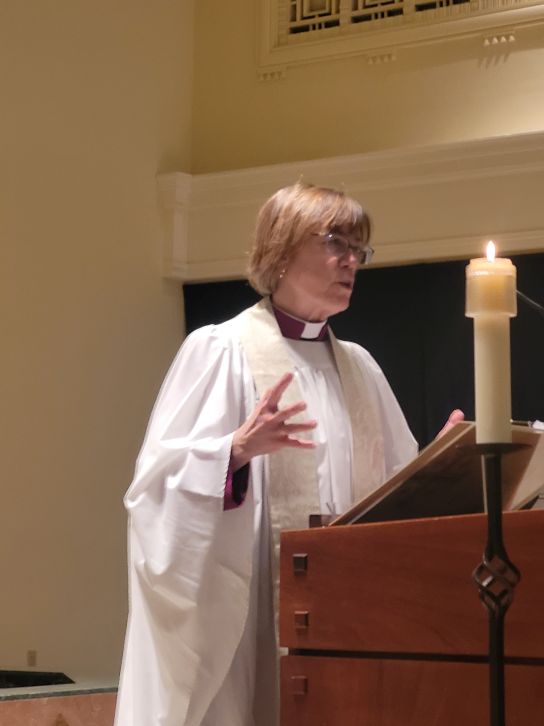
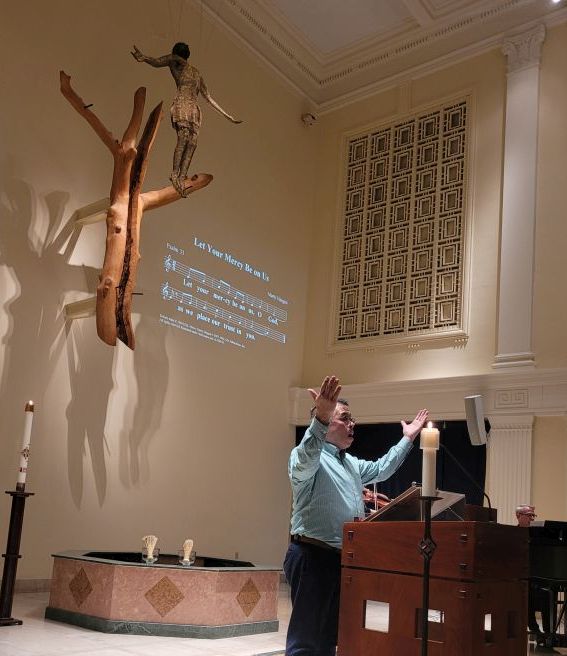
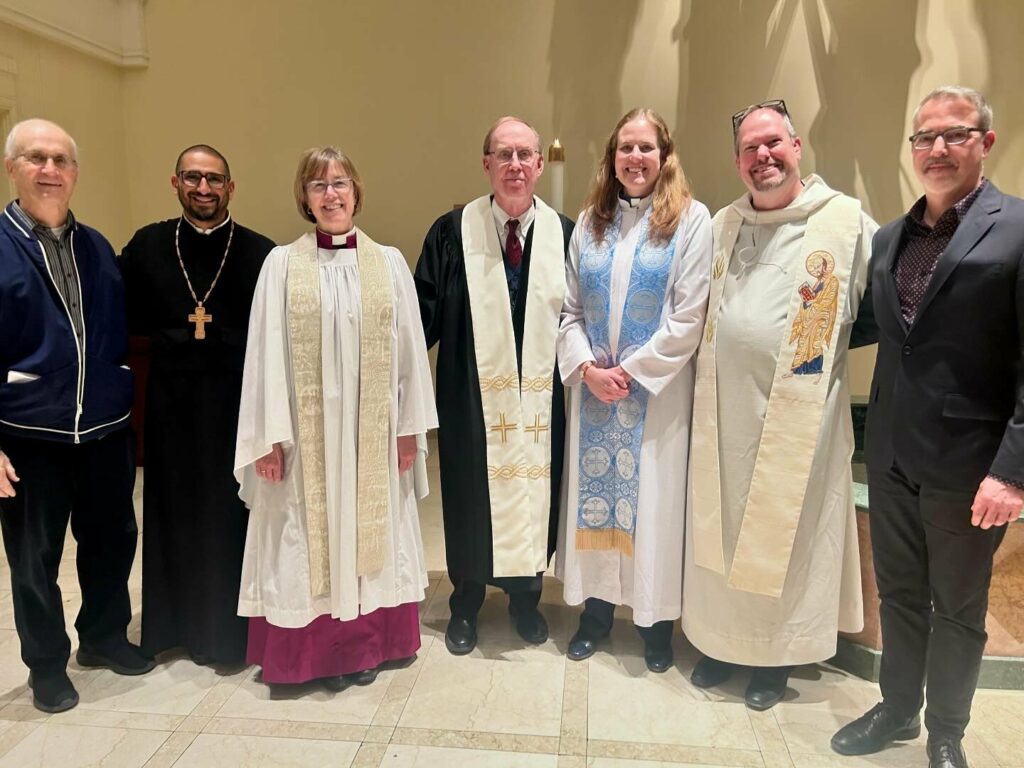
We had the privilege and honor of praying with clergy representing Catholic, Orthodox, Baptist, and Episcopal traditions at the Paulist Center and Chapel on Thursday evening for the Octave of this Week of Prayer for Christian Unity. It was an incredible time of prayer and ecumenical encounter as we enjoyed beautiful music, heard the call to care for creation by Dean Amy McCreath, and prayed for the needs of one another. To God be the glory!

Above: Clergy at the Closing gathering for the Week of Prayer for Christian Unity. From left to right: Fr. Tom Ryan (Catholic), Fr. Mina Kaddis (Orthodox), Dean Amy McCreath (Episcopal), Rev. Colin Leitch (Swedenborgian), Rev. Kelly Fassett (Baptist), Fr. Rich Andre (Catholic), Music Director Nourmand Goui

God, our healer, we who are scattered like sheep without a shepherd, ask you to gather us into one fold. Enliven us by your Spirit and send us again, two by two, to be the light of the world and the salt of the earth.

Written by uniteboston · Categorized: Blog, EVENTS & YEAR HIGHLIGHTS, Unity & Reconciliation, Who is My Neighbor? · Tagged: christian unity, reconciliation, south end, uniteboston, unity

Jan 25 2024

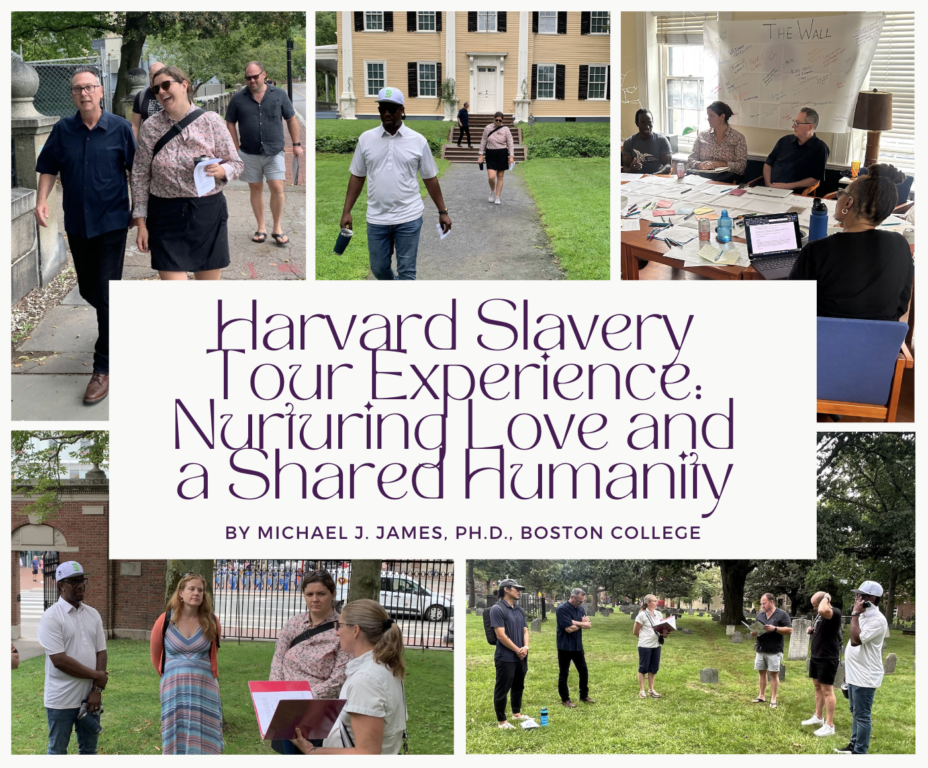
Harvard Slavery Tour Experience: Nurturing Love and a Shared Humanity

In our final blog around the theme of “Love Thy Neighbor” from the Week of Prayer for Christian Unity, Dr. Michael James shares some recent learnings and reflections of how he is applying his learning from the experiences he has had as a member of our Christian unity cohort. Michael James is a Resident Minister and faculty member of Boston College and also is a member of the Focolare Movement, a lay ecclesial movement of the Roman Catholic Church who seek to promote brotherhood and to achieve a more united world in which people respect and value diversity in alignment with Jesus’ prayer “that they would be one” (Jn 17:21). 

Here, Michael shares how his experience during the Harvard Slavery Tour renewed his commitment to building unity through the “art of loving.”


In the face of a climate on most college and university campuses that are too often marked by isolation, fragmentation, discontinuity, competition, and abject individualism, my experience during the Harvard Slavery Tour reminded me of my responsibility to build processes of repair on my own university campus that cultivate a culture of unity through practicing the “art of loving.” By practicing the “art of loving,” I can participate in generating the counter currents of interdependence, relational action, dialogue, reciprocity, and fraternity. 

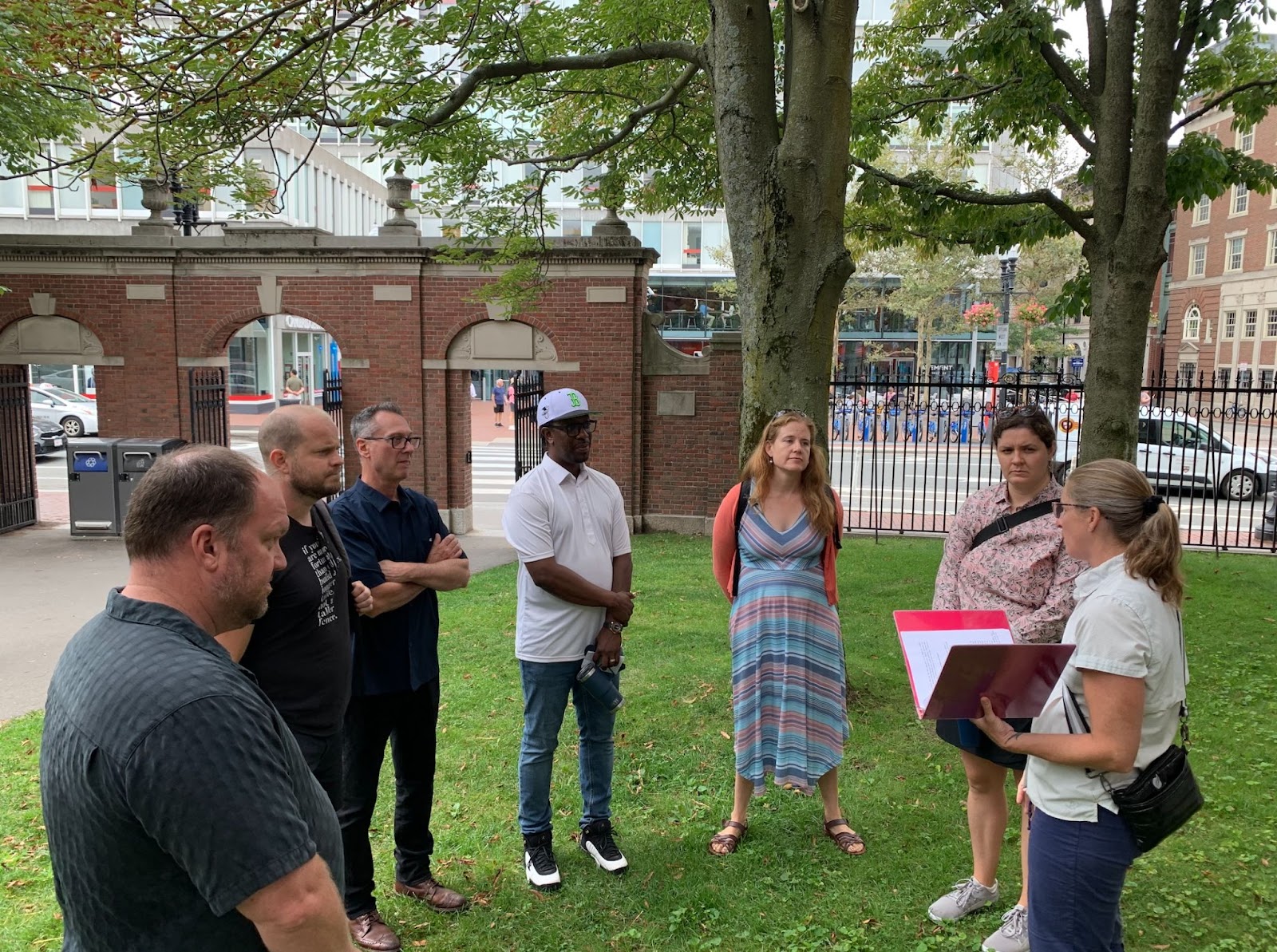
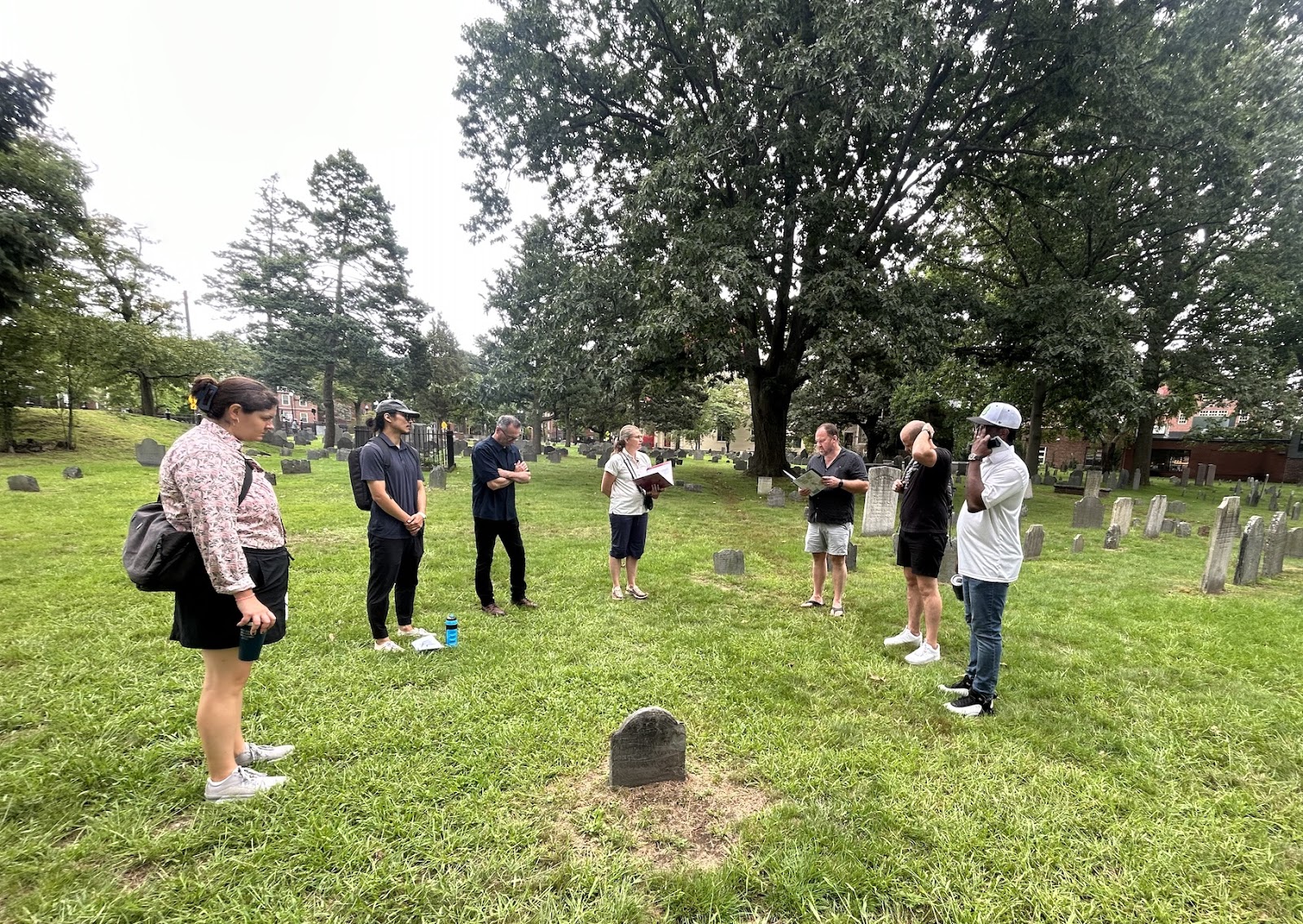
In the Harvard & the Legacy of Slavery Tour Experience, we explored Harvard University’s entanglements with the institution of slavery. We walked for two hours, making ten stops in and around the nation’s first college campus, re-examining familiar terrain and learning about a part of Harvard’s history that has long been hidden in plain sight. The tour helps dispel the myth that the New England region did not play a significant role in slavery, profit from human trafficking, or contribute to the erasure of countless family histories. In addition, the tour elevates stories of Black women and men whose resistance and leadership have shaped the University—and our nation. Our tour was led by Rev. Rita Powell and Pastor Dan Smith, and it was intentional about taking space for prayerful reflection to remember and process a history that has been hidden for so long – too long. 

The art of loving

My experience of walking the Harvard Slavery Tour in communion with brothers and sisters in Christ reminded me of the sacramental opportunity I have to build unity on my own campus of Boston College. Christian colleges and universities offer a distinct, formative, and transformative student development experience – the kind of experience that is animated by the life of Jesus.  Christian unity calls us to encounter Jesus in one another through love. As a faculty member I am called to live a vocation that invites all members of our campus to build unity through a practice in the “art of loving.”

The “art of loving” is demanding. It requires us to love everyone – acknowledging that our dignity and value are not external, but inherent; not dependent on what we do, but who we are: made in the image of God, the Imago Dei (Gen 1:27).  

  • It is selfless. It calls me to share the joy and pain of another person by letting go of my worn strong beliefs, opinions, and ideas in order to make the other’s perspective my own. 
  • It is generous. I am asked to be the first to love in each encounter. I ask myself, “What is the will of God in this moment with this person?” The answer is simple: to love that person who is made in the image of God. I must initiate love for the other right away, without expecting anything in return. 
  • It is reciprocal. I have come to understand, through the example of Jesus, that a person discovers his or her deepest, most authentic self by being detached from the self.  To enter into relationship, I must identify and embrace my own self-identity, while at the same time relinquishing it for the sake of the other.

 Jesus shows me through His ultimate sacrifice that I am myself, not when I close myself off from the other, but when I give myself, when out of love I lose myself in the other. In this way I actually find myself.

Embracing our shared humanity

The opportunity for reverence and reflection at the gravesites of enslaved people in Cambridge was the most formative moment for me on the Harvard Slavery Tour. I learned about Cicely and Jane, aged 13 and 22, who were the only known enslaved people buried in the Old Burying Ground, but for whom not much else is known. In prayer in front of the gravestones of Cicely and Jane, I recalled how I had grown increasingly more at peace with the weeks and then months of being sheltered-in-home during the spring and summer of 2020. Absent my daily commute to campus, I enjoyed reduced stress, more leisure time with my family, long meals and hikes in the park, and the luxury of time to read, write and work on lesson plans.  

However, the walls of silence I had built through self-isolation began crumbling. My conscience grew increasingly unsettled with each incident of violence and racism against brothers and sisters of color. I had been further jarred from my “comfort” as COVID-19 ravaged Black and Latino communities disproportionately compared to white communities. In this state of mind, I eagerly sought out sources of conversation, consolation and conversion.

James Baldwin, in his 1964 essay, Nothing Personal, spoke of the “miracle of love” that begins to “take flesh” when we encounter someone who embraces our wounds and is unafraid of making themselves vulnerable. As I reflected at that time on the national landscape of morally questionable leadership and the divisive nature of our public discourse, I recognized how prophetic Baldwin’s words were at that moment and endure today. 

Baldwin asks how we can navigate and embrace our shared humanity. He laments that “our failure to trust one another deeply enough to be able to talk to one another has become so great that people with these questions in their hearts do not speak them.” In many ways, we as a society are still deluding ourselves that wounds are something to be hidden rather than fundamental realities to interrogate. 

Reflecting more deeply at that moment on my own paralysis to act, to make the connections that this particular moment necessitated, I decided to contact Black and Latino students with whom I shared spaces of teaching and learning over the last several academic semesters. My students spoke with me from locations including Miami, Washington, DC, Los Angeles, Boston, and New York City. Each person described their frustrations with the anemic debate about who is on the right and wrong side of public violence and the murders of black people, as well as the passivity of public conversations about the best way to correct systemic injustices. As these young people shared with me their increased sense of vulnerability to COVID-19 in communities of color, the slaying of Black lives, and their persistent personal encounters with racism and police violence, I experienced their outrage, devastation, exhaustion, fear, powerlessness, and anxiety.

As I entered into my students’ suffering, I heard Baldwin’s question echo – how do I navigate and embrace our shared humanity? The answer, Baldwin proposes, does not emerge in politics or law. As much as the correcting of social evils does require radically examining and repairing our political system, any change that does not begin on the individual level will be inert, at best. I recognized that the answer will not be something one can purchase or manufacture by oneself. Instead, the only adequate answer is something from beyond ourselves.

The founder of Focolare (a lay ecclesial movement in the Catholic Church that I am part of) Chiara Lubich presents the vision of “a world united” challenges me to look beyond myself as an educator, scholar, teacher and minister. Lubich explains,

“The goal that has been assigned to education (to form the human person so as to render him or her independent) is implemented almost paradoxically, by forming the ‘person-in-relationship,’ which for us means the human person in the image of the Trinity, one who is capable of continually transcending self…” It is through this spiritual and educational practice of mutual love, to the point of becoming completely one, that we work toward the achievement of the goal of all goals, expressed in Jesus’ prayer and testament: “May they all be one.’”

Lubich’s insight is that social justice begins from a personal choice to share the suffering of our brothers and sisters. In doing so, we look at our own woundedness and openly share our vulnerability. The more we deny our humanity, the more we become blinded to others’ humanity. We forfeit the grace that comes with the miracle of love.

Conclusion

Walking the Harvard Slavery Tour helped me to renew my commitment to build a unity that requires acknowledgement of exposed systemic injustices in Catholic higher education and in the broader social context. Building unity requires me to address Catholic campus cultures that have been historically fractured by the disparities attributed to students’ socio-economic status, race, gender, sexual identity, and ethnicity. It is my hope that by practicing the “art of loving” on my own campus, I contribute to the work of repair by cultivating unity that generates countercurrents of interdependence, relational action, authentic dialogue and an ethic of reciprocity that may, by a miracle of love, begin to change 400 years of a different narrative in our city, state, and country – one that has not been based on interdependence or love. 

Written by uniteboston · Categorized: Blog, FAITH & JUSTICE, Racial Justice · Tagged: cambridge, christian unity, jesus, peace, unity

  • « Previous Page
  • 1
  • …
  • 12
  • 13
  • 14
  • 15
  • 16
  • …
  • 91
  • Next Page »


Give to Further Christian Unity

DONATE!

  • Email
  • Facebook
  • Instagram
  • YouTube

Copyright © 2026 · UniteBoston · Built on WordPress