UniteBoston

Bridging Divides Across Christians for the Flourishing of the City

  • Home
  • Events
    • Submit Event
  • Join In
    • Beloved Community Lab
    • Migrant Care and Solidarity
    • The Church and Civic Engagement
    • The ATTIC
    • Kingdom Conversations
    • Worship & Pray
    • Boston Flourish
  • About
    • UB Board, Staff & Volunteers
    • Cohorts
    • Missional Letter
    • Annual Reports
    • History
    • Christian Unity
  • Forums
  • Blog
  • Give to UniteBoston
  • Contact
  • Search

Feb 19 2024

The Church: A Place of Belonging

In an age of global migration and mass displacement, what is the responsibility of the Church to respond to the needs and realities of migrant and displaced communities? All too often, the narrative surrounding immigration is depicted within mainstream media as highly political and divisive. In evangelical and charismatic circles, many Christians are more likely to be influenced by what the media says about immigration than the Bible.

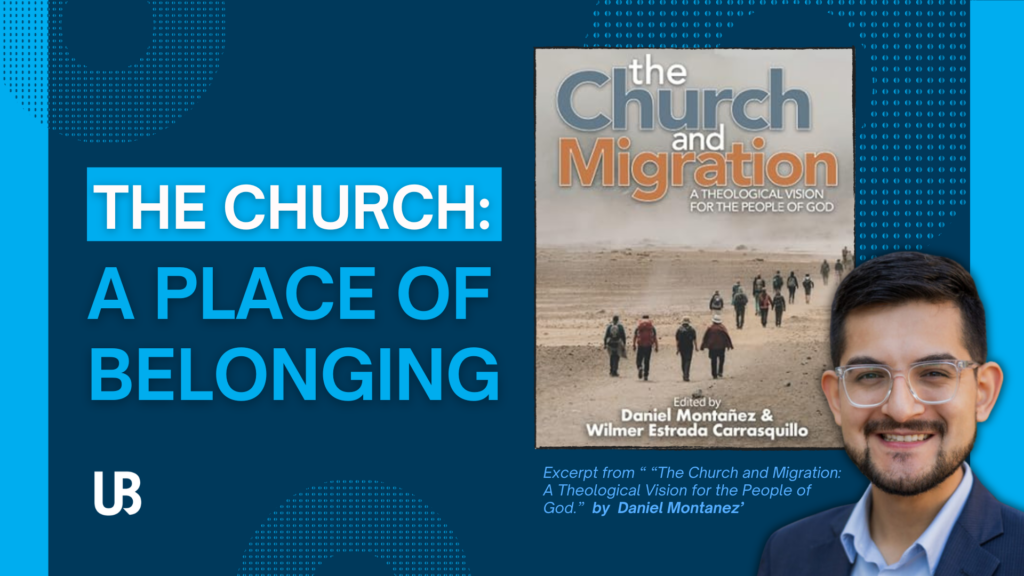
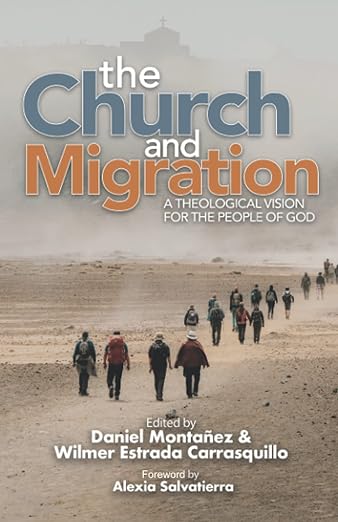
For our week on “Believe,” we are sharing a piece entitled, “The Church: A Place of Belonging” which is a chapter from local author Daniel Montanez’ book entitled, “The Church and Migration: A Theological Vision for the People of God.” The book seeks to transform the narrative of immigration by approaching it from the larger lens of human migration. By exploring the theme of human migration throughout the grand narrative of Scripture, this resource sets forth a theological vision for understanding migration from a Biblical-theological perspective. Read below to hear some practical ways in which Christians can get involved in serving migrant and displaced communities.

The Sojourner, the alien, the foreigner, the exile, the refugee, the immigrant, or whatever name is used to refer to those who may not be like us or from among us, still refer to persons who are created imago Dei and deserve the treatment afforded to everyone created as such. Just as the Temple in Jerusalem, with its imposing structure and radiant splendor, stood as a representation of the God to whom it is was constructed and dedicated, so also is the Body of Christ, the Church, the representation of God in the world today. It is, therefore, the responsibility of the Church to be Christlike in its actions and treatment of people. And the church, as a building or locale is to be equally welcoming to those who may not be part of the Body of Christ—the “other.” 

Immigrants make the move from one country or location to an other because they might be seeking safety from a dangerous situation in  their own land, looking for employment to help provide for their families, looking to start a new life in a foreign land, etc. Despite the variety of those mainly extenuating circumstances in which the immigrant population finds itself, the Bible gives only one way in which to treat them—with love and compassion—because the God is the One who loves them, and the Body  of Christ follows the Head of the Church. Additionally, Israel was constantly reminded that they, too, were sojourners: “Love the sojourner, therefore, for you were sojourners in the land of Egypt”(Deut 24:14). When they went to the temple to make their sacrifices they were to “declare before the  LORD your God: ‘My father was a wandering Aramean, and he went down  into Egypt with a few people and lived there and became a great nation, powerful and numerous'(Deut 26:5). In Leviticus, Israel is commanded, “When a stranger sojourns with you in your land, you shall not do him wrong. You shall treat the stranger who sojourns with you as the native among you, and  you shall love him as yourself, for you were strangers in the land of Egypt: I am the LORD your God (Lev. 19:33-34).” 

Creating Places of Belonging  

How does the church become a place of inclusion for immigrants? What are their needs? How are they to be treated, and how can the church effectively minister to them? The parable of the good Samaritan (Luke 10:23-37) is a powerful example of inclusion and ministry and answers the question about how to  practice inclusion. That is done by showing compassion to the other when  the other is a stranger and even an enemy. The actions of the good Samaritan are non-judgmental and carried out only in compassion for the person in need. There is no questioning of the legality of travel, or intentions at  point of destination, or even of the moral character of the wounded person,  i.e., whether or not he is a “bad” person and not worthy of assistance. Help is rendered based on the need of the person and goes way past the bandaging of his wounds to his healing and wellbeing. 

Miroslav Volf, in what is probably his most popular work, Exclusion and Embrace: A Theological Exploration of Identity, Otherness, and  Reconciliation shows his own wrestling with showing compassion to the other: that as he tries to answer the question posed to him by his Professor Jürgen Moltman about embracing his enemy—the Serbian fighters: “But can you embrace a četnik?” After giving it some thought, he knew that his response would be: “No, I cannot—but as a follower of Christ I think I should be able to”(9). The church in this country has not always been a place of inclusion. It is a reflection of the society in which it finds itself. But there is hope that we can become a place of belonging. Tex Sample has said that in dealing with those who are different to us we must “deal respectfully, authentically, and transformatively.” To do so “could lead to a quantum leap in the way the church understands the faith, reckons with and makes moral decisions, celebrates Christian faith, and moves in a mission to the world” (139).

That mission to the world is to minister to its needs. Faith is not detached from providing tangible ministry to those in need, as so clearly explained in James 2:14-26. Martin Luther King, Jr. in his book Strength to Love argues that “A religion that professes a concern for the souls of men and is not equally concerned about the slums that damn them, the economic conditions that strangle them and the social conditions that cripple them, is a spiritually moribund religion” (250).

A church can do the following to become a welcoming place of belonging to immigrants: 

  1. Be a welcoming by opening its doors to them. Have programs and  resources that they need even without preaching to them: ESL classes, GED classes, computer classes, child-development classes, after-school classes, and care, etc. 
  2. Help with their specific needs. To do so effectively, the church needs to know who lives in the community, town, or city. Who  are they trying to reach? Who can they reach most effectively with  their resources and human capital (members and workers)? Immigrants in the neighborhood need access to immigration assistance and information, child-care, translation services, food and  nutrition, clothes, furniture, etc. As a church in a neighborhood that is 73% Hispanic with a majority being first generation immi grants from Central America and Mexico, our church aims specifically at reaching that population and those who help ministering to their needs. We share resources with the “Clínica Santa María”  next door and try to minister to their staff also as caregivers.
  3. Adopt a family, mentor parents, teens, etc. Recently arrived families can be paired with families who have been in church for a while and who can help them during their adjustment period. Mentoring programs for family members and, especially, teens  are very effective. 
  4. Make church a host site for workshops, conferences, community action and meetings on issues that have to deal with immigration,  social justice, racism, etc. Offering the use of the local church  building and facilities is a good way to get the community to feel  welcome and have a sense of belonging to this important house of faith in their community. There are always social work organizations, educational institutions, various non-profits, etc., that are looking for spaces in the community to offer their programs.
  5. Be a friend and loving neighbor. Recognize important dates in the community and celebrate the heritage of the members of the community. Celebrating Hispanic Heritage and Black History Month, Independence Days, etc. help the community see the church as a place to which they belong, and which shares their moments of  joy and celebration. 

As a recently arrived international student in a small southern town which has its history of struggles against racism, I was welcomed by a church and a family that “adopted” me and helping me get acclimated to life in this country demonstrating the love of Christ. In difficult moments, they served as advocates helping to fight for justice and even opened their home when I was unable to afford to live in campus housing. The “Adopt-a-Student” program of that church gave me something to which I could  belong—a family, a church, a denomination, and the Body of Christ. It was a tangible way for a local church to embrace an immigrant.

Churches must continue to envision and embrace a world and their communities with more immigrants and accept their mandate to represent Christ and be a place of belonging for sojourners, aliens, and immigrants.


But Wait! There’s More…

This is a chapter from Daniel Montanez’ book “The Church and Migration,” which serves as an accessible and educational guide for pastors, church leaders, and parishioners to better understand what the Bible says about God’s heart towards people on the move and how these truths can be applied in our modern world. It is available for purchase in English and Spanish. 
Our page “A Sanctuary for Strangers” also has a variety of other pressing action steps that churches can take to support our new neighbors.

There have been two other articles written by UniteBoston Staff exploring themes in the Good Samaritan: Rev. Kelly Fassett invites us to consider, “To whom must I become a neighbor?” and Rev. Devlin Scott challenges us to consider how we might inadvertently seek to justify ourselves instead of fully embracing Jesus’ radical acceptance.

Written by uniteboston · Categorized: Blog, FAITH & JUSTICE, Immigration & Belonging, Who is My Neighbor? · Tagged: community, neighborhood, reconciliation, uniteboston, unity

Feb 02 2024

Highlights from the 2023 Week of Prayer for Christian Unity

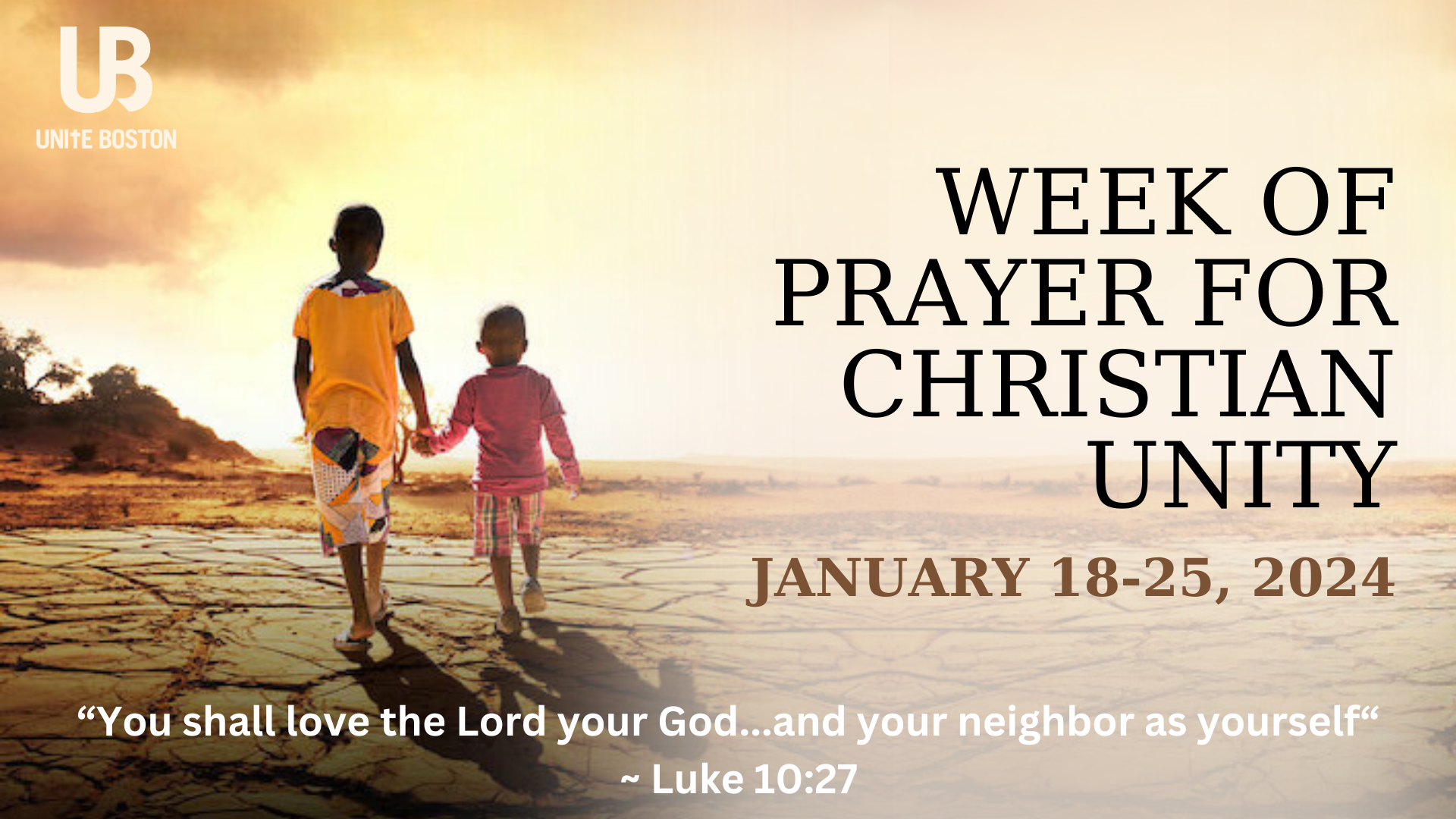
Thanks to everyone who participated in this year’s Week of Prayer for Christian Unity! This year’s theme and liturgies were developed together by Christian churches from Burkina Faso in western Africa, based on the text from the Gospel of St Luke: “You shall love the Lord your God … and your neighbor as yourself” (Luke 10:27). UB was honored to host a variety of gatherings this year, including prayer, fellowship, and also service initiatives that aligned with this theme.

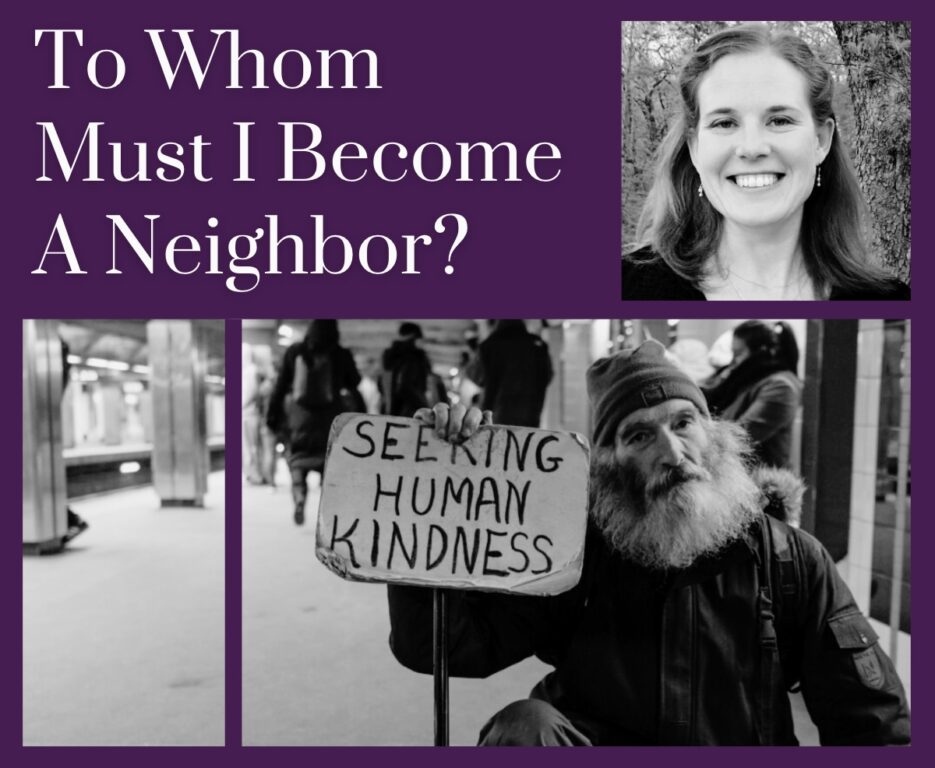
UniteBoston staff members Rev. Kelly Fassett and Rev. Devlin Scott also wrote blogs exploring what this theme might mean practically for Christians in Boston. Rev. Kelly Fassett invites us to consider, “To whom must I become a neighbor?” and Rev. Devlin Scott challenges us to consider how we might inadvertently seek to justify ourselves instead of fully embracing Jesus’ radical acceptance.
Lord Jesus, who prayed that all might be one, we pray to you for the unity of all Christians, according to your will, according to your means. May your Spirit enable us to experience the suffering caused by division, to see our sin and to hope beyond all hope. Amen.

Saturday January 20 – Loving Our Unhoused Neighbors: Miracle Mile Service Opportunity

Miracle Mile Ministries is a collaborative of churches devoted to a sustained, deliberate, strategic response to the area we call “Miracle Mile,” a roughly 2-square-mile area in the South End of Boston often referred to as “Mass & Cass” or “Methadone Mile.”  It is led by a core group of six Boston-area Lead Churches (Congregación León de Judá, Antioch Community Church Brighton, Cornerstone Church, Restoration City Church, Hilltop Church and Symphony Church) and also involves a dozen or so churches and parachurch ministries from throughout Boston’s neighboring communities who faithfully support this effort, week after week.

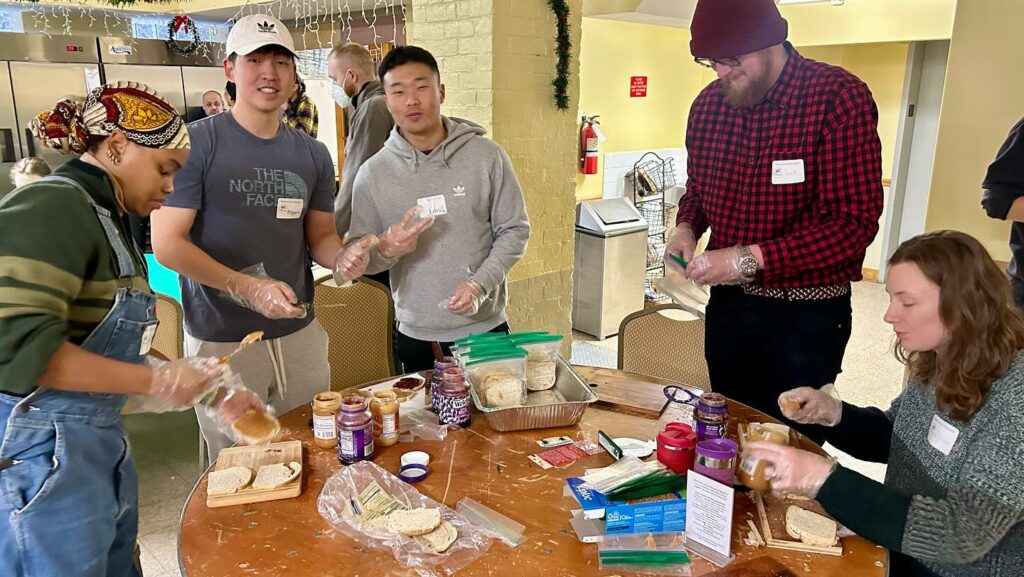
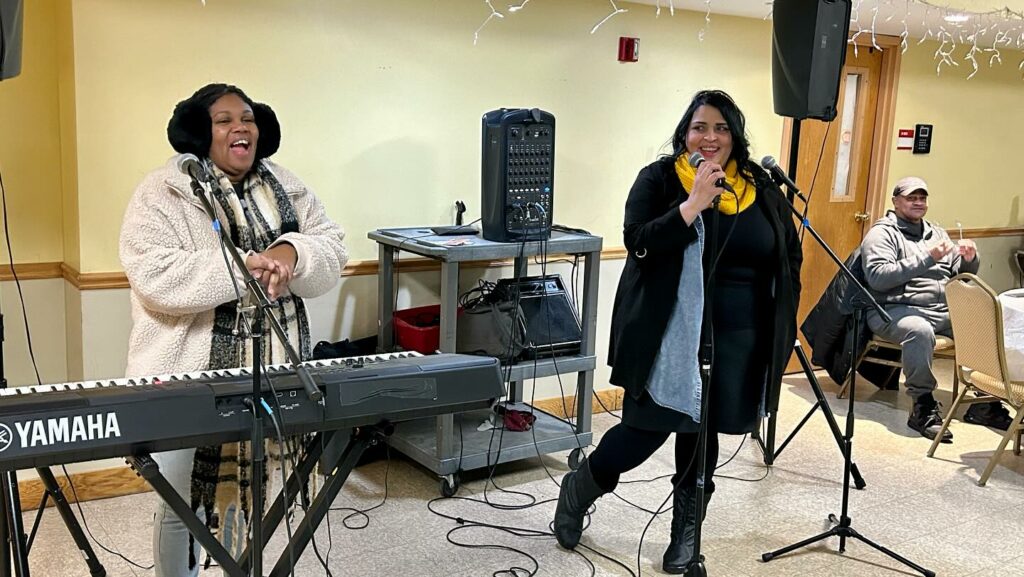
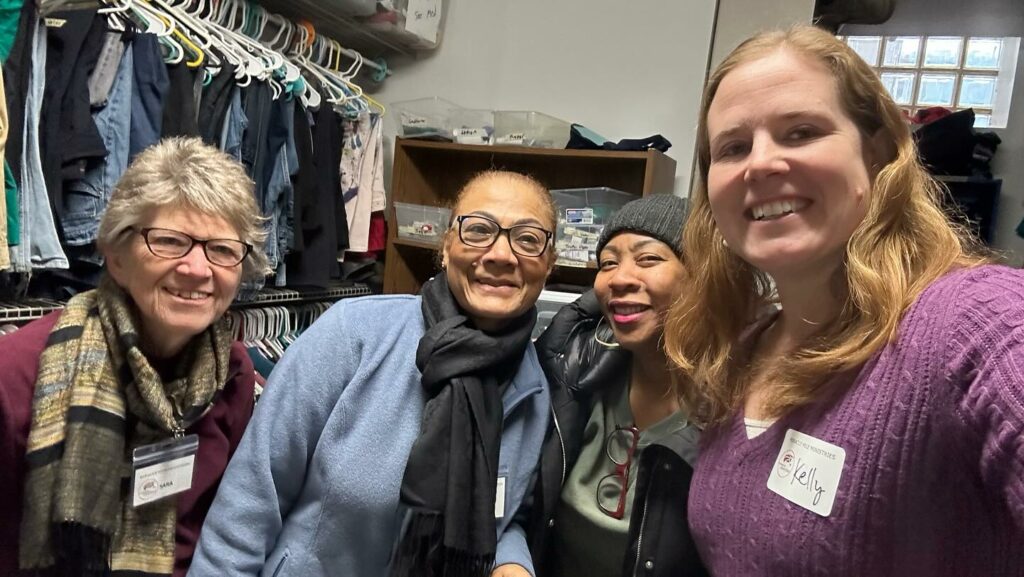
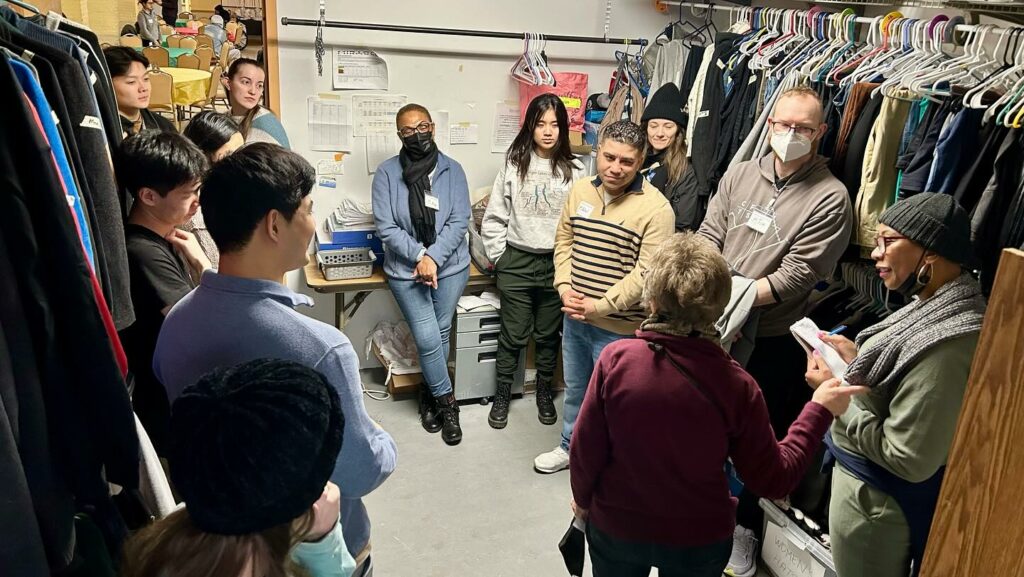
On Saturday January 20, 53 volunteers from 17 different churches served dozens of guests with a hot cup of coffee, a nourishing meal, clothing, conversation, and spiritual care. You can learn more about Miracle Mile Ministries here, and this is a regular service opportunity that you can participate in any Saturday morning! You can sign up to volunteer here. For questions, email Heidi, heidi.marie99@aol.com

“God of welcome, grant us the grace to risk embracing the stranger, tending their wounds and standing in solidarity with them. Strengthen our resolve to be kind and merciful and to act towards our brothers and sisters at all times as you do towards us.”

Sunday January 21 – An Afternoon of Christian Unity with The Focolare and Chemin Neuf Communities

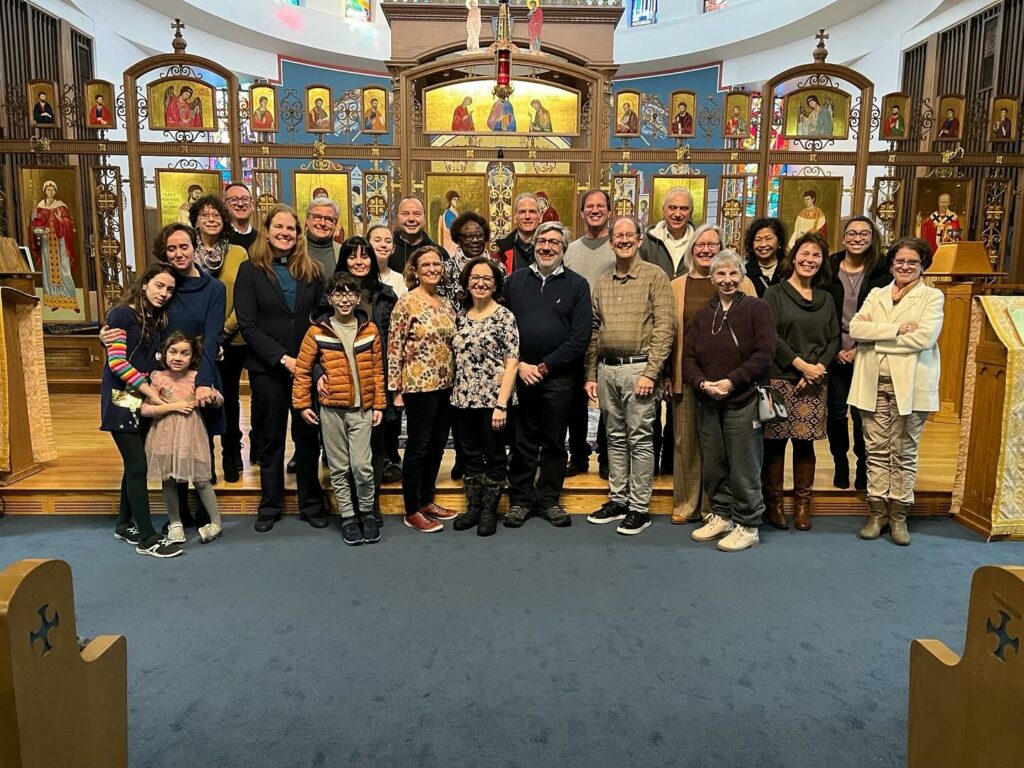
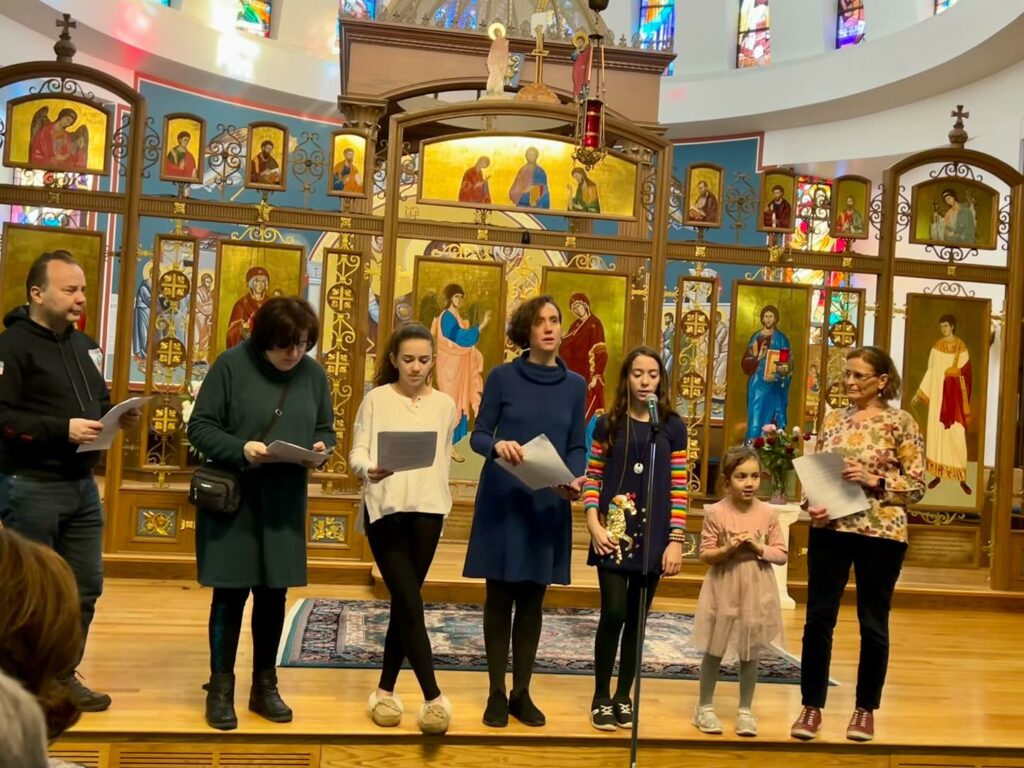
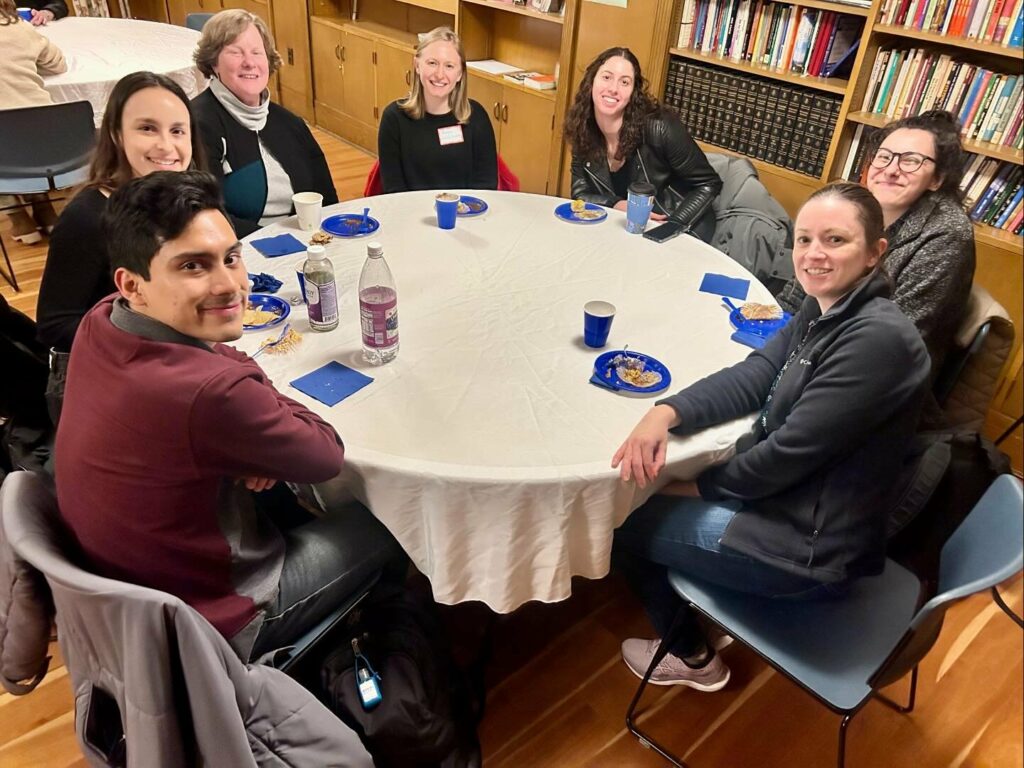
We gathered with the Focolare and Chemin Neuf communities for activities and prayer around the “love your neighbor” theme. We learned from Chiara Lubich that we must be the first to love, as that is what Christ did for us. We must develop the capacity to love Jesus in every person, as what we do or say to them we do to Jesus. The day ended with a liturgical prayer gathering in the beautiful sanctuary, including the youth leading us in the melodic choruses of “Baba Yetu / Our Father” song in Swahili.

Monday January 22 – “Love Your Neighbor” Neighborhood Dinner

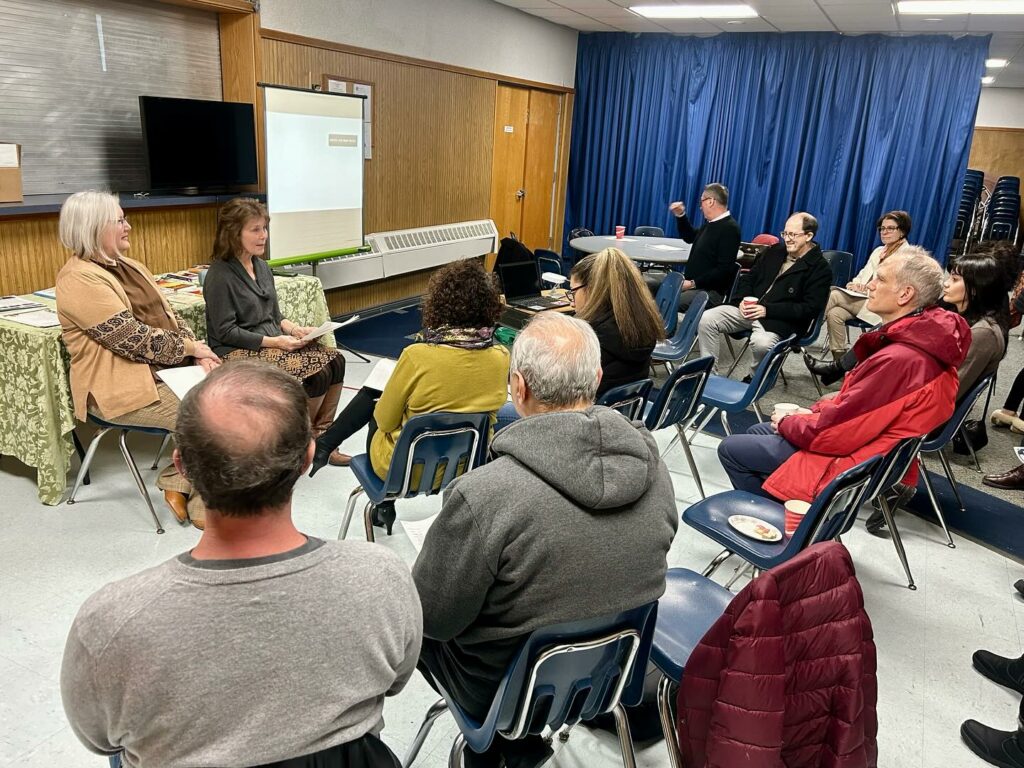
Cleopatra Muhammad hosted a neighborhood dinner on Monday evening centered on the theme of “Love Thy Neighbor.” It was as intimate gathering where they ate, got to know one another and took a creative look at what it means to love our neighbor. She said, “My favorite part was hearing and seeing people’s creative take on the story of the Good Samaritan – through poetry, re-imagining the story in a modern day setting, free write, and drawing.”

Tuesday January 23 – Taize Prayer Gathering

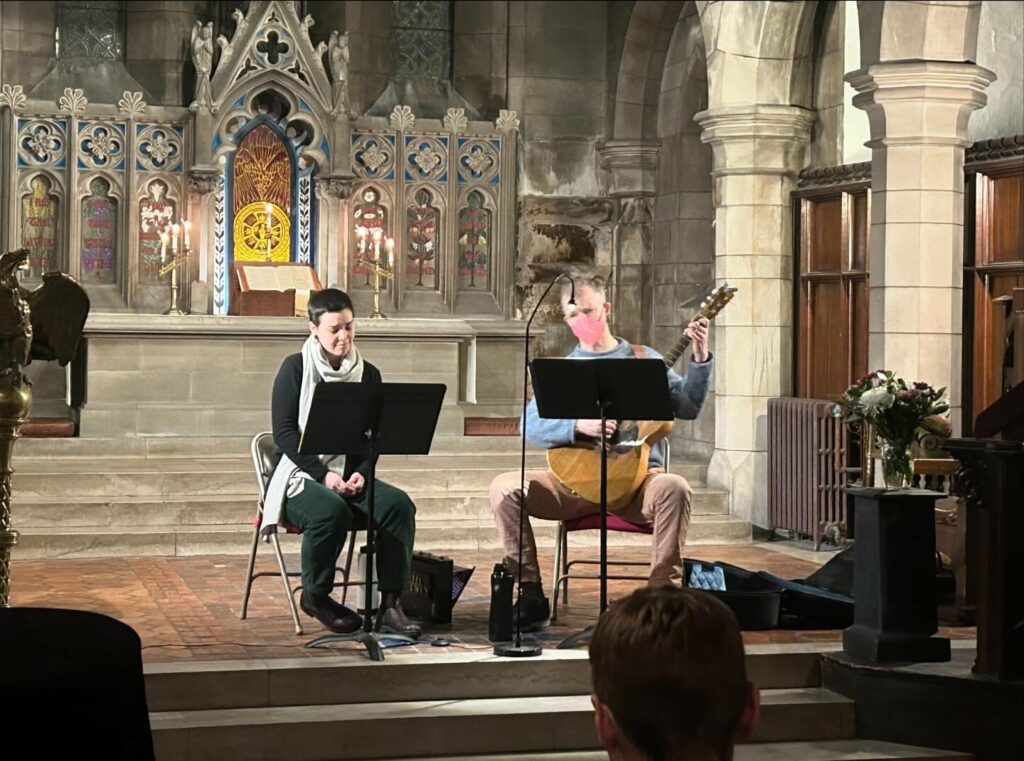
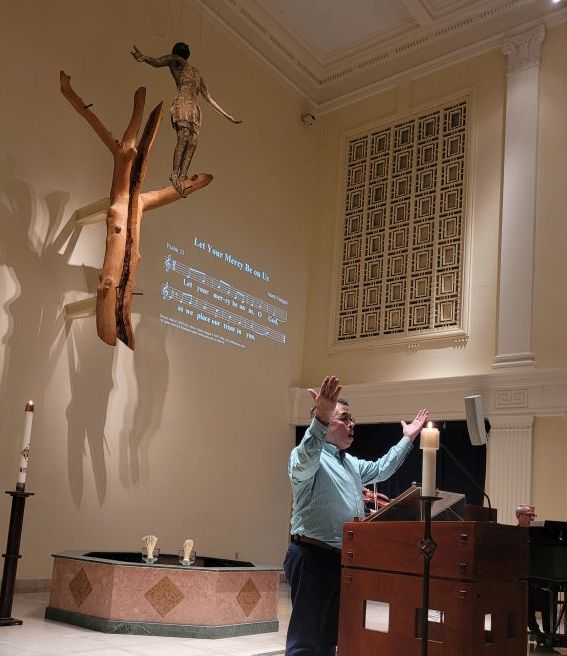
Tuesday evening’s Taize prayer service in Cambridge was absolutely beautiful visually and musically. It incorporated meditative song, silence and prayer around Jesus’ call to love our neighbor. The Taizé Community is an ecumenical Christian brotherhood in Burgundy, France, composed of over 100 brothers from all over the world, from Catholic and Protestant traditions, a true “parable of community” that wants its life to be a sign of reconciliation between divided Christians and between separated peoples.

Thursday January 25 – Christian Unity Prayer Gathering

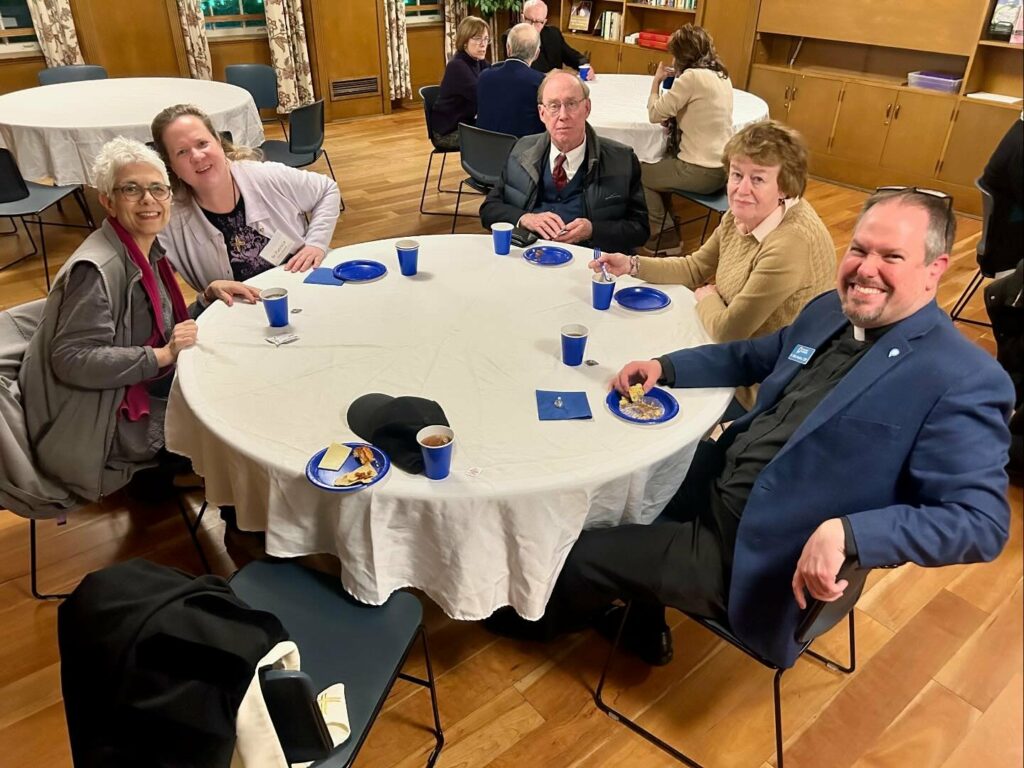
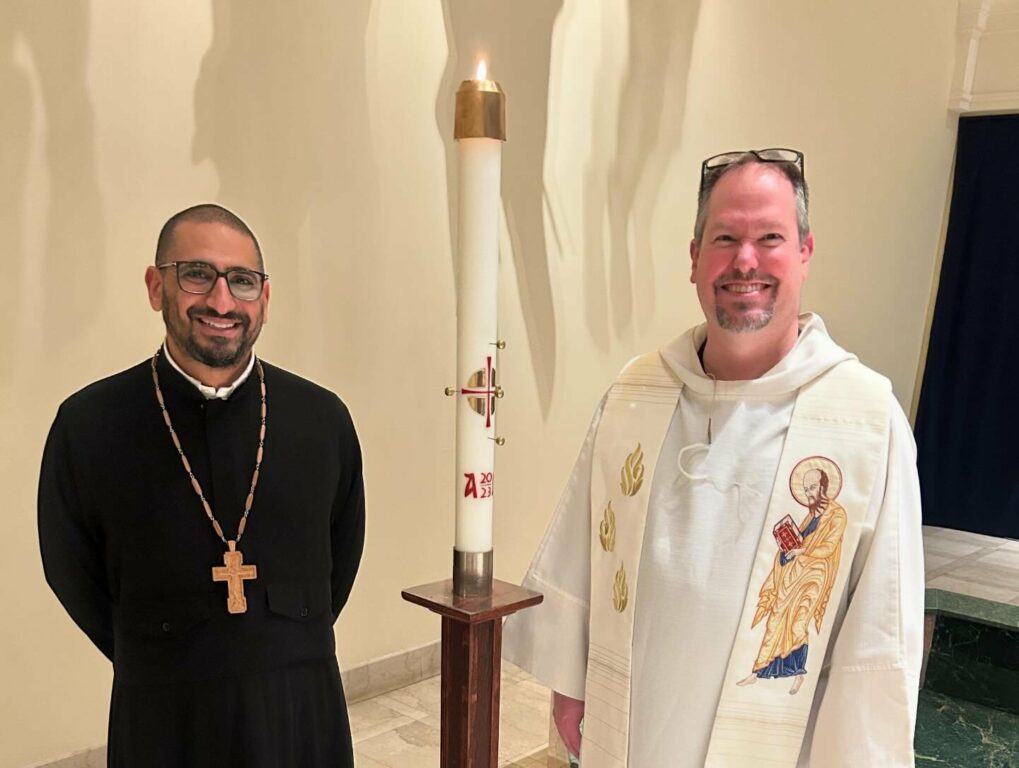
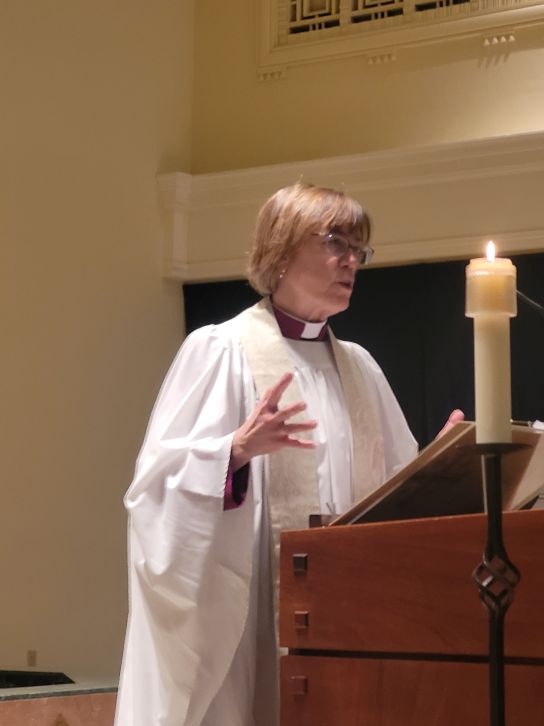
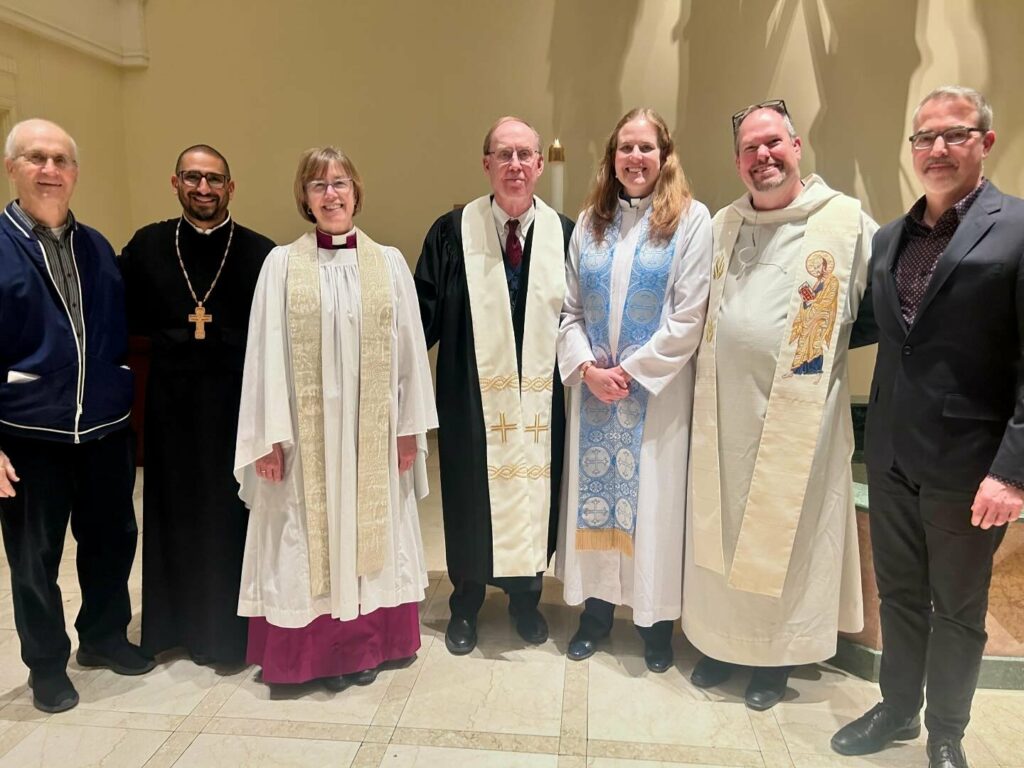
We had the privilege and honor of praying with clergy representing Catholic, Orthodox, Baptist, and Episcopal traditions at the Paulist Center and Chapel on Thursday evening for the Octave of this Week of Prayer for Christian Unity. It was an incredible time of prayer and ecumenical encounter as we enjoyed beautiful music, heard the call to care for creation by Dean Amy McCreath, and prayed for the needs of one another. To God be the glory!

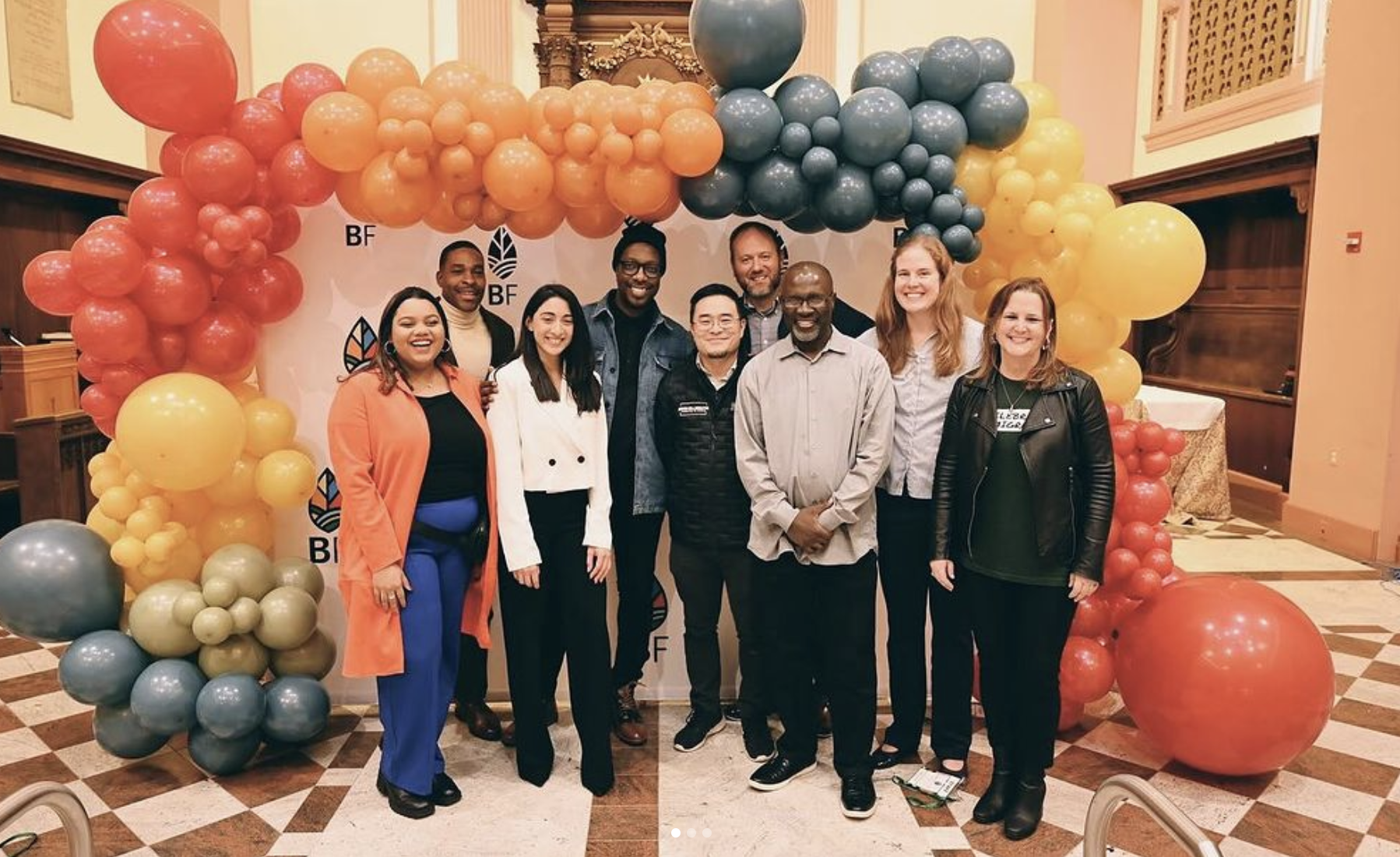
Above: Clergy at the Closing gathering for the Week of Prayer for Christian Unity. From left to right: Fr. Tom Ryan (Catholic), Fr. Mina Kaddis (Orthodox), Dean Amy McCreath (Episcopal), Rev. Colin Leitch (Swedenborgian), Rev. Kelly Fassett (Baptist), Fr. Rich Andre (Catholic), Music Director Nourmand Goui

God, our healer, we who are scattered like sheep without a shepherd, ask you to gather us into one fold. Enliven us by your Spirit and send us again, two by two, to be the light of the world and the salt of the earth.

Written by uniteboston · Categorized: Blog, EVENTS & YEAR HIGHLIGHTS, Unity & Reconciliation, Who is My Neighbor? · Tagged: christian unity, reconciliation, south end, uniteboston, unity

Jan 10 2024

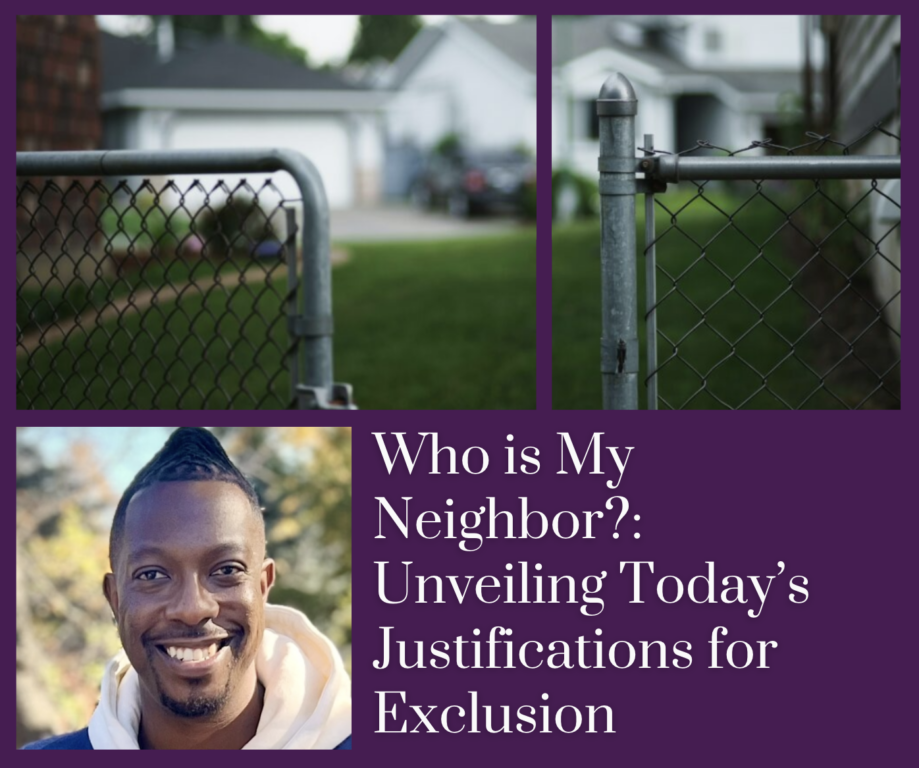
To Whom Must I Become A Neighbor?

Some might say that “Love Your Neighbor” is the quintessential call of a Christian… but what might this mean practically for Christians in Boston? This year’s theme for the Week of Prayer for Christian Unity is “You should love the Lord your God… and your neighbor as yourself” (Luke 10:27). For the next two weeks, UniteBoston staff Rev. Kelly Fassett and Rev. Devlin Scott will be sharing wisdom on how we can live out God’s call to love our neighbors. Read below as Kelly invites us to consider, “to whom must I become a neighbor?”


As I’ve been reflecting on Jesus’ parable of the Good Samaritan these past few weeks, there are two things that have stood out to me: The willingness of the Samaritan to help his “enemy,” and the way the Samaritan dropped everything, sacrificing his own time, attention and resources to treat the injured man. He was moved with compassion, and so must we, when our “neighbor” is in need.

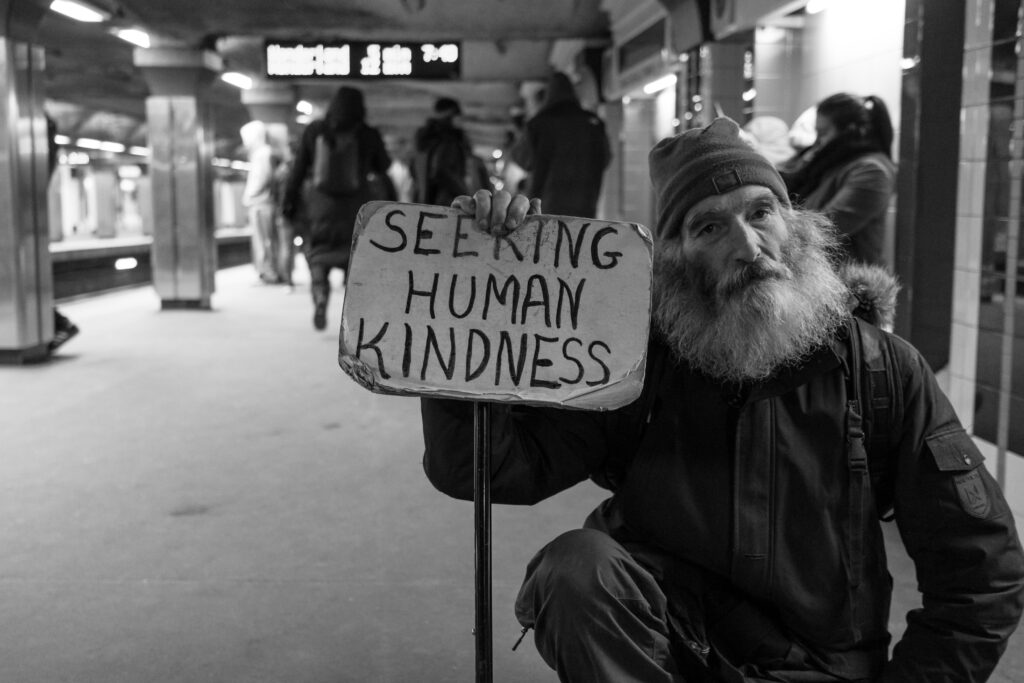
Photo by Matt Collamer on Unsplash

First, this parable was quite provocative in Jesus’ day because of the hostility present between Jews and Samaritans. Individuals in these two groups hated one another because of their different religious beliefs. Samaritans claimed to be descendants of Israel, and believed that worship should be done at Mt Gerizim, not Jerusalem. These differing religious beliefs eventually became violent – In the intertestamental period, the Jews destroyed the Samaritan temple; and around 6AD the Samaritans spread human remains in the Jewish temple and sanctuary during Passover. Jesus’ followers who heard this story were so provoked because the hero in this story isn’t a religious leader, he isn’t even Jewish; he is a hated Samaritan, an outsider. 

Second, the Samaritan demonstrated abundant self-sacrificial time, attention and resources to the Jewish man. Not only did he bandage his wounds to treat immediate needs, he risked his life by transporting the wounded man to an inn within enemy territory, and spent several days’ wages to continue his care at an inn. He took a risk and modeled costly love for the sake of a stranger, who was perceived as his “enemy.”

By telling this story, Jesus is expanding the idea of “neighbor” beyond the typical understanding of those who are in close proximity to us. The question is not just “who is my neighbor” but “to whom must I become a neighbor?” Jesus describes that neighbor is one from the outside group, the one whose beliefs or practices we don’t agree with and may even harbor feelings against: an “enemy.” The neighbor is someone we may avoid at all costs or we might secretly wish would fail. This isn’t to say that God doesn’t take sides, because I’ve learned that standing up for what is true and right is especially needed on issues of justice. The point is that too often I see God’s people drawing hard lines to keep ideological purity with “our tribe,” which can lead to underlying arrogance, hostility and antagonism, rather than upholding a posture of listening and engaging, treating one another with the love, care and respect that Jesus models and is core to our Christian witness.

In verse 33, the passage describes how Jesus was moved with compassion, which is the Greek verb splagchnizomai. This verb means to be moved in the inward parts, or to experience a deep visceral feeling. Mirriam-Webster defines that “Compassion is the sympathetic consciousness of others’ distress together with a desire to alleviate it.” Do we know one another enough to feel this type of deep compassion?

Here, Jesus is calling us to step outside of our comfort zones to show mercy. Yes, I know how easy it is as a Bostonian to put your head down and ignore all those around you to get what you need done every day (and many of us have a lot on our plates!) It’s also very easy to just stay with those who look like us and believe like us. I’ve learned that especially for the BIPOC community, being with “your people” is absolutely crucial to rest, heal, and avoid the micro-aggressions that are all-too common. Yet, Jesus said that even sinners love those who love them (Lk 6:32). This parable makes it clear that loving your neighbor isn’t about what is easy but about what is costly. It involves laying down our agenda, our time, energy, power, and resources for the sake of the other. It involves actually sitting with those on the “other side,” feeling what they feel, and even risking yourself for their sake, without expecting anything in return.

I invite you today to consider – To whom might God be inviting you to become a neighbor? Is it a particular person, or a group of people? What can you do to tangibly risk your life for their sake, offering your time or resources, in the likeness of what Jesus has done for us? 

Being a neighbor might be risky, but it may lead to connection or friendship, or even change the course of two people’s lives, as it did for the Samaritan as well as the Jewish man in this parable. May you listen to God’s invitation during the Week of Prayer for Christian Unity and beyond, that we might not cross the road from human need but lay down our lives for our friends and neighbors.

Written by uniteboston · Categorized: Blog, FROM THE UB LEADERSHIP, Racial Justice, Unity & Reconciliation, Who is My Neighbor? · Tagged: christian unity, community, lent, uniteboston, unity

Dec 22 2023

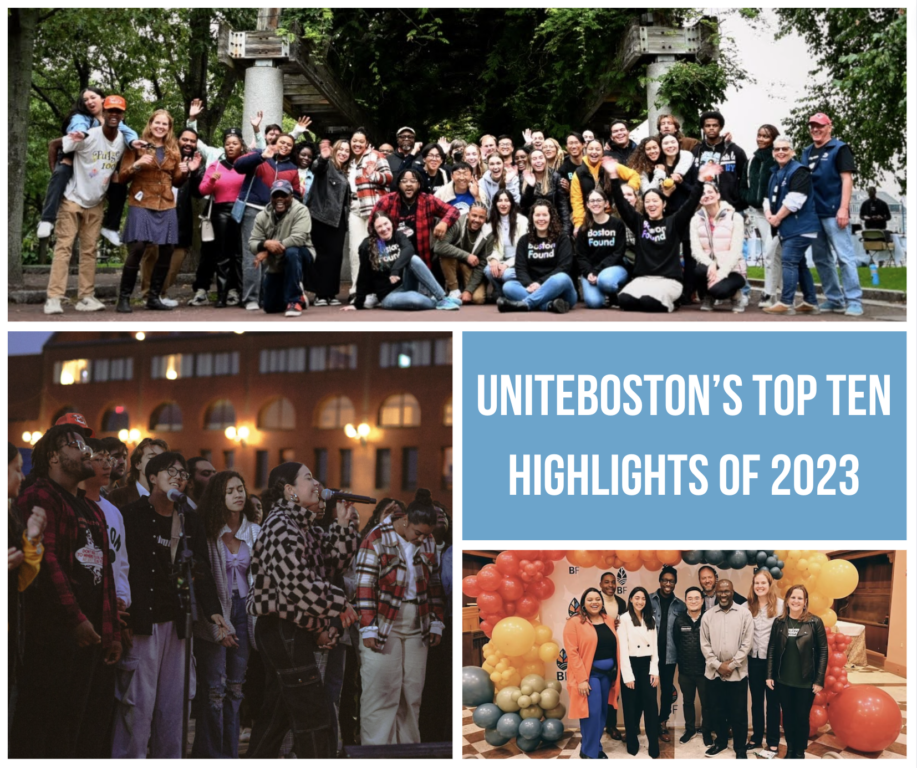
UniteBoston’s Top Ten Highlights of 2023

From hosting a united worship concert and the Boston Flourish conference, to launching a “Christian unity in the city” cohort, to hiring a third team member for UniteBoston, this was an incredible year for UniteBoston! Check out our year in review for 2023 – Glory to God!


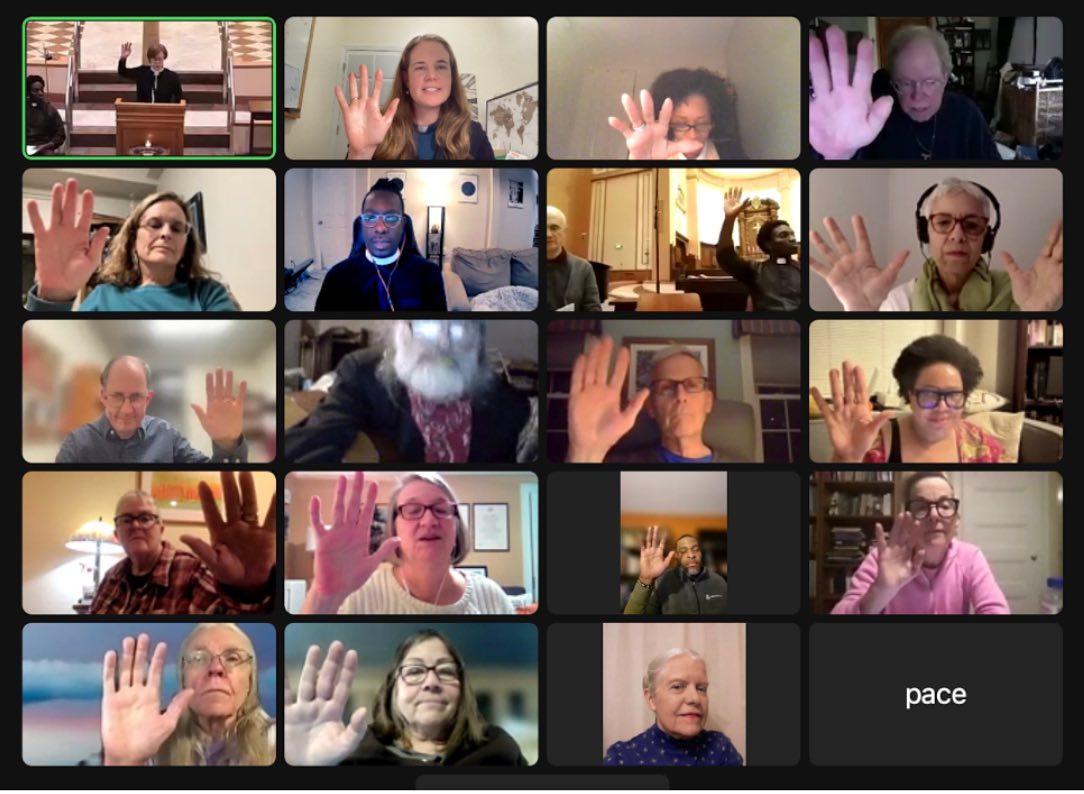
#10 – Here is a snapshot into a prayer gathering we hosted in January during the Week of Prayer for Christian Unity. This year’s theme was “Do Good; Seek Justice” (Isaiah 1:17) which integrated a holistic understanding of justice, including how we can live our unity as Christians so as to confront the evils and injustices of our time, and in particular addressing the sin of racism.

#9 – In May, we launched The ATTIC, a Facebook Group to help connect resources with needs and create a space for collaboration for Christians in Boston. This year in the ATTIC, people have found last-minute worship leaders, free equipment to borrow for a summer movie night, new prayer partners, advice on Christian counselors, and more! There are already 220+ members – definitely check it out and join!

#8 – From May to September, our team came alongside The SEND to galvanize local participation and collaboration for their Boston-area arena gathering which gathered young adults to be sent into God’s mission fields locally and globally.

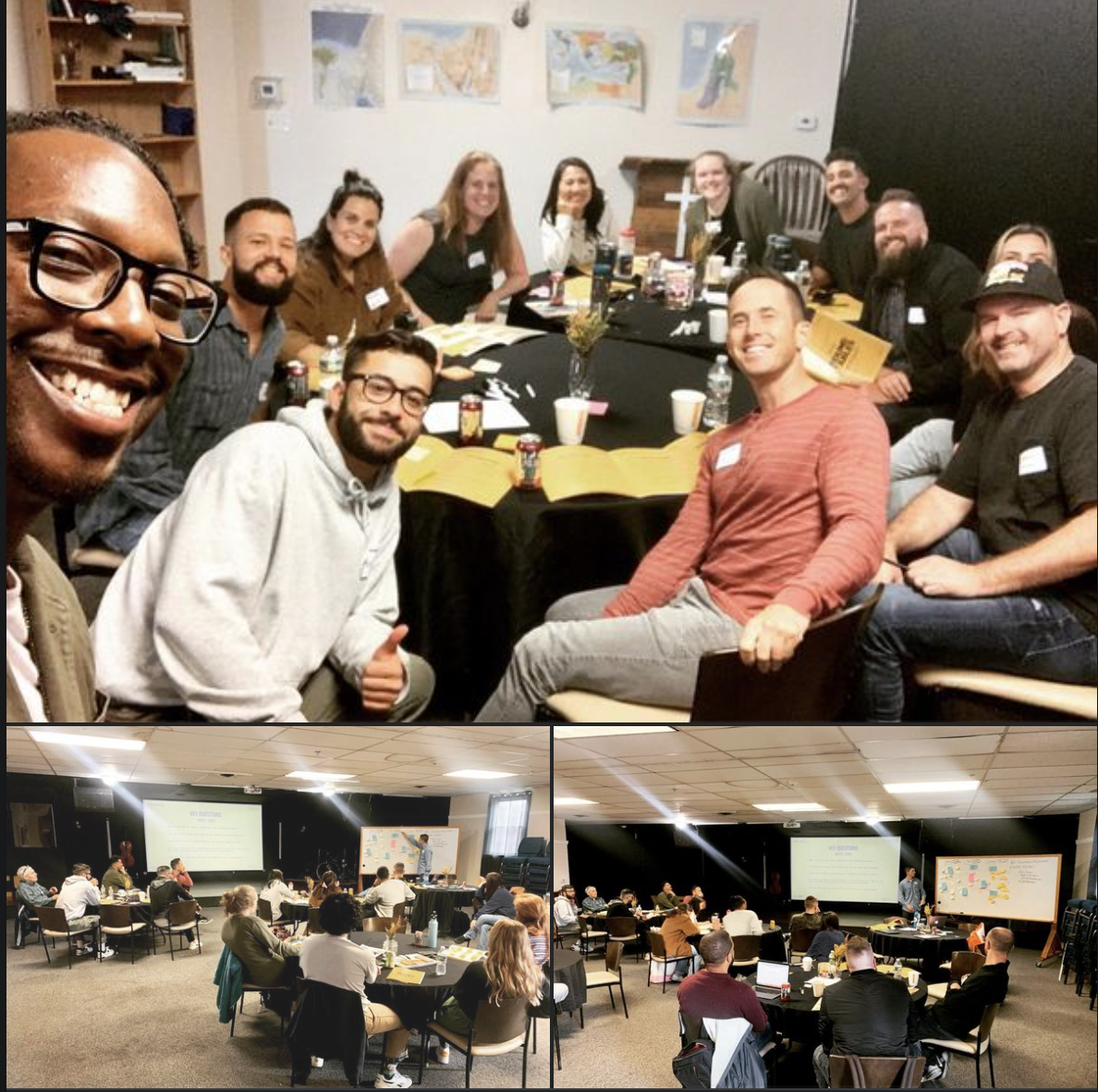
#7 – In June, we launched the “Christian Unity in the City” cohort, where eleven next-generation leaders have been meeting monthly for lunchtime conversations and story-sharing to explore the divisions within the current church and understand how people are living out God’s call towards unity, justice and reconciliation. The insights from community have played a pivotal role in where we are going as an organization to address disunity and division and activate people on God’s mission as ambassadors of reconciliation.

#6 – In July, we hosted a “Circle of Restoration” Island Retreat for BIPOC leaders to get away for self-care and connection in community. Individuals enjoyed a boat ride out to the island, beach games, music, massages, and a catered lunch.

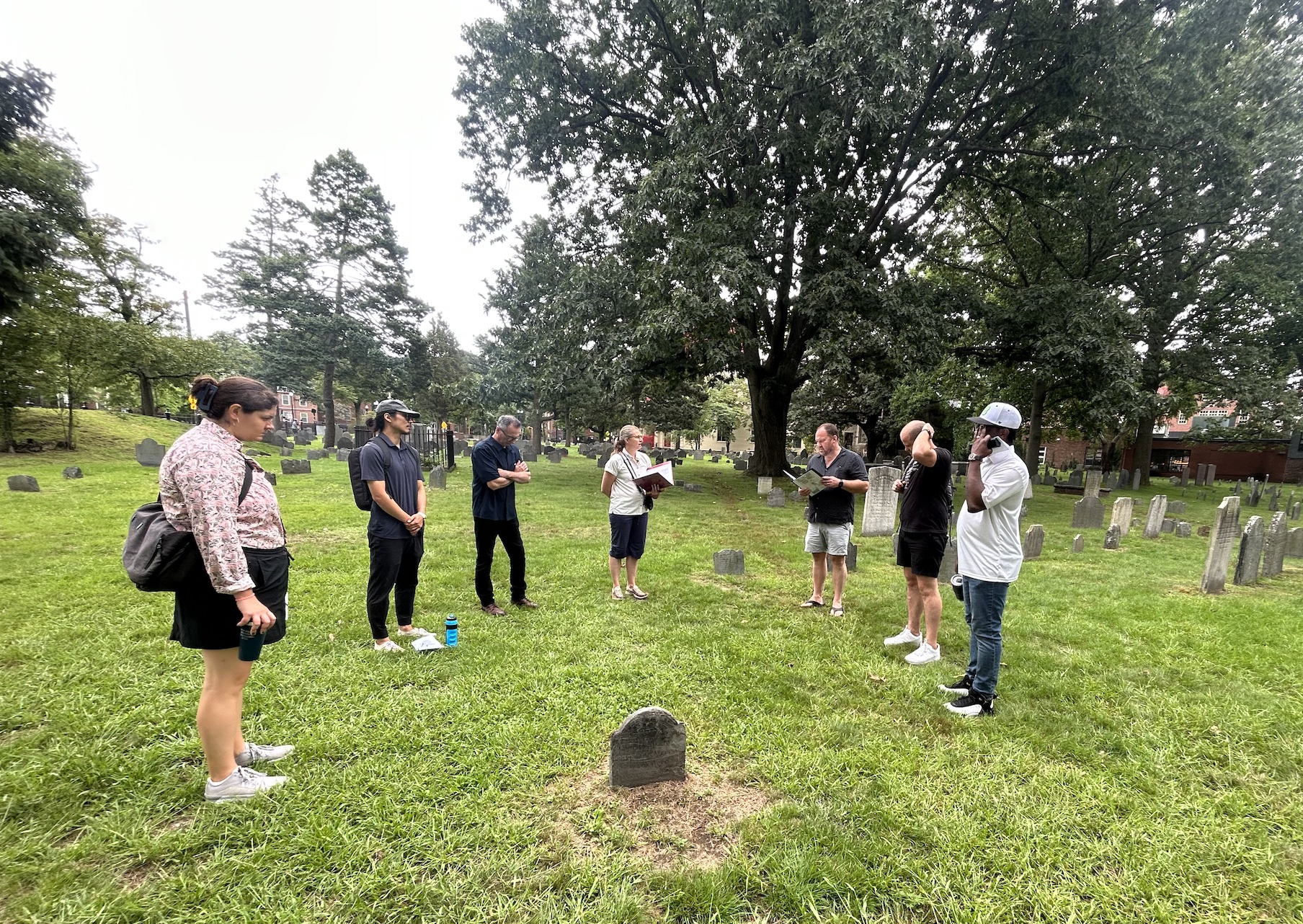
#5 – Here is a snapshot into our August Christian unity cohort gathering, where we participated in a tour on the legacy of slavery at Harvard University, hosted by Rev. Rita Powell and Rev. Dan Smith.

#4 – Our team expanded yet again this year as we were able to hire Calvin Lee as our communications administrator this August. Calvin’s skillsets in communication and graphic design have been a huge asset, and we have enjoyed dreaming with Calvin about the future of UniteBoston as he calls the Church to greater action and partnership.

# 3 – In August, we hosted a board / staff retreat where we brainstormed about the biggest barriers hindering Christian unity in the city. Our team is currently developing a framework about how we can address these three barriers: imbalanced theology, righteous hubris, and historical injustices.

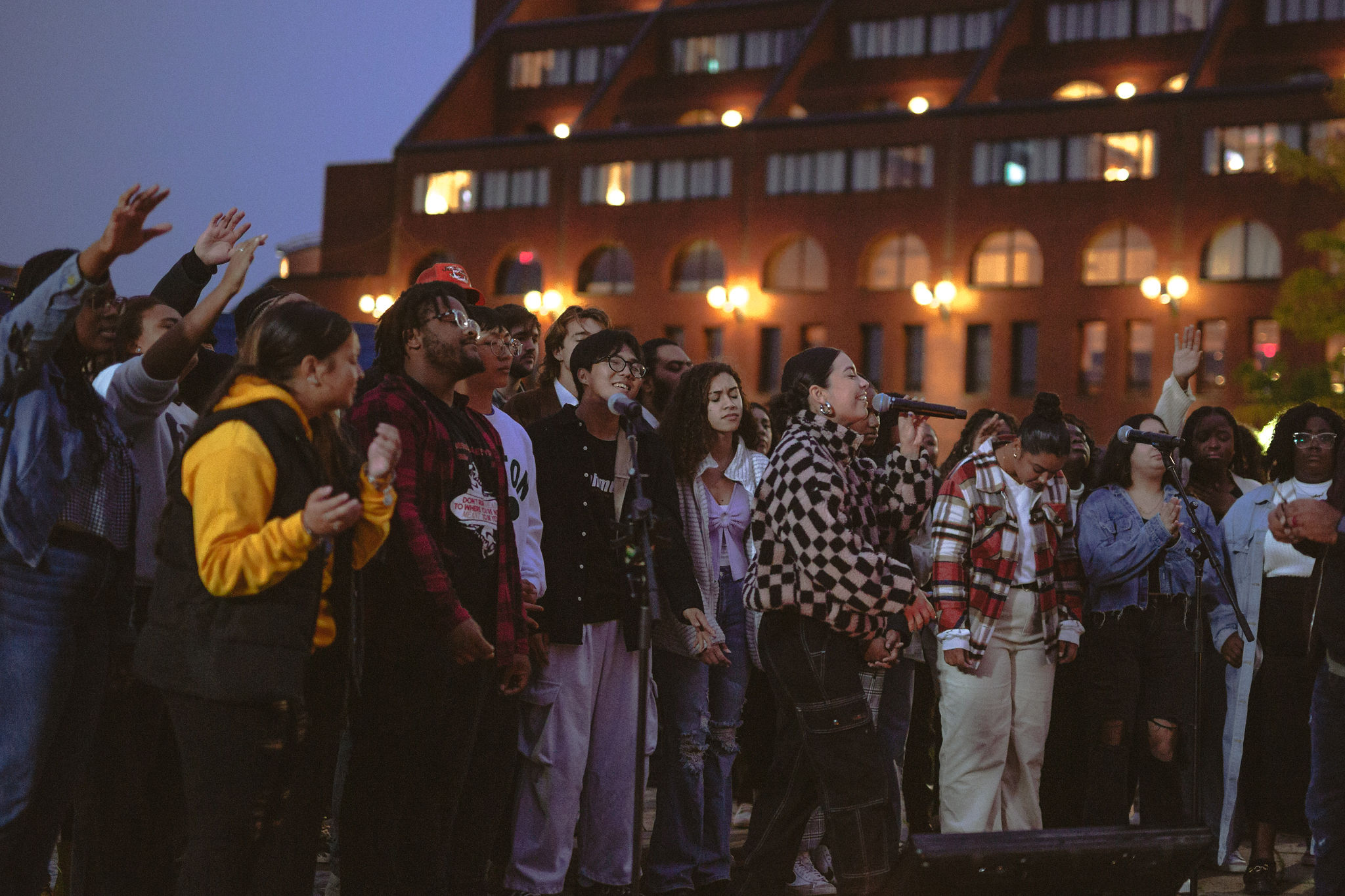
#2 – In September, we hosted the “Again I Say Rejoice” concert on the waterfront, which created a platform for six local Christian artists and the “God’s Chosen Gospel Choir” to lead the city in public Christian worship. There were 15 different organizations hosting ministry tables surrounding the perimeter of the gathering, 30+ members of a community choir, and hundreds of attendees and passersby who stopped by for a portion of the evening to listen to the music, learn about the various organizations in the city, or receive prayer! Check out our photoblog with stories, videos, and more here.

#1 – In November, we partnered with other local organizations to host the second annual Boston Flourish Conference, where we celebrated the many ways that God has been and is presently at work in the city and furthered this work by connecting together to strategically address issues facing Boston residents. This year, we galvanized people around migrant care, human trafficking, and youth trauma/mental health.


It’s been a great year! Thanks for joining with us – your prayers, participation, and finances have made this ministry happen! We look forward to seeing what God has in store for us in 2024!

Written by uniteboston · Categorized: Blog, EVENTS & YEAR HIGHLIGHTS · Tagged: christian unity, community, reconciliation, uniteboston, unity

Dec 17 2023

On the Wonder of the Incarnation

Today, we are featuring a blog post written by UniteBoston’s Executive Director Rev. Kelly Fassett. Having written this shortly after she birthed her second daughter, Kelly shares a moving reflection on the season of Advent and the meaning of the incarnation.


December 18, 2021

‘Hail, space for the uncontained God’

From the Agathistos Hymn,
Greece, VIc

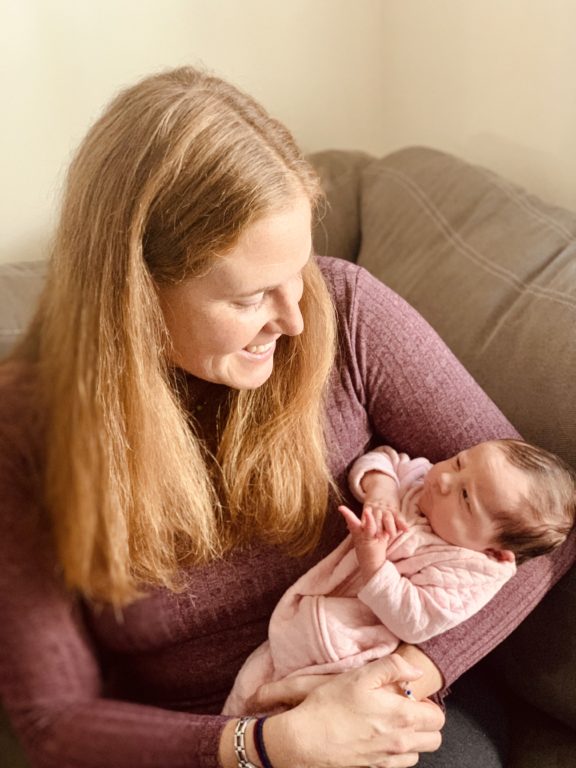
Many of you know that my family welcomed a beautiful little girl into our family and into the world on November 14. Today I wanted to share how raising a baby during Advent season has inspired new wonder and new questions. 

I now wonder:

– How long was Mary’s labor? How painful were her contractions?

– Who was there to catch baby Jesus, as he entered the world?

– When leaving the stable, did she ride away on a donkey? (I know how tender your lower region is after delivering a baby!)

When I set baby Elyse on my chest, and consider the notion of God enfleshed… all that God is – all the love, mercy, power, and compassion… wrapped up into a tiny little human that is no bigger than two of your hands… What was it like to be Mary, to hold this Jesus in her arms and consider everything that the angel had said to her – that this little baby will be called the Son of the Most High; that He will reign over Jacob’s descendants forever; that His kingdom will never end (Lk 1:32)…

As I consider all of this, the wonder of the incarnation comes alive for me. Fully divine AND fully human. All-powerful and all-knowing in divinity… and yet so tiny, seemingly vulnerable, and defenseless.

God in human flesh. God with us. 

Those five little fingers wrapping around mine… those deep blue eyes staring into mine… infinity and eternity within skin. The ineffable reality of God enfleshed.

In some ways it seems impossible… yet this is the stuff of the kingdom. 

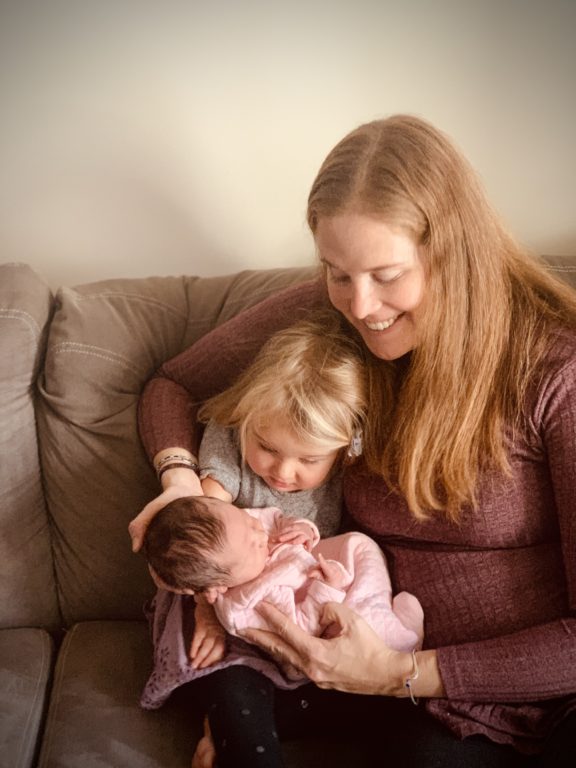
I look at my two-year-old Abigail, and wonder – What was Jesus like as a toddler? I know that Jesus was sinless.. A toddler who really did listen to his mother and father every time, obeying and never talking back? The wonder of that! 

And when I hold my two little ones, the two girls that I carried for nine months in my womb and then birthed, I am filled with such love… coupled with the fierce desire to protect these little ones from all pain and difficulty that life would bring their way. Mary must have had similar feelings as she watched Jesus grow up…  Yet how could she bear to watch those final hours, where her beloved son was brutally beaten, then painfully walked up the steep hill at Golgotha with the cross on his back, then the agony as nails pierced his bloody hands and He breathed his final breath.

Was this the end? No… Jesus took the weight of sin on his shoulders, imputing it on our behalf for the sake of redeeming the world. The veil between God and humanity was forever torn. Glory. 

And through these acts of incarnation and redemption, God displayed that He chooses to not exist aloof in the clouds but to come near to us, walking with us, and working through the limitations of our humanity, of our humble bodily vessels. God with us.

Mary questioned, ‘How can this be?’… yet obeyed. And in that moment she must have realized it all was true. May I be filled with such courage to believe the things of the kingdom. 

Emmanuel. God with us. Hallelujah!

May we never forget the mystery, and the wonder, of the Incarnation.

“Let the Word, I pray, be to me, not as a word spoken only to pass away, but conceived and clothed in flesh, not in air, that he may remain with us. Let him be, not only to be heard with the ears, but to be seen with the eyes, touched with the hands, and borne on the shoulders. Let the Word be to me, not as a word written and silent, but incarnate and living.“ – Bernard of Clairvaux


Written by uniteboston · Categorized: Advent, Blog, FROM THE UB LEADERSHIP · Tagged: boston, jesus, lent, unite, uniteboston

  • « Previous Page
  • 1
  • …
  • 12
  • 13
  • 14
  • 15
  • 16
  • …
  • 53
  • Next Page »


Give to Further Christian Unity

DONATE!

  • Email
  • Facebook
  • Instagram
  • YouTube

Copyright © 2026 · UniteBoston · Built on WordPress