UniteBoston

Bridging Divides Across Christians for the Flourishing of the City

  • Home
  • Events
    • Submit Event
  • Join In
    • Beloved Community Lab
    • Migrant Care and Solidarity
    • The Church and Civic Engagement
    • The ATTIC
    • Kingdom Conversations
    • Worship & Pray
    • Boston Flourish
  • About
    • UB Board, Staff & Volunteers
    • Cohorts
    • Missional Letter
    • Annual Reports
    • History
    • Christian Unity
  • Forums
  • Blog
  • Give
  • Contact
  • Search

Nov 13 2025

A More Perfect Communion: Panel Discussion

Feeling conflicted about what it means to be Christian? Until recently, calling yourself a “Christian” has meant that we share a short list of beliefs about God, Jesus, and the Bible with many, many other Americans. Now the same short list of beliefs no longer has the same unifying effect. What could it mean to be the Church in this moment?
​
Hosted by InterVarsity’s Theological Foundations Department and InterVarsity Greater Boston, this panel discussion will feature pastor-theologians who will take us beyond that short list into deeper convictions about who we are as human beings, and what the Church is meant to be and do in our world fractured by race, politics, and more. Join us to seek a way for the “communion of saints” to take meaningful shape in our communities and beyond.

Date: November 21st, 2025
Time: 7 pm
Location: Central Square Church
5 Magazine St, Cambridge, MA 02139

​Panelists will include:

  • ​Rev. Dr. Soong-Chan Rah, Robert B. Munger Professor of Evangelism and Church Renewal at Fuller Theological Seminary and the author of The Next Evangelicalism (IVP Books, 2009); Many Colors (Moody, 2010); Prophetic Lament (IVP Books, 2015); co-author of Forgive Us (Zondervan, 2014); Return to Justice (Brazos, 2016); and Unsettling Truths (IVP Books, 2019). Rev. Dr. Rah is also the founding Senior Pastor of Cambridge Community Fellowship Church, and has previously served on the boards of World Vision, Sojourners and the Christian Community Development Association

  • ​Rev. Dr. Joy Jittaun Moore, MDiv., PH.D., President and Professor of Homiletics at Northern Seminary and an ordained elder in the United Methodist Church. As an “Ecclesial Storyteller”, she seeks to encourage theologically framed, biblically attentive, and socially compelling interpretations of Christian Scripture in order to understand the critical issues influencing community formation in contemporary culture.

  • ​Dr. Marc Cortez is the Dean of the Litfin Divinity School at Wheaton College and a leading expert in theological anthropology, an area of theology that focuses on what Christians believe about human persons. He has written multiple books on the subject, including Theological Anthropology: A Guide for the Perplexed (Bloomsbury, 2010), ReSourcing Theological Anthropology (Zondervan, 2018), and Christological Anthropology in Historical Perspective (Zondervan, 2016).

​This discussion will be moderated by Rev. Dr. Jeff Liou, PhD, the National Director of Theological Formation for InterVarsity Christian Fellowship. Jeff has been ministering among college students and young adults since 2001. His scholarly interest and work are at the intersection of race, identity, and ministry.

​This discussion is free and open to the public, with a special welcome to InterVarsity Alumni! A reception with refreshments and an opportunity to connect more with InterVarsity Greater Boston will follow the discussion. We hope that this event and the discussion that follows will serve as an opportunity to explore how these questions intersect with the college campus and influence the work InterVarsity is doing to disciple the next generation. RSVP is encouraged. Contact greater-boston@intervarsity.org with questions.
Written by uniteboston · Tagged: boston, cambridge, community, jesus, unity

Nov 10 2025

Discipleship and Community Without Judgmentalism

Today, our guest blogger is Mark D. Baker, who lives in Portland Maine and attends Rise Church. Rev. Kelly recently connected with Mark, as he wrote a book called Centered-Set Church; centered-set thinking resonates deeply with the vision of UniteBoston.

Below, Mark shares some of his personal experience, offering valuable insights on the perils of in-group and out-group thinking and how we can draw theological boundaries that faithfully uphold our convictions with compassion.


Cancel culture, us-them divisions, and line-drawing judgmentalism tear at the seams of society today. The way of Jesus offers an antidote, but before churches can offer the antidote to others, we must stop these practices ourselves. How can we leave judgmentalism behind, but still maintain a commitment to truth and biblical ethics? How can we appropriately make judgments between right and wrong without practicing self-righteous judgmentalism?

Youthful Judgmentalism

While riding home from church as a six-year-old, I looked disdainfully at people mowing their lawns; I had learned that Christians did not work on Sunday. I could draw a neat line between those who belonged to my religion and those who did not, just by looking at this one behavior. This gave me the security of knowing I was “in.” As I grew older, I continued to derive security from the lines I drew. As a teenager, I felt morally superior because, in contrast to those around me, I did not cheat on tests, steal on the job, drink, dance, swear, smoke, or do drugs. Unlike those on the other side of my lines, I was “in”––a good Christian.

The Problem is Judgmental Line Drawing, Not the Content of the Lines

At the Christian college I attended, I met some Christians who had a shorter list of rules than I did. They drank alcohol occasionally and enjoyed dancing. I faced a dilemma. My definition of Christianity told me they could not be Christians—at least, not good ones. In other ways, though, I recognized their faith to be more mature than mine. I concluded that the problem was legalism—putting too much focus on rules and strictly enforcing them. So, I became less legalistic. But had I really changed? Was I less judgmental? No, I had immediately drawn new lines. I looked down on legalistic Christians. Now they were the ones who were not “good Christians.”

Over the next several years, I embraced new expressions of Christian discipleship: a simple lifestyle, total commitment to Jesus, openness to gifts of the Spirit, and advocacy for social justice. I also continually drew new lines or added new criteria to the lines I used to define what constituted a good Christian. Just as I had disparaged those who mowed on Sunday, I now looked down on those who did not share my new perspectives. 

I thought I had progressed as a Christian, but one day, through the prodding of a friend, I recognized I was just as judgmental as I had been as a six- or sixteen-year-old. I thought that legalistic rules were the problem, but it was the judgmental use of lines. Ceasing to draw lines would appear to be the solution. Many have erased the lines, but the resulting fuzziness creates new problems.

An Alternative: Orientation to the Center

Knowing I wrestled with this issue, a friend recommended I read an article by missiologist Paul Hiebert. He borrows categories from mathematical set theory to describe how groups determine who belongs and applies it to churches. A bounded church (left diagram) creates a list of essential characteristics that form a clear boundary line that determines whether a person is part of the group or not. Anyone who meets the requirements is considered “in.” I immediately recognized that I had practiced a bounded approach to Christianity. As seen in the diagram, a fuzzy church (right diagram) is the result of addressing the problem through line removal. Hiebert gave me language and diagrams for better describing my line-drawing judgmentalism and the ambiguity of the fuzzy option. More significantly, though, he introduced me to an alternative: a centered approach. 

Bounded Set
Fuzzy Set

A centered group is created by defining a center and observing people’s relationship with the center–which in this case is Jesus. As the diagram with its arrows illustrates, instead of just judging a person by which side of a line they are on, a centered church looks at the direction the person is heading. 

Centered Set

Jesus’ parable of the Pharisee and the tax collector in Luke 18 clearly displays the difference between a bounded and centered approach. Luke informs us that Jesus told this parable “to some who were confident of their own righteousness and looked down on everyone else” (18:9). In Hiebert’s terminology, we could say that Jesus told this parable to those using a bounded-group approach.  According to a bounded approach, the Pharisee would be in—part of the group. The tax collector would be out—on the wrong side of the line. But referring to the tax collector Jesus says, “I tell you that this man, rather than the other, went home justified before God” (v. 14). How can Jesus say it is the tax collector who is justified, included, “in”? Because Jesus is looking at direction. A centered approach evaluates trajectory rather than just looking at compliance with a list of requirements. 

Note that Jesus does not state that the Pharisee’s standards are wrong, it is his attitude toward others.  Boundaries themselves are not the problem. Jesus himself draws boundaries between appropriate and inappropriate behaviors—like those listed by the Pharisee. The problem of the bounded church is using the boundaries to grasp for status and put others down. Through using boundaries to define the group, a bounded church ends up putting its identity and security in the lines drawn. A centered approach, through defining members by their orientation toward the center, naturally pulls people to put their identity and security in the center—Jesus. (See this article for a fuller explanation of the bounded, fuzzy, and centered approaches.)

A Resource: Examples of Practicing a Centered Approach

Excited by its potential to help students practice discipleship and ethics in less legalistic and judgmental ways, I introduced my seminary students to Hiebert’s work. Many students had experienced the shame of standing on the wrong side of a bounded church’s line. The possibility of an alternative excited them; some, however, felt nervousness. Does embracing a centered approach mean taking beliefs and standards less seriously? I first said, “No, that is what a fuzzy approach does.” After making the same clarification I did above—that to critique a bounded approach does not mean a rejection of boundaries—I gave the following example:

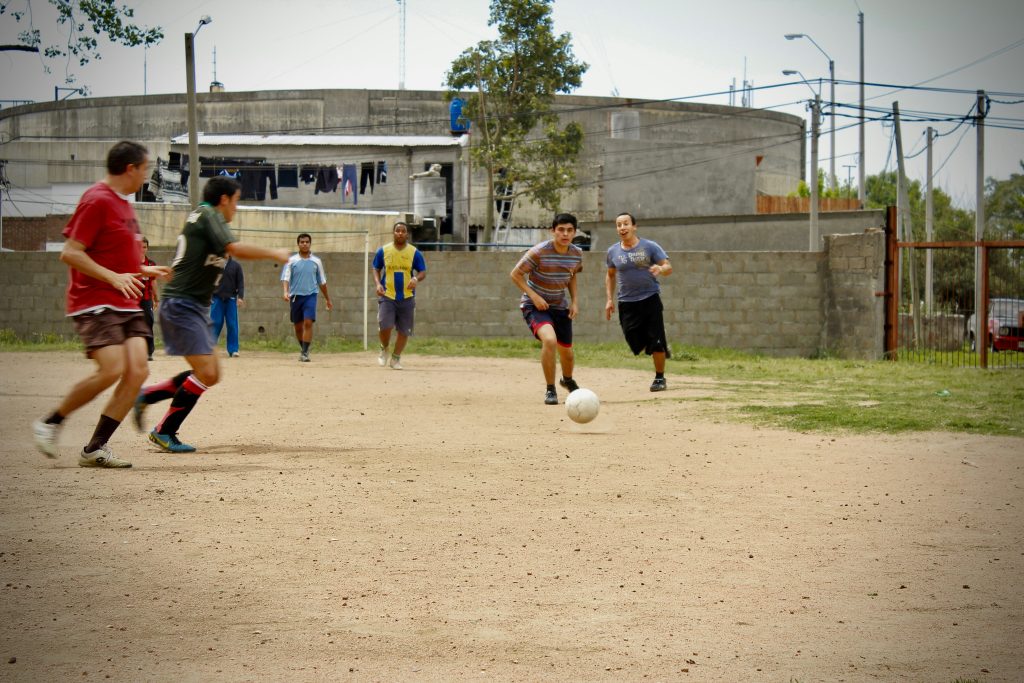
A centered approach to playing soccer would be inviting anyone who wants to play to gather at a local park on Saturday afternoon at three o’clock. In the diagram, those who show up are represented by the people whose arrows are heading toward the defined center, which is soccer. Those who do not show up to play are represented by the people whose arrows are turned away from the center. Some of those who show up may not be very good, but their lack of ability will not exclude them—their wanting to play shows their trajectory is toward the center.

I said to the students, “Suppose one of the players picks up the ball and starts running with it. What will the other players do?” A student responded, “They will say, this is not rugby, you can’t use your hands.” I asked, “What if the person does it again, and after further instruction does it a third time?” A student replied, “They will tell them they can’t play if they do not follow the rules.” I added, “Yes, because if they do not all follow the rules they will no longer be playing soccer. They will say, ‘we are playing soccer, you can come back whenever you are ready to play by the rules.’” 

Photo by Greta Schölderle Möller on Unsplash

Similarly, a centered church must lovingly confront, and at times exclude, those whose beliefs or behavior hinder the community from living out the way of Jesus (Gal. 6:1; I Cor. 5:12). By discerning trajectory, a centered church has more space than a bounded church to walk with people in messy situations, but it does not water down standards.

As students more fully understood, they become curious about application; they asked, “What is the centered approach to dealing with ______?” (many things filled that blank, e.g., disagreement with the church’s doctrinal statement, a couple living together, and poor attendance at worship team rehearsals). They asked, “What do you do about membership in a centered church?” or “Don’t some things, like recovery ministry, have to be bounded?” I had no resource to recommend to them. Eventually I decided to write the resource I wished existed. 

Before writing the book, I interviewed numerous church leaders practicing a centered approach. Their stories and insights fill the book. I invite you to read Centered-Set Church: Discipleship and Community Without Judgmentalism and join others in applying a centered approach to all aspects of ministry. 

Unity with Other Churches: A Centered Approach

An individual church practicing the centered approach must define its center. In part that means differentiating between things of primary importance and secondary things about which there can be disagreement. Churches that have Jesus as their center will define their centers differently. For instance, they will have different practices of baptism. Rather than focusing on differences, as a bounded approach might pull us to do, a centered approach fosters unity across churches by focusing on what we have in common. That unity will grow as we recognize, that in relation to that common center, we are all heading the same direction.

This is not, however, just about diagrams and using different language like “trajectory.” Fundamental to a centered approach is relationship with the center. The shift in my attitude toward others, in my church and in other churches, flows from Jesus. Resting in the security of Jesus’ loving embrace, I feel less need to gain security and status by putting others down. A centered approach facilitates that shift, but in the end it is the work of the Holy Spirit. 

Rather than being known as places of finger-pointing judgmentalism, my prayer is that we may become known for how we lovingly walk with people, toward Jesus, in their struggles and pain.


Diagrams taken from Centered-Set Church by Mark D. Baker. Copyright (c) 2021 by Mark D. Baker. Used by permission of InterVarsity Press, P.O. Box 1400, Downers Grove, IL 60515, USA. www.ivpress.com

Bio: Mark D. Baker is Professor Emeritus of Mission and Theology, Fresno Pacific Biblical Seminary. He now lives in Portland, Maine. He previously was a missionary in Honduras for ten years and a campus minister with InterVarsity Christian Fellowship at Syracuse University for three years. He has written a number of books in English and Spanish, including, Freedom From Religiosity and Judgmentalism: Studies in Paul’s Letter to the Galatians, and Ministering in Honor-Shame Cultures: Biblical Foundations and Practical Essentials.

Written by uniteboston · Categorized: Blog · Tagged: community, jesus, uniteboston, unity, university

Oct 24 2025

Civic Engagement – Bridging the Gap: Why Cross-Sector Collaboration Matters More Than Ever

This week’s article, written by Jerome Garciano, team lead of the Civic Engagement conversation, highlights one of the driving forces behind Boston Flourish 2025—the call for cross-sector collaboration that bridges faith, justice, and public life.  Jerome explores how followers of Jesus can bring grace, unity, and conviction into the civic arena through movements like the AND Campaign.

As Boston prepares to launch its local chapter, this article invites us to imagine what it looks like when Christians engage politics not through partisanship, but through the Gospel—seeking the common good so that our city may truly flourish.


I may have been one of the few evangelicals taking part in my local town’s No Kings Demonstrations last weekend, but I was somewhat surprised to see protest signs appealing to “religious” values.  These signs highlighted God’s commands and decrees to love the foreigner because we all were foreigners, and reminded us to ask ‘What Would Jesus Do?’ for our transgender neighbor? One sign especially resonated with me stating, “IT’S SO BAD EVEN THE INTROVERTS ARE HERE!” We need followers of Jesus to speak grace and unity into this moment of division and hatred and set forth a hope and vision for the common good grounded in the Gospel and God’s Word, and that’s why I think the AND Campaign is so important at this time in our history. 

As described in Compassion (&) Conviction: The AND Campaign’s Guide to Faithful Civic Engagement, the AND Campaign is a Christian civic organization that asserts the compassion and conviction of the gospel of Jesus Christ into the public square. It believes that Christians are called to promote social justice and moral order (rather than one or the other) in the sociopolitical arena, and to transcend both partisanship and political ideology. 

The AND Campaign has four primary objectives:

  1. Education – Raise civic literacy among Christians and help believers apply biblical values to the most pressing issues of the day.
  2. Representation – Represent and articulate a clear and credible biblical worldview that Christians can identify with in the public square.
  3. Coalition Building & Reconciliation – Organizing Christians to speak with one voice in the public square, and bridging racial and sociopolitical divides in the church.
  4. Advocacy – Promoting values and policies among policy makers and political decision makers that align with the biblical worldview.

Join us next week at the Boston Flourish Conference as we hear from AND Campaign founder and author Justin Giboney and meet with others who are passionate about seeing our City flourish. We will also mark this moment as the launch of the Boston Chapter of The AND Campaign. We can’t wait to see you there!

Join the Movement

Boston Flourish 2025 takes place October 30, 2025, at IBEW Local 103 in Dorchester.

Tickets are available now for $99, Student rate for $75

👉 Register today to be part of Boston’s unfolding story — a story of faith, research, and collaboration that’s shaping the future of our city.

Because when it comes to creating a Boston where everyone belongs, thrives, and flourishes — it starts with us.

P.S. If you’d like to learn more about the AND Campaign, check out the (&) Civic Revival 10 Disciplines  and the Civic Engagement Playbook

Written by uniteboston · Categorized: Blog · Tagged: collaboration, jesus, jesus christ, reconciliation, unity

Oct 10 2025

Momentum Conference

The Momentum Conference is designed for college and graduate students, young adults and 20 somethings. Join us for two days of powerful worship, genuine fellowship, practical teaching, and serving — all to equip you for Jesus’ mission on your campus and in your church. We have also partnered with Send Relief on Saturday to go out and serve the city in compassion and outreach ministry. Speakers include Adam Mabry (Lead Pastor of Aletheia Church) and worship is led by Zach Bolen (lead singer of the Citizens). Check out our instagram @NewEnglandStudents and website for more information and to register.

Written by Andrew Walker · Tagged: church, city, jesus, ministry, worship

Oct 03 2025

Building a City of Belonging: Launching the Boston Immigrant Resource Dashboard (BIRD)

“Too often, we’re sending families to services that are already full. With BIRD, we’ll finally have a clear, real-time picture of what’s available. I am so excited for the potential of this dashboard to equip all of us to better serve our immigrant neighbors.” — Pastor Melinda Priest

Boston is a city shaped and strengthened by immigrants, yet too often new arrivals and those who serve them struggle to find up-to-date, reliable information about essential resources. Whether it’s shelter, legal services, English classes, or job training, the systems meant to help can feel confusing, outdated, and fragmented.

That’s where the Boston Immigrant Resource Dashboard (BIRD) comes in.

Over the past year, leaders across the city have been collaborating to build a dynamic, real-time platform. BIRD allows immigrant-facing providers to post and update their available services, so providers and clients can quickly see what’s available through a simple green–yellow–red light display. Read the story below, and plan to join us on October 30 at Boston Flourish when we will publicly launch the dashboard!


At Immigrant Connection at Awaken City, Site Director and Pastor Melinda Priest meets many immigrant neighbors seeking legal help, English classes, and citizenship support. She often refers people to other organizations, knowing that no single church or organization can meet every need. Yet every referral requires time—calls, emails, and website checks to confirm what’s actually available.

For the past two years, Boston Flourish has been convening conversations on migrant care and solidarity. Through a panel discussion, hundreds of individual conversations, and monthly gatherings supported by the Mayor’s Office of Immigrant Advancement, a central challenge emerged: while Boston has no shortage of resources for immigrants, connecting people to them requires exhausting and often duplicative effort. Faith-based organizations and city agencies are frequently working toward the same goals, but in isolation from one another. A collaborative team with faith and city leaders began to dream: What if technology could streamline these connections and make real-time information accessible to everyone?

Why the Boston Immigrant Resource Dashboard Matters

Too often, existing databases are incomplete or out of date, leading to missed opportunities at critical moments. BIRD seeks to bridge that divide by building a shared platform where churches, nonprofits, and civic agencies can work together to serve immigrant neighbors more effectively. 

  • Real-time updates so providers and families know what’s available now
  • Key service areas including immigration legal services, housing, workforce development, and ESOL/citizenship classes
  • A collaborative ecosystem where referrals are streamlined and clients don’t need to repeat the intake process at every step

The mission of BIRD is both simple and urgent: to provide real-time, accessible information on vital resources for immigrants, refugees, and service providers—ensuring that help is timely and never lost in the shuffle. At a time when immigrants are too often dehumanized in public discourse and policy—whether through detention of people without criminal records, prolonged solitary confinement, or sweeping deportation strategies that target vulnerable families—BIRD offers a different vision: belonging in action.

Many on our core team are guided by the Biblical mandate to love the foreigner and sojourner, remembering that “you yourselves were foreigners in Egypt” (Lev. 19:34; Deut. 10:19) and Jesus words ‘I was a stranger and you welcomed me’ (Mt. 25:35). In that spirit, BIRD seeks to help build a “city of belonging”—a network of care, rooted in justice, that restores dignity and connection for immigrants, refugees, and asylum seekers across Boston.

“BIRD helps us live out our commitment to “love thy neighbor” in practice—so we can become a city of belonging, where no one is left searching alone.” – Rev. Kelly Fassett, UniteBoston Executive Director


Built in Partnership

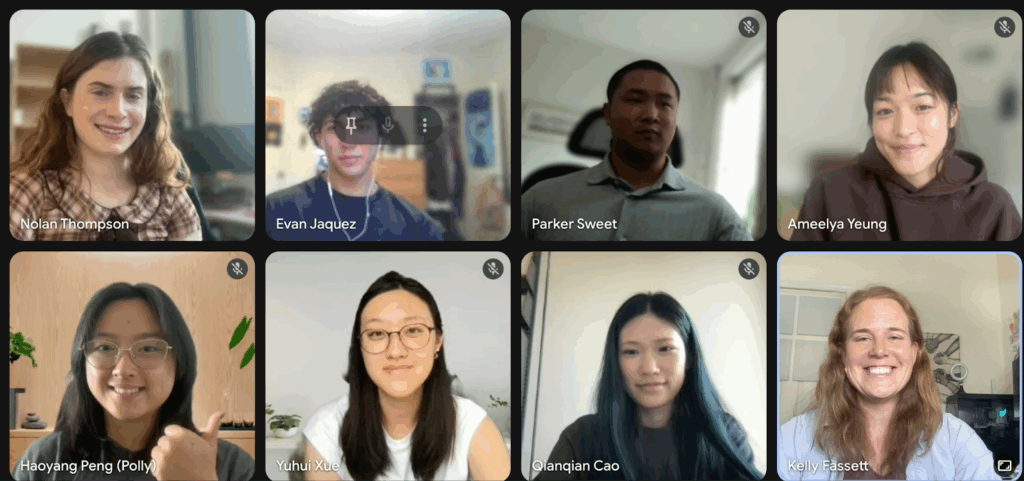
BIRD is being built through extraordinary collaboration. The need for a real-time infrastructure became clear at a collaborative session at Boston Flourish in 2023. A team developed with leaders from a broad spectrum of backgrounds and contexts. They fundraised and received a generous grant from the Imago Dei Fund, then hired web developer Richard Tang to create the foundational infrastructure for the dashboard. Now, a team of students from Boston University’s SPARK program is refining the user interface to ensure the platform is intuitive, accessible and easily updated.

Left – Students from Boston University SPARK Program involved in this project

Immigrant-Facing Service Providers on a BIRD Orientation Call this week

“Our UX team at BU Spark! is excited to create a welcoming, intuitive, and accessible user interface for BIRD. We hope our efforts can improve the lives of many in the community.” — Evan Jaquez, Boston University Spark! UX Project Manager

“We wanted to make the platform simple enough for anyone to use, but powerful enough to handle the complexity of Boston’s service network.” — Richard Tang, Web Developer

This technical development is paired with a wide coalition of partners who are shaping the project on the ground. We are grateful for the early leadership and engagement of the Mayor’s Office of Immigrant Advancement, the Immigrant Family Services Institute, SEND Relief Boston, the Fellowship of Haitian Evangelical Pastors Association, the Emmanuel Gospel Center, the Center for Public Theology and Migration, the Boston Haitian Resource Hub, True Alliance Center, Voice of the Gospel Tabernacle Multi-Service Center, and Massachusetts Immigrant Collaborative among others.

“I am very excited about the potential of BIRD. Unfortunately, many times we serve in a context where the right hand doesn’t know what the left hand is doing. BIRD can help us improve in this area to be better informed and increase our effectiveness in collaborating to serve and alongside our immigrant and refugee communities. We are grateful for the efforts that have made this vital tool an integral part of our shared ecosystem in Greater Boston.” —  Rev. Dr. Gregg Detwiler, Senior Consultant, Intercultural Ministry, Emmanuel Gospel Center


Join Us: Orientation & Launch

We’re now inviting immigrant-facing providers to get involved. If your organization serves immigrants, refugees, or asylum seekers, we’d love for you to be part of the dashboard! Reach out to Rev. Kelly to learn more and schedule a time for an orientation.

And be sure to save the date: on October 30 at Boston Flourish, we’ll be officially releasing BIRD to the public and sharing stories of collaboration across the city.


Looking Ahead

This fall, we’re beta testing with leaders and preparing for a citywide launch. In the future, we envision expanding services, adding new functionality, integrating volunteer opportunities, and building a sustainable funding model.

“When a pastor can point a family to legal support or a social worker can see ESL openings at a glance, we’re not just sharing data—we’re sharing hope.” — Rev. Devlin Scott 

BIRD is more than a database—it’s a collaborative tool to strengthen Boston’s support ecosystem and ensure that no immigrant or refugee falls through the cracks.

Together, we can make Boston a city of belonging.


Written by uniteboston · Categorized: Blog · Tagged: collaboration, community, jesus, uniteboston, unity

  • « Previous Page
  • 1
  • …
  • 4
  • 5
  • 6
  • 7
  • 8
  • …
  • 37
  • Next Page »


Give to Further Christian Unity

DONATE!

  • Email
  • Facebook
  • Instagram
  • YouTube

Copyright © 2026 · UniteBoston · Built on WordPress