UniteBoston

Bridging Divides Across Christians for the Flourishing of the City

  • Home
  • Events
    • Submit Event
  • Join In
    • Beloved Community Lab
    • Migrant Care and Solidarity
    • The Church and Civic Engagement
    • The ATTIC
    • Kingdom Conversations
    • Worship & Pray
    • Boston Flourish
  • About
    • UB Board, Staff & Volunteers
    • Cohorts
    • Missional Letter
    • Annual Reports
    • History
    • Christian Unity
  • Forums
  • Blog
  • Give
  • Contact
  • Search

Mar 09 2017

A Word to White Evangelicals: Now is the Time to Engage Issues of Race

Today, we feature a guest blogger, Megan Lietz, who is an Applied Research & Consulting Associate with the Emmanuel Gospel Center. She challenges the Evangelical community about the critical opportunity today to engage in conversations and action around racial equity.

Check out her blog article here: https://www.egc.org/blog/2017/2/22/a-word-to-white-evangelicals-now-is-the-time-to-engage-issues-of-race

Written by uniteboston · Categorized: Blog · Tagged: city, community, emmanuel gospel center, MIT, unity

Dec 26 2016

Guest Blogger: Costly Vs. Cheap Unity

This week, we feature a blog written by Scott Brill, Assistant Regional Director of InterVarsity New England and co-director of the Institute for Christian Unity. Scott uses Dietrich Bonhoeffer’s language as he examines and contrasts ‘costly unity’ with ‘cheap unity.’ His analysis is full of rich wisdom and is a must-read for those who are working towards a more reconciled Christian Church in Greater Boston.

For more great reading on Christian unity, check out Scott’s “Recapitulare” Blog here: https://recapitulareblog.wordpress.com/

As someone whose life calling is to foster unity, I’ve been wrestling with how I should respond to the events of the past few weeks and months. Division and divisiveness seem to be everywhere. The country is divided; the political landscape is divided; Christians are divided; even structures within the Church that share a common mission and doctrinal basis are divided. People all around me – in person and on social media – are asking questions about unity and throwing around thoughts and ideas. I don’t think I’ve ever seen a deeper longing for unity or a greater sense of how far we are away from it. I’ve sensed the need to formulate some kind of response.

unity-as-pretext-spectrummagazine-org

Up until this point, though, I’ve mostly been listening in silence. Which has felt like something of a spiritual discipline. Similar to the Jewish practice of “sitting Shiva”, I’ve wanted to grieve myself, as well as honor others who are grieving this brokenness. And I’ve wanted to create space to wait for a word from the Lord rather than offer quick solutions.

But finally I feel compelled to say something. I want to be able to answer the question: “why should we even work for ‘unity’ at a moment like this?” Does the word have any meaning, any power, any motivating energy? Is unity dead? Like Jairus, the synagogue ruler in the fifth chapter of Mark’s gospel, should we not trouble Jesus any more – just give up and go home? I believe at this moment (as for Jairus at that moment in the Gospel), Jesus has spoken a word of hope and faith to me. And I want to speak that word of hope out loud now. This is my “apology” for pressing on for unity – right here; right now:

I am focusing my comments particularly on the Christian community. While there are compelling reasons to work for unity on a broad national or global scale, the Church is the place I am most familiar with, and it is a place where there is a special mandate for unity (see Jesus’ prayer in chapter 17 of the gospel of John). Ideally, we should be both a sign of hope and a model to the larger world of how to live out unity.

But our community seems particularly stuck, paralyzed by our inability to be unified but not wanting to admit that we can’t figure it out. At this moment of awareness of our deep division and brokenness, Christians appear tempted to minimize them. In posts and articles and conversations, I hear us again and again wanting to (in the words of the prophet Jeremiah) “dress the wound of my people as though it were not serious” and pronounce, “’Peace, peace,’ when there is no peace.” We seem drawn to move forward quickly, avoiding the actual pain of division and pronouncing some form of surface-level healing.

In response, I want to borrow a familiar framework from Dietrich Bonheoffer’s Cost of Discipleship, and to say that we are at this critical moment supremely tempted to opt for “cheap unity.” The urgent antidote, then, for this moment has to be “costly unity.” But what is costly unity over against cheap unity? Here are some characteristics of cheap unity that have come to my heart and mind:

  • Cheap unity avoids conflict. It is uncomfortable with sharp disagreement, and seeks to diminish strong emotions and firm convictions. It elevates attempts to feel better over honest expressions of problems.
  • Cheap unity finds a “least common denominator” and stops there. It looks for something innocuous we can all agree on, and declares “reconciliation” too soon
  • Cheap unity draws the circle of community too tightly. One of the solutions it offers is to shrink the number of people who need to be reconciled. If there are fewer true brothers and sisters, then those folk furthest away from our perspective can be dismissed as heretics, non-believers, or apostates.
  • Cheap unity also refuses to talk about holiness. In contrast to drawing the circle too tightly, this type of cheap unity wants to ignore decisions of conscience and exclude some from the conversation for being too inflexible or overly obsessed with keeping the rules.
  • Cheap unity reduces conflict to concepts and ideas and avoids the messiness of the human heart and human relationships. It proposes that the problem of division lies primarily in a lack of intellectual or organizational rigor.
  • Cheap unity diminishes power dynamics and minimizes the cost to some (usually the minority voices) of “staying at the table.” It presumes a level playing field in the conflict and that both sides must make the same amount and types of sacrifices in order to bring about healing and restoration.
  • Cheap unity wants to move on too quickly, and ignore the painful history of the past. It insists that those who are wary or distrustful of reconciliation based on their past experiences need to “get over it.” It overemphasizes optimism for the future and detaches forgiveness from sorrow for sin.

There are probably more, but identifying aspects of cheap unity is only half the battle. Embracing and living out a more costly unity is the essential act of repentance from cheap unity. Costly unity moves away from what I just described above. It presses into conflict, it avoids declaring victory too soon, it accepts the tension between hospitality and holiness, it seeks the “messy middle”, it acknowledges injustice, it sits with pain. And then it begins to work slowly and honestly through what divides: listening, praying, learning, building trust, seeking the interests of those on the “other side”

I believe it is our real hope for moving toward the unity Jesus longs for us to experience. It is this kind of unity that will give the larger world hope and model the message of the gospel. Pursuit of costly unity will lead us more deeply into the discipleship Jesus has called us – “for whoever seeks to save their life will lose it, but whoever loses their life for my sake and the sake of the gospel will find it.” (Mark 8). And it lives a life worthy of that gospel, “struggling together to remain faithful” to it (see Philippians 1:27 CEB). It embodies the self-emptying servant life of Christ that Paul goes on to describe in the next chapter of that epistle.

This is because ultimately costly unity forces me, forces all of us, out of ourselves. Costly unity presents a challenge to me to “count the cost” of pursuing my brothers and sisters and seeking their good. For one more time to borrow images from Scripture (this time from Luke’s gospel): Costly unity looks for the lost sheep without which the flock is not complete; it seeks the missing coin that is needed for the full value of the others; it pursues the separated siblings and invites them “in” – to life and celebration and relationship.

This commitment to costly unity is unilateral. It is a following in the way of Jesus to seek others in love. But this is the kind of unity I can be hopeful for. It won’t come easily and it will require discipline on the part of many of us. This is the kind of unity I am committed to spending the rest of my life working for. I invite you to join me.

Originally published here: https://recapitulareblog.wordpress.com/2016/12/12/cheap-unity-v-costly-unity/; re-posted with permission.

Written by uniteboston · Categorized: Blog · Tagged: christian unity, community, peace, reconciliation, unity

Nov 16 2016

Statement of Prayer from the Black Ministerial Alliance

A Statement of Prayer from the Black Ministerial Alliance for our Community, our City, our Commonwealth and our Country.
 
After an extremely challenging election season – not for just the candidates, but for the nation as a whole- the voting is over but the pain, the anxiety and the deep concerns still remain across our nation and right here in the City of Boston.


Today, as I pray over what we see happening across the country in the aftermath of the election, I know today many citizens are hurting in our churches, in our community, in our City and, yes, our country and that the days, weeks, and even the months ahead will be difficult for many.


In this time of great uncertainty, I want to encourage all of us to take comfort and to stand on the infallible Word of God.  In the words of the Apostle Paul, I admonish us to not “be anxious about anything, but in every situation, by prayer and petition, with thanksgiving, present [our] requests to God. 7 And the peace of God, which transcends all understanding, will guard [our] hearts and [our] minds in Christ Jesus.” (Philippians 4:6-7).
As the Black Ministerial Alliance of Greater Boston, we want to assure the residents of Boston that we are praying for you. We are praying that God will comfort, strengthen and heal those who are broken and hurting.  Our prayer is that both those who are celebrating, as well as those who are protesting, will come to experience the peace and presence of God about the election. Now, more than ever, we need to heed the admonition of the Prophet Jeremiah to pray for the peace of the City and, may I add, our nation.


So, we will stand in prayer with faith leaders, community leaders and the faith community at large as we pray for the peace of our city and our nation. We will look to the hills whence cometh our help; for our help comes from the Lord.  Remember that we serve a sovereign God Who remains on the Throne. Though the results of this election have taken many by surprise, our Heavenly Father has not lost control.


The Word of God reminds us that, “He [God] changes times and seasons; he removes kings and sets up kings; he gives wisdom to the wise and knowledge to those who have understanding.” (Daniel 2:21) (ESV). We pray that God will continue to watch over the United State of America in this time of transition.  Our prayer is that God will indeed give wisdom, knowledge, and understanding to our current president, Barak Obama, and to the president-elect, Donald Trump.


Let us take courage in the words of that great Christian hymn, “Be not dismayed whate’er betide, God will take care of you!”
———————————————————————————————
 
For a downloadable statement of prayer, please click here.
Written by Rev. Arlene Hall, President of the Black Ministerial Alliance

Written by uniteboston · Categorized: Blog · Tagged: boston, community, jesus, peace, unity

Jun 18 2016

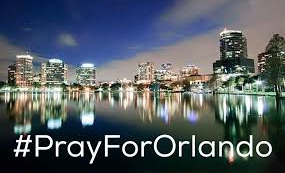
The Church for Orlando

Screen Shot 2016-06-18 at 3.23.53 PM

We are grateful to our friends at the Institute for Christian Unity who compiled this list of gospel voices offering prayers and compassion for the tragedy in Orlando:

The Church is the body of Christ in the world. The Church is called by God to proclaim the Good News of Jesus Christ to the whole world, and to do so in word and deed. This proclamation is always urgently needed and never more so than in the instance of human brutality and suffering.

We offer to you Gospel voices–voices for light in darkness–speaking for the Church in Boston to our suffering neighbors in Orlando, to the LGBTQ community, to the victims of gun violence, to the Muslim community and to the poor in spirit everywhere.

What follows are a series of links to statements by leading voices in Boston’s Roman Catholic, Eastern Orthodox, Evangelical/Pentecostal and Mainline Protestant communities as well as a special link to practical action the Church (your church!) can take on behalf of the Orlando victims and the LGBTQ community.

http://www.bostoncatholic.org/Utility/News-And-Press/Content.aspx?id=32619

http://www.hchc.edu/about/news/news_releases/mass-shooting-statement

http://www.grace.org/deeper-closer-wider/praying-for-orlando/

https://www.robly.com/archive?id=a033f5cf5ec356ecc0ef6d57e910e6dc

Also, here are a few great articles recommended by the Lead Them Home ministry:

  1. Scott Sauls: A Pastor’s Reflection on Violence Toward the LGBT+ Community
  2. Russell Moore: After Orlando, Can We Still Weep Together?
  3. Pope Francis: Reflections from Pope Francis
  4. Joe Carter, The Gospel Coalition: 5 Ways Christians Can Respond to the Orlando Shooting
  5. Jen Hatmaker: Don’t Say Nothing
  6. Wesley Hill: If the Church Were a Haven
  7. Lead Them Home: What Your Church Can Do

Finally, check out the article “There is Gospel to Preach Here”, with twelve Christian leaders across the country serving in a variety of roles tell the stories of how they responded to the massacre and offer resources to help others responding to tragedy.

Written by uniteboston · Categorized: Blog · Tagged: christian unity, community, home, jesus, unity

May 06 2016

Christ is Risen!

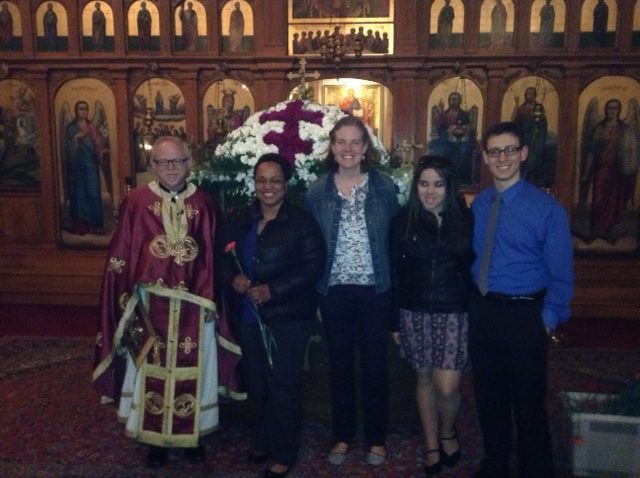
photoUHZ6HESHOur blogger this week is Steven Hardy, who is a UniteBoston Rep in the Cambridge/Harvard Square area. Steven attends St. Paul’s Parish and is a self-described  “arm chair theologian and historian.” Below, Steven presents some great insights on the unity of the church after attending his first Orthodox liturgy service.

—————

For the first time this year, I decided to attend the Pascha (Easter) celebrations at an Orthodox church. A group of us from UniteBoston had participated in the Good Friday service of Lamentations the previous evening, and I felt as though it would be incomplete to lament the crucifixion and burial of Christ with this community, and not celebrate his joyful resurrection with them. Being a Western Christian, I had already undergone the Lenten fast and the Feast of the Resurrection, but one can never mark this great mystery enough, right?

Image Credit: holycrossbookstore.com

Going into the service, I fully expected the many differences in the Eastern liturgy to stand out. I was eager to experience these differences and ready to make note of them. Basically, I suspected that I would be more of an observer than a participant. However, what drew my attention was the many things I saw that were in common with my own liturgical background. Many of the prayers, verses and responses, and even the placement in the liturgy were the same or very similar to my own background. Some of them were in the very same translations that I’ve known my whole life. As is often the case, my expectations were utterly off base when it comes to the work of God, through the Holy Spirit.

Another thing that I was very conscious of, being at an Antiochian Orthodox Church, was the current strife taking place in Syria. I noticed that, though many were not of Syrian decent, those who are, were at least one generation removed from their immigrant forerunners. The blood of Christian martyrs is being spilled there far too frequently. These Christians martyrs are not just Orthodox, but a mix of denominations. They are being persecuted and murdered due to their shared faith in Christ, causing the blood of Catholic, Orthodox, and Protestant martyrs to be mingled together in union. As Pope Francis told Catholicos Karekin II of Etchmiadzin, the Patriarch of the Armenian Apostolic Church, “Just as in the ancient church the blood of the martyrs became the seed of new Christians, so in our day the blood of many Christians has become the seed of unity.” The Pope was referring to both the Arminian Genocide that took place under the Ottoman Empire 101 years ago, as well as the current state of affairs.

We often use the term brother and sister when referring to Christians of other denominations. I suspect, however, that we often mean something more akin to cousin, or friend. As I witnessed the many things in common with the Orthodox in Cambridge, as I was made to feel welcome at their festive post- liturgy celebrations, and as I thought on the witness of the martyrs, I can’t help but to feel a much closer bond to these people who are indeed my brothers and sisters in Christ.

One day I hope that we can finally remove the things that stand in the way of full union with one another. We have a rich diversity in Christian faith traditions right here in the Greater Boston Area. We share in one Baptism into the living body of Christ on Earth. We all proclaim Christ crucified and risen. I would very much like to celebrate this shared faith together, in full communion so that we can reply with one voice, “truly He is Risen!”

Photo from UniteBoston Meetup at Orthodox Good Friday Service

Written by uniteboston · Categorized: Blog · Tagged: community, harvard square, lent, uniteboston, unity

  • « Previous Page
  • 1
  • …
  • 63
  • 64
  • 65
  • 66
  • 67
  • Next Page »


Give to Further Christian Unity

DONATE!

  • Email
  • Facebook
  • Instagram
  • YouTube

Copyright © 2026 · UniteBoston · Built on WordPress