UniteBoston

Bridging Divides Across Christians for the Flourishing of the City

  • Home
  • Events
    • Submit Event
  • Join In
    • Beloved Community Lab
    • Migrant Care and Solidarity
    • The Church and Civic Engagement
    • The ATTIC
    • Kingdom Conversations
    • Worship & Pray
    • Boston Flourish
  • About
    • UB Board, Staff & Volunteers
    • Cohorts
    • Missional Letter
    • Annual Reports
    • History
    • Christian Unity
  • Forums
  • Blog
  • Give
  • Contact
  • Search

Apr 08 2018

Martin Luther King’s Legacy Continues in Boston

Cambridge Community Fellowship Church Lives Out MLK’s Legacy

Martin Luther King was a doctoral student at the school of theology at Boston University, and lived in the South End. He was an assistant preacher at Twelfth Baptist Church. He led a mile-long civil rights march from the South End to the Boston Common.

He also stood at the Parkman Bandstand, in front of 22,000 people, speaking to the racial divisions: “Now is the time to make brotherhood a reality. Now is the time. The vision of the new Boston must extend into the heart of Roxbury. Boston must become a testing ground for the ideals of freedom.’’

While this week, the world commemorated the 50th anniversary of his assasination, King’s legacy lives on in our city. Pastor Larry King from Cambridge Community Fellowship Church seeks to extend this legacy and shape the identity of his church around social justice and racial reconciliation. Their congregation was featured on Channel 10 News – Click on the above image to watch this!

Where Martin Luther King, Jr. Lived, Worked and Played in Boston 

Martin Luther King’s Prayer for the Church

We thank you for your church, founded upon your Word, that challenges us to do more than sing and pray, but go out and work as though the very answer to our prayers depended on us and not upon you.
Help us to realize that humanity was created to shine like the stars and live on through all eternity.
Keep us, we pray, in perfect peace.
Help us to walk together,
pray together,
sing together,
and live together
until that day when all God’s children
– Black, White, Red, Brown and Yellow –
will rejoice in one common band of humanity
in the reign of our Lord and of our God, we pray.
Amen.
Written by uniteboston · Categorized: Blog · Tagged: peace, racial reconciliation, reconciliation, south end, unity

Aug 04 2017

Running for Racial Reconciliation

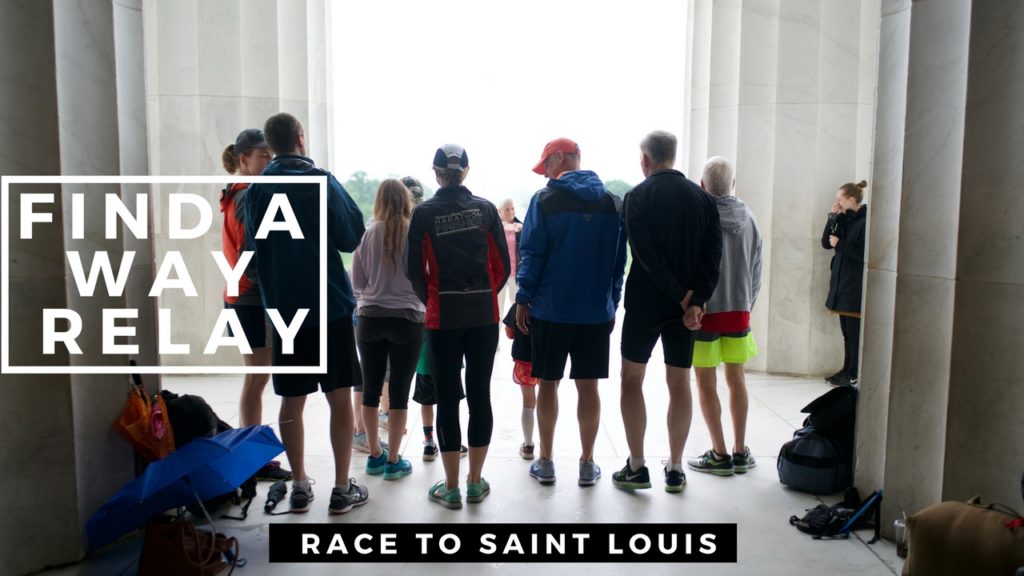
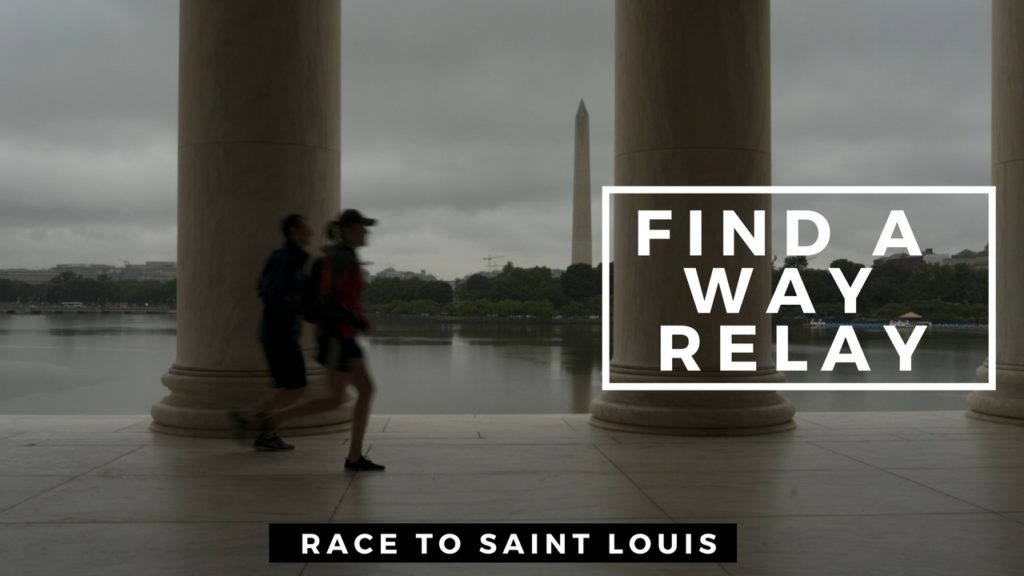
The Find A Way Relay was a journey, on foot and by bicycle, that ten people took from DC to St. Louis, where they participated in the Taize St. Louis Pilgrimage of Trust in May 2017. Together they crossed the countryside, receiving the hospitality of others, seeking to spotlight the injustice of racial violence. Vinny and Beth Mwano put together a video about the journey.

Full Version (13 minutes)

Trailer Version (2 mins) 

UniteBoston’s Executive Director Kelly Steinhaus was one of the key team members for this initiative. Below, she reflects on her own journey of learning about the reality of racial inequity and God’s heart for racial justice.


My rocking chair creaked as I sat in front of the kindergarten class in one of Boston’s public schools. As the students quieted down, dozens of faces looked up at me, expectant to hear the story of the day. I had chosen a book about a young man who has a dream about playing basketball, and through perseverance he defied the odds to make the team.

After I finished reading, I asked the students to share with me their dreams. One by one, each chimed in: “a teacher, a painter, a doctor.” I looked at each of the black and brown faces sitting in front of me, and encouraged them, “You can be anyone and do anything you set your mind to. It won’t be easy, but if you just persevere, you can accomplish anything in life.”

Those were the words that came out of my mouth, but this time there was a check in my heart. Was it actually true that these students could accomplish anything in life, in light of the obstacles in their path?

The message I shared that day was the narrative that I had been told all my life. My parents had continually encouraged me to dream big, supporting me in my pursuits of getting a 4.0, playing college volleyball, then trying to make the national rowing team. For me, my hard work paid off and my dreams came to fruition. This made it easy for me to believe that success is simply the result of hard work and perseverance.

When the shooting of Michael Brown happened, and Trevon Martin, and Tamir Rice, my first thought was how sad it was that those white policeman were so racist that they resorted to shooting. I had been caught up in the media’s portrayal of these incidents, and it wasn’t until later that I considered the police’s side of the story of when and where they use force. The Dolan Consulting Group found that police don’t disproportionately target African-American men in their use of force and in fact are responding to deadly force assaults, while other research shows that black people are 3x more likely to be killed by police, although they are more likely to be unarmed than white victims. I mention both of these articles to emphasize that this issue is incredibly complex and nuanced. We can easily generalize and stereotype people of certain races and professions based on specific incidents without examining the broader motivations and underlying factors.

The Black Lives Matter movement speaks a lot about implicit bias, which is a term that refers to our attitudes and associations that are often unconscious. When I took Harvard University’s implicit bias test, to my surprise I realized that I unconsciously associate negative concepts with black people. While I’m not clear as to how this implicit bias correlates with my behavior, this reality was striking, especially since I’m used to scoring well on tests!

While there are a multitude of factors contributing to police use of lethal force, I began to discover that beyond the important controversy over the use of force, the evidence showing unequal opportunities for people of color is undeniable:

  • I never knew that, at the time my mother was telling me that I could be whoever I wanted to be in life, black students my age were being told how to avoid being shot when stopped on the street. A black colleague of mine told me that “being pulled over is a life and death situation. Not only can I not carry a knife or gun because of the risk of getting shot to death, I cannot be thought to be carrying a knife or gun. My heart rate soars and I have a protocol of how to move and what to say to minimize anything escalating.” This fear is birthed from the reality that 40% of those who are incarcerated are black, even though they make up only 13% of the US population.
  • I learned in school that the U.S., although founded to be the land of the free, had slavery at its backbone based on a desire for cheap labor. But what I didn’t know was that the U.S. had also institutionalized laws that allowed people with white skin to gain greater opportunities for financial wealth and home ownership than those with black or brown skin.
  • I never knew that white households are worth roughly twenty times as much as black households. While the motive to pass down wealth from generation to generation is natural, it has resulted in an escalating disparity of financial resources and opportunity.
  • While I had lived most of my 32 years without thinking about race, I never knew that the majority of black people think about race every day. I didn’t realize that my ability to simply ignore racial prejudice was the result of being in the majority culture and was one of the greatest privileges that the color of my skin could offer me.

Once you see, you can’t not see… and what I began to see was that the deaths of a few black men that spurred on the Black Lives Matter movement was a symptom of racial injustice infecting America. While we will never know exactly what happened in these deaths, the societal injustice and inequity gripping America are clear. The problem was the vastly differentiated educational opportunities for Boston’s youth, it was the correlation I saw between race and income in different neighborhoods, it was the fear that I admittedly felt walking through a predominately black neighborhood, and on and on.

When I realized the extent to the problem, I became paralyzed at the vast inequity and its implications for everything. What could I do? My white skin had brought me so much, a white privilege, which admittedly was a term which I used to refrain from using. But over time, I began to realize that my initial offense at this term was a denial of the discrepancy between the world that I saw and the world as it actually is. My blinders had come off, and I couldn’t go back to the way I operated in the world beforehand.

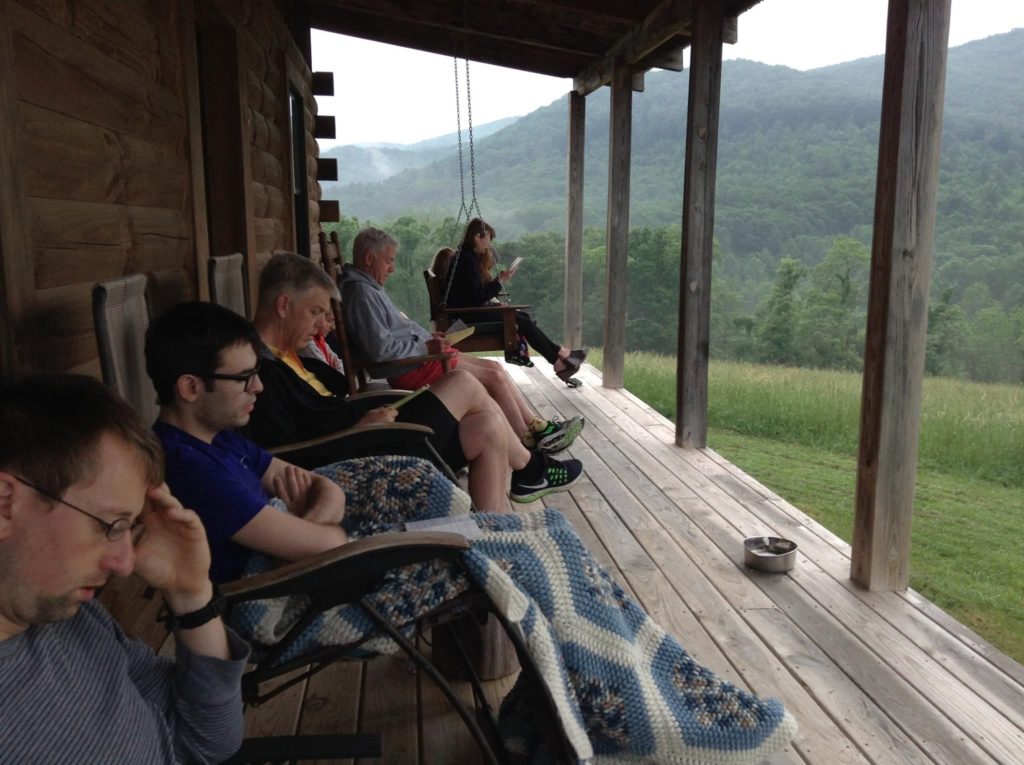
Yet, this white skin is all I have, and so I said “yes” to my friend and colleague Rev. Rita Powell when she mentioned running from Washington DC to St Louis to the worldwide Taize gathering in May 2017 focused on racial reconciliation. After the shooting of Michael Brown at Ferguson, the Archdiocese of St Louis asked the Taize brothers from France to host a “pilgrimage of trust” due to the escalating racial violence. Rather than flying to the event, Rev. Rita inspired us to pilgrimage, to travel with spiritual and sacrificial intentions. Ten of us ran and biked hundreds of miles throughout the South, offering our bodies as spiritual acts of worship as a sign of solidarity with victims of racial violence (Rom12:1). We prayed in the morning and evening and relied on the hospitality of strangers and churches along the way.

Taize Song and Prayer at our cabin the first night in Jefferson National Forest


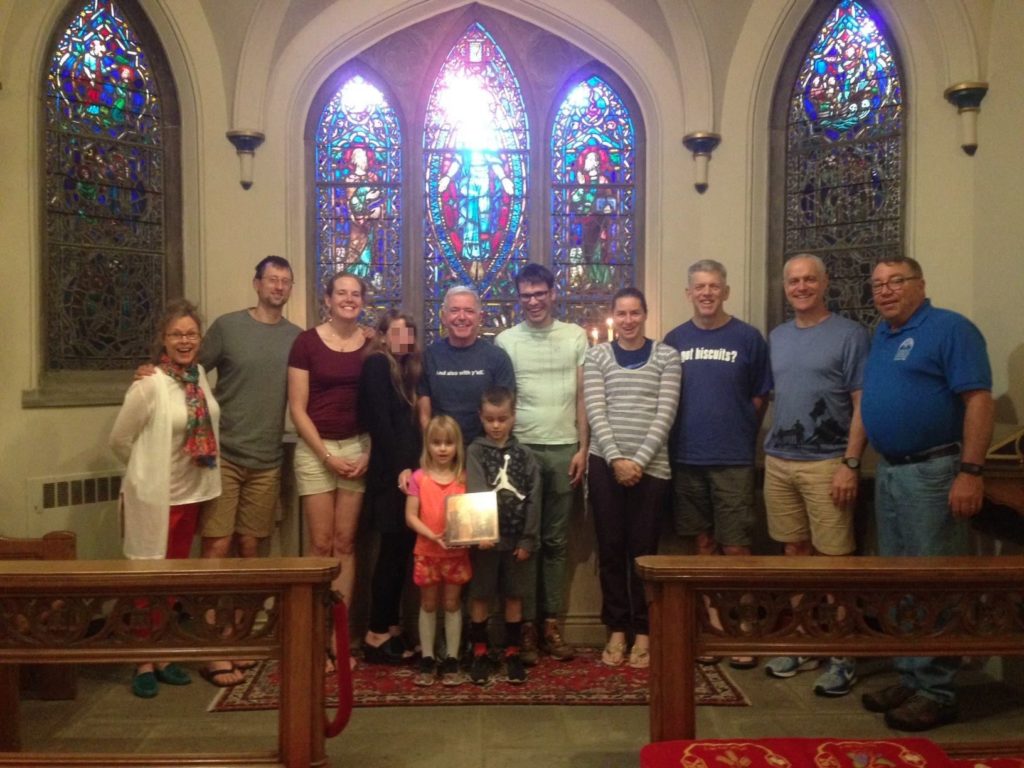
Friends from Christ Church, Lexington KY


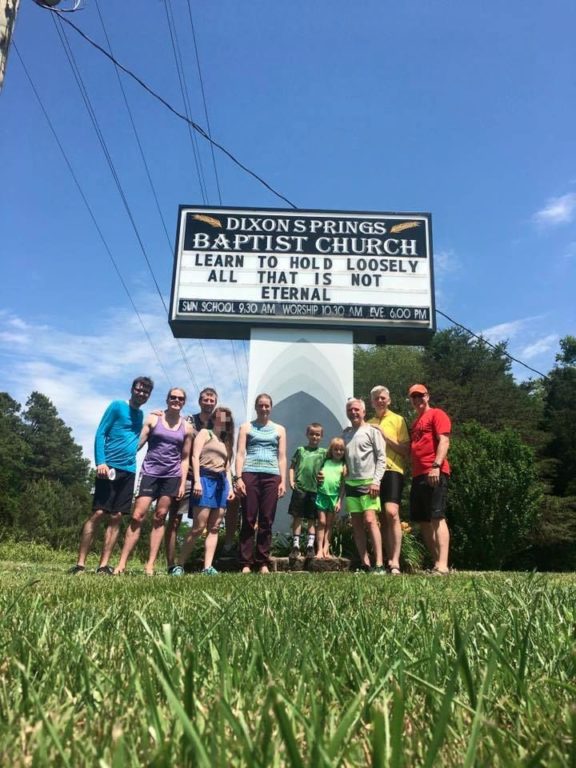
Group picture after our last run

One night it was mentioned how different our journey would be if we were ten black people taking this pilgrimage together. That statement stuck with me, because it wasn’t right and yet it was true. There is something about truth that inescapably rings in your mind and heart.

Throughout our journey, I began to see a wound of racial inequity that was deeper, wider, and more painful than I ever imagined, like pulling open a band-aid to find that our efforts towards “reconciliation” were only surface-level. I began to discover that racial justice requires more than an intellectual knowing; rather, it is an embodiment, a standing alongside, a listening deeply and committing to put my whole self in. Still, I kept asking, what could I do? My black and brown friends told me that what they needed most was for someone to hear their hurt and pain born out of their experiences to acknowledge the wrongdoing.

One pastor at Ferguson said, “We don’t just need white allies. We need people to put their bodies into the fight.” And so our team ran, for 510 miles, my feet pounding on the pavement, drawing me into solidarity with the young men whose pain was so much greater than mine.

Even after returning home, there is something different about my runs. I run more purposefully: every step as a prayer for change, justice, and hope on behalf of my black and brown brothers and sisters.

A racialized society begins, and ends, with racialized hearts. This is a call to courage: to bravely uncover the ways we are holding bias, consciously and unconsciously, and act for change. It will take all of us committing to do the hard work of challenging our implicit ways of seeing and being, that we might see the way forward, recognizing that the solution for holistic reconciliation can come from Christ alone.

“And God has committed to us the message of reconciliation. We are therefore Christ’s ambassadors, as though God were making his appeal through us. We implore you on Christ’s behalf: Be reconciled to God.” (2 Corinthians 5:19-20)

I will end by saying that I understand there may be some things in this article that have offended you. I encourage you to do your own research, to hear personal stories of people from various racial backgrounds regarding race and violence, and to draw your own conclusions. I believe we must not shy away from difficult dialogue but rather move toward it; in fact, I’ve found that discussing our differences is the key to healing political and racial division. We must all humbly admit that we see from the glass dimly (1 Cor 13:12); each of us are in desperate need of one another and God’s grace to uncover our underlying stereotypes and preconceived notions. I welcome you as a dialogue partner, and especially if you would send along any resources you’d like to share with me. You can contact me via email at kelly@uniteboston.com.

Next steps:

  1. Watch a CNN study  showing how children view racial bias
  2. Read an article about Racial Equity in America – How Far Have We Come? 
  3. Take the Harvard Implicit Bias test (click on race)
  4. Connect with Megan Lietz, Research Associate with the Emmanuel Gospel Center’s Race and Christian Community Initiative

Written by uniteboston · Categorized: Blog · Tagged: ferguson, racial reconciliation, reconciliation, uniteboston, unity

Jan 07 2017

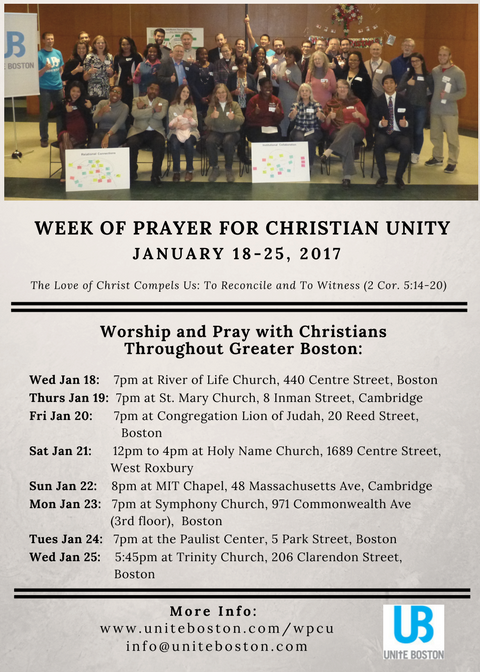
Press Release: Diverse Christian Leaders Unite for the Week of Prayer for Christian Unity

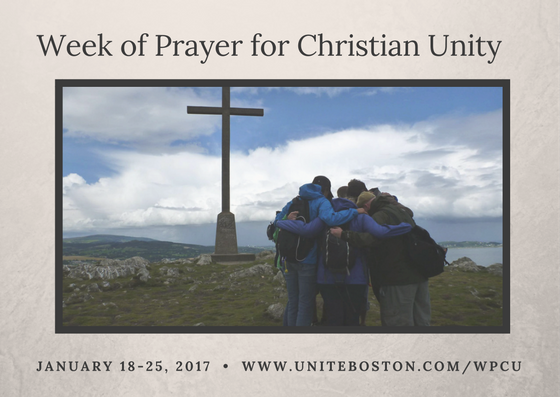
Today, the UB Blog features a press release for the upcoming Week of Prayer for Christian Unity, which is taking place from January 18 to 25, 2017!


Diverse Faith Leaders Unite for Worship and Blessing Service
in the Week of Prayer for Christian Unity

Today, Greater Boston faith leaders announce “Christian Unity 2017 – The Love of Christ Compels Us To Witness and Reconcile,” a collaborative event on Saturday, January 21, 2017 to join hundreds of Catholic, Orthodox, Evangelical, and Protestant Christians together for the international Week of Prayer for Christian Unity. Marking the 500th anniversary of the Reformation, the program celebrates the progress towards Christian unity and fosters dialogue around Christian approaches to the issues of our day including race, diversity, interchurch families and the global persecution of Christians.

copy-of-week-of-prayer-for-christian-unity

Cardinal Seán O’Malley, Archbishop of Boston said, “Pope Francis has challenged the Catholic community to build bridges with our ecumenical colleagues by seeking unity in the name of the Lord.  Joined by our faith in Jesus Christ, we are called to work together to build a civilization of love. It is my prayer that this gathering will strengthen our shared mission of bringing Jesus’ love and peace to the people we serve.”

The event will begin at Holy Name of Jesus Church in West Roxbury with noontime lunch followed by workshops on Christian unity’s relation to: evangelization, interchurch families, global persecution of Christians, racial reconciliation, the 500th anniversary of the Reformation, Scripture in the Christian Life, and Pope Francis. Cardinal Seán O’Malley of the Roman Catholic Archdiocese of Boston, Metropolitan Methodios of the Greek Orthodox Metropolitan of Boston, Rev. Dr. Bryan Wilkerson of Grace Chapel, Rev. Dr. Roberto Miranda of Congregación León de Judá, Rev. Dr. David Wright of the Black Ministerial Alliance, Pastor Barry Kang of Symphony Church and other leaders will co-preside at a Worship and Blessing Service for the Week of Prayer for Christian Unity at two o’clock. The event will conclude with a Mission and Volunteer Reception where participants can engage with various organizations in their ministries.

“For the first time in this region’s history, the Week of Prayer for Christian Unity will reflect the face of the new global Christianity,” explained Dr. Vito Nicastro, Associate Director of the Office of Ecumenical Affairs of the Archdiocese of Boston. “This event will join Asian, Pentecostal, Black, and Oriental Orthodox churches alongside the Evangelical and Mainline Protestants, Catholics and Eastern Orthodox- in countless variations, and on a new scale. Together, we will provide the tinder for God to spark a new local prayer movement drawing us closer to Christ and to each other.”

To date, partner organizations collaborating on the event include: Alpha New England, Black Ministerial Alliance; Community of Sant’Egidio; Congregación León de Judá; Coptic Orthodox Diocese of New England; E-Net New England; Emmanuel Gospel Center; Focolare; Glory of God in New England/Glory of God on Cape Cod; Grace Chapel; Greek Orthodox Metropolis of Boston; Institute for Christian Unity; InterVarsity New England; Lord’s Day Alliance; Massachusetts Council of Churches, Massachusetts Family Institute; Park Street Church; The Paulist Center; Roman Catholic Archdiocese of Boston; UniteBoston, 3 Armenian Churches of Watertown, and a growing list of others.

“All the partner organizations seek to inspire a generation of prophetic leaders who will build relational, missional and theological bridges across historic divides among Christians,” said Scott Brill, Co-Founder of The Institute for Christian Unity and Assistant Regional Director for InterVarsity Christian Fellowship.

Kelly Steinhaus, Executive Director of UniteBoston, the organization that created the local, week-long programming explained, “We build relational connections through our events to show a more unified testimony to the strength of God’s love for every person. As Christians identifying with many different denominations, we can better serve our city together with dialogue around our common beliefs and values.”

For more information on the event, please visit: https://www.facebook.com/events/1819327351612594/

The event is free and open to the public. Lunch is $8 and free for those under the age of 35. Holy Name of Jesus Church is located at 1689 Centre Street in the West Roxbury neighborhood of the City of Boston. Parking is available and the Church may be accessed via the MBTA. Take the 38 Bus from Forest Hills Station (Orange Line) to Wren Street via Centre Street.

For a complete schedule of events in Greater Boston for the Week of Prayer for Christian Unity, please visit https://uniteboston.com/wpcu.

week-of-prayer-for-christian-unity-1


Media Contact: Timothy McGuirk; mcguirkt@rcab.org; 857 225 1537


Written by uniteboston · Categorized: Blog · Tagged: christian unity, racial reconciliation, testimony, uniteboston, wpcu

Oct 07 2016

Upcoming UniteBoston Events: Save the Date!

10518625_10152725660463035_107844485045841618_o

UniteBoston nurtures relational connections throughout Boston’s Christian community. Save the date for these upcoming events that we’re planning for the year!

  • December 8: “UniteBoston: Let’s Do it!” party, Paulist Center downtown, 6:30 to 8:30pm. We’ll have a live band, food, and fun activities. Please plan to attend!
  • January 18-25: Week of Prayer for Christian Unity, with worship gatherings reflecting the diversity of the body of Christ throughout Boston. Do you know any churches who would like to host for this? We’re beginning to recruit for this…
  • May 6: BostonServe, where we are coordinating collaborative service projects and encouraging every church to serve together in their neighborhood
  • May 21-29: Taize Pilgrimage of Trust gathering in St. Louis focused around racial reconciliation; A large group of Boston people are going; some of us will be doing a running relay to get there!
Finally, in November we’re going to be giving away Amazon gift cards to people who tell their friends to sign up for the UB newsletter. Stay tuned for more info about that!
Thanks for your commitment to Jesus and His Church throughout the city. Please email kelly@uniteboston.com if you have any questions or feedback for us. God is up to great things in Boston!

Written by uniteboston · Categorized: Blog · Tagged: christian unity, racial reconciliation, reconciliation, uniteboston, unity

Dec 18 2014

Begin with the End in Mind

Last year, Chris White hosted a dialogue at Harvard sharing about race. In this week’s UniteBoston blog, Reverend White encourages us to “begin with the end in mind” as he shares his story on racial reconciliation.

——
As the end of 2014 approaches, it is important that we take time to look back on the year. My hope for unity in Boston and America is that we will “begin with the end in mind.”

We learn by stories, so I will share mine. I was adopted from Bogota, Colombia into a white family. My Mom is Polish and my dad is English, hence the last name White. They say we have a castle in London but I have yet to see it. I grew up in Peabody. If you aren’t from Boston, it is pronounced as one word really fast, “Peabody.” My skin color isn’t white, but I grew up white; I lived in a white neighborhood and was brought up Catholic which is predominantly white. I also experienced white privilege, which to me is better schools, safer neighborhoods, and higher paying jobs.

As a person of color, I also experienced racism. I remember when I was studying at UMass Amherst, I was rollerblading and fell. I started bleeding and across the street there was a white woman. She stopped, stared, did not say a word, and walked away. It hurt not just the pain from the cut but that I was ignored.

Some say you are born into what you believe. For me, that statement rings true. I often wondered why I was brought up in Boston with a mom who’s family was Catholic and part of my dad’s family who was Jewish. My mom thought it would be a good idea to experience both religious traditions. It probably would have been if I didn’t encounter Christ when I was in college.

It wasn’t until I read The Purpose Driven Life that I understood better why God made me the way He did and put me in America. “And He has made from one blood every nation of men to dwell on all the face of the earth, and has determined their preappointed times and the boundaries of their dwellings.“ (Acts 17:26)

I enjoyed my Catholic upbringing and had an amazing priest named Father Bruce. During my second year of college, I met some friends who were Mormons and inspired me to learn more about God. To make a long story short, I made Jesus my Savior and became born again.

I was ordained by the American Baptist of Massachusetts in 2009. We do many things together to reflect unity in Boston. We have joint services with blacks and whites, we help minorities build stronger congregations, and we provide funding for minority children to come to Camp Grotonwood.

In his famous book Seven Habits of Highly Effective People, Stephen Covey encourages us to “begin with the end in mind. Picture you are in heaven, and think about what that looks like as you sing to God, “And they sang a new song, saying: "You are worthy to take the scroll and to open its seals because you were slain, and with your blood you purchased for God persons from every tribe and language and people and nation.” (Revelation 5:9)

Heaven is a place where all the colors bleed into one. If heaven is going to be blacks, whites, Catholics and Protestants worshiping together and living as one, wouldn’t it make sense to do ministry the same way?

My hope for the churches of Boston is that we would do more together. Yes, the scripture in John 17:23 calls us to be one. But what does that one look like and who are these people in the organizations making the decisions? During my time there were many older white men in leadership. I hope that the leaders would come from many different backgrounds and ethnicities.

I also hope that the Catholic and Protestant Churches would work together, as well as various ethnic groups. As we work together, think about those who are worshiping with you. If you are trying to get black people to come to your events make sure you include some Gospel.

I’d also encourage churches to share your wealth! Many black churches don’t have the funds that white churches have because of slavery and discrimination. Whenever possible, we need to support black missionaries and minorities. Minority staff are not going to have as much access to funds that white staff have available to them. I know this personally from my experience working with Intervarsity and Campus Crusade for Christ; the diversity of the staff wasn’t as strong as I would have liked, but I am thankful that both organizations are working on this.

Finally, I’d encourage Christians in Boston to be intentional as they live. No one likes to be ignored and people of color feel that way a lot. It is important to say hello and acknowledge them. Stretch yourself and your network by attending a black church or white church, by helping out at a Catholic event or a Protestant service. One of the best things you can do is to have a friend of the opposite race. Be like Jesus and break down the racial and denominational barriers. Begin with the end in mind!

To learn more about Chris White’s ministry, visit revchrisopherwhite.org or email: revchristopherwhite@gmail.com, like him on Facebook https://www.facebook.com/ChrisWhiteMinistries

Written by jasonjclement · Categorized: Blog · Tagged: oneinchrist, racial reconciliation, uniteboston, uniteboston10, weareoneinchrist

  • « Previous Page
  • 1
  • 2
  • 3


Give to Further Christian Unity

DONATE!

  • Email
  • Facebook
  • Instagram
  • YouTube

Copyright © 2026 · UniteBoston · Built on WordPress