UniteBoston

Bridging Divides Across Christians for the Flourishing of the City

  • Home
  • Events
    • Submit Event
  • Join In
    • Beloved Community Lab
    • Migrant Care and Solidarity
    • The Church and Civic Engagement
    • The ATTIC
    • Kingdom Conversations
    • Worship & Pray
    • Boston Flourish
  • About
    • UB Board, Staff & Volunteers
    • Cohorts
    • Missional Letter
    • Annual Reports
    • History
    • Christian Unity
  • Forums
  • Blog
  • Give
  • Contact
  • Search

Jun 05 2025

Navigators Disciplemaking Network

Jesus said to go and make disciples of all the nations.

The Boston Navigators are building a network of believers who desire to grow in knowledge and skill as disciplemakers.

We meet quarterly in different locations to offer practical content, real life stories, and the opportunity to build friendships and partnerships in ministry. This quarter we are focusing on disciplemaking in our neighborhoods.

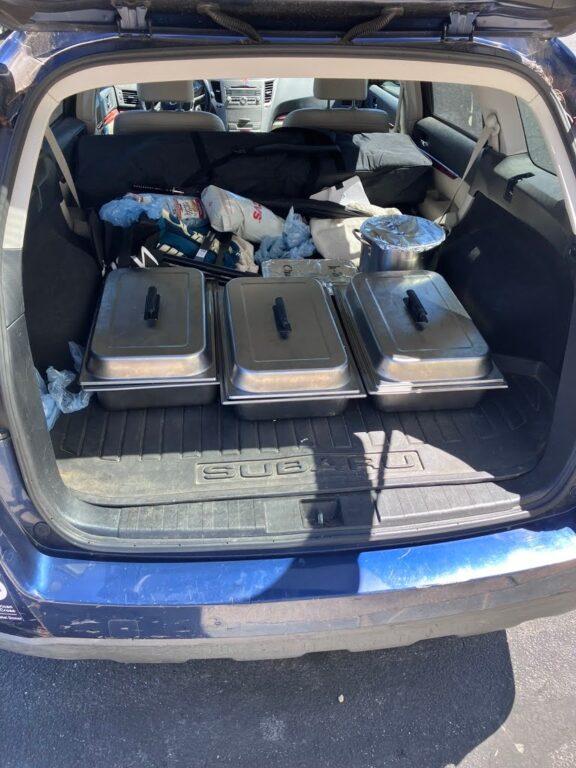
The cost is free but we ask that you register. Breakfast snacks and coffee will be provided.

Written by Andrew Walker · Tagged: boston, boston christians, christiansinboston, friends, gospel in action, hospitality, jesus, Life Together, love thy neighbor, ministry, movement, neighborhood, neighborhood dinner, neighborhood outreach, neighboring, new england

Mar 26 2025

Part-Time Business Office Associate

Located in the historic Boston neighborhood of Beacon Hill, Park Street School provides a continuous, integrated Christian-based education for children from toddler through sixth grade. Exemplifying a Christian worldview, Park Street School is an equal opportunity employer and is continuously striving to maintain a faculty with varying backgrounds and cultural experiences. It is truly a wonderful place to work! We are currently seeking to hire a Part-Time Business Office Associate. Please email employment@parkstreetschool.org for application instructions.

Position Summary
The Business Office Associate (BOA) is an integral member of the Business Office at Park Street School (the School). This position reports to the Director of Finance. The BOA’s central responsibility is managing Accounts Payable, which involves working with colleagues and outside vendors to ensure timely payment and recording of the School’s expenses.

Primary Responsibilities
• Process invoices in a timely and accurate manner
• Follow approval procedures for payment of invoices, and a variety of reimbursements
• Obtain accurate vendor information for 1099’s
• Proactively establish and maintain processes within the Business Office to improve efficiency
• Use innovative methods to develop efficient A/P processes
• Collaborate with colleagues to develop and maintain proper and efficient processes between the Business Office and other departments
• Maintain an organized filing system, both online and physical
• Actively pursue learning opportunities to better their understanding of accounting procedures, databases and software
• Support the Administrative team in assisting where needed, with a mission driven focus
• Support Faculty members as needed, with a student-first focus
• Other duties as assigned, including but not limited to front-desk coverage, lunch-duty, recess and pick-up/drop-off of students

Requirements and Qualifications
• 2-4 years related experience and a Bachelor’s degree preferred
• Capable and proficient in using technology to process work, including Microsoft Excel, Microsoft Word and other online applications and database management software
• Experience with Veracross, Fyle, Bill.com desirable
• Demonstrate excellent, interpersonal communication skills with a diverse group of people
• Ability to be flexible in duties by exhibiting a can-do attitude
• Ability to understand or research the needs and concerns of colleagues and a willingness to help them with any Business Office-related questions or concerns
• Highly detail-oriented with the capability to organize, plan, manage, and work simultaneously on multiple projects and follow through to completion
• Previous experience in a school environment is desirable
• Understanding of and experience with preschool, elementary, and middle school students is helpful
• Evening and weekend availability for School events, as necessary

Please email employment@parkstreetschool.org for application instructions.

Written by Andrew Walker · Tagged: beacon hill, boston, lent, neighborhood, unity

Mar 06 2025

Lent with Irenaeus of Lyons

“We need to be more self-reflective than ever.  Marketing has long drawn us into greed.  Algorithms now draw us into fear and outrage.  Politics draw us into viciousness. But those vices feed a foe within us — one more subtle and terrible than any foe without (Romans 7:14 – 25).  How will we – as Christians in Greater Boston – endure the change and hardship coming while relating more deeply with Jesus? “

Lent is upon us, a season of spiritual discipline, reflection, and self-examination. In this week’s newsletter, we’re featuring Lent with Irenaeus, a new book by local author Mako Nagasawa, who is also an elder at Neighborhood Church of Dorchester.

Irenaeus of Lyons, a second-century bishop, confronted distorted beliefs and emphasized the wholeness of body, soul, and creation in the Christian faith. Read an excerpt of his book below to explore his timeless insights on spiritual formation to deepen your faith from the darkness of Lent to the light of Eastertide.


Lent is the forty day period before Easter — that is, Resurrection Sunday. Lent begins with Ash Wednesday, when Christians often mark our foreheads with ash to remind us that we are mortal and will return one day to the dust. Lent ends with Holy Week – we recall Jesus’ entrance into Jerusalem as king, confronting the powers, only to face anguish at Gethsemane, be crucified on Good Friday, and then, at last, be raised on Resurrection Sunday into an immortal life.

During this period in his life, Jesus journeyed to give and to gain. He went to give something up – his very life. He also went to gain something infinitely valuable — his humanity purified and perfected, and a way for us to share in what he accomplished. The letter to the Hebrews says Jesus endured the cross, scorning its shame, for the joy set before him (Heb.12:2).

Lent is like a spiritual fitness routine. In order to more fully appreciate the significance of Jesus’ journey during Lent, Christians typically give something up — often a comfort item: meat; sugar; coffee; video games; social media. We let ourselves feel a physical or emotional pang of desire. We let this desire remind us of a deeper desire: the desire for a deeper connection with Jesus. Lent is, therefore, a season where we hope to gain things: a deeper hunger and thirst for Jesus and his righteousness (Mt.5:6), and strength over our lesser cravings – even if those lesser cravings help us cope with pain or loss. Perhaps especially if so.

Irenaeus is an outstanding guide in this Lenten journey. He was a Christian leader in the second century. He had been mentored by Polycarp of Smyrna in western Asia Minor, the region where Jesus’ apostles – his earliest followers – had spent the most time investing in new communities. Polycarp had been mentored by the apostle John, so Irenaeus’ pedigree was impressive. He might have died as a martyr, but certainly he was ready to, as his predecessor Pothinus of Lyons and mentor Polycarp of Smyrna both died by martyrdom. How did he come to love Jesus that much?

Irenaeus defended the Christian faith against “gnostic” influences — those who believed the body was evil or worthless or didn’t matter as much as the soul and the mind. So-called “gnostic Christians” then argued that Christian faith was about simply believing certain ideas while giving up on changing much of anything. It would have been the easier way to live, frankly. But Irenaeus knew that our journey with Jesus had to be more fully embodied, and involve a retraining of our whole being. For we are, as Irenaeus understood, human becomings.

Most of these reflections come from the fourth book of Irenaeus’ five volume work, Against Heresies. In this book especially, Irenaeus connects the stories and practices of the Old Testament to Jesus. The gnostics wanted to disconnect Jesus from the ancient Jewish story and community. Irenaeus points out that Jesus’ physical humanity was dependent on the Jewish community from which he came. God had shaped and trained ancient Israel in certain ways, with their partnership. Jesus embraced that training and journeyed further.

I hope Irenaeus’ reflections on this journey with Jesus helps you this Lenten season. For this early Christian leader – Irenaeus – believed it was a journey of becoming truly human.

Reflection 2:  We Ascend to God or Descend to the Animal

We often think of Lent as a season where we give up something, which is often a comfort item:  meat; sugar; screen time; chocolate.  We let ourselves feel the loss or lack of that thing.  We let this lack lead us to feel desire, and this desire reminds us that our deepest desire is for Jesus.  So during Lent, we hope to gain things:  a deeper hunger and thirst for the righteousness of Jesus (Mt.5:6), and strength over our lesser cravings – even if those lesser cravings help us cope with pain or loss.

Irenaeus speaks of this training of our desires.  He says we either ascend towards God, or descend towards the animal – or, at least, certain types of wild animals.  As finite beings created and loved by the infinite God, we are meant to grow infinitely in relation to God… Yet, the apostle Peter said that those who sin without repenting eventually become “slaves to corruption, for people are slaves to whatever masters them” (2 Pet.2:19).  Peter, quoting King Solomon in Proverbs 26:11, says that such people are like dogs that return to their vomit or pigs that return to mud.  Irenaeus, citing Peter, explains it in terms of desires and longings: “Now, spiritual men shall not be incorporeal spirits; but our substance, that is, the union of flesh and spirit, receiving the Spirit of God, makes up the spiritual man.  But those who do indeed reject the Spirit’s counsel, and are the slaves of fleshly lusts, and lead lives contrary to reason, and who, without restraint, plunge headlong into their own desires, having no longing after the Divine Spirit, do live after the manner of swine and of dogs; these men, [I say], does the apostle very properly term “carnal,” because they have no thought of anything else except carnal things.”  (AH 5.8.2, italics mine, quoting 2 Pet.2:12 – 22; Prov.26:11; cf. AH 4.4.3, quoting Ps.49:12)

Consider how we might “live after the manner of swine and of dogs” as Peter and Irenaeus mention, unpleasant as that might be.  We can make our habitats – our families, friendships, and organizations – morally and spiritually unhealthy.  For example, if we make a home for toxic favoritism or disdain, allow gossip and conflicts to fester in our presence, or get defensive when we are wrong, then we are like those pigs who sit in the mud and their own excrement.  If we are in leadership and allow sins to go unaddressed, we contribute to an unhealthy environment where other people suffer.

We need to be more self-reflective than ever.  Marketing has long drawn us into greed.  Algorithms now draw us into fear and outrage.  Politics draw us into viciousness.   But those vices feed a foe within us — one more subtle and terrible than any foe without (Romans 7:14 – 25).  How will we – as Christians in Greater Boston – endure the change and hardship coming while relating more deeply with Jesus? 

Written by uniteboston · Categorized: Blog, Devotionals, Lent, SPIRITUAL FORMATION & EVANGELISM · Tagged: community, jesus, lent, neighborhood, unity

Jul 09 2024

Jesus Needs a Place for the Day

Amidst the number of new immigrant and refugee families arriving to our city, many churches are opening their doors and hearts to serve and care for our new neighbors. One of these churches is St. Michael’s Episcopal Church in Milton with Pastor Hall Kirkam, which served as a day shelter site for many of our new community members from Haiti. 

Read below to hear Pastor Hall’s reflection on the experience and how they have lived out Jesus’ call to welcome the ‘least of these.’

P.S. While the state has asked IFSI to pause on day center services until further notice, there are two urgent opportunities for congregations to serve our new neighbors:

  1. Coordinating a Neighborhood Support Team, with up to $10k grant funding for teams that apply by 7/31
  2. Coordinating an Intensive English class with IFSI, where churches provide space and volunteers for a three to six hour session so individuals can practice English towards job readiness. Contact Sheldine Jean-Baptiste to set up a call to discuss the details!

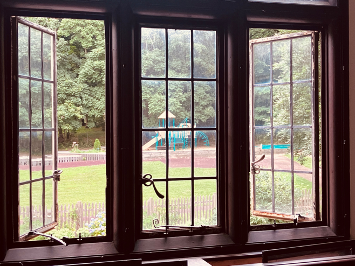
I open my windows on days like this, sunny and warm in June while kids are still together before summer, in order to hear the preschoolers on a playground made tidy and furnished with games and such by The Village School, which rents space from us. I watch as a little one wears butterfly wings and chases another who’s on a tricycle (without a hint of the danger that butterflies face from moving vehicles on the highway).

Mark 9:30-37 tells us that Jesus was on his way to Capernaum in Galilee when he told his disciples a second time that he was going to be handed over to the authorities at some point and be killed. After they arrived, he asked them what they were talking about on the road, and they were quiet, because they’d been talking about who was the greatest among them. He told them, “Look, if you want to be ‘first’ as it were, you will need to be ‘last’, the servant of all. Like this child before me: If you welcome one of these children, you welcome me, and you welcome the one who sent me.”

I listen as families from Haiti, parents and preschool children working with Immigrant Family Services Institute (IFSI), make their way through our Memorial Chapel into the Lower Parish Hall for instruction, administrative help, a hot meal, and maybe a suitcase or clothes or a blessing bag of personal hygiene items, safe from the streets and from the gangs they have escaped back home, safe for now anyway in a place that is beautiful, well- and lovingly-cared-for, and made welcome, by the good people at St. Michael’s.

The children who file in are, well, children, thankfully curious and mischievous, mostly ready to play and eager for whatever is next.  They, too, are butterflies, chasing one another or peering from a doorway, and on the playground after school has let out.

We began hosting families in our Lower Parish Hall early April 2024, when Rev. Laura Everett from the Massachusetts Council of Churches reached out to parishes in the Milton area to see if any wanted to learn about sharing space.  I did, my parish responded to the plan I shared first with Wardens and then Vestry, and then members gamely raised their hands to offer ESL skills, daytime availability to play with kids, and cars for transporting food prepared at Church of the Holy Spirit in Mattapan.  We assembled a Signup Genius and an Amazon wish list.

It wasn’t easy. There were challenges with the increasing flows of traffic, which was alleviated as  a few parishioners signed up as cab-wranglers to help manage the coming and going of Haitian families while school families were coming and going as well.

In early June, IFSI decided to ‘pause’ at this location, perhaps as things with MassPort, IFSI, the Commonwealth, Haiti, and all the constituent details seem to float in unpredictable patterns and each day brings – as each brought – something unexpected.  The generosity of spirit of St. Michael’s parishioners, and then of The Village School, has helped many of us to open our eyes in order that we open our hearts to hold space, resources, and compassion for folks who come to our door.

Matthew 25:40 tells us that, when we welcome the least, we welcome the King.  

And Elizabeth Barrett Browning reminds us that:

Earth’s crammed with heaven 
And every common bush afire with God 
And only he who seeks takes off his shoes
The rest sit around and pluck blackberries.

Our world is hard, butterflies get smooshed by trucks, and people get hunted, tossed aside, and executed by greed and prejudice. Fear turns his wheel indeed, again and again, like Yeats’ widening gyre. “Be not afraid”, Jesus encourages.

If we can allow the possibility of solidarity with the least of Jesus’ siblings – the vulnerable, hungry, and stranger – we’ll discover God without having to squint so hard.

Written by uniteboston · Categorized: Blog, Immigration & Belonging · Tagged: community, home, jesus, neighborhood, unity

Feb 19 2024

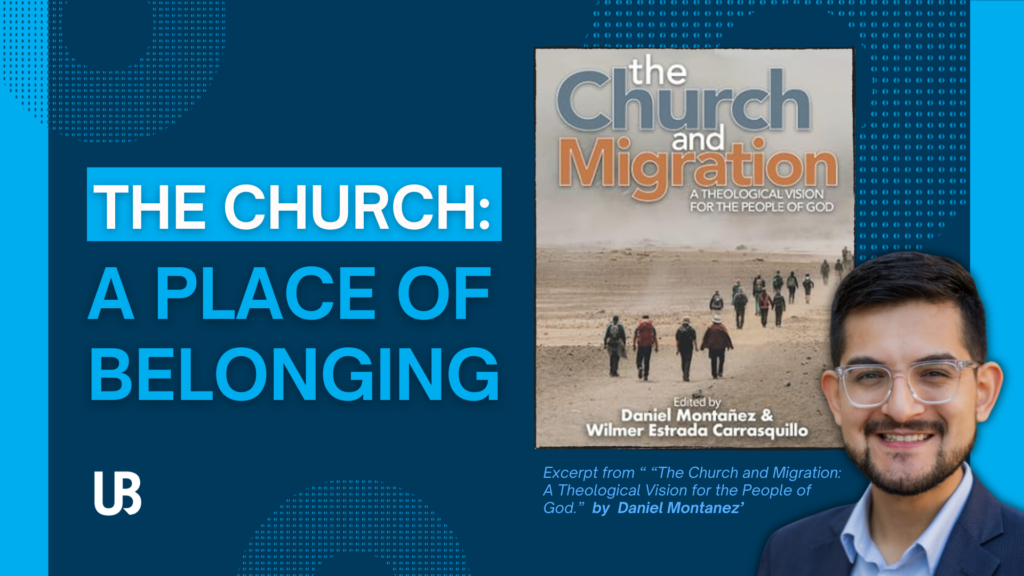
The Church: A Place of Belonging

In an age of global migration and mass displacement, what is the responsibility of the Church to respond to the needs and realities of migrant and displaced communities? All too often, the narrative surrounding immigration is depicted within mainstream media as highly political and divisive. In evangelical and charismatic circles, many Christians are more likely to be influenced by what the media says about immigration than the Bible.

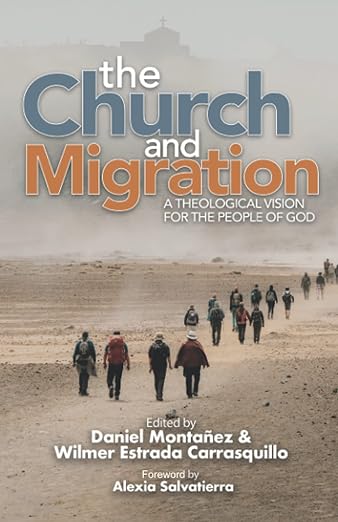
For our week on “Believe,” we are sharing a piece entitled, “The Church: A Place of Belonging” which is a chapter from local author Daniel Montanez’ book entitled, “The Church and Migration: A Theological Vision for the People of God.” The book seeks to transform the narrative of immigration by approaching it from the larger lens of human migration. By exploring the theme of human migration throughout the grand narrative of Scripture, this resource sets forth a theological vision for understanding migration from a Biblical-theological perspective. Read below to hear some practical ways in which Christians can get involved in serving migrant and displaced communities.


The Sojourner, the alien, the foreigner, the exile, the refugee, the immigrant, or whatever name is used to refer to those who may not be like us or from among us, still refer to persons who are created imago Dei and deserve the treatment afforded to everyone created as such. Just as the Temple in Jerusalem, with its imposing structure and radiant splendor, stood as a representation of the God to whom it is was constructed and dedicated, so also is the Body of Christ, the Church, the representation of God in the world today. It is, therefore, the responsibility of the Church to be Christlike in its actions and treatment of people. And the church, as a building or locale is to be equally welcoming to those who may not be part of the Body of Christ—the “other.” 

Immigrants make the move from one country or location to an other because they might be seeking safety from a dangerous situation in  their own land, looking for employment to help provide for their families, looking to start a new life in a foreign land, etc. Despite the variety of those mainly extenuating circumstances in which the immigrant population finds itself, the Bible gives only one way in which to treat them—with love and compassion—because the God is the One who loves them, and the Body  of Christ follows the Head of the Church. Additionally, Israel was constantly reminded that they, too, were sojourners: “Love the sojourner, therefore, for you were sojourners in the land of Egypt”(Deut 24:14). When they went to the temple to make their sacrifices they were to “declare before the  LORD your God: ‘My father was a wandering Aramean, and he went down  into Egypt with a few people and lived there and became a great nation, powerful and numerous'(Deut 26:5). In Leviticus, Israel is commanded, “When a stranger sojourns with you in your land, you shall not do him wrong. You shall treat the stranger who sojourns with you as the native among you, and  you shall love him as yourself, for you were strangers in the land of Egypt: I am the LORD your God (Lev. 19:33-34).” 

Creating Places of Belonging  

How does the church become a place of inclusion for immigrants? What are their needs? How are they to be treated, and how can the church effectively minister to them? The parable of the good Samaritan (Luke 10:23-37) is a powerful example of inclusion and ministry and answers the question about how to  practice inclusion. That is done by showing compassion to the other when  the other is a stranger and even an enemy. The actions of the good Samaritan are non-judgmental and carried out only in compassion for the person in need. There is no questioning of the legality of travel, or intentions at  point of destination, or even of the moral character of the wounded person,  i.e., whether or not he is a “bad” person and not worthy of assistance. Help is rendered based on the need of the person and goes way past the bandaging of his wounds to his healing and wellbeing. 

Miroslav Volf, in what is probably his most popular work, Exclusion and Embrace: A Theological Exploration of Identity, Otherness, and  Reconciliation shows his own wrestling with showing compassion to the other: that as he tries to answer the question posed to him by his Professor Jürgen Moltman about embracing his enemy—the Serbian fighters: “But can you embrace a četnik?” After giving it some thought, he knew that his response would be: “No, I cannot—but as a follower of Christ I think I should be able to”(9). The church in this country has not always been a place of inclusion. It is a reflection of the society in which it finds itself. But there is hope that we can become a place of belonging. Tex Sample has said that in dealing with those who are different to us we must “deal respectfully, authentically, and transformatively.” To do so “could lead to a quantum leap in the way the church understands the faith, reckons with and makes moral decisions, celebrates Christian faith, and moves in a mission to the world” (139).

That mission to the world is to minister to its needs. Faith is not detached from providing tangible ministry to those in need, as so clearly explained in James 2:14-26. Martin Luther King, Jr. in his book Strength to Love argues that “A religion that professes a concern for the souls of men and is not equally concerned about the slums that damn them, the economic conditions that strangle them and the social conditions that cripple them, is a spiritually moribund religion” (250).

A church can do the following to become a welcoming place of belonging to immigrants: 

  1. Be a welcoming by opening its doors to them. Have programs and  resources that they need even without preaching to them: ESL classes, GED classes, computer classes, child-development classes, after-school classes, and care, etc. 
  2. Help with their specific needs. To do so effectively, the church needs to know who lives in the community, town, or city. Who  are they trying to reach? Who can they reach most effectively with  their resources and human capital (members and workers)? Immigrants in the neighborhood need access to immigration assistance and information, child-care, translation services, food and  nutrition, clothes, furniture, etc. As a church in a neighborhood that is 73% Hispanic with a majority being first generation immi grants from Central America and Mexico, our church aims specifically at reaching that population and those who help ministering to their needs. We share resources with the “Clínica Santa María”  next door and try to minister to their staff also as caregivers.
  3. Adopt a family, mentor parents, teens, etc. Recently arrived families can be paired with families who have been in church for a while and who can help them during their adjustment period. Mentoring programs for family members and, especially, teens  are very effective. 
  4. Make church a host site for workshops, conferences, community action and meetings on issues that have to deal with immigration,  social justice, racism, etc. Offering the use of the local church  building and facilities is a good way to get the community to feel  welcome and have a sense of belonging to this important house of faith in their community. There are always social work organizations, educational institutions, various non-profits, etc., that are looking for spaces in the community to offer their programs.
  5. Be a friend and loving neighbor. Recognize important dates in the community and celebrate the heritage of the members of the community. Celebrating Hispanic Heritage and Black History Month, Independence Days, etc. help the community see the church as a place to which they belong, and which shares their moments of  joy and celebration. 

As a recently arrived international student in a small southern town which has its history of struggles against racism, I was welcomed by a church and a family that “adopted” me and helping me get acclimated to life in this country demonstrating the love of Christ. In difficult moments, they served as advocates helping to fight for justice and even opened their home when I was unable to afford to live in campus housing. The “Adopt-a-Student” program of that church gave me something to which I could  belong—a family, a church, a denomination, and the Body of Christ. It was a tangible way for a local church to embrace an immigrant.

Churches must continue to envision and embrace a world and their communities with more immigrants and accept their mandate to represent Christ and be a place of belonging for sojourners, aliens, and immigrants.


But Wait! There’s More…

This is a chapter from Daniel Montanez’ book “The Church and Migration,” which serves as an accessible and educational guide for pastors, church leaders, and parishioners to better understand what the Bible says about God’s heart towards people on the move and how these truths can be applied in our modern world. It is available for purchase in English and Spanish. 

Our page “A Sanctuary for Strangers” also has a variety of other pressing action steps that churches can take to support our new neighbors.

There have been two other articles written by UniteBoston Staff exploring themes in the Good Samaritan: Rev. Kelly Fassett invites us to consider, “To whom must I become a neighbor?” and Rev. Devlin Scott challenges us to consider how we might inadvertently seek to justify ourselves instead of fully embracing Jesus’ radical acceptance.

Written by uniteboston · Categorized: Blog, FAITH & JUSTICE, Immigration & Belonging, Who is My Neighbor? · Tagged: community, neighborhood, reconciliation, uniteboston, unity

  • « Previous Page
  • 1
  • …
  • 3
  • 4
  • 5
  • 6
  • 7
  • …
  • 15
  • Next Page »


Give to Further Christian Unity

DONATE!

  • Email
  • Facebook
  • Instagram
  • YouTube

Copyright © 2026 · UniteBoston · Built on WordPress