UB Board President Dr. Michael James shares his personal reflections from participating in the inaugural Beloved Community Lab pilot cohort. In a culture driven by polarization, Michael explores what it truly takes for Christian leaders to remain present to one another across deep theological, political, and cultural divides.
Read his moving testimony on how truth, love, and belovedness can transform our leadership, and learn how you can join our nationwide Fall Beloved Community Lab Online Cohort!
What does it actually take for Christian leaders to remain present to one another across deep theological, political, and cultural divides?
In a world increasingly shaped by polarization, contempt, and fear, the Church is often tempted to mirror the very hostility surrounding us. But as I look back over this past year in the inaugural pilot cohort of the Beloved Community Lab (BCL), I feel a profound sense of gratitude and hope: the Church can become a different kind of community—one where truth is spoken in love, wounds are acknowledged, and no one’s humanity is sacrificed for the sake of winning.
As UniteBoston prepares to launch its Fall Beloved Community Lab Online Cohort, I want to share a bit of my story and what this year-long journey of deep discipleship has meant for my heart, my faith, and my daily leadership.
My Background: Seeking Unity in the Academy and the Church
In my daily work, I serve on the faculty and as a Resident Minister at Boston College, alongside my active participation in the Boston Focolare Community—a global movement within the Catholic Church dedicated to building unity, dialogue, and universal brotherhood across religious and cultural divides. I also serve on the executive leadership team with UniteBoston, working ecumenically to foster bridges of trust across Greater Boston’s diverse Christian traditions.
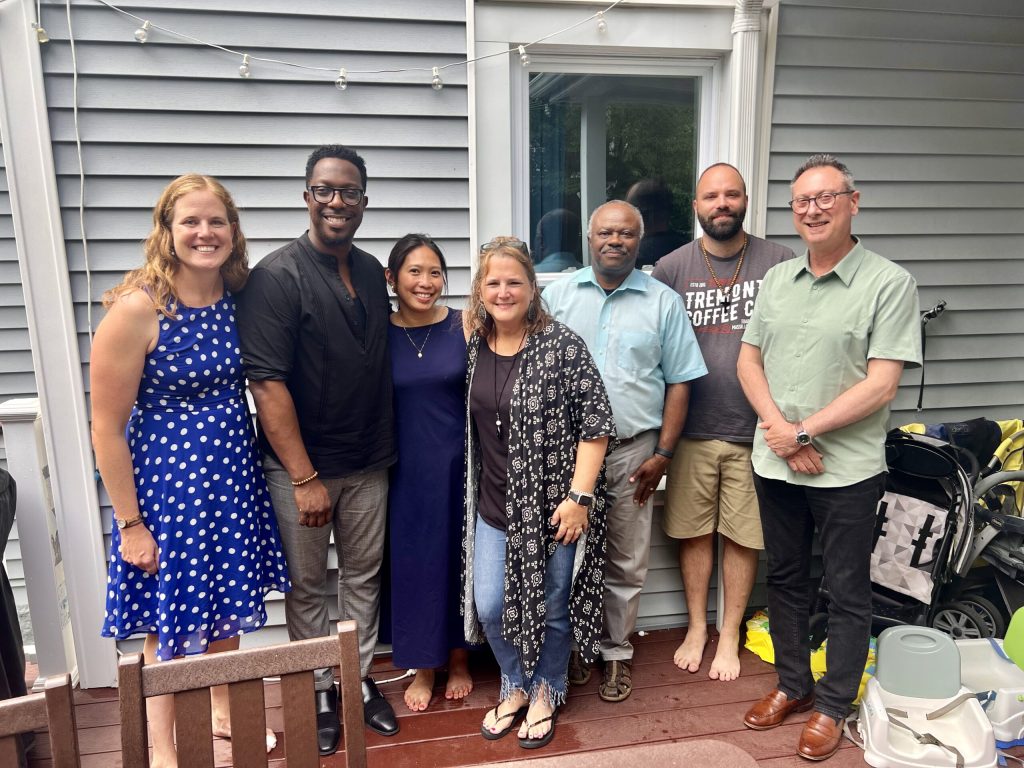
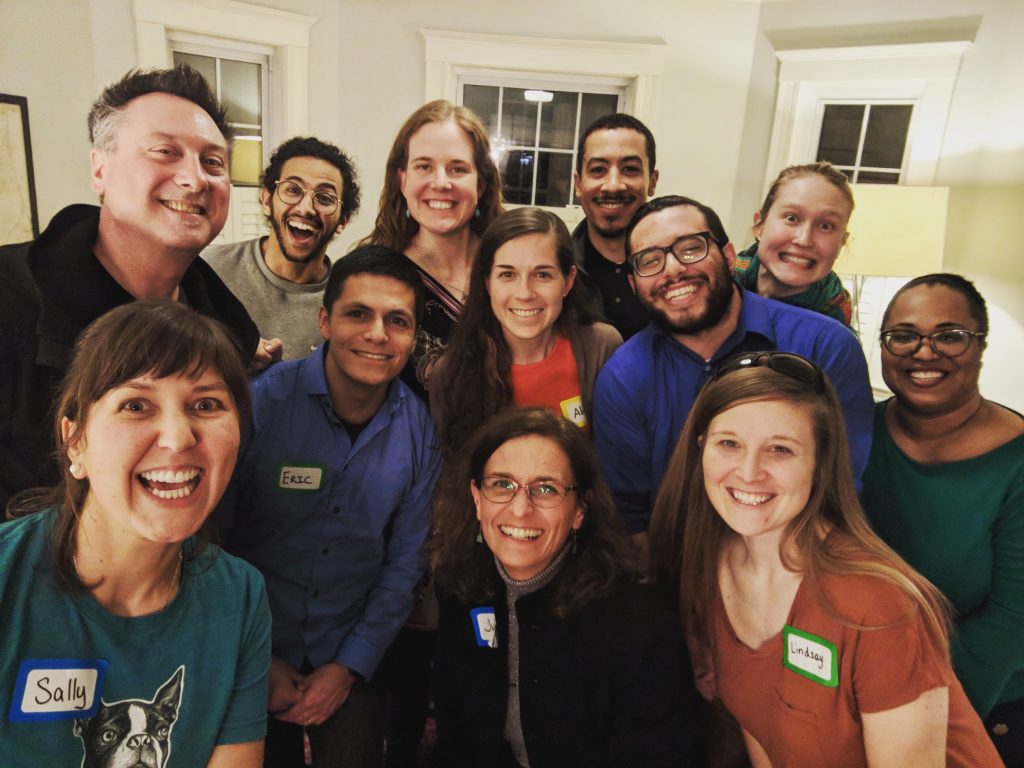
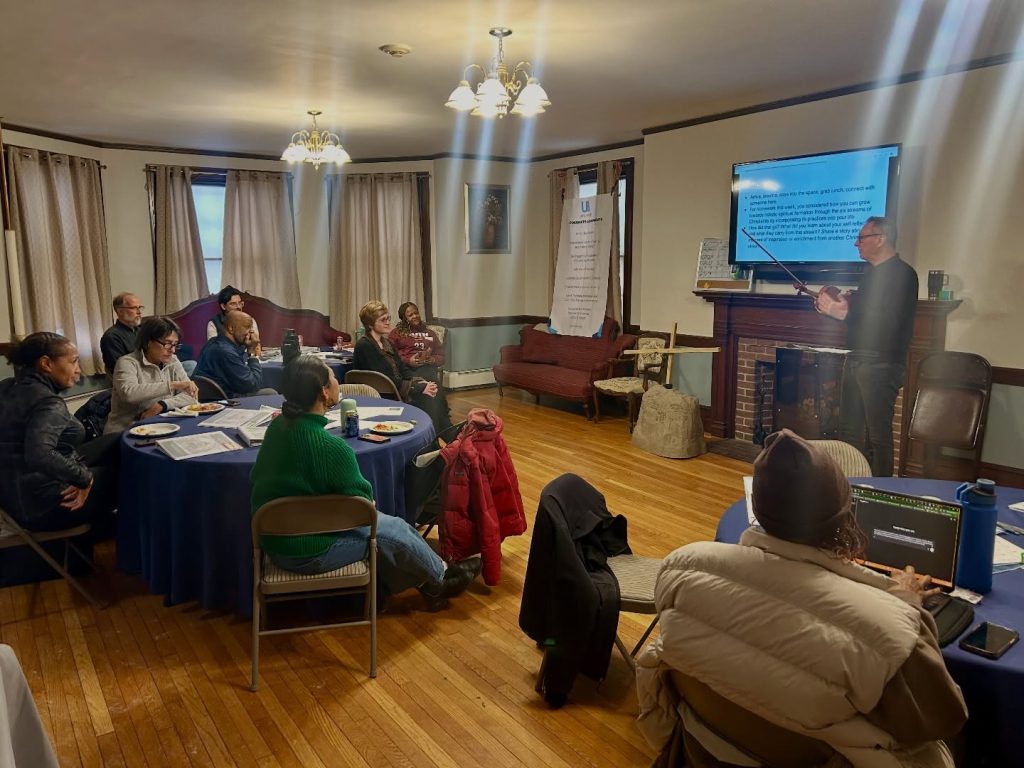
Because my life’s work sits at the intersection of spiritual formation, higher education, and ecumenical community life, I came to the Beloved Community Lab with a deep hunger for sustained, heart-level reflection. The Lab turned out to be much more than a series of thoughtful sessions. It offered a sustained invitation to examine my own heart, to become more attentive to God’s presence in people whose experiences and convictions differ from mine, and to consider more honestly whether my leadership helps create the conditions for reconciliation, belonging, and shalom.
“I Am Beloved. You Are Beloved. We Are Beloved.”
The truth I most want to hold onto from this year is beautifully simple and endlessly demanding: “I am beloved. You are beloved. We are beloved.”
Our sessions introduced a framework called the “Stool of Belovedness“—the dynamic balance of loving God, loving neighbor, and receiving one’s own belovedness. I have long believed this conceptually, but I do not always live it with equal consistency. Love of God, love of neighbor, and a healthy reception of my own belovedness are inseparable. When any one of those relationships is neglected, my capacity to participate in beloved community is diminished.
The Lab deepened my conviction that the belovedness of another person is not something I confer upon them because they agree with me, behave as I would prefer, or belong to my community. It is a reality that precedes my judgment. The truest thing about the person before me—even someone who thinks, lives, votes, worships, or interprets the world very differently—is that this person is a beloved child of God.
This does not mean that every action is acceptable, every conviction is equally true, or every disagreement can be easily reconciled. But it means that disagreement must never become permission for dehumanization.
Holding Conviction and Compassion Together
Another crucial lessons I carried away was the distinction between compassion and conviction. The Lab challenged the false assumption that fidelity to Christ requires choosing one over the other.
Christian maturity means learning to speak truth in love—holding our convictions sincerely while refusing to use them as weapons. Compassion without truth can become evasive, but conviction without compassion can become cruel, self-righteous, and spiritually violent. Jesus calls us to a much more demanding integration of grace and truth.
Our sessions on “righteous hubris” and “enemy love” were particularly searching for me. They invited me to ask an unsettling question: Where might my own convictions, however sincerely held, have caused unintended harm? I learned that bringing grief, anger, or bodily reactions honestly before God isn’t an obstacle to spiritual discernment —it can become a doorway through which the Holy Spirit reveals wounds, attachments, fears, and invitations to repentance.
How Difference Enriched My Catholic Identity
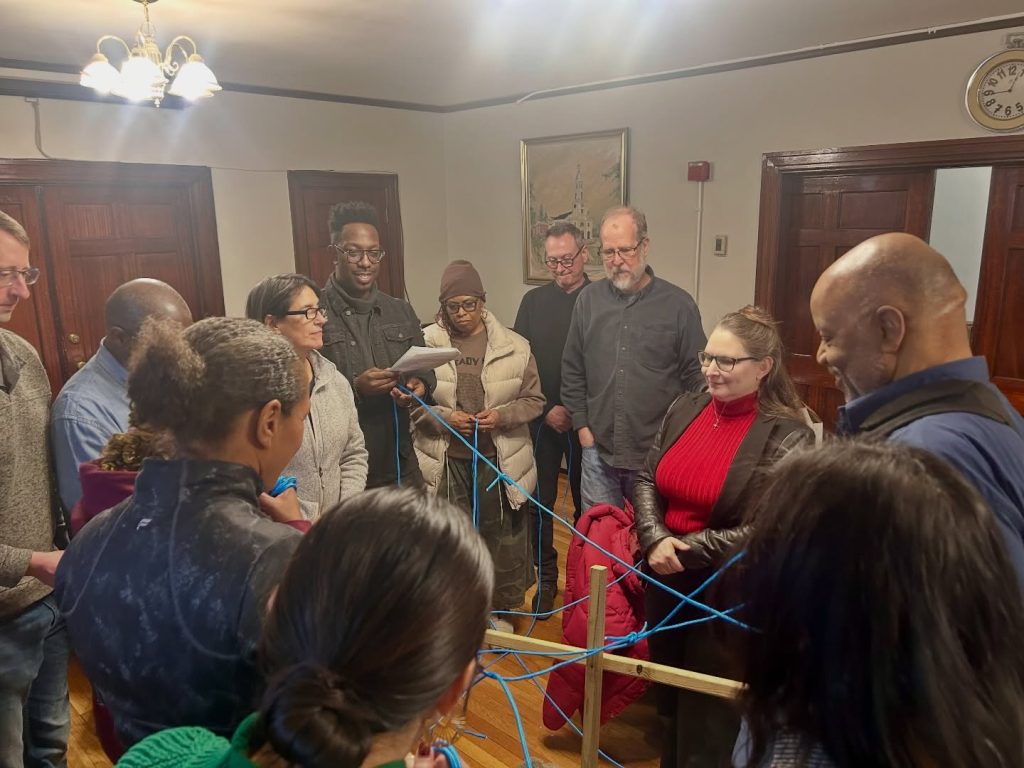
One of the greatest gifts of the Lab was developing genuine friendships with leaders whose ecclesial traditions, theological language, cultural experiences, and ministry settings differ from my own.
One friendship in particular taught me that I don’t need to translate difference immediately into either agreement or disagreement—I can first receive another person’s story as a gift. Through our conversations, I became more attentive to the communities that nurtured them, the wounds they carry, the Scriptures that sustain them, and the hopes that animate their ministry. I was reminded that another Christian tradition is not simply a collection of doctrinal propositions; it is a living community of prayer, memory, suffering, faithfulness, and encounter with God.
That experience actually made my own Catholic identity more—not less—meaningful. I was invited to articulate my tradition with greater humility and gratitude, while receiving the wisdom of another without feeling that difference threatened my fidelity. Dialogue does not require us to become less fully ourselves; it enables us to encounter one another more fully as human beings and as fellow disciples.
Bringing the “Lab” into My Daily Leadership
The Lab is showing up directly in my leadership at Boston College and beyond through a more intentional commitment to pause before responding.
I find myself asking more frequently: Am I entering this conversation primarily to persuade, defend, or resolve—or am I genuinely prepared to understand and connect? I am practicing the movement from judgment to wonder: What am I missing? What experience lies behind this conviction? What does this person most need me to understand?
In a recent leadership conversation where I felt the familiar impulse to explain my position quickly because I believed I had been misunderstood, I forced myself to pause. I allowed the other person to finish, asked a clarifying question, and reflected back the concern and value beneath their words. I eventually stated my own perspective and maintained an important boundary, but I did so without dismissing the other person or treating the disagreement as a contest. The relationship remained intact, and the conversation became far more honest.
I am discovering that beloved community doesn’t mean the absence of boundaries; a boundary can be stated firmly without contempt, and accountability can be pursued without humiliation. Conflict can be approached with care for everyone’s dignity.
An Invitation to Join the Journey
I leave this year with immense gratitude, hope, and a renewed sense of responsibility. The Beloved Community Lab reminded me that reconciliation is not an optional side interest alongside the Church’s mission—it is at the very heart of God’s mission. The credibility of our Christian witness depends upon the quality of our relationships, the manner in which we disagree, and our willingness to recognize Christ in one another.
I pray that I will continue to become a leader who is less anxious about controlling outcomes, less quick to defend, more willing to listen, and more courageous in speaking truth with compassion.
If you are a pastor, ministry leader, or non-profit director longing for a space to be formed as a peacemaker, I warmly encourage you to apply for UniteBoston’s upcoming Fall Online Beloved Community Lab Cohort. You will find a rich, challenging, and safe container to integrate your head, heart, and hands for the work of shalom.
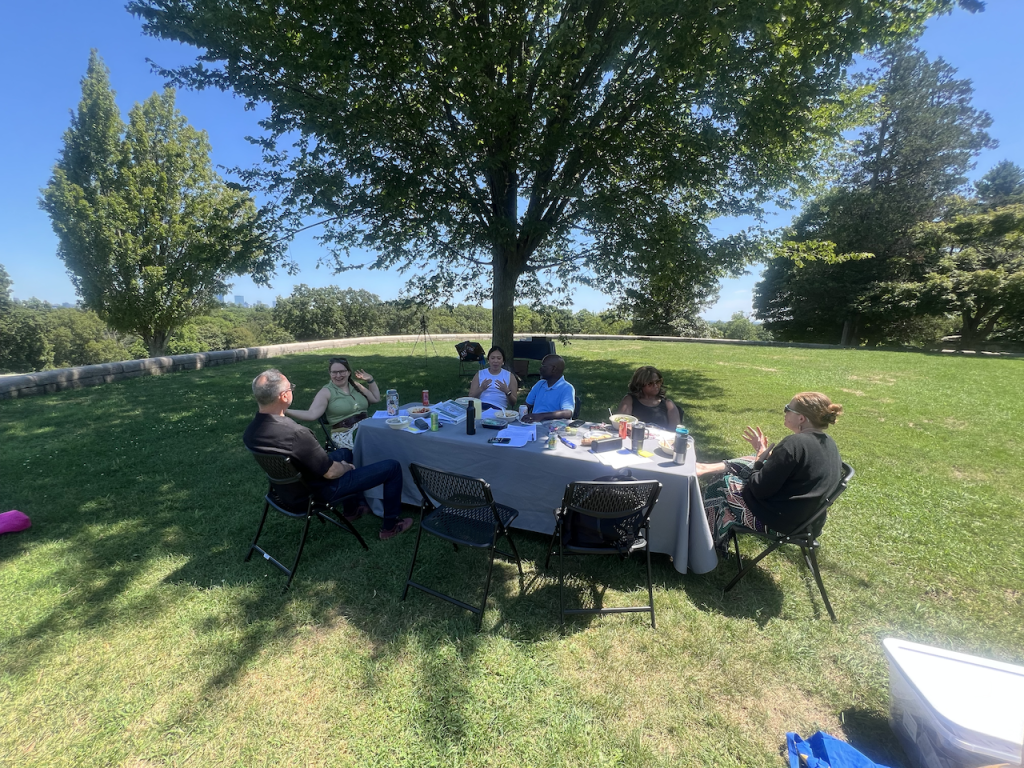
Closing reflection and commissioning service at Larz Anderson Hill Park
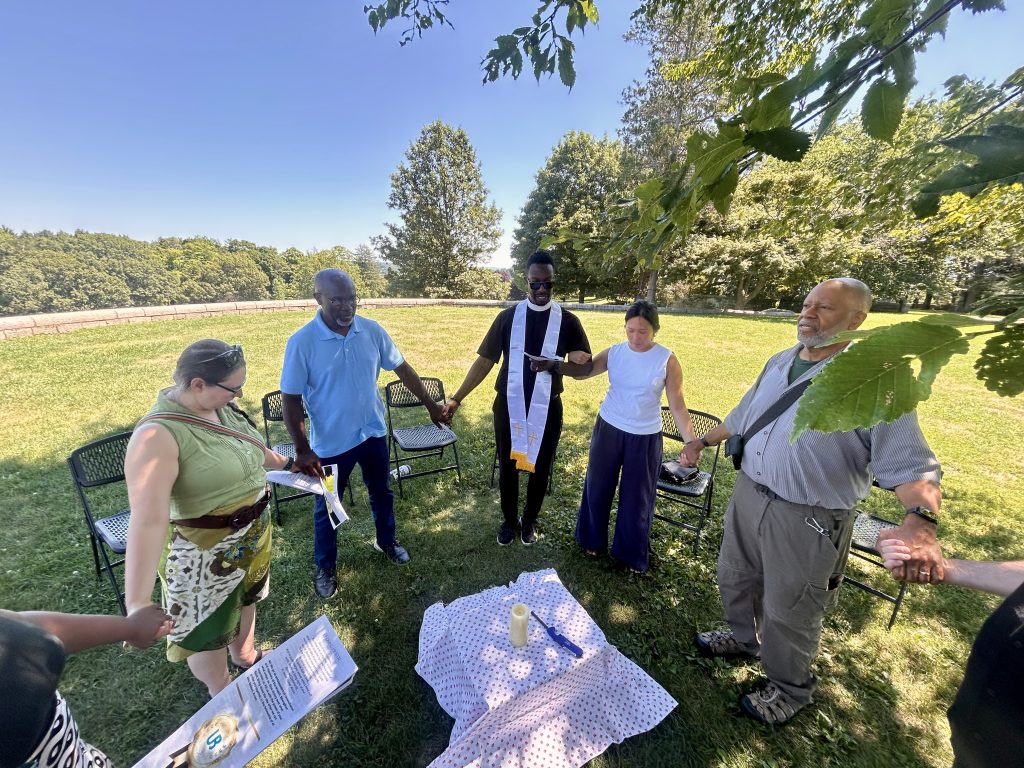
God of reconciliation,
You have knit us together in Christ
And called us to the hard and holy work of mending divides in your Church and in the world.
Send us now with your Spirit
To live with integrity,
To stand in solidarity,
To speak truth in love,
And to build bridges where others have built walls.
Make us living signs of your Beloved Community.
In Jesus’ name. Amen.
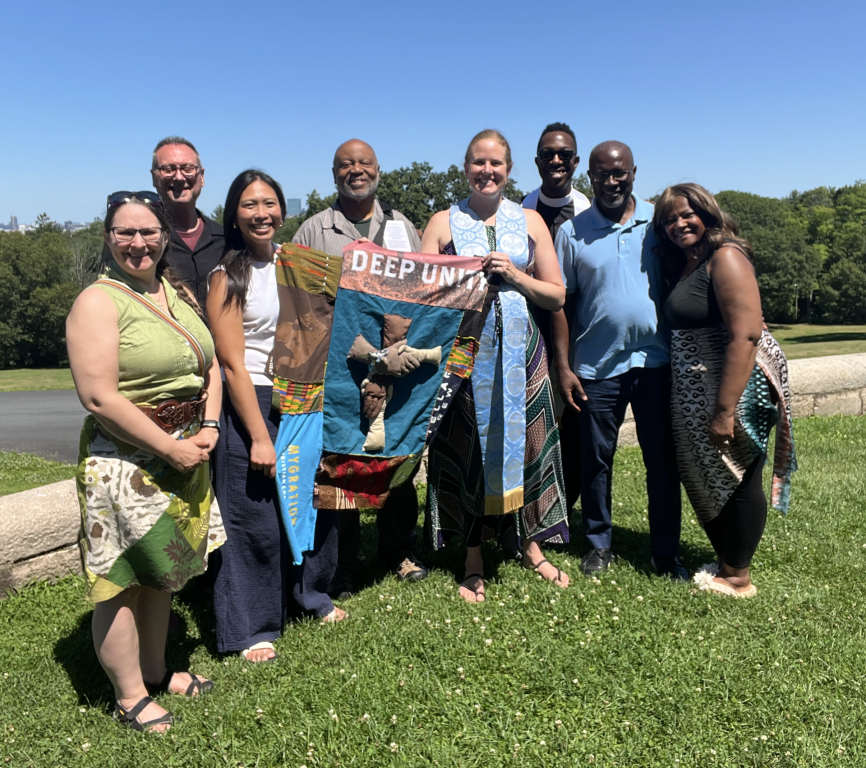
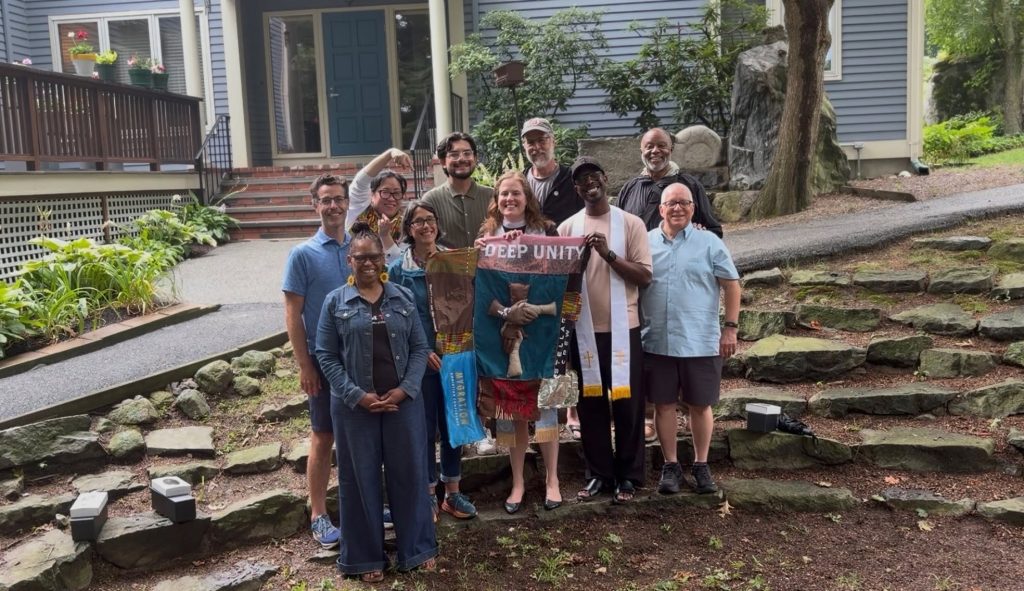
Looking Forward: Expanding the Movement
As this pilot year came to a close, we began to hear of leaders in other contexts who share a longing to bring the journey of mending divides to their own contexts. We believe this instinct and dream for deep unity is something the Holy Spirit is birthing in our day and age.
In response to this growing movement, UniteBoston is thrilled to announce the next chapter of our story:
- Beloved Community Consulting Opportunities & Workshops: We are extending customized training, interactive workshops, and coaching to help local congregations and community organizations put these concepts into practice in their own staffs and leadership teams.
- Online Beloved Community Lab Cohort (Launching Fall 2026): We are officially opening up our 12-session interactive curriculum to pastors and ministry leaders nationwide who have interest in bringing this to their contexts and cities through a digital cohort space and in-person closing retreat.
The Beloved Community Lab is far more than a leadership program—it is an active experiment in Christian unity that meets this cultural moment with grace, truth, and hope. You can read a few testimonies and fruit that is emerging from the pilot cohort here! As we look to the future, we invite you to join us in living out this mission, leaning into difference without fear, and embodying the reconciling love of Christ across lines that seek to divide us.
Interested in bringing the Beloved Community Lab to your church or joining our Fall Online Cohort? Contact our team at info@uniteboston.com – we’d love to hear from you!
Leave a Reply