
In a culture fractured by hostility, what if the path to Christian unity runs directly through our differences rather than around them? The Beloved Community Lab was created to move beyond shallow tolerance and instead cultivate a daily discipleship of peacemaking and reconciliation.
Read below about the fruit that is emerging from our pilot cohort, and learn how you can join the movement this fall!
By Rev. Kelly Fassett
There we were at the Bethany House of Prayer in Arlington, sitting in a circle and reflecting on the year. As we went around the room sharing what this year had meant to us, two pastors spoke back-to-back. The contrast between them was striking—one hailing from a conservative-leaning theological tradition, the other a progressive clergy member in a mainline denomination.

Yet, the unity in the room was palpable. They spoke not of theological compromise, but of a quiet, uncanny kinship—a mutual affection that genuinely willed the good of the other. One described the year as a personal “journey from tentativeness to greater dimensions of security and affection,” describing their friendship as God-ordained. The other reflected: “In my tradition, I thought I knew a lot about tolerance and radical welcome. But being in close contact with Christians who profess quite different, often deeply (and personally) challenging theological views was something I was little prepared for. The point, of course, was not to change one another’s minds. Instead, it was to find ways to love each other. And I can say that this really did happen, slowly but genuinely… This alone feels like a miracle, and I am deeply, deeply grateful for it.”
Standing at the intersection of such profound difference and profound love raises a core question for the Church today: What is at the heart of the unity we seek as followers of Jesus, and how do we actually get there?
Moving Beyond Papered-Over Peace
Historically, efforts towards Christian unity have often centered high-level doctrinal negotiations—ecumenical councils of bishops and theologians ironing out statements of belief. While doctrine is vital—at UniteBoston, we hold steadfast to the foundational truths of the Nicene Creed—we are convinced that statements alone cannot heal a fractured Church.
Perhaps the unity Jesus prayed for in John 17 is less about structural consensus and more of an invitation into the dynamic, relational dance of the Trinity itself. After all, Jesus did not leave us a checklist; He offered Himself, saying, “I am the way, the truth, and the life.” If our shared relationship with Jesus is the most fundamental reality of our identity and purpose, then we believe Christ is the anchor capable of holding us together across deep divides.
However, I’ve seen the Church too often settling for a shallow, ‘kumbaya’ togetherness that papers over difference with polite tolerance. I’ve become dismayed by how this plays out in events I attend: at ‘unity’ gatherings, I often notice that the room is predominantly white, while ‘justice’ events are led by BIPOC individuals and those on the margins. There is a tendency to treat unity and justice as competing priorities, but this is a false dichotomy because we know that God is about both unity AND justice.
Here at UniteBoston, we are beginning to cultivate a framework for Deep Unity—believing that the path to Christian oneness runs directly through our differences, not around them. Our aim is unity in reconciled diversity—a oneness cultivated and sustained not by watering down our differences or focusing on the least common denominator, but through diverse friendships in beloved community.
Deep Unity is a daily lifestyle and discipleship practice that:
- Refuses to pretend differences don’t matter, choosing instead to honor the unique cultures and perspectives that enrich the body of Christ.
- Cultivates the courage to stay at the table when conversations become difficult or uncomfortable, rather than retreating into ideological silos.
- Approaches others with humility, curiosity, and generosity, remembering that we all “know in part” (1 Cor 13:9) and need one another to see God clearly.
- Pursues justice for the vulnerable through cruciform solidarity—sacrificing power, privilege, and resources for the well-being of our neighbor towards holistic flourishing.
- Listens deeply and tends to places of historical wounds, seeking the active redemption and restoration of broken relationships toward God’s vision of shalom.
The Birth of the Beloved Community Lab
Three years ago, a diverse group of Boston Christian leaders gathered around a burning question: What kind of discipleship actually forms leaders who can embody this kind of deep unity in a fractured world? We knew the answer had to move beyond mere debates, books, sermons, and conferences. What we needed was an intentional experience of holistic spiritual formation—a space that cultivated healthy engagement across Christians of differing backgrounds, perspectives, and life experiences. Out of that prayerful inquiry, the Beloved Community Lab (BCL) was born.
We call it a “lab” because it is both theological and practical—a courageous space to reflect, experiment, and practice with fellow Christians in a variety of leadership contexts. The 12-session curriculum centers on five foundational pillars: Belovedness, Diversity, Reconciliation, Justice, and Shalom. We operated on a simple truth: reconciliation is the Gospel, and true healing requires us to press into areas of deep disagreement so the love of Christ can mend what is broken.
The 2025–2026 Pilot Cohort: A Mosaic of Faith
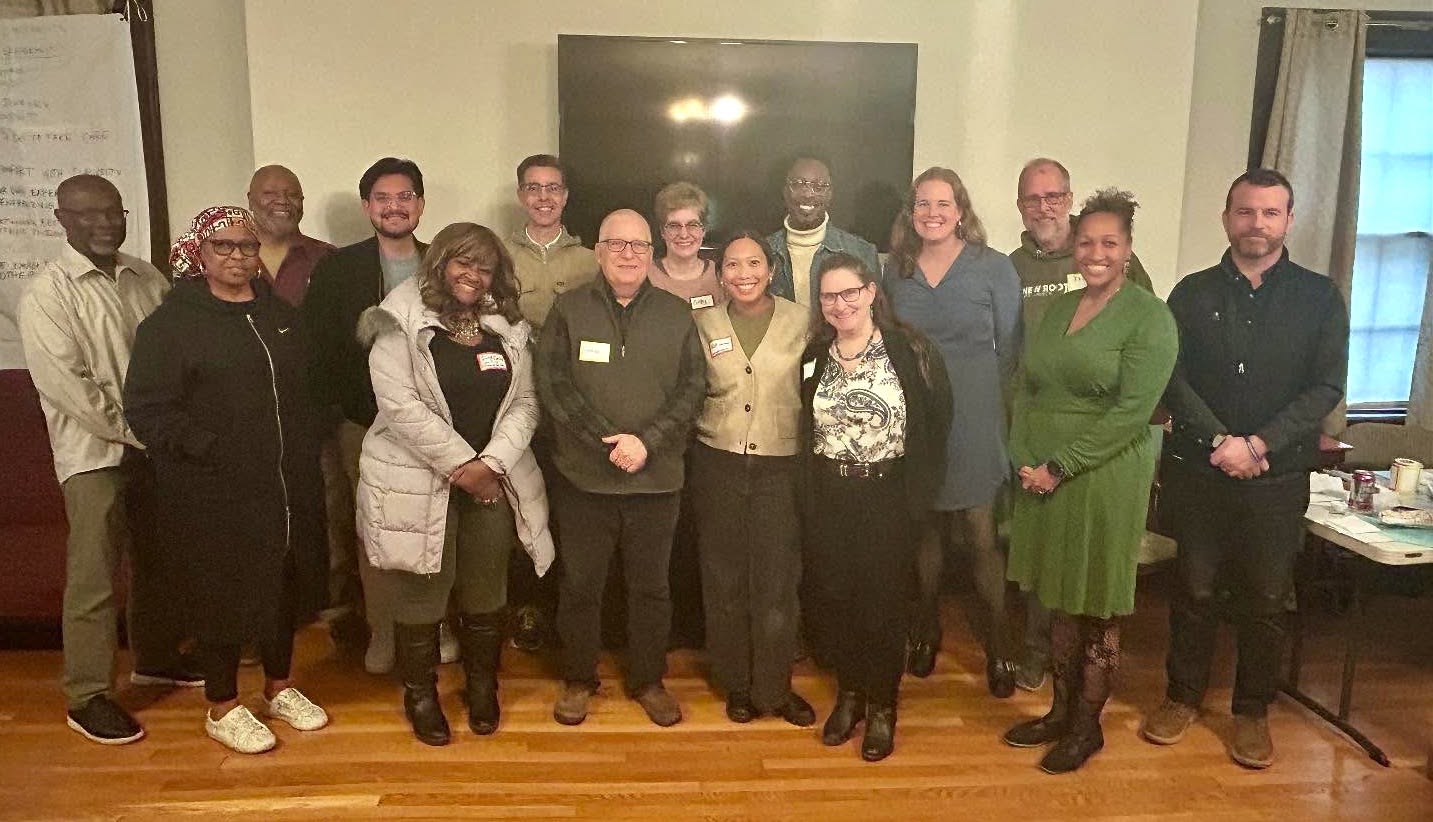
From September 2025 through June 2026, we had the honor of piloting this curriculum with a cohort of sixteen courageous Boston-based pastors and ministry leaders. Representing a vast theological and denominational mosaic—including Reformed Baptist, Pentecostal, Evangelical Covenant, African Methodist Episcopal, Catholic, Episcopal, Nazarene, Assemblies of God, and United Church of Christ—this group gathered monthly to do the heavy, sacred work of bridge-building.
Bridge-building is demanding, holy work, and our year together was no exception. We navigated hard conversations and conflict involving tension across perspectives and life experiences. This is the hard work of beloved community: coming together across profound differences will inevitably stretch and cost everyone something. Reconciliation is cruciform—it is shaped like the cross and is, by its very nature, uncomfortable.
The unity Jesus prays for is not found by ignoring our convictions, but by cultivating the courage to stay at the table when tension arises. In fact, these places of tension and discomfort become the very soil where we become formed into the image and likeness of Jesus Christ.
Rev. Gina Tillotson-Cordy, Pastor of Lynn First Church of the Nazarene, reflects on how the frameworks, conversations, and collaborative spaces within the lab shifted her perspective, equipping her to practice radical hospitality and see others more deeply as “beloved.”
For Rev. Rocklyn E. Clarke, Pastor of Life Church Boston, staying at the table provided a clearer mirror for his own ministry. He shared that the cohort gave him “a better understanding of the perspectives with which I differ and a better understanding of how to express my own perspectives. It has equipped me to better love my brothers and sisters in Christ and my neighbors who are not yet followers of Jesus.”
Similarly, Rev. Dr. Daniel Montañez, Executive Director of the Center for Public Theology & Migration, found that the space expanded his vision for the Church’s public witness: “I was challenged to reimagine what true unity within the body of Christ can look like and why it matters today. The experience has inspired me to envision the body of Christ as a model of reconciliation, justice, and abundant life for a hurting world.”
Additionally, Jeff Bass, Vice Chair of Stewards at New Roots AME and former Executive Director of the Emmanuel Gospel Center, reflected on how invaluable it was to press into the hard concepts of Christian unity alongside a broad cross-section of the Church, forging relationships that will bear fruit for years to come.
Ultimately, as Rev. Jihyon (Sophia) Kim, Youth Pastor at First Korean Church of Cambridge, summarized: “More than anything, this experience reminded me that reconciliation is not simply another ministry strategy—it is part of the Gospel itself.”
Highlights from the Closing Retreat: Mending and Commissioning
To close the inaugural Beloved Community Lab Cohort, we had a closing retreat at Bethany House of Prayer in Arlington. We took time to debrief our journey together and prayerfully discern tangible next steps toward that vision, committing to carry the work of reconciliation into our own communities and leadership contexts.
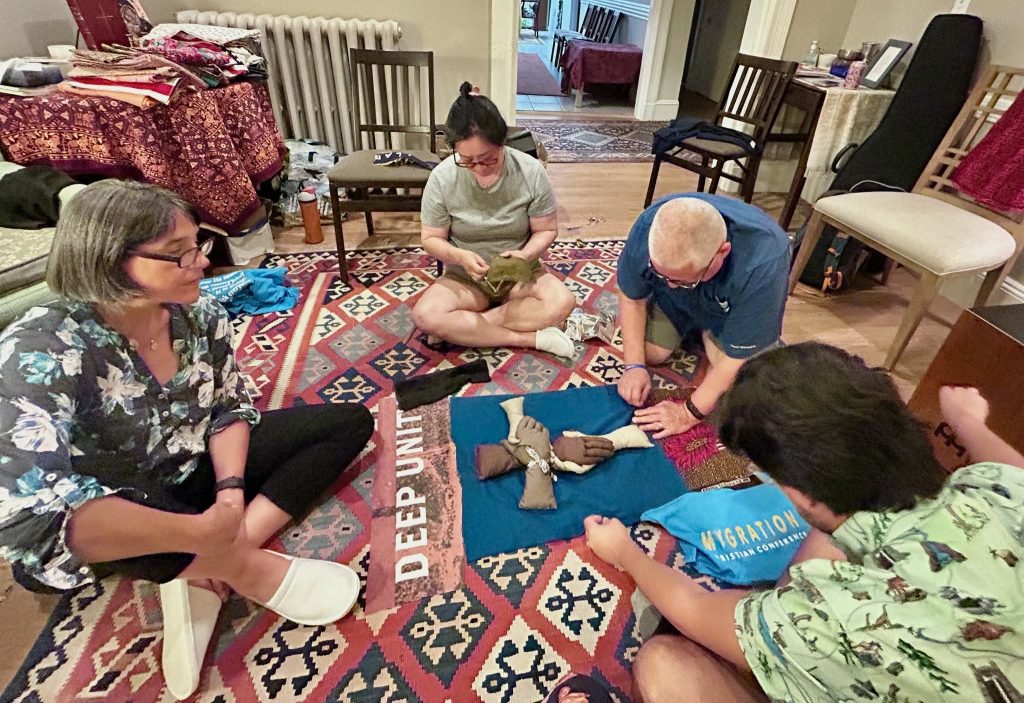
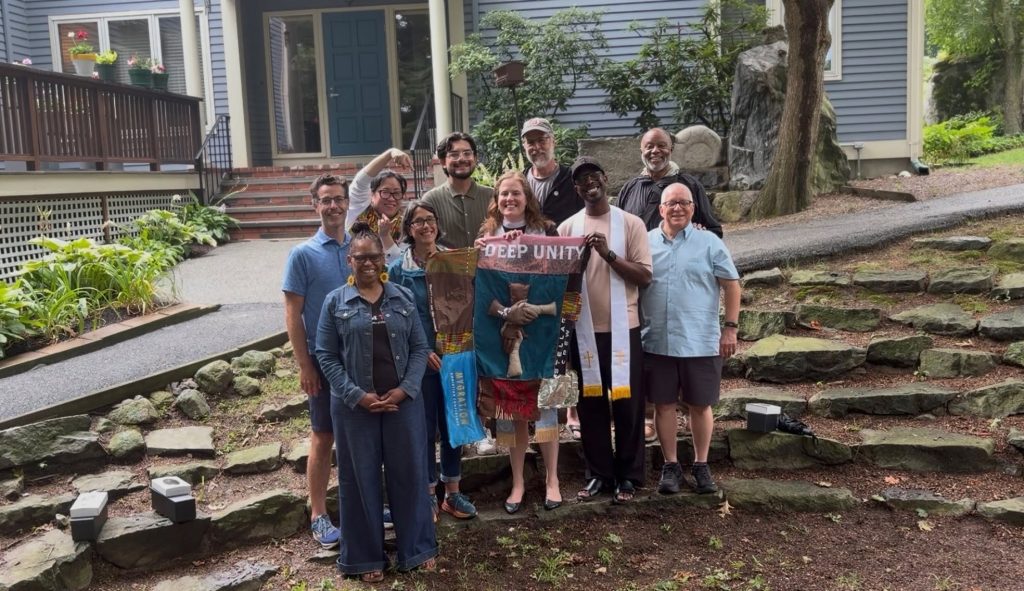
One of the most moving—and comedic—moments of the retreat was a physical parable of our year together: creating our Beloved Community Mending Blanket. Each person brought a piece of fabric representing their community or context, and together we began weaving them into what will become an ever-growing tapestry of unity in diversity.
Like visible mending, the goal isn’t to hide the seams or erase our differences. The imperfections are the point. Christ holds together our diverse stories, cultures, and experiences, allowing us to see God more fully. It stands as a visible reminder that our distinct, fragmented stories are far stronger when mended together… even with memories of beginner’s mistakes, like accidentally attaching the tablecloth to the blanket!
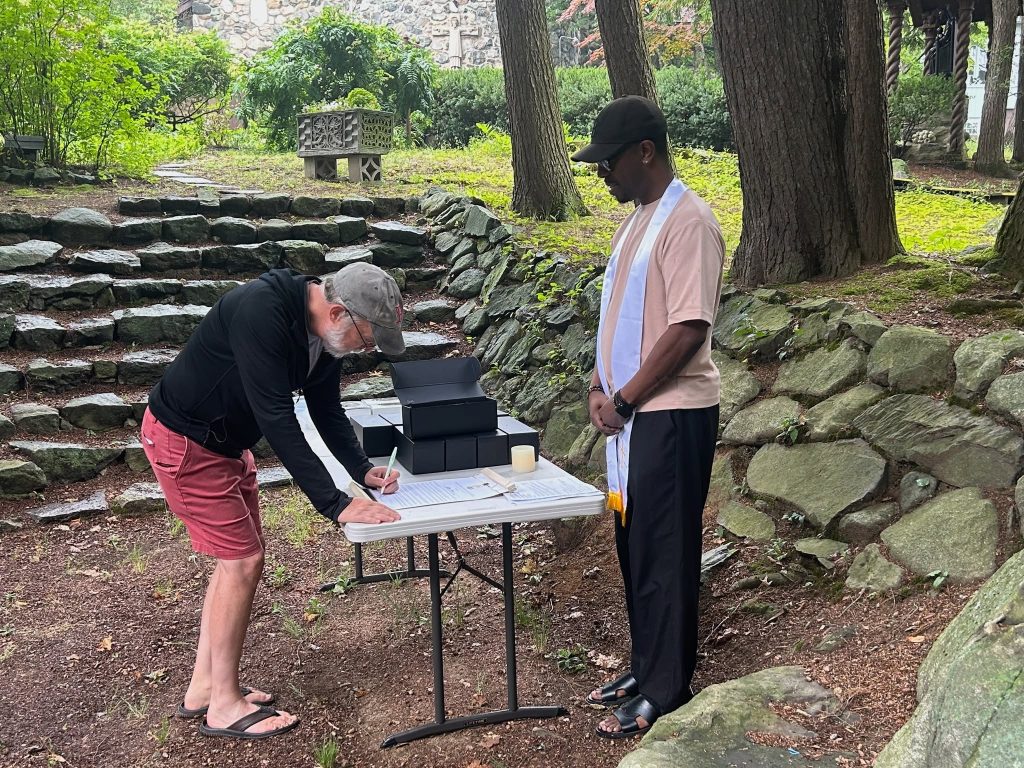
We concluded the retreat by commissioning each participant as an Ambassador of Reconciliation, where participants named their next steps to implement this into their contexts, and we prayed over each person to extend this work in the places God has called them to live, work, and play. We will continue to meet regularly to continue learning, practicing, and reflecting together as a Beloved Community Lab cohort family.
When Relationships Become Collaboration
The retreat may have ended, but the work of mending divides is just beginning. One of the greatest joys of the Beloved Community Lab is watching trust transform into concrete partnerships. In our closing session, when asked what they wanted to do with their Beloved Community Lab journey next, many participants shared a deep desire to collaborate across denominational and cultural lines.
This vision is already bearing fruit in real-time. Just this past Sunday, Rev. Cristina Rathbone, Executive Director of Common Cathedral and Rev. Devlin Scott, Pastor of NewCity Church came together in worship and service on the Boston Common. For the second year in a row, NewCity Church had the privilege of serving lunch before worship and joining the Common Cathedral community in celebrating God’s presence among neighbors who are unhoused and housed alike. Additionally, Life Church and Neighborhood Church of Dorchester both co-sponsored a gospel night with the Boston Project Ministries in the streets of Dorchester.
These are beautiful, living expressions of the Gospel and a reminder that the Church is at its best when we cross boundaries to love, serve, and worship together. This is what we hope the Beloved Community Lab will cultivate: relationships that grow into partnerships, partnerships that become shared ministry, and shared ministry that bears witness to the reconciling love of Christ: “By this everyone will know that you are my disciples, if you love one another” (Jn. 13:35). May this be said of us, today.

Looking Forward: Expanding the Movement
As this pilot year came to a close, we began to hear of leaders in other contexts who share a longing to bring the journey of mending divides to their own contexts. We believe this instinct and dream for deep unity is something the Holy Spirit is birthing in our day and age.
In response to this growing movement, UniteBoston is thrilled to announce the next chapter of our story:
- Beloved Community Consulting Opportunities & Workshops: We are extending customized training, interactive workshops, and coaching to help local congregations and community organizations put these concepts into practice in their own staffs and leadership teams.
- Online Beloved Community Lab Cohort (Launching Fall 2026): We are officially opening up our 12-session interactive curriculum to pastors and ministry leaders nationwide who have interest in bringing this to their contexts and cities through a digital cohort space and in-person closing retreat.
The Beloved Community Lab is far more than a leadership program—it is an active experiment in Christian unity that meets this cultural moment with grace, truth, and hope. As we look to the future, we invite you to join us in living out this mission, leaning into difference without fear, and embodying the reconciling love of Christ across every line that seeks to divide us.
Interested in bringing the Beloved Community Lab to your church or joining our Fall Online Cohort? Contact our team at info@uniteboston.com – we’d love to hear from you!
This is a very inspiring issue of Unite Boston’s publication, Kelly! God bless you for your important work for unity among all the followers of Jesus!
Fr. Tom Ryan