UniteBoston

Bridging Divides Across Christians for the Flourishing of the City

  • Home
  • Events
    • Submit Event
  • Join In
    • Beloved Community Lab
    • Migrant Care and Solidarity
    • The Church and Civic Engagement
    • The ATTIC
    • Kingdom Conversations
    • Worship & Pray
    • Boston Flourish
  • About
    • UB Board, Staff & Volunteers
    • Cohorts
    • Missional Letter
    • Annual Reports
    • History
    • Christian Unity
  • Forums
  • Blog
  • Give to UniteBoston
  • Contact
  • Search

Jan 15 2025

The Nicene Creed: Why It Matters Today

This year’s theme for the Week of Prayer for Christian Unity is “Do you believe?” (John 11:26). In 2025, Christians mark the 1,700th anniversary of the First Ecumenical Council at Nicaea, where key doctrinal disputes about the Trinity and the nature of Christ were resolved, resulting in the Nicene Creed—a foundational statement of Christian faith and unity. The Nicene Creed is the Christian “symbol” of agreed doctrine and also the statement of faith for UniteBoston.

But why does the Nicene Creed matter? Read below to learn about the historical basis of the Nicene Creed and insights from local leaders and notable theologians on its significance for today.


Click above to watch a reflection on the significance of the Nicene Creed from Dr. Elizabeth M. Woodard, Catholic theologian, musician, author, speaker, spiritual director, and ecumenist. She is a member of our Christian unity cohort and pastoral associate a Sacred Hearts Parish. She considers her vocation as bringing people to God and to each other.

“The Nicene Creed stands as a centuries-old treasure linking current Christians to the earliest ones. It is through symbols like the Creed that we can truly claim to be apostolic, that is, the Church handed to the apostles and handed down from them through generations of Christians. The Creed acts as a barrier against our human temptation to remake God in our own image, and leads us to open ourselves to the wisdom of God’s self revelation, distilled in these precious words throughout our history. Diverse though Christians are in our various traditions, we find a precious unity in our acceptance of the essentials spoken in the Creed.” – Dr. Elizabeth M. Woodard

“Within the Empire, particularly between the great apostolic patriarchies of Alexandria and Antioch, disparities in Christology were leading to excommunications and divisions, especially in the rivalry between St. Athanasius and Arius. The common doctrine achieved was a significant milestone in Christian unity. It is only appropriate then, in remembering this event of common confession, that Christians today may celebrate that which unites them. Spiritual ecumenism, according to Vatican II, is the “soul” of the ecumenical movement. It is our common faith in the Risen Christ that brings us together for prayer. In turn, the prayer itself is effective in nourishing and confirming our unity.” – James Loughran, SA, in his reflection on this year’s Week of Prayer for Christian Unity theme

“The celebration of any anniversary is, beyond a mere commemoration of an historical event, a motivation to learn from the past in order to live more fully in the present. As Christians united in our faith in a God who assumed flesh and dwelt among us, we have also confessed with one voice the same creed formulated 1700 years ago at the Council of Nicaea. Through the centuries, we may have differed in our interpretations and manifestations of that original statement of faith. Nevertheless, we have endured in our appreciation of and devotion to that earliest of professions and convictions that “we believe in one God, maker of heaven and earth; and in one Lord Jesus Christ, who was incarnate for our salvation. Our unity in this doctrine should inspire us to imagine and illustrate the same faith in language that addresses the challenges of our age and our world. That’s why Orthodox Christians refer to the creed as a ‘symbol of faith.’ Our vocation as Christians is to unravel and unveil, to define and defend the same pristine principles in a way that embraces and heals every human being without discrimination and every aspect of God’s creation without exception.” – Fr. John Chryssavgis, Executive Director of the Huffington Ecumenical Institute 

“The use of the phrase “We believe” in the Nicene Creed is so significant. In an area of skepticism and fragmentation, it affirms a shared faith and belonging that faith is not just a private affair, or something that we created today, but is rooted in historical reality of the person of Jesus Christ. It helps to bridge the past to the present and the local Boston Church to the global, reminding us that we are part of something much bigger than ourselves.” – Rev. Kelly Fassett, Executive Director of UniteBoston

“When we recite the Nicene Creed, we are stepping into the stream of a centuries-long conversation about who God is and what God has done. It anchors us in a living tradition of shared understanding and worship.” – Rowan Williams, Former Archbishop of Canterbury

“The Creed expresses what the Church believes, teaches, and confesses in unison. It is the foundation of our unity, the treasure we hold in common, and the proclamation of the hope we have in Christ.” – Pope Benedict XVI

“The Nicene Creed is a confession of the inexhaustible mystery of God’s love. It invites us into the drama of salvation, where the Church stands as a witness to the world of the truth of Christ.” – Hans Urs von Balthasar

““In the Nicene Creed, we encounter the Church’s faithful testimony to the mystery of Christ. It is a gift handed down to us that holds together the Gospel’s integrity and unity.” T.F. Torrance

Learn about the Council of Nicaea

For centuries, the Nicene Creed was sung as part of the Latin Roman Catholic liturgy. Along with many other parts of the Mass “ordinary,” it was set to music by composers throughout the centuries and regularly sung each week. Here, please enjoy an early version set in Gregorian Chant. While most Catholics since the 1960s speak many of the ordinary parts of the Mass, including the Creed, its sung version is a beautiful way to reflect on the words, if you happen to speak Latin!” above to listen to a beautiful singing of the Nicene creed chanted in Latin.

Franciscan Friar Casey Cole walks through the theology of the Nicene Creed

“This theme, by offering a way to see that faith is not just a static set of beliefs, but an active means of receiving grace, is most appropriate for the Week of Prayer for Christian Unity in 2025. If faith can raise the dead and conquer all fear, surely faith will bring us the miracle of unity as Christians. Remembering that division, separation and rejection are symptoms of sin, the healing of the Church comes about in the power of the Holy Spirit. We pray knowing to whom it is we pray, as one community. God wills us to reconcile. God wills us to love one another. God will give those who profess the faith of Martha, of Nicaea and of all the holy ones who have gone before us, the precious gift of unity.” – James Loughran, SA, in his reflection on this year’s Week of Prayer for Christian Unity theme

Written by uniteboston · Categorized: Blog, SPIRITUAL FORMATION & EVANGELISM, Worship & Prayer · Tagged: christian unity, community, testimony, uniteboston, unity

Jan 01 2025

UniteBoston’s Top Twelve Photos of 2024

From launching the United Gospel Experience Tour and convening the Boston Flourish conference, to hosting two cohorts with emerging leaders, and hiring our first full time staff person, this was an incredible year for UniteBoston! Check out our year in review for 2024 – Glory to God!


#12: UniteBoston Fundraising Party at PKL – In January, the UniteBoston community raised $12,010 to support the mission of UniteBoston and also had some fun playing shuffleball and cornhole!

#11: Boston Unity Walk – 80 faith leaders, community members, the Boston Police Department, and city officials came together for a prayer walk in Dorchester hosted by the Mayor’s Office of Faith-Based Initiatives. The goal was to foster meaningful relationships between faith communities, law enforcement, and city leadership and UniteBoston served as a key convener for the gathering.

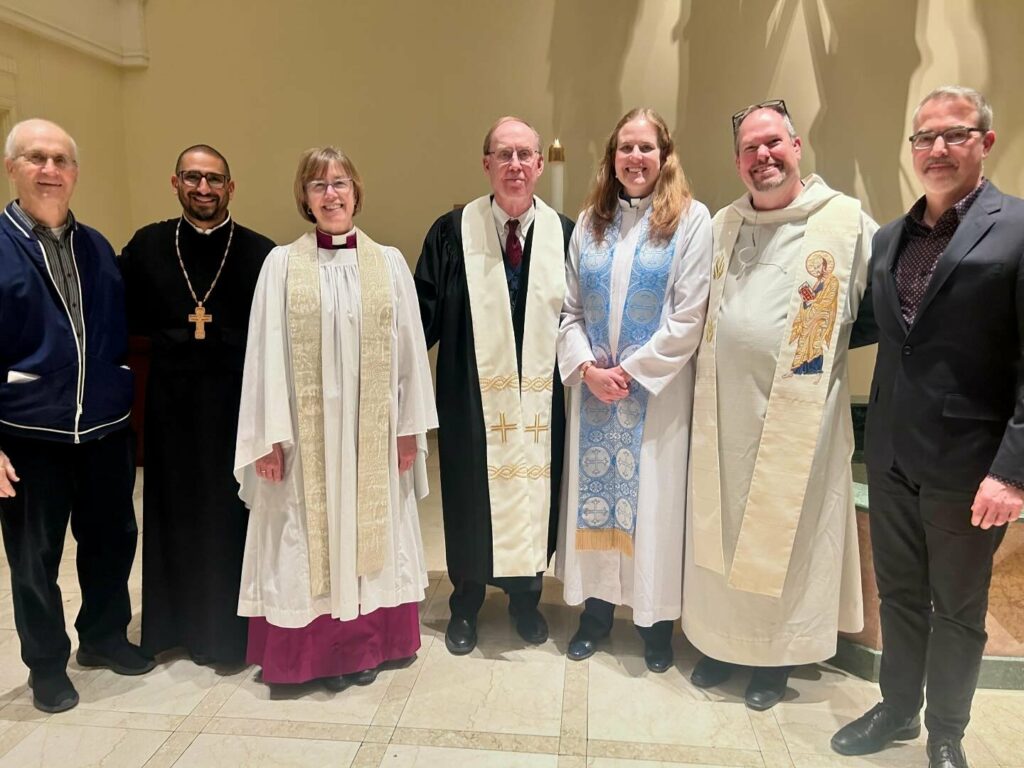
#10: Week of Prayer for Christian Unity – During this week, UB hosted seven opportunities to pray for the unity of all Christians and put “love thy neighbor” into practice in a variety of ways. The above photo is from a prayer gathering at the Paulist Center with clergy representing Catholic, Orthodox, Baptist, and Episcopal traditions where we enjoyed beautiful music, heard the call to care for creation by Dean Amy McCreath, and prayed for the needs of one another.

#9: UniteBoston Board and Staff Retreat – In August, the UB Board of Directors and staff met for our annual retreat! We gained insights into the unique role that UB is playing in the city and talked through some of our initiatives for the coming program year.

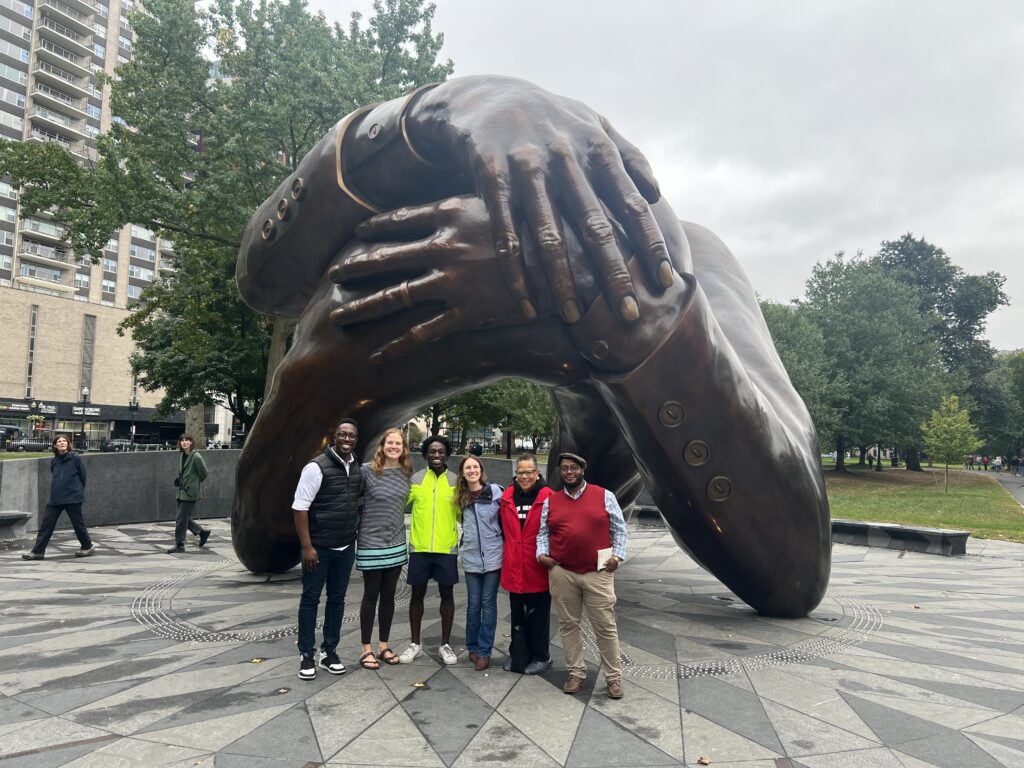
#8: UB’s Sankofa Cohort – This cohort is experiencing history firsthand by seeing the sights in Boston pointing towards the legacy of slavery, the black freedom movement, and where racial healing and repair is taking place with a special focus on Christian churches and congregations. We recognize that we must understand and confess the mistakes of our past – of the sin of racism and its impacts – in order to pave the way forward towards racial healing and shalom. Here we are visiting the Embrace Memorial, remembering the legacy of Rev. Dr. Martin Luther King Jr. and Coretta Scott King, and many other leaders who contributed to the Civil Rights Movement in Boston.

#7 – Collaborative Migrant Care Efforts – This year, UniteBoston catalyzed congregations and leaders to care for and accompany our new immigrant and refugee neighbors through launching a “Sanctuary for Strangers” campaign with Migrant Sunday resources in four languages. We also hosted a breakout session at Boston Flourish where 32 people committed to taking a variety of tangible action steps to support and accompany our new immigrant and refugee neighbors. UB Board Member and local pastor Melinda Priest (on right) is now leading a team to create a Boston Immigrant Dashboard to better connect the needs of our new neighbors and service providers.

#6: Legacy of Slavery at Harvard University Tour. In November, 35 church leaders and community members engaged in a walking tour on the Landscape of Slavery at Harvard University. While Boston is known for its world-class colleges and universities, not many are aware how these institutions have deep historical ties to the exploitation of enslaved people. This photo shows the burial ground that holds the oldest known gravestone of a Black person in the Americas, serving as a tangible reminder that slavery was not just an abstract concept at Harvard—it was a reality woven into daily life. Louis Agassiz also founded the theory of polygenesis at Harvard, seeking to prove genetically that Black people were inferior to White people. Christianity was grievously often used to justify the enslavement and exploitation of African people, many whose legacies are still unknown.

#5: UniteBoston Island Retreat – In July, we hosted our third annual “Circle of Restoration” Island Retreat for BIPOC leaders to get away for self-care and connection in community. Individuals enjoyed a boat ride out to the island, beach games, music, massages, and a catered lunch.

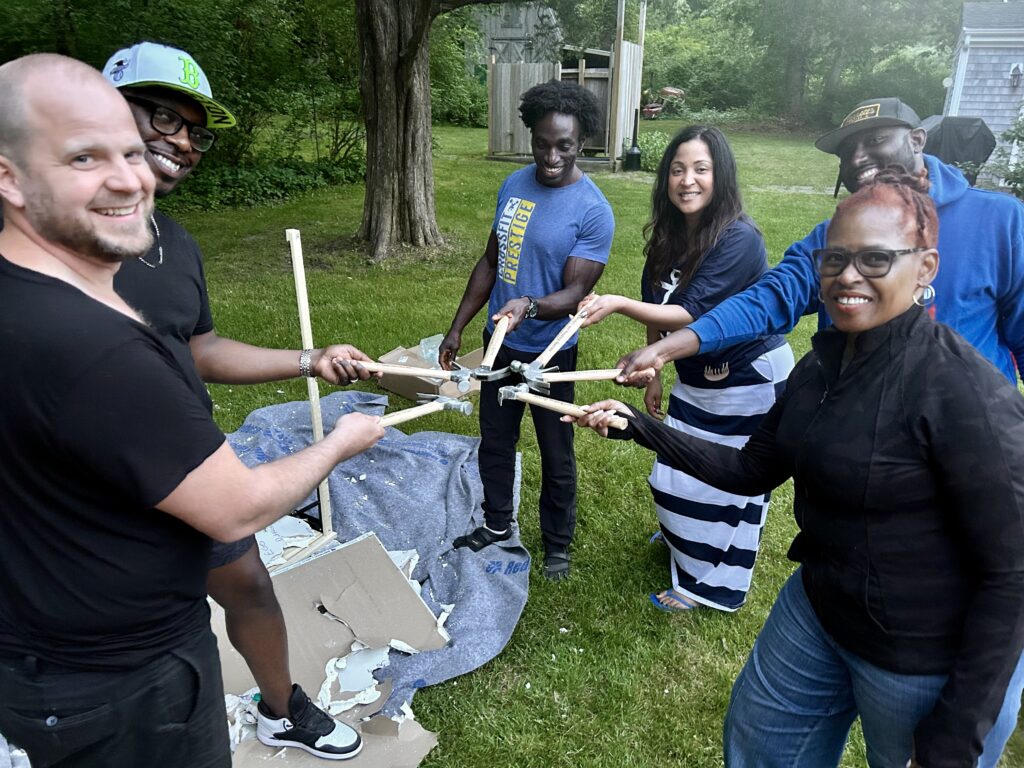
#5: Christian Unity Cohorts: Above – our original Christian unity cohort who is “building bridges and breaking walls” (pictured with hammers) has transitioned to a curriculum development cohort that we launched in May. This new cohort of leaders is meeting monthly to learn about nurturing “Christian unity” in their own contexts by being ambassadors of reconciliation and repair (2 Corinthians 5:18-20). We are building the components of our curriculum of the knowledge, skills, habits, motivation/attitude, and environment for walking in the way of Jesus towards Christian unity. We look forward to piloting this curriculum in 2025!

#4: Hiring Our First Full-Time Employee – This year, UniteBoston was able to hire our first full time employee, Rev. Devlin Scott, who is doing an incredible job as UniteBoston’s managing director. He is leading UniteBoston’s communications, social media, strategic planning, and various programs, and has really taken UniteBoston’s mission and ministry to a new level!

#3: Launch of the United Gospel Experience Tour – Dozens of college students from six campuses across the region have united this year for a United Gospel Experience Tour, beginning with Morning Star Baptist Church and Providence College. There is something about being led in worship by 70+ young adults from diverse backgrounds, all part of a mass gospel choir that has strengthened each individual campus as well. Save the date for the next concert at March 1 at UMass Lowell or April 12 in Wenham!

#2: Boston Flourish. In November, UniteBoston worked with other organizations to convene a conference where 266 leaders gathered across sectors to collaborate around essential issues facing our city: housing justice, migrant care and solidarity, youth and family trauma, and innovative church building use. By uniting our efforts and sharing ideas, we’re creating pathways for real change, so all who call Boston home can truly flourish ????

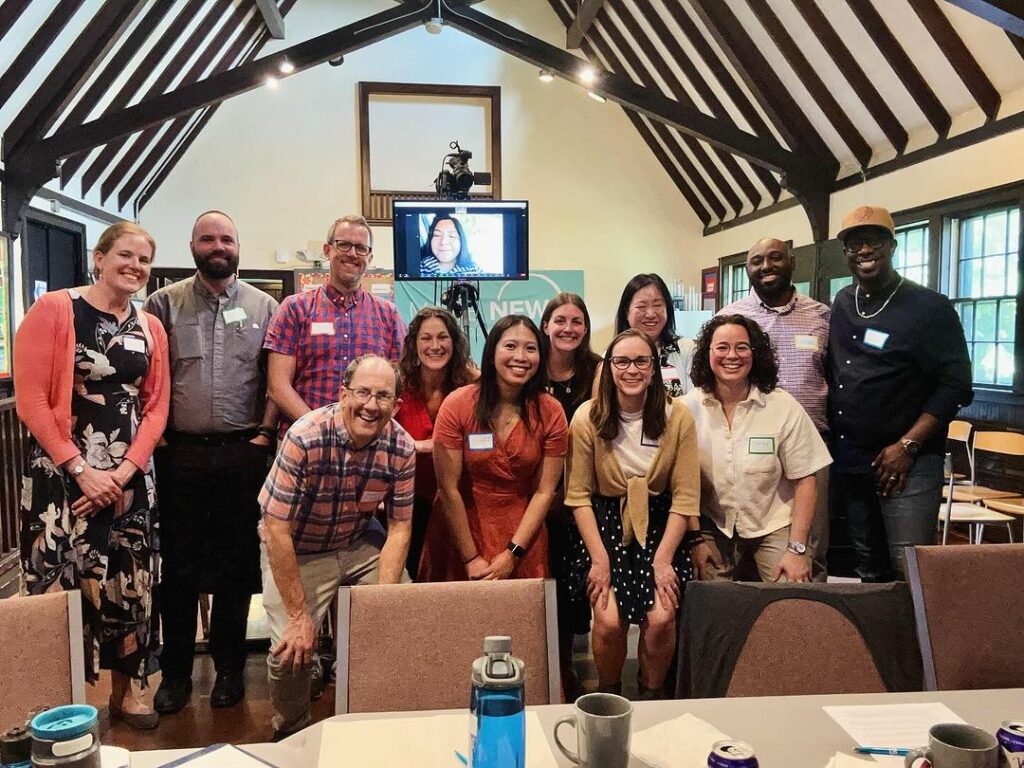
#1: Church & Civic Engagement gathering – UniteBoston and ten other organizations convened 75 diverse Christian leaders to share their hopes and concerns as Christian leaders in this election year. While conversations on politics can often lead to an entrenchment of positions, the structured dialogue enabled many to grow in understanding in the stories and values behind our differing perspectives, allowing God to spiritually form us through actively practicing the fruit of the Spirit. We celebrate the relationships among pastoral leaders that were inspired or birthed, as we seek to be a public witness to our churches and our city that the way of Jesus is to love all our neighbors through intentional, curious, respectful conversation. This gathering was even featured on Religion News Service! ????


It’s been a great year! Thanks for joining with us – your prayers, participation, and finances have made this ministry happen! We look forward to seeing what God has in store for us in 2025!

Written by uniteboston · Categorized: Blog, EVENTS & YEAR HIGHLIGHTS · Tagged: christian unity, prayer walk, reconciliation, uniteboston, unity

Dec 26 2024

Breathe Life!

In this week’s UB Newsletter, we are featuring a devotional entitled “Breathe Life,” inspired by artist Rob ProBlak Gibbs’ wall mural in Roxbury. He describes that, “More than just a title, ‘Breathe Life’ is a philosophy, meant to share energy, and lift-up images that reflect the community back to itself, to greater flourishing.” This message aligns closely with Jesus’ mission as described in John 10:10: “I have come that they may have life, and have it to the full.”

This devotional is an excerpt from Reservoir Church’s Advent Devotional. As we enter 2025, we invite you to prayerfully use the images and reflection questions below to reflect on what God has done in your life this past year and where you are seeking places for God to “breathe life” in the coming year.

Written by uniteboston · Categorized: Blog, Devotionals, SPIRITUAL FORMATION & EVANGELISM · Tagged: city, community, jesus, prayer, unity

Dec 10 2024

Following Jesus as the Prince of Peace: Removing Walls of Hostility

 For [Jesus] himself is our peace, who has made the two groups one and has destroyed the barrier, the dividing wall of hostility, by setting aside in his flesh the law with its commands and regulations. His purpose was to create in himself one new humanity out of the two, thus making peace, and in one body to reconcile both of them to God through the cross, by which he put to death their hostility. He came and preached peace to you who were far away and peace to those who were near. For through him we both have access to the Father by one Spirit.

Ephesians 2:14-18 NIV

In this Advent season, we are called to follow Jesus as the Prince of Peace by actively removing walls of hostility in our lives. These barriers—whether political, cultural, or personal—perpetuate division and conflict, preventing us from upholding the ‘ministry of reconciliation’ (2 Cor 5:18). Through Jesus’ work on the cross, walls of hostility can be broken down, creating a new humanity of reconciliation, peace, and love, so together we can bear witness to the Way of Jesus.

On December 8, UniteBoston’s Executive Director Rev. Kelly was honored to be invited by UB Board Member Pastor Kat Hampson to preach at Riverwalk Church! Click below to watch the sermon or read some of the notes!


The Problem of Hostility

The polarization in our society today mirrors the animosity between Jews and Gentiles in Ephesians 2:11-22, with divisions physically, relationally, and attitudinally. Research shows that Americans increasingly view those with opposing views as threats, with 80% of people believing that the other party “poses a threat that if not stopped will destroy America as we know it” (NBC News). Unfortunately, we see this hostility present even among Christians called to the ministry of reconciliation (2 Cor 5:18). This divisive posture contradicts our calling as peacemakers (Mt 5:9) and repairers of the breach (Is 58:12).

Jesus: Transforming Hostility into Enemy-Embracing Love

As Prince of Peace (Is 9:6), Jesus inaugurated a new way; he redefined who and how we associate with others. Ephesians 2 reveals that Jesus broke down the dividing walls of hostility, reconciling people both to God (vertical peace) and to one another (horizontal peace). His purpose was to create one new humanity, transforming enmity into fellowship. This is exemplified in His life: dining with outcasts, forgiving enemies, and welcoming diversity among His disciples.

The type of peace we have in Christ breaks down societal barriers rather than building them, a peace where love banishes all fear, and a peace that breaks down walls of hate and hostility by upholding belovedness as all made in God’s image. This posture is summed up in Jesus’ statement that we are not just to love those who are most like us but to love our enemies (Mt 5:43).

Early Christians embodied this boundary-crossing nature of the faith, and people took note. Historians believe that it was in Antioch that they were called Christians because they saw early Christ followers crossing ethnic walls to worship with one another. Historian Harvey Conn writes that, “Into a world where class, power and ancestry divided rich from poor, free from slave, men from women, came a society that welcomed all who bore the name Jesus.”

Our Call as Followers of the Prince of Peace

Following Jesus as Prince of Peace is counter-cultural and vitally important. To embody Jesus’ boundary-breaking love, Rev. Kelly offers four steps:

  1. Find Your Wall of Hostility
    Reflect on the groups or individuals you feel animosity toward. Here are some questions we can ask to help us identify who this may be:
    • Which groups do you avoid or feel threatened by? Who makes you uncomfortable?
    • Is there a particular group that you cringe at the thought of praising them; that you don’t even want to be exposed to the ideas or ways, much less earnestly listen to them? Who do you believe that the world would be better off if there were less of “those people” around?
    • Howard Thurman said – “Often the degree to which we oppose a thing marks the degree to which we do not understand it. Sometimes we use our opposition to an idea to cover up our own ignorance.” Have you met the person on the ‘other side,’ and heard their story?
  2. Remember the Belovedness of the ‘Other’
    Every person is made in God’s image and is beloved by Him (Gen 1:27). Commit to seeing this inherent worth in everyone you meet, especially those on the ‘other side’ of a particular background or ideology.
  3. Go with Curiosity
    “You can’t hate someone whose story you know.” Our assumptions and conclusions are often built on what have heard, rather than face-to-face conversations. With the rise of siloed media and social media platforms, we have become so accustomed today to talking about one another rather than with them. One of the biggest tools we have as peacemakers is curiosity: when someone shares a strong or ‘loaded’ statement, we can ask, “Is there a story behind that?” Engage others’ stories with humility, seeking to understand their longings, hopes and fears.
  4. Reflect and Discern
    Opening yourself up to new experiences and ideas is often uncomfortable. Yet, it is also a sign of maturing in our faith (Eph 4:15). Prayerfully reflect on what you have heard using frameworks like the Wesleyan Quadrilateral (Scripture, Reason, Tradition, Experience) to evaluate your theological conclusions. Growth requires embracing discomfort and balancing openness with a firm foundation in Jesus Christ.

One caveat: When we talk about getting beyond a wall of hostility, a situation of abuse or trauma does not apply. There are some ‘walls’ that are necessary for self-protection, health, and safety. We must differentiate between a wall of hostility and a wall of protection as there are times when you need to be with “your people” to say the things you need to say, for healing and restoration.

Why This Matters

Our unity is both the fruit and the witness of the gospel. As we remove hostility, we demonstrate the reconciling power of Christ and live into His mission. The early church modeled this radical love by breaking barriers in a divided world, and we are called to do the same today.

Invitation

Will you follow Jesus, the Prince of Peace, by removing your walls of hostility? As John Howard Yoder said, “This new Christian community in which the walls are broken down not by human idealism or democratic legalism but by the work of Christ, is not only a vehicle of the gospel or only a fruit of the gospel; it is the good news. It is not merely the agent of mission or the constituency of a mission agency. This is the mission.“

Reflection Questions:

  • 1. What walls of hostility exist in your heart? Consider which groups do you avoid or feel threatened by? Who makes you uncomfortable?
    • With this group in mind, what assumptions do you hold? What conclusions are you making? What do you fear? Be on the lookout for these biases
  • 2. How can you actively uphold the belovedness of all of God’s children, even those who believe differently than you?
  • 3. Who can you listen to with curiosity this week or month? Holiday gatherings are opportune spaces where we can listen, learn, and have tough conversations with people of differing perspectives and convictions.
    • Make a plan. Consider what type of structure will allow you to have the conversation you need to have. What do you fear? What do you wonder? Here are two conversation guides from Essential Partners that we recommend.
      • Partisan Conversation Guide
      • Political Conversation for Trust & Understanding
  • 4. How might God be calling you to grow in your understanding on a particular divisive issue? Consider how your perspective is informed by Scripture, Reason, Tradition, and Experience.

We’d love to hear from you if you take some of these steps to follow Jesus as the Prince of Peace! Rev. Kelly can be reached at kelly@uniteboston.com Be blessed friends!

Written by uniteboston · Categorized: Advent, Blog, Devotionals, FROM THE UB LEADERSHIP, RESOURCES, SPIRITUAL FORMATION & EVANGELISM, Who is My Neighbor? · Tagged: community, peace, reconciliation, uniteboston, unity

Nov 05 2024

Choosing Unity Over Division in this Post-Election Season

Today, we are featuring a guest blogger, Bil Mooney-McCoy, who shares the importance of holding firm convictions while still embodying Christ’s love toward those who see things differently, especially across the political aisle. Bil is a member of Neighborhood Church of Dorchester and Director of Worship and Lecturer at Gordon College. Read below to hear his wise, practical advice in how we might choose unity over division and treat one another well in this post-election season, along with some thoughts from our colleague Rev. Dr. Gregg Detwiler.


Last Sunday, in church, we sang a song that summarized what is known as the Apostles’ Creed. When it got to the line “I believe…in Your holy church”, I began to cry. Looking at all the rhetoric and vitriol that has been part of this election cycle, I have been distressed by how divided we’ve become as a nation.

But specifically, my sorrow, my grief was prompted by how we Christians have handled the political landscape. We have villainized each other, questioned the validity of each others’ faith journeys. I’ve seen misinformation knowingly promoted by Christians, insults hurled at fellow believers, and in some cases heard of relationships within the body of Christ severed. I am sure that there have been times when my words and actions have contributed to this division. That’s not OK. This is not Christ’s vision for His church.

We are called to unity. But not to uniformity. We have different experiences, priorities, values, and perspectives; therefore, our opinions and beliefs on issues like abortion, gay rights, immigration, and gun ownership will vary. And it is appropriate for one to hold firm stances on these issues and to strongly disagree with those who hold contrary viewpoints. But these convictions should never lead to opportunities to tear each other down.


As I cried out to God today, I felt a prompting. I asked my God what I should do to promote unity amidst the political discord. Could I stay engaged and firm in my beliefs and convictions while working to diffuse the hostility and intolerance that is so rampant? How do I act justly, love mercy, and walk humbly before my God in a time like this? Particularly now, in the election’s aftermath. And how do I channel God’s compassion and peace, knowing that last Tuesday’s outcome filled many with joy and hope but others with deep disappointment and dread?

The answers came quickly. Here’s what I believe God would have me commit to:

• I will cry with our Lord over the disunity and even hatred within our faith community.
• I will not speak ill of those who disagree with my political views, publicly or privately.
• I will pray for courage to engage in respectful, honest connection with those who disagree with me. I confess that I’m not there yet.
• I will recognize that in the outcome of every major political contest or legislative action, there will be many who will grieve; knowing that, I will not gloat nor condone others’ gloating.
• I will do all I can to comfort those who mourn, who are afraid, who feel ignored. I will listen to those who are angry.
• I will remind myself that being loving is more important than being right.
• I will do due diligence to confirm the veracity of any story I wish to repeat, verbally or online, refusing to spread incorrect or unconfirmable narratives, regardless of which agenda they promote.
• I will stand firm in my beliefs, taking strong positions based on my understanding of scripture and the character of Christ. But I will do so knowing that I don’t have all the answers. I will strive to discover my blind spots and accept new information and insights that may challenge my perspectives.
• I will (when appropriate) call out fellow believers whose words and actions are divisive, hurtful, and insulting even when their position aligns with my own.
• I will stand in the truth that my well-being and the well-being of those I love is not contingent on the election or defeat of a presidential candidate, the Senate and House majority, the make-up of the Supreme Court, or any earthly construct. My hope is in the loving care of my Father in Heaven.
• I will be grateful that, despite the flaws in our electoral system, I get to vote.
• I will pray for this nation and for its leaders.

I acknowledge that I do not have the character and morality to walk in these principles; I must rely on the work of the Holy Spirit within me to carry this out and will need to quickly acknowledge when I fall short.

The church’s one foundation is not a set of party platforms, a stance on societal issues, or adherence to a deeply-held political ideology. Her one foundation is Jesus Christ, her Lord.

Father, forgive me when I forget this.


Our friend and colleague Rev. Dr. Gregg Detwiler, consultant in the Intercultural Ministries and Leadership Development at the Emmanuel Gospel Center also shared the following sentiment as this week came to a close:

“While we all continue to sort out the results of the election and attempt to make meaning and find faithful responses to it, curious things can happen. Many of my friends are grieving and concerned; others are happy with the outcome (a subset of those are gloating); others are conflicted, filled with a mixture of emotions and thoughts (find me here). This election has taxed all the various muscle groups of my being – my intercultural ministry skills within the Church and society, my emotional intelligence, my mental health, and my spiritual foundation.

I made a decision this week to not push against the tide of the political upheaval but to try to flow with it. That meant spending probably 90% of my time engaging in reflective journaling, prayer, reading, posting a few transparent but measured comments on FB, and doing my level-best to have grace-filled truth-seeking conversations. I was amazed that at how many fruitful conversations I was able to have across the political spectrum after the election. Not all of them went well but a lot of them did, many more than I ever would have expected. And I have a docket of follow-up conversations scheduled over the next few weeks. So while this is painful and perplexing I find myself in this odd space filled with some unexpected turns along the way.  

One those unexpected turns came when one of my Facebook posts – My 3a.m. Election Day Confession – was anonymously quoted in a UK-based org article that seeks to promote political renewal through thoughtful Christian civic engagement. Here is the link to the article if you are interested in taking a look. I totally get it if things are still too raw for you to go there.

May the Lord help us all as we decompress from this week, find our moorings, and continue the work of seeking shalom in our communities, nation, and world.

P.S. BTW, if you are curious why I voted the way I did I go deeper into that in my FB post – Answering Two Questions of my Political Critics.


P.S. In case you missed it, UniteBoston also hosted an influential “Church and Civic Engagement” gathering of 75 leaders with ten other sponsoring organizations. Many of these leaders made a public commitment to Keep in Step with the Holy Spirit. We invite you also to consider upholding this same commitment in the days preceding and following the election.

Learn More

Written by uniteboston · Categorized: Blog, Civics & Elections, FAITH & JUSTICE, Unity & Reconciliation · Tagged: community, peace, shalom, uniteboston, unity

  • « Previous Page
  • 1
  • …
  • 10
  • 11
  • 12
  • 13
  • 14
  • …
  • 73
  • Next Page »


Give to Further Christian Unity

DONATE!

  • Email
  • Facebook
  • Instagram
  • YouTube

Copyright © 2026 · UniteBoston · Built on WordPress