UniteBoston

Bridging Divides Across Christians for the Flourishing of the City

  • Home
  • Events
    • Submit Event
  • Join In
    • Beloved Community Lab
    • Migrant Care and Solidarity
    • The Church and Civic Engagement
    • The ATTIC
    • Kingdom Conversations
    • Worship & Pray
    • Boston Flourish
  • About
    • UB Board, Staff & Volunteers
    • Cohorts
    • Missional Letter
    • Annual Reports
    • History
    • Christian Unity
  • Forums
  • Blog
  • Give to UniteBoston
  • Contact
  • Search

Oct 27 2025

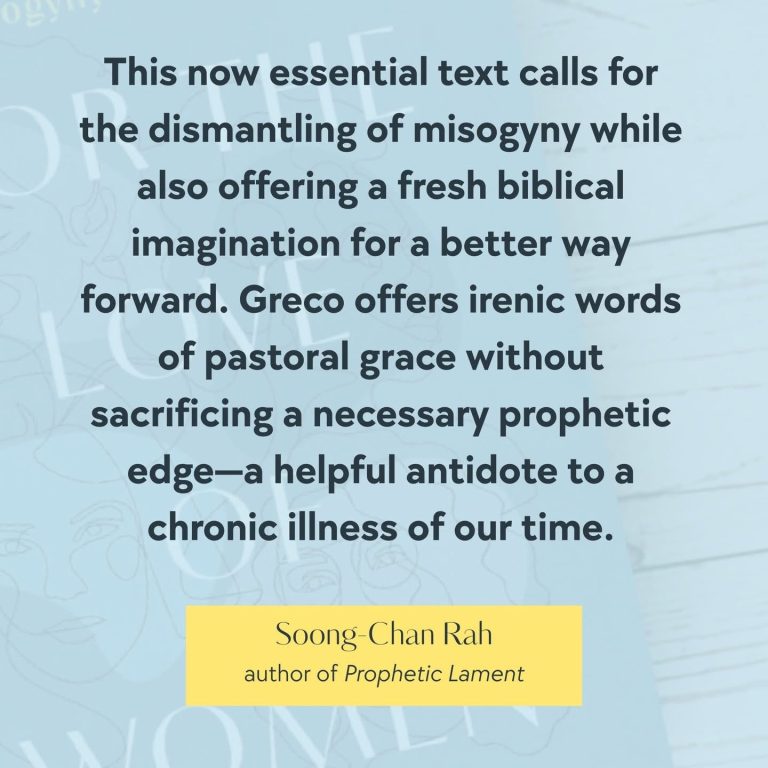
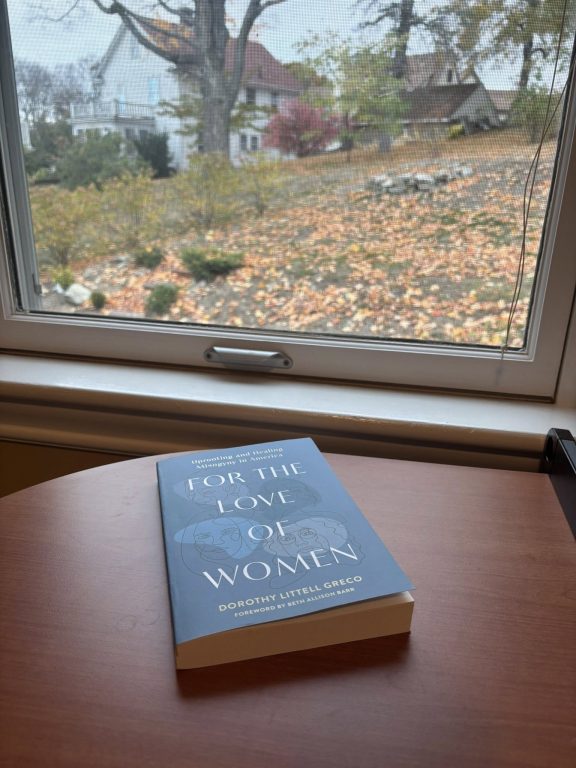
New Book Release! For the Love of Women

At UniteBoston, we are committed to building bridges across divides and strengthening the Church’s witness by reckoning with the deeper causes of division. This week, we’re excited to highlight a new resource that speaks to this mission: For the Love of Women: Uprooting and Healing Misogyny in America — a brand-new book released this week by local author and longtime Boston ministry leader, Dorothy Greco.

Dorothy and her husband, Christopher, have faithfully served the church in Boston for decades. In her latest work, Dorothy explores how misogyny continues to show up in subtle and harmful ways across everyday life — from healthcare and the workplace to media, government, relationships, and even within the Church itself.

Below, you’ll find a snapshot of Dorothy’s heart for this work and her invitation for all of us to recognize these patterns and pursue healing, equity, and justice — so that the Church can more faithfully follow Jesus and embody beloved community.

P.S. If you’re looking to re-imagine and re-form gender relations that move toward forgiveness, healing and the restoration of relationships, consider attending the upcoming Gender Equity & Reconciliation International training taking place in the Boston area.
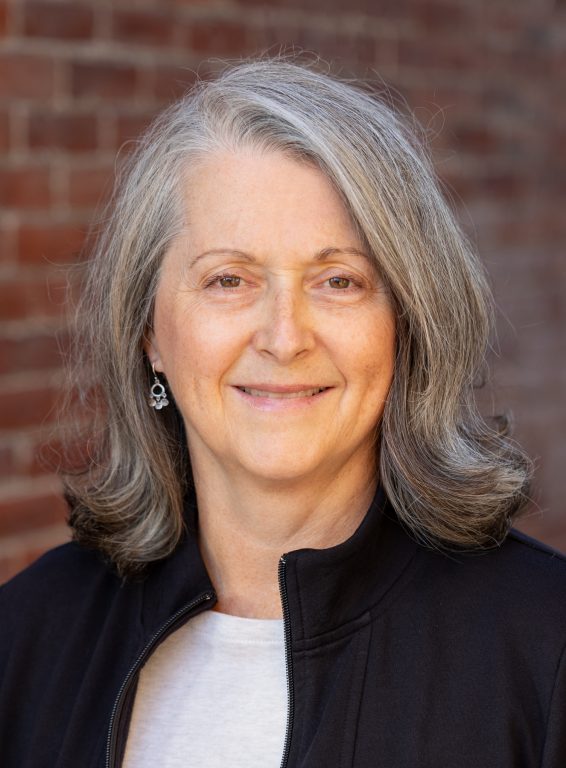

Dorothy, can you share more about yourself and what led you to writing this book?

I’m in my mid sixties, a wife and a mother of three grown sons. I’ve spent the past forty years working as a photographer, writer, and serving in various capacities in church settings. At core, I’m a journalist with a pastoral heart. I’ve written two other books, Making Marriage Beautiful, and Marriage in the Middle, with the most recent focuses on misogyny. 

The inspiration for writing For the Love of Women emerged out of personal experiences, being proximate to ongoing sexual abuse in church settings, and the current political moment where women and children are routinely being mistreated. As I read and listen to women, so many are choosing to leave the church in part because some vocal church leaders are using their positions of authority to control and demean women. This breaks my heart and I think God wants more for his church and our culture.

How would you define misogyny?

It’s super important how we define this term. Though the literal definition is “the hatred of women,” that’s not the definitive or even the most helpful definition because many people who engage in misogynistic behaviors or hold misogynistic beliefs don’t hate women. Linguist Ben Zimmer notes that misogyny “has more to do with ingrained prejudices against women than a pathological hatred of them.”

Misogyny is a persistent, insidious belief that men’s ideas, wants, needs, and experiences are more important than women’s and that legal, religious, and social systems, as well as intimate relationships, should uphold this principle. This belief system subsequently influences the laws, policies, practices, and ethos of a given culture.

As I write in the first chapter of the book, “if we define misogyny too narrowly, we may be tempted to disregard or deny it. Misogyny encompasses more than specific, tangible acts committed by individuals who admittedly despise women. If we interpret violence or prejudice against women as random and label the Andrew Tates of the world as anomalies, we will fail to see the patterns. If we constrain the definition to include only violent, hateful acts, some men will distance themselves from the conversation and from having any responsibility to change it. We must understand the scope of the issue and expand the definition to fully encompass it.” 
What’s the thesis of the book? 

For the Love of Women examines six spaces in culture where misogyny has influenced laws, policies, structures, expectations, and behaviors: healthcare, the workplace, the government, entertainment and media, sexual relationships, and the church. The final two chapters explore how women and men can heal from the effects of misogyny and partner together to diminish it.

Because it’s easy to dismiss misogyny as a problem “over there,” I’ve focused on North America, primarily the United States, though the examples transcend geographic boundaries.

I wrote this book primarily for women who’ve had first-person experiences of misogyny. Because misogyny harms, shames, and tries to silence us, I wanted to give voice to and validate our experiences. But this offering isn’t only for women. Despite women’s courage, resilience, and strength, we won’t succeed in eradicating misogyny without men’s partnership, which is why I long for men to read this book with curiosity and humility.

Why does the Church need to address this topic?

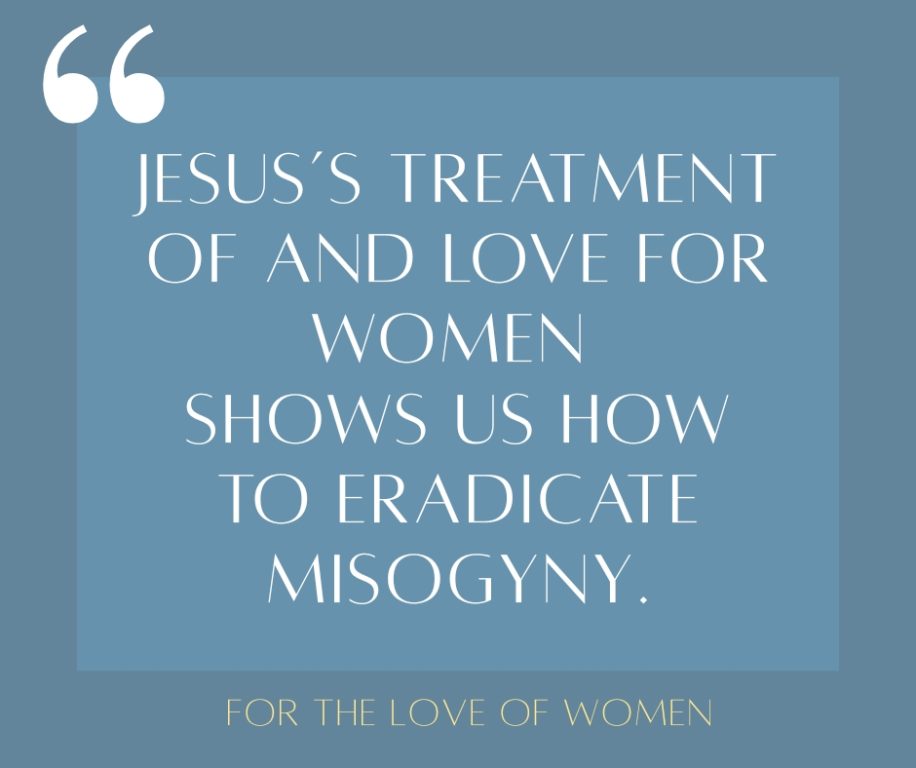
I’ve been reading and studying Scripture for more than forty-four years. There’s still much I don’t understand, but I do think it’s clear that God loves women. Scripture tells so many stories about Jesus overturning prevailing cultural norms to care for and love women well. I think of the woman caught in adultery whom Jesus spared a certain death by helping the men to see their hypocrisy. Or when the woman who had been suffering from chronic health issues reached for him in the crowd, he blessed her faith and healed her. Further, as we read about the early church, women were released and blessed to lead alongside men in many different capacities, from deacons (Pheobe), to teachers (Priscilla), and patrons (Lydia). 

It didn’t take long for the church to revert back to pre-Pentecost ways. Since Constantine’s rule and decision to make Christianity the state church, women have been excluded from key leadership roles and have been vulnerable to abuse within hierarchical church structures. The church should be the safest place for women and the best place for them to flourish. Tragically, that’s not consistently been true. I think it’s long past time that we addressed these wrongs. 

How can this understanding benefit both individuals and the Church as a whole?

According to Jesus, the most important commandment is to love the Lord with all of who we are and then to love our neighbor as ourselves. Therefore, we need to be loving women as defined by 1 Corinthians 13. This is a radical mandate and one that requires us to regularly confess our sin, repent, and work to repair and reconcile. If the church could consistently love like this, Sunday services would be packed. 

Furthermore, men need to realize that protecting, advocating for, and supporting women is not simply a gospel mandate: their lives will be significantly better when they prioritize mutual flourishing. 

How can we interrupt and heal from misogyny?

The final two chapters of the book focus on what healing and repair from misogyny might look like. Everyone’s journey will be unique, but there are common practices that need to be in place. This includes men confessing any of the ways that they have contributed to misogyny, facing and healing from the trauma misogyny causes, grieving and lamenting in community, and ultimately, forgiveness. In spaces where there has been systemic abuse or injustice, we must not rush the survivors to forgive. It must be on their timetable. 

The goal is not simply to interrupt misogyny, but to stop it. This is no small thing, and women cannot do this alone. Men have to be willing to use their power and authority to benefit everyone, not simply themselves. This requires them to interrogate their stories, face any fears connected to losing power, and learn how to trust others. One practical way to frame male engagement is for men to become allies, advocates, and interrupters. Chapter nine has lots of practical ideas connected to this.

It will require all of us to image what it could look like to end misogyny in relationships, the workplace, the government, and the church. God has blessed each one of us with imaginations and given us access to the Holy Spirit. That’s a lot of potential. Let’s put it to good use.   


P.S. At UniteBoston, we respect the variety of convictions on the role of women in church leadership and we encourage individuals to have honest, courageous conversations of listening, learning and story-sharing with those they may disagree with to grow in our embodiment of Christian unity. We believe Dorothy’s book is an important message today for all of us to consider how we can honor women as image bearers; we encourage everyone to pick up a copy of her powerful message for the Church and society. Byron Borger’s bookstore, Hearts and Minds, is offering 20% off. Dorothy also regularly shares thoughtful reflections on her Substack, “What’s Faith Got to Do With It”

Written by uniteboston · Categorized: Blog · Tagged: christian unity, lent, reconciliation, uniteboston, unity

Oct 26 2025

Trauma Healing: Healing Is Public Work – Centering Community in Trauma Recovery

The Problem

The City of Boston has declared child trauma a public health emergency—and for good reason. Across our city, research and lived experience alike point to an undeniable truth: trauma is eroding our families, weakening our communities, and stifling our growth. It is stealing the futures of our children, distorting identities, and creating cycles of brokenness that ripple across generations.

We are witnessing what happens when unhealed trauma goes unacknowledged—how it plays out in our schools, on our streets, in our homes, and even in our sanctuaries. For too long, the pain has been treated as a private matter, but healing must be public work. It must be done together, in community, with compassion, strategy, and spiritual grounding.

The Word reminds us in 2 Timothy 1:7, “For God has not given us a spirit of fear, but of power and of love and of a sound mind.” This promise tells us that wholeness is possible. That healing is not just for some—it is for everyone, and it is the responsibility of the entire community to walk alongside those in need of it.

Where Do We Go From Here?

Are we at a nexus moment—a point in time where the truth is clearer than ever before? Can we finally recognize trauma not just as an emergency to respond to but as a call to action?

This is our invitation to stop reacting and begin rebuilding. Instead of merely treating symptoms, we are being called to dig deeper—to the root causes, the systems, the historical harms, and the spiritual wounds that keep us from thriving. Healing is not passive. It’s active, intentional, and communal. The question isn’t just “What’s wrong?”—the question now becomes: “What are we going to do about it—together?”

Why Boston Flourish?

Boston Flourish is the sacred space where community leaders, healers, teachers, pastors, parents, and young people come together. It’s where the work meets the workers, and where those doing the labor of healing can find support, prayer, and partners in the journey.

This year, we are honored to sit with leaders who are not only experts in their fields but are deeply committed to transformation. We will learn from:

Jermaine Tulloch, Director of Academic Mentoring Initiatives for Boston Public Schools, who is building bridges of mentorship across our schools and investing directly in the lives of students.

Rochelle Jones, Director of Education at Victory Generation, who is championing youth development through culturally-rooted, faith-filled educational approaches.

Together, we will hear stories of resilience, experience different models of counseling, and reflect on how faith and strategy can walk hand in hand to bring healing to individuals and entire communities.

Boston Flourish wants to bring together those who for decades have been addressing youth violence with conversations, introspection, and action rooted in cultural and spiritual truths.

Join the Movement

Boston Flourish 2025 takes place October 30, 2025, at IBEW Local 103 in Dorchester.

Tickets are available now for $99, Student rate for $75

👉 Register today to be part of Boston’s unfolding story: a story of faith, research, and collaboration that’s shaping the future of our city.

Written by uniteboston · Categorized: Blog · Tagged: collaboration, community, home, transformation, unity

Oct 24 2025

Civic Engagement – Bridging the Gap: Why Cross-Sector Collaboration Matters More Than Ever

This week’s article, written by Jerome Garciano, team lead of the Civic Engagement conversation, highlights one of the driving forces behind Boston Flourish 2025—the call for cross-sector collaboration that bridges faith, justice, and public life.  Jerome explores how followers of Jesus can bring grace, unity, and conviction into the civic arena through movements like the AND Campaign.

As Boston prepares to launch its local chapter, this article invites us to imagine what it looks like when Christians engage politics not through partisanship, but through the Gospel—seeking the common good so that our city may truly flourish.


I may have been one of the few evangelicals taking part in my local town’s No Kings Demonstrations last weekend, but I was somewhat surprised to see protest signs appealing to “religious” values.  These signs highlighted God’s commands and decrees to love the foreigner because we all were foreigners, and reminded us to ask ‘What Would Jesus Do?’ for our transgender neighbor? One sign especially resonated with me stating, “IT’S SO BAD EVEN THE INTROVERTS ARE HERE!” We need followers of Jesus to speak grace and unity into this moment of division and hatred and set forth a hope and vision for the common good grounded in the Gospel and God’s Word, and that’s why I think the AND Campaign is so important at this time in our history. 

As described in Compassion (&) Conviction: The AND Campaign’s Guide to Faithful Civic Engagement, the AND Campaign is a Christian civic organization that asserts the compassion and conviction of the gospel of Jesus Christ into the public square. It believes that Christians are called to promote social justice and moral order (rather than one or the other) in the sociopolitical arena, and to transcend both partisanship and political ideology. 

The AND Campaign has four primary objectives:

  1. Education – Raise civic literacy among Christians and help believers apply biblical values to the most pressing issues of the day.
  2. Representation – Represent and articulate a clear and credible biblical worldview that Christians can identify with in the public square.
  3. Coalition Building & Reconciliation – Organizing Christians to speak with one voice in the public square, and bridging racial and sociopolitical divides in the church.
  4. Advocacy – Promoting values and policies among policy makers and political decision makers that align with the biblical worldview.

Join us next week at the Boston Flourish Conference as we hear from AND Campaign founder and author Justin Giboney and meet with others who are passionate about seeing our City flourish. We will also mark this moment as the launch of the Boston Chapter of The AND Campaign. We can’t wait to see you there!

Join the Movement

Boston Flourish 2025 takes place October 30, 2025, at IBEW Local 103 in Dorchester.

Tickets are available now for $99, Student rate for $75

👉 Register today to be part of Boston’s unfolding story — a story of faith, research, and collaboration that’s shaping the future of our city.

Because when it comes to creating a Boston where everyone belongs, thrives, and flourishes — it starts with us.

P.S. If you’d like to learn more about the AND Campaign, check out the (&) Civic Revival 10 Disciplines  and the Civic Engagement Playbook

Written by uniteboston · Categorized: Blog · Tagged: collaboration, jesus, jesus christ, reconciliation, unity

Oct 10 2025

Deconstructing Anxiety: What Faith Means to a Generation Raised on Crisis

By the Boston Flourish NextGen Team

This week, we feature another article introducing one of the key conversations shaping Boston Flourish 2025—the Next Gen focus on faith and formation among young adults. Deconstructing Anxiety: What Faith Means to a Generation Raised on Crisis explores how Boston’s emerging generation is navigating uncertainty, rediscovering faith, and inviting the Church to reimagine discipleship for an anxious age. From the challenge of “generational precarity” to the hope of a quiet revival, the Next Gen Team shares how belief is taking new shape in our city and what it means for the future of the Church.


Across Boston and beyond, a generation is coming of age in the aftermath of disruption. They’ve watched recessions reshape opportunity, pandemics redefine community, and politics fracture belonging. They’ve inherited a world where the ground seems to shift faster than they can plant their feet.

Sociologists have named them “The Anxious Generation.” This describes young people growing up in an era marked by constant crisis—economic instability, social isolation, digital overload, and cultural upheaval—that has left many feeling uncertain, overwhelmed, and searching for solid ground. Yet in the language of faith, we might also call them the hopeful generation—because even in their fear and anxiety, they are reaching for something real.

They are growing up in what The Boston Flourish NextGen Team is describing as generational precarity— not as catchy, we know. But what we mean is there is a pervasive sense of instability that shapes how young people think about the future: where they’ll live, what they’ll do, and whether they belong. But juxtaposed to this precarity, something powerful is stirring: a revival marked not by noise or spectacle, but by authenticity—a quiet turning of hearts back to God in a search for meaning, belonging, and peace. 

A Generation Formed by Fear, Searching for Faith

According to recent Barna research, church attendance among Gen Z and young adults is actually on the rise—with younger believers now participating more consistently than older generations. Despite widespread narratives of decline, this data reveals a generation not abandoning faith but reimagining it—seeking spaces where authenticity, belonging, and truth can coexist.

Across Boston, we see this reality reflected in real time. Young adults are returning to church communities and faith conversations not out of obligation, but out of hunger—for meaning that speaks to their lived experience and for a faith that holds up under pressure.

To me, generational precarity means that many young people are trying to build stable lives in a world that feels uncertain,” said Taylor Perry of Kingdom Builders Church. “It matters because it affects how we dream, make decisions, and trust that our efforts will lead to something lasting.

Others, like Elise Vernely, see how this instability touches deeper questions of identity and belonging:

Generational precarity to me means an uncertainty of identity, purpose, and belonging. There are so many messages about who you should be based on your race, age, or background—and that isn’t helpful. 1 Corinthians 12 teaches me that everyone is unique, everyone is needed, everyone is valued, and when we come together, we thrive. That’s the message young people need to hear today.

These reflections capture the paradox of this moment: fear and faith are shaping each other in real time. The same instability that once pushed young people away from church is now drawing them toward an authentic encounter with God—one not built on performance or certainty, but on presence. Beneath the anxiety, there is a growing hunger for belonging, purpose, and a faith big enough to hold their questions.

Listening to the Voices That Matter

That conviction has driven our journey as the NextGen Team —pastors, mentors, nonprofit leaders, and young adults working together under the umbrella of Boston Flourish 2025. Over the past several months, we’ve been listening closely to those who live and lead in this tension.

Several members of our team—Cady Malkemes, Amaris Hernandez Diaz, Taylor Perry, and Joe Rivers—represent the very generation we’re seeking to serve. Their honesty, questions, and conviction have grounded our work in lived experience rather than distant observation. They remind us that this generation’s story cannot be told about them—it must be told with them.

Alongside them, leaders like Jason Adams and Pastor Reggie Smalls bring years of experience serving students and young adults across Boston. Jason’s work has spanned campus ministry at UMASS Lowell, mentorship at the International Fellowship House in Back Bay, and youth education programs for the Department of Education in East Boston. Reggie’s leadership through the DeVos Urban Leadership Initiative continues to equip young people for faith-based civic and community impact. Together, their work reflects the heartbeat of this initiative: forming young adults who are spiritually grounded, socially aware, and ready to lead.

We’ve also solicited insights from current campus ministry leaders across CRU, InterVarsity, and Chi Alpha, who affirm that while this generation’s struggles are real, there is also a growing hunger for belonging, purpose, and truth. Their experiences echo recent findings from Harvard’s Human Flourishing Program, whose research on generational precarity confirms what many of us see firsthand—that young adults are searching for anchors of meaning amid a culture of instability. Representatives from the program will join our Boston Flourish conversation to help shape a faithful response.

In that spirit, Elise Vernely offered a powerful theological reflection on this moment, drawing from 1 Corinthians 12:

“Generational precarity to me means an uncertainty of identity, purpose, and belonging. I thought of the scripture that says, ‘If the foot should say, “Because I am not a hand, I am not of the body,” is it therefore not of the body?’ There are so many messages about who you should be based on your race, age, or background—and that isn’t helpful. No one is a monolith. 1 Corinthians 12 teaches me that everyone is unique, everyone is needed, everyone is valued, and when we come together, we thrive. That’s the message young people need to hear today.”

She continued,

“I am excited to be part of this year’s NextGen conversation because I see this as an opportunity to really make meaningful change for this generation and those to come. I see this as a divine opportunity to share my talents, gifts, and knowledge in a way that serves our youth and even breaks cycles.”

For Cady Malkemes of Neighborhood Church Dorchester, the heart of this work is deeply missional:

My excitement to be part of the NextGen Conversation is rooted in Matthew 28:19. As I reflect on the Great Commission, I am blessed to be part of not just a conversation but a team that is working toward readying and engaging the present generation of disciples to further disciple the Church.

Through these conversations, our team has found that this generation isn’t faithless—it’s faithful differently. They want discipleship that’s lived out loud, not locked in a classroom; mentorship that’s mutual, not one-directional; and faith that’s curious enough to engage the world, not retreat from it.

Our Emerging Response: From Events to Ecosystem

In response, we’re beginning to reimagine what engagement could look like for a generation that learns through story, dialogue, and experience. The NextGen team is exploring a rhythm of quarterly citywide gatherings—spaces designed to bridge college and non-college young adults, spiritual and civic life, and faith with everyday formation.

Rather than relying on traditional programming, we’re envisioning creative discipleship laboratories—think of the energy of a TED Talk, the small group vibe and relational depth of an Alpha Course, and the authenticity of a live podcast conversation. Each gathering would pair short, idea-driven talks with honest dialogue, worship, discussion and community connection. The hope is not just to inform minds but to ignite imagination—giving young adults the language, faith, and community to make sense of their world through the lens of Christ.

Still, we know that lasting transformation happens in ongoing relationships, not in one-time gatherings. That’s why we’re hoping to partner with campus ministries like CRU, InterVarsity, and Chi Alpha, and community-based ministries such as The Boston Project’s Young Adult Ministry (led by leaders like Cady Malkemes). Together, these ministries could offer discipleship pathways and small-group environments where participants continue growing after each gathering—spaces where conversation turns into formation.

If realized, this rhythm could begin to form a citywide ecosystem—a collaborative network that cultivates connection, community, and courage throughout the year. It’s not about hosting more events; it’s about testing ways to build trust and belonging among young adults who are rediscovering faith in an anxious age.

As Rev. Devlin Scott, Managing Director of UniteBoston and convener of the team, shared:

We don’t just want to host an event; we want to cultivate an ecosystem where the next generation knows they’re seen, valued, and sent.

This idea seems to reflect what many across Boston are sensing: that a quiet revival is stirring—not defined by crowds, but by curiosity; not by production, but by participation. It’s faith that speaks the language of this moment while helping a generation rediscover what’s timeless.

Faith Beyond the Fear

The Next Gen team will bring this vision to the Boston Flourish Conference on October 30, joining hundreds of civic, business, and faith leaders to imagine a city where everyone can flourish. Together, we’ll name the problem of generational precarity—and propose a pathway of hope rooted in collaboration, discipleship, and love that casts out fear.

Because if this is indeed the anxious generation, then it is also the one through whom God may be revealing a new kind of faith—honest, embodied, and unafraid to question.

Raised in the shadow of disruption, this generation is teaching the Church something profound: faith isn’t the absence of fear—it’s what we build together in spite of it.

Because maybe the real story of our time isn’t the crisis that shaped a generation—it’s the courage and revival that’s shaping what comes next.

Written by uniteboston · Categorized: Blog · Tagged: lent, peace, transformation, uniteboston, unity

Oct 03 2025

Building a City of Belonging: Launching the Boston Immigrant Resource Dashboard (BIRD)

“Too often, we’re sending families to services that are already full. With BIRD, we’ll finally have a clear, real-time picture of what’s available. I am so excited for the potential of this dashboard to equip all of us to better serve our immigrant neighbors.” — Pastor Melinda Priest

Boston is a city shaped and strengthened by immigrants, yet too often new arrivals and those who serve them struggle to find up-to-date, reliable information about essential resources. Whether it’s shelter, legal services, English classes, or job training, the systems meant to help can feel confusing, outdated, and fragmented.

That’s where the Boston Immigrant Resource Dashboard (BIRD) comes in.

Over the past year, leaders across the city have been collaborating to build a dynamic, real-time platform. BIRD allows immigrant-facing providers to post and update their available services, so providers and clients can quickly see what’s available through a simple green–yellow–red light display. Read the story below, and plan to join us on October 30 at Boston Flourish when we will publicly launch the dashboard!


At Immigrant Connection at Awaken City, Site Director and Pastor Melinda Priest meets many immigrant neighbors seeking legal help, English classes, and citizenship support. She often refers people to other organizations, knowing that no single church or organization can meet every need. Yet every referral requires time—calls, emails, and website checks to confirm what’s actually available.

For the past two years, Boston Flourish has been convening conversations on migrant care and solidarity. Through a panel discussion, hundreds of individual conversations, and monthly gatherings supported by the Mayor’s Office of Immigrant Advancement, a central challenge emerged: while Boston has no shortage of resources for immigrants, connecting people to them requires exhausting and often duplicative effort. Faith-based organizations and city agencies are frequently working toward the same goals, but in isolation from one another. A collaborative team with faith and city leaders began to dream: What if technology could streamline these connections and make real-time information accessible to everyone?

Why the Boston Immigrant Resource Dashboard Matters

Too often, existing databases are incomplete or out of date, leading to missed opportunities at critical moments. BIRD seeks to bridge that divide by building a shared platform where churches, nonprofits, and civic agencies can work together to serve immigrant neighbors more effectively. 

  • Real-time updates so providers and families know what’s available now
  • Key service areas including immigration legal services, housing, workforce development, and ESOL/citizenship classes
  • A collaborative ecosystem where referrals are streamlined and clients don’t need to repeat the intake process at every step

The mission of BIRD is both simple and urgent: to provide real-time, accessible information on vital resources for immigrants, refugees, and service providers—ensuring that help is timely and never lost in the shuffle. At a time when immigrants are too often dehumanized in public discourse and policy—whether through detention of people without criminal records, prolonged solitary confinement, or sweeping deportation strategies that target vulnerable families—BIRD offers a different vision: belonging in action.

Many on our core team are guided by the Biblical mandate to love the foreigner and sojourner, remembering that “you yourselves were foreigners in Egypt” (Lev. 19:34; Deut. 10:19) and Jesus words ‘I was a stranger and you welcomed me’ (Mt. 25:35). In that spirit, BIRD seeks to help build a “city of belonging”—a network of care, rooted in justice, that restores dignity and connection for immigrants, refugees, and asylum seekers across Boston.

“BIRD helps us live out our commitment to “love thy neighbor” in practice—so we can become a city of belonging, where no one is left searching alone.” – Rev. Kelly Fassett, UniteBoston Executive Director


Built in Partnership

BIRD is being built through extraordinary collaboration. The need for a real-time infrastructure became clear at a collaborative session at Boston Flourish in 2023. A team developed with leaders from a broad spectrum of backgrounds and contexts. They fundraised and received a generous grant from the Imago Dei Fund, then hired web developer Richard Tang to create the foundational infrastructure for the dashboard. Now, a team of students from Boston University’s SPARK program is refining the user interface to ensure the platform is intuitive, accessible and easily updated.

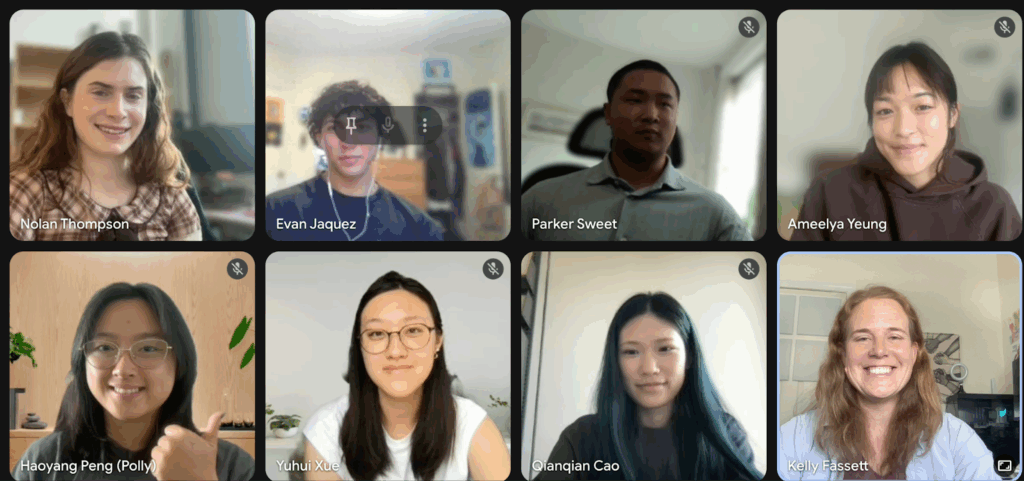
Left – Students from Boston University SPARK Program involved in this project

Immigrant-Facing Service Providers on a BIRD Orientation Call this week

“Our UX team at BU Spark! is excited to create a welcoming, intuitive, and accessible user interface for BIRD. We hope our efforts can improve the lives of many in the community.” — Evan Jaquez, Boston University Spark! UX Project Manager

“We wanted to make the platform simple enough for anyone to use, but powerful enough to handle the complexity of Boston’s service network.” — Richard Tang, Web Developer

This technical development is paired with a wide coalition of partners who are shaping the project on the ground. We are grateful for the early leadership and engagement of the Mayor’s Office of Immigrant Advancement, the Immigrant Family Services Institute, SEND Relief Boston, the Fellowship of Haitian Evangelical Pastors Association, the Emmanuel Gospel Center, the Center for Public Theology and Migration, the Boston Haitian Resource Hub, True Alliance Center, Voice of the Gospel Tabernacle Multi-Service Center, and Massachusetts Immigrant Collaborative among others.

“I am very excited about the potential of BIRD. Unfortunately, many times we serve in a context where the right hand doesn’t know what the left hand is doing. BIRD can help us improve in this area to be better informed and increase our effectiveness in collaborating to serve and alongside our immigrant and refugee communities. We are grateful for the efforts that have made this vital tool an integral part of our shared ecosystem in Greater Boston.” —  Rev. Dr. Gregg Detwiler, Senior Consultant, Intercultural Ministry, Emmanuel Gospel Center


Join Us: Orientation & Launch

We’re now inviting immigrant-facing providers to get involved. If your organization serves immigrants, refugees, or asylum seekers, we’d love for you to be part of the dashboard! Reach out to Rev. Kelly to learn more and schedule a time for an orientation.

And be sure to save the date: on October 30 at Boston Flourish, we’ll be officially releasing BIRD to the public and sharing stories of collaboration across the city.


Looking Ahead

This fall, we’re beta testing with leaders and preparing for a citywide launch. In the future, we envision expanding services, adding new functionality, integrating volunteer opportunities, and building a sustainable funding model.

“When a pastor can point a family to legal support or a social worker can see ESL openings at a glance, we’re not just sharing data—we’re sharing hope.” — Rev. Devlin Scott 

BIRD is more than a database—it’s a collaborative tool to strengthen Boston’s support ecosystem and ensure that no immigrant or refugee falls through the cracks.

Together, we can make Boston a city of belonging.


Written by uniteboston · Categorized: Blog · Tagged: collaboration, community, jesus, uniteboston, unity

  • « Previous Page
  • 1
  • …
  • 4
  • 5
  • 6
  • 7
  • 8
  • …
  • 73
  • Next Page »


Give to Further Christian Unity

DONATE!

  • Email
  • Facebook
  • Instagram
  • YouTube

Copyright © 2026 · UniteBoston · Built on WordPress