UniteBoston

Bridging Divides Across Christians for the Flourishing of the City

  • Home
  • Events
    • Submit Event
  • Join In
    • Beloved Community Lab
    • Migrant Care and Solidarity
    • The Church and Civic Engagement
    • The ATTIC
    • Kingdom Conversations
    • Worship & Pray
    • Boston Flourish
  • About
    • UB Board, Staff & Volunteers
    • Cohorts
    • Missional Letter
    • Annual Reports
    • History
    • Christian Unity
  • Forums
  • Blog
  • Give
  • Contact
  • Search

Feb 10 2015

What I’ve Learned on “Blood Corner”

For three decades, Roger Dewey sought to combat racism through organizing intensive urban experiences and internships, with over a hundred churches in the region sharing resources through urban service projects, housing renovation, and small business development and consulting. This week, Roger challenges our perception of racial tensions in Boston.

———

Nearly fifty years ago, as riots fueled by the assassination of Martin Luther King Jr. erupted in cities across the country, I carried a proposal from a dozen major churches in Boston to a prominent black community leader, the Reverend Michael Haynes. The proposition was that black and white Christians march arm in arm through the city. It would have been the first time any of the white pastors had marched for anything. It was a frightening time and no one had a better idea.

“Call the march off,” said Rev. Haynes. “Every step would be a lie. It would suggest that there is a relationship between black and white Christians, but we are completely estranged brothers and sisters.” Long story short: we called off the march, and at Rev. Haynes’ suggestion I moved into the neighborhood, joined his church and shut up and listened. I still live there today, in a house overlooking a park where Dan Rather of CBS once staged his broadcast because it demonstrated the worst racial relations in Boston.

There was a sense then that better days were ahead, that ordinary people could make a difference. It was a collective version of the American Dream. We believed that if enough of us worked together to make changes, even the poorest could begin to enjoy a more equitable life. Sure, it would require sacrifice. Some of us would have to walk through the valley of the shadow of death. But we had a vision. We had hopeful songs about a better world a-coming. And many things have changed since then. But many others have not.

Today, for instance, it’s particularly depressing to read blogs about Ferguson and Staten Island that either call the police murderers or call black people animals. It’s heartbreaking to hear police mock the killing of Michael Brown, and then also to face the evil of policemen being assassinated. Irreconcilable opposites, each denying the humanity of the other, each deflecting criticism from itself, and so preventing even modest changes for the better.

When I’m honest I realize that I too, having given my life to fighting racism, still experience ugly racial thoughts triggered by the most innocent sight or sound. They may masquerade as social or economic commentary, but they’re attacks on another’s humanity, thoughts that others’ lives matter less than my own.

I remember two defining moments. After decades of examining racism on the ground, I saw that my abashed confession of my own prejudice allowed me to confront racism in others without preaching down from some higher moral plane. What if racism is in our air? What if we all breathe it in? If we each become alert to our own limitations, then perhaps the charge of “racist” will no longer be a bomb we toss at those evil “others.” Then we no longer need to deny that there is racism within the delight some take in degrading a black football player or a black president. There is good and bad within all of us.

The other moment happened in that park across from my house, the one famous for its racial turmoil. A local postman had bought a triple-decker house to enable a group of us to move into the area. We were an interracial community hoping to be a force for justice and reconciliation. We were welcomed with open arms as we rented nine additional apartments and quickly got to know the teenagers in the neighborhood. The most common flashpoint at the park was when black kids wanted to play basketball and white kids were already using the court. The fights were so frequent that privately we called our intersection “Blood Corner.”

I was mystified at why the Irish kids kept saying they were attacking the black kids “to save our houses.” Then, on an inspiration, I asked how many of them remembered living west of Washington Street. All their hands shot up. Suddenly I understood.

A few years earlier, in response to the assassination of Martin Luther King Jr., the Boston Banks Urban Renewal Group decided to make home ownership available to poor black families. They literally drew a red circle on a map around a Jewish and Irish area. Then they distributed leaflets, which conveyed the message, “Sell your house before it’s worth nothing.” In just two years all the whites moved out, selling their houses cheap, losing their equity. These Irish kids’ parents had moved to the other side of our park.

The incoming black families lost too. It sounded good to buy with no down payment, but when the roof leaked or furnace failed, the same banks denied them home repair loans because they had built up no equity. This was predictable. As a result, more mortgages were foreclosed in that area than in all the rest of our state. The area deteriorated, black families were further marginalized, the Irish blamed the blacks and the kids fought each other. Oh, and the banks and real estate people sold those houses a second time, doubling their profits.

I knew two elderly black women who lost their home. “Roger,” they said, “we thought we were paying a mortgage, but I guess we’ve just been renting 15 years.” I was there at the sidewalk auction when the bank bought their house from itself to sell it again. It was my own banker, a very nice person. But his graciousness did not eliminate the fact that his standard, uncontroversial daily work resulted in the impoverishment of the Irish and Jews who moved out as well as the black families who moved in. The fights on Blood Corner were the direct result.

And it continues. Today I know some of the extremely nice, very spiritual, affluent white people who have moved into those same homes. Today a person needs an income of at least fifty thousand dollars to buy a house here. So the poor are being moved out and impoverished, indirectly, by some of the nicest people in the world.

These sorts of stories that are hidden from many of us strike me as helpful when we talk about Ferguson and Staten Island and the police. We tend to think of racism as a personal failing, like a “rogue cop” or a “radical protester.” But it was the legal structure of slavery that was evil, not just the personal attitude of Thomas Jefferson, who justified owning 225 slaves because “blacks are inferior to whites in endowments of body and mind.” The Indian Removal Act of 1830 legalized land grabs and extermination because “they have neither the intellect, the industry, the moral habits, or the desire for improvement.”

Structural racism continues to have a huge impact, without regard to personal niceness. The FHA insured millions of homes for whites in the 1930s and excluded most blacks. The G.I. Bill subsidized millions more homes for soldiers, but less than 2 percent of the funds went to non-whites. Those subsidies created wealth for those who received them—the resulting home equity empowered their kids to go to college or to start a business—and denied it to those who were excluded. The black parents I know are well aware that their children continue to suffer the effects of America’s historic, legislated economic favoritism.

Today’s downward mobility includes poor whites and much of the middle class. So on top of racial discrimination, America is building two cultures, one rich and one poor. The surface fight is black against white, police against those they are to protect. But perhaps the deeper issue is that we all together are becoming pawns of a tiny elite.

At the top of our country’s income distribution, a single family, the Waltons, has the same net worth as the bottom 41 percent of America’s families. The exact figure is $171.5 billion. The top one percent now take almost all of the benefits of our economic growth. This disparity reminds me of Honduras, home of close friends, where ten families own virtually the entire country—oblivious to the poverty that creates such hopeless despair that its youth risk death to escape. In my experience, that’s how many young black urban Americans feel today.

What Rev. Haynes said to me those many years ago stung at the time, but I’m grateful for his challenge to move into his neighborhood and see the facts on the ground for myself. Eventually I understood why Martin Luther King Jr.’s vision went far beyond combating prejudice to addressing structural racism by building a social movement to empower the needy. The vision that inspired King was the biblical concept of Jubilee—a command that every fifty years prisoners were to be freed, debts forgiven and land ownership (wealth) returned to a generalized state of equality. King gave his life for a large-scale common vision, not just to shame mean people into being nicer. After all these years, I still hold out hope that stories like these from Blood Corner will contribute to our next step forward as a nation.

—-

Note: this blog was originally posted on HelloHoratio.com and is re-printed here with permission.
Roger Dewey would love to dialogue with you about this issue – he can be reached at rogerclairedewey@gmail.com
Written by jasonjclement · Categorized: Blog

Feb 05 2015

BOSTON WARM: How You Can Help

The Boston Warm Day Center at Old South Church is open! The atmosphere has been peaceful. Guests have rested, read, slept, chatted. We’ve gone through a lot of coffee and snacks! And we’ve filled 60 storage lockers with people’s possessions, so far. This is a HUGE service we’ve been able to offer to those who otherwise would have to carry all of their possessions with them to doctor’s appointments, job interviews, and work, and people have been so thankful for it. If that weren’t enough, the Boston Warm Day Center at Emmanuel Church opens this Monday! So, we need your help…

Donations: Financial resources are critical. With your $43 donation, we can purchase a storage bin ($40) and a padlock ($3), where those people displaced from Long Island can store their belongings. You can literally take some weight off of another persons shoulders. Address checks to: City Mission Society, 14 Beacon Street, #203, Boston MA 02108 with Boston Warm on the memo line.

Material needs: Boston Warm day centers are in need of the following material donations:

  • Food: sandwiches, hard-boiled eggs, fruit, baked goods, granola bars and other non-perishable snacks, juice boxes, canned food with pop-top lids.
  • Bulk Items: ground coffee, sugar packets, coffee cups, plates, napkins, wet wipes.
  • Water cooler water jugs.
  • Pillowcases and fleece blankets for the nap room.

    $5.00 CharlieCards to help guests get to appointments and job interviews

  • Hygiene kits (in ziploc bags, containing items like soap, toothbrush, toothpaste, washcloth, deodorant, comb, shampoo, tissues, hand sanitizers, feminie hygiene products.
  • Socks, and warm hats, gloves, mittens, and scarves.
  • Due to space limitations, we cannot accept other clothing donations.

Do you or someone you know work for a company that could donate in-kind to the Boston Warm day center? Please consider requesting the above donations.

You can drop off donations (marked #BostonWarm) at Old South Church, First Church Cambridge, or Emmanuel Church.

Follow our progress: bostonwarm.weebly.com or www.facebook.com/bostonwarm>

Written by jasonjclement · Categorized: Blog

Feb 02 2015

The Pastor of the Pats

Watching the game? Whoever you’re cheering for, you’ll be encouraged to hear about how chaplain Jack Easterby is guiding the Patriots through life’s ups and downs:

Patriots Love in the Time of Deflategate, on ESPN.com

Written by jasonjclement · Categorized: Blog · Tagged: gopats

Jan 28 2015

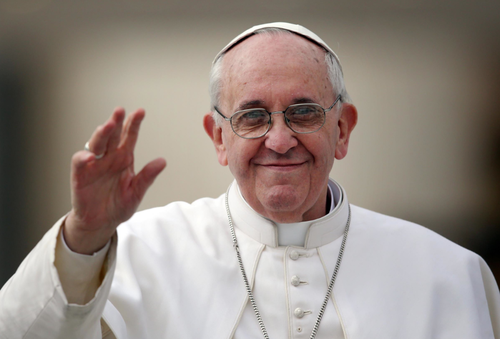
Pope Francis on Christian Unity

In honor of the Week of Prayer for Christian Unity, Scott Brill from the Institute for Christian Unity compiled these quotes from Pope Francis:


Photo credit: NBC News

Vespers: “Christian unity will not be the fruit of subtle theoretical discussions in which each party tries to convince the other of the soundness of their opinions. The Son of Man will come and will find us still arguing. We need to realize that, to plumb the depths of the mystery of God, we need one another, we need to encounter one another and to challenge one another under the guidance of the Holy Spirit, who harmonizes diversities and overcomes conflicts; to reconcile our differences.”

Colloquium: “There is no unity without conversion. Religious life reminds us that at the center of all search for unity and, therefore, of every ecumenical effort, is first of all conversion of heart, which entails the request and the granting of forgiveness. To a great extent it consists in a conversion of our look itself: to seek to look at one another in God, and to be able to place oneself also in the other’s point of view: here is a twofold challenge linked with the search for unity, whether within the religious communities or between Christians of different traditions.

There is no unity without prayer. Religious life is a school of prayer. The ecumenical commitment responds, in the first place, to the prayer of the Lord Jesus himself, and it is based essentially on prayer. One of the pioneers of ecumenism and great promoter of the Unity Octave, Father Paul Couturier, used an image that illustrates well the bond between ecumenism and religious life: he compared all those who pray for unity, and the ecumenical movement in general, to an “invisible monastery” that gathers Christians of different Churches, of different countries and continents. Dear brothers and sisters, you are the first leaders of this “invisible monastery”: I encourage you to pray for Christian unity and to translate this prayer in your daily attitudes and gestures.

There is no unity without holiness of life. Religious life helps us to be aware of the call addressed to all the baptized: the call to holiness of life, which is the only true path to unity. It is evidenced with incisive words in the Conciliar Decree Unitatis Redintegratio:”May all the faithful remember that, the more they promote, rather live in practice the unity of Christians, the more they will take care to live a life in greater conformity with the Gospel. In fact, the closer their communion is with the Father, with the Word and with the Holy Spirit, the more profoundly and easily they will be able to render mutual fraternity” (n. 7).”

Written by jasonjclement · Categorized: Blog · Tagged: oneinchrist, uniteboston, wpcu

Jan 25 2015

Why Should I Care About Race? Aren’t We All Just Christians?


Photo credit: CS Monitor

This month, as we remember the life and death of Martin Luther King Jr., given up for reconciliation and racial justice, and as I read about Black Lives Matter protesters who tie themselves to concrete barrels and lay their bodies across I-93 rush hour traffic to wake the Boston area up to the fact that injustice is a greater problem than inconvenience, I’m struck again by Jesus’ unnerving call: “Greater love has no man than this, that he lay down his life for his friends.” Regardless of your politics and view on current protests, I think most of us can safely say that we have never put ourselves in the path of physical death in order to save the life of another–particularly someone who’s not “one of our own.” A professor recently reminded my New Testament classmates and me, “As you follow Jesus, your life will take on the shape of the Gospel narrative.” Martin Luther King’s death certainly reflects that.

I am also amazed, as I read through the New Testament this week, at just how radically committed the early church was to cross any racial and ethnic line, to preach the good news that Jesus is King of all. They did this against their own better, rabbinical judgment, against centuries of careful study of Torah, and against their own bloody history of protest to save Jewish identity from Assyrian, Babylonian, Greek, and Roman colonization. And as they did so, they fought and squabbled about whose rules they would follow and which parts of whose culture to keep. Early Jewish Christians had a lot to lose, and they made very uncomfortable compromises to become “one in Christ” with Gentiles. (Note Acts 1:6: Even after Jesus’ resurrection, pre-sending of the Holy Spirit, the disciples were still imagining the Kingdom of God to be a Jewish political entity. The revelation of the true meaning of “Messiah” by the Holy Spirit at Pentecost opened up a theological can of worms. The New Testament attests to the apostles’ worm-wrestling over the next fifty years!). The insistence of Paul that Gentiles did not need to be circumcised to be “children of Abraham” was a hard-won battle that didn’t stick easily. Conversely, Gentiles took on some dietary restrictions in order to enjoy table fellowship with Jewish Chrsitians. Thus, the very strange unity of “Jews and Greeks” would have caught the world’s attention. Saying, “It’s Jesus, the Messiah from Nazareth, who does this… for everybody” in that atmosphere, would have been electrifying. His love poured into our hearts through the Holy Spirit changes our ability to really see and hear one another.

As I read Jesus’ commands, and read through the Acts narrative and its accompanying epistles, I don’t feel I’ve come anywhere near being faithful to the Gospel’s call to let my privilege and its accompanying insularity be crucified with Christ. But I have to wonder: today, in a country where Sunday morning is the most segregated time of the week, where we have a centuries-long history of white Christians committing acts of terror against Black and Native people (among others), how can the Church live out a startling “Jew and Greek” unity? How do we knock the foundation out from beneath our very real dividing walls?

I do know that destroying strongholds of disunity doesn’t happen through ignoring differences like culture, race and class. The famous statement in Galatians 3:28, “There is neither Jew nor Greek…for you are all one in Christ,” in its context communicated a spiritual equality, not the loss of “Jewishness” and “Greekness.” Nor does unity happen by mildly “agreeing to disagree”; it happens when we have the courage to do whatever it takes to get close and embrace those whom God has called but we have failed to see.

Here are a few thoughts on practical ways to begin, and I share them with you that we might journey together in these things that I am just beginning to learn.

1) Visit a church where you feel uncomfortable.
Speaking directly to the white folks reading this: we sometimes don’t even know what it feels like to be “in the minority,” racially speaking. Given the huge role race has played in the history of our nation, we can’t afford to ignore this fact. Practice displacing yourself by attending a church where “the outsiders” (to your theology, to your ethnicity, to…) hold the microphone.

2) Ask the questions you’re embarrassed to ask.
Many of us assume we understand what it might be like to be in another’s skin, or, even more often–we’re too embarrassed to ask. We don’t know the rules. We feel silly for not knowing how to refer to another’s ethnicity (“Is it Native American? Indian? First Nations?…. I don’t know what to call them”), or not really remembering where someone is from (“somewhere in Africa”). That’s okay. Sensitivity and learning “what not to say/ask” is important, but embarrassment and apology-making is a big part of Gospel training. Do take the time to ask someone in the know, admitting your stupidity, and humbly asking for the honor of hearing another’s story, remembering it’s a great privilege to listen. Particularly for white folks: “Color blindness,” which is often our de facto orientation, does not honor the way persons of color often experience the world. It’s better to ask what might feel like an awkward question, like, “How have you been processing Ferguson?”, than to fail to love by our silence.

3) In 1 & 2, be prepared for the work of the Holy Spirit to change your rules.
The anger, lament, and sense of foresakenness of our brothers and sisters is the sound of the Spirit’s prophetic voice, and hearing these things should change us. It was inconceivable to Peter, when he was given the vision of the “sheet of unclean animals” in Acts 10:9-16, that God’s rules were changing. It was only by seeing the work of the Holy Spirit among Cornelius’ household that Peter was able to defend an amendment of the “circumcision rule” at the contentious Jerusalem council (see Acts 15:6-11 and context). We can talk about our brothers and sisters in theory, but until we witness the Spirit’s work in them up close, well–we’re missing out on the glory of the Gospel!

—
Hilary Davis is working toward her MDiv at Gordon-Conwell Seminary and learning to listen in her part-time staff position with InterVarsity Christian Fellowship’s Native Ministries.
Her very occasional bloggings can be found at: hilarykdavis.wordpress.com
If you take issue with, or would like to ask any questions about, any of the above, Hilary can be reached at hilarykd@gmail.com

Written by jasonjclement · Categorized: Blog · Tagged: blacklivesmatter, ferguson, oneinchrist

  • « Previous Page
  • 1
  • 2
  • 3
  • 4
  • 5
  • 6
  • …
  • 21
  • Next Page »


Give to Further Christian Unity

DONATE!

  • Email
  • Facebook
  • Instagram
  • YouTube

Copyright © 2026 · UniteBoston · Built on WordPress