UniteBoston

Bridging Divides Across Christians for the Flourishing of the City

  • Home
  • Events
    • Submit Event
  • Join In
    • Beloved Community Lab
    • Migrant Care and Solidarity
    • The Church and Civic Engagement
    • The ATTIC
    • Kingdom Conversations
    • Worship & Pray
    • Boston Flourish
  • About
    • UB Board, Staff & Volunteers
    • Cohorts
    • Missional Letter
    • Annual Reports
    • History
    • Christian Unity
  • Forums
  • Blog
  • Give
  • Contact
  • Search

Sep 19 2019

Design By Faith Lecture Series: Heidi Lee

The Well at Massart, Massart’s Intervarsity Chapter, is pleased to welcome Heidi Lee as the first speaker of their Fall ’19 Faith in Design Lecture Series.

Heidi Lee — Heidi Lee, Unbound Visual Arts (UVA) Vice-President, resides in Jamaica Plain. She worked as the Artist in Residence for the Common Art program for seven years, where she guided and instructed unhoused community members. She coordinated many exhibits for the program throughout the Boston area, including Common Art’s involvement in City Heart, a citywide art exhibit and sale for homeless and low-income artists. She received her Bachelor of Fine Arts with a concentration in Painting from Gordon College and a Master of Education with a concentration in Visual Arts from Lesley University. She founded the art program at an inner city middle and high school in Hyde Park, taught there for nine years, and has since been teaching students of all ages independently. She works in mixed media, acrylic, and oils at her studio in Newton.
Written by Andrew Walker · Tagged: christian, Fenway, homelessness, mission hill

Apr 20 2019

Four Characteristics of Neighborhood-Focused Church Planting

“What if we saw the places and people in our lives not as existing for our sake, but places and people to which God has called us for their sake?”

-Matt Owens

This week, we have Pastor Matt Owens as our guest blogger on UniteBoston. Matt has been involved in starting churches for the last nine years. He’s a native of Illinois, and has served in church plants in Ireland and Birmingham, AL, prior to coming to Boston. In the Boston area, he has interned with the Christ the King Presbyterian church plant in Jamaica Plain / Roxbury, served as Assistant Pastor at a church plant in Somerville, MA, and is now planting a new congregation in Quincy. In his blog, Pastor Matt shares some valuable insights about how all Christians can be intentional about seeing their neighborhood as their parish.

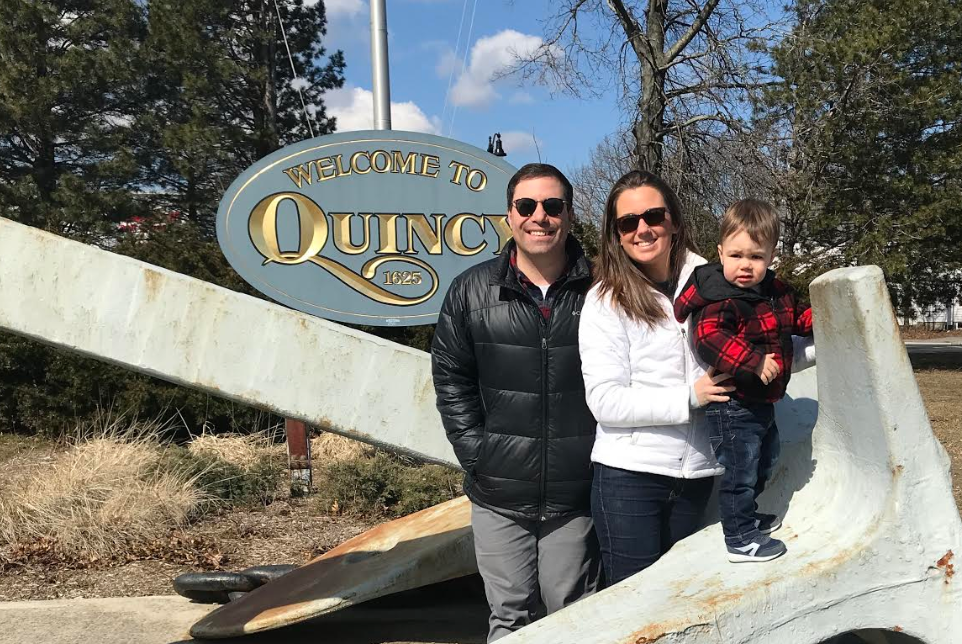
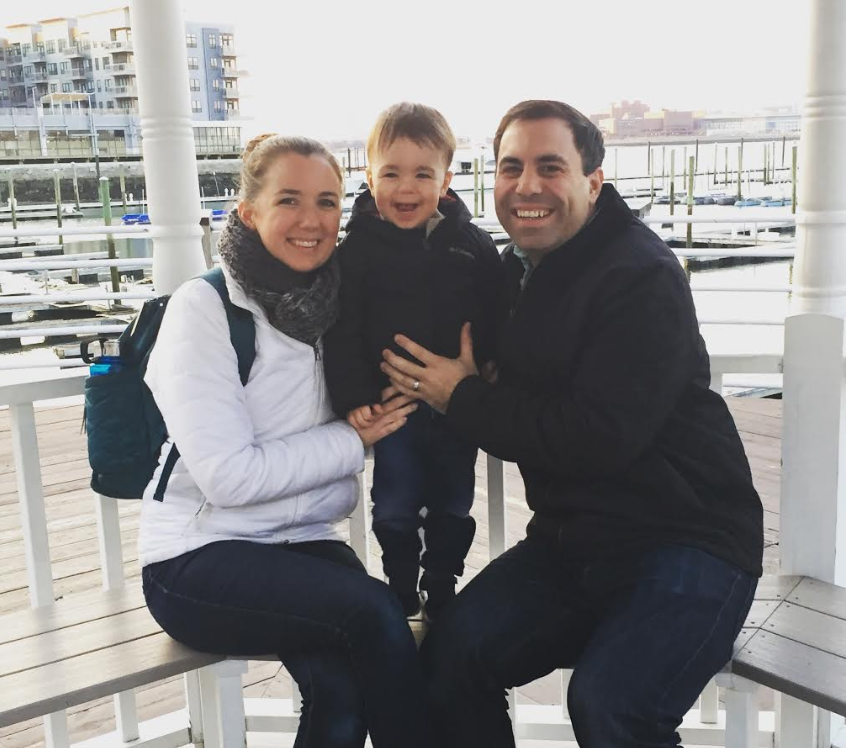
The Owens family (Matt, Naomi and their son, Liam) at Marina Bay in Quincy.

Spirited Contextualization

“Now while Paul was waiting for them at Athens, his spirit was provoked within him as he saw that the city was full of idols. So he reasoned in the synagogue with the Jews and the devout persons, and in the marketplace every day with those who happened to be there.” (Acts 17:16-17)

As Paul observes the idols in Athens, his spirit is provoked by the Holy Spirit for two reasons. First, because he loved the Lord, he long to see Jesus (not idols) worshipped and glorified. Second, out of a deep love for the people of the city, he wants them to worship only God who can give life.

Yet, this provocation doesn’t cause him to yell at the people of Athens (though he might take this approach elsewhere). Rather, he reasons…He knows the people of Athens are a reasoning people. So he reasons with them, and is then taken to the Areopagus to explain Jesus and the Resurrection (Acts 17:19).

He then preaches a beautifully compelling and contextualized sermon, beginning by noting the various idols of Athens and introducing the people to the unknown God, who has now made himself known in Jesus Christ. He uses a different starting point, different themes and different arguments than he would with a predominately Jewish audience, but proclaims the same gospel.

This passage is a good example of spirited contextualization. Tim Keller defines contextualization as, “giving the Bible’s answers…to questions about life that people in their particular time and place are asking, in language and forms they can comprehend, and through appeals and arguments with force they can feel, even if they reject them.”

The task of every Christian is to be a spirited contextualizer, contextualizing not as an intellectual exercise, but out of love for God and our city, provoked by the Spirit of God.

Theology of Place and Developing a Parish Mindset

A theology of place begins with the question, “What if we saw the places and people in our lives not as existing for our sake, but places and people to which God has called us for their sake?”

Our model in this mindset, of course, is Jesus, who “came not to be served, but to serve, and to give his life” (Mark 10:44). We must also be certain that our sovereign God knows the name of the street you live on, and the park nearby, in all of the beauty and brokenness that it may represent to you. He knows the names of all your neighbors, whether you do or not. When we begin to see the people and places God has called us to as God sees them, then we realize that we don’t live on our particular street coincidentally or arbitrarily, but for such a time as this.

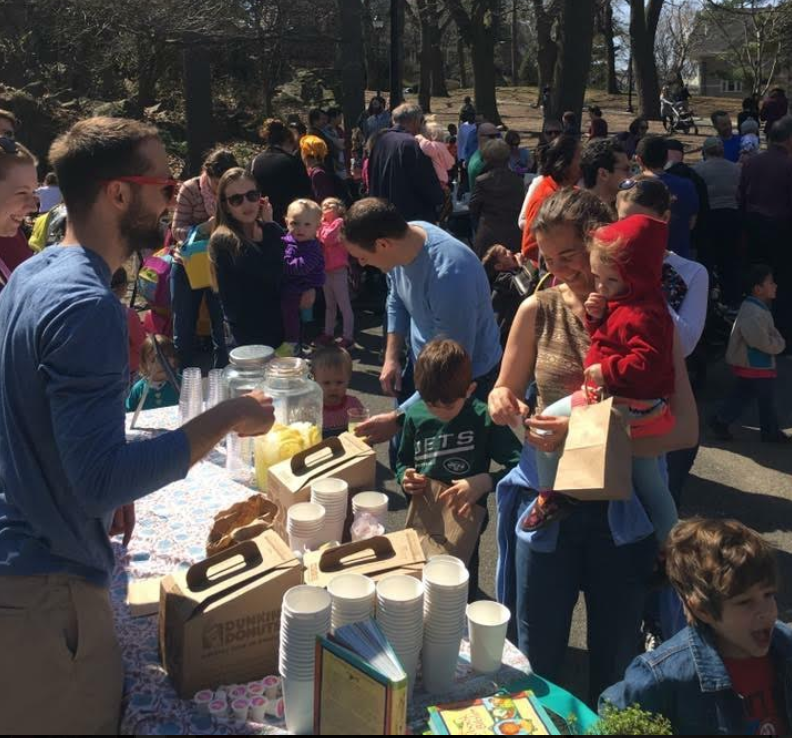
Serving coffee at the CTK Somerville Easter egg hunt at Powerhouse Park in Somerville
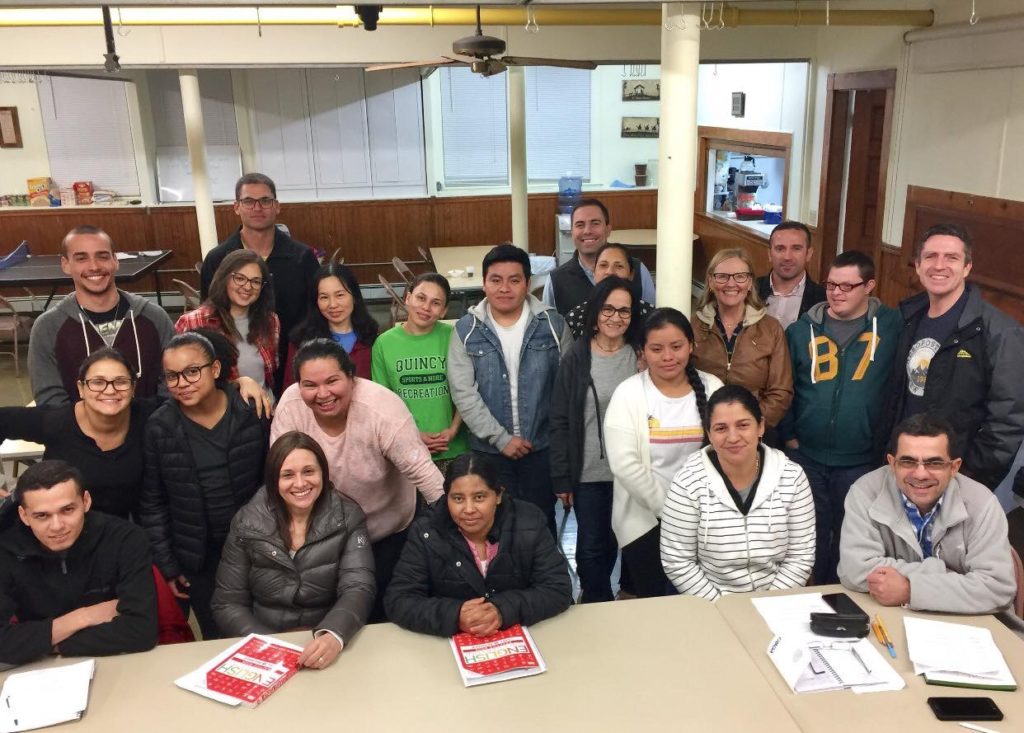
The English learning group at CTK Quincy (Brazilian Church) in West Quincy

This is how I would define a parish: the people and places to which God has called you. I imagine a parish in concentric circles with one’s family (if applicable) at the center of the parish. (Pastoral ministry is perhaps the only job in which one’s responsibilities include caring well for their family. After all, your spouse and children are presumably members of your church.) The next circle out is one’s congregation, then one’s neighborhood, city, and finally the surrounding geographical region. Every Christian must love his/her parish, take pride in it, and hate (that is, be provoked by) the idols that harm it.

An example of a parish mindset is David Ortiz’s famous (short) speech at Fenway Park after the Boston Marathon Bombing. As a relative outsider to Boston, he revealed a deep sense of belonging and ownership when he passionately proclaimed, “This is our f@#*’in city!”

More recently, New Zealand Prime Minister Jacinda Ardern, in the wake of the mosque attack in Christchurch, “Many of those who will have been directly affected by this shooting may be migrants to New Zealand; they may even be refugees here. They have chosen to make New Zealand their home, and it is their home. They are us.”

Four characteristics of neighborhood-focused church planting:

1. Presumes a post-Christendom culture

Churches who operate with a “Christendom” mindset are assuming that unchurched people are going to come walking through their front doors. A post-Christendom approach assumes that people will not come unless they’re engaged in some way (through relationships, service, etc.). Neighborhood-focused plants are incarnational. I recall one young man who had become a Christian at one of the CTK church plants reflect, “Can you believe God cared for me so much that he planted a church in my neighborhood?”

2. Equips Christians to be missional, not consumeristic

Neighborhood church planting steers existing Christians away from choosing a church based on whose product they like best, and directs them to live on mission in their parish.

3. Encourages multi-culturalism

If a church planter’s neighborhood is multi-cultural, that diversity should be reflected in the church. When an outsider looks in, he/she should see a group of people that don’t belong together on the surface, and may have nothing in common but a shared identity in Christ. When this is the case, the makeup of the congregation is a compelling apologetic of the gospel.

4. Requires Kingdom unity

If someone cares about their neighborhood, he/she should be happy to see other churches joining Jesus on his mission. We need many different kinds of churches to reach many different kinds of people. We are working together with a Brazilian congregation in Quincy, as we believe that we can reach a greater scope of the city together than either of us can on our own. We are collaborating with them in teaching in ESL at the Brazilian church each Wednesday evening. The Lord’s Kingdom will come through a movement of the Holy Spirit in and through a unified body of Christ.


Matt and his wife Naomi have an almost-2 year old son, Liam. The Owens family moved to Quincy in June to plant a new congregation. You can track their progress or sign up to receive updates here: http://thequincyproject.com

Last, here is another great resource: check out David Leong’s article: “What is the Theological Meaning of the City?”

Written by uniteboston · Categorized: Blog · Tagged: boston marathon, Fenway, neighborhood, uniteboston, unity

Mar 29 2019

InterVarsity Christian Fellowship Worship Night 2019

Join IVCF at MCPHS University for their annual worship night! All are welcomed and it is FREE ADMISSION! For non-MCPHS students, please bring your school ID!

Worship is the expression of praise and adoration for God. Come and join us in experiencing who God is through musical worship. No matter what your experience is with worship, everyone is welcome!

Join us at our MCPHS University Boston Campus (101 Palace Road, Boston, MA, 02120) at 7pm in White Hall (Room W300).
See you there!

Refreshments will be provided!

Written by Andrew Walker · Tagged: Fenway

Jul 02 2014

Unity in Diversity: Shalom in the Fenway

For the past five months, the UniteBoston Reps have been engaging in various activities to listen and learn from their communities. These next four weeks, each rep will be writing a brief blog to share their findings with the Greater Boston Christian community. This week, Betsy Slate, Director of Community Engagement at Fenway Church is sharing her insights from the Fenway Community.

We dream of having every community in Boston connected with a UB Rep! UB Rep Cohorts begin in October and extend to May. If you’re interested in being a UB Rep in your community, email Kelly Steinhaus, kelly@uniteboston.com


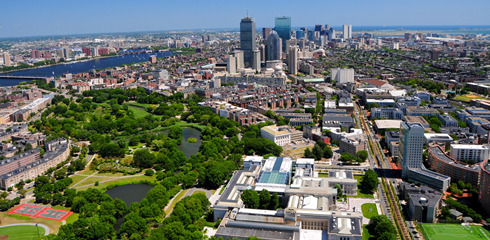
(Photo Credit: www.colleges-fenway.org)

Strolling through the Fenway neighborhood, you’re likely to meet people from all walks of life. You may meet Fatma, who has come from Saudi Arabia to the area for its proximity to the Longwood Medical Center; her daughter is ill with a disease that she’s come to Children’s Hospital with hope for a cure. Continuing down Boylston Street, you meet someone like Mark, a student from California who has come to study music at Berklee, just trying to figure out the ins and outs of adulthood. As you pass the Fenway Victory Gardens, you meet Janine and Bobby, long-term residents who find a sense of community in the very ground of the Fenway. Rounding the bend, you bump into Clara, a resident of the Fenway for over three decades, working to see the community become just that – a community, a people that care about one another and the state of the neighborhood.

The beauty of the Fenway lies therein; a diverse group of people brought together geographically – often for a limited period of time. This neighborhood is denoted by transition, which puts the area at risk for great instability. With the number of families dropping each year, the increase of young, transient residents and ever-rising housing prices, one could look at the Fenway and think it’s headed for disaster. But, if you search for God’s heartbeat in the humdrum of this bustling neighborhood, you’ll hear a different rhythm, one that softly drums hope.

Despite the odds being stacked against the neighborhood, God is bringing together individuals from these different social groups to generate unity for social impact. This is not a community that backs down from a challenge; organizations like the Fenway Community Development Corporation (FCDC) are bringing together students, long term residents, and families to build an “urban village” – a place with ample and affordable housing, healthy local business, shared indoor and outdoor community spaces, and good access to transportation. Further, residents and developers – typically at odds – are partnering to see a Community Center come to fruition. While these may look “practical” and not “spiritual,” they are the instruments God can use to bring about a community knitted together in shalom – community-wide, holistic peace characterized by relationships as He intended.

Though we’re seeing the first signs of partnership between residents and students, there is still much to be done. On the whole, the church in the Fenway can partner to bring peace and reconciliation alongside local community workers. Division seems to always be at work in the Fenway. Even the geography reflects the struggle between unity and division: the Fens – the park system iconic of the neighborhood – is both a space to unite the neighborhood and which separates the Fenway in an east-west divide. Churches in the Fenway must unite across geography and turf, and share a common vision to see this neighborhood transformed. Followers of Jesus throughout the Fenway can then enter community organizations as learners with a sense of peace and unity that will come to the whole neighborhood.

Futher, the church can function as peacemakers between disparate groups in the Fenway. Long term residents sometimes feel at odds with students, the transience of whom lead to increased housing costs and poor living conditions within the neighborhood; whereas students are largely unaware of their place in the community. The church can act as ministers of reconciliation in the Fenway by facilitating the connection between the residential community and the student community. A neighborhood is not one group or another; rather, it includes everyone who lives in that area. Students have a place in and responsibility to the community, and residents have a role in welcoming students to the neighborhood. The church can model the former to students, and introduce students and residents to one another.

Disparate groups are not meant to coexist, in the Fenway or otherwise, but to engage with one another. As God directed the Israelites in Jeremiah 29, so are we to seek the welfare of the city, of the neighborhood, in which we find ourselves. God is already at work in this neighborhood; let us partner with Him as peacemakers to see unity in the Fenway. The church can and must weave itself into the fabric of the community, and help others do the same, with the hope of bringing unity and shalom to the Fenway neighborhood – one step toward seeing unity across Boston.

On the right, Betsy Slate is Director of Community Engagement at Fenway Church

Written by jasonjclement · Categorized: Blog · Tagged: christian unity, community, community exegesis, Fenway, jeremiah 29, neighborhood, shaom, unity


Give to Further Christian Unity

DONATE!

  • Email
  • Facebook
  • Instagram
  • YouTube

Copyright © 2026 · UniteBoston · Built on WordPress